Showing posts with label Al Qaeda. Show all posts

Thursday, November 14, 2019

British mercenary Le Mesurier found dead in Istanbul

Crescent International
British mercenary James Le Mesurier (right) and his monstrous creation, the White Helmets
Another Western terrorist mastermind responsible for much propaganda and mayhem in Syria has died.
The body of James Le Mesurier who founded the White Helmets in Syria was discovered in the early hours of November 11 on a street in Istanbul where he had been living.
The cause of his death was not immediately clear although there are strong suspicions that Le Mesurier, like the Daesh leader Abu Bakr al Baghdadi had outlived his usefulness and became dispensable.
The police in Istanbul said that Le Mesurier had slash marks on his face and there were fractures on his legs. They have launched an investigation but say that review of CCTV footage showed only two person in the building, the mercenary and his wife.
It is also possible that he may have been bumped off by some intelligence agency on the lookout for him because of his disruptive role in Syria.
Presented as a “humanitarian organization”, the White Helmets was merely a propaganda tool of the West that worked hand-in-glove with such terrorist outfits as al-Qaeda (aka al-Nusra Front) in Syria.
The ever-so tactful BBC, reporting Le Mesurier’s death wrote on its web page: “A former British Army intelligence officer who was honoured by the Queen for his work with the White Helmets civil defence group (sic) in Syria has been found dead near his office in Istanbul… [ ]… The cause of death was not immediately clear.”
So there!
Only three days earlier, however, Russian foreign ministry spokesperson, Maria Zakharova, had called on Britain to “clarify” Le Mesurier’s precise role, asking whether he had links to the terrorist group, al-Qaeda.
In her tweet, Zakharova wrote:
MFA Russia
✔ @mfa_russia
#Zakharova: The White Helmets’ co-founder, James
Le Mesurier, is a former agent of Britain’s MI6,
who has been spotted all around the world,
including in the #Balkans and the #MiddleEast.
His connections to terrorist groups were reported back
during his mission in #Kosovo.
--------------------------------------------------------------------------------------
The question of who Le Mesurier really was kept propping up even in the British media. John Wight, writing in the Guardian had this to say:
“Le Mesurier carries about him the inescapable whiff of Britain’s malign legacy of dirty wars, waged in Kenya, Aden, Ireland, Iraq, Libya, in other words wherever London’s blood-soaked imperialist foot has tread around the world. A product of Britain’s prestigious Royal Military Academy of officer training at Sandhurst, he served in various UK military/NATO military deployments over the past three decades, specifically Bosnia, Kosovo, Iraq and Lebanon.
“The question of why a given state becomes fragile and failing is of course neither asked nor explored, for doing so would dredge up the subject of imperialism, which for Western ideologues such as Mr Le Mesurier would be akin to a vampire being exposed to daylight.”
Western-created “civil defence groups” such as White Helmets for which Le Mesurier received $300,000 seed money (no small potatoes) and over a three-year period the sum of $123 milllion, are the thin-edge of Western military wedge.
He also created the MayDay Rescue operations to “train” al-Qaeda operatives. It was outside the offices of MayDay Rescue in Istanbul that his body was found early today.
Some British military officers have been quite candid about the real function of such “humanitarian organizations.”
British Chief of Naval Staff, Admiral Sir Philip Jones stated last year that “the hard punch of military power is often delivered inside the kid glove of humanitarian relief.”
It is for this reason that military actions sponsored by the US, Britain, Canada and their allies for the past several decades have often been framed as “humanitarian interventions.”
If today, there is one less terrorist mastermind, there is some hope, however, slim that the imposed war on Syria may gradually be coming to an end.
It could come no sooner for the traumatized people of Syria.

Thursday, September 12, 2019

America’s Mysterious Iran Policy

USN
On July 3, 1988, the United States, under the guidance of President George H.W. Bush, downed Iran Air Flight 655 over the Persian Gulf. Nearly 300 civilians died including 66 children.

The plane was descending for a landing in Dubai on a scheduled flight on a well-travelled route. The responsible ship, the USS Vincennes, was in the Gulf in support of Iraq’s dictator Saddam Hussein who had, only a year before, killed 37 American sailors when the Iraqi Air Force accidentally attacked the USS Stark.

If one were to ask why American one might contend that America’s policies in the Middle East and elsewhere are mysterious in both origin and execution, I suggest that one might strap ones self down as this is going to be a bumpy ride.

As of the close of July 2019, the United States and Iran are facing off in the Gulf again, this time, the US is acting, superficially at least, on behalf of Israel and Saudi Arabia who are fearful of the military power of Iran.

Why the fear of Iran is a bit of a mystery, but wait, we are getting ahead of ourselves.
Iran has never acted against either Israel or Saudi Arabia, certainly not directly and assets it is targeted simply because it exists and fails to do as it is told. Could things be this simple?
Moreover, another mystery, until recently, Israel and Saudi Arabia had, at least publicly, been “blood enemies.” Finding this to be not just false but finding Saudi Arabia and the UAE openly partnered with Israel, and Bahrain with them, despite decades of protestation of quite opposite views, opens one for a bit of revisionism, particularly when it comes to looking at root causes of Islamic extremism and who is really behind a number of terrorist attacks.

Then we have the issue of ISIS and al Nusra, or al Qaeda as it is also called, and their military operations in Syria and Iraq, operations one might normally consider a threat against both Israel and Saudi Arabia as well. Instead, however, we are faced with yet another mystery.

Instead, they seemed to get over not just their differences with each other but, mysterious as it might seem, concerns about having major terrorist organizations controlling the large and powerful nations on their borders.

In fact, Saudi Arabia and Israel, perhaps Jordan as well, couldn’t be more pleased than to see al Qaeda and ISIS with their own air forces, submarines and even nuclear capabilities.
Here we have yet it seems another perplexing mystery.

One might note that this is the same al Qaeda deemed by the US as responsible for the attacks on 9/11, now clearly partnered with Saudi Arabia and Israel. Another mystery is the unasked question.

Is America’s new love affair for al Qaeda a mystery or simply a case of “moral relativism” gone bad?

Here, we are forced to ask when did Saudi Arabia and Israel gain control over al Qaeda? Was it after 9/11? Was it before?

More Historical Background

Then again, we approach the mysterious war between Iraq and Iran, a war that lasted from 1980 until one month after the downing of Iran Airlines Flight 655.

During this war, Saddam Hussein’s forces in Iraq openly used poison gas against Iran on hundreds of occasions.

During this time, with full backing of the United States, Iraq developed not only a major production facility for biological and chemical weapons but began high level enrichment of uranium as well in order to produce nuclear weapons.

No sanctions were asked for against Iraq despite their drive toward nuclearization of their military, another mystery.

At that time, Germany was the primary manufacturer of the high-speed gas centrifuges being shipped to Iraq and for the needed equipment to produce Sarin and VX gas shells as well.

The manufacturing of Sarin and VX gas had been perfected in a joint Israel, South African venture through the 1970s and 1980s with testing done on human subjects in Angola under the auspices of a Dr. Basson, but we are getting ahead of ourselves.

Even more mysterious is the fact that these transactions, between Germany and Saddam’s Iraq, were facilitated by a company owned exclusively by the brother of the President of the United State, Prescot Bush and Company.

There was another Prescott Bush, but the business was the same, arms for dictators, poison gas and millions of dead. Let’s hear that story as well.

Prescott’s father and namesake, Prescott Sheldon Bush, a former United States Senator, had also represented German arms manufacturers, also under mysterious circumstances.
That partnership began even before Hitler took power in Germany and many assert that without backing by the Bush family and the Rockefellers at Standard Oil, Hitler’s political career may well have fallen flat.

It was only in 1943, after the German defeat at Stalingrad, that then Senator Prescott Bush began to relinquish his millions in holdings in German occupied Poland, under Consolidated Silesian Steel among others.

These Bush owned holdings, responsible for much of the Third Reich’s military production, used labor recruited from a German managed workers housing facility in Southern Poland now known as Auschwitz. Acting as host was a man named Himmler, as agent and manager for the American owned industries in and around Oswiecim, Poland, facilities owned by IG Farben, Standard Oil of New Jersey and, of course, the Bush family.

That family that grew rich on Auschwitz labor, supplying weapons to Hitler and similarly, grew wealthier supplying WMD’s to Saddam Hussein in his war against Iran.

Only 3 short years after the US downed that Iranian airliner, the son of that Senator, now an American president, began a war on Iraq seeking, among other goals, to rid Iraq of the weapons of mass destructions purchased, quite mysteriously, directly from the family of that same American president, just as had happened those short decades before when so many millions died in Europe in a mysteriously similar task.

This was Operation Desert Storm. At least 35,000 American military died of Gulf War Syndrome, a mysterious disease that afflicted those who served in that conflict.

Who says lightning doesn’t strike in the same place over and over? Run the clock up to 2003 and the son of that same son of that same senator that armed Hitler, was sending American troops again after Saddam Hussein, after those same weapons purchased from that same Bush family member, an unending cycle, generation upon generation.

By that time, as history has shown us, those weapons had been destroyed, as alleged by UN weapon inspectors. Still, 5000 Americans died looking for them and another 250,000 were wounded sufficiently to be considered permanently disabled. We add that to the 35,000 that died first time around when the Bush family turned its very good friend, Saddam Hussein.

For Iraq, 2 million died prior to the 2003 invasion due to American sanctions and another half million or so during the “civil war” that ensued during the American occupation.

Was that enough? Another mystery, let’s look at early 2014 when, lo and behold, Iraq was again attacked, this time by “ISIS.” Funded by Saudi Arabia, backed by Qatar, Bahrain and as many assert, the US and Israel, ISIS seized 40% of Iraq and held it for nearly 4 years.

During that time, another 250,000 Iraq’s died, tens of billions in oil was stolen and America eventually came to Iraq’s assistance, in a limited way, only when Iranian forces helping Iraq began handily defeating ISIS.

Did American aid for Iraq lengthen the war with the US moving ISIS commanders from one place to another and accidentally attacking pro-Iranian forces fighting ISIS over and over? Is this another mystery?

Thus, we return to 2019 as America attempts to fill the Persian Gulf with warships in order to, well, in order to “what?”

When Iran entered into the JCPOA agreement with the US and other nations in 2015, there were no regional security concerns, none for Saudi Arabia and none for Israel.

It is true that Saudi Arabia, a nation with the second most costly military on the planet, was deeply involved in a minor conflict with poorly armed tribesmen in Yemen, this we admit.

Additionally, Israel was and is deeply involved in a war against its own Islamic population, one of those rare occasions where artillery and 5th generation stealth aircraft are needed to calm a discordant population upset over troublesome domestic policies.

Where our attention lies today is the Persian Gulf where, were we to forget history and lose our taste for mystery and intrigue, we might well accept, at face value, the American assertion that military posturing in, around and above the territorial waters of an openly targeted nation is defensive in nature.

Gordon Duff is a Marine combat veteran of the Vietnam War that has worked on veterans and POW issues for decades and consulted with governments challenged by security issues. He’s a senior editor and chairman of the board of Veterans Today, especially for the online magazine “New Eastern Outlook.”

Wednesday, September 11, 2019

Eighteen Years After 9/11, Has Al-Qaeda Won The War On Terrorism?

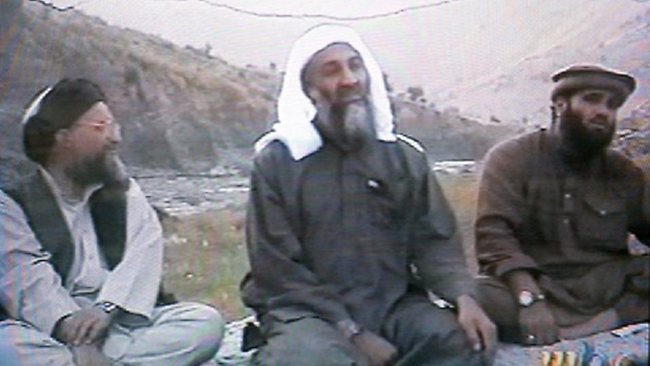
Al-Qaeda leaders Ayman al-Zawahri, Osama bin Laden and Suleiman Abu Ghaith in 2002.
by Peter Ford
What blasphemy is this? al-Qaeda has won? Absurd!
Most observers would say reflexively that, eighteen years after 9/11, the U.S. has cut al-Qaeda down to size, and if it has not quelled it altogether the remaining operations against Osama bin Laden’s organisation—such as the strike on al-Qaeda in Syria in Idlib on 31 August—amount to not much more than mopping up. But is this not a superficial reading of the situation?
Until Trump nixed the deal (temporarily?) the anniversary of 9/11 was set to coincide with an agreement between the U.S. and the Taliban, whereby the U.S. would withdraw from Afghanistan in return for assurances that U.S. troops will not be attacked as they leave and that the Taliban will not support groups such as al-Qaeda. Much of the discussion on the putative deal revolves around the question of whether the Taliban will respect any assurances they give.
But there is a deeper question here: the Taliban may or may not attack U.S. troops, but why would al-Qaeda today even want to attack the U.S. from Afghanistan? Or from anywhere at all? Has the U.S. not ended up aligning itself with al-Qaeda on the causes closest to al-Qaeda’s heart?
A Convergence of Interests
And what causes might those be? Leave aside the cause of besting its rival, the Islamic State (IS or ISIS), although the U.S. has done al-Qaeda an immense if unintended favour by largely removing from the scene al-Qaeda’s biggest competitor for recruits and funding. More to the point, how about the causes of fighting Iran, the Shia, the Syrian government, Hezbollah, and the Houthis, and generally making the Middle East safe for Sunni extremism?
‘Iran is the number one nation of terror’: has Donald Trump with this mantra not shifted the spotlight off Sunni terrorism, the undisputed bugbear of the U.S. in the first ten years after 9/11? And has al-Qaeda on its side not lost much of its anti-Western focus and become principally concerned with what it sees as heresy within Islam in the shape of Shiism and its offshoots?
Look at the absence of al-Qaeda reaction to the recent announcement that in light of the Iranian ‘threat’ the U.S. would be stationing troops once again in Saudi Arabia. Such stationing was an important catalyst for Bin Laden’s movement when, in the run up to and aftermath of the first U.S. war on Iraq in 1991, the U.S. kept thousands of troops in the holy land of Islam, considered anathema by many Muslims at the time. Now the prospect arouses barely a peep, so conditioned have the Saudi people and Sunnis generally become to seeing Iran as the enemy, not Israel or its protector the U.S.
Not that al-Qaeda ever appeared to care much about Israel’s misdeeds, at least to judge by actions rather than words. When did al-Qaeda ever mount a significant attack against Israel? So much fulmination, so little action. Even action against the U.S.: what did al-Qaeda do against the U.S. after the big coup of 9/11? It is necessary to go to the archives to come up with anything at all: the Times Square foiled car bomb attack in 2010 by a Pakistani who may or may not have been linked to al-Qaeda. The attack on the U.S. consulate in Benghazi in the confused aftermath of Muammar Gaddafi’s downfall in 2012 may also just count. Even taking into account a number of plots allegedly foiled by U.S. security agencies (often involving agents provocateurs), the record hardly amounts to strong evidence of a continuing major al-Qaeda targeting of the U.S.
The feeling, or quasi-indifference, appears to have been mutual. After the killing of Bin Laden in 2011 the U.S. seemed to act as though it believed that the account had been squared and there was not a lot of point in doing more than go through the motions on combatting al-Qaeda, especially with the appearance of the new kid on the terrorist block, IS, itself an offshoot of al-Qaeda in Iraq.
Allies in Syria and Beyond
The emerging convergence of interest between the U.S. and al-Qaeda has been most obvious in Syria. During the Obama years, the U.S. funnelled immense amounts of arms and equipment to jihadi groups in full knowledge that much of it was ending up in the hands of al-Qaeda affiliates, notably the group originally known as Jabhat Al Nusra. This group began life as al-Qaeda in Syria, before disagreements with al-Qaeda central led to a degree of distancing. With the passing years Nusra stepped up efforts to rebrand itself, first as Jabhat Fatah ash-Sham (JFS), then as Hayat Tahrir ash-Sham (HTS), its current avatar. But its basic radical jihadi ideology, and its oppressive sharia-inspired behaviour in areas it controlled, never changed.
The U.S., by mobilising all the immense means at its command to weaken and attempt to overthrow Bashar al-Assad, did much of the work of Nusra/JFS/HTS for it. The U.S. still does that, without ever manifesting the slightest concern that removing Assad would inevitably pave the way to jihadi control over all Syria. For if the U.S. no longer finds it expedient to pour arms directly into the maw of jihadi groups, it lifts not a finger to prevent ally Turkey from doing so with advanced U.S.-supplied weaponry, or Qatar from channelling copious funding to those groups. It constantly admonishes, with threats, the Syrian government and the Russians for using much the same level and type of military effort to dislodge HTS from Idlib that the U.S. itself used in Coalition operations to remove IS from Mosul, Fallujah, and Raqqa. At one point in 2018 it threatened to bomb Syria if Assad’s attempts to recover Idlib were not halted, prompting barbed comments that the U.S. Air Force, which had already bombed Syrian targets twice—in 2017 and 2018—was acting as the al-Qaeda air wing.
U.S. officials have put considerable effort into attempting to hobble Assad and the Syrian Arab Army in what they call their war on terrorism by imposing sanctions, withholding international reconstruction assistance, and pressuring countries not to normalise relations with Syria. It lionises groups like the White Helmets, considered by the Syrian government and Russia to be auxiliaries of HTS. It encourages think tanks hostile to Syria and Russia and does everything in its power to shape a mainstream media narrative on Syria that can only give comfort to a group, HTS, which plays adroitly on Western consciences in the hope that assistance from the West will continue and possibly even develop into armed intervention.
True, the U.S. continues to pay lip service to the cause of fighting al-Qaeda and even occasionally mounts some token military action against it, as when on 30 June this year the USAF launched a strike on a location near Idlib where commanders of an al-Qaeda affiliate, Hurras al-Din (the Guardians of Religion), were gathering. The Pentagon claimed that the purpose of the strike was to pre-empt ‘external’ attacks, which would endanger ‘U.S. citizens, our partners, and civilians’. The main impact of this curious attack out of the blue, following two years of complete U.S. inaction against al-Qaeda in Syria, was to deflate an emerging clamour for U.S. intervention in Syria, and may have been a Pentagon power play against ultra hawk John Bolton. The U.S. carried out an almost identical strike on 31 August, which is likely to strengthen the hold of HTS, left unscathed, over Hurras al-Din and other unruly factions that are more brazen in their al-Qaeda affiliation. Even if the two strikes are taken entirely at face value their rarity underlines that if the U.S. seriously wished to oppose al-Qaeda, it could and would be bombing HTS and its allies regularly. It can only be assumed that the U.S. broadly prioritises undermining Assad and Iran over the fight against Sunni terrorists, who for their part—especially now with IS a spent force—no longer have much appetite or incentive for attacking the U.S.
The de facto convergence between the U.S. and al-Qaeda is equally obvious in Yemen, where the U.S. is propping up the Saudi-led military coalition in its efforts to remove the Houthi-controlled government, deemed over-reliant on Iran. The U.S.-Saudi intervention has led to a chaotic situation where al-Qaeda in the Arabian Peninsula has gathered considerable strength.
U.S. rhetorical support for the Uighurs (to spite China) and military cooperation with predominantly Muslim Azerbaijan, from which Israeli drone attacks on pro-Iranian forces in Iraq have reportedly been launched, may also not be seen with disfavour by al Qaeda, jihadi ranks in Syria being full of Uighurs and Caucasus Muslims.
Repeating the Past
We have seen this movie before, of course. U.S. support for Afghan mujahideen fighting Russia helped create the conditions for the emergence of al-Qaeda in that country in the first place, just as the overthrow of secular dictators in Iraq and Libya helped create the conditions for the emergence of IS and other jihadi groups in those countries.
At some subliminal level, the architects of U.S. Middle East policy seem to recognise that they have a problem with pretending that Iran has overtaken al-Qaeda or al-Qaeda-inspired groups as terrorist-in-chief. Possibly for this reason, Secretary of State Mike Pompeo has tried to smear Iran as a secret supporter of al-Qaeda, a claim no honest observer can possibly take seriously.
At all events, the question today—18 years after 9/11—is whether the U.S. obsession with Iran will not backfire like previous misadventures and play once again into the hands of Sunni extremists, inheritors of the Bin Laden legacy. We shall see the answer to that if U.S. Syria policy succeeds, and an economically crippled and politically fragmented Syria becomes once more ungovernable, with Assad forced out of power—an outcome for which al-Qaeda must be fervently praying.
Peter Ford is an expert on the Middle East. An Arabist, he served as British Ambassador to Syria and Bahrain before joining the UN to work on refugee issues.

Wednesday, September 04, 2019

How Syria Defeated the 2012-2019 Invasion by US & Al-Qaeda

Eric ZUESSE

On August 31st, the brilliant anonymous German intelligence analyst who blogs as “Moon of Alabama” headlined “Syria – Coordinated Foreign Airstrike Kills Leaders Of Two Al-Qaeda Aligned Groups”, and he reported that,“Some three hours ago an air- or missile strike in Syria’s Idleb governorate hit a meeting of leaders of the al-Qaeda aligned Haras-al-Din and Hay’at Tahrir al-Sham (HTS) aka Jabhat al-Nusra. Both were killed. It is likely that leaders of other Jihadist groups were also present. The hit completely destroyed a Haras al-Din guesthouse or headquarter. The Syrian Observatory says that more than 40 people were killed in the strike. The hit will make it much easier for the Syrian army campaign to liberate Idleb governorate.
At long last, Syria’s army and Russia’s air force are no longer being threatened with World War III by the US and its allies if they proceed to destroy the tens of thousands of Al-Qaida-led jihadists whom the US had helped to train and arm(and had been protecting in Syria ever since December 2012) in order to overthrow Syria’s non-sectarian Government and replace it by a fundamentalist-Sunni Government which the royal Sauds who own Saudi Arabia would appoint. All throughout that war, those Al-Qaeda-led ‘moderate rebels’ had been organized from the governate or province of Idlib (or Idleb). But now, most (if not all) of their leadership are dead.
Turkey’s leader Tayyip Erdogan had hoped that he would be allowed both by Russia’s Vladimir Putin and by the United States’ Donald Trump to grab for Turkey at least part of Idlib province from Syria. But now, he is instead either participating in, or else allowing, Syria’s army and Russia’s air force, to slaughter Idlib’s jihadists and restore that province to Syria. On 9 September 2018, Russia and Iran had granted Turkey a temporary control over Idlib, and Erdogan then tried to seize it permanently, but finally he has given it up and is allowing Idlib to become restored to Syria. This turn-around signals Syria’s victory against its enemies; it’s the war’s watershed event.
Here is the history of how all that happened and how Syria is finally a huge and crucial step closer to winning its war against the invaders (which had originally been mainly Al Qaeda, US, Turkey, Qatar, and the Sauds,, but more recently has been only Al Qaeda and US):
Right now, the Trump Administration has committed itself to prohibiting Syria (and its allies) from retaking control of Idlib, which is the only province that was more than 90% in favor of Al Qaeda and of ISIS and against the Government, at the start of the ‘civil war’ in Syria. Idlib is even more pro-jihadist now, because almost all of the surviving jihadists in Syria have sought refuge there — and the Government freely has bussed them there, in order to minimize the amount of “human shield” hostage-taking by them in the other provinces. Countless innocent lives were saved this way.
Both Democratic and Republican US federal officials and former officials are overwhelmingly supportive of US President Trump’s newly announced determination to prohibit Syria from retaking control of that heavily jihadist province, and they state such things about Idlib as:
It has become a dumping ground for some of the hardcore jihadists who were not prepared to settle for some of the forced agreements that took place, the forced surrenders that took place elsewhere. … Where do people go when they’ve reached the last place that they can go? What’s the refuge after the last refuge? That’s the tragedy that they face.
That happened to be an Obama Administration official expressing support for the jihadists, and when he was asked by his interviewer “Did the world fail Syria?” he answered “Sure. I mean, there’s no doubt about it. I mean, the first person who failed Syria was President Assad himself.”
Idlib city, incidentally, had also been the most active in starting Syria’s ‘civil war’, back on 10 March 2012 (that’s a news-report by Qatar, which had actually helped to finance the jihadists, whom it lionized as freedom-fighters, and Qatar had also helped the CIA to establish Al Qaeda in Syria). Idlib city is where the peaceful phase of the “Arab Spring” uprisings transformed (largely through that CIA, Qatari, Saudi, and Turkish, assistance) into an armed rebellion to overthrow the nation’s non-sectarian Government, because that’s where the Syrian branch of Al Qaeda was centered. On 29 July 2012, the New York Times headlined “As Syrian War Drags On, Jihadists Take Bigger Role”and reported that “Idlib Province, the northern Syrian region where resistance fighters control the most territory, is the prime example.” (Note the euphemism there, “resistance fighters,” not “jihadists,” nor “terrorists.” That’s how propaganda is written. But this time, the editors had slipped up, and used the honest “Jihadists” in their headline. However, their news-report said that these were only “homegrown Muslim jihadists,” though thousands of jihadists at that time were actually already streaming into Idlib from around the world. Furthermore, Obama lied and said that the people he was helping (the al-Saud family who own Saudi Arabia, and the al-Thani family who own Qatar) to arm, were not jihadists, and he was never called-out on that very blatant ongoing lie.) But the US-allied, Saud-and-Thani-financed, massive arms-shipments, to the Al-Qaeda-led forces in Syria, didn’t start arriving there until March 2013, around a year after that start. And, then, in April 2013, the EU agreed with the US team to buy all the (of course black-market) oil it could that “the rebels” in Syria’s oil region around Deir Ezzor were stealing from Syria, so as to help “the rebels” to expand their control in Syria and thus to further weaken Syria’s Government. (The “rebels,” in that region of Syria, happened to be ISIS, not Al Qaeda, but the US team’s primary target to help destroy was actually Syria, and never ISIS. In fact, the US didn’t even start bombing ISIS there until after Russia had already started doing that on 30 September 2015.)
A week following my 10 September 2018 news-report, I reported, September 17th, about how Erdogan, Putin, and Iran’s Rouhani, had dealt with the US alliance’s threat of going to war against Russia in Syrian territory if Russia and Syria were to attack the jihadists in Idlib:
As I recommended in a post on September 10th, Russia’s President Vladimir Putin and Turkey’s President Tayyip Erdogan jointly announced on September 17th, “We’ve agreed to create a demilitarized zone between the government troops and militants before October 15. The zone will be 15-20km wide,” which compares to the Korean DMZ’s 4-km width. I had had in mind the Korean experience, but obviously Putin and Erdogan are much better-informed about the situation than I am, and they have chosen a DMZ that’s four to five times wider. In any case, the consequences of such a decision will be momentous, unless US President Donald Trump is so determined for there to be World War III as to stop at nothing in order to force it to happen no matter what Russia does or doesn’t do.
What the Putin-Erdogan DMZ decision means is that the 50,000 Turkish troops who now are occupying Idlib province of Syria will take control over that land, and will thus have the responsibility over the largest concentration of jihadists anywhere on the planet: Idlib. It contains the surviving Syrian Al Qaeda and ISIS fighters, including all of the ones throughout Syria who surrendered to the Syrian Army rather than be shot dead on the spot by Government forces.
However, after Erdogan got control over Idlib, he double-crossed Putin and Rouhani, by trying to solidify his control not only over Idlib but over adjoining portions of Syria, I headlined on 14 July 2019 “Turkey Will Get a Chunk of Syria: An Advantage of Being in NATO”, and reported:
Turkey is already starting to build infrastructure even immediately to the north and east of Idlib in order to stake its claim to a yet larger portion of Syria than just Idlib. This might not have been part of the deal that was worked out by Russia’s Putin, Iran’s Rouhani, and Turkey’s Erdogan, in Tehran, on 9 September 2018, which agreement allowed Turkey only to take over — and only on a temporary basis — Idlib province, which is by far the most pro-jihadist (and the most anti-Assad) of Syria’s 14 provinces. Turkey was instead supposed to hold it only temporarily, but the exact terms of the Turkey-Russia-Iran agreement have never been publicly disclosed.
Turkey was building in those adjoining Syrian areas not only facilities from two Turkish universities but also a highway to extend into the large region of Syria to the east that was controlled by Kurdish separatist forces which were under US protection. In July 2019, Erdogan seems to have been hoping that Trump would allow Turkey to attack those Kurdish proxy-forces of the US.
For whatever reason, that outcome, which was hoped for by Erdogan, turned out not to be realized. Perhaps Trump decided that if the separatist Kurds in Syria were going to be allowed to be destroyed, then Assad should be the person who would allow it, not he; and, therefore, if Erdogan would get such a go-ahead, the blame for it would belong to Assad, and not to America’s President.
Given the way Assad has behaved in the past — since he has always sought Syrian unity — the likely outcome, in the Kurdish Syrian areas, will be not a Syrian war against Kurds, but instead some degree of federal autonomy there, so long as that would be acceptable also to Erdogan. If Erdogan decides to prohibit any degree of Kurdish autonomy across the border in Syria as posing a danger to Turkish unity, then Assad will probably try (as much as he otherwise can) to accommodate the Kurds without any such autonomy, just like in the non-Kurdish parts of the unitary nation of Syria. Otherwise, Kurdish separatist sentiment will only continue in Syria, just as it does in Turkey and Iraq. The US has backed Kurdish separatism all along, and might continue that in the future (such as after the November 2020 US Presidential election).
Finally, there seems to be the light of peace at the end of the nightmarish eight-year invasion of Syria by the US and its national (such as Turkey-Jordan-Qatar-Saud-Israel) and proxy (such as jihadist and Kurdish) allies. Matters finally are turning for the better in Syria. The US finally appears to accept it. America’s threat, of starting WW III if Russia and Syria try to destroy the jihadists who have become collected in Syria’s Idlib province, seems no longer to pertain. Maybe this is because Trump wants to be re-elected in 2020. If that’s the reason, then perhaps after November of 2020, the US regime’s war against Syria will resume. This is one reason why every US Presidential candidate ought to be incessantly asked what his/her position is regarding the US regime’s long refrain, “Assad must go”, and regarding continued sanctions against Syria, and regarding restitution to Syria to restore that nation from the US-led war against it. Those questions would reveal whether all of the candidates are really just more of the same actual imperialistic (or “neocon”) policies, or whether, perhaps, one of them is better than that. Putin has made his commitments. What are theirs? Will they accept peace with Russia, and with Iran? If America were a democracy, its public would be informed about such matters — especially before the November 2020 ‘elections’, and not merely after they are already over.

Thursday, February 21, 2019

US “accidentally” arming Al Qaeda (again)

Tony Cartalucci
US weapons are once again falling into the hands of militants fighting in one of Washington’s many proxy wars – this time in Yemen – the militants being militants of local Al Qaeda affiliates. Tony Cartalucci is Bangkok-based geopolitical researcher and writer, and a frequent contributor to Global Research, has more on this topic in an article titled “Yemen: US “accidentally” arming Al Qaeda (again).”
CNN in its article, “Sold to an ally, lost to an enemy,” said that according to a CNN investigation: Saudi Arabia and its coalition partners have transferred American-made weapons to al Qaeda-linked militants, hardline Salafi militias, and other factions waging war in Yemen, in violation of their agreements with the United States.
The article also said: According to local commanders on the ground and analysts who spoke to CNN, Saudi Arabia and the United Arab Emirates, its main partner in the war, have used the US-manufactured weapons as a form of currency to buy the loyalties of militias or tribes, bolster chosen armed actors, and influence the complex political landscape.
CNN reported that Weapon transfer included everything from small arms to armored vehicles. The article included a response from Pentagon spokesman Johnny Michael, who claimed: The United States has not authorized the Kingdom of Saudi Arabia or the United Arab Emirates to re-transfer any equipment to parties inside Yemen. The US government cannot comment on any pending investigations of claims of end-use violations of defense articles and services transferred to our allies and partners.
Despite obvious evidence that Saudi Arabia and the United Arab Emirates are both violating whatever agreements the Pentagon claims to have with both nations, the US continues fighting their joint war in Yemen for them in all but name.
The US role in Yemen includes not only arming Saudi Arabia and the UAE, but also training their pilots, selecting targets, sharing intelligence, repairing weapon systems, refueling Saudi warplanes, and even through the deployment of US special forces along The Saudi-Yemeni border.
Because of this continued and unconditional support – Pentagon complaints over weapon transfers it claims were unauthorized ring particularly hollow. More so when considering in other theaters of war, US weapons also “accidentally” ended up in the hands of extremists.
An entire army of Al Qaeda-linked militants was raised in Syria against the government in Damascus through the “accidental” transfer of US weapons from alleged moderate militants to designated terrorist organizations including Al Qaeda’s Al Nusra affiliate and the Daesh.”
And while this was presented to the public as “accidental” –  years before the war in Syria even erupted, there were already warning signs that the US planned to deliberately use extremists in a proxy war against both Syria and Iran. As early as 2007 – a full 4 years before the 2011 the Islamic Awakening began – an article by Pulitzer Prize-winning journalist Seymour Hersh published in the New Yorker titled, “The Redirection: Is the Administration’s new policy benefiting our enemies in the war on terrorism?” warned that: To undermine Iran, which is predominantly Muslim Shiite, the Bush Administration has decided, in effect, to reconfigure its priorities in the West East. In Lebanon, the Administration has cooperated with Saudi Arabia in clandestine operations that are intended to weaken Lebanon’s Hezbollah movement. The U.S. has also taken part in clandestine operations aimed at Iran and its ally Syria. A by-product of these activities has been the bolstering of extremist groups that espouse Salafism and Wahhabism and are hostile to America and sympathetic to Al Qaeda.
From 2011 onward, admissions throughout prominent Western newspapers like the New York Times and Washington Post admited to US weapon deliveries to the so-called “moderate rebels” in Syria.
Articles like the New York Times’, “Arms Airlift to Syria Rebels Expands, With C.I.A. Aid,” and “Kerry Says U.S. Will Double Aid to Rebels in Syria,” the Telegraph’s,  “US and Europe in ‘major airlift of arms to Syrian rebels through Zagreb’,” and the Washington Post’s article, “U.S. weapons reaching Syrian rebels,” detailed hundreds of millions of dollars in weapons, vehicles, equipment, and training funneled into Syria to so-called “moderate rebels.”
Yet even as early as the first year of the conflict, Al Qaeda affiliate Al Nusra – a US State Department-designated foreign terrorist organization –dominated the battlefield opposite Syrian forces.
The US State Department in its own official press statement titled, “Terrorist Designations of the al-Nusrah Front as an Alias for al-Qa’ida in Iraq,” explicitly stated that: Since November 2011, al-Nusrah Front has claimed nearly 600 attacks – ranging from more than 40 suicide attacks to small arms and improvised explosive device operations – in major city centers including Damascus, Aleppo, Hamah, Dara, Homs, Idlib, and Dayr al-Zawr. During these attacks numerous innocent Syrians have been killed.
If the US and its allies were admittedly transferring hundreds of millions of dollars worth of weapons, equipment, and other support to the so-called “moderate rebels,” who was funding and arming Al Nusra even more, enabling them to displace Western-backed militants from the Syrian battlefield?
The Western media had proposed several unconvincing excuses including claims that large numbers of defectors to Al Qaeda and its affiliates brought with them their Western-provided arms and equipment.
The obvious answer – however –  is that just as Seymour Hersh warned in 2007 – the US and its allies from the very beginning armed and backed Al Qaeda, intentionally created its Daesh offshoot, and used both in a deadly proxy war they had hoped would quickly conclude before the public realized what had happened.
It had worked in Libya in 2011, and the quick overthrow of the Syrian government was likewise anticipated. When the war dragged on and the nature of Washington’s so-called “moderate rebels” was revealed, implausible excuses as to how Al Qaeda and Daesh became so well armed and funded began appearing across the Western media.
As the alternative media now attempts to shed light on the ongoing US proxy war in Yemen, a similar attempt to explain how Al Qaeda has once again found itself flooded with US support is being mounted. Just as in Syria – the obvious explanation for Al Qaeda militants in Yemen turning up with US weapons is because the use of Al Qaeda and other extremists was always a part of the US-Saudi-Emirati strategy from the very beginning.
CNN’s revelations were not the first. An Associated Press investigation concluded in August 2018 in an article titled, “AP Investigation: US allies, al-Qaida battle rebels in Yemen,” that: Again and again over the past two years, a military coalition led by Saudi Arabia and backed by the United States has claimed it won decisive victories that drove al-Qaida militants from their strongholds across Yemen and shattered their ability to attack the West. Here’s what the victors did not disclose: many of their conquests came without firing a shot.
An investigation by The Associated Press found, that’s because the coalition cut secret deals with al-Qaida militants, paying some to leave key cities and towns and letting others retreat with weapons, equipment and wads of looted cash. Hundreds more were recruited to join the coalition itself.
While the US pleads innocent and attempts to blame the arming of Al Qaeda in yet another of Washington’s proxy wars on “accidental” or “unauthorized” weapon transfers, it is clear that Al Qaeda has and still does serve as a vital auxiliary force the US uses both as a pretext to invade and occupy other nations – and when it cannot – to fight by proxy where US forces cannot go.
The US – which claims its involvement in Syria, Iraq, and Yemen is predicated on containing Iran who the US accuses of jeopardizing global security and of sponsoring terrorism – has aligned itself with actual, verified state sponsors of terrorism – Saudi Arabia and the UAE – and is itself knowingly playing a role in the state sponsorship of terrorism including the arming of terrorist groups across the region.
Iran’s morally-backed Ansarullah movement and the revolutionaries – accused of being “terrorists” – are the most effective forces fighting terrorist groups like Al Nusra and Daesh across the region – illustrating Washington and its allies of being guilty in reality of what it has accused Syria, Russia, and Iran of in fiction.

Thursday, February 07, 2019

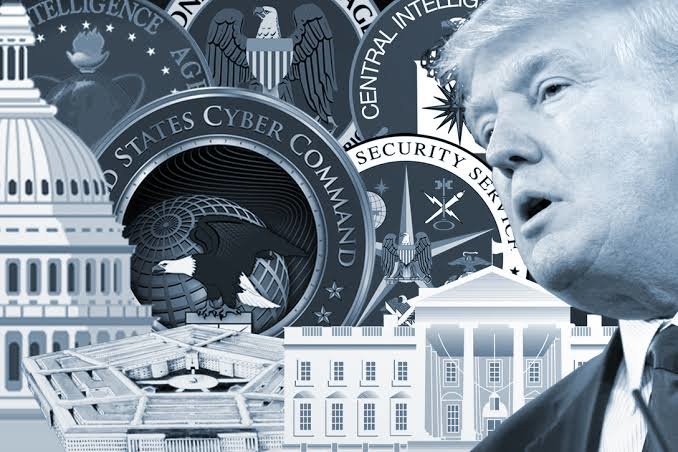
U.S. ‘deep state’ and Trump’s anti-Iran rhetoric

By Mudasir Sheikh
TEHRAN - The U.S. deep state refers to a shadowy government consisting of an integration of Wall Street controlled U.S. intelligence community, Washington think tanks and the military-industrial complex that yields absolute control over popular governments and propagate the agenda of deep politics.
Deep state as referred to by Tom Hayden is a state within the state whose evidences of foreign interference dates back to 1962 CIA’s “Operation Northwoods” against Cuba.
CIA has also been instrumental in orchestrating ‘false flag attacks’ in addition to toppling democratically elected leaders like Guatemala’s president Jacobo Arbenz in 1954, Chile’s Salvador Allende in 1973, Haiti’s president Jean-Bertrand Aristide in 2004.
The deep state overshadowed U.S. government during Obama’s tenure in 2009 when the coup in Honduras was orchestrated by CIA.
The foreign powers like Israel and Gulf monarchies are strongly tied with the U.S. deep state. According to the former Italian president Francesco Cossiga who also revealed the existence of Operation Gladio, the 9/11 tragedy was perpetuated by CIA and Mossad.
If we even accept the mainstream narrative that al-Qaeda was behind the 9/11, it again justifies the role of CIA behind 9/11 as al-Qaida itself was the creation of CIA and Bin Laden was a CIA intelligence asset.
The Saudi regime also yields huge influence over the U.S. intelligence community as the complex milieu of Safari Club, BCCI and Adnan Khashoggi helped to consolidate CIA.
Iran and its allies are perceived as common enemies by Saudi monarchy and the Israeli regime thus it is quite obvious that they will use their influence of the U.S. deep in countering Iran. That is why Mike Pompeo in 2017 said that Saudi Arabia and Israel are working together to confront Iran and its allies and they are about to set up their joint military headquarters.
According to Yaakov Nagel, the former security advisor to Netanyahu and energy minister of Israel, Saudi Arabia is even ready to sacrifice the demands of Palestinian people for strengthening its ties with Israel. And recent events and statements by Saudi’s crown prince have proved that right.
The former Israeli Defense chief of army staff Gadi Eisenkot in an  interview to Sunday Times said that Israel has been directly engaged in supporting Syrian rebels with weapons and in 2018 Foreign Policy magazine reported that Israel is supporting at least 12 rebel groups in Syria with weapons and cash.
According to former U.S. vice president Joe Biden, hundreds of millions of dollars and a huge cache of military hardware was poured by Saudi Arabia to topple Assad government and the close cooperation between Saudi Arabia and Israel is meant to counter the Iranian influence in the region.
The US involvement and the common interests of Saudi Arabia and Israel are all set to implement their continuity of government procedures by repeating their anti-Soviet strategy into Syria as explained by Helena Cobban.
When the U.S. and its allies are on the verge of defeat in Syria, then a statement from John Bolton in which he said “we now have the best U.S.-Israeli relationship in our history, and the U.S. will remain committed to support Israel and its other allies in the region” and the statement from Mike Pompeo regarding Trump’s Syria withdrawal in which he said that the U.S. withdrawal from Syria is merely a "tactical change" and U.S. will not change its military capacity to fight ISIS or Iran clearly indicates the intentions of the U.S. officials and their friends in the Middle East to overrule Trump’s decision of Syrian withdrawal that just needs a lame excuse which may have already come in the form of January 16, 2019 attack by ISIS terrorists in northern Syrian town of Manbij.
The protection of Kurdish population as a condition for U.S. withdrawal from Syria as proposed by John Bolton after his meeting with Netanyahu in Israel is in coherence with the interests of Israel. The Kurdish rebels were blocking the so-called Iranian corridor by Israel into Syria and additionally the statement of Bolton is favoring the interests of military industrial complex as Bolton himself has been part of a project of council for national policy under the name of New American century in 2006 that is meant promote corporate interests in Honduras and elsewhere.
On the other hand, Black Water founder Erik Prince in an interview with Fox business proposed to replace U.S. troops with private military contractors to defend the interests of US and its allies in Syria and according to him without their help, US allies would be “smashed by Iranian and Syrian forces.”
So it is easy to conclude that Trump's decision of Syrian withdrawal is negatively perceived by the U.S. deep state and the private military interests are well prepared to reap profits from the blood of Syrian people.
So keeping in view the continuity of government procedures, the deep politics of deep state, Israeli-Saudi war machine and the intentions of warmongers like John Bolton and Mike Pompeo, there are extremely slim chances of a long-lasting peace agreement in Syria and even if it happens they may open a new front under different pretexts as they have done in the past thus undermining any wise decisions from the US president.
Additionally the dire warning of Eisenhower about military industrial complex which he described as a threat to democratic government, the role of Allen Dulles in the assassination of John F. Kennedy and a strong pro-Israeli-Saudi lobby poses a serious question about the authority of Donald Trump to control the pro-war elements within U.S. establishment and the anti-Iran policies of White House.
The writer is a student and independent researcher based in Indian-controlled Kashmir.

Thursday, January 24, 2019

Why Yemen matters to Saudi Arabia and the West

By Farzad Farhadi

TEHRAN - Yemen is one of the most populous countries on the Arabian Peninsula. With a population that is 35 percent Shia, Saudi Arabia has also been concerned by what it sees as Iranian meddling in Yemen. Saudi Arabia has worried that the presence of Iran in Yemen could be risky for Sunni order, especially along part of its 1,800-kilometer border with Yemen.
 From the viewpoint of the Saudi authorities, such a wide border is seen as the main point of penetration for extremists and terrorists such as al-Qaeda into Saudi Arabia. You only have to look at the list of detainees at Guantanamo Bay to know that Yemen has been a fruitful recruiting ground for al-Qaeda.
A majority of the 800 prisoners listed in recently published detainee assessments were Yemenis. Back in the 1990s, most of Osama bin Laden's bodyguards were recruited from Yemen. Since 9/11, the Saudis have invested heavily in stamping out the threat at home from al Qaeda, and the last thing they want is contagion seeping in from next door and it made a major investment in Yemen in term of development and advancement. Therefore, military and financial support from the central government of Yemen is not only wise but necessary to its national security and military strategy.
In the West's view, by controlling Yemen through the Houthis, Iran is aiming to increase its strategic and regional influence and is desirous for acceptance of its positions in Syria and Iraq, which is not desirable to the Arab-Western axis. In their view, the Houthis are the Iranian forces in Yemen, and Iran is a geopolitical threat to the axis.
According to Saudi Arabia, the Pahlavi regime collapse caused the geopolitical void in the region and it paved the way to Saudi Arabia to be a regional power, but the Islamic revolution complicated matters for the Saudis. In the Iraq-Iran war, Saudi Arabia tried to help Iraq. After the war, however, Iran became more powerful in the Middle East. The stabilization of Iran's position in Iraq, Lebanon, Syria, Bahrain and Yemen led Saudi Arabia to see Iran as a big threat. Confrontation increased.
From Saudi Arabia’s view, the Yemeni Shiites are the last ring of the Shiite crescent, and their victory  would mark a complete collapse of its military goals and its regional power, and would also constitute a threat to its territorial integrity.
Perhaps this is why, despite the international criticism and intense media outrage against Saudi Arabia for the humanitarian catastrophes and war crimes in Yemen, the U.S. continues to support Saudi Arabia as its important ally in the Middle East.
Unlike some Arab countries whose oil is paramount, Yemen’s strategic location at the south of the Arabian Peninsula and on the vital sea lanes has ramped up the importance of Yemen both to the Saudis and the West.
The Gulf of Aden in southern Yemen is an important port area at the intersection of one of world's busiest shipping lanes. During colonial British times, the Aden area was used as a coal station for the British merchant marine.
The daily passage of millions of barrels of oil, the maritime traffic of trade towards the Suez Canal and the Saudi Refinery in Yenbu’, and the flow of oil tankers and other commercial vessels to destinations such as China and Europe, have given special importance to the Gulf of Aden and the Strait of Bab al-Mandab. The presence Somali pirates also greatly enhances the importance of stability and security in Yemen in general and the Gulf of Aden and the Strait of Bab al-Mandab.
The West is concerned that instability and insecurity on the frontier of one of the world's oil giants may cost them. According to Saudi statistics, a production rate of 11 million barrels of oil per day plays a very important role in the world’s energy market, as most of Saudi oil goes to developed Western countries, as well as emerging countries such as China and other parts of East Asia.
The importance of control over Yemen for Saudi Arabia and the West is obvious. Instability along Saudi’s border with Yemen seems a threat to the global political and economic order as determined by the West and the Saudis.