TEHRAN (Tasnim) – Leader of the Islamic Revolution Ayatollah Seyed Ali Khamenei on Wednesday paid homage to the late founder of the Islamic Republic, Imam Khomeini, two days before the beginning of Ten-Day Fajr (Dawn) ceremonies marking the victory of 1979 Islamic Revolution.
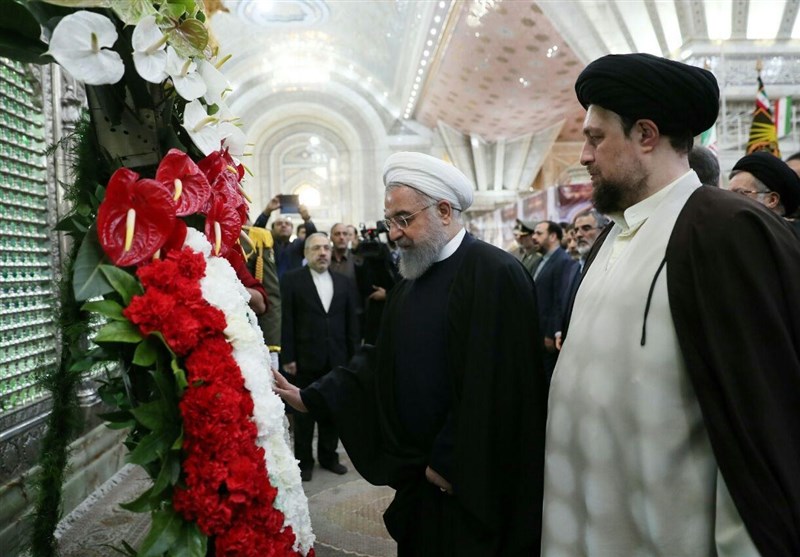
Ayatollah Khamenei visited the mausoleum of Imam Khomeini, south of Tehran, to pay tribute to the late founder of the Islamic Republic.
Ayatollah Khamenei also paid homage to Iranian martyrs laid to rest in Behesht-e Zahra Cemetry in southern Tehran including the martyrs of the 1980-1988 Iraqi imposed war on Iran and a 1981 bombing in which 72 officials of the Islamic Republic were killed.
Iranian President Hassan Rouhani also visited the mausoleum, paying tribute to Imam Khomeini and the Iranian martyrs.
The Iranian nation toppled the US-backed Pahlavi regime 40 years ago, on February 11, 1979, ending 2,500 years of monarchic rule in the country.
The Revolution, led by Imam Khomeini, established a new political system based on Islamic values and democracy.
Every year Iranians mark the anniversary of their Islamic Revolution from February 1 to 11, known as the Ten-Day Fajr ceremonies. February 1, 1979, was the date when Ayatollah Ruhollah Khomeini returned from exile in Paris to Tehran.
Venezuela has as much right to call itself a democracy as does the United States.
Until that is understood by enough people, the Trump administration will continue to devastate Venezuela’s economy with illegal sanctions and push it towards civil war.
Here’ an analysis in this regard by Joe Emersberger, a Canadian analyst of Ecuadorian roots, who writes primarily for Telesur English and Znet, in his opinion “When Is a Democracy not a Democracy? When It’s Venezuela and the US is Pushing Regime Change”.
Venezuela has as much right to call itself a democracy as does the United States. Until that is understood by enough people, the Trump administration will continue to devastate Venezuela’s economy with illegal sanctions and push it towards civil war. People can oppose President Donald Trump’s economic sanctions and incitement of a military coup without acknowledging President Nicolas Maduro’s democratic legitimacy, but by not acknowledging his legitimacy they needlessly weaken their position.
Millions around the world opposed the U.S. invasion of Iraq in 2003, and the many years of sanctions that came before that invasion, while also accepting, in that case appropriately, that Saddam Hussein was a monstrous dictator. However, massive global opposition to U.S. aggression in Iraq failed to prevent the war that killed hundreds of thousands of people. The most horrifying thing about Venezuela’s case is that it shows (for at least the third time in this century alone) that democratic legitimacy provides very little defense for a government when the U.S. and its allies decide that it “must go.”
On May 20 of last year, Maduro received the votes of 6.2 million people, about 31 percent of the eligible voters, about the same percentage that U.S. presidents generally receive (Obama received 31 percent in 2008 and 28 percent in 2012, while Trump received 26 percent in 2016). Four different groups of international observers (reports here, here, here and here) concluded that Maduro’s electoral victory was clean. If you look beyond vague appeals to the authority of establishment groupthink — statements that typically say the election was “widely dismissed as fraudulent” — you’ll find the arguments to support that claim appallingly thin.
Turnout (at 46 percent) was very low by Venezuelan standards because the bulk of the U.S.-backed opposition to Maduro not only called for a boycott and refused to run candidates, it also attacked Henri Falcon, who defied U.S. threats to run in the election. On May 6, Falcon’s economic advisor, Francisco Rodriguez, said on Twitter that people from the opposition side promoting theories that he was in cahoots with Maduro must have taken a “strong dose” of drugs. In another tweet on the same day, Rodriguez asked the opposition party Voluntad Popular to “stop spreading lies” that a secret pact existed between Maduro and Falcon. Incidentally, Voluntad Popular is the party of the previously obscure legislator, Juan Guaido, whom Trump just anointed as Venezuela’s president.
Falcon began his presidential campaign with an incendiary 35-minute speech on Venezuelan state media, in which he repeatedly called Maduro the “hunger candidate.” In an interview on a large private network, Falcon said that Maduro’s government was an “unscrupulous monster” but insisted that Maduro was also “beatable” at the polls. During the interview, Falcon also advised government opponents that it’s foolish to wait for a “military invasion to save Venezuela.” Aside from hinting at the obvious objective of the electoral boycott, it’s surreal that this was said on TV in a country labeled a “dictatorship” and accused of perpetrating a “crackdown” on dissent. Falcon’s advisor also traveled all over Venezuela and made numerous TV appearances (examples here, here and here) campaigning for Falcon.
A secret ballot precludes vote-buying
Reuters, whose headlines have often been quite open in their contempt for Maduro’s government, conceded that voting is secret in Venezuela, but tents set up by the government close to voting centers on Election Day (known as Punto Rojos) were hyped as “voting buying.” Puntos Rojos (Red Points) are used for exit polling, and have also been used by the opposition, except in a different color, in numerous elections over the past 20 years. By law, they are required to be 200 meters away from voting centers.
On May 3, Maduro said that people who came to a Puntos Rojo after voting could “probably” win a prize. This is hardly an exemplary practice, but voting is secret, so nothing prevents people from voting for the opposition and then showing up for a chance at a prize. An opposition blog referred to these tents as “The Perfect Blackmail” but even this account concedes that the government can’t know how people voted.
U.S. sanctions as the real “blackmail”
As an argument for calling the election invalid, this is stunningly weak and that’s before you consider a huge offsetting factor: U.S. economic sanctions that effectively hold a gun to the Venezuelan electorate. It’s perfect blackmail indeed when Western journalism can’t detect a disqualifying electoral problem with sanctions that have cost Venezuela’s government $6 billion dollarsin the 12 months following August of 2017 when Trump imposed financial sanctions. That’s about 6 percent of its GDP in a region where most countries spend about 7 percent of GDP annually on health care.
Bear in mind also that Venezuela was only able to import $11.7 billion in goods in 2018 according to Torino Capital, where Rodriguez is the chief economist. Aside from being electoral blackmail, U.S. sanctions are clearly murderous, as they drastically cut into the government’s capacity to import essential items like food and medicine. This is simply ignored by a media that often hyperventilates over very dubious allegations of significant “Russian interference” in U.S. elections through email hacking and clickbait operations.
Francisco Rodriguez has noted (approvingly) that Trump’s recognition of a “new government” could prevent Venezuela from getting paid for oil shipments to the United States. In other words, Trump is now poised to make the sanctions still more devastating.
Apologists for Trump have dismissed the impact of U.S. sanctions by saying that Venezuela’s crisis was not caused by them. It’s true that Maduro could have prevented the crisis — most easily in the first year and a half of his government when oil prices were still very high – and therefore prevented Trump from ever being able to put his foot on the throat of Venezuela’s economy. But would it have been acceptable for a foreign government to deliberately make the financial crisis in the United States worse in 2008 by arguing it was not the original cause? Is it acceptable to assault a cancer patient provided the assailant can prove he did not give the patient cancer?
Confusing competence with legitimacy
The competence of a government is also a totally separate issue from its democratic legitimacy, but the two are often conflated in Venezuela’s case. If bad policies that produce needless suffering make a country a dictatorship then was the United States a dictatorship during the Great Depression, or is it today as a result of its scandalously poor health care system for a wealthy country? Was Greece a dictatorship during its economic meltdown after 2010?
Moreover, U.S. support for coup attempts in Venezuela since 2002 was partly responsible for the policies that led to the crisis. It saddled Venezuela with opposition leaders who knew they’d be supported by the world’s most powerful country no matter how they seized power. The exchange rate system that ended up being the Achilles heel of the government’s economic policy, was set up after the second major attempt by the U.S.-backed opposition to depose the government by force: that time through the sabotage of the state oil company. The first coup “attempt” briefly succeeded and established a dictatorship under Pedro Carmona that was welcomed by the Bush Administration, theNew York Times editorial board (among others), and the IMF, whichimmediately stepped forward to offer Carmona’s dictatorship loans.
Another complaint about Maduro’s electoral victory last year was that two prominent opposition leaders were disqualified from running: Leopoldo Lopez and Henrique Capriles. Both were participants in, not just supporters of, the coup that installed Carmona. In the United States, anyone who participates in a violent uprising that threatens the life of a sitting president would not be complaining about being disqualified from running for office. That would be the least of their worries, for them and any foreign government foolhardy enough to support them.
Additionally, opposition-aligned pollster Datanalisis claimed, three months before the election, that Falcon was one of the opposition’s most popular leaders — basically in a statistical tie with Leopoldo Lopez for the top spot.
The U.S. pot and the Venezuelan kettle
The opposition has other reasons for rejecting Maduro’s legitimacy but, even when they have some validity, one struggles to see how very similar objections could not also apply to the United States. It was certainly a disproportionate Venezuelan Supreme Court ruling that disqualified the entire National Assembly in 2017 because it flouted the court’s authority. In 2000, the U.S. Supreme Court made a very dubious ruling that gave George W. Bush the presidency. Should the Democrats, backed by a foreign power, have disregarded the Supreme Court and named their own president? Then there is mass incarceration, political brutality, voter suppression, and other forms of corruption in the U.S. political system. The U.S. Electoral College is a bad joke that has, twice since 2000, allowed the loser of the popular vote to take the White House.
Does all that make United States a dictatorship? Which foreign government (if a powerful enough government existed) is anyone willing to authorize to “fix” the U.S. political system through economic blackmail, threats of invasion, or by inciting the U.S. military to perpetrate a coup?
Trump has predictably found some willing allies around the world for his recent escalation against Venezuela. Unpopular as the Iraq War was around the world in 2003, the U.S. managed to get dozens of governments to join the ”coalition of the willing” to perpetrate the supreme international war crime – including two with very progressive reputations: Norway and Denmark. The more widely loathed the U.S. president, the more important allies become. Hence, on February 29, 2004, George W. Bush — who was thoroughly discredited around the world, owing to the invasion of Iraq — was happy to be fully supported by the governments of Canada and France when U.S. troops kidnapped Haiti’s democratically elected president and installed a dictatorship under which thousands of loyalists to the deposed government were murdered.
It is possible that Trump may eventually succeed in producing a kind of “electoral victory” similar to that which Ronald Reagan produced in 1990 in Nicaragua through a combination of terrorism and economic strangulation. It is fine and necessary to promote dialogue and negotiations, but if Maduro’s democratic legitimacy is not recognized, a “negotiated solution” is not only less likely but also less likely to lead to anything good.
Come to Southeast Asia and enjoy beaches, cheap sex and raunchy massage parlors. Hang around this part of the world in whichever way you like;wearing flip-flops, shorts and t-shirts. You were told that ‘everything is easy here, that things are cheap and people are friendly and happy’. Do what you want, as almost everything is allowed, especially if you are from the West, and have plenty of cash and some credit cards in your pockets.
That’s what your simplified perception of Southeast Asia is supposed to be. This stereotype has been created, refined and fine-tuned, then finally hammered into the subconscious of the people in North America, Europe, Australia and Japan. It has been done consistently, for many years and decades, until these lies,repeated a thousand times, have replaced reality.As a result, tens of millions of holiday-makers, sexual tourists, adventurers and single men on power trips, descend on Southeast Asia, annually.Most of them do not see anything, and they do not hear. Most of them leave for home after getting suntanned, a bit fatter, and much more confident. They come with clearly formed ideas, and they leave without learning much.
Most of the ‘visitors’ do not want to be disturbed by reality, because the reality could be extremely unsavory, even horrifying.
The ‘hidden’ and extremely uncomfortable truth is: most of Southeast Asia is actually absolutely unfit for tourism. It is deeply, and terribly injured, even,a broken part of the world which has never been allowed to leave its brutal,feudal system behind.
Its people are barely surviving in the straight jacket of extreme capitalism.All sorts of imported rubbish, from brainless pop music to the lowest grade of Hollywood films, junk food, mass media and ‘fashion’ as well as ‘me-me-me habits’ have been put to work in order to irreversibly ruin their traditional cultures. Generally, people here are unhappy;often thoroughly confused. Societies from Thailand to Indonesia and the Philippines are becoming increasingly violent. At the same time, the politically ‘pacified’ population does not rebel against the rulers in the West or its own servile elites: right-wing political and religious extremism are often the only‘answers’ to popular outrage.
The land of Southeast Asia is devastated, as it is nowhere else on our planet; in fact, it has been totally plundered by unbridled mining, logging, palm oil and rubber plantations. The extraction of natural resources is done in a monstrous fashion;often by poisoning rivers with mercury, by cutting most of the primary forests down or by flattening entire mountains.From an airplane, places like the island of Borneo or Peninsular Malaysia appear as nothing less than hell on earth.
This vast part of the world with a total population of around 650 million, does not count on any renowned thinkers or scientists, and with the exception of Vietnam (which is Communist and therefore to a greater degree different) on even one single globally renowned writer or a film director.
All this is not supposed to be discussed ‘like this’; in this fashion. Writers and filmmakers, local and foreign both, are discouraged from describing and documenting what is right in front of their own eyes.
But why?How come that Southeast Asia has managed to escape almost entirely allthe scrutiny by the Western mainstream media?
It is because what I have just described above is nothing else other than a result of the monstrous mass murder, plunder and destruction, which has been perpetrated by the West. It has been happening all over here; in all corners of Southeast Asia. The destruction has been so appalling and frightening, that almost no liberals in Paris, London, Amsterdam, Canberra or Washington are willing to acknowledge it, instead sticking to bizarre clichés and glorification of the state to which the victims have been reduced to; in which they are forced to live.
Entire teams of academics, notably those at the Australian National University (ANU), but also at several other institutions, continuously repeat the official Western dogma, which describes Indonesia as ‘a normal country’.
But isn’t this what the so-called Western ‘political correctness’ is all about? Doesn’t it work like this: “A country is attacked, left-wing government gets overthrown, corrupt leaders put on thrones; then natural resources get plundered, and extreme right-wing ‘elites’ fully subservient to the West quickly steal everything from their country and people, while dutifully sharing the booty with Western corporations. The population gets indoctrinated, totally brainwashed and the opposition either murdered or scared into submission. And then, and then, the West ‘shows great respect’ for that local ‘culture’ and for ‘local people’. Read:respect for its own Frankenstein; for its own creations.
It goes without saying that this gangrenous monster which the West first created and then ordered everyone to ‘respect’, has nothing to do with the culture and ‘the people’.
In the end, the victims themselves,get methodically conditioned with tools such as mass media, ‘education’, and continuous propaganda dispensed by the political regime. They stop being aware of their own conditions. They become resigned.They become religious, submissive. They blame and fight each other, but never the true oppressors; never the regime.
The victims often feel they are not well, but they have no idea, why?
*
For centuries, Southeast Asia suffered terribly at the hands of the French, Dutch, US and British colonizers. For instance, at the beginning of the 20th Century, the US forces brutally massacred around 1 million Filipinos, in their Asian colony.
Official independence from European and North American colonial masters did not stop the suffering of the people.
After WWII, no other part of the world endured more Western massacres and terror than Southeast Asia. Not even Africa, the Middle East or Latin America. The numbers are truly striking.
The West’s lovely ‘holiday destinations’ inhabited by ‘friendly locals’, were carpet-bombed, and poisoned by chemical weapons. Millions of people were slaughtered; by injected military regimes, by monarchs, by elites and military juntas. Not unlike in Latin America, but with numbers astronomically higher, because the West never considered Asian people to be equal human beings (For instance: around 2 million Indonesians were slaughtered during the 1965 military coup of General Suharto. The coup perpetrated by General Pinochet in Chile, in 1973, took lives of 2-3 thousand people. Adjusted to the numbers of people living in both countries, Indonesia still lost approximately ten times more people than Chile).
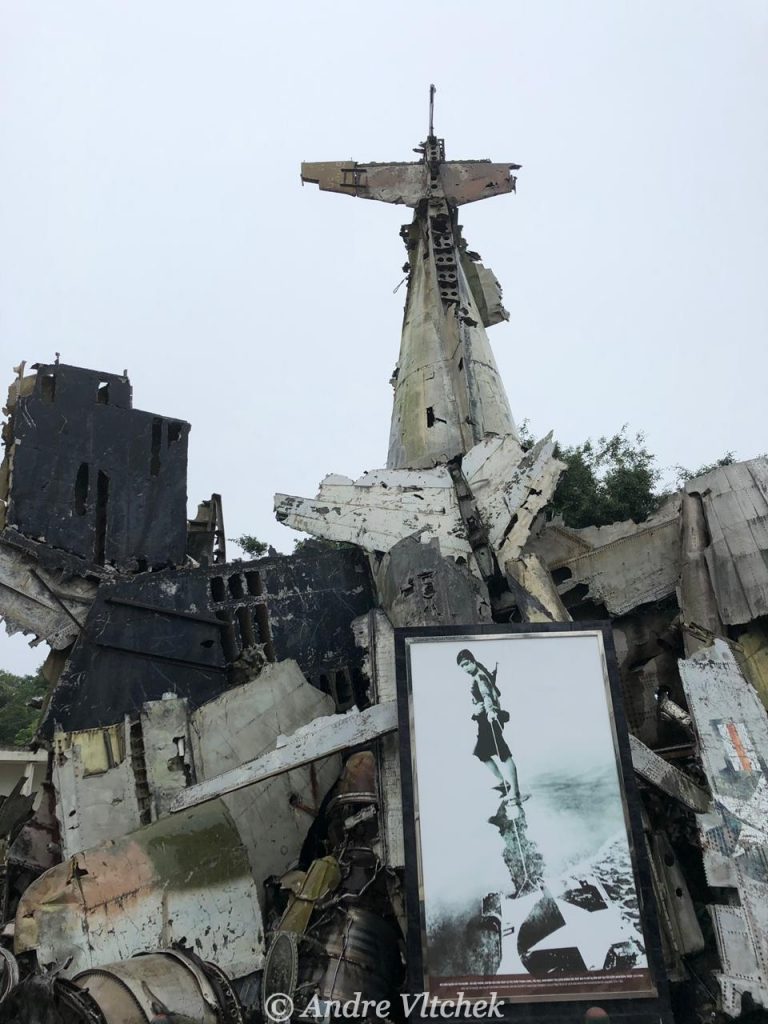
Everyone knows about the suffering of Vietnam, under French brutal colonial rule, and then, during the terrorist war unleashed against the country by the US and its allies. But no one really knows, precisely, how many Vietnamese people died.The number of victims goes in to millions.At least 4 million Vietnamese citizens vanished.
In Laos – US bombs ‘with love’
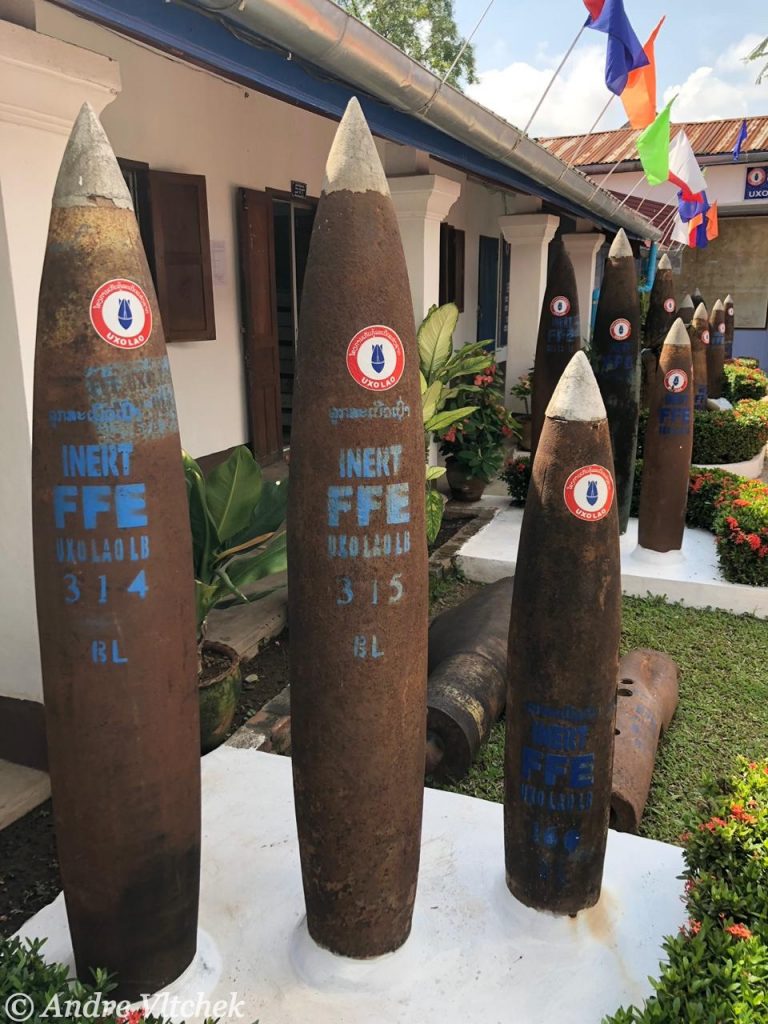
Laos and the so-called ‘side-kick’ or ‘Secret War’ was even worse, on a per capita basis. Hundreds of thousands vanished in this sparsely populated country, which is inhabited by humble and gentle people. Strategic B-52s bombers were deployed against farmers and their water buffaloes, using evil cluster bombs that are, to this day, killing thousands, all over the Laotian countryside. There was no reason for this brutal, monstrous genocide, except some abstract ‘concern’ in Washington that this poor nation could follow Vietnam’s example and ‘go Communist’ (it did, after it tasted true Western ‘democracy’, literally on its skin).
Cambodia– a country where the West nurtured corrupt and brutal elites in Phnom Penh, and then began the same monstrous carpet-bombing campaign as in Laos, against unarmed, desperately poor peasants, using B-52s, killing hundreds of thousands, and displacing millions. People lost their minds from the horrors of the bombing.They were also driven from their land, and began dying from famine. Dismal situation opened doors to Khmer Rouge, which the US decisively supported (on the battlefield and at the UN), even after this deranged murderous group got defeated by heroic Communist forces of Vietnam.
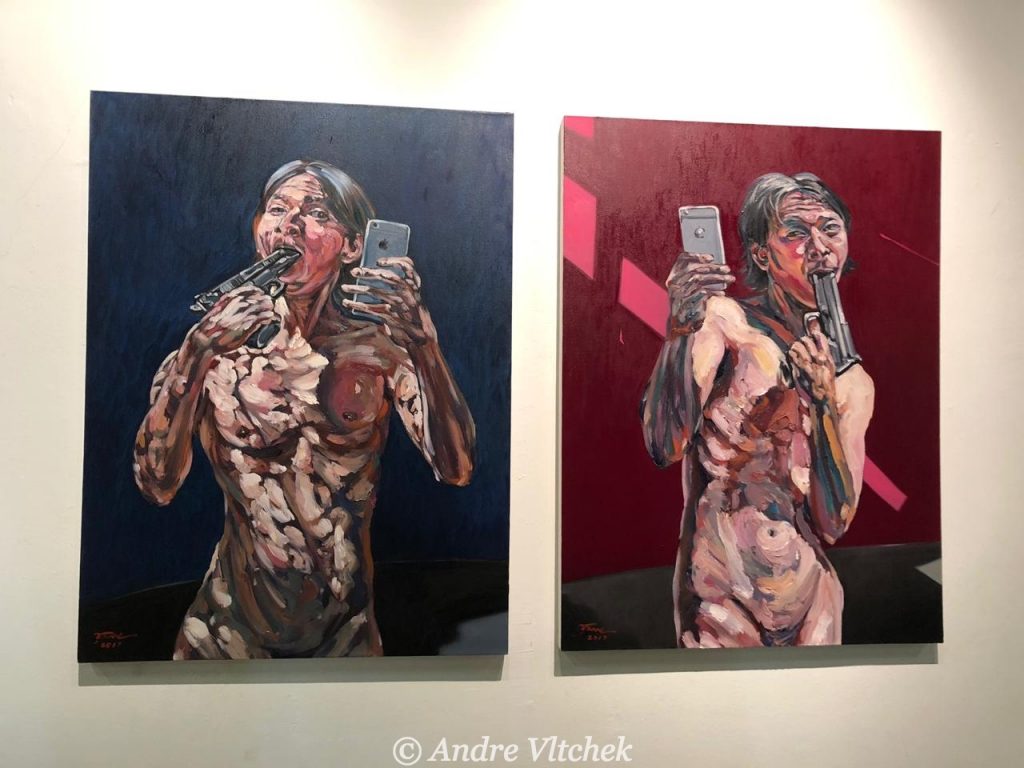
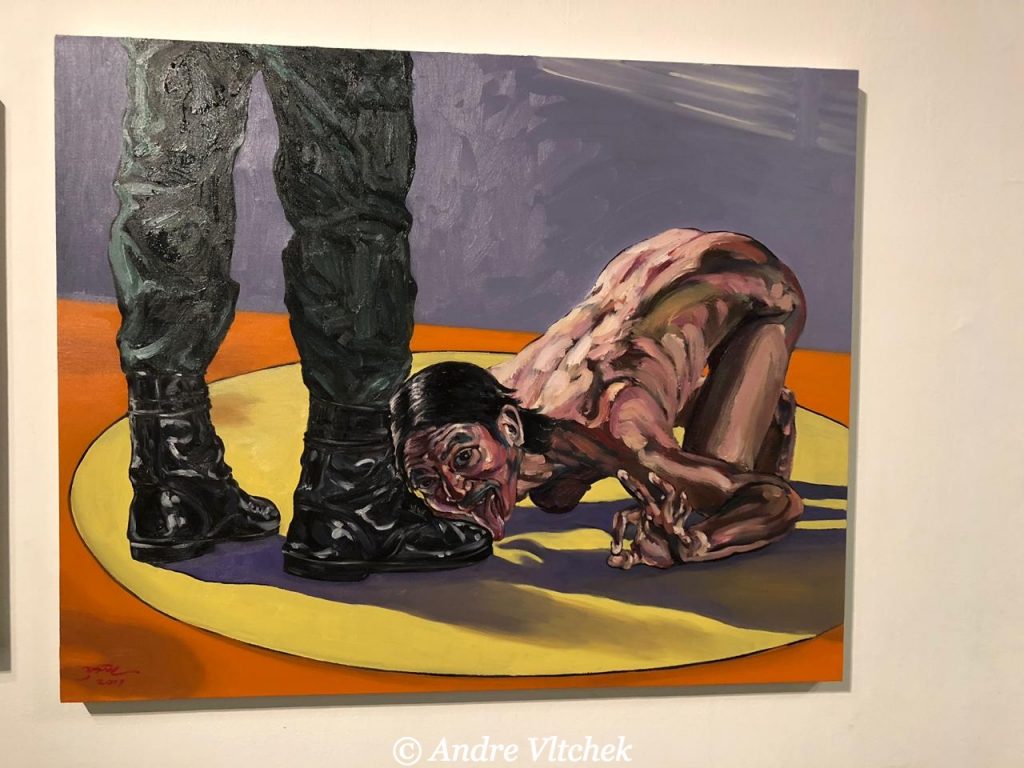
In Bangkok, depiction of modern Thai realityArtwork at BACC, before Thai elections
Thailand – country which has been choked by car industry and monstrous form of extreme capitalism, while upholding its backward feudal system. Thailand with countless military coups designed to sustain pro-Western monarchy. Thailand which accepted on its turf part of defeated Chinese anti-Communist army, and ‘put it to work ‘almost immediately’, allowing it to massacre substantial part of its own left-wing movements. Thai state that massacred and raped its own students, and butchering thousands of Cambodian refugees. Thailand that technically attacked both Vietnam and Laos, by flying Air America missions against those countries, opening its airports to the West, while selling its own women in countless brothels in Pattaya and elsewhere, to the Western pilots and ground staff.
Indonesia, where the 1965 US and UK -sponsored military coup against left-wing President Sukarno and (then) the third largest Communist Party in the world (PKI), took the lives of between 1 and 3 million people, installing perhaps the most grotesque fascist extreme-capitalist regime on earth. Indonesia, where all the great artists and thinkers were killed, or imprisoned in the Buru concentration camp, and, where the West helped to install a totally brainless system de-intellectualizing the nation and forcing it back to the Middle Ages. Indonesia, where secularism is now collapsing, and where, during the upcoming April 2019 elections, voters will decide between an inept and weak pro-capitalist leader, and a truly fascist military mass murderer.
East Timor (Timor Leste) – a tiny country which was overrun by Indonesia in 1975, shortly after it gained independence from Portugal, under the leadership of the left-wing FRETILIN movement. The right-wing dictator of Indonesia – Suharto – declared that he was ‘not going to tolerate a second Cuba near its shores’, and got a big pat on his back, as well as full support from the US, UK and Australia. The result: around 30% of the entire population of East Timor vanished during the occupation. Countless Indonesian leaders, including the former President ‘SBY’, served there. If Indonesia was a ‘normal country’, these individuals would now be facing long jail sentences for genocide, or in some cases, a firing squad.
In West Papua – hundreds of thousands of people have already died, also under the Indonesian genocidal occupation, which is fully supported by the West, because Papua, like Borneo (which is known in Indonesia as Kalimantan) is getting thoroughly plundered by multi-national companies, of course under the careful supervision of Indonesian military forces. Horrors like the state-sponsored ‘trans-migration’ policy, designed to make people of Papua a minority on their own island, are ongoing and relentless. The people,who have lost everything under the occupation, are forced to convert to Islam, and they are also forced to abandon their way of life and their land. What Indonesia does in West Papua is nothing less than genocide. It is not only the killing and rape,of which its military could be accused of. The plunder of Papuan resources is as deadly for many other reasons,it is likeif the force would be used to ‘open up’vast parts of the Amazonia or Orinoco basins in South America – areas inhabited by indigenous tribes that have never come in contact with the outside world. Even the most insane right-wing presidents of Brazil or Venezuela (of the past), would never dream about such brutal genocidal undertakings (although this may change under the fascist presidency of Bolsonaro in Brazil). In West Papua, dozens of fragile cultures are disappearing. People who have never come into contact with the ‘outside world’ are being forced out of their rain forest, as trees are cut down and mining companies, backed by the Indonesian armed forces, ransack the land. Defenseless tribal people are dying from diseases and hunger, at the same time as corrupt Indonesian officials and businessmen are burning money in Jakarta’s over prized malls, as well as in Singapore, Macau and Hong Kong. And now, thousands of Western tourists fly into West Papua, to Raja Ampat, which is becoming an ‘in place’ for diving!
Malaysia had its own share of inter-religious conflicts, although never at the level of neighboring Indonesia. Nature in Malaysia, almost like in Indonesia, is totally devastated, due to massive palm oil plantations and mining.
The Philippines lived through horrific decades of US neo-colonialism, experiencing the similar extreme capitalism that has been imposed on Indonesia. Only in the recent years, sound social policies have been introduced, and a moratorium on mining, at least in some parts of the Mindanao Island, has been enforced.
Brunei, one of the richest exporters of oil on earth, is now governed by Sharia Law, which, at least in theory, allows amputations, flogging, stoning and other religious practices. Another place where such regressive brutality is officially allowed is in an autonomous province of Indonesia – Aceh.
*
I worked in this apart of the world for decades. I covered countless horrors and conflicts in Indonesia. I used to live in Hanoi, and I covered in-depth the situation in Laos, Cambodia, Malaysia, and Papua. I covered East Timor,during the occupation, and was tortured there by Indonesian forces. It happened after I exposed mass rape in Ermera town.
Right now, I am working on a detailed and shocking documentary film about the total environmental destruction of Borneo.
As a local (I actually feel like a ‘local’ in all parts of the world), I often look at the Western travelers visiting this part of the world, and I am wondering, sincerely: are they really so ignorant about the past and the present of Southeast Asia? Or perhaps, are they making sure not to know?
Are they ‘enjoying themselves’, surrounded by devastated nature, privatized and ruined beaches, and a deranged culture? Do they feel powerful, unique, superior, because their countries managed to destroy the entire Southeast Asia, bringing it into shameful submission? Is it, at least partially, why they are here?
Don’t they see? The Indonesian islands of Bali and Lombok have become thoroughly grotesque: everything has been stolen along the coasts, people forced out of their dwellings, and the culture has been fully ruined. Bali suffers from traffic jams and pollution, from over-population, poverty and filth. There is hardly anything pristine there, now. ‘Culture’ is only for sale!
The coastline of Thailand is totally finished. The once pristine islands are now dotted with mass-produced, low quality market towns, with makeshift bungalows and ugly concrete structures. There are standardized,repetitive‘offerings’, most of them of extremely low-quality. There are Thai and Western ‘beach food’, bad old (Western) pop music,countless massage parlors and ersatz bars. There is almost nothing truly Thai left on the Thai coastline. Thai women, the poorest of the poor, many from the north of the country, walk in flip-flops and tasteless T-shirts hand in hand with Western grandfathers, some of them in their 80’s. What a sight!
Everything feels ‘forced’, unnatural, and in terrible taste: in Indonesian ‘resorts’, on the Thai coast, and in the bars of the Philippines, as well as in Cambodia.
In and around Phnom Penh, ‘genocide tourism’ has reached its peak. It is fueled and sponsored by countless Western NGO’s, which are literally pimping the terrible Cambodian past as ‘proof’ that ‘Communism is evil’. Not a word about the fact that most of people who died here, were actually victims of the Western carpet-bombings and consequent famines, and that the Khmer Rouge was in reality a US-sponsored band of freaks, who knew very little about Communist ideology (I spent substantial time talking to them, deep in jungle, and most of them admitted that they had no clue about Marxism or Communism, when they were in power). But to the Westerners, genocide tourism is something thrilling, it represents ‘something new’; ‘something they did not experienced before’.It is good for selfies and for colorful pub stories back at home. And Cambodia is now making huge money out of all this, willing to twist its own horrid past, just to gain some cash. Go to the villages and talk to people: they know the truth. But almost nobody goes. Not even the Western media.
West has totally stolen historic narrative, all over Southeast Asia. Academia in Malaysia, Indonesia, the Philippines and Thailand is deeply influenced, and manipulated from abroad. ‘Soft power’ is being used; scholarships, funding and invitations to the ‘academic exchanges’.
Both the academic narrative and the mass media in Southeast Asia, are now much more “Westernized” than in the West itself.
*
Clichés about this part of the world are mostly incorrect, in fact, surreal.
Despite the fact that it is suffering from the horrid religious intolerance, racism and perpetual conflicts and tensions, Indonesia is portrayed in the West as ‘tolerant’. Not having one single political party that would represent the majority (which is poor), it is branded as ‘democratic’. A place where a Chinese, black, white or Papuan person can hardly make few steps without being insulted on the street, or being mocked for his or her appearance, Indonesia is described by the Western mass media as ‘friendly’.
Thailand is the same. A staunch ally of the West during so-called Vietnam War, and ‘fight against Communism’, the Kingdom is portrayed as ‘Land of Smiles’. In fact, it has higher homicide rate per capita than the United States, and more female tourist are raped here, annually, than in South Africa. Smiles are reserved only for those who are ready to pay any price, without demanding much in return. Any confrontation here can easily deteriorate to violence. The West hardly ever criticizes outrageous capitalist models of Thailand or Indonesia, as well as collapsed infrastructure and inhuman city planning that is prioritizing motor vehicles and ruthless real estate developers over people. Bangkok and Jakarta are much more polluted than the Chinese cities, and Thai and Indonesian governments do almost nothing to change the situation. But, cliché says that it is dangerous to go to Beijing due to the air quality, while Bangkok or Jakarta are hardly ever mentioned.
*
In Southeast Asia, deafening noise is often administered, in order to silence fear. Thinking is discouraged.It is considered impolite to discuss, to face terrible past and the present. Brainless banging into the phones is recommended. Social media is used here much more than anywhere in the world. While some countries like Indonesia have the lowest readership of books on earth, per capita.
Southeast Asia had been living through genocides, coups, and total submission to the Western masters and to savage capitalism. It has been robbed of its nature, and of natural resources. Its population has been ‘pacified’, forced into obedience and submission. Extreme religious concepts have been injected and upheld from abroad. Only in the Philippines, is the situation now gradually changing. In Vietnam, the state is still strongly resisting subversion from the West, although the country had also been damaged to a great degree, by Western NGOs and social media. Elsewhere, it is getting much worse.
Laos is now moving closer to China, which is literally pulling this beautiful and sparsely populated nation out of slumber, building a high speed rail system, infrastructure, factories, dams, schools and hospitals. But the more China does for Laos, the more it is demonized by the West, by its press, academia and the NGOs. It is now one big battle, over Laos.However, it is clear that the Laotian people are benefiting greatly from their proximity to China, after being literally ruined by French colonialism and the Western “Secret Wars”.
On purpose, here, I don’t mention Burma, as there, the situation is extremely complex, and ‘specific’. But later this year, I expect to publish a detailed report on the topic.
*
Southeast Asia is clearly a victim. It is also an ‘untold story’. Deep, dark story.
With the exception of Singapore and to some extent Malaysia, it is a devastated, an impoverished victim. It is also a ‘time bomb’. People here are discontent, often desperate. Often, they do not know why. Unlike in Latin America and Africa, where the political awareness of the victims is extremely high; here the victims often believe that they are treated justly and that ‘this is the only way how the society can be arranged and governed’.
If someone travels here,searching for ‘culture’ and ‘new ways to understand life’, they should think twice. In most of Southeast Asian countries, the local culture was thoroughly uprooted. What they will see are some folk shows for foreigners, hardly ever attended by locals. Most of the native music venues, as well as theatrical and other art forms, have been replaced by the most vulgar Western entertainment, by video games and naturally, by social media.
Western men often feel good here. It is because in Southeast Asia, ‘they have won’. They are often ‘respected’ here, just for being both men, and white. They are respected, the same way as the French, Dutch and British colonialists used to be respected here, a century ago. Not loved, not admired, but esteemed for belonging to the race and culture that managed to conquer, destroy and then to give orders.
In fact, for those who want to relive those days of imperialist ‘grandeur’, this is the perfect place to visit.
Naturally, Southeast Asia is glorified by the West, with the exception of the Philippines, Vietnam and Laos (and Burma, for different reasons) – countries that are trying to get away from Western dictates.
It is because this part of the world is ‘perfect’ in the eyes of rulers of the Empire. Here, human lives are freely sacrificed for the profits of corporations, both Western and local,like when a pedestrian here has to wait until the cars pass by; entire villages have to give way to the mining venues and to palm oil plantations. Social services for the citizens are not something secondary, but tertiary, almost irrelevant. Profit is all that matters.The well-being of the citizens is hardly considered.
The West is almost never criticized here. Like in any ‘good’ feudal society, the West is seen as a ‘daddy’. It is severe, but always right. It beats its ‘children’, but gives directions. Religions help to reinforce this sort of obedience, which in many other parts of the world would be synonymous with the Middle Ages.
The local ‘elites’, in the meantime, are ‘having a ball’. They govern unopposed. They are only accountable to the much bigger, mostly Western, power. They can do anything they want with their subjects. They drive their super expensive sedans and SUVs, purchased with funds stolen from the poor, and the poor bow, and bend, prostrating themselves in great respect, fear, servility and admiration.
And they do the same in front of the West.
In brief: perfect societies, observed from New York, Canberra, London or Paris.
And in Bali or Phuket, women dressed in traditional clothes dance in 5-star hotels, roll their big eyes, and twist their slender arms. In order for the foreign visitors to say: “What a great culture!” While, of course, the true great culture was killed by the military pro-Western regimes; choked and murdered in the concentration camps and inside the army barracks.
The only victims of this ‘perfect’ state of things, are the poor; in fact, the great majority in Southeast Asia (no matter what the official statistics say). But who really cares about them?
*
Did most of the Southeast Asian countries really gain their independence, some decades ago? Were the famous merdeka shouts just a big farce? Is it true that Thailand was ‘never colonized’? Is this entire huge region still a de facto colony? And if it is, can the situation change?
These are not just rhetorical questions; they are real. And the answers to them are never simple.
The People of Southeast Asia were violated, robbed and then encircled by pseudo-reality; by lies about their past and present. They were told that they are well, happy, and that what they are experiencing is progress, freedom and democracy. They were also ordered to believe that what their usurper, the West, represents, is synonymous with ‘good governance’ and honesty. Many of them have never encountered any alternative views.
After burying tens of millions of corpses, and after having their rain forests, rivers and mountains thoroughly ruined, most of the Southeast Asians are still convinced that their tormentors are fully qualified to control the world.
*
Andre Vltchek is a philosopher, novelist, filmmaker and investigative journalist. He has covered wars and conflicts in dozens of countries. Four of his latest books are China and Ecological Civilizationwith John B. Cobb, Jr., Revolutionary Optimism, Western Nihilism, a revolutionary novel “Aurora” and a bestselling work of political non-fiction: “Exposing Lies Of The Empire”. View his other books here. Watch Rwanda Gambit, his groundbreaking documentary about Rwanda and DRCongo and his film/dialogue with Noam Chomsky “On Western Terrorism”. Vltchek presently resides in East Asia and the Middle East, and continues to work around the world.
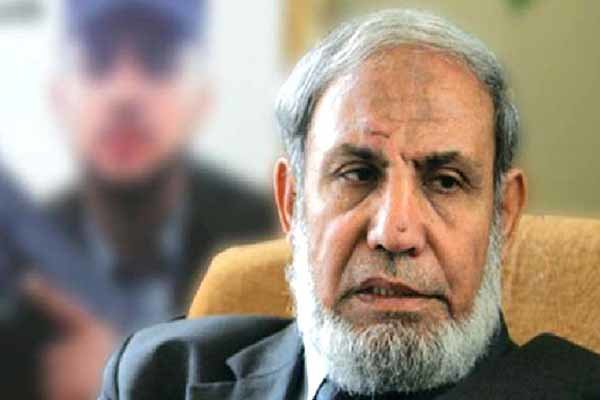
TEHRAN, Jan. 29 (MNA) – A senior Hamas member, Mahmoud al-Zahar, told MNA that if all the countries and powers occupied by the Israelis regime come together, a so-called ‘Last Battle’ will take place, which will put an end to the regime.
Hezbollah Secretary General Sayyed Hassan Nasrallah said in a televised interview with Lebanese Al Mayadeen TV on Saturday that at any moment a decision could be taken in Syria by Syrian leaders and the Resistance axis to confront the Israeli aggressions. In short, the message that Netanyahu has to receive is to consider these variables and not to make a mistake in its assement, which could lead to war in the region.
On the other hand, Israel’s Prime Minister Benjamin Netanyahu rejected Hassan Nasrallah's remarks, claiming Hezbollah was anxious and very confused.
According to Israeli media, Netanyahu said at a cabinet meeting that Hezbollah's leader broke his silence during a televised speech, because this ‘militia’ faces financial pressure from US sanctions against Iran and that the recent Israeli operation has destroyed Hezbollah tunnels in the north.
To shed further light on this, Mehr News conducted an interview with Mahmoud al-Zahar, co-founder of Hamas and a member of the Hamas leadership in the Gaza Strip, which is as follows:
In the past few days, Sayyed Hassan Nasrallah broke his media silence after two months and took positions on the developments in the region with special Zionist threats. What impact did his recent remarks have on deterrence of the Israeli regime’s authorities?
First, Netanyahu claims in his remarks that Sayyed Hassan Nasrallah had been disappointed, one of his lies, and that the purpose of the plan was, on the one hand, to increase the morale of the Israeli side and, on the other, part of the campaign's pre-election propaganda, in particular after the issue of tunnels in southern Lebanon. As many sources stressed that there was no tunnel in that area, it was only Netanyahu's trickery and deception on the Israeli community to frighten them from the resistance in the north of the occupied lands.
Netanyahu also claimed that the Resistance in the north and south failed to stabilize the spirit of the Israelis. Everyone knows that Nasrallah does not need these things and does not tremble with these words. Because people back him, and Resistance is with him and the great powers also support him.
Lebanese Hezbollah secretary general announces Lebanese resistance forces to enter Al-Jalil district in case of confrontation with the Zionists. How do you evaluate this capability?
There are powers that, if united and coordinated, are able to defeat the Zionist regime. First, a part of Lebanon's territory is occupied and Lebanon's Resistance has been able to strike Zionist enemy in some of these areas and it can complete this process; thus they can enter the occupied territories of northern Palestine. In the case of Syria, after retaking its lands completely, Damascus is able to attack Israel to reclaim its territory and end Israeli’s occupation of northern Palestine.
On the other hand, the Palestinian Resistance can also strike the occupiers in southern regions, as it did in the past. Therefore, if all the countries and powers that occupied by Israelis are united, ‘The Last Battle’ will happen and this alien regime will be wipe off.
Seyyed Hassan Nasrallah maintained that discovery of Resistance tunnels after 13 years shows the weakness of Zionist intelligence. What is your analysis of the Israel’s security situation?
Suppose that the Zionists discovered the tunnels. Is this a miracle? These are, in fact, fictitious victories, indicating that owners of occupied lands (Palestinians) may use invisible tools to gain victory. Palestinian Resistance also dig tunnels and discovering that is not a major achievement.
Because we do not talk about ghosts and shadows, but about the land and the land is also visible. There are plenty of ways to explore the tunnels, but the true desire of Resistance to use all of the ways, including the tunnel for the destruction of Israel, cannot be eliminated.
In general, is there any possibility of conflict between the Zionists and the Resistance Axis in the New Year? Which side is going to win?
Firstly, the issue of war is one of the Zionists' propaganda tool before the parliamentary elections. They believe that Gaza and the Palestinian Resistance group in the south of the occupied territories are weaker than Resistance group in the north, even in this situation, they cannot again defeat Palestinian Resistance. Netanyahu does not want to fail upcoming elections, and because of the defeat in the south, he is looking for victory in the north. The truth is that the "The Last Battle" is God's will to destroy Israel, and in spite of the normalization of relations with the Zionists, there is a power called Resistance in the region to destroy Israel and change the political geography of the region.
NORTH CAROLINA - It appears that Trump (and now especially with his appointments of some of the worst of the Zionist Neocons who planned decades ago the march to destroy polities that did not exactly kowtow to U.S. demands and submit to the “Empire of Chaos”) has been searching for a signature interference and possibly a war to assert U.S. hegemony.
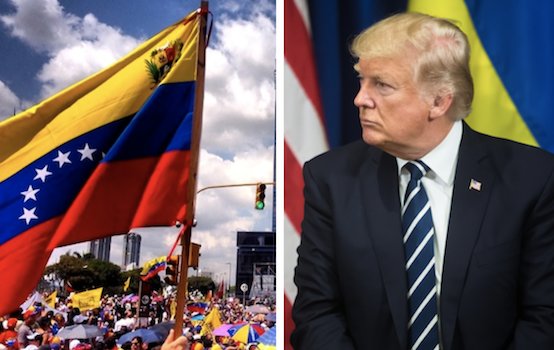
Perhaps Trump and minions have found their primary target now, which is the lowest hanging and geographically nearest fruit – resource rich Venezuela – given the political and economic problems faced by Nicolas Maduro, which in fact are largely the result of U.S. economic and other sanctions on the proponents of the so-called “Bolivarian Revolution”.
What would be Trump’s signature war many have asked? All his predecessors in the White House had at least one, the most damaging of which to date was the Iraq War, with Libya and Syria not far behind. Might it be North Korea? Nah, probably because the Norks had developed a nuclear deterrence and the means to deliver nuclear bombs, at least in East Asia if not farther out to Hawaii and California, and anyway Kim Jong Un has an arresting and even jovial personality that Trump seemed to like, and Kim has proven to be rather smart in seeking détente or better relations with the other half of the Korean peninsula in the south.
Might it be a ramp-up of U.S. hostilities towards Syria? Nah, because with the help of the Russians and Iran and also Hezbollah, and the bravery of the Syrian army, popular Assad managed to drive out or kill most of the mercenary terrorists funded by the U.S. and the Saudis.
But what about Iran? The jury is still out on a U.S. or Israeli military strike on Iran outside of Syria. The U.S. has, however, attacked Iran with the cancellation of U.S. participation in the JCPOA and harsh economic sanctions aiming to turn Iranians against the Islamic Republic and its leaders.
One huge mistake by the Trumpists has been its promotion of the despised MEK as an alternative for Iran, or even the restoration of the son of the former shah. From a distance, this appears to have shored up at least nominal support inside Iran for the current government despite the lambent hardships suffered by Iranians generally.
Iran may simply too hard a nut to crack for the craven warmongers in Washington and Tel Aviv given the heavy investments in Iran and the alliances Iran has more or less maintained that seem to have turned Iran into a “red line” for countries like Russia and China. Iran may constitute a bridge too far, and anyway, if Iran were attacked, there would be Hell to pay throughout the Middle East and particularly in the Persian Gulf.
How does a barrel of oil costing over $200 sound to the warmongers? You’d see an economic collapse in the West and the U.S. like none before, and the fortunes of both political parties in the U.S. would go up in smoke. Not to mention the fact that Trump was, allegedly, primarily elected to dampen U.S. military adventurism overseas and focus on domestic problems, which are rampant and growing by the day.
So, for now at least, with Venezuela and Maduro in the crosshairs of U.S. regime change efforts, horrible as that is potentially for the people of Venezuela, it seems possible that Iran, even if sanctions are not lifted, might witness some reduction of pressure upon it and allow the Islamic Republic to consolidate what bulwark it has developed against further attack.
Imagine, for example, if the situation inside Venezuela goes “Mad Max” with civil war atop the economic disasters already present, and with the potential that the U.S. might invade. Venezuela has a population of about 32 million as well as the largest (heavy) oil reserves on the planet. While it is not nearly as big a country like Iran, it is far bigger than Iraq or Libya or Syria, for examples, and you can bet that if the U.S. did move in to attack Maduro militarily, the opposition there would be or become extreme. The Venezuelan armed forces have already said they support Maduro and not the lightweight fool who unilaterally and illegally declared himself “president”.
For now, too, Maduro is trying to buy some time and has just declared that U.S. diplomats will not be kicked out of Caracas immediately. The U.S. could, if it makes the wrong moves, find itself MORE bogged down in Venezuela than ever it was in Iraq and as it has been in Afghanistan. And this, if it were to occur, would certainly take the spotlight off of Iran and quite possibly result in rejection of Washington and Trump and not just outside the U.S., but also inside the U.S. (It’s important to realize, as has been proven in so many countries faced with upheaval since World War 2, that a mere 10 percent of so of any population absolutely determined to radical change and willing to sacrifice for it can make it happen.)
Indeed, if Trump wants his personal donnybrook, he can have it with Venezuela, a far softer and closer target but also one that could prove to be equally as disruptive, it seems, as any further attack on Iran. At any rate, one ought not to be surprised if Trump, now having fully embraced the Neocons, is not elected for a second term in the White House. This latter would be glorious for all the world.
TEHRAN - The gravity of the declaration of the coup d’etat against Maduro is sobering. The coup strategy integrates different variables: international pressure for recognition of the parallel government and chaos and death inside the country.
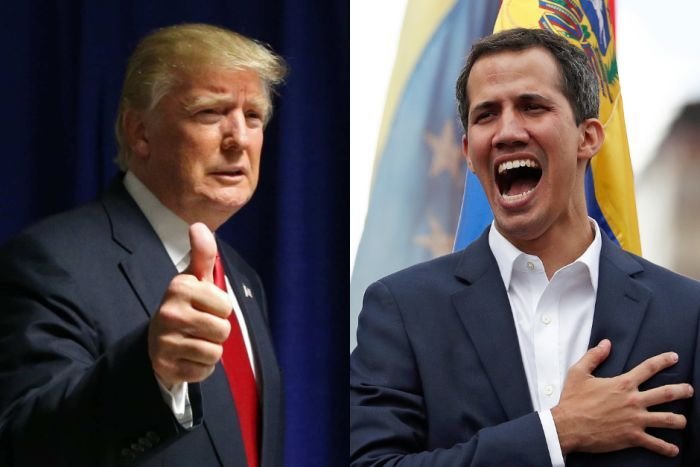
The current chain of events seems to have been planned out step-by-step: the attempted theft of weapons by a group of members of the Bolivarian National Guard on the morning of January 21, followed by incidents of violence concentrated in the west of Caracas; U.S. Vice-President Mike Pence’s video supporting Juan Guaidó and calling for demonstrations on January 23; the swearing-in of Guaidó; U.S. President Donald Trump’s recognition of Guaidó a few minutes later; ongoing incidents of violence; the convening of a meeting of the Organization of American States (OAS) to seek recognition of the parallel government; the U.S. $20 million announced by Pence for “humanitarian aid”; and yet more programmed violence.
Not everything went as planned. Regarding the international front, the attempt to get the OAS to recognise Guaidó as president failed, with only 16 votes out of 34. This is not a new failure: the Lima Group (formed in 2017 by right-wing Latin American governments), now weakened by the Mexican government’s anti-interventionist stance, emerged out of a similar situation.
At the extraordinary session of the Security Council, which was requested by the United States, U.S. delegates, their allies in the Lima Group and part of the European Union (EU) did not achieve their goals at the Security Council, while most other countries demanded respect for the sovereignty of Venezuela. Nineteen of the 35 countries rejected Venezuelan foreign intervention.
Venezuela's Foreign Minister Jorge Arreaza said at the UN Security Council: “They cannot lead us to a civil war in Venezuela.”
He further wondered why the U.S. was not judged by members of the UN Security Council, and added that the U.S. attempt to carry out the coup d’etat in Venezuela is obvious and this should be condemned by this organization. How can the U.S. President, who has threatened Venezuela with the military, not be questioned by the world? It is the U.S. that commands the opposition in Venezuela and the failed governments of the region.
Venezuela's Foreign Minister Jorge Arreaza is dismissing demands by European countries for President Nicolas Maduro to call new elections in eight days. He says the call is “almost childlike” and adds that the country “will not allow anyone to impose on us any decision or order.”
Leaders of Britain, France, Germany, Spain and Belgium issued statements Saturday saying they will recognize opposition leader Juan Guaido as Venezuela's president if Maduro doesn't call for a new vote for president in eight days.
In the case of the second variable, violence, the launch of planned violence occurred in different parts of Caracas along with media coverage. According to experts, some 40 percent of the demonstrations were violent, and some of them were opposed by the security forces.
The activation of a parallel government that has some international credibility, but not national credibility, has the power to influence economic moves such as attempting to close state assets or attract Citgo, a state-run affiliated company of PDVSA, which is located in the U.S. These attacks have aggravated the country's economic crisis. Meanwhile, it is expected that the “humanitarian aid” promised by Mike Pence at the OEA summit might bolster the parallel government.
Juan Guaidó has said that military intervention was “an option on the table,” and in the coup that the Bolivarian National Armed Forces confirmed, that “this factor is always taken into account.” Guaido's proposal is an armed program from outside, which can not be seen without domestic violence.
Defense Minister Vladimir Padrino Lopez said: “We will try to prevent confrontations between Venezuelans at any cost, a civil war cannot be the solution for the problems facing Venezuela.” But one of the strategies proposed by the coup plotters are civilian conflicts.
The right-wing front insists it will not negotiate. But Nicolas Maduro has confirmed his willingness to conduct talks, according to statements by the government of Mexico and Uruguay. What if the conversation does not work? It is strange that the issues of the Venezuelan government were largely unknown to anyone until early in January. It appears the proposed “president” wants to rule from Washington, or at least with Washington’s consent, and not that of the Venezuelan people.