Showing posts with label Saudi-Iranian dialogue. Show all posts

Tuesday, October 29, 2019

S. Arabia seeks to wreak havoc, ease tensions with Iran concurrently

S. Arabia seeks to wreak havoc, ease tensions with Iran concurrently

Tehran, IRNA – A foreign policy analyst says Saudi Arabia was taking vicious steps while trying to ease tensions with Iran, noting that the Saudis know that the dialogue process with Iran can be lengthy. Therefore, in addition to their efforts to negotiate with Iran, they are also taking measures to weaken Iran's position.
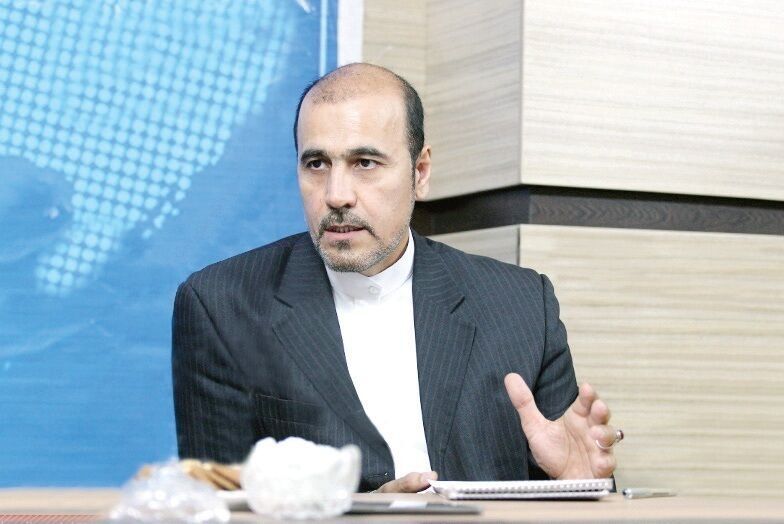
In an interview with IRNA about Saudi Arabia and the United Arab Emirates' approach to reducing tensions with Iran and simultaneously making accusations against Tehran, Amir Mousavi said both Saudi Arabia and UAE are serious about reducing tensions with Iran. In recent weeks, we have witnessed mediation and requests from the Iraqi and Pakistani prime ministers to ease tensions with Iran.
He stated that the role of Imran Khan in reducing tensions between Tehran and Riyadh is not just for mediation, stressing that the role of the Pakistani Prime Minister is more than mediation, and in fact, his role is to guarantee and validate possible agreements between Iran and Saudi Arabia. However, Riyadh faces two external and internal problems to reduce tensions with Tehran.
The Saudi external problems to ease tensions with Iran is their dependence on the United States and Israel, which will not allow Riyadh to do so, the expert said. As soon as Imran Khan traveled to Tehran to talk to Iranian officials and ease tensions with Riyadh, the United States announced it would send Saudi Arabia two billion dollars, several thousand troops and a number of fighters, ships and missiles to confront Iran.
Describing Saudi Arabia's internal barriers and challenges to reducing tensions with Iran, Mousavi reiterated that within the House of Saud, we are witnessing clandestine rivalries that do not want Mohammed bin Salman to succeed and would like him to remain in the quagmire he is grappling with it. In fact, there is a shadow government in Riyadh that does not support the improvement of Iranian-Saudi relations by Mohammed bin Salman and wants the Saudi crown prince to remain in the swamp.
Saudi Arabia has failed in Syria, Lebanon, Iraq and Yemen, Mousavi said, pointing out that Muhammad bin Salman has failed in all of his projects. Even Mohammed bin Salman has failed to establish a strategic relationship with Trump, and we have seen repeated insults and humiliations by the US president. Meanwhile, Saudi Arabia is not in good position after the attacks on Aramco and Najran.
The foreign policy analyst went on to say that Mohammed bin Salman and the Saudi government have lost their regional popularity, and the money they paid to hire others is no longer working, and the forces that are hitting Iran and the axis of resistance in other countries backed Saudi Arabia, are now in the weaken positions.
Mousavi said that Saudi Arabia would have to reduce tensions with Iran to get out of the current quagmire and underlined that reducing tensions with Iran would be a great success for Mohammed bin Salman. So the Saudi government is trying to negotiate with Iran because it knows that any confrontation with Iran and the axis of resistance is not in their interest. They can strike, but the result is not desirable for them, and it will yield nothing but defeat.
The Saudis know that the process of negotiating with Iran can be lengthy, he said, noting that Saudi Arabia is taking evil measures against Iran while trying to ease tensions with it. Therefore, in addition to their efforts to negotiate with Iran, they are also taking measures to weaken Iran's position. If by then negotiations with Iran have been finalized, they will stop theses disrupting measures, but if not, they will restore to such measures to have an upper hand in negotiation with Iran.
The recent developments in Lebanon and Iraq are an example of Saudi evils aimed at weakening the axis of resistance and chaos in Iran's friendly countries, the expert added.
Mousavi noted that Iran was aware of this Saudi Arabia's strategy and double-layer game and went on to say that the reason for the Saudi mischief is that they are now in a losing position and have no trump cards. Being present at the negotiating table with Iran is also a sign of surrender and failure, and they do not like it. So by taking such measures, they want to be in a better position in negotiation.
Referring to the UAE's approach to reduce tensions with Iran, Mousavi highlighted that the UAE is ahead of Saudi Arabia in improving relations with Iran, and has taken practical measures in the form of a silent light to improve relations with Iran. They left Yemen and took steps to improve bilateral relations.
Despite these positive actions by the UAE, Abu Dhabi is making shenanigans against Iran, the foreign policy analyst went on to say. They had strong present at the Manama Conference and active in the Iranophobia project. Their footprints are also evident in Lebanon and Iraq.
Mousavi emphasized that Iran should be able to calm Saudi Arabia and the UAE further and attract them, saying that reducing the tension of Riyadh and Abu Dhabi with Tehran is in the interest of the region, the axis of resistance and Iran because they are, however, part of the Islamic world and unfortunately the two countries are overwhelmed by mercenaries and dependence on the United States and, more recently, Israel, and have been so persuaded that their dependence on the West causes them to be devoured by Iran.
He explained the reason why Saudi Arabia and the United Arab Emirates had changed their approach to talks with Iran and noted that they have realized that they cannot count on the US in sensitive situations, and this has led them to think about reducing or at least managing tension with Iran. They fabricated coalitions against Iran and were also praised, but in effect received no results. Saudi Arabia suffered the most damages in the attacks on Aramco, and was only verbally supported.
The expert concluded that they saw that neither the US weapon nor the US was working for them, and they saw that the US was not willing to endanger even the life of one soldier for them, giving only expensive and useless weapons so they were ready for dialogue but this readiness and change of attitude is not because of friendship and benevolence, but because of Iranian authority and distrust of the US and the West.

Tuesday, October 08, 2019

Running hot and cold: Gulf balances on the edge of war and peace

With war and peace hanging in the balance, tensions in the Gulf are running hot and cold.
Saudi and Iranian leaders are this week walking back from the brink, signalling that they want to avoid outright military confrontation and manage rather than resolve differences.
In fact, there is every reason to believe that neither Riyadh nor Tehran has a vested interest in a definitive solution of the Middle East and North Africa’s multiple problems.
The trick for men like Saudi crown prince Mohammed bin Salman and Iranian president Hassan Rouhani is to find a controllable way of maintaining their potentially existential bitter rivalry without fighting what could be a devastating regional war.
To do so, both men appear to be making the right noises against the backdrop of an evolving US policy that is forcing Saudi Arabia to rethink its almost decade-long, often reckless and assertive go-it-alone foreign and defense policy and Iran to seek ways to level the playing field.
The Anti-Iran Alliance is not just faltering, it’s crumbling. Bolton is gone; Bibi is going; MBZ has struck his deal with Iran; MBS is not far behind,” tweeted Council on Foreign Relations distinguished fellow and former US Middle East negotiator Martin S. Indyk.
Mr. Indyk was referring to former US national security advisor John Bolton and embattled Israeli prime minister Binyamin Netanyahu while identifying United Arab Emirates crown prince Mohammed bin Zayed and his Saudi counterpart and namesake, Prince Mohammed, by their initials.
Signalling a change in tone, Saudi Arabia has gone quiet on its investigation into responsibility for last month’s attacks on key Saudi oil facilities after earlier stopping just short of blaming Iran.
Prince Mohammed has meanwhile welcomed potential face-to-face talks between US President Donald J. Trump and Mr. Rouhani, saying “absolutely… This is what we all ask for.”
Prince Mohammed’s remarks were tempered by Saudi minister of state for foreign affairs Adel al-Jubeir who spelled out the kingdom’s demands.
Without clarifying whether these were a pre-condition for talks or issues to be discussed, Mr. Al-Jubeir’s demands included “ending Iran’s involvement in the affairs of other countries; stopping support for terrorist organizations; abandoning the policy of destruction and sowing conflict; and freezing the plan to develop nuclear weapons and the ballistic-missile program.”
In response, Iran insisted that Saudi Arabia freeze its multibillion-dollar arms purchases from the United States, stop its intervention in Yemen and end discrimination against the Shiite Muslim minority in Saudi Arabia.
The chances of the two countries accepting the other’s conditions are virtually nil.
Nonetheless, Mr. Rouhani, with France, Iraq and Pakistan seeking to mediate, has kept the door open for talks with the United States which withdrew last year from the 2015 international agreement that curbs the Islamic republic’s nuclear program and has since imposed harsh economic sanctions on Iran.
Addressing the Iranian cabinet this week, Mr. Rouhani termed a four-point plan put forward by French president Emmanuel Macron “acceptable.”
The plan calls for the United States to lift sanctions on Iran and allow it to freely export its oil and collect revenue in return for an Iranian commitment not to pursue nuclear weapons and help ensure Gulf security.
Mr. Macron’s proposal includes a US$15 billion credit line that would enable Iran to export oil and would also restore the P5+1 framework of signatories of the nuclear accord, France, Britain, Russia, China, Germany and the US.
Like with Mr. Al Jubeir’s demands, the question is what comes first, the chicken or the egg.
Mr. Trump sees lifting of sanctions as the outcome of talks while Mr. Rouhani has insisted that sanctions be removed prior to negotiations.
To step up pressure, Iran has been gradually breaching the terms of the accord and increasing tensions that bring the region closer to the brink of war in a bid to position negotiations as the only alternative.
Iranian oil minister Bijan Zanganeh put the changing mood on public display at a Russian energy conference chaired by President Vladimir Putin when he described his Saudi counterpart, Prince Abdulaziz bin Salman, a son of King Salman, the Saudi monarch, as “a friend.”
“Prince Abdulaziz bin Salman has been a friend for over 22 years,” Mr. Zanganeh said.
The two men were later seen holding hands together with Organization of Petroleum Exporting Countries (OPEC) Mohammed Barkindo and speaking on the sidelines of the conference in the first such encounter since the attack on the oil facilities.
The new mood could over time, against the backdrop of mounting Gulf doubts about the reliability of the United States’ regional defence umbrella, make a Chinese-backed Russian proposal for a multilateral security architecture more attractive.
The Russian proposal is built on the notion that security in the Gulf would be better served by an architecture that downplays regional rivalries rather than accentuating them as part of the US umbrella that is rooted in the Saudi-Iranian divide and designed to protect the conservative Arab monarchies against the Islamic republic.
The Russian approach theoretically could accommodate the survival strategies of both the Iranian regime and the Saudi ruling family.
Upholding Iran’s revolutionary façade requires the existence of an imperialist foreign threat that also gives a lease on life to the vested economic interests of hardliners grouped around the country’s Islamic Revolutionary Guards Corps.
Saudi Arabia, figuring that it needs at least six years to develop its natural gas potential to the degree that it can compete with Iran, home to the world’s second largest reserves, may want to see an Iranian regime that is weakened and possibly destabilized, but not on the verge of collapse.
Said Saudi foreign policy scholar Yasmine Farouk: “Time is of the essence. This moment in the Middle East’s international politics offers incentives and deterrents that Saudi Arabia can leverage in its negotiations with Iran. The longer the kingdom waits, the less influence it will have on the final outcome of its conflict with Iran, and on any future multilateral framework for security in the Gulf.”
Dr. James M. Dorsey is a senior fellow at Nanyang Technological University’s S. Rajaratnam School of International Studies, an adjunct senior research fellow at the National University of Singapore’s Middle East Institute and co-director of the University of Wuerzburg’s Institute of Fan Culture

Saturday, October 05, 2019

Hints Of Gulf Rapprochement: Iranian Tactics May Be Paying Off

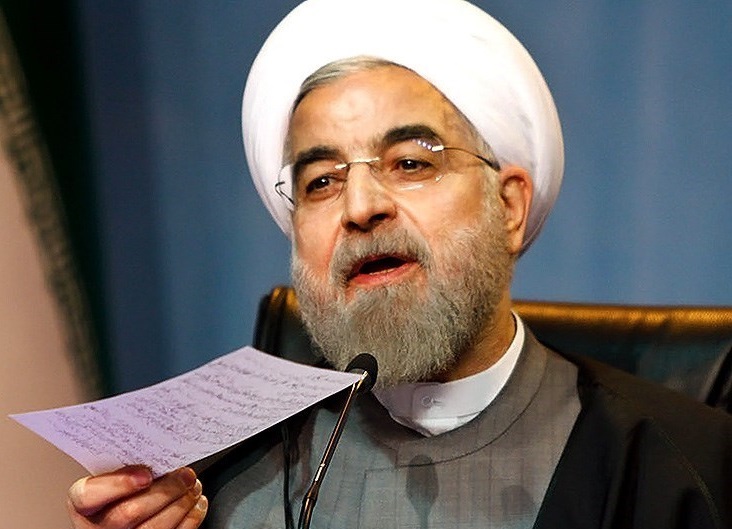
Hassan Rouhani (Wikimedia Commons)
by James M. Dorsey
Fears of a potential military conflict with Iran may have opened the door to a Saudi-Iranian dialogue against the backdrop of a rethink of US military logistics, involving at least a gradual partial relocation to the United States of command and control operations based in the Gulf for almost four decades.
The relocation does not necessarily signal a reduced US commitment to the defense of the strategic energy-rich region even if it comes amid Gulf suspicions that the United States is gradually withdrawing from the Middle East.
Nonetheless, the move, officially intended to reduce the vulnerability of US military assets to a potential Iranian strike without decreasing the United States’ operational capability, is bolstering a rethink in capitals across Eurasia, including Moscow, Beijing, Tokyo, New Delhi, Abu Dhabi and Riyadh about possible alternative, more collective and multilateral security arrangements in the Gulf.
The arrangements would involve the Gulf states, Russia, China, the US, the European Union and India as well as other stakeholders, a likely reference to Iran. By necessity, it would require a lowering of tension in the region and a degree of accommodation between Saudi Arabia and Iran.
Chinese foreign minister Wang Yi urged Gulf states “to establish a platform for dialogue and consultation” in which countries from outside the region would play a role in maintaining security in the region.”
Mr. Wang was speaking days after Iranian president Hassan Rouhani proposed a security arrangement that would be limited to countries in the region.
In a variation on the theme, Narayanappa Janardhan, a prominent Indian Gulf researcher at the United Arab Emirates’ Emirates Diplomatic Academy, suggested that a new regional security architecture should be Asian-led.
US President Donald J. Trump’s transactional approach towards foreign and defence policies in which countries are expected to shoulder their fair burden and pay for US defense services coupled with the president’s long-standing assertion that China and others dependent on energy supplies from the Gulf are free-riding beneficiaries of the US defence umbrella and his withdrawal early in his presidency from the Trans-Pacific Partnership, a regional trade pact, has sparked doubts across Asia about the wisdom of depending on the United States for energy security.
In a sense, the Gulf states and Asian nations are in a bind. The United States may no longer be reliable but despite the various calls for a new security arrangement few realistically see an alternative.
“Having just spent three days in Moscow, I’m convinced the Russians haven’t the faintest clue how to operate any architecture in the Gulf...let alone a security architecture,” tweeted Gulf scholar Michael Stephens.
Concern that military retaliation for last month’s attacks on two key Saudi oil facilities would spark a regional war have sparked a flurry of diplomatic activity and a search for non-military responses as the United States and Saudi Arabia point the finger of responsibility at Iran.
Iran has warned that military retaliation by the United States and/or the kingdom would spark a war that would spread to the Gulf, including Iranian targeting of installations in the region.
Mr.. Trump’s cautious reaction to the attacks coupled with Saudi Crown Prince Mohammed bin Salman’s stated preference for a non-military response constitute the latest developments in recent months that have opened the door to the Chinese-backed Russian proposal for a collective security arrangement that would reduce US influence in the region.
Saudi and Iranian leaders, in a gleam of hope that the two countries may be inching towards one another, expressed an interest in resolving issues politically rather than militarily.
The political and peaceful solution is much better than the military one,” Prince Mohammed told CBS News when asked about a possible military response to the attacks on the kingdom’s oil assets.
Iranian parliament speaker Ali Larijani responded saying: “The doors of Iran are open. A Saudi-Iranian dialogue can solve many of the region’s security and political problems.”
In a further hopeful development, Saudi Arabia was reported to be considering a partial ceasefire in Yemen. Earlier, the Houthis declared a unilateral halt to the fighting. Mr. Larijani said Iran was advising the Houthis to accept whatever ceasefire was on offer.
“The Saudis have conditions before the negotiations process starts and the same with Iranians. We have liaised these conditions to each side. It is not an easy task to get together two opposite sides in terms of their ideology, sect and their alliances in the region,” said Abbas al-Hasnawi, an official in the office of Iraqi prime minister Adel Abdul Mahdi.
“Saudi Arabia’s conditions are that Iran minimise its role in Yemen and Syria and stop supporting armed groups such as the Houthis. It also asks the Syrian regime to solve its problems with the Syrian opposition groups, and to write a constitution for Syria with all parties agreeing on it,” the official said.
“If there will be a potential deal in the region that includes Yemen, Syria and Iraq, the Americans have no problem with that,” Mr. Hasnawi added.
While there is every reason to be sceptical despite the noise that Saudi Arabia and Iran are anywhere near resolving their differences, talk of dialogue and calls for a Yemen ceasefire suggest that Iran’s strategy of strategic escalation may be producing results.
Iran moved earlier this year away from its initial strategic patience response to the US withdrawal from the 2015 international agreement curbing the Islamic republic’s nuclear program to a strategy of gradual escalation.
Escalation tactics include a step-by-step breaching of the agreement and a more aggressive asymmetric military posture involving the seizing of a British vessel that was released last week, alleged attacks on tankers off the coast of the UAE, and allegedly the attacks on the Saudi oil facilities.
Said Eldar Mamedov, an advisor to the social-democrats in the European parliament’s Foreign Affairs Committee: The “sequence of events shows that, thus far, the Iranian strategy of calculated counter-escalation is working… By escalating on its own, Iran forced a number of key players to change their cost-benefit calculus.”