Showing posts with label United Arab Emirates (UAE). Show all posts

Thursday, October 03, 2019

Yemeni Defenders’ Shock and Awe Resistance

Hit on Saudi Aramco sends chills through global colonial hegemony

Brecht Jonkers
On September 14, the world experienced a shockwave. The mujahidin of Yemen struck the world’s largest oil refinery complex in a highly successful drone strike on Abqaiq and Khurais in Saudi Arabia.
It is not possible to overstate the importance of the strike on Saudi Aramco facilities in the grand scheme of things. Yemen has been a forgotten and underreported conflict ever since the Saudi-Emirati-US alliance invaded the impoverished country in March 2015. It is a war so vile, so destructive, and so bereft of any justification, that the imperialist mainstream media outlets have decided to not even try to justify it. Rather, they have opted for silence. Ignore it and people will not notice, is their policy.
For four and a half years, the aggressors have subjected impoverished Yemen’s civilians to constant bombings. Nearly half of the country’s landmass has been occupied. There is constant infighting and mass murders in the occupied east and south of Yemen. The Saudi-UAE invaders provide open support to terrorist organisations such as al-Qaeda and Da‘ish. Despite all this being known publicly, there is barely a peep in the major media outlets of the US, UK, or the rest of Europe.
But all that changed in one swift operation by the forces of the National Salvation Government of Yemen, often called “the Houthis” by the imperialist media. As many as 10 drones were reported to have struck the Abqaiq and Khurais petroleum refineries. The economic damage to the Kingdom is devastating. More than half of the petroleum production and export of the Wahhabi state was cut down in a single day, making Riyadh lose out on as much as 5.7 million barrels of crude oil exports daily.
According to specialist consultancy agency Energy Aspects, the Saudi kingdom also suffered a setback of 18% in natural gas production and as much as 50% in ethane and liquified gas output. The massive decrease in available crude oil, combined with damage to the refinery, have had the additional effect of causing a shortage of refined petroleum products. These are needed to repair and run the refinery’s machinery.
In stark irony, Energy Aspects reported that it is highly likely that Saudi Arabia, the kingdom founded because of oil and entirely dependent on it, will be forced to import gasoline, diesel and fuel oil just to keep its own oil-based economy afloat.
While the royals and their ministers in Riyadh guaranteed that the Abqaiq and Khurais facilities were up and running again by September 16, experts estimate that full recovery will take at least two weeks. That is, if no further retaliatory strikes are carried out from the land of Sheba. That does not take into account the hydrogen sulphur that has been released by the fires when the strike occurred. This is likely to directly reduce the efficiency of pumping installations.
The results of the Yemeni retaliation against their invader’s bread and butter were felt around the world. Oil prices jumped by no less than 20% on the global markets, forcing the US to announce a release of its own strategic petroleum reserves in order to avoid a major economic disaster.
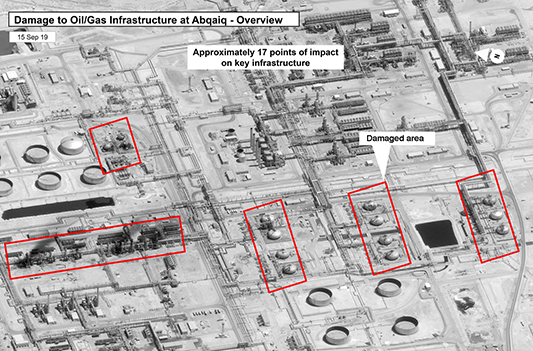
Aerial image of the points of impact of Yemeni retaliatory drone/ cruise missile attack on Saudi oil production infrastructure at Aramco facilities in Abqaiq, 9-14-2019. Reports now coming in from investigators indicate this was a sophisticated attack, perhaps taking months to plan, and waiting on the ideal conditions to execute: lead drones first took out the US Patriot radar installations and then follow on cruise missiles hit the intended targets. The accuracy of the drone/ missile strikes suggests that oil workers sympathetic to Ansarullah, or Yemeni agents posing as workers placed cell phones in appropriate places to act as homing beacons. Regardless, the fact that the US, with its billion dollar surveillance equipment and satellite technology, still has not determined where the drones/missiles came from over ten days after the attack took place, and could not protect the economic lifeline of the entire developed world indicates that US power is no longer invincible and Muslim military parity is fast becoming a reality.
Naturally, accusations from Riyadh and Washington went straight to the Islamic Republic of Iran, claiming Tehran was behind the strikes. And reflecting raw racism, they claimed the proud people of Yemen are “too backward” to pull off an attack of this magnitude. However, unbiased analysis of the facts show that Yemen most definitely could, and would, retaliate against their aggressors in such a spectacular manner. The accusation against Iran was also meant to divert attention from Saudi incompetence and the failure of US-supplied billion-dollar-a-piece Patriot missile batteries to intercept incoming drones.
It must be borne in mind, this is not the first airstrike, be it by missiles or by unmanned aircraft, that the Republic of Yemen has carried out against the Najdi invaders. While counterattacks deep inside Saudi territory have been taking place ever since the start of the war, the year 2019 has seen a surge in successful high-profile retaliations.
On May 14, the Saudi regime was forced to stop pumping crude oil in its main pipelines across the country, following Yemeni drone strikes against two Aramco facilities west of Riyadh. On June 12, a missile strike launched from inside Yemen hit Abha International Airport, which was in use by the Saudi military at the time, exploding right in the arrivals hall and causing major damage. It is noteworthy that Abha is over 100 km from the Yemeni border. The airport was hit again just five days later and yet again on July 2, destroying a hangar for military planes. Together with the Saudi military airbase of Khamis Mushayt in ‘Asir province, the airport of Abha has been struck multiple times in the past few months. This reflects the total incompetence of Saudi air defence systems.
The month of August 2019 started with a double missile and drone attack against two very different Saudi targets. First, a joint missile and UAV strike at a camp of Saudi-backed mercenaries in the southern port city of Aden killed dozens of collaborators. And then the Yemeni mujahidin hit a Saudi military base in Dammam city, in the Eastern province of Saudi Arabia that is hundreds of kilometres away from the Yemeni border.
On August 17, an attack took place that can be seen as a general rehearsal of sorts for the Abqaiq and Khurais strikes. Using a fleet of drones, Yemen’s revolutionaries attacked the Shaybah oil refinery. The massive refinery unit, located no less than 1,100 km from Yemen, was chosen specifically for its proximity to the United Arab Emirates (UAE). In one attack, the Yemeni revolutionaries not only proved their capacity to strike deep inside Saudi Arabia and hit its economic lifeline, but also sent shivers down the spine of the Emirate rulers.
“The UAE must quit the Saudi-led aggression if it wants to save its glass towers,” Yemeni military spokesman Yahya Sari‘ warned in crystal clear terms after the mid-September strikes.
The Yemeni struggle for independence and liberty has been a source of inspiration for years. Yet after September 14, the war against the US-Israeli-Saudi-UAE-led aggressors has entered a new phase. It may lead to the collapse of Bani Saud’s rule over the Kingdom. Should that happen, it would be widely celebrated by committed Muslims worldwide.
 

Brecht Jonkers


Wednesday, August 14, 2019

Ayatollah Khamenei: Intra-Yemeni dialogue needed for a united Yemen

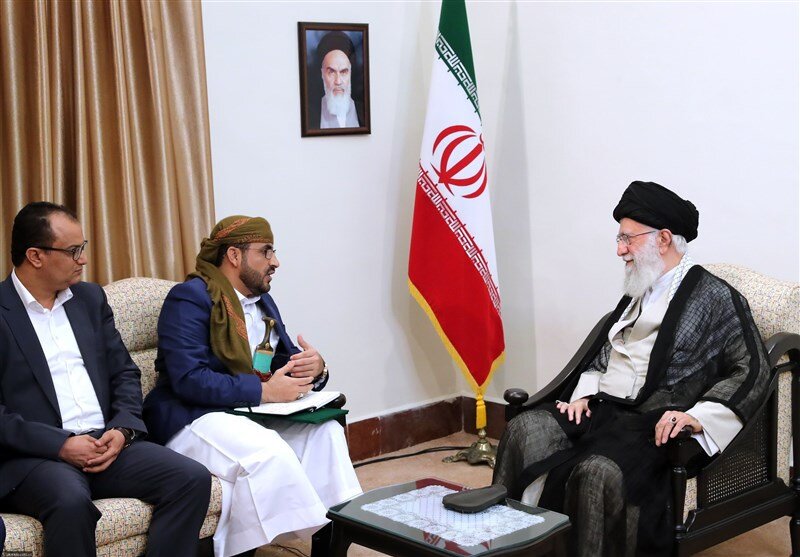
TEHRAN – Ayatollah Ali Khamenei, Leader of the Islamic Revolution, said on Tuesday Saudi Arabia and the United Arab Emirates have committed “great crimes” in Yemen.
The Leader made the remarks in a meeting with Mohammed Abdulsalam, the spokesman for Yemen’s Ansarullah and chief negotiator of the National Salvation Government.
The Leader also said Riyadh and Abu Dhabi are seeking to break up Yemen and this should be strongly resisted.
“They are after dividing up Yemen but there must be a strong resistance against this plot and (it is necessary to) support an integrated, united Yemen with its territorial integrity,” the Leader asserted.
Ayatollah Khamenei added protecting the Yemeni territorial integrity in view of its diverse religious and ethnic diversity entails intra-Yemeni dialogue.
Praising the Yemeni old and rich civilization, Ayatollah Khamenei lauded the Yemeni people’s resistance against military invasions for five years and predicted that they will win the war and succeed to form a strong government.
The Leader also referred to U.S. complicity in the war on Yemen, saying the Islamic Republic’s anti-U.S. and anti-Western position is not out of “prejudice” but because of realities and the record of rulers in the U.S. and the West.
These countries, with a superficial civil and ethical appearance, commit the “worst crimes” and constantly talk about human rights, Ayatollah Khamenei regretted.
 
The United States is the main supplier of advanced weapons to the Saudi-led military alliance against Yemen. The atrocities committed against civilians in Yemen are so awful that even Congress has voted against selling weapons to Saudi Arabia but the bill has been vetoed by President Trump.
Some European countries such as Britain, France and Germany also sell arms to the countries pounding Yemen. The United States even provides logistical support for Saudi Arabia in pounding the country.
 According to the United Nations, Yemen suffers one of the longest humanitarian crises in the world.
Yemen has been under military attack by a Saudi-led alliance since March 2015. Saudi Arabia launched war on the country with the aim of reinstating the toppled government of Mansur Hadi in a matter of weeks. However, more than four years have passed and still there is no victory in sight.
In April 2015, Iran proposed a four-point plan for the resolution of conflict in Yemen.
In a post on his Twitter post on November 2018, Iranian Foreign Minister Mohammad Javad Zarif again reminded about Tehran’s four-point plan, saying: "War on Yemen must be stopped. We urge ceasefire, humanitarian assistance, intra-Yemeni dialogue & establishment of broad-based government."

Thursday, July 04, 2019

Why the Deal of the Century fails?

By Ruhollah Ghasemian

TEHRAN - These days, apart from the tensions between Iran and United States, another event in south west Asia has attracted the attention of the countries’ officials, nations, and the media from all over the world. 
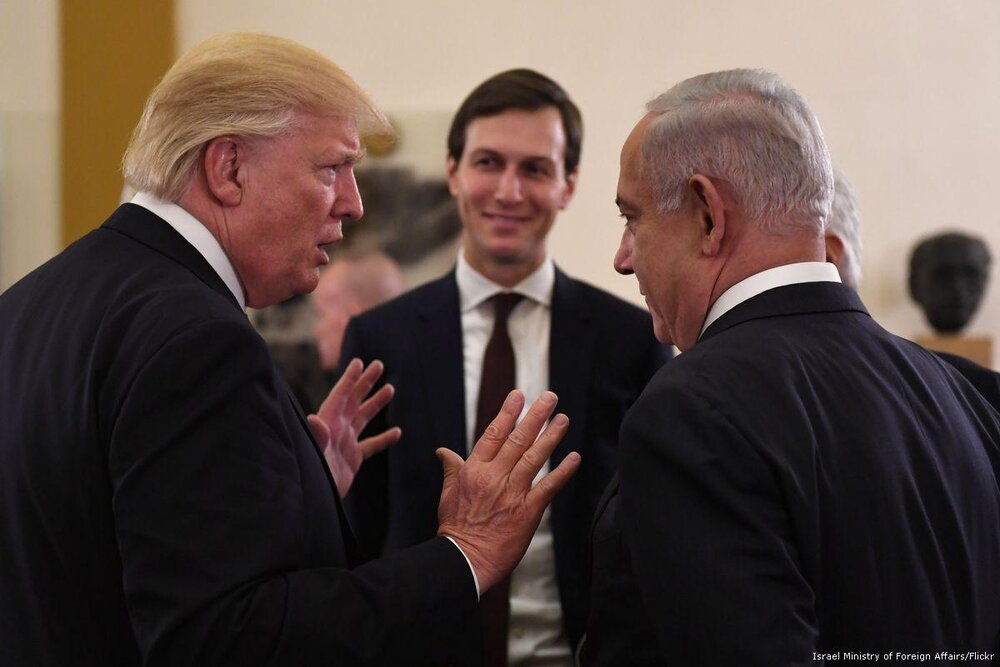
This new issue is “the Deal of the Century”; a new project that Donald Trump and his son-in-law are supposed to run. Deal of the century was officially put forward in Manama meeting and is following the same goal as “the New Middle East” project. The deal of the century is nothing but trading lands, it seeks to achieve the Zionists’ aim which is to turn Palestine into a country reserved for Jews. 
The details of the deal of the century are not yet clear, but based on what different media have announced, the deal says that 3 million of Palestinians should live in the West Bank, 2 million in Gaza Strip, around 2 million in Arab lands occupied in 1948 and the Palestinians who live in other countries can settle down in another separate area.  
This scheme seems pretty unrealistic and there is little chance that it will get off the ground.  
In Manama meeting, Saudi Arabia accepted to invest $40 billion and United Arab Emirates (UAE) offered to invest $20 billion. In fact, the planners of the deal of the century knew that the Palestinians are having financial problems, so they tried to start their project with first deceiving the Palestinians with offering some money. 
However, this plan had two problems; first, Saudi Arabia is under unrelenting financial pressure because it has spent a lot of money by meddling in many issues in Middle East, such as the Yemen war. 
Second, even though Palestinian resistant groups have a lot of differences, they are all on the same page in disagreeing with the deal of the century. 
Many countries in the region, international organizations, Palestinian groups and the resistant group have declared their opposition to the deal of the century. We can say that based on four reasons, this project is doomed to fail: 
1.    Over the last two decades, every project that U.S. has started in South West Asia or North Africa has failed. One example is the Substitute Homeland Project suggested by Ariel Sharon with two alternatives of either building a new capital in Jordan or reviving the Bahrolmeyet Lake by building a canal over the Gulf of Aqaba. Other examples are the Neom City plan put forward by Mohammad bin Salman and the Red Sea tourism project. All these plans were managed by U.S. and were supposed to attract the Palestinians from both inside and outside their country. 
Similar projects for attracting and locating Palestinians were carried out in Sinai Peninsula, but all these projects failed and the deal of the century which has the same goal and road map will fail just like them. 
2.    The deal of the century cannot be successful; it is not because U.S. or the United Kingdom or any other country who follows them are not trying enough, it is simply because they are now “incapable” of doing whatever they want in Middle East. U.S. and U.K. can no longer be the main powers in the region, they cannot suppress the Palestinian resistant groups and cannot determine the course of events for Palestine.
Palestinian resistant groups are now far more powerful. In the same time, Benjamin Netanyahu’s cabinet has become weaker than before as they have faced many failures over the last years. Therefore, it seems unlikely for them to be able to run the deal of the century. 
3.    The deal of the century is a project that seeks to change the geopolitics of a region, to give away some vast lands and to make a big population move so that the usurper regime of Israel can have a firmer position and they can turn Palestine into a land excluded to Jews; however, changing the geopolitics of a region or changing the religions practiced in a region are social transformations and cannot be controlled by some political plan. 
The statistics show that the population of Palestinian Arabs has increased 7.4% while the population of Jews leaving in this region has increased by only 1.2%, this is a social fact that the number of Arab Palestinians is increasing; the dominant ethnic groups in this region are Arabs. Palestine is an Arab country and will remain one, and their lands will be completely returned to them. 
4.    The main supporter of the Zionists and the deal of the century is no one but U.S.; however, over the last few months, American officials have repeatedly announced that they do not seek military action against Iran. This shows that U.S. is changing its policies toward the Middle Eastern countries who are resisting the American oppression, and especially toward the Islamic Republic of Iran which is the symbol of resistance against western interference and oppression in Middle East. Based on these facts, we can easily predict that the deal of the century will be a total failure. 
The last word
The deal of the century is the first step toward “the New Middle East” project that was first proposed when George W. Bush was the president of the United States. “The new Middle East” project seeks to change the geopolitical features of the Middle East. 
Undoubtedly, projects such as “the New Middle East” and “the deal of the century” which try to divide lands and populations, can pose great dangers to the nations, but we can defeat these dangers if we stand against them with open eyes and firm resolution. From now on, Middle East and the Muslim world should pay more attention to such projects and try to nip them in the bud.   

Sunday, June 09, 2019

Failed plans for spreading Iranophobia: Saudi and UAE frustrated

By Fatemeh Salehi

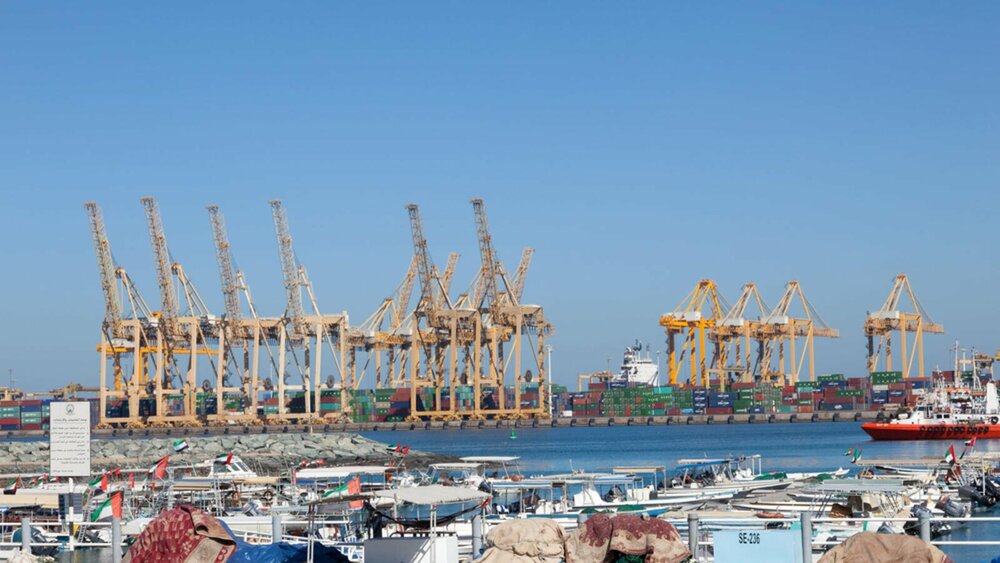
TEHRAN - Saudi Arabia, United Arab Emirates (UAE), U.S. and the Zionist regime once again have failed in their attempt to spread Iranophobia; this time they accused Iran of being involved in Fujairah explosions, but their lies were soon exposed as it was revealed that they have no kind of proof or evidence for their claims.
Saudi Arabia, UAE and Norway handed a report to UN Security Council about explosions in UAE territorial waters, off the port of Fujairah. However, the claims about Iran being responsible for the attack were so unfounded and unsubstantiated that they were unable to mention Iran’s name in the report.
Saudi Arabia, supported by U.S. and the Zionist regime and specially Mossad, is trying to spread fabricated information to develop Iranophobia amid the rising tensions in the region with U.S. officials constantly firing words of condemnation and threat against Iran. These countries immediately pointed their fingers at Iran for the explosions without having any kind of reason or proof for their claims, but once again they failed in convincing the international communities.  
In the report presented to UN Security Council by the two countries, it says that the attack on four oil tankers off the Emirati coast on May 12 was a calculated and sophisticated operation carried out by ‘a state actor’.
The report doesn’t indicate the name of the ‘state’ that has been involved in sabotage in Fujairah. According to the report, four commercial vessels were damaged by the attack; namely, Amjad crude carrier tanker, Al Marzoqah crude tanker, A Michel ship and Andrea Victory ship.
The statement added that there were no victims or oil leaks from tankers.
In response to the meeting, Iranian Foreign Minister, Mohammad Javad Zarif tweeted, “The B-Team boys who cry wolf are crying once again. This time, Mossad is fabricating intelligence about Iran’s involvement in sabotage in Fujairah. I’ve warned of ‘accidents’ and false flags — we know what happens when you believe their lies. We’ve been here before, haven’t we?”
While Saudi Arabia and UAE are trying to pretend that their accusing Iran for Fujairah explosion is a conclusion that they themselves have arrived at, many reports in Israeli media have revealed that Mossad was the main agency who tried to convince U.S. that Iran was involved in the attacks and should be blamed for it.
Anyway, all such reports and accusations are only propaganda and are solely devised to influence public opinion.
Such attempts to ruin the name of Iran are surely not a new thing. Arab countries surrounding the Persian Gulf, as well as U.S. and the Zionist regime officials have constantly come up with claims that Iran is trying to threaten their interests or attack their bases in Iraq or other countries, but none of these claims have ever been supported with any kind of solid or credible evidence.
However, when certain media constantly repeat the name of a country, even though without any solid proof, as the one who is responsible for any kind of attack or sabotage in the region or even the world, people unconsciously start to blame that country for all attacks and incidents, without even looking for any proof or evidence.
This is exactly the goal of U.S., the Zionist regime, Saudi Arabia and UAE for mentioning the name of Iran next to every incident and attack in the region, even though they were never able to prove any of these accusations and occasionally they even indirectly took their claims back, but they succeeded at making the right impression on people.
After Fujairah explosion, these states immediately blamed Iran and announced that Tehran should receive a response for it, but now they are incapable of proving their claims. U.S. blamed Iran for the incident just two days after the attack.
Despite all international laws and customs, U.S. officials, such as Mike Pompeo, Brian Hook and even Donald Trump openly blamed Iran and tried to create an anti-Iran atmosphere.  
In a meeting with Donald Trump and Hungarian Prime Minister Viktor Orbلn in White House, Trump said if anything happens, Iran will be in big trouble.
In Tweeter, some pro-Saudi users posted a video, trying to show that Iran was involved in explosions in Fujairah; while it was later revealed that the video was in fact of a Greek ship in some place other than Persian Gulf.
In this video, which has no clear date or location, it is showed that two people are dangerously tampering with the helm of a Greek oil tanker to change the ship’s direction. After showing this video, they claimed that it proves that Iran could have been involved in Fujairah sabotage!
It seems that after failing to bring any credible proof, Saudi Arabia is now resorted to publishing such videos in social media; while German Federal Minister of Defense had previously announced that there are no signs of Iran’s involvement in explosions in Fujairah port.
Some military experts believe that the Israeli or Saudi intelligence agencies have planned the explosions to lead U.S. into a war with Iran; nevertheless, after seeing the resistance of Iranian people and officials, U.S. has now retreated from its war-mongering policies and is talking about having negotiations with Iran; naturally, Saudi and UAE who blindly follow U.S. policies are expected to adopt the same policy; especially now that they haven’t found any convincible proof to support their claims and spread Iranophobia.
Saudi Arabia and UAE have constantly proven to be the main states who create tension and conflict in the region. As long as they don’t change their policies in Middle East, and specially their policies toward Iran, the tension will continue, as Iran has repeatedly announced that it devises its policies based on mutual respect and peaceful interaction with countries in the region.

Tuesday, May 14, 2019

Al-Fujairah: The result of crimes of Saudi and UAE

By Mohammad Ghaderi

TEHRAN - Though Emirates officials are trying to censor news of the firing of tankers in the port of al- Fujairah, Riyadh and Abu Dhabi appear to have faced the consequences of their terrorist acts in the West Asian region much earlier than they thought. Now, Riyadh and Abu Dhabi, as two failed actors in Yemen and the Western Asia region, feel the crisis in a few steps. Undoubtedly, in the near future, the severity and extent of the crisis will increase.
 The fact that the killing of innocent and defenseless Yemenis, including thousands of women and children in Yemen by the hated and hated Saudi regime and the United Arab Emirates, has led to the anger of the Yemeni people and other Muslim nations from Riyadh and Abu Dhabi. It has been repeatedly emphasized that Saudi Arabia and the United Arab Emirates are considered to be the killers of the Yemeni nation and the United States, and they are doomed to failure.
The fact is that all the western and Arab countries that have been killing and massacring Yemeni people are involved in the numerous crimes committed in this country. The humanitarian crisis in Yemen continues. Famine has spread across Yemen. Meanwhile, the United States, and Germany, Britain and France as its allies continue to maintain arms support for the Saudi assassination regime. Undoubtedly, the role of Washington and its allies in the killing of Yemeni women and children is very high.
Finally, Saudi Arabia, the United Arab Emirates and their western supporters have become closer to the final point of the defeat in Yemen. Following the announcement of the Riyadh and Abu Dhabi official failure in the Yemeni war, the leaders of these two countries must be the answer to the public opinion of Muslim countries and people around the world as a war criminal in Yemen. Undoubtedly there is not much time left to reach this point. 

Wednesday, January 23, 2019

Exploring Saudi-Emiratis disagreements on Yemen

By Mohammad Ghaderi


TEHRAN - The Saudi-Emirati offensive in Yemen and bombing of innocent people in the country is some of the issues that have always been discussed between Saudi Arabia and the United Arab Emirates (UAE) on the developments in Yemen.
There was an unwritten agreement between the two countries on the spheres of influence: Saudi Arabia played a role in northern Yemen and the UAE supported southern groups. However, in the past three years, there has been a great deal of discord between the two countries over the division of influence in Yemen, and the field defeats. The launch of Yemeni ballistic missiles towards the UAE and Saudi Arabia, have also brought a dispute between the two states.
When Saudi-backed exiled President Abed Rabbo Mansour Hadi of Yemen, told the Saudi leadership of his desire to return to Aden, Riyadh replied that the Emirates were unable to comply with his request because it was not the right timing. Saudi Arabia strongly supports President Mansour Hadi, while the United Arab Emirates supports the Southern Transitional Council (STC), which seeks for an independent South Yemeni state.
Following the UAE objection, the pro-Mansour Hadi media and Yemeni Congregation for Reform (al-Islah) once again accused the Emirates of sabotaging the legal Yemeni government. Emirate media, for the first time since the meeting of Crown Prince of Abu Dhabi Mohammad bin Zayed, MbZ, with Chairman of the Islah party Mohammed al-Yadomi in December, resumed wave of attack on Yemen's al-Islah party. 
An Emirati state-run newspaper Akhbar Al Arab in a report on Tuesday accused al-Islah party of managing the black market on classified information exchange, which refers to the operation of the secret information exchange carried out with the help of the army and Ansarullah forces. 
According to Arab sources, al-Islah party has not functioned as desired by the UAE, because an important faction of the party is connected to Qatar. 
The root of the UAE and Saudi disagreements in Yemen
Although the Emirates has participated in the Yemeni war in the form of an anti-Yemeni coalition with Saudi Arabia, the field evidence suggests that the UAE's ties to Riyadh are not very large in the Yemeni arena, and even the UAE is now reluctant to win Saudi Arabia, because Saudi Arabia Unlike its dealings with Abu Dhabi, the pro-UAE elements have been marginalized and even fired by the Cabinet in the undercover government of Yemen.
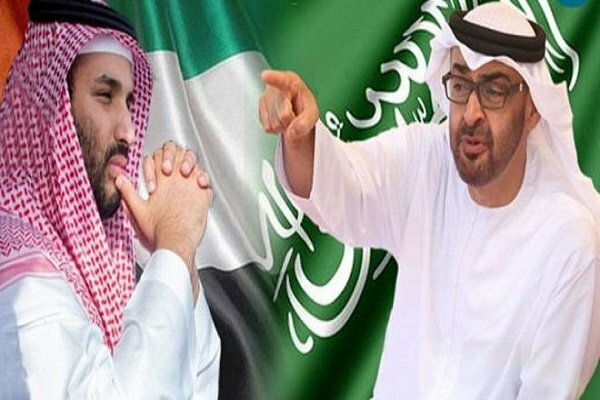
The discord between the two countries is enormous, but the close relationship between Saudi crown prince Mohammed bin Salman (MbS) and the Crown Prince of Abu Dhabi MbZ prevented the conflict escalation. However, the differences will come to the surface in due course of time.
David Hearst, Editor in Chief of the Middle East Eye, in an article says, “The rivalries between the UAE and Saudi Arabia over Yemen are competing for the leadership in the Sunni Arab world. The UAE tries to sabotage the power transfer by the Saudis in Yemen and defeat the Mansour Hadi administration which has some members of the al-Islah party affiliated with the Muslim Brotherhood. Abu Dhabi, instead wishes to bring in Ahmed Ali Abdullah Saleh al-Ahmar, the eldest son of former Yemeni president Ali Abdullah Saleh, who was a commander of approx. 80,000 troops of the Republican Guard unit of the Yemen Army and former ambassador to the UAE, to run for presidency in Yemen.”
Although this analysis was published before Sanaa's sedition and the assassination of Ali Abdullah Saleh, it is largely in line with the Yemeni political and ground realities. The Emirates worked hard to bring in Abdullah Saleh to diminish the Saudis’ role in Yemen; however, Saleh’s death threw off all the political equations in Yemen and once again intensified the discord between the Saudis and Emiratis.
The discord over the Muslim Brotherhood
The Muslim Brotherhood and its role in southern Yemen have always been one of the major areas of conflict between Saudi Arabia and the UAE. Although Riyadh has repeatedly tried to resolve this issue in a variety of ways, the UAE still considers the Muslim Brotherhood an obstacle in southern Yemen.
The meeting between MbS and MbZ with the Muslim Brotherhood authorities in December 2017 sparked speculation of potential dispute resolution between the Yemeni Muslim Brotherhood and Abu Dhabi, though Emirati's media stance soon removed the speculation. 
Dispute over the breakup of Yemen
The disintegration of Yemen is the second issue between Riyadh and Abu Dhabi. The economic importance of southern Yemen for the UAE has led the country to pursue the division of the region, and to do so, Abu Dhabi fully supports the Southern Transitional Council headed by Aidarus al-Zoubaidi.
In fact, in the Yemeni crisis, first and foremost, the UAE seeks to stabilize southern Yemen to keep the flow of free trade in the Strait of Bab al-Mandab and the surrounding area of Aden. Thus, Abu Dhabi will prefer the breakup of Yemen, if the STC, gets to have the upper hand.
The investment and widespread involvement of the UAE in southern Yemen, which the Mansour Hadi administration describes it as an occupation government, is largely due to this motive. On the other hand, Saudi Arabia, unlike the UAE, does not have economic considerations in southern Yemen, because Riyadh has access to the Red Sea and the Indian Ocean from its shores making the Strait of Bab al-Mandab less important for the Saudis.
Imposing influence on the Yemeni government and maintaining its territorial integrity, which will increase Saudi political influence in the Arab world, is of great significance for Mohammed bin Salman, and this has been the most important issue that has led to the difference between Abu Dhabi and Riyadh.