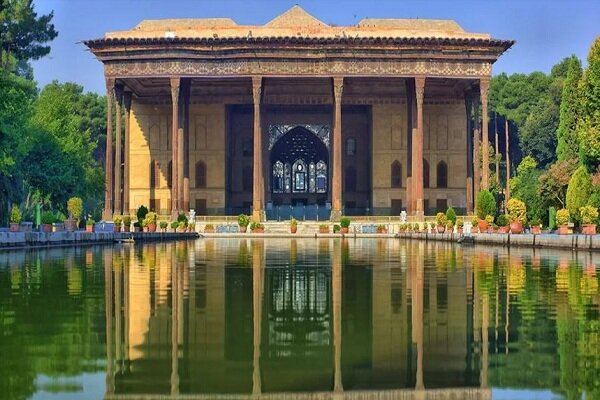
TEHRAN, (MNA) – Located next to Naqsh-e Jahan Square and Chahar Bagh, Chehel Sotoun Palace is considered as one of the tourist attractions of Isfahan, Iran.
The attractive Safavid architecture and world heritage sites have made Isfahan province a popular destination for both Iranian and international tourists.
Isfahan is Iran's most beautiful city, where it boasts the highest level of Islamic and Iranian architecture and, as a living museum; shows the culture and tradition of the Iranian people.
The artistic and historical city of Isfahan has over 22,000 historical sites and monuments, of which 850 are nationally registered and four have been designated by UNESCO as World Heritage Sites, namely Naqsh-e Jahan Square, Imam Mosque and Chehel Sotoun Palace.

Chehel Sotoun Palace is renowned for its unique paintings and mirrors and has once been the place of hosting greats from all over the world.
The palace dates back to Safavid Era in 1588, was established during the reign of Shah Abbas I, the first king of Safavid Empire, in the midst of a vast and lush garden. It was a small palace in the middle of a large garden and to be used for the Shah's resting. The immense halls of this palace used to be the selected places for official feasts of the country.
After his reign, Chehel Sotoun Palace was enlarged and inaugurated by Shah Abbas II for receptions and amusements. Some porches, paintings, ornaments and various parts were added at the behest of Shah Abbas II, making it a glorious palace for the Safavid kings.
It was selected as the official venue for the usual political ceremonies and reception of other kings and officials.

The land of Chehel Sotoun Palace is 67000 square meters. The architecture of this palace is a blend of Iranian, Chinese and European arts and consists of a main porch on the east part of the palace. The 20 slender, ribbed wooden pillars of the palace rise to a superb wooden ceiling with crossbeams and exquisite inlay work.
The name, meaning "Forty Columns" in Persian, was inspired by the twenty slender wooden pillars supporting the entrance pavilion, which, when reflected in the waters of the fountain, are said to appear to be forty.

The main porch of the palace consists of two parts. The first part consists of 18 wooden pillars and 4 middle pillars on the stone lions. The second part of the palace is the Hall of Mirrors, which is on two columns and is decorated with a very wide and beautiful mirror.
The central hall of the Chehel Sotoun Palace is dedicated to guests and great figures from other countries and contains the beautiful paintings by the famous Safavid painter, Reza Abbasi. Each miniature here is depicting one certain time during Safavid dynasty.

In the paintings of the central hall which, in some cases, have been repainted in Qajar period on the previous paintings, we can see the depiction of “Shah Abbas I, Shah Abbas II and Shah Tahmasb entertaining Turkestan kings and Indian Homayoun” and “the battle of Shah Ismail and the Uzbek”. Two other illustrations one in front of the hall entrance opposite to the other depict a scene of Chaldiran Battle in shah Ismail’s period and Karnal Battle in Nader shah Afshar’s time. Dedicated to entertaining the guests and foreign ambassadors, this hall has a pretty dome with colorful corner motifs, golden and lucid details.
The doors and windows are all decorated with fretworks and cachet designs. In addition, the central hall of the palace includes some glamorous paintings on the walls that each refers to a special event on a specific period of time. All these elements are representative of the proficiency of the skillful Iranian masters and architectures.
Chehel Sotoun Palace is a great example of the royal gardens left over from the Safavid era. It was registered on UNESCO Cultural Heritage list in 2011.It is among the 9 Iranian Gardens which are collectively registered as one of the Iran’s 23 registered World Heritage Sites under the name of the Persian Garden.
The best time to visit Chehel Sotoun Palace is in spring and summer and visiting this palace will take one hour.