Showing posts with label Historical Architecture. Show all posts

Wednesday, July 14, 2021

Unmissable sites to visit in Tehran

TEHRAN, (MNA) – Considered as the best manifestation of Iranian art and architecture from the Qajar era (19th and 20th centuries), the incredibly lavish Golestan Palace is an intangible cultural heritage of the Iranian capital.
Golestan Palace:
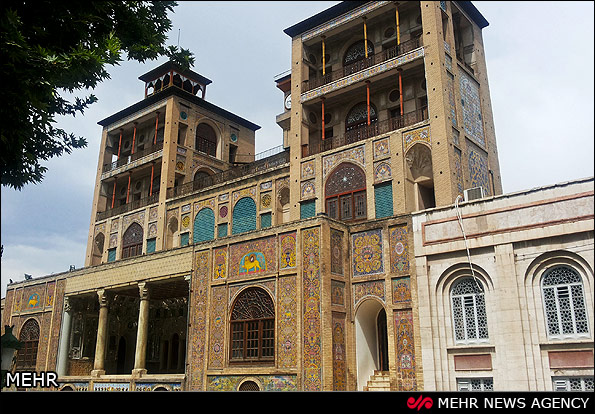
Considered as the best manifestation of Iranian art and architecture from the Qajar era (19th and 20th centuries), the incredibly lavish Golestan Palace is an intangible cultural heritage of the Iranian capital.
The beautiful and colorful architecture is a UNESCO heritage site and is stretched over an area of 4.5 hectares, near Tehran’s traditional Grand Bazaar.
It is one of the oldest historic monuments in Tehran and a masterpiece of beautiful gardens and royal buildings full of Iranian craft collections, where the royal Qajar family used to live for quite some time.
The Golestan Palace is a group of royal buildings that were once enclosed within the walls of Tehran’s Historic Arg (citadel). Its architecture is a mixture of both Persian and European architectural styles, in particular, French.
The complex is made up of 17 buildings with eight key structures. The eye-catching architecture outside is only an introduction into what you will find inside.
It is now a grand complex full of charming Persian art, consisting of gardens, royal buildings, museums and collections of Iranian crafts and European presents.
Some of its most important buildings include: Takht-e Marmar (Marble Throne), Khalvat-e Karim Khani (Karim Khani Nook), Talar-e Brelian (Brilliant Hall), Talar-e Salam (Salam Hall), Talar-e Adj (Ivory Hall), Talar-e Zoruf (Containers Hall), Talar-e Ayeneh (Mirror Hall), Talar-e Almas (Diamond Hall), Emarat-e Badgir (Building of Windcatchers), Shams-ol-Emareh (Edifice of the Sun) and Howz Khaneh (Pond House).
The palace, with very nice and glamorous halls and rooms, each of which reminds the historical importance of the palace, is indeed a must-see place to visit when you are in Tehran. You will have a better experience if you study about Qajar dynasty before visiting the palace.
Sa’d Abad Complex:
Spread over a 180-hectare area, Sa’d Abad complex was built by the Qajars and the Pahlavies (20th century).
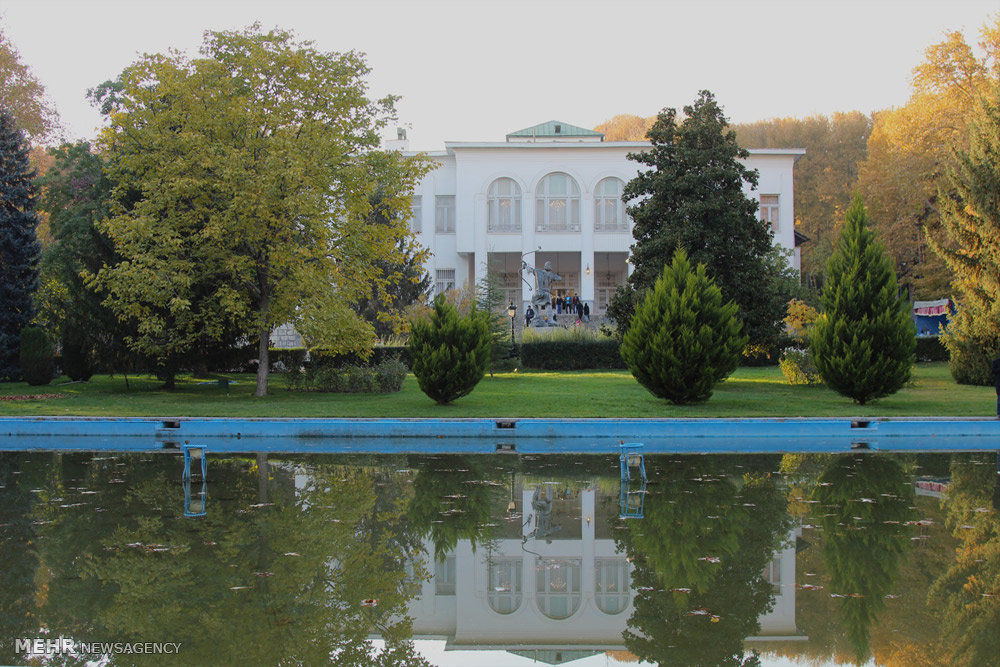
The complex includes a natural forest, several streets, qanats, galleries, mansions and museums. Currently, large parts of the complex are museums, which are accessible to visitors.
Some of buildings of the palace include: Ahmad Shah Qajar Palace, the Green Palace, the White Palace, Museum of Natural History, Museum of Fine Arts, Museum of Anthropology, Museum of Glassware and Handicrafts, the Military Museum, the Behzad Museum, Museum of Treasure, and Museum of Mir Emad Calligraphy.
The most famous palaces are the White palace and the Green Palace, which was the residential of Reza Shah Pahlavi, providing visitors with an insight about the lifestyle of the Iranian king as well as various kinds of 1970s' furniture and art crafts.
The complex’s garden is very nice to walk and it leaves you with a memorable day.
Compared to Golestan Palace, Sa’d Abad represents a more modern face of Iran.
Niavaran Complex:
One of the most beautiful Iran tourist attractions is the 9000-square meters Niavaran Complex. It was built in the scenic surroundings of northern part of Tehran and was used by the Qajar king Naser-e-din Shah (19th century) as a summer residence.
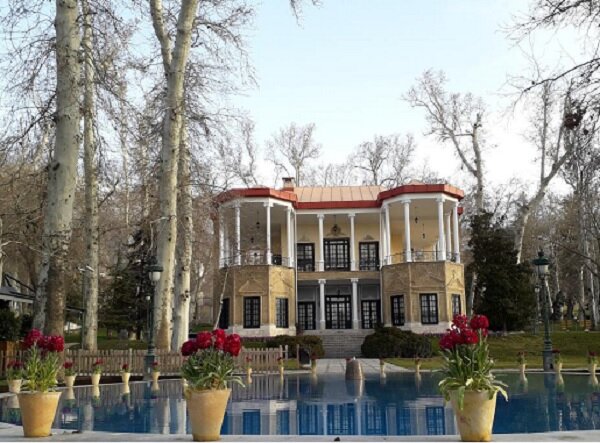
Five museums (Niavaran Palace Museum, Ahmad Shahi Pavilion, Sahebqaraniyeh Palace, Jahan Nama Museum and Private Library), and other cultural, historical and natural attractions such as the Blue Hall, Private Cinema, Jahan Nama Gallery and Niavaran Garden stand among the various parts of the complex.
The Niavaran Palace, completed in 1968, was also the main residence of the last Shah of Iran, Mohammed Reza Pahlavi, and the imperial family until the Islamic Revolution. It seems interesting to discover where the last king of Iran used to watch TV, his children used to play, etc.
The whole complex is inspired by Iranian archeology using modern technology. Like any other royal palaces in Iran, it has breathtaking architecture and decoration.
There are also some famous artworks from Salvador Dali and Picasso. The complex also includes a very big library.

Wednesday, September 18, 2019

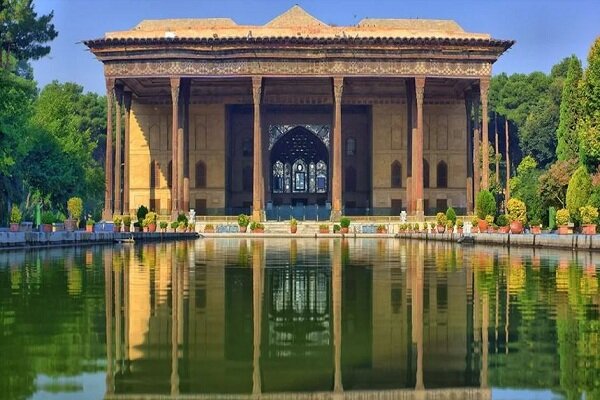
Chehel Sotoun; a blend of prominent Persian garden, glorious palace

TEHRAN, (MNA) – Located next to Naqsh-e Jahan Square and Chahar Bagh, Chehel Sotoun Palace is considered as one of the tourist attractions of Isfahan, Iran.
The attractive Safavid architecture and world heritage sites have made Isfahan province a popular destination for both Iranian and international tourists.
Isfahan is Iran's most beautiful city, where it boasts the highest level of Islamic and Iranian architecture and, as a living museum; shows the culture and tradition of the Iranian people.
The artistic and historical city of Isfahan has over 22,000 historical sites and monuments, of which 850 are nationally registered and four have been designated by UNESCO as World Heritage Sites, namely Naqsh-e Jahan Square, Imam Mosque and Chehel Sotoun Palace.
Chehel Sotoun Palace is renowned for its unique paintings and mirrors and has once been the place of hosting greats from all over the world.
The palace dates back to Safavid Era in 1588, was established during the reign of Shah Abbas I, the first king of Safavid Empire, in the midst of a vast and lush garden. It was a small palace in the middle of a large garden and to be used for the Shah's resting. The immense halls of this palace used to be the selected places for official feasts of the country.
After his reign, Chehel Sotoun Palace was enlarged and inaugurated by Shah Abbas II for receptions and amusements.  Some porches, paintings, ornaments and various parts were added at the behest of Shah Abbas II, making it a glorious palace for the Safavid kings.
It was selected as the official venue for the usual political ceremonies and reception of other kings and officials.
The land of Chehel Sotoun Palace is 67000 square meters. The architecture of this palace is a blend of Iranian, Chinese and European arts and consists of a main porch on the east part of the palace. The 20 slender, ribbed wooden pillars of the palace rise to a superb wooden ceiling with crossbeams and exquisite inlay work.
The name, meaning "Forty Columns" in Persian, was inspired by the twenty slender wooden pillars supporting the entrance pavilion, which, when reflected in the waters of the fountain, are said to appear to be forty.
The main porch of the palace consists of two parts. The first part consists of 18 wooden pillars and 4 middle pillars on the stone lions. The second part of the palace is the Hall of Mirrors, which is on two columns and is decorated with a very wide and beautiful mirror.
The central hall of the Chehel Sotoun Palace is dedicated to guests and great figures from other countries and contains the beautiful paintings by the famous Safavid painter, Reza Abbasi. Each miniature here is depicting one certain time during Safavid dynasty.
In the paintings of the central hall which, in some cases, have been repainted in Qajar period on the previous paintings, we can see the depiction of “Shah Abbas I, Shah Abbas II and Shah Tahmasb entertaining Turkestan kings and Indian Homayoun” and “the battle of Shah Ismail and the Uzbek”. Two other illustrations one in front of the hall entrance opposite to the other depict a scene of Chaldiran Battle in shah Ismail’s period and Karnal Battle in Nader shah Afshar’s time. Dedicated to entertaining the guests and foreign ambassadors, this hall has a pretty dome with colorful corner motifs, golden and lucid details.
The doors and windows are all decorated with fretworks and cachet designs. In addition, the central hall of the palace includes some glamorous paintings on the walls that each refers to a special event on a specific period of time. All these elements are representative of the proficiency of the skillful Iranian masters and architectures.
Chehel Sotoun Palace is a great example of the royal gardens left over from the Safavid era. It was registered on UNESCO Cultural Heritage list in 2011.It is among the 9 Iranian Gardens which are collectively registered as one of the Iran’s 23 registered World Heritage Sites under the name of the Persian Garden.
The best time to visit Chehel Sotoun Palace is in spring and summer and visiting this palace will take one hour.

Monday, August 12, 2019

Difficult but worthwhile ascent

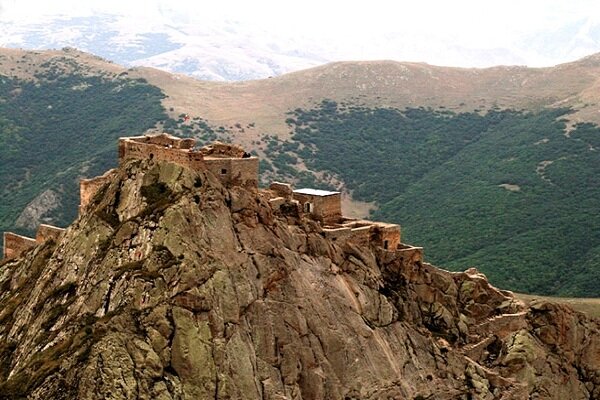
TEHRAN, Aug. 11 (MNA) – One of the mysterious places in Iran which its location made it impossible army of thousands men to pass, is Babak Fort. It sits attractively on a steep-sided mountain in north-western Iran.
Babak Fort, also known as the Immortal Castle or Republic Castle, in East Azarbaijan Province is located on top of a mountain with 2600 meter height in the Arasbaran forests, 6 km southwest of Kalibar City in northwestern Iran. It is known as the most glorious stone castle of Iran.
It is a magnificent and beautiful monument that was the stronghold of Babak Khoramdin, a patriot and militant leader against invaders.
Babak Khoramdin was one of the Iranian commanders of Azarbaijan and main Persian revolutionary leaders of the Iranian Khoramdinan, which was a local freedom movement fighting the Abbasid Caliphate. He persisted against Abbasid for 22 years and gave his life for it. 
The fort is one of the greatest examples of Iranian architecture. It consists of several stone towers and lodging areas stretched in an area of nearly ten thousand square meters, attributed to the Sassanid-era (224–651).
Babak Fort has a multi-story structure in which the main hall has been surrounded by seven rooms all of them ends up in the hall. It was constructed in two floors and has only one entrance gate. There exists a narrow passage about 100 meters high to reach the main fort before the entrance. This passage was under control of guardians in the past in order to check all traffic. There were towers in two sides of the entrance which were the headquarters of guards. The entrance was the only way to enter the fort because of the security issues.
On the eastern side of the fort, there are some reservoirs next to the rooms. The mortar was the materials which were used in building of reservoirs in order to prevent the rain and snow water penetration. In rainy and snowy seasons the tank become full of water that they use it in summer.
Most of the western part is now destroyed, but it seems that it was the place where the troops were guarding and monitoring everything. Staircase is the only way to reach the upper floors; it is located in the northwestern side of the fort. The roof of this reservoirs has been established by barrel and rib vault. 
The Babak Fort has been refurbished many times over the years, but its complete restoration is not easy given its geographical location and conditions. Much of the fort's walls have collapsed, and its current appearance is very different from past.
It was recorded in list of national, cultural and historical opuses in 1966 and has been repaired by The Cultural Heritage Organization of Iran.
Iranian archeologists have found many coins and potteries belonging to 13th century in Babak Fort. The objects and tools obtained from the Babak Fortress are carved and glazed potteries that are belonged to early seventh century A.H.
Given that Babak Fort is in a mountainous area, the best time to visit this glorious castle is from April to early June and also from September to October. Access to fort is challenging and involves one to two hours difficult uphill walk. The hike is not recommended for the infirm, elderly or those afraid of heights.
If you are interested in ancient Iranian history, continue your adventure up the Babak Fort on your journey to East Azerbaijan province.