Monday, October 31, 2022

What’s behind Erdogan’s New Constitutional Changes?

Alwaght- Six months to the presidential elections, the Turkish President Recep Tayyip Erdogan has increased his activities to continue his presence in the power. From the normalization of the relations with the Syrian government and the Israeli regime and mediation in Ukraine war to efforts to change the constitution are the ways Erdogan is referring to for a stay in power. Meanwhile, in recent days, he unveiled a new package of amendments to the constitution. 

Saying that the package of the constitutional changes is prepared by the government, Erdogan maintained that it would improve instability and welfare in the country. According to him, the drafting of a new constitutional amendments in full compliance with the national will is one of the goals of the “Turkish century” vision, and “we are determined to implement this new constitution in a manner worthy of the new age of Turkey. We implement it with the approval of the parliament and the consent of our people.” 

According to the new package of the constitutional amendments, the Turkish government intends to amend Article 24, which addresses the freedom of religion and add some new words saying that no one should be discriminated against in education and work life because of the form of their clothing. Also, it is stated in Article 41 of the constitution that the family is the foundation of Turkish society and it is based on the equality of couples. The government wants to change the term couple due to its ambiguity and alter it to man and woman. Another suggestion is to add the explanation of male and female in front of the word family. Erdogan had previously said about these important amendments that they will preserve all women's rights and protect the institution of the family in the country from the threat of “deviant trends.” Erdogan said that if this issue is not resolved in the parliament, he will leave it to the people to comment on it. 

According to reports emanating from Turkey, the debate over hijab is heating as the presidential and parliamentary elections are drawing close. Although a majority of the country's people are Muslims, the separation of the religion from politics is mentioned in the constitution. For long years, women had no rights to wear hijab in the state organizations and workplaces, but the ruling Justice and Development Party revoked this law in 2013 and now plans to eliminate any discrimination in this regard to ensure equality of the rights of women with hijab to those without it. 

In order to amend the constitution, at least 50 percent of the people must vote in favor. Also, 330 members out of 600 members of the parliament must agree to the change and if Turkish legislators give a positive opinion, the way will be paved for holding a referendum. If the constitutional referendum is held, this will be the 24th constitutional change in the 100-year history of the modern Turkey, which means that the country has witnessed a constitutional change every four years on average. 

By holding a referendum on the issue of hijab, Erdogan wants to show the people of his country, contrary to the arguments of the opponents who accuse him of being a dictator, his government is the most democratic government that bases its work on the opinion of the people in all state affairs. In other words, Erdogan is trying to pretend that all the laws are based on the opinion and vote of the people and that the government is the only an executor and everything that goes on in the society is based on the national will. 

Records of constitutional amendments 
The constitutional amendments under Erdogan have precedents, and before this he had introduced substantial reforms to the national constitution to solidify his power. Having a strong greed for power, Erdogan did not find sufficient 11 years of ruling as prime minister and therefore took another way to retain the power under a new title. 

In 2013, Erdogan took advantage of AKP’s absolute majority in the parliament and changed the political system of this country from a parliamentary to a presidential one. At that time, the MPs agreed to the amendments with 339 votes, and Erdogan recorded his name as the first president of Turkey by winning the 2014 presidential election. 

The constitutional changes were put to referendum in 2017, namely three years of their approval by the parliament, with over 50 percent of people voting in favor. Although the plan was initially proposed for political system change, the failed military coup of 2016 against Erdogan had led to amendments to many of the constitutional articles, empowering the president and giving him a mandate to sway many state affairs. 

With the constitutional changes, Erdogan became the strongest man and practically seized the whole power. This triggered accusations by the opposition labeling him a dictator. The 2017 amendments paved the way for Erdogan to run for a third term, and if he wins 2023 elections, he retains the president post for the third time. 

Still, amending the articles addressing hijab is meant to attract popular support ahead of the elections, and by increasing the freedom of the women with hijab and eliminating the discrimination against them, he tries to win their vote. Changing the law to end discrimination against women with hijab on the eve of the election is a sequel to the same scenario that was carried out in 2013 before the first round of the presidential election. 

In recent months, Erdogan has shown that he does everything to retain power, including breaking with his past policies and sitting on the table with his opponents. So, perhaps in run up to the elections, such movements by him would be more observable in order to win the majority vote. His popularity has been declining since last year due to economic problems and sky-rocketing inflation, and, thus, he is trying to attract all sections of the society with new initiatives in the remaining months and to silence the voice of the opposition, which is getting louder every day. 

The presidential election was originally scheduled for 2014 but since according to the 2017 constitutional amendments the parliamentary and presidential elections should be held simultaneously every five years, it is planned to be held a year earlier. 

Although Erdogan's resorting to all instruments and ways at his disposal for election victory make a positive point for him, his watchful opponents are highlighting his economic and foreign policy failures to dissuade the public opinion from voting for him. Perhaps this time history is not written as he wishes and next year elections can mark end of his two-decade political life. 

Germany leading tension between Iran, Europe

Hadi Mohammadi, Guest contributor

Germany leading tension between Iran, Europe

Hadi Mohammadi

While more than 45 days have elapsed since the eruption of the protests and riots in Iran, bids are still being made by some countries to fan the flames of a dying fire and keep it burning.

This comes as normally such issues are entirely domestic in nature and should be resolved between the people and their government, not through foreign interference by states failing to have a good record in similar areas.

What’s important with regard to the recent events is Europe’s substantial role in inciting the recent riots in Iran. Over the past weeks, some European states have provided overt and covert financial assistance to anti-Islamic Revolution lobbies and allowed them to attack Iran’s diplomatic missions on their soil. Imposition of sanctions against Iranian persons and institutions has been the most recent instance of such anti-Tehran measures. Among these European states, Germany seems to have played a more significant role in the implementation of hostile measures against Iran.

The German government’s role in the adoption of hostile measures and stances has become such bold that one can easily claim that it currently is the U.S. proxy in Europe and that of the international anti-Iran lobby for pressuring Tehran and leading the tension between the Islamic Republic and the EU.

Other than one or two exceptions, relations between Tehran and Berlin have traditionally been based on mutual respect and, at times, warm and cordial, with the latter serving as the former’s gateway to European markets and preparing the ground for its increased relations with Europe. Due to the same reason, the Zionists, a group of hardliners in the United States as well as elements of the anti-Iran lobby always sought to cause tensions in Tehran-Berlin ties, turning them against one another.

What’s currently taking place on the ground indicates that those opposed to favorable ties between Tehran and Berlin have apparently completely succeeded in souring the two sides’ relations. In addition, contributing to the policy of creating a rift in Tehran-Berlin relations have been factors such as bids to link Iran with Russia in the Ukraine conflict – despite Tehran’s official and explicit positions in opposition to war – and the appointment of new German Foreign Minister Annalena Baerbock.

As a matter of fact, despite the norm in the past years, Iran’s case has turned into a priority and an important issue in Germany’s internal policy. Tensions in the two sides’ bilateral ties have reached such a level in form and content never witnessed in their history of diplomatic relations, even in the aftermath of the Mykonos restaurant issue. The tensions in bilateral relations have become more conspicuous, in particular, following the end of Angela Merkel’s term as Chancellor and the coming to power of the new German government.

The Greens’ views and approaches, having turned by Baerbock into Germany’s dominant foreign policy, have caused the commonplace and shallow issues to greatly influence the German government’s emotional and shortsighted decision-making despite the age-old common interests of Tehran and Berlin. Through adopting such an approach, the party is capitalizing on the Ukraine war and human rights issues, which have recently turned into two important topics and priorities for the Europe’s public opinion, to proceed with its anti-Iran policy in the country and the continent.

Proof to the claim is the political and media sorcery that unfolded overnight in the form of presenting the OXI Courage Award of the U.S. Institute of Peace jointly to Masih Alinejad and Ukrainian President Volodymyr Zelenskyy in an effort to link the two issues.

Regrettably it appears that Germany has changed its behavior toward Iran based on emotion and irrationality, with the country’s foreign minister, having prioritized personal and partisan objectives and interests as the government’s top agenda, visibly turning a blind eye to the country’s long-term interests and acting against Iran. This comes as although damaging the two countries traditional age-old relations may be possible overnight, reconstructing such a ruin will definitely be a lengthy and exhausting process.

Based on the available evidence, this is the first time that an anti-Iran element belonging to a minority group, who fails to be popular even outside the country, has become a main source of decision-making in European states, such as France and Germany, against Tehran. Likewise, it is the very first time that anti-Islamic Republic Iranians living outside the country, such as Alinejad, have managed to pass themselves off as a source for Europe’s decision-making against Iran.

Iran has never been interested in the escalation of tensions in its relations with Europe and sees European countries as old partners and customers. Tehran has always sought to draw a distinguishing line between Europe and the United States and that is why it cannot understand the new approach adopted by some European states, particularly Germany, toward itself and seeks to change it.

It will be highly plausible if Europe, especially Germany, refrains from tying its interests to those of the United States and acting and deciding emotionally toward Iran based on the consultation provided by some treacherous elements who have turned their back on their nation’s interest.

Europeans know that they should not easily lose Iran, which is the main factor behind the Middle East’s stability and a place for resolving regional problems, to the whims of a foreign minister and her partisan demands and preferences. Iran and Europe are working together on a large number of cases, including the JCPOA, refugees’ issue and fighting terrorism as well as drug trafficking, the resolution of which is definitely in the both sides’ interests. Any escalation of tensions under flimsy pretexts fails to benefit either side, especially Europe.

Duplicity of US policies are reflected in Malala’s stance urging protests in Iran

  • Shaban Syed


  •  
  • Source: Al Mayadeen English


One can only assume that Malala is clueless and just a puppet to the powers that elevated her to ‘celebrity status’, otherwise she would think twice about joining the western media’s narrative on women’s rights in Iran.

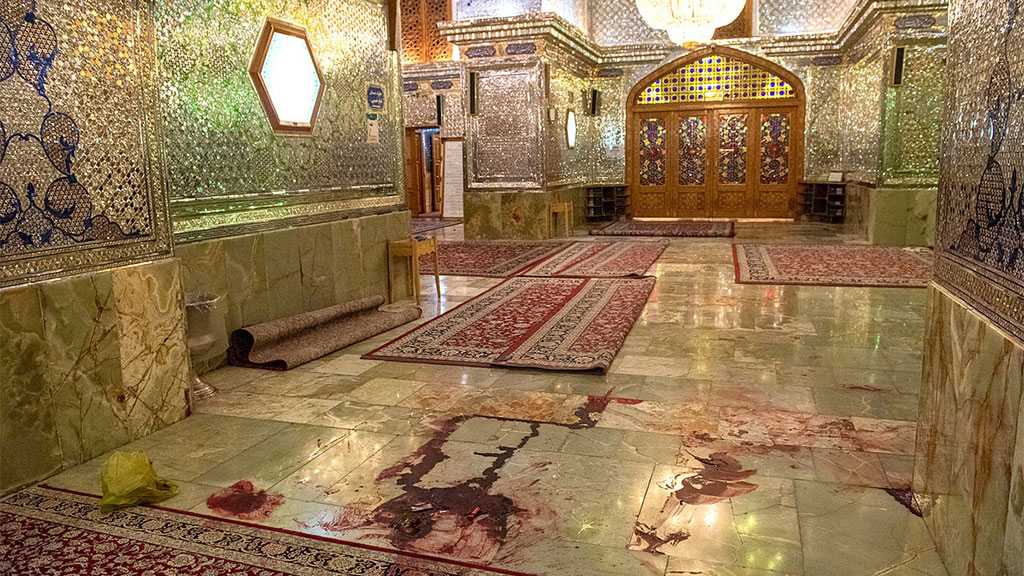
As the “women’s rights” protests are taking place in and outside Iran, ISIS has claimed responsibility for the attack on the Shah Cheragh shrine in Shiraz, killing fifteen and wounding forty.

It should be apparent by now that protests against Iran are part of a process outlined by a senior Mossad official of how "Israel" and the US can “secretly help to advance regime change in Iran”, and according to the director of an Israeli think tank, ISIS “can be a useful tool in undermining "Iran, Hezbollah, Syria and Russia".

The first casualty of war, as they say, is the truth, but when there is a continuous throttling of the truth through a narrative that supports the US’s long-held agenda for regime change, including the “destruction of 7 countries in 5 years”  as exposed by US General Wesley Clark, the duplicity becomes starkly visible. 

The duplicity of those supporting this narrative also becomes visible, as in the case of Malala Yusufzai, the Pakistani of Pashtun origin and Nobel Peace Laureate, who is using her celebrity status to support an onslaught of misinformation aimed at engineering a “regime change” coup in Iran. 

The false narrative being propagated is that a young Iranian girl was beaten to death in a Tehran police station for not wearing her head scarf properly. The Iranians released a video and the medical records of the girl in question, Mahsa Amini, which clearly show that Amini collapsed while standing talking to another woman and that she had a serious underlying condition.

However, the death of this young girl was enough of the spark needed to gather all the MEK and anti-Iran terrorists within Iran to go on a rampage and slit the throats of policemen, officials, and innocent worshippers, while those urging these protests like Nazanin Boniadi, ambassador at Amnesty UK tweet “say it with me…. It’s a Revolution.” 

This was also an opportunity not to be missed by the pro-"Israel" Murdoch press, which went into overdrive with news headlines that the '2022 Iranian Revolution' has begun; with US and UK celebrities cutting off their hair in support and Malala Yusufzai, the Nobel Peace Laureate sending out a video message encouraging the protests: "To the Iranian girls and young women who are in the streets to demand freedom and safety: You are already changing the world with your courage."

At these staged protests, one Iranian woman bared her breasts as a sign of "women’s bodies women’s right." It’s a pity she or Malala couldn’t stand up with the same slogan for Muslim women in France, where hijab for girls under 18 is banned and Muslim women are facing criminal charges for covering their head with a scarf, or they could not protest at the deaths of 35 young girl students killed in a terror attack in Afghanistan.

Therefore, it was cringe-worthy, especially for women of the global south, to watch Malala Yusufzai sending a video message urging the protests. What is even worse for Malala is that she affirmed the rumours that she is stage-managed by the CIA after she joined another CIA asset, Masih Alinejad, the anti-Iran activist whose close links with the organization that lied cheated and stole, are not hidden, nor her links to the American Jewish Committee who awarded her with the Moral Courage Award.

By supporting Alinejad’s shrieks for Iranian women to remove their scarves and overthrow the Iranian government, questions have been raised regarding Malala’s credibility as a women’s rights activist. Or even a human rights activist, in her stance to support the US and "Israel’s" long-held agenda for regime change, while ignoring the abuses and “safety” of women in her own backyard.

In Afghanistan, according to The Borgen Project: “Eighty-seven percent of women have experienced one form of gender violence”, while “62% have experienced all 3 forms: psychological, physical and sexual, where due to poverty the women have no voice and cannot seek justice”. 

Or as one writer in Pakistan’s Express Tribune mourns the death of yet another woman by a murderer who is walking free stating: “Another day to realize the gravity and magnitude of the system that is rigged against women…. a long, lonely, grueling battle where her privacy is torn apart, her clothing is questioned, her mental health is doubted… vile accusations are made against her, her right to justice is made to look like an unlawful act and her raising a voice for herself is regarded as a matter of shame.”

While Malala prances around the UN being awarded the Nobel Peace Prize, which in real terms has little meaning since it was also awarded to US President Barack Obama in his efforts “to strengthen international diplomacy and cooperation between peoples", the same man who threw over 26,000 bombs, killing hundreds of innocents, while targeting Muslim countries like Pakistan, Afghanistan, Libya, Somalia, Yemen, and Syria.  

One can only assume that Malala is clueless and just a puppet to the powers that elevated her to ‘celebrity status’,  otherwise she would think twice about joining the western media’s narrative on women’s rights in Iran, while ignoring the fact that the US went to war with Afghanistan to “fight for the rights and dignity“  of women, to their detriment. Now, after nearly two decades and over $2 trillion, the country is in dire condition where poverty and hunger are rife, and Afghanistan is ranked as the worst place in the world to be a woman.

A 2018 Time magazine report stated that an estimated two-thirds of Afghan girls do not attend school, and 87 percent of Afghan women are illiterate. A “watchdog report called the USAID’s $280 million Promote program – billed the largest single investment that the U.S. government has ever made to advance women’s rights globally – a flop and a waste of taxpayer’s money”.

What most of these reports will fail to highlight is the duplicity that President Biden unwittingly exposed when he said “our mission in Afghanistan was never supposed to have been about nation-building, it was never supposed to be creating a unified central democracy”. 

The 91,000 war logs in the Afghan diary detailed the killing and raping of women and children by NATO’s soldiers. Daniel Hale, who served in Afghanistan as a US soldier, outlined gruesome details of how “drones killed innocent children and then we would put into our reports that they weren’t children but goats”

While Malala and the Pakistani political elite champion the rights of the US to implement its policies with impunity, respected Journalist Vanessa Beeley, speaking on RT (another TV station banned by US and NATO), argues the US is “profoundly hypocritical” and does not care about women’s rights, rather it has “weaponized the issue of human rights in pursuit of their goal to go to war or destabilize a country, as they are attempting with Iran”.

She argues: “where were the rights of women and civilians of Iran when the US was supplying chemical weapons to Iraq to be used against Iranian civilians”?

“Where are the rights of the women of Iran when the US is imposing savage economic sanctions on the people of Iran. Where are the rights of the women in Syria when the West, the US the UK cabal is funding terrorist groups that would take women’s rights groups back to the dark ages to the medieval era…”

Instead of a defender of women’s rights, Malala has become a symbol of the West’s duplicity of ‘smiles’ layered with hypocrisy, symbolizing US foreign policy. The same foreign policy that removed the democratically-elected, most popular Prime Minister Pakistan has ever had, Imran Khan, and installed the Sharif government, many of whom had been indicted by courts for corrupt practices and money laundering

It is apparent that while Malala enjoys the privileges bestowed on her by Western governments and media, she will not be raising her voice with 90% of the Pakistani population who “do not want the US imported government”. Or question the fact of how a respected Pakistani journalist Arshad Sharif, who had been accused of voicing “anti-state” opinions and involved in making an anti-corruption documentary targeting members of the US-backed Pakistani government was “accidentally” killed in suspicious circumstances?

Analyzing the Palestinian Islamic Jihad

  • Hanna Eid 
  • Source: Al Mayadeen English

While the early PIJ nucleus held study circles on Qutb and Al-Afghani, their transformation into a resistance faction with material capability against the Zionist regime came in large part from recruiting former Fateh, PFLP, DFLP, and ALF fedayeen in prison. So what does this mean?

The analysis of the question of Palestine and liberation from colonialism and imperialism was always posited in a materialist way for the Palestinian Islamic Jihad (PIJ) and one of its founding fathers, Fathi Al-Shiqaqi. “This is the history of the superpowers’ relationship with oppressed peoples” (1).

While he argues that there are certainly Quranic justifications for the falling of tyrants and the freedom of Muslims, Al-Shiqaqi always analyzed them in two separate but interrelated ways. Though there definitely seems to be some common ground between the works of Al-Shiqaqi and communists of the Third World (Amin, Fanon, PFLP), yet I also see in Al-Shiqaqi some elements of the Civilizational theories (Dugin, Abdel-Malek).

PIJ documents often separate the materialist and metaphysical arguments with regards to imperialism, colonialism, and the West’s ‘crusader ideology’, thus Al-Shiqaqi does not make grand claims about Islam as a 'pill' the whole world needs to swallow, although Ramadan Shallah, another PIJ founding father, is more convinced that the entire world should be converted to Islam.

In the work of Al-Shiqaqi, we can see Islam as a unique solution in the geographical, cultural, and spiritual arena of the Arab/Islamic civilizational sphere (AFR-Arabian in the words of Ali Mazrui (2)). By this, I mean that a unique type of society could be built in this area; this civilizational project could have Islam as a metaphysical and cultural frame of reference, and socialism (or in fact any other method of politico-economic organization) as the economic and political frame of reference. For example, in China under the guidance of the CPC, Socialism with Chinese characteristics is what works. It is socialism uniquely adapted to the local, regional, and modern conditions of China. Thus, we have seen President Xi Jinping reviving Confucianism to humanize the peaceful development in the PRC, and using cultural-civilizational touch points that are part of the Chinese lexicon (3).

In Bolivarian Venezuela, Nicolas Maduro and his predecessor, Comandante Hugo Chavez, never renounced Christianity, and are themselves deeply true believers who understand that Christianity acts as a moral and metaphysical framework for their people. Yet, they also understand how amenable Christianity is to the construction of Bolivarian socialism. When I read the PIJs’ political and historical documents, I saw these features for Palestine and the whole Ummah. Obviously, local conditions differ greatly (Sykes-Picot and the division of the Ummah made it this way) but this is what I envision for an Islamic socialism. Yet, as Al-Shiqaqi notes, all of our struggles right now are based on “calculations of immediate gain and loss” (4) instead of a coordinated and integrated attempt to build an Islamic renaissance.

While the early PIJ nucleus held study circles on Qutb and Al-Afghani, their transformation into a resistance faction with material capability against the Zionist regime came in large part from recruiting former Fateh, PFLP, DFLP, and ALF fedayeen in prison (5). So what does this mean? Firstly, it means that the colonial prisons have been the site of the development of new advancements in the struggle for Palestine. Secondly, it means that with a civilizational approach to history, as opposed to a purely metaphysical or purely materialistic approach, organizations and their philosopher-martyrs can adequately analyze and study their conditions, while also providing a solution to the contradictions of these conditions.

Looking deep into history with a full understanding of the civilizational approach has benefits when studying the Arab-Islamic civilizational sphere. According to Abdel Malek: “The first wave of invasions, looting, penetration, occupation was to hit the Arab-Islamic region, starting from the ninth century, from the Crusades to Zionist militarism” (6). Al-Shiqaqi recognized this when he recalled the heroes of Palestine and simultaneously diagnosed the collective West as adhering to a crusader ideology:

Thirteen centuries later, in one of the honorable days and on the path of extended continuation—the continuation and persistence of this great religion— came the…Husseini pioneer called Izz al-Din al-Qassam. He raised his small hand in the face of the next crusader invasion. Confronting the foul Britain and its Zionist affiliate, Al-Qassam fell as a [Husseini] martyr on the mountains of Palestine. (7)

The civilizational approach allows us to use cultural touchpoints with respect to historical and power-political analysis. It also allows us to stretch and use the strengths of the Marxist historical materialist approach for our own local conditions. This is the lesson of Fanon, that in the colonial context Marxism must be stretched, revisited, and reinterpreted. The above quote by martyr Fathi Al-Shiqaqi is also evidence of the ability of the Axis of Resistance to transcend the sectarian splits in our Ummah, which are exploited and aggravated through the collective West’s crusader ideology.

So while Erik Skare argues in his books on the PIJ that “Ali Shari’ati represents an Islamic Marxist position, and represents the most ‘centrist’ Islamic position, more akin to Khomeini”, as their positions are far from incompatible, the assertion that the martyr Izz al-Din Al-Qassam is ‘Husseini’ carries with it the weight of the Arab-Islamic civilizational project. This above quote highlights that in the realm of creed, Al-Shiqaqi and the PIJ see Shi’a Muslims as no different than their Sunni coreligionists, and that Shi’a-Sunni conflicts are Zionist driven fitna (strife) that seeks to sew discord.

The recent rapprochement between Hamas and the Syrian Arab Republic shows that the rise of multipolarity and the end of American and Zionist designs in West Asia requires a twofold approach. The first approach, according to Alexander Dugin, is that “correct evaluation of geopolitical timing is crucial”.

The growing strength of Ansarullah in Yemen, the evident weakness of the Zionists in their negotiations with Lebanon regarding the Karish gas field, the rising strength of the Palestinian resistance factions, the US and NATO’s tunnel vision in Ukraine, the growth of China’s Belt and Road Initiative (now including Syria); all of these developments point to a crucial time for a renewed push towards liberation.

The second approach relates to promoting unity in struggle across ideological and sectarian lines. Baathist Syria, an Islamic Iran renewed in strength, Shia Hezbollah, Sunni Hamas and PIJ, secular-nationalist PFLP, and Zaydi Ansar Allah can and have united to work towards expelling the invaders, what's left is to plan for the future. What will this future liberation look like? Is it possible to view things like Al-Shiqaqi did? A dual approach of spirituality and shrewd geopolitical analysis with respect for the religious and cultural lives of the people, combined with a government and economy capable of promoting equality and a good life for its citizens is necessary, in my opinion.

The rights of other cultural expressions within the Arab-Islamic civilizational sphere must be respected: Orthodox Christians, Catholics, Kurds, Assyrians, Jews, and other minority groups must be respected and integrated into this renewed civilization.

So again we see the power of the civilizational approach, not in the style of Huntington, which carries with it the anxieties of the collective West in the face of the rise of multipolarity, but in the style of Alexander Dugin and Anouar Abdel-Malek, where the cultural traditions of the oppressed peoples are not ridiculed, nor subject to an infantile leftist anti-theism. Instead, these cultural touchpoints are cherished, revised for the current epoch, and seen through a lens of liberation from the domination of invading states. The analytical strength of historical materialism remains in this case as well, and it strengthens the civilizational approach. An Islamic approach, unique to our civilizational project, is what propelled and drove martyr Fathi al-Shiqaqi; his participation from the prisons and the grassroots allowed him to see from the great heights of the civilizational view that every problem has a unique solution.

Sources: 

(1) Al-Shiqaqi quoted in Skare, Erik. A History of Palestinian Islamic Jihad. Cambridge University Press, 2021.

(2) Mazrui, Ali A. Euro-Jews and Afro-Arabs: The Great Semitic Divergence in World History. University Press of America, 2008.

(3) https://thediplomat.com/2014/09/the-chinese-communist-partys-confucian-revival/

(4) Al-Shiqaqi quoted in Skare, Erik. A History of Palestinian Islamic Jihad. Cambridge University Press, 2021.

(5) Ibid

(6) Abdel-Malek, Anouar. Nation and Revolution. State University of New York Press, 1981.

(7) Al-Shiqaqi quoted in Skare, Erik. A History of Palestinian Islamic Jihad. Cambridge University Press, 2021.

Germany’s turn from economy to politics

Ali Majedi, Iran’s former ambassador to Germany

Germany’s turn from economy to politics

Ali Majedi

Britain and France are traditionally the political players of Europe, while Germany usually tends to shape the continent’s economic policies. That is why long-standing relations between Tehran and Berlin have their roots in the economy.

Basically, Germans have taken moderate positions in foreign policy, especially toward Iran. For instance, Berlin has played a constructive role in the JCPOA talks, unlike France and Britain, which have sometimes adopted tough stances against Tehran. Another example is the Mujahedin Khalq Organization – an opposition group operating against the Islamic Republic of Iran, which customarily hold its rallies in France, where it has been granted more leeway than in Germany.

Germans assumed a softer stance toward Russia than other European countries. They even tried to push the Russian president to stand down at the advent of the Ukrainian war. The situation changed when the conflict dragged on. The United States stepped in to explicitly support Ukraine and the European Union followed suit.

It was when pro-Russians ceded power in Germany and the new government launched its mission in defense of Ukraine. The new leaders in Germany appear to be rather tough. Therefore, their recent aggressive stances against Iran have nothing to do with the street protests in the Islamic Republic. Rather, such position stems from the alleged use of Iranian drones by Russia against Ukraine. 

Germany has never been opposed to the development of relations between Iran and Russia. However, it followed in the footsteps of the U.S. and the EU to be hard on Iran after the drone allegations popped up.

The Islamic Republic of Iran has announced its opposition to the war and denied the sale of drones to Russia for use against Ukraine. But the new twist in Germany is that Berlin is turning from economic priority to political priority and getting closer to the U.S. Although they already had close ties with the U.S., after the war in Ukraine their relations have become more intimate.

The US will fail to drive Iran to its knees

  • Rabi Sankar Bosu 
  • Source: Al Mayadeen English

Since the 1979 Islamic Revolution of Iran, the country has made significant progress in the fields of education, culture, sports, science and technology.

Following the death of 22-year-old Iranian woman Mahsa Amini in hospital on September 16 after she collapsed at a police station in Tehran, the anti-hijab protests in Iran have captured much attention from the global media. Her death is really unfortunate but the way the United States, “Israel” and other western countries are conspiring to overthrow the Iranian government under President Ebrahim Raisi needs to be unmasked. 

Words of the tragic death of Mahsa had spread through the capital Tehran and various provinces of Iran like a flame fanned by wind through foreign media. 

According to many western media reports, the anti-regime protests of Iranian girls and women are spreading in other parts of the world including France, England, Ireland, and Germany, to name a few. 

Yet,  the international community should be careful about how the U.S.-led  Western countries and their mainstream media are using the hijab as a pretext “to weaken Iran's stability and security by supporting rioters”, as in the words of Iran's Foreign Ministry spokesperson Nasser Kanaani. Western media and Iran's enemies have spread daily millions of propaganda content on social media targeting Iran's Islamic Revolution while creating a negative attitude in the minds of the world about Iran. The western media's coverage of Amini's death is the prime example of a disinformation campaign.

An investigative report carried out by the Arab Independent Media website, Al Mayadeen English revealed on September 17 that “Amini was never assaulted, beaten, or abused, and the proof was CCTV footage that slammed western reports and proved they were fake and fabricated”.

On September 21 at the 77th session of the United Nations General Assembly (UNGA) in New York, U.S. President Joe Biden criticized the Iranian government for not allowing anti-government protests by referencing the death of an Iranian woman in custody by stating that “we stand with the brave citizens and the brave women of Iran who right now are demonstrating to secure their basic rights”.

But the truth is the opposite. The US’ claim for defending women’s rights is nothing but a hoax. It is the geopolitical and economic interests of the U.S. and its allies whether there will remain an Islamic government in Iran or not. America's main goal is to keep West Asia's oil in its own possession by using the Arab-Israeli conflict. Therefore, the freedom of women and girls in Iran or other parts of the world is just an empty slogan of America.

If we look back at history, we can see how the U.S. government and the Central Intelligence Agency (CIA) horrifically interfered in Iran's political history. The CIA with British intelligence overthrew Iran’s democratically-elected Prime Minister Mohammad Mossadegh on August 19, 1953, by carrying out “Operation Ajax”. Declassified documents released by the U.S. government in 2017 revealed that the CIA ‘hired’ protesters at a cost of thousands of dollars to remove Mossadegh from power to control oil wealth in Iran and Saudi Arabia. Undoubtedly, the 1953 coup in Iran by the CIA is clear proof of America’s meddling in other countries’ internal affairs.

The U.S.  and its Western allies are worried about Iran’s nuclear programme. Therefore, with the efforts of President Barack Obama, the five permanent members of the United Nations and Germany signed a nuclear deal, known as the Joint Comprehensive Plan of Action (JCPOA) with Iran in 2015. But in an unprecedented move, former President Donald Trump unilaterally abandoned the JCPOA in May 2018 and imposed all kinds of economic sanctions on Tehran that led to poverty and chaos in Iran. On October 4, Biden said that the U.S. will impose "further costs" on Iran over a crackdown on peaceful protests.

The ongoing foreign-backed riots in Iran (as revealed by the arrest of nine foreign nationals) raise a burning question: Will the U.S. government with the help of the CIA make Iran another Afghanistan or Iraq or Vietnam? 

Regarding the nationwide violence and anarchy over the death of Mahsa Amini, a few words of the Iranian leader of the Islamic Revolution Ayatollah Sayyed Ali Khamenei deserve to be quoted here: “I state it clearly that these developments were planned by the US, the Zionist regime and their acolytes. Their main problem is with a strong and independent Iran and the country’s progress. The Iranian nation proved to be fairly strong during recent events and will bravely come onto the scene wherever necessary in the future”, he said while attending a joint graduation ceremony for cadets of armed forces academies in Tehran on October 3.

Since the 1979 Islamic Revolution of Iran, the country has made significant progress in the fields of education, culture, sports, science and technology. According to UNESCO reports, as of 2016, the literacy rate among girls aged 15 and above in Iran is 85.5 percent. For girls aged 15 to 24, this rate is 97.9 percent which was 42.33 in 1976. The Iranian government spends 23.1 percent of total government expenditure on education (2020). This surprising data surely refutes the so-called 'tyranny' of Iran’s ‘regime of the mullahs’ on women in Iran as fabricated by the Western world.

America knows well that despite exerting maximum pressure, it cannot bring down the Islamic regime of Iran to its knees. So they want to achieve their nefarious goals by creating division among the Iranian people with the help of the death of a young woman. Iran will move forward in its self-glory, defying obstacles and conspiracies of the West like economic embargo, media propaganda, and patronage of internal enemies. It is hoped that the U.S. government should judge their own human rights record from Palestine to Afghanistan, from Iraq to Syria and even on their own land before lecturing Iran and other countries about their human rights records.

Iran Arrests Second Individual Involved in Shiraz Terrorist Attack

By Al Ahed Staff, Agencies

Iran Arrests Second Individual Involved in Shiraz Terrorist Attack

Iranian Intelligence Minister Esmail Khatib said the ministry’s forces have arrested the second individual involved in last week’s terrorist attack on the highly revered Shah Cheragh shrine in the southern province of Fars.

Khatib made the remarks during the Passive Defense National Conference on Monday.

“Technical and defensive measures by the Intelligence Ministry” led to the arrest on Sunday night of the second person involved in the terrorist attack, he said, adding that the ministry was also tipped off by people.

People’s awareness can foil enemy plots, Khatib argued, also noting that “If people pay attention and be present in the scene, the enemy will be disappointed.”

A heavily-armed terrorist assaulted the well-known shrine at approximately 5:45 pm local time on Wednesday, just before the evening prayers, killing 15 pilgrims — including a woman and two children — and injuring at least 40 others.

The attacker opened fire indiscriminately on visitors within the shrine, according to the police commander of Fars province. He was wounded and later succumbed to his wounds in hospital.

The Daesh [Arabic for ‘ISIS/ISIL’] Takfiri terrorist group has claimed responsibility for the act of terror.

Leader of the Islamic Revolution His Eminence Imam Sayyed Ali Khamenei and other Iranian officials have offered condolences to the Iranian nation, assuring that the perpetrators of the “outrageous” crime will definitely face punishment.