
By Palestine Chronicle Staff
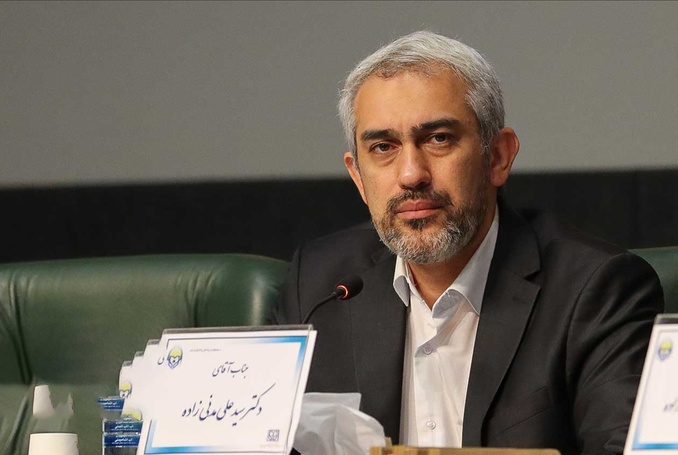 Iranian Economy Minister Ali Madani Zadeh. (Phot: Salmas1394/Wikimedia)
Iran has vowed to withstand Washington’s new global sanctions campaign, saying it prepared in advance for attempts to sever its economic lifelines.
Key Takeaways
- Iranian Economy Minister Ali Madanizadeh said Tehran was “fully prepared” for Washington’s new economic offensive and had developed a two-year plan in anticipation of intensified sanctions.
- “You will not be able to cut our financial arteries,” Madanizadeh said, arguing that the end of the unipolar world had weakened Washington’s ability to economically isolate Iran.
- US Treasury Secretary Scott Bessent unveiled “Operation Economic Outcast,” threatening secondary sanctions against foreign banks, companies and governments maintaining identified economic links with Tehran.
Iran: ‘We Have Been Preparing for These Days’
Iran said it was prepared to confront the Trump administration’s newly announced economic offensive, dismissing Washington’s threat to sever Tehran’s international financial connections.
Iranian Economy Minister Ali Madanizadeh said on Tuesday that the government had anticipated intensified US sanctions and spent considerable time preparing measures to mitigate their impact.
“We have been preparing for these days for a long time,” Madanizadeh told Iranian state television.
According to the minister, Tehran had been aware of Washington’s plans and developed a two-year strategy in preparation for a renewed economic confrontation.
“We are fully prepared to confront the sanctions and American measures,” he said.
Madanizadeh directly rejected Washington’s stated objective of severing Iran’s access to international financial networks.
“You will not be able to cut our financial arteries,” he said.
The Iranian minister argued that changes in the global economic and political order had reduced Washington’s ability to impose comprehensive isolation on other countries.
“The era of the unipolar world is over,” he said, adding that the United States would once again discover that it “will not succeed at all.”
In the Second World War, D-Day marked the historic beginning of a campaign with our allies to target and drive the enemy from its positions, including those in third countries. Today, in that same spirit, we are launching an economic onslaught against Iran’s financial connections… pic.twitter.com/1fLyobUucu
— Treasury Secretary Scott Bessent (@SecScottBessent) August 24, 2026
Trump’s ‘Economic D-Day’
Iran’s response followed the Trump administration’s announcement on Monday of what it described as a sweeping new campaign to isolate the Iranian economy.
US President Donald Trump had promoted the initiative as Iran’s ‘Economic D-Day’, while Treasury Secretary Scott Bessent formally unveiled what Washington has named ‘Operation Economic Outcast’.
“We are launching an economic onslaught against Iran’s financial connections around the globe,” Bessent said at the Treasury Department, according to CNBC.
The administration has not yet imposed the threatened new sanctions.
Instead, Bessent said Washington would begin sending individual countries timelines for shutting down activities identified by the United States.
Trump himself is contacting foreign leaders and making “specific requests to cease their interactions” with Tehran, according to the Treasury secretary.
“Any entity that facilitates money laundering on behalf of Iran will be removed from the US dollar system,” Bessent warned. “The clock just started ticking.”
Washington Seeks to Sever ‘Every Economic Lifeline’
Bessent described the objective in expansive terms, saying Washington intended to isolate Iran across multiple sectors of the global economy.
“Our objective is to sever every economic lifeline that sustains this tyrannical regime until Tehran stands alone,” he said.
The administration identified entities that purchase or transport Iranian oil, facilitate financial transactions, accept Iranian flights or enable seaborne transfers as potential targets.
Washington also intends to expand its sanctions reach into digital assets, technology, gold, aviation and shipping.
The strategy relies heavily on secondary sanctions, allowing Washington to threaten foreign companies and financial institutions with penalties for maintaining specified commercial relationships with Iran.
Crucially, institutions found to be facilitating targeted Iranian transactions could face exclusion from the US financial system, giving Washington significant leverage because of the dollar’s central role in international finance.
China Not Exempt, Bessent Claims
The initiative could also create friction between Washington and Beijing, given China’s position as Iran’s leading trading partner.
Asked whether the administration would sanction Chinese banks or avoid doing so to protect its fragile trade relationship with Beijing, Bessent said no country would automatically be spared.
“We want to make clear here today that no one is above the reach of US sanctions,” he said. “If they facilitate transactions and are part of the ecosystem that turns Iranian oil into money, into repression, they will be targeted.”
The warning comes as Washington and Beijing maintain a fragile trade truce following last year’s escalating trade confrontation.
Trump and Chinese President Xi Jinping met in Beijing in May, while Xi is expected to meet Trump in Washington in late September.
Targeting major Chinese banks or companies over their relationships with Iran could therefore bring Washington’s campaign against Tehran into direct tension with its negotiations with Beijing.
Araghchi: Washington is Repeating an Old Strategy
Iranian Foreign Minister Abbas Araghchi separately portrayed the new campaign as another version of a longstanding US strategy that Iran had already learned to confront.
Speaking on the sidelines of a ceremony at the shrine of the Islamic Republic’s founder, Imam Khomeini, Araghchi described Washington’s latest threats as “a repeated scenario and continued intimidation in American policy.”
He argued that the return to intensified economic pressure demonstrated Washington’s inability to achieve its objectives through other means.
According to Araghchi, the United States’ return to “old plans and threats” reflected “its despair at achieving its goals.” The US, he added, “has no choice but to speak respectfully to the Iranian people.”
Economic Front of Wider US-Iran Confrontation
The new campaign comes as the US war against Iran approaches the six-month mark, with Washington increasingly turning to economic pressure alongside its military strategy.
A ceasefire arrangement reached in June had largely unraveled before its 60-day deadline expired, while the Strait of Hormuz remains a crucial source of Iranian leverage over global energy flows.
Iran has also faced a US naval blockade of its ports and coastline, which Tehran has characterized as an act of aggression.
The United States has reported fewer strikes against Iran in recent weeks, while reports have raised questions over the depletion of some US weapons stockpiles.
Washington is now seeking to extend the confrontation far beyond Iran itself by forcing governments, banks, shipping companies and other entities worldwide to choose between continued dealings with Tehran and access to the US financial system.
Tehran, however, is presenting the campaign as another test of a sanctions regime it has confronted for decades.
For Madanizadeh, Washington’s stated ambition to economically isolate the Islamic Republic faces a fundamentally different international environment.
“We have been preparing for these days for a long time,” he said. “You will not be able to cut our financial arteries.”
(PC, CNBC, Al Mayadeen)

No comments:
Post a Comment