As a young woman, I was attracted to the language of equality and social justice and felt compelled to take a position in the feminism debate. “How could anyone support inequality or injustice?”, feminists would accusatorily ask. “Stand on the right side of history,” they’d say, presenting feminism as the default position, a fait accompli that I needed only approve. However, after I examined the terms, arguments, and underlying framework of feminism, it became clear that I was emerging with more questions than answers. The lack of clear definitions, the shallow and subjective readings of history, and the inconsistency between the figureheads and intellectual powerhouses of the movement all drove me to consider an alternative.
I drifted to the other side of the debate and was disappointed by the lack of answers among anti-feminist reactionaries. The same vitriol, inadequacy, and inconsistency prevailed, though it was arguably even worse in reactionism and pseudo-intellectualism. Moving from one camp to its equal and opposite extreme revealed that they are, neither in substance nor in form, not significantly different. In fact, both movements operate in a closed circuit, fueling each other within the same paradigm. On one side, feminists and social justice warriors and on the other, “red pilled,” purported champions of traditionalism, male dominance, and even science.
Rivals in the Gender Wars: One and the Same
Both of these movements talk over women, ignoring everything that contradicts or undermines their arguments – as if this were all a game and not immediately consequential to half the world’s population. The harms of the feminist paradigm, including immediate physical ones, like unlimited abortions and “liberated” sexuality, to familial and social ones, with individual whims superseding collective considerations make it unsurprising that one might seek answers elsewhere. However, anti-feminist activists dismiss, with tired slogans like “not all men” and “feminazis,” the slightest concern over issues like women’s access to healthcare or education and characterize such concern as an attempt to shame men. Anti-feminists activists label any man who agrees with criticisms or calls on other men to embrace and utilise their manhood in support of women who face oppression as controversial, prejudiced, and “whipped.”
The biggest loser between these two movements is intellectualism, decency, and level-headedness, as both build from the same self-defeating foundation: either men consistently oppress women or women consistently oppress men, thus affirming the subscription of both movements to an inevitable, even natural, physical and metaphysical inequality of men and women. While feminists purport the problem is a patriarchal society that marginalizes women and forces demeaning compromises in favour of the masculine, “red pill” vigilantes maintain that society is increasingly and viciously misandrist and forsakes and problematizes masculinity. Such emotional, exaggerated, and high volume diatribes presume a dystopia for both genders: in the eyes of feminists, a violent world order of male supremacists achieving their lust for power through the subjugation of an eternally inferior gender, or in the eyes of anti-feminists, a world in which all women are (amazingly) both vicious ideologues driven by anger and incoherent emotional wrecks incapable of managing their own affairs, let alone those of entire societies.
The Remedy of Sacred Law
What is the alternative to these movements? How can Islamic law, morality, and ethics emancipate women from both the slave labour of the workplace and the tyranny of male members who in traditional societies control all the aspects of a woman’s wealth? How can it prevent sexual abuse and harassment by men, behavior that seems to have only amplified today, in spite of (or perhaps because of) the efforts of feminism? As Muslims, we must deliver Islam in a relevant manner that explores diverse societies and how the sublime moral beliefs of Islam can shape a well-ordered society.
John Rawls (1921-2002) first defined the term “well-ordered society,” as a society in which “…all citizens accept the principles of justice and know that their fellow citizens also do so, and all citizens recognize that the basic structure is just. The full philosophical justifications for the principles of justice are also knowable by and acceptable to all reasonable citizens.” As Wael Hallaq argues in The Impossible State, the pre-modern Islamic society that operated under the Shari’i paradigm was an exemplary form of the well-ordered society, in which everyone knew his rights. One did not need highly trained lawyers speaking in jargon with high fees to represent them in courts where they would feel out of place. The Shari’i justice system was simple and clear, as any person, Muslim or non-Muslim, could go directly to a judge, and because all understood the language of the Qur’an and the morality that underpinned society, could demand his or her rights.
Inheritance laws exemplify this. In pre-modern Islamic societies, women inherited less than men in four scenarios, similar to men in ten scenarios, and more than men in fourteen scenarios. The complexity of equity in the Shari’a was not a confused and contradictory framework, but an intricate mosaic of rights and responsibilities that served the well-ordered society. The Shari’i paradigm harmonizes between the sexes and dissolves many feminist and anti-feminist polemics. This paradigm is predicated on divine revelation and ‘Urf (the common knowledge and traditions of the people), both of which have been epistemologically eviscerated in the modern world that defines itself as secular and progressive. Divine revelation holds no authority and the tradition of our forefathers is decrepit, leaving us to the whims of man – the very antithesis of a well-ordered society – and to our dilemma today.
It is clear, then, that reactionary theories cannot resolve today’s issues. They merely operate within the paradigm that has birthed feminism, selectively and irrationally pontificating and neglecting the real problems men and women face. There is no attempt to reconcile these two camps: only an endless stream of contrarian invectives and no practical solutions to maintain the dignity of both those in need of help and those with the power and privilege to offer alternatives. Overcoming the self-serving polemics on all sides requires more than a return to reason and sensibility. It necessitates a well-grounded and comprehensive framework that re-centers Allah ﷻ and accounts for individual and collective concerns, complementarily honouring and privileging both men and women. We must move away from zero-sum discourse towards the makings of a well-ordered society, where harmony prevails over discord, and we are guided by the words of our Creator:
The believing men and believing women are allies of one another. They enjoin what is right and forbid what is wrong and establish prayer and give zakah and obey Allah and His Messenger. Those – Allah will have mercy upon them. Indeed, Allah is Exalted in Might and Wise. [9:71]
About the author: Mariam is a university student living in Egypt. Her interests include literature, art, psychology, philosophy, and sociocultural thought.
Attention to justice is the barometer for the rise and fall of civilizations
Kevin Barrett
Just a few decades ago, the US empire was riding high. After helping put the Soviet Empire out of its misery, Washington declared itself the “sole superpower” and “indispensable nation” possessed of a mysterious “exceptionalism” that allowed it to do whatever it wanted anywhere in the world. The self-styled unipolar hegemon set out to arbitrarily inflict its values, corporations, and military bases on the whole planet, irrespective of the wishes of the inflictees.
Today, events have spun out of Washington’s control. China is becoming the world’s leading economic and technological behemoth; military primacy will soon follow. Russia is deploying advanced weapons that can devastate US forces anywhere in the world, making a joke of US plans to achieve a nuclear first strike capability. Even Uncle Scam’s EU lapdogs are yapping noisily and inflicting a few bites on Uncle’s ankles — including efforts to defy Trump’s sanctions on Iran by chipping away at US dollar hegemony in international trade.
Muslim-majority countries are recovering from post-9/11 US-Zionist intimidation. Iran leads the way by continuing to tread an independent, Islamic path, remaining defiant even as Trump unleashes the furiously barking but toothless mad dogs Bolton and Pompeo. Syria has prevailed against the Empire’s regime-changers, and is joining Lebanon, Yemen, and perhaps even Iraq in an Axis of Resistance opposed to Zionism and imperialism. Turkey has defeated a US-backed coup attempt and asserted inklings of independence. Malaysia and Pakistan have elected leaders who support the global 9/11 truth movement and are generally skeptical of US and Western power. Even US-occupied Qatar, a tiny country that punches above its weight thanks to natural gas exports and its al-Jazeera media empire, has defied the Trump regime and gotten away with it.
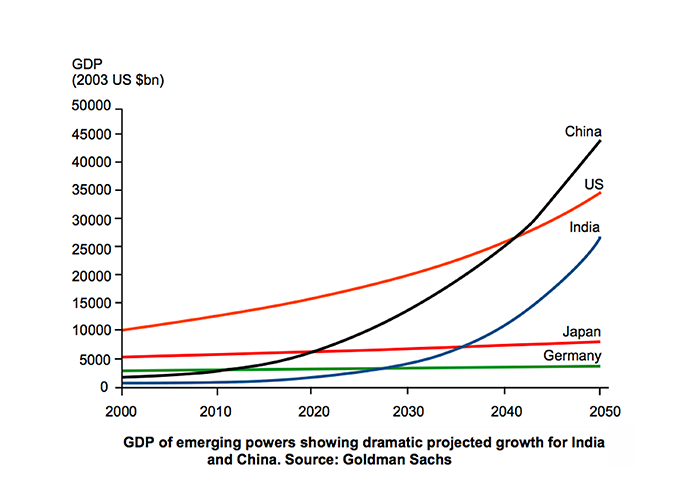
Washington’s loss of global political power stems from a larger process of Western civilizational decline. One key metric is economic. The US-EU share of global GDP is projected to decline from nearly 60% in 2000 to less than 30% by 2050. Another metric is population. The US birth rate has dropped to 1.7 children per woman. In Europe it is at 1.6, while in the biggest and most economically vibrant European nation, Germany, it is less than 1.5. These are all far below replacement levels.
Why is the West, led by its American flagship, facing such steep political, economic, and demographic decline? One way to approach the question is through the two best-known theoreticians of civilizational decline, Ibn Khaldun and Oswald Spengler.
Ibn Khaldun, who is widely regarded as the world’s first social scientist, argued that “civilized people” (that is, wealthy urban dwellers) grow soft, self-centered, materialistic, and decadent. Non-urban folk, who are tougher and more willing to sacrifice self-interest in service to the bonds of ‘asabiyah (tribal loyalty, love of one’s own people) soon succeed in taking the cities from their decadent custodians. A few generations later, the cycle repeats.
Oswald Spengler, influenced by Ibn Khaldun, developed a theory of the fixed life cycle of discrete civilizations. Spengler applied to the rise and fall of civilizations something like the Qur’anic notion, “…kullunyajri li-ajalinmusamma: …everything runs for an appointed time [and meets its end]” (13:2), which in this ayah from Surah al-Ra‘d describes the course of the Sun and Moon, but also applies to all created things, including human lifespans and the lifespans of civilizations.
Both Ibn Khaldun and Spengler understood that a God-given spiritual essence, a sort of Platonic ideal beyond space and time, determines the material rises and falls of civilizations. In considering these matters, we follow the Qur’an’s advice to travel the world and contemplate what became of the vainglories of illustrious civilizations that have crumbled into ruins. Specifically, the Qur’an urges us to notice a moral and ethical factor, “Say, ‘Go all over the earth, and behold what happened in the end to those who gave the lie to the truth!’” (6:11); and, “Say, ‘Go all over the earth and behold what happened in the end to those lost in sin!’” (27:69).
Although China’s purchasing power parity (PPP) is already higher than that of the United States, Goldman Sachs projects that China will overtake the US in total GDP by around 2040 and that India will almost be at parity with the US by 2050; other agencies suggest that China will surpass the US by 2020, and India by 2030. The picture for each country’s GDP as a percentage of the world economy is more eye-catching still. Here, the US drops consistently from now until 2050, while China and India rise inexorably. The average annual growth rate from now until 2050 is expected to be around 2.3% per annum for the US but 6.5% for China and as much as 6% for India. The economic future appears to be very bright in the east — the world is rapidly becoming ever more Asia-centric. On almost any projection, global growth will be concentrated in Asia over the next few decades. However, measured in per capita terms, it will not be until the middle of the century that Asian wealth per person approaches European and American levels.
If lies and sin are key factors causing once-illustrious civilizations to collapse into ruins, the West in general and the US in particular are in trouble. Let us begin by considering “those who give lie to the truth.” The respect for truth in the US and the West has declined precipitously. We may chart this decline across the past few centuries as the Enlightenment undermined belief in God and shifted attention toward a secular-materialist, rational-empirical notion of truth. While the pursuit of empirical truths about the dunya bore economic and technological fruit, this was only because it was driven by residual religious morality. Once morality had withered away, “truth” became an arbitrary function of power, as Foucault and the postmodernists realized.
The triumph of power over truth in the West was summarized by Bush advisor Karl Rove in the wake of 9/11, “We’re an empire now, and when we act, we create our own reality. And while you’re studying that reality — judiciously, as you will — we’ll act again, creating other new realities, which you can study too, and that’s how things will sort out. We’re history’s actors… and you, all of you, will be left to just study what we do.” But Rove’s arrogant boast got it precisely backward. It is the Empire’s lack of God-fearing respect for truth, its delusional belief that it can lie to the world and “create our own reality,” that will be its downfall.
The Qur’anic term that Muhammad Asad interprets in his translation, The Message of the Qur’an as “those lost in sin” is mujrimin, which might also be translated as criminals or evil-doers (to borrow a term from George W. Bush, who certainly fits the description). And just as the West is increasingly becoming the Empire of Lies, it is also falling ever deeper into sin, criminality, and depravity. And though the “crime problem” may be more evident in poor neighborhoods, it is the rulers who are the biggest criminals. The 2008 banking collapse, for example, was the product of systematic frauds that looted double-digit trillions of dollars from the public. Yet the bankers who carried out this, the world’s all-time biggest heist, have enjoyed absolute impunity. Not one of them has served a day in prison. On the contrary, they have been lavishly rewarded for their crimes with taxpayer-funded bailouts.
An even more disgusting example of the criminality of the Empire’s rulers is the case of Jeffrey Epstein, the Mossad pedophile pimp who apparently “owns” so many powerful Americans, including Donald Trump and Bill Clinton, after furnishing them with child sex slaves to get blackmail film. As the Miami Herald recently reported, Epstein debauched hundreds of underage girls, got caught, and was barely offered a wrist slap by then-District Attorney Alexander Acosta, who was rewarded for his part in the cover-up with his current job as Trump’s Secretary of Labor. Apparently the most powerful men in America have reason to fear Jeffrey Epstein.
One could go on at length with examples of how America is riddled with oppression and injustice, how its manners and morals have declined, how its values are evermore debased and vulgarly materialistic, and how it increasingly worships at the altar of sexual deviance. Anyone who has eyes to see and ears to hear, anyone who is not summun, bukmun, ‘umyun (deaf, dumb, and blind) and whose heart is not locked, sealed, or rusted must know this.
Where does it end? When does decline enter its catastrophic terminal phase and become out-and-out collapse? Only Allah (swt) knows but America’s has certainly begun.
It goes without saying that American decision makers are Israeli politicians: Americans by citizenship, Israelis by public spirit — with very few exceptions. No one could have demonstrated this better than Secretary of State Mike Pompeo last month during his bossy presence in Cairo, Egypt.
In his speech at the American University of Cairo (AUC) he swanked about being an evangelical Christian with a Bible on his office desk. He also prided himself on 2019 being the 100th year of the establishment of the AUC in Cairo. Aside from these self-congratulatory introductory remarks Pompeo indulged in the fallacies of US foreign policy presenting them as righteous and unselfish!
He began by stating that Christians, Muslims, and Jews are all the children of Abraham. Looks like he hasn’t been studying his Bible carefully. Biblical interpretations equate the sons of Abraham through his son Isma‘il with illegitimate children and in some non-religiously correct interpretations as bastards. Dare any religious or political Egyptian bring that to the attention of their superior Mr. Pompeo?
Mr. Pompeo thinks he is speaking to a dumbed down crowd when he asserts that America is a “force for good” in the Middle East. No common man in the street from Quneitrah (Morocco) to Cairo to Qatar will agree; US presence in the Muslim East has been caustic and catastrophic. Look at the US involvement in Iraq, Syria, Yemen, Libya, Egypt, and Somalia — not to mention Afghanistan, Pakistan, and Palestine.
Mr. Pompeo said that US leaders (alluding to the Obama regime) have misread US history and the historical moment of the Middle East. This was his jab at Obama’s eight years when policies were made apparently to quiet down Islamic Iran. The secretary of state mentioned his and his regime’s determination to put an end to ISIS (by bombing them into defeat). He said that ISIS drove to the outskirts of Baghdad as America hesitated [to confront them]… they raped and pillaged and murdered hundreds of thousands of innocents… What he either knowingly or unknowingly left out of his speech is the fact that successive US regimes fully backed the supporters of ISIS. If US foreign policy really intended to pull the plug on ISIS all that had to be done was to tell US allies Saudi Arabia, Qatar, the United Arab(ian) Emirates, and Turkey in particular to stop their financing and arming of ISIS and its offshoots and equivalents throughout the Muslim East. Had the US done that, it would have terminated ISIS and its bloody associates all over the Muslim world.
Mr. Pompeo went on to say that the US was timid in asserting itself when needed. “Asserting itself”! What are hundreds of thousands of US troops doing in the Muslim East? What is the meaning of hundreds of US military bases proliferating within and around the Muslim East? And he had the chutzpah to say that America hesitated to wield power that caused ISIS to spread… As if the US did not want ISIS to spread… US policy has been to setup, entrap, and kill Muslims through the vehicle of ISIS and its counterparts. Naive and susceptible Muslim youth fell into that deception. The ISIS trap would not have worked were it not for the Saudi supervised and financed atavistic religious Wahhabi institutions.
After this stretched starter Pompeo finally made it to his real intent and purpose: Islamic Iran and Zionist Israel. He said that the US must confront the Ayatullahs, not cuddle them. He also said that the US will support in a decisive manner Israel to defeat its enemies (Islamic Iran, Hizbullah, etc). Netanyahu couldn’t have expressed himself better.
Now let us probe the propositions of this pompous Pompeo performance. President Barack Obama went to Cairo to kick off his regime’s version of protecting Israel: the American carrot approach. Here we have Pompeo also going to Cairo, but to kick off his regime’s stick approach.
The pivotal point in Pompeo’s Cairo contention is that Iran should not be contained (that was Obama’s failure) but should be confronted (that, he assumes, will be Trump’s success). This is a very discreet and diplomatic way of saying the US is preparing for war with Islamic Iran. The objective of a conference scheduled to be held in Poland (February 13–14, after Crescent press time) will be to fuse together certain “Sunni-Arabian” nation-states to become the spearhead in a military campaign that will be controlled remotely by evangelical imperialist Washington on behalf of talmudic Zionist Israel. The way information is coming out, the Arabian regimes that will be called to Zionist military duty against Islamic Iran are: Saudi Arabia, the United Arab(ian) Emirates, Bahrain, Kuwait, Jordan, Egypt; the jury is still out on Qatar and Oman.
The second target in Pompeo’s speech is Hizbullah. Expect in this coming year Israeli maneuvers or false-flag operations to commence military operations or even a war in Lebanon with US backing and blessing. Pompeo mentioned that Hizbullah has 130,000 missiles in Lebanon equipped with precision Iranian technology to be used against Israel. He (calculatingly) forgot to tell his listeners how many missiles and what type of missiles (among them atomic ones) Israel has and will use against Palestinians, Arabs, and Muslims when its Masada moment arrives.
Pompeo said that the US is not an occupying force. What are US military forces doing in Afghanistan and Iraq? What have US forces been doing in Somalia, Libya, Yemen, and Syria? Wasn’t it Pompeo’s president — Mr. Trump — who bemoaned the fact that the US spent over $6 trillion in the Muslim East without any revenue or profits to show for it? Aren’t ill-advised American policies responsible for the death of over three million Iraqis in the past 40 years, 30,000 Libyans in the past seven years and over a million Afghans in the last four decades? Erroneous American policies rationalized by an “Israel can’t be wrong” bottom line have littered the Muslim East with instability and chaos, murder and mayhem, extremism, violence, and terrorism. Ethnic breakaway tendencies and sectarian wars rage on because of the American foreign policy masterplan of blindly supporting Zionist Israel in its colonizing and expansionist strategy.
The trillions of dollars that the US poured into the hellhole of the Middle East, were they spent on building infrastructures and hospitals, research centers and an industrial base, orphanages and churches (you can’t expect the US to fund the building of any masjids), the political landscape would be very different. US wars for the sake of Israel in the Muslim East have left the Muslim populations with hunger and starvation, tens of millions of refugees, and un-depleted uranium that has polluted the agriculture and water supply for hundreds of thousands of years, not to mention the US policies of beefing up the militaries of its allies for American-Israeli manufactured future conflicts and wars.
The imperialist-Zionist deep state has come to realize that its proxies in the Muslim East are unable to overthrow the Syrian leadership nor are they capable of unseating the Qatari rulers. So don’t be surprised if in this coming year the Saudi and Qatari rulers make up (by the Saudis withdrawing their 13 demands), and both march in cadence with the American Israeli beat against Islamic Iran.
When you closely think about these Zio-American strategies you cannot avoid noticing that most of these reactions by Arabian regimes are because of their inability and unwillingness to sit down and discuss their differences with their Islamic neighbor in Iran.
We should not lose sight of the loss of credibility bordering on the loss of legitimacy of the three stooges: Trump, Netanyahu, and Bin Salman. All three are under growing internal public pressure: the Americans are increasingly fed up with Trump, the people in Israel are showing more willingness to put Netanyahu on trial for his serious legal problems, and the people in Arabia have had it with Bin Salman. These mounting domestic pressures may hasten the American-Israeli-Saudi break out of war against Islamic self-determination from Iran to Lebanon.
To put it succinctly: Israel is making America the sick man of the world. And none dare say so for fear of being called “anti-Semitic.”
If such a war breaks out, and there is no reason to believe that it will not, then let it be known that corporate America, racist Israel, and tribally ruled Arabia are on the wrong side of history when they declare war on 2 billion Muslims who will never cede the rights of the Palestinians to live in their historical fatherland and ancestral motherland. Vietnam will look like a picnic and Masada will be expanded by the thousands.
Israel is Israel; but America is Israel major and Saudi Arabia is Israel minor. If you can’t understand that, you can’t understand today’s world, “Attention! Allah’s help and triumph is near” (2:214).
Palestinian author and journalist Ramzy Baroud says African Muslim countries like Chad and Mali are cosying up to Israel to win Washington’s favour.
Forget the hype. Israel’s “security technology” has nothing to do with why some African countries are eager to normalise relations with Israel.
What is it that Israel is able to offer in the technology sector to Chad, Mali and others that the United States, the European Union, China, Russia, India, Brazil, South Africa and others cannot?
The answer is “nil,” and the moment we accept such a truth is the moment we start to truly understand why Chad, a Muslim-majority country, has just renewed its diplomatic ties with Israel. And, by extension, the same logic applies to Mali, another Muslim-majority country that is ready to normalise with Israel.
Chadian President, Idriss Deby, was in Israel last November, a trip that was touted as another Benjamin Netanyahu-engineered breakthrough by the Israeli government and its allied media.
In return, Israeli Prime Minister, Netanyahu, paid Deby a visit to N’djamena where they agreed to resume diplomatic ties. In their joint press conference, Deby spoke of “deals” signed between Chad and Israel, but failed to provide more details.
Israel may try to present itself as the saviour of Africa, but no matter how comparatively strong the Israeli economy is, Tel Aviv will hardly have the keys to solving the woes of Chad, Mali or any other country on the African continent.
Israeli media is actively contributing to the fanfare that has accompanied Netanyahu’s “scramble for Africa,” and is now turning its focus to preparations under way for another “historic visit,” that of Malian President, Soumeylou Boubeye Maiga, to Israel in the “coming weeks.”
Netanyahu is keen to schedule Maiga’s trip just before the April 9 date, when Israelis go to the polls to vote in the country’s early general elections.
Israel’s motives
Israel’s motives to normalise with Africa are inspired by the same reasoning behind Netanyahu’s international outreach to South America and other regions in the Global South.
Despite the Trump-Netanyahu love affair at the moment, Israel has no faith in the future of the U.S. in the Middle East region. The current Donald Trump administration, as the previous Barack Obama administration, has made clear and calculated moves to slowly deploy out of the region and “pivot” elsewhere.
This has alerted Netanyahu to the fact that Israel would have to diversify its alliances as an American veto at the United Nations Security Council is no longer a guarantor to Israel’s regional dominance.
For years, Netanyahu has pursued an alternative course, which has become the only path for Israel to escape its international isolation. Unfortunately for Palestinians, Israel’s new strategy, of seeking separate alliances with UN General Assembly members seems to be paying dividends. Israel now hopes that other countries that have historically stood on the side of Palestinians – voting for Palestinian rights as a bloc at the UN – will follow the Chad and Mali examples.
Mali President Soumeylou Boubeye Maiga
The struggle between Israel and Arab countries in Africa, according to Dan Avni – a top Israeli Foreign Ministry official during the 1950s and ‘60s – is “a fight of life and death for us.” That statement was made during a time that the U.S. had not fully and ardently committed to the Israeli colonial project, and Israel was in a desperate need to break away from its isolation.
Following the expansion of the Israeli colonial project in Palestine and other Arab countries after the 1967 war, the U.S. unconditional political, economic and military support for Israel has addressed many of Israel’s perceived vulnerabilities, empowering it to become the uncontested bully of the whole region. At the time, neither Africa mattered, nor did the rest of the international community.
But now, a new Great Game is changing the rules once more. Not only is the U.S. losing its grip in the Middle East and Africa – thanks to the rise of Russian and Chinese influences, respectively – Washington is also busy elsewhere, desperate to sustain its dwindling global hegemony for a bit longer.
Although ties between Washington and Tel Aviv are still strong, Israeli leaders are aware of a vastly changing political landscape. According to Israeli calculation, the “fight of life and death” is drawing near, once again.
The answer? Enticing poor countries, in Africa and elsewhere, with political support and economic promises so that they would deny Palestinians a vote at the UN.
The road to Washington passes by Tel Aviv
It is no surprise that the governments of Chad and Mali are struggling, not only economically, but also in terms of political legitimacy as well. Torn in the global struggle for dominance between the U.S. and China, they feel pressed to make significant choices that could make the difference between their survival or demise in future upheavals.
For these countries, an alliance with Israel is a sure ticket to the Washington political club. Such membership could prove significant in terms of economic aid, political validation and, more importantly, an immunity against pesky military coups.
Considering this, those who are stuck discussing the Israeli “charm offensive” in Africa based on the claim of Israel’s technological advancement and hyped water technology are missing the forest for the trees.
It is important to note that it is not the road to Tel Aviv that N’Djamena and Bamako are seeking, but rather the road to Washington itself. In Africa, as in other parts of the global South, it is often the U.S., not the UN, that bestows and denies political legitimacy. For African leaders who enjoy no democratic credence, a handshake with Netanyahu could be equivalent to a political life insurance.
So, for now, Israel will continue to walk this fine line, usurping American resources and political support as always, while learning how to walk on its own, by developing a foreign policy that it hopes will spare it further isolation in the future.
It is yet to dawn on Israeli leaders that, perhaps, a shortcut to breaking its isolation can be achieved through respecting international law, the rights of the Palestinian people and the territorial sovereignty of its neighbors.
Diplomatic ties with Chad and Mali may garner Netanyahu a few more votes next April, but they will also contribute to the Israeli illusion that it can be an international darling and an Apartheid regime, simultaneously.
Ramzy Baroud is a journalist, author and editor of Palestine Chronicle. His latest book is The Last Earth: A Palestinian Story (Pluto Press, London, 2018). He earned a Ph.D. in Palestine Studies from the University of Exeter and is a Non-Resident Scholar at Orfalea Center for Global and International Studies, UCSB.
The last surviving beacon for the world’s oppressed and disadvantaged
Zafar Bangash
Even if we ignore all its other achievements — and there are many — the very survival of the Islamic Republic of Iran, 40 years after the victory of the Islamic Revolution is a remarkable achievement. This has occurred despite unremitting hostility, sabotage, and aggression from a vast array of internal and external enemies that have spared no effort to destroy the Islamic Republic and the Islamic system of governance. Of this, the people of Iran led by muttaqi and self-sacrificing leadership can be truly proud.
Faced with similar or even less serious challenges, any other state or polity would have collapsed long ago. Not so the Islamic Republic. Instead, the people and leadership of Iran have made enormous sacrifices to maintain their independence and dignity standing up to virtually the entire world. It is not easy; an entrenched unjust global order whose tentacles have spread into all international institutions does not cede control easily. Similarly, with minor exceptions, most countries are also beholden to the predatory powers to serve their own narrow interests. Rule of law and principles of justice are meaningless expressions uttered from international platforms to camouflage the barbaric practices of the imperialists and Zionists and their puppets worldwide.
Maintaining one’s independence, especially based on Islamic principles, and standing up for truth and justice require enormous sacrifices. This is what Islamic Iran has done for 40 years. It has done more: the Islamic Republic has taken great strides in many vital fields despite facing seemingly insurmountable challenges.
For instance, on January 15, Iran launched two satellites into space using its indigenous technology. It has improved its missile systems for self-defence. Islamic Iran leads the Muslim world in scientific research and its scientists have published peer-reviewed articles in leading scientific journals. On the geostrategic level, Iran is now the preeminent power in the region. It has achieved all this despite 40 years of illegal sanctions imposed by the international thug and bully — the US — and its henchmen and puppets in the world.
To consider how far Iran has progressed, let us look at the history of the Islamic Revolution. In 1978–1979, the year of the revolution, the world was divided into two distinct camps. The Western camp was led by the US (First World) while the former Soviet Union led the eastern camp (Second World). The victors of the Second World War had imposed this global order following the disastrous war that resulted in 60 million deaths. For the vast majority of people in the world, this global order has been an unmitigated disaster but since it serves and continues to serve the predators’ interests, it has remained entrenched.
The Second World War, fought primarily in Europe (although the US dropped two atomic bombs on Japan, a non-European state, resulting in millions of deaths), left various colonial powers greatly weakened. Britain, France, Germany, Belgium, the Netherlands, Italy, and Portugal among others were no longer able to keep control of their colonial possessions in Asia and Africa. That even such two-bit European players as Belgium and the Netherlands, little larger than city-states, had colonial possessions is reflective of how weak the rest of the world had become.
For the colonized people of Asia and Africa, the Second World War turned out to be a blessing in disguise. With the weakening of the European colonial powers, people in Asia and Africa gained independence but it was nominal. The newly emerging states were also left with little choice but to join one or the other bloc for sheer survival. The two blocs were like vast prisons from where escape was virtually impossible. Countries existed as vassals of one or the “superpower.” True, there was the so-called non-aligned movement but this was little more than a label of convenience.
When the Islamic Revolution started, Iran was completely under US control. It is interesting to note that even as signs of discontent against the Shah’s regime were becoming visible, the US continued to support him. On a visit to Tehran, then US President Jimmy Carter described the Shah’s regime as an “island of stability.” At a state banquet on December 31, 1977, Carter toasting the Shah said, “Iran, because of the great leadership of the Shah, is an island of stability in one of the more troubled areas of the world. This is a great tribute to you, Your Majesty, and to your leadership and to the respect and the admiration and love which your people give you” (emphasis added). Anyone with even a rudimentary knowledge of the state of affairs in Iran would have found these words totally detached from reality. Within a year, Carter’s “island of stability” had been swept away by the tidal wave of the Islamic Revolution.
In praising the Shah, Carter was merely confirming that he was a loyal puppet and the US would keep him in power. The CIA had a huge presence in Iran. The Shah’s notorious secret service Savak was everywhere. It had such a vast network that people did not trust even their close relatives. Tens of thousands of people were imprisoned and tortured mercilessly.
In such an oppressive environment, the thought of success of the Islamic Revolution appeared remote. After all, the West had neutralized not only Christianity but it thought Islam too had been reduced to the same level: a set of rituals for individual salvation without intruding into the realm of state and politics. The West’s assumption was not entirely wrong; it was based on the sorry condition of Muslim states. Pakistan (officially called an “Islamic Republic”) and Saudi Arabia (claiming to be “governed by the Qur’an and the Prophet’s Sunnah”) offered ready examples.
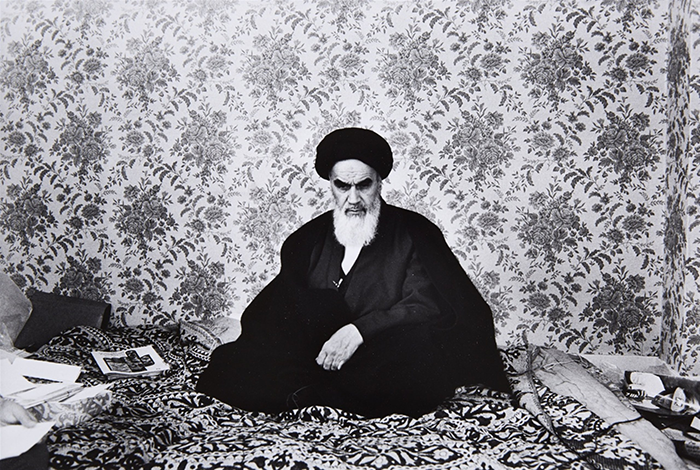
What the Western policymakers and think-tankers had ignored vis-à-vis Iran was that the movement led by Imam Khomeini was entirely indigenous and rooted in purely Islamic principles. It was not contaminated by Western political thought or influenced by its ideas that bred an inferiority complex in non-Western people. There was also widespread belief among the educated elite in newly independent states that they could only survive if they belonged to one or the other camp.
This is where Imam Khomeini broke new ground. He did more: he overcame the inertia in Shi‘i political thought that had for centuries held the view that injustices in the world would end only with the appearance of Imam Mahdi (a). Imam Khomeini posited that Muslims, especially the ‘ulama’ must abandon their quietism and struggle to prepare the ground for Imam Mahdi’s arrival.
Long before Imam Khomeini came back to Iran to lead the new Islamic Republic, he was already committed to the realization that the world could only be misled by the prevailing superpowers and their ideologies, as they were running their programs of institutional injustice counter to the system and values Allah had chosen for humanity. And he broadly communicated his views, not only to the emergent revolutionaries in Iran, but to anyone else who would listen in the Muslim world and beyond. Apparently, enough of the people in power were listening, for none of their proxies in the Muslim world permitted the Imam to migrate there, forcing him to go to France until his final and triumphant return home.
In a series of lectures both in Iran and then in exile in Iraq, the Imam enlightened the people to take charge of their Islamic responsibilities. Titled Hukumat-e Islami (Islamic Government), these lectures were later published in English under the title, Islam and Revolution: Writings and Declarations of Imam Khomeini, edited and annotated by Professor Hamid Algar, the leading authority on Iran. In these lectures, the Imam outlined his reasons for the necessity of establishing the Islamic government and the rule of walayah al-faqih (rule of the jurist consult). Muslims sincere about understanding the nature, purpose, and ethos of the Islamic Revolution should study this book carefully.
Once the protests started in Qom in January 1978, they spread to other cities heralding the birth of the Islamic Revolution. It quickly gained momentum despite the regime’s brutal crackdown. Shooting unarmed protesters was the time tested method to crush dissent but the protests remained peaceful throughout the year until succeeding in February 1979. Referred to as Deh-e Fajr (“Ten Days of Dawn”), it takes its name from the Qur’anic ayat, “Wa-al-fajr, wa-layalin ‘ashr” (89:1–2).
Despite the regime’s indescribable brutality, the people’s resolve remained firm. This was primarily because of the Imam’s charismatic personality, leadership qualities, and foresight. At every critical juncture, the Imam provided guidance that proved invaluable. On January 16, 1979, the Shah fled the country leaving behind a puppet regime whose authority was confined to his office. Soon thereafter, the Imam arrived in Tehran from Paris and went straight to the Behesht-e Zahra Cemetery to pay homage to the tens of thousands of martyrs of the Revolution (most estimates put the number of people killed by the regime’s forces at 80,000 including women and children!). In his address to the massive crowd, he mentioned that the Shah’s so-called modernization had given us a graveyard full of martyrs.
With the Imam back in Iran, remnants of the regime began to crumble. The first ten days of February proved crucial. The Imam appointed a new government ignoring the regime left behind by the Shah. On the morning of February 11, that regime also crumbled. The revolution had finally succeeded in overthrowing one of the most oppressive regimes in contemporary history.
At this point, it may be pertinent to define the Islamic revolution. The late Dr. Kalim Siddiqui, one of the leading experts on the Islamic Revolution, defined it thus,
The Islamic revolution is that state of a society in which:
1. all the Muslims of an area become mobilized to the point where their collective will and effort becomes irresistible and undefeatable;
2. the Muslim society acquires a leadership that is positively committed to the civilizational goals of Islam and has no class or other interests of its own;
3. the energies thus released are capable of restructuring the society at all levels internally; and,
4. the social order acquires the confidence and the ability to deal with the external world on its own terms” (Zafar Bangash, editor, In Pursuit of the Power of Islam: Major Writings of Kalim Siddiqui, London, 1996; p.136).
True, there are some Muslims, perhaps many that are still not fully aware of or appreciate the importance of the Islamic Revolution. This is largely the result of relentless anti-Iran and anti-Islam Western propaganda beamed at the behest of their corporate or political masters. There are, however, other reasons as well for some Muslims’ antipathy toward the Islamic Revolution.
Part of this has to do with long-entrenched sectarian prejudices that are constantly highlighted by illegitimate regimes to divert attention from their own failures. Unfortunately, most Muslims’ understanding of Islam is quite superficial; they are generally unaware of the Qur’anic message or the Prophetic Sunnah and Sirah. The overwhelming majority of Muslims, even Arabic speaking ones, are woefully unaware of what Allah (swt) says in the noble Qur’an. This is both the result of the decline of Muslims as well as the secularization of Islam.
A state becomes Islamic when the legal system of Islam is implemented in that society as a natural outgrowth of its moral commitment to Allah (swt), His command, and His counsel. Only, then is it able to deal with its enemies on its own terms, not those dictated by others. Further, the Islamic executive, leadership, and temporal command instrument, otherwise called the state, is an essential requirement for establishing Islam in society, as exemplified by the noble Messenger (pbuh) when he migrated from Makkah to the prototypical Islamic State of Madinah.
Even those Muslims who understand the necessity of the Islamic state insist that unless it conforms to their peculiar fiqhi understanding, then the state is not Islamic. This is what has prevented some “Sunni” Muslims from appreciating the significance of the Islamic Revolution in Iran. They simply dismiss it as “Shi‘i,” as if Shi‘is are somehow not Muslims (nastaghfir-allah).
It may also be appropriate to mention the role of Crescent International in support of the Islamic Revolution. Throughout the year of the Revolution and since its success, the West’s poisonous propaganda has been unrelenting. Every attempt has been made to distort its reality and to create doubts in the minds of people, especially Muslims. This was to be expected since the West had lost a favorite client.
The current US President Donald Trump (right), then age 38, visiting Tehran along with US actors, Jack Nicholson (left) and Warren Beatty in 1978. Trump was planning to open a casino (one of the reasons he has close ties to today’s casino king, arch-Zionist Sheldon Adelson) and nightclub in the north of Iran, but his plans were scuttled because of the instability leading up to the culmination of the Revolution, which would occur the following year. One need not guess over Trump’s decades-old vendetta against Islamic Iran as it prevented him from expanding his criminal business empire (read that, his mob empire) in areas that would have been free and clear of US taxation. Not only did the new Islamic leadership reject his “business” initiatives in the country, but it took a principled stand against the predatory and rapacious practices of the American business elite, which was used to being accommodated with all sorts of luxuries and prostitutes during the proxy reign of the Shah.
Further, Islamic Iran had openly challenged the oppressive exploitative global order and defeated it in one geographical area. Left unchecked and unchallenged, its influence would spread. Despite massive anti-Iran and anti-Islam propaganda and sabotage, Islamic Iran has made enormous strides. Its influence has spread both at the intellectual as well as political and geostrategic levels. We in the Crescent International can claim some credit for acting as a bridge between Islamic Iran and the wider Muslim Ummah, indeed the rest of the world or that part of it where people are not totally blinded by Western propaganda.
It must also be mentioned that the resilience to survive these serious challenges came from one source: the Iranian leadership and people’s reliance on Allah (swt) and Allah alone. This is called the power of Islam. It needs elaboration. Every system is based on certain ideas, suppositions about human nature, and values (sometimes, these values are morals, while in other instances, material considerations). The former Soviet Union and its satellites were based on Marxist ideology. The West has pursued capitalism. Muslims have the Islamic system of governance but only one country — Iran — has truly adopted it in contemporary history.
Communism has long been abandoned while capitalism is on its deathbed because it has deepened global inequalities both within and between societies. This has resulted in immense suffering everywhere. The world is a deeply troubled place today.
If we focus on the Muslim East (aka the Middle East), the picture is not only dismal it is deeply problematic. There is hardly a country that is free of turmoil, degradation, and dysfunction, whether internally generated or externally imposed. Most regimes are also totally subservient to the imperialists and Zionists and exist at their mercy. Islamic Iran, on the other hand, despite four decades of illegitimate Western sanctions, has not only weathered these challenges but has emerged much stronger.
Others states, such as Iraq, that were subjected to similar sanctions, have suffered grievously, resulting in mass poverty, starvation, and the death of hundreds of thousands of people. In Iran’s case, far from bringing it to its knees, the leadership has used sanctions as an opportunity to develop a resistance economy, as repeatedly stressed by the Rahbar, Imam Seyyed Ali Khamenei. True, not every segment of the government machinery has followed this advice thereby resulting in problems for ordinary people. These, however, pale into insignificance compared to the very serious problems even some Western countries — France, Britain, and the US — are facing. The neo-liberal world is now in terminal decline, and in all cases, the problem is its obeisance to capitalism — a system that thrives on wealth inequality and class indignation. The US is on the run in the Muslim East. Can the Zionist regime be very far behind?
It also needs emphasizing that the Islamic Republic is not a perfect model of an Islamic state. There are good and not so good people in the government and state machinery. What is indisputable is that the overall ethos is Islamic and that the establishment is totally committed to and sincere about Islamic values and principles. The Rahbar is a modicum of wisdom and taqwa; he has been a truly worthy successor of Imam Khomeini.
Under his leadership, the resistance front has emerged stronger and is able to successfully challenge the oppressive powers. This is just as evident in Syria as it is in Yemen and now increasingly in Palestine. The days of imperialist and Zionist hegemony are over. Their nervousness is evident from the shrill propaganda they indulge in against Islamic Iran these days. Their client regimes are also destined to the dung heap of history, sooner rather than later, insha’allah.
“Islam was and is not only a viable option, but is the only alternative to an Occident that is increasingly troubled by social and ideological crises.” – Murad Hoffman
In his 1992 book Islam the Alternative, German career diplomat Murad Hoffman argued that far from having reached an “end of history” in secular capitalist paradise, the West was heading for trouble. The only viable solution to the coming crisis, as Hoffman saw it, was authentic, corrected Abrahamic monotheism: namely, Islam. Hoffman expected that by the mid-21st century, Islam would be the majority religion in the West, not because of immigration, but because Westerners would embrace it.
Zionist arch-Islamophobe Bernard Lewis likewise understood that Islam offered a tempting alternative civilizational model. Lewis found this terrifying. In his 1990 essay “the roots of Muslim rage” Lewis coined the term “clash of civilizations” to describe the alleged long-term incompatibility of Christian and Islamic forms of Abrahamic monotheism. Lewis’ lifelong crusade to cast Islam as a dangerous “other” was, among other things, a psychological overreaction to his repressed realization that Islam could save Christian civilization. And that, to a committed Zionist, must be a terrifying prospect.
Reacting against Hoffman, while echoing Lewis, Samuel Huntington published his essay “The Clash of Civilizations” in 1993. Like Lewis, Huntington exaggerated the differences between Islam and Christianity, predicting that an immanent “clash” between Islam and the West would be central to the coming era of inter-civilizational warfare.
The truth, of course, is that the differences between Islam and Christianity are miniscule compared to the differences between universalist Abrahamic monotheism (Islam/Christianity) and other dins including secular materialist humanism, Judaism, Buddhism, Hinduism, Confucianism, paganism, and so on. In reality, there is only one traditional Western religion, universalist Abrahamic monotheism, and it is shared by all of the world’s 2.5 billion Christians and 2 billion Muslims, who together make up a majority of the world’s 7.5 billion people — and who have been disenfranchised in their own Holy Land by a few million Zionists. But Zionist-influenced Western elites threw all of their international-banker-financed weight behind the Lewis-Huntington prophecy that the West would soon go to war with Islam. On September 11, 2001, they rolled out the “most perverse publicity stunt in the history of public relations” (in the words of National Medal of Science winner Lynn Margulis) and made sure their prophecy came true.
In the post-9/11 world, proposing Islam as “the only alternative to an Occident that is increasingly troubled by social and ideological crises” is even more subversive than it was in 1992. Indeed, the Global War on Islam (GWOI) was designed to throw a monstrous roadblock into the peaceful and natural Western path toward Islam proposed by Murad Hoffman. Today we cannot help but see that the highest-level Western elites, who dominate the world through weaponized usury, will stop at nothing to maintain their power and the riba system that sustains it.
Today Murad Hoffman’s liberal yet vaguely salafist approach seems a bit dated. His belief that the secret rulers of the West would allow individuals to discover Islam for themselves the way he did, through free inquiry protected by Enlightenment liberalism, now appears naive (perhaps that is why Hoffman’s excellent books are now in the discount bin at IslamicBookstore.com).
Hoffman apparently did not fully understand that even in 1992, the only functioning “Islamic alternative” society was the Islamic Republic of Iran. Today, on the occasion of the 40th anniversary of the Islamic Revolution, we should take time to ponder the experience of Iran’s Muslims in their ongoing efforts to realize an Islamic civilizational model.
The first lesson of the Iran’s Islamic revolution is: think pan-Islamically, act locally! Though Imam Khomeini sparked an Islamic Revolution, not a Shi‘i revolution or a purely Iranian revolution, his was nonetheless a “revolution in one country” (as the Russian Bolsheviks started calling their project after 1925). Both Imam Khomeini and his successor, the Rahbar, Imam Sayyid Ali Hosseini Khamenei, have been devoted to supporting Islamic movements as well as other justice movements in various countries that embody values compatible with Islam, while at the same time focusing on building viable long-term institutions in Iran. And those institutions, for obvious reasons, have to be compatible with the local religious and ideological orientation of the population. So just as Islamic Iran is naturally going to have religious institutions dominated by Persian speakers of the Twelver Shi‘i (Ja‘fari) school of thought, those seeking to Islamize Turkish society will have to work with Turkish speaking Hanafis, those working in Morocco will be among Arabic-speaking Malikis including quite a few Sufis, and so on (and of course everyone, everywhere, will have to be able to communicate with those who have unthinkingly absorbed the secular-materialist progressivist humanism that is the de facto hegemonic religion imposed by the West on much of the world).
While the above observations may seem obvious, the unfortunate reality is that too many Islamic activists have been hindered by the sectarian delusion that their own approach is the only acceptable one. These folks need to remember the Qur’anic edict, “For every community faces a direction of its own, of which He is the focal point. Vie, therefore, with one another in doing good works. Wherever you may be, Allah will gather you all unto Himself: for, verily, Allah has the power to will anything” (2:148, Muhammad Asad’s interpretation).
The Islamic Revolution succeeded in part because Iran nurtures high-quality Islamic scholarship, and many of those scholars are willing and able to apply their knowledge to real-world social and political problems. It succeeded because a nucleus of the Iranian ‘ulama’, led by Imam Khomeini, refused to do what so many Islamic scholars have done, which is sell their souls and their services to corrupt rulers. Instead, Imam Khomeini and his allies spoke truth to power, sparking a popular revolution that institutionalized a role for religious scholars in a democratic-republican political order, under the doctrine of walayah al-faqih.
Should Muslims be working to impose the Iranian walayah al-faqih model in other Muslim-majority countries? Probably not. The conditions in most countries will not permit an exact duplication of the Iranian experience. But other Muslim communities can certainly “compete in goodness” with Iran by developing and empowering communities of first-rate Islamic scholars who speak truth to power. They can heap scorn on sellout pseudo-scholars who lick the boots of tyrants. And they can engage politically, wherever they happen to live, focusing on the most important issues from the standpoint of authentic Islamic values. Among those issues are: the fight against the international bankers’ usury-based currency system; the struggle for truth against official lies and cover-ups; the struggle to liberate Palestine; other struggles on behalf of oppressed people (mustad‘afin); and the larger struggle to re-establish God rather than man (or his emerging replacement, the post-human cyborg) as our focus of conformity.
All of the above issues require revolutionary rather than reformist approaches. Usurious currency creation by private bankers must be completely abolished, not reformed. The most subversive truths of “hidden history” must be fully unveiled, destroying public confidence in the lying rulers. Palestine must be completely liberated from Zionism. Neo-liberal capitalism must be overthrown and replaced by a system that cares for the poor and oppressed. And the idolatrous conformity to the human and/or post-human must cede to the conformity to God.
In short, 40 years after Iran’s liberation from the Shah, we still need Islamic revolutions. Meanwhile the Islamic Republic of Iran endures as a source of inspiration to Muslims everywhere, while the lessons of the 1979 Revolution remain more relevant than ever.