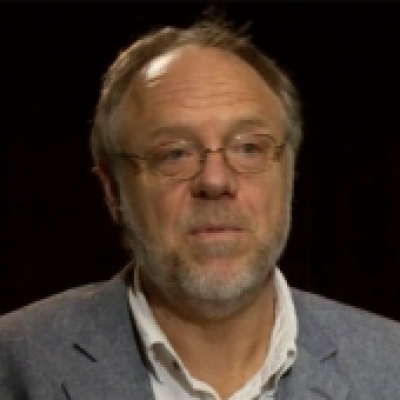
The following speech was delivered by Ken Livingstone during the 2nd conference of ‘Love Muhammad - The Prophet of Mercy’ in January 2014 organised by The World Forum for Proximity of Islamic Schools of Thought (special interfaith edition issue 65 March 2019)

“It is both a pleasure and honour to be here. When I looked at the agenda for tonight I was reminded of an event just about two years ago. I was attending a meeting of Christian Churches in London. It was part of the last mayoral election campaign…with Boris Johnson, Lib Dem Brian Paddick, the Green candidate, and we were answering questions from representatives of the Christian Churches and Brian Paddick answering a question said: “You have to understand Islam is a peaceful religion” and there were murmurs of dissent.
 |
| Kenneth Robert Livingstone |
What he said was clearly unpopular and disbelieved by many of the people present. Fortunately I was the next person to speak and I came prepared….. In all my meetings I always carry with me two quotes from the last sermon of the Prophet; the last sermon which he delivered knowing that his time was coming to an end spells out how humanity should live side by side.
So after the murmurs of dissent and disapproval I read to those Christians the words of the Prophet where he says, “No Arab has superiority over a non-Arab. No non-Arab has superiority over an Arab. Also no white has superiority over a black and a black has no superiority over a white”. It goes on to say “that God forms you in tribes and nations, so you get to know one another”, not so that you may fight, oppress, occupy, convert or terrorise but so that you would get to know one another. All the audience burst into applause.
That was always the response in any meeting whether they were Muslims, Christians, atheists or others. They were all enlightened and infused by those words because those words have absolute relevance to how we live our lives today.
He was a man over thousand years ago fore–calling a code on how we should live, and his words are absolutely relevant today as they were the day he delivered them. What was striking was the number of people who came to me at the end of that meeting and said, “that was amazing; I must go and read that whole sermon”.
I ask myself how many non-Muslims in Britain have ever heard those words. Have they even heard that there was a last sermon?
I spent my entire childhood in schools, not even once was the name of the Prophet Muhammad ever mentioned. We were never taught anything. Even when I became a politician I was ignorant on a vast scale about the meaning of Islam and its history. That is why it is so easy for those who wish to divide us and spread fear and hatred to succeed because they are talking to people who have never been taught the truth about Islam.
There was a survey about four years ago conducted by a unit from the University of Cardiff. They read all British newspapers from 2000 to 2008. They found that two thirds of all stories in our papers in those eight years were negative about Islam, portraying it as a threat, problem or both.
That is why it is so important that when we gather in the meetings like this we don’t forget when we go out, what we came here to do. It is what we say, how we educate, and the way to spread the truth not only in the meetings like this, [but] in our day to day lives, what we say when we meet others, in the things we write on the internet and elsewhere. There is a huge task ahead of us.
Think back to 2011 when a terrorist killed 77 people in Norway, mainly children. He wrote on the internet his personal manifesto. If you read that horrific document it is filled with quotes from British newspapers demonising Islam. It is filled with quotes from the journalist Melanie Philips who wrote for the Daily Mail for many years and published a book called ‘Londonistan’, saying that we have been taken over by Muslims and we are a centre for Muslim terrorism. The hatred she perpetrated on an almost daily basis in the Daily Mail, sinking (please check this word) in his [the terrorist] heart and mind and filled his acts of horrific murder against innocent Norwegian boys and girls.
Following the killing of those 77 Norwegians the former [Norwegian] Prime Minister Mr Jagland who is now the Chair of the Noble Peace Prize Committee warned that ‘we have to stop talking about Islamic terrorism because it helps to demonise Islam and we need to recognise that the vast majority of terrorist acts that happen here in this continent, happen at the hands of right wing groups, extremists from the far right’. He also mentioned our own Prime Minister, David Cameron, warning that ‘his message helps to stir up hatred against Muslims’.
If you look at the work commissioned in 2011 by George Soros, the billionaire, a study of Muslims in European countries, it is quite revealing. One of the questions they asked….. was, ‘do you feel a part of your country?’ In France they asked ‘do you feel you are French?’ Here ‘do you feel you are British?’ The results of that study were quite revealing. Only one Muslim in four in Germany felt that they are also German. Only one in two in France, felt that they are French. I was very proud to read that nine out of ten Muslims in Britain felt that they are British. They have no problem living their lives as Muslims and living their lives as British people, and I look at this city [London] – apart from New York. the most diverse city on earth – every faith, every ethnic group, every nationality, gather together, and when we had those terrible bombings in London we saw the response of Londoners.
A week after the bombing we had a service in Trafalgar Square. I was able to say that within a week of that bombing there had been no recorded incident of an attack on a Muslim Londoner. Londoners knew that terrorist attacks sought to divide us, they refused to be divided and that is the legacy of the teachings of the Prophet in that last sermon.
Ayatollah [Araki] just spoke about the legacy of invasions, the American, the British and the French invasions of Muslim lands over many decades. Everything he said was true and even more. One can go on all night about what we have done, but there are two phases to this.
In that period after World War I, and after the collapse of the Soviet Union, the real driving force for Western imperialism and its interventions, whether it was Egypt or the overthrow of the government of Iran in 1953, was about control of oil. But then with the collapse of the Soviet Union there was another dimension and we saw it in the book published by the American academic Samuel Huntington in 1996. The book was called ‘The Clash of Civilisations’. In this book he spelt out an inevitable clash between West and Islam. It set the political agenda for the intolerant right for the decades that followed and it is wrong and it is dishonest. Why was this taken up so eagerly by American presidents such as George W Bush? Because America had a vast economy based on its military machine. Half of all the military spending on earth is by one nation, the United States of America. With the collapse of the Soviet Union they couldn’t justify vast stock piles of nuclear weapons, hundreds of bases around the world and they needed a new enemy, and that is what Huntington gave. We have to challenge this.
One of the final acts of George W Bush in his last year of Presidency was to put $300 million into the hands of terrorist groups to allow them to undertake terrorist attacks inside Iran. Sadly president Obama did not cancel that.
How many people read the British papers, reading about terrorism, how many read the truth, about what the west has done, what America has done so often?
We know now that hundreds of millions of pounds were spent funding Iraq to invade Iran in the 80s. We need to tell people the truth. Both the truth about what Islam really stands for and what lies behind this demonisation of Islam today.
Finally I just want to say this. When we look at how we live our lives, as we look around London, we notice we are living according to the teachings of the Prophet Muhammad. We are tolerant, we do accept difference and diversity, and this is a striking example of the power of his message of peace and love.
In the 1300 years following Prophet Muhammad’s death, from Morocco to Iran, every Muslim nation had in it a strong and vibrant Jewish community, free to practice its faith. Accepted and tolerated, not threatened, not evicted. By whom was Judaism victimised? By the Christian King of Spain who expelled the Jews from Spain. By the Christian King of England, who expelled them from England. Around much of the Christian world, the Jews were victimised and expelled. In the Muslim world the legacy of Prophet’s last sermon actually guaranteed peace and harmony between Jews and Muslims and that of course was shattered by the war of 1948, a tragic event.
I, as you have guessed, am not a Muslim, but I don’t have any doubt whatsoever, I have no problems saying that I try to live my life as he left his message, being tolerant, accepting diversity and being proud of that difference and that is why I am proud to be a Londoner and am proud to be among you tonight.
Former Mayor of London Kenneth Robert Livingstone is a veteran British Labour Party politician.