Showing posts with label imam khomeini. Show all posts

Friday, November 15, 2019

Palestine tops Rahbar's concern in address to Muslim ambassadors, guests of Islamic Unity Conference

Crescent International
With Zionist Israel’s barbarous onslaught on the besieged Gaza Strip continuing, it was appropriate that the Rahbar of the Islamic Revolution, Imam Seyyed Ali Khamenei would address the issue of Palestine.
In a meeting today with ambassadors of Muslim countries and participants of the Islamic Unity Conference in Tehran, the Rahbar emphasized that the Islamic Republic will continue to help the Palestinians without reservation.
He also called upon other Muslim countries to follow suit, describing Palestine as the greatest challenging facing the Muslim world.
Describing Tehran’s stance on Palestine as principled and clear, the Rahbar said: “Since the beginning of the Islamic Revolution, we have maintained this position. We have helped and will continue to help Palestine and the Palestinians without any reservation. We view this the duty of the entire Muslim world.”
He rejected attempts by Zionists and their enablers worldwide to “distort” statements by the Father of the Islamic Revolution, the late Imam Khomeini and Iranian officials about the elimination of Israel.
“We are in favor of Palestine and its independence and salvation, but the elimination of Israel does not mean the elimination of the Jewish people. We are not against them, as a large number of Jews live safely in our country.
“The elimination of Israel means the elimination of the fake Zionist regime. The Palestinian people—be they Muslim, Christian or Jewish—who are the original inhabitants of that land, should be able to choose their own government,” the Rahbar said.
They should also be able to “kick out the outsiders and thugs like [Israeli Prime Minister Benjamin] Netanyahu and run their own country, which of course will happen,” the Rahbar emphasized.
Stressing on the significance of unity among Muslim countries in resolving the Palestine issue, the Rahbar said: “Had Muslim countries maintained even the minimum level of unity, we would not have such dire plight of Muslims in the world today.”
More than 350 guests from some 118 countries have assembled in Tehran for the annual Islamic Unity Conference on the occasion of the birthday of the noble Messenger (pbuh). It is observed as Muslim Unity Week.
The Islamic Unity Conference is organized by Majma at Taqrib bain al Madhahib (The Assembly of bringing various Schools of Thought closer together).
The 33rd assembly was inaugurated on Thursday November 14 with an address by President Hassan Rouhani who also emphasized the importance of Palestine.
This year’s theme was “Islamic Unity in Defense of Masjid al-Aqsa”.
This was the second year in a row that the conference has chosen Palestine as the theme signifying its importance.
While touching on the enmity of US and Zionist Israel toward the Islamic Republic, the Rahbar said they were opposed to all Muslim countries.
He pointed to US President Donald Trump’s insulting remarks about the Saudis.
“The nature of Islam is based on the rejection of tyranny, arrogance and hegemony; therefore, they are opposed to Islam and all Muslim states in principle.”
The Rahbar cited US presence in the region as the main source of trouble, corruption and insecurity, and the formation of such groups as Daesh.
He called on Muslim countries to understand Washington’s “true and hypocritical face.”
The Rahbar warned that the US’ main weapon today is infiltrating sensitive centers, creating divisions among people, creating mistrust among governments and exerting pressure that giving in to Washington is the only way to resolve their problems.
“This weapon is even more dangerous than military and hard weapons,” the Rahbar warned.
The way to confront the enemies is to obey Allah’s command of resisting on the path of righteousness.
“Of course, this resistance will have hardships, but enduring these hardships is a righteous act and will be rewarded by Allah. Moreover, giving in to the enemy will have more hardships, and Allah will punish those who give in to oppression,” the Rahbar warned.
He also called for unity among people as well as cooperation between Muslim governments in various fields for the benefit of all the people.
Heads of Muslim organizations and governments should pay heed to these wise words.

Tuesday, September 03, 2019

Approaching End of Israel

By: Kayhan Int’l

The chronic question of Palestine cannot be resolved unless the Muslims of the world close ranks and mobilize all resources including military means to liberate the former qibla of Islam.
The recent meeting in Tehran between the Leader of the Islamic Revolution, Ayatollah Seyyed Ali Khamenei and a special representative of the Hamas Islamic movement from Zionist-besieged Gaza, highlighted this issue. 
May God damn the British occupiers of Palestine for planting the illegal Zionist regime in the heart of the Islamic World in 1948, after settling the non-Israelite and non-Semite Khazar European Jews in this Muslim land between the two world wars!
It is interesting to note that the Wise Leader is fully confident of the end of the cancerous tumour called Israel, at the most, within the next two decades, but maybe more sooner than one realizes.
Ever since the Father of the Islamic Revolution, Imam Khomeini (RA), had designated the usurped land of Palestine as the principal issue of the Muslim world, Iran has spared no efforts in marshalling its resources and awakening the Ummah worldwide for this great task of liberating Bayt al-Moqaddas and al-Aqsa Mosque. 
The struggle requires sacrifices, and the Muslims of the world are ready to offer their lifeblood for the holy struggle.
According to observers, the recent provocations of Israel against Lebanon’s legendary anti-terrorist movement, Hezbollah, and against the Hashd ash-Sha’bi (Popular Mobilization Units) of Iraq, is like to trigger an explosive situation in which the Zionists will suffer the most, if not totally wiped out from the map of West Asia.
This is something logical, and irrespective of the treason of regimes, such as those of Bahrain, Saudi Arabia, and Egypt, Palestinians and their supporters will definitely triumph over the Israelis. 
We know the US cannot do a damned thing, and we have full and firm faith in God Almighty that whatever weight they throw behind the Zionist entity, their efforts will end in futility.
The holy Qur’an has promised believers of final victory, and Insha Allah (God Willing we will soon be marching toward al-Aqsa in the heart of Palestine.

Sunday, June 09, 2019

In remembrace of Imam Khomeini (QS)

By Yusuf Abdullah

NIGERIA/ ABUJA - In the name of Allah Who states “… verily, never will Allah change the condition of a people until they change it themselves with their own souls” Q13:11 May the peace and blessings of Allah be upon His chosen servant, our master Muhammad and his purified progeny?
Let me start with congratulations to Muslim world on the completion of Ramadan fast and Sallah celebrations respectively. I pray to Allah, the Most High to accept our ibadat and give us the capacity to practice the everlasting lessons of the great month.
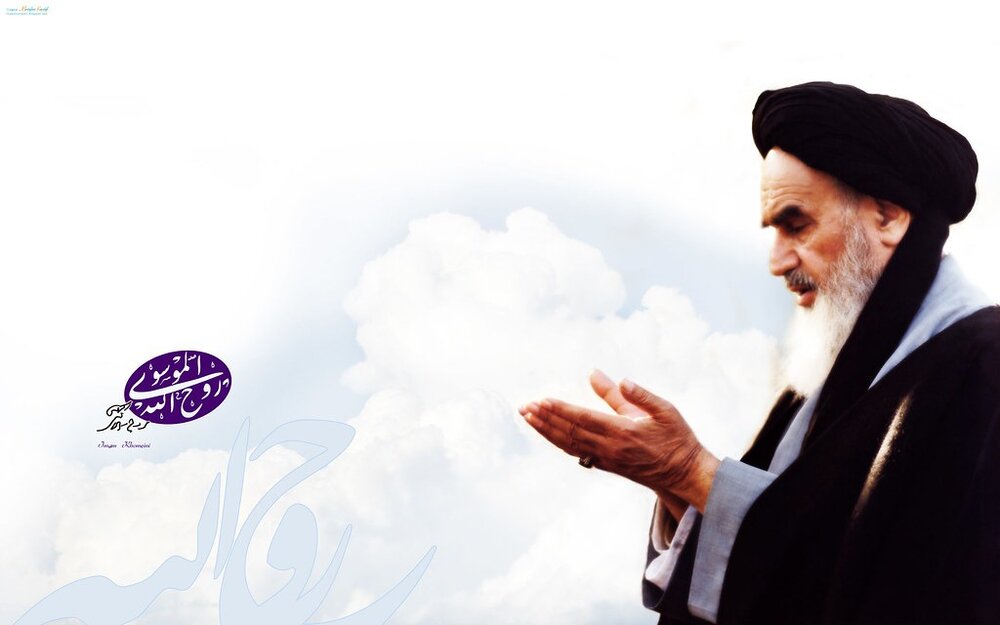
 The piece for this week is on the 30th commemoration of Imam Khomeini's demise, 3rd June, 1989.  There is no doubt, he was a great man of Allah who demonstrated his love and obedience to Him. He exceptionally succeeded in the struggle against the enemies of Islam and their local and international stooges at the era of advancement in science and technology. But for his Islamic revolution, no one could tell the destiny of Islam and Muslims not only in the Middle-east but world at large.  In remembrance like this, it is not easy to decide on which of the various aspects of his successful life to talk.
Imam Ruhollah, al-Moosawi al-Khomeini was the leader of Islamic revolution and founder of the Islamic republic.  He was born on 20th Jimada-thani, 1420 H, equivalent to 20th September, 1902 to a renowned family of scholarship and sacrifice, from Khomein, the central province of Iran.  Ayatollah Sayyid Mustapha was his father and Banoo Hajar, the daughter of Ayatollah Khonsari, a famous family of letters was his mother. The Imam married Sayyidah Khadija Khanom, from a renowned family and was blessed with several children. Grand Ayatollah Hajj. Abdul Kareem Haeri Yazdi was his famous teacher in religious disciplines. In addition to that, he had an in-depth studies in Western philosophy.
To know the extent of his works, one must study Iran before and after the success of Islamic revolution. In other words, when it was subservient to Israel, America and Western powers. The marvelous success of Islamic revolution is a pride to Iranian nation and indeed Muslim-Ummah, with the persistent conspiracies and rhetoric of the arrogant powers and their stooges.  Its multidimensional achievements owe lots to sincere, faithful, audacious, and insightful leadership which tremendously benefit the Islamic republic and the Ummah at large. Some of its apparent achievements include:
1. The revolution, based on the mission of man as vicegerent of Allah on earth, established Islamic government on Islamic ideals and values apparently impacting Muslims and international community. Despite similarities with French, Russian, Chinese, Cuban and Nicaraguan, the Islamic revolution stands erect as faith-based. It is an undisputed fact that Europe’s RENAISSANCE after DARK AGES was achieved in the light of Islamic civilization.
2. Well established institutions with direct touch on the Ummah like the international Quds day, unity week, international Qur'anic exhibition and periodic educational conferences among others. Obviously, these are of significant relevance to the republic in particular and Muslim world at large.
3. Unrelenting multidimensional support to the world oppressed irrespective of race, religion and geography especially Muslims. This is evident in Palestine, Yemen, Bahrain, Iraq, Syria, Afghanistan and Myanmar among others. An apparent aspect is provision of educational scholarships to children of martyrs, and hitherto empowerment.
4. Active participation in all matters having to do with culture and education of Muslim world such as Musabaqat, multilateral trade and co-operation for the benefit of stakeholders in particular and humanity in general. The Imam had many scholarly works. He authored numerous books in different fields of enormous importance. The institute for the compilation and publication of his works -international affairs division-, translates his teachings in nearly 30 different languages.
5. Promoting the original message of Islam intelligently on the principle of unity and justice to Muslims and non-Muslims leading to tangible result. The impact of such move was very obvious on famous individuals such as Sheikh Mahmud Shaltut and Professor Dasuqi of Muslim Arab world affecting Umma in turn. It has equally influenced non-Muslims like late Mandela, Hugo Chavez and presently, Putin, Nicolas Maduro and many others. The Imam's historic delegation to former leader of the defunct USSR -Mikhail Gorbachev- is still in the light "the basic problem of your country is not the issue of ownership, economics or liberty. Your problem is lack of true faith in God; the same problem that has driven or will drive the West to worthlessness and dead end". This could also remind the world of his audacious response on the passage of bill allowing Israeli spies into the Iranian soil "the Muslim nation and Ulama of Islam are alive and lasting. They shall sever any hand that betrays the foundation of Islam and trespasses on the chastity and virtues of the Muslims".  In the end, the Shah was defeated and the approval annulled.  
6. Despite unabated sanctions of four decades, the Islamic republic had wonderful results in security, healthcare delivery, agriculture, economy, defense, education, science, technology, aviation, oil and solid minerals, communication, transport, diplomacy, space technology, social welfare and private sector among others.  A very unique achievement is its prominent role in regional security.
7. Exporting the Islamic revolutionary ideas through the country's cultural offices and other possible avenues to help the Muslim world actualize Islamic ideals, self-reliance and socio-economic stability. This also affect international community.
To elaborate few points, some statistics are relevant. According to World Bank, Iran was 7th in 2016 in the area of patent as against 38th in 1970. With great strides in science and technology, it is considered the fastest growing in the field. The education sector has witnessed significant improvement raising from 16 universities before the revolution to 267 now. The student’s enrolment also rose from 154,315 to 4.5 million respectively. The literacy index has greatly rose to 93%. The country was ranked 5th in citable scientific articles' publication in the West Asian region in 1996.
On health care delivery, life expectancy has generally rose to 75 years as against 50 before the Islamic revolution, with child mortality rate from 185 in 1000 to 14.9 respectively. It has also rose from 5890 medical specialists before the revolution to 36000 with female as very significant part. The World Bank reports in 2009 ranked Iran, 21st in terms of quality and number of hospitals just as UNICEF recognized it as the second country world over in the control of contagious diseases. Other fields with tremendous achievements are agriculture, Nano-technology, aerospace and nuclear technology. However, an insignificant portion of Iranians does not appreciate the monumental development. And this is not unconnected with lack of pre-revolution experience and comparative knowledge of socio-economic indices of most countries. To bridge the gap, government has intensify efforts in public enlightenment campaign. Today's Iran on concept of Willayatul faqih -governance of the jurist- is a symbol of peace, security, social justice, moral values and scientific and technological advancement, as they no doubt, owe their roots to original teachings of Islam.
While praying for Allah's mercy to the late Imam (QS) - the founder of the Islamic republic, we implore His absolute guidance and protection to the indefatigable leader of Islamic revolution, Sayyid Khamne'i. At this juncture, I emphasize the urgent need for the unconditional release of the oppressed leader of Islamic Movement, Sheikh Ibraheem el-Zakzaky (H) and his disciples.

Thursday, June 06, 2019

30 years of the wise leadership of Ayatollah Khamenei (1)

On the 30th anniversary of the election by the Assembly of Experts of Ayatollah Seyyed Ali Khamenei as the Leader of the Islamic Revolution, following the departure from the mortal world of the Father of the Islamic Revolution, Imam Khomeini (RA), we present you a special two-part article on the status of leadership in the Islamic Republic of Iran.
Now we have part one of this article as follows: 
Leadership has a special status in the Islamic Republic of Iran, which is the system of government based on popular religious rule. The person to serve as the Leader of the country should be a top religious scholar, well versed in Islamic sciences, aware of political and social issues, courageous, and with a flawless moral record. The Late Imam Khomeini, as initiator of the dynamic concept of Velayat-e Faqih or Governance of the Supreme Jurisprudent, bequeathed to the nation and the world the rules of governance of the society by the most qualified person of his times, in the absence of the Lord of the Age, Imam Mahdi (AS), the 12thand Last Infallible Heir of Prophet Mohammad (blessings of God upon him and his progeny), who is awaited as the Redeemer of Mankind for establishing the global government of peace, prosperity, and justice.
In the first decade of the Islamic Republic, Imam Khomeini played the role of helmsman of a ship, ably guiding Iran towards security and consolidation by weathering the plots of the anti-revolutionaries and the Americans, as well as the 8-year war imposed by the US through Saddam of the repressive Ba’th minority regime of Baghdad. Each of these political crises, economic sanctions and military offensives failed to undermine the Islamic revolution, because of the prudence and political acumen of Imam Khomeini, who stabilized the Islamic Republic system. The unique role of Imam Khomeini made enemies of Islamic Revolution think that after him, the Islamic Revolution and the Islamic Republic will come to its end. They were proved wrong. Imam Khomeini’s foresight had established such a strong and stable system, that it was important for any event to derail it.
The constitution of the Islamic Republic which is based on the Holy Qur’an, the Sunnah of the Prophet, and the guidelines of the Infallible Imams of the Ahl al-Bayt, set in motion such a perfect mechanism that the next Vali-e Faqih or Supreme Jurist, as the Leader of the country, is determined through the vote of the the Assembly of Experts, which is a highly qualified body of ulema, elected through public ballots. This ensured that there will never be any leadership vacuum in the Iranian society. The Assembly of Experts within less than 24 hours after the passing away of Imam Khomeini, took a historic decision by electing Ayatollah Seyyed Ali Khamenei, the then president of the Islamic Republic as the Vali-e Faqih and Leader of the Islamic Republic and the Islamic Revolution. He was not voted to the post of Vali-e Faqih because he was the president, but because he was a fully qualified jurisprudent, aware of political and social issues, flawless of moral characteristics, frank, forthright, and courageous in the face of enemies and their plots.
Ayatollah Khamenei proved a worthy successor to Imam Khomeini, as is evident by his role over the past three decades in guiding the country on the path of progress and protecting it from the plots of both the internal and external enemies. For the past 30 years, much to the chagrin of the Great Satan, the US, and the client regimes in the region, as well as the anti-revolutionaries who want to sell out the country to the superpowers, he has shown profound wisdom and prudence in defeating all sorts of plots. The various elections in the country, as envisaged by the constitution, such as presidential, parliamentary, assembly of experts, and town and urban councils, have continued to be held under his supervision, will full freedom for the people, based on Islamic teachings. This is proof of the dynamism of the Islamic Republic system and the astuteness of the Leadership.
In the current turmoil in the region, the Islamic Republic of Iran stands as the land of stability and the people of various walks of life, are living in security, thanks to the insight of Ayatollah Seyyed Ali Khamenei. He has ensured that the unique system of government based on popular religious rule is exemplary and is serving as a model for people of the neighbouring countries aspiring to determine their own destiny by breaking free of the shackles of dictatorship and the deceit of western liberal democracy, as advocated by their enemies, especially the US.
It is worth recalling that in 1989 on hearing news of the passing away of Imam Khomeini, the enemies were delighted at this bitter incident were seeking to overthrow the Islamic Republic of Iran. At that time the Voice of America said with joy "The death of Ayatollah Khomeini will definitely lead to instability in Iran, and some predict that the situation would probably fuel the flames of civil war.”
The US and its satanic aspirations were proved wrong as Ayatollah Khamenei ably took over the leadership as one of the most outstanding disciples of Imam Khomeini. As a matter of fact, the Late Imam, though he did not express his opinion publicly, had told his close confidantes, including Ayatollah Akbar Hashemi Rafsanjani that Ayatollah Khamenei is the hope of the future for guiding the Islamic Revolution and Iran. The opponents of the revolution, however, tried to undermine the position of the Leader on the assumption that Ayatollah Khamenei did not have popular support and the ability to continue the path of the Imam. They were disappointed when the Iranian people, including scholars, senior officials, senior jurisprudents, and various organs declared  their allegiance and full support for the leadership of Ayatollah Khamenei as the successor to Imam Khomeini. For his own part, Ayatollah Khamenei, who is gifted with sharp intellect, insight, foresight, political prudence, and economic acumen, proved to the main factor in stabilizing Iran and the status of leadership.
In his first speech as the Leader of the Islamic Revolution, Ayatollah Khamenei said:" We have made a covenant with God to follow the path of Imam Khomeini, which is the path of Islam and the holy Qur’an and the path to the dignity of the Muslims, and we will not give up any of the ideals drawn by the Imam.” A glance at the thirty years of leadership of Ayatollah Khamenei shows that not only has he continued the way of Imam Khomeini, but has managed to materialize many of the lofty objectives of the Father of the Islamic Revolution despite the many difficulties and obstructions that have taken place.
In this period of ups and downs, the authority of Iran and the strengthening of the organs within the system have increased. This authority is due to the economic, political, scientific, cultural and military achievements and, in particular, internal unity and solidarity. The leader of the Islamic Revolution in the past three decades has succeeded in keeping people and political currents unified around the axis of the values and goals of the revolution. He also supported officials with different viewpoints, but noted in various ways their mistakes and misconduct. One of the issues that the Leader has always emphasized is to reform the country's economic structure and move seriously towards the economy without dependence on oil revenues. He has proposed the “Economy of Resistance”, saying such an economy is based on knowledge, expertise, technology, national interests, and social justice. The materialization of the objectives of this plan could safeguard Iran against the plots of its enemies.
Thus, over the past thirty years, despite the economic sanctions and political pressures, the Islamic Republic of Iran has had significant success in helping deprived people in remote areas, increasing agricultural production, livestock, industrial and mineral resources, but according to the Leader, these developments should further be expanded.
Ayatollah Khamenei's emphasis on science and technology has inspired the nation to make spectacular progress in fields such as medicine, nanotechnology, nuclear technology, stem cells, aerospace and many other fields. Interestingly, most of these successes are due to the reliance on young experts who are always encouraged and supported by the leader. Meanwhile, in the past three decades, there have been a number of dilemmas and problems within the country that the leader has resolved with intelligence and sharpness. In this relation, we can mention the differences of political currents that were occasionally misused by the enemy. As in the 2009 presidential elections, Western regimes sought to exploit the inflammatory atmosphere resulting from the baseless allegation of fraud in counting votes. Despite the fact that they mobilized all their political, propaganda and intelligence capabilities for this, the wise decision of the Leader nullified this dangerous conspiracy.
With the guidelines of Ayatollah Khamenei as the commander-in-chief of the armed forces, over the past thirty years, despite sanctions and threats, Iran has become one of the top military powers in the world. Iran now produces various types of missiles, drones, ships, submarines, tanks, airplanes, air defense systems and electronic warfare and other light and semi-heavy weapons with the help of its highly skilled specialists. The presence of these diverse and advanced weapons, available to hundreds of thousands of trained, brave and motivated forces, has made the enemies set aside the plan to invade Iran. In the field of foreign policy, Ayatollah Khamenei has laid emphasis on three principles of dignity, wisdom and goodwill as guidelines. The anti-oppression campaign and the defense of the oppressed people, which are the principles of Islam and the revolution of Iran, have always been taken into consideration by the Leader. In this regard, support for the oppressed people of Palestine, Yemen, Lebanon, Iraq, Syria, Afghanistan, Bahrain and some other places is on the agenda of Iran's foreign policy.

Tuesday, June 04, 2019

Imam Khomeini’s biography

Imam Khomeini’s biography

TEHRAN, Jun. 04 (MNA) – Here you can read the biography of Islamic Revolution founder Imam Khomeini. The text is being republished from the official website of Islamic Revolution Leader Ayatollah Khamenei 'Khamenei.ir'.
Introduction
Imam Ayatollah Seyed Ruhollah Musavi Khomeini (May 17, 1900 – June 3, 1989) was a Muslim cleric and Marja, and the political leader of the 1979 Islamic Revolution of Iran which overthrew Mohammad Reza Pahlavi, the last Shah of Iran. Following the Revolution, Imam Khomeini became Grand Leader of Iran — the paramount figure in the political system of the new Islamic Republic — until his demise.
Imam Khomeini was considered a Marja-e taqlid to many Muslims, and in Iran was officially addressed as Imam rather than Grand Ayatollah; his supporters adhere to this convention. Imam Khomeini was also a highly-influential and innovative Islamic political theorist, most noted for his development of the theory of velayat-e faqih, the "guardianship of the jurisconsult."
Early Years
Family and early years
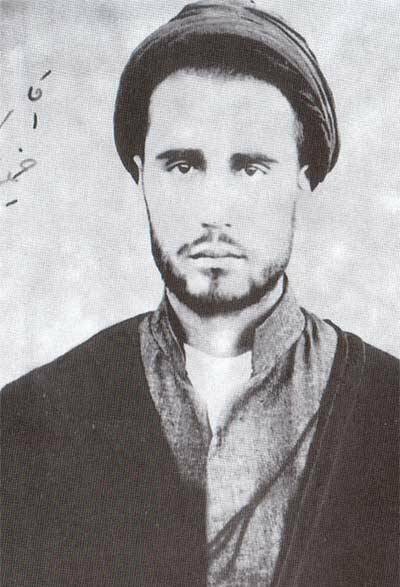
Ruhollah Mousavi was born to Ayatollah Seyyed Mostafa Musavi and Hajieh Agha Khanum, also called Hajar, in the town of Khomein, about 300 kilometers south of the capital Tehran, Iran, possibly on May 17, 1900 or September 24, 1902. He was a Seyyed from a religious family that are descendants of Prophet Mohammad, through the seventh Imam, (Imam Mousa Kazem). His paternal grandfather was Seyyed Ahmad Musavi, whose third wife, Sakineh, gave birth to Mostafa in 1856. Imam Khomeini's maternal grandfather was Mirza Ahmad Mojtahed-e Khonsari, a high-ranking cleric in central Iran whose Fatwa for banning usage of Tobacco in opposition to a monopoly granted by Shah to a British company, led to cancellation of the concession.
Imam Khomeini's father was murdered when he was five months old, and he was raised by his mother and one of his aunts. Later, when he was 15, his mother and aunt died in the same year. At the age of six he began to study the Quran, Islam's holy book. He received his early education at home and at the local school, under the supervision of Mullah Abdul-Qassem and Sheikh Jaffar, and was under the guardianship of his elder brother, Ayatollah Pasandideh, until he was 18 years old. Arrangements were made for him to study at the Islamic seminary in Esfahan, but he was attracted, instead, to the seminary in Arak, which was renowned for its scholastic brilliance under the leadership of Ayatollah Sheikh Abdol-Karim Haeri-Yazdi (himself a pupil of some of the greatest scholars of Najaf and Karbala in Iraq).
In 1921, Imam Khomeini commenced his studies in Arak. The following year, Ayatollah Haeri-Yazdi transferred the Islamic seminary to the holy city of Qom, and invited his students to follow. Imam Khomeini accepted the invitation, moved, and took up residence at the Dar al-Shafa school in Qom before being exiled to the holy city of Najaf in Iraq. After graduation, he taught Islamic jurisprudence (Sharia), Islamic philosophy and mysticism (Irfan) for many years and wrote numerous books on these subjects.
Although during this scholarly phase of his life Imam Khomeini was not politically active, the nature of his studies, teachings, and writings revealed that he firmly believed from the beginning in political activism by clerics. Three factors support this suggestion. First, his interest in Islamic studies surpassed the bounds of traditional subjects of Islamic law (Sharia), jurisprudence (Fiqh), and principles (Usul) and the like. He was keenly interested in philosophy and ethics. Second, his teaching focused often on the overriding relevance of religion to practical social and political issues of the day. Third, he was the first Iranian cleric to try to refute the outspoken advocacy of secularism in the 1940s. His now well-known book, Kashf-e Asrar (Discovery of Secrets) was a point by point refutation of Asrar-e Hezar Saleh (Secrets of a Thousand Years), a tract written by a disciple of Iran's leading anti-clerical historian, Ahmad Kasravi. Also he went from Qom to Tehran to listen to Ayatollah Hassan Modarres —the leader of the opposition majority in Iran's parliament during 1920s.
Imam Khomeini became a Marja in 1963, following the death of Grand Ayatollah Seyyed Hossein Borujerdi.
Early Political Activity
In this time he could represent his religious-political ideas openly. Because the deaths of the leading, although quiescent, Shia religious leader, Ayatollah Seyyed Mohammad Borujerdi (1961), and of the activist cleric Ayatollah Abol-Ghasem Kashani (1962) left the arena of leadership open to Imam Khomeini, who had attained a prominent religious standing by the age of 60. In addition, although ever since the rise of Reza Shah Pahlavi to power in the 1920s the clerical class had been on the defensive because of his secular and anticlerical policies and those of his son, Mohammad Reza Shah, these policies reached their peak in the early 1960s with "White Revolution."
Opposition to White Revolution
Imam Khomeini first became politically active in 1962. When the White Revolution proclaimed by the Shah's government in Iran called for land reform, nationalization of the forests, the sale of state-owned enterprises to private interests, electoral changes to enfranchise women, profit sharing in industry, and an anti-illiteracy campaign in the nation's schools. Most of these initiatives were regarded as dangerous, Westernizing trends by traditionalists, especially the powerful and privileged religious scholars (Ulama) who felt keenly threatened. The Ulama instigated anti-government riots throughout the country. They found the White Revolution a sustainable ideological framework to support a particular relation of domination, in this case the monarchy of Mohammad Reza Shah Pahlavi. This was above all a hegemonic project intended to portray the Shah as a revolutionary leader through the utilization of social and historical myths reinterpreted through the prism of contemporary, often conflicting ideological constructs, such as nationalism and modernism.
In January 1963, the Shah announced a six-point program of reform called the White Revolution, an American-inspired package of measures designed to give his regime a liberal and progressive facade. Imam Khomeini summoned a meeting of his colleagues (other Ayatollahs) in Qom to press upon them the necessity of opposing the Shah's plans. Imam Khomeini persuaded the other senior Marjas of Qom to decree a boycott of the referendum that the Shah had planned to obtain the appearance of popular approval for his White Revolution. Imam Khomeini issued on January 22, 1963 a strongly worded declaration denouncing the Shah and his plans. Two days later Shah took armored column to Qom, and he delivered a speech harshly attacking the ''ulama'' as a class. Imam Khomeini continued his denunciation of the Shah's programs, issuing a manifesto that also bore the signatures of eight other senior scholars. In it, he listed the various ways in which the Shah allegedly had violated the Constitution, condemned the spread of moral corruption in the country, and accused the Shah of comprehensive submission to America and Israel. He also decreed that the Nowruz celebrations for the Iranian year 1342 (March 21, 1963) be cancelled as a sign of protest against government policies. In the afternoon of Ashura (June 3, 1963), Imam Khomeini delivered a speech at the Feiziyeh Madreseh seminary in which he drew parallels between Yazid and the Shah and warned the Shah that if he did not change his ways, the day would come when the people would offer up thanks for his departure from the country.
Following Imam Khomeini's public denunciation of Shah Mohammad Reza Pahlavi as a "wretched miserable man" and his arrest, on June 5, 1963 (Khordad 15, on the Iranian calendar), three days of major riots erupted throughout Iran with nearly 400 killed. Imam Khomeini was kept under house arrest for 8 months and was released in 1964.
Also this was a turning point in political viewpoint of Islam. The clergies had supported Shia monarchy since establishment of Safavids and this was the main source of legitimacy of monarchs. Shia clergies had advised them to be just and obey Ja'fari jurisprudence. Also monarchs didn't enforce religious rules which restricted or threatened religious life and institutions and defended the Shia territory of Iran. But Reza Shah transformed the Iranian monarchy into a modern dictatorship. The modernizing programs of Pahlavi dynasty restricted and threatened religious life and made clergies be against monarchy and finally Imam Khomeini decide to fight with them and build another state comparable to religious rules.
Opposition to capitulation
During November of 1964, Imam Khomeini made a denunciation of both the Shah and the United States, this time in response to the "capitulations" or diplomatic immunity granted to American military personnel in Iran by the Shah. In Nov. 1964 Imam Khomeini was re-arrested and sent into exile.
Life in exile
Imam Khomeini spent over 14 years in exile, mostly in the holy city of Najaf in Iraq. Initially, he was sent to Turkey on 4 November 1964, where he stayed in the city of Bursa for less than a year. He was hosted by a Turkish Colonel named Ali Cetiner in his own residence, who couldn't find another accommodation alternative for his stay at the time. Later in October 1965 he was allowed to move to Najaf, Iraq, where he stayed until being forced to leave in 1978, after then-Vice President Saddam Hossein forced him out (the two countries would fight a bitter eight year war 1980-1988 only a year after the beginning of Imam Khomeini’s leadership in Iran and the start of Saddam Hussein’s term in Iraq) after which he went to Neauphle le Château in France.
Logically, in the 1970s, as contrasted with the 1940s, he no longer accepted the idea of a limited monarchy under the Iranian Constitution of 1906-1907, an idea that was clearly evidenced by his book Kashf-e Asrar. In his Islamic Government (Hokumat-e Islami) — which is a collection of his lectures in Najaf published in 1970 — he rejected both the Iranian Constitution as an alien import from Belgium and monarchy in general. He believed that the government was an un-Islamic and illegitimate institution usurping the legitimate authority of the supreme religious leader (Faqih), who should rule as both the spiritual and temporal guardian of the Muslim community (Umma).
In early 1970 Imam Khomeini gave a lecture series in Najaf on Islamic Government which later was published as a book titled variously Islamic Government or Guardianship of the Islamic Jurists (velayat-e faqih). This was his most famous and influential work and laid out his ideas on governance (at that time): 
  • That the laws of society should be made up only of the laws of God (Sharia), which cover "all human affairs" and "provide instruction and establish norms" for every "topic" in "human life."
  • Since Sharia, or Islamic law, is the proper law, those holding government posts should have knowledge of Sharia (Islamic jurists are such people), and that the country's ruler should be a faqih who "surpasses all others in knowledge" of Islamic law and justice, as well as having intelligence and administrative ability. Rule by monarchs and/or assemblies of "those claiming to be representatives of the majority of the people" (i.e. elected parliaments and legislatures) have been proclaimed "wrong" by Islam unless approved by the faqih.
  • This system of clerical rule is necessary to prevent injustice: corruption, oppression by the powerful over the poor and weak, innovation and deviation of Islam and Sharia law; and also to destroy anti-Islamic influence and conspiracies by non-Muslim foreign powers.
A modified form of this Velayat-e Faqih system was adopted after Imam Khomeini and his followers took power, and he became the Islamic Republic's first "Guardian" or Grand Leader.
In the meantime, however, Imam Khomeini was careful not to publicize his ideas for clerical rule outside of his Islamic network of opposition to the Shah which he worked to build and strengthen over the next decade. Cassette copies of his lectures fiercely denouncing the Shah as, for example, "the Jewish agent, the American snake whose head must be smashed with a stone," became common items on the markets of Iran, helped to demythologize the power and dignity of the Shah and his reign.
As protest grew, so did Imam Khomeini’s profile and importance. During the last few months of his exile, Imam Khomeini received a constant stream of reporters, supporters, and notables, eager to hear the spiritual leader of the revolution.
Return to Iran
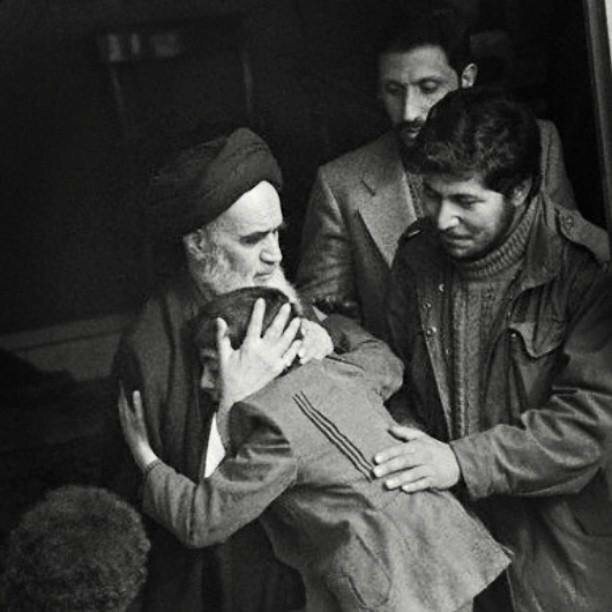
Only two weeks after the Shah fled Iran on January 16, 1979, Imam Khomeini returned to Iran triumphantly, on Thursday, February 1, 1979, invited by the anti-Shah revolution which was already in progress.
Conservative estimates put the welcoming crowd of Iranians at least three million. When Imam Khomeini was on plane on his way to Iran after many years in exile, a reporter, Peter Jennings asked him: "What do you feel?" and surprisingly Imam Khomeini answered "Nothing!"
In a speech given to a huge crowd on the first day of returning to Iran, Imam Khomeini attacked the government of Shapoor Bakhtiar promising "I shall punch their teeth in." He also made a variety of promises to Iranians for his coming Islamic regime: A popularly elected government that would represent the people of Iran.
Establishment of new government
On February 11, Imam Khomeini declared a provisional government. On March 30, 1979, and March 31, 1979, the provisional government asked all Iranians sixteen years of age and older, male and female, to vote in a referendum on the question of accepting an Islamic Republic as the new form of government and constitution. Through the ballot box, over 98% voted in favor of replacing the monarchy with an Islamic Republic. Subsequent elections were held to approve of the newly-drafted Constitution. Along with the position of the Grand Leader, the constitution also requires that a president be elected every four years, but only those candidates approved indirectly by the Council of Guardians may run for the office. Imam Khomeini himself became instituted as the Grand Leader for life, and officially decreed as the "Leader of the Revolution." After assuming power, Islam was made the basis of Iran's new constitution and obedience to Islamic laws made compulsory.
Relationship with other Islamic nations
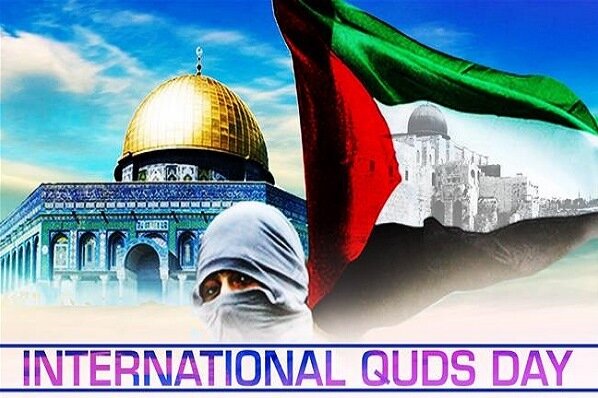
Imam Khomeini intended to reconstruct Muslim unity and solidarity, so he declared the birth week of Prophet of Islam (the week between 12th to 17th of Rabi'al-Awwal in Islamic Hegira calendar) as the Unity Week. Then he declared the last Friday of the fasting month of Ramadan as the International Day of Quds in 1979.
But because of Islamic ideology of Islamic Republic of Iran, most rulers of other Muslim nations turned against him and supported Iraq in the imposed war against Iran, even though most of Islamic parties and organizations supported his idea.
Iran-Iraq War
Saddam Hussein, Iraq's secular Arab nationalist Ba'athist leader, was eager to take advantage of Iran's weakened military and (what he assumed was) revolutionary chaos, and in particular to occupy Iran's adjacent oil-rich province of Khuzestan and undermine attempts by Iranian Islamic revolutionaries to incite the Shia majority of his country.
With what many believe was the encouragement of the United States, Saudi Arabia and other countries, Iraq soon launched a full scale invasion of Iran, starting what would become the eight-year-long Iran-Iraq War (September 1980 - August 1988). A combination of fierce patriot resistance by Iranians and military incompetence by Iraqi forces soon stalled the Iraqi advance and by early 1982 Iran regained almost all the territory lost to the invasion. The invasion rallied Iranians behind the new regime, enhancing Imam Khomeini's stature and allowed him to consolidate and stabilize his leadership.
Although outside powers supplied arms to both sides during the war, the West (America in particular) became alarmed by the possibility of the Islamic Revolution spreading throughout the oil-exporting Persian Gulf oil and began to supply Iraq with whatever help it needed. The war continued for another six years, with 450,000 to 950,000 casualties on the Iranian side and the use of chemical weaponry by the Iraqi military.
As the costs of the eight-year war mounted, Imam Khomeini, in his words, "drank the cup of poison" and accepted a truce mediated by the United Nations. As the war ended, the struggles among the clergy resumed and Imam Khomeini’s health began to decline.
Rushdie Fatwa
In early 1989, Imam Khomeini issued a fatwa calling for the killing of Salman Rushdie, an Indian-born British author. Imam Khomeini claimed that Rushdie's murder was a religious duty for Muslims because of his alleged blasphemy against Prophet Mohammad in his novel, The Satanic Verses. Rushdie's book contains passages that some Muslims — including Ayatollah Imam Khomeini — considered offensive to Islam and the Prophet. Though Rushdie publicly apologized, the fatwa was not revoked, Imam Khomeini explaining that "even if Salman Rushdie repents and becomes the most pious man of all time, it is incumbent on every Muslim to employ everything he has got, his life and wealth, to send him to Hell."
Letter to Mikhail S. Gorbachev
In December 1988 (before the fall of the Berlin Wall), Ayatollah Imam Khomeini sent a letter to USSR President Mikhail Gorbachev predicting the fall of Communism and inviting him to study and research Islam. In his historical letter he wrote: "It is clear to everyone that Communism should henceforth be sought in world museums of political history."
Life under Imam Khomeini
Under Imam Khomeini's rule, Sharia (Islamic law) was introduced, with the Islamic dress code enforced for both men and women. Women had to cover their hair, and men were not allowed to wear shorts.
Life for religious minorities has been mixed under Imam Khomeini and his successors. Shortly after his return from exile in 1979, Imam Khomeini issued a fatwa ordering that Jews and other minorities (except Bahai) be treated well. By law, several seats in the Parliament are reserved for minority religions. Imam Khomeini also called for unity between Sunni and Shia Muslims (Sunni Muslims are the largest religious minority in Iran).
Death and funeral
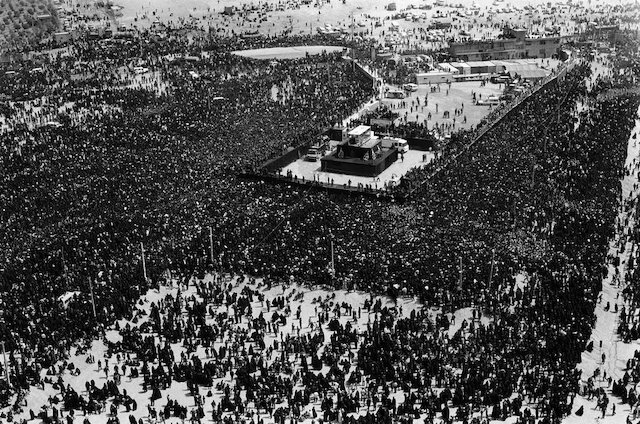
After eleven days in a hospital for an operation to stop internal bleeding, Imam Khomeini died of cancer on Saturday, June 3, 1989, at the age of 89. Many Iranians mourned Imam Khomeini's death and poured out into the cities and streets. More than 10 million people from across the country attended Imam Khomeini’s funeral to form one of the largest ever funerals in the world.
Following Imam Khomeini’s demise, Ayatollah Seyyed Ali Khamenei came to be selected on June 4, 1989 by the Assembly of Experts to be his successor, in accordance with the Constitution.
Political thought and legacy
Imam Khomeini adamantly opposed monarchy, arguing that only rule by a leading Islamic jurist would insure Sharia was properly followed (Velayat-e Faqih).
Imam Khomeini believed that Iran should strive towards self-reliance. He viewed certain elements of Western culture as being inherently decadent and a corrupting influence upon the youth. His ultimate vision was for Islamic nations to converge together into a single unified power, in order to avoid alignment with either side (the West or the East), and he believed that this would happen at some point in the near future.
Imam Khomeini expressed support for the Universal Declaration of Human Rights; in Sahifeh Nour (Vol. 2, page 242), he states: "We would like to act according to the Universal Declaration of Human Rights. We would like to be free. We would like independence."
Imam Khomeini led an ascetic lifestyle, being deeply interested in mysticism, and was against the accumulation of land and wealth by the clergy.
Many of Imam Khomeini's political and religious ideas were considered to be progressive and reformist by leftist intellectuals and activists prior to the Revolution.
Imam Khomeini's definition of democracy existed within an Islamic framework. His last will and testament largely focuses on this line of thought, encouraging both the general Iranian populace, the lower economic classes in particular, and the clergy to maintain their commitment to fulfilling Islamic revolutionary ideals.
Family and descendants
In 1929, Imam Khomeini married Batol Saqafi Khomeini, the daughter of a cleric in Tehran. They had seven children, though only five survived infancy, 3 daughters and 2 sons. His sons entered into religious life. The elder son, Mostafa, was murdered in 1977 while in exile with his father in Najaf, Iraq and SAVAK (the Imperial-era secret police) was accused of his death by Imam Khomeini. Ahmad Khomeini, the younger son, died in 1995.
Imam Khomeini's grandson Seyyed Hassan Khomeini, son of the late Seyyed Ahmad Khomeini, is also a cleric and the trustee of Imam Khomeini's shrine.
Works:
Velayat-e Faqih
Forty Hadiths (Forty Traditions)  
Adab-e Salat (The Disciplines of Prayers)       
Jihad-e Akbar (The Greater Struggle)
Tahrir al-Wasilah
Interpretation of Surah Fatihah
Serr al-Salat (Secrets of Prayers)
Interpretation of Dawn Pray
Interpretation of Forces of Reason and Negligence Tradition 
Hajj
Source: Khamenei.ir

After 30 Years, Imam’s Legacy Carries On

TEHRAN — Thirty years ago millions of mourners crowded the streets of Tehran for the funeral of Imam Khomeini, and today the founder of the Islamic Republic remains a guiding figure in Iran, France’s AFP news agency reported on Sunday.
In life, he was recognized by his followers as the "Imam,” leader of the Shia community, and decades after his passing he remains enshrined in the Iranian constitution as "the great source of imitation.”
"His key legacy is the strong notion of independence, sovereignty and resilience against foreign hegemony and imperialism that still continues to exist among Iranians,” Muhammad Marandi, head of the American studies department at Tehran University, told AFP. 
Born in 1902, Imam Khomeini passed away on June 3, 1989, following a battle with cancer just over 10 years after he led the Islamic Revolution that swept Iran’s last shah Muhammad Reza Pahlavi, a key U.S. ally, from power.
Imam Khomeini’s teaching was centered on the defense of Islam and the underprivileged and a fierce rejection of Western imperialism.
He revived the doctrine of Velayat-e faqih (the guardianship of the jurist) stating that power should be in the hands of a supreme spiritual leader chosen for his piety to direct both the state and believers.
"Velayat-e Faqih is not a concept that he created. It existed in Shia jurisprudence over many centuries,” said Marandi.
"What was new was that he actually was able to overthrow a Western-backed dictatorship in the country and establish an Islamic Republic” that allowed Iran to put the "theory into practice.”
The overthrow of the monarchy was achieved thanks to a disparate array of forces.
While Imam Khomeini has become a major historic figure, he continues to play a central role in discourse in Iran decades after his death.
"The ayatollah’s charisma is kept alive in the political debate,” said Clement Therme, an Iran specialist at the International Institute of Strategic Studies (IISS), cited by AFP.
While disputes may rage over Imam Khomeini’s political legacy there is little doubt that he transformed Iran and remains for many in the country a major authority.
Imam Khomeini "literally changed Iranian society, from a country that was subservient to the needs and interests of foreign entities to prioritizing the needs, the dignity, beliefs, culture and the interests of the indigenous population,” said Marandi from Tehran University. 

Sunday, June 02, 2019

The International Quds Day

By Yusuf Abdullah

NIGERIA - In the name of Allah who states "Glory be to Him Who made His servant go on a night from the Sacred Mosque to the remote mosque of which We have blessed the precincts, so that We may show to him some of our signs; surely He is the Hearing, the Seeing" Q17:1
Peace and blessings of Allah be upon His chosen servant, our master Muhammad, and his purified progeny.
While giving an open invitation to Muslims and the world on August 7th, 1979 to observe the day, Imam Khomeini of blessed memory said "I invite Muslims all over the glove to consecrate the last Friday of the holy month of Ramadan, which is a day of fate and which could also become the day on which the fate of Palestinian people might be determined as Quds day and to proclaim the legitimate right of the Muslim people of Palestine" The day expresses solidarity and global support to Palestinians, and indeed all other oppressed.
 Observed through processions, conferences, and rallies by nations, human rights activists and civil liberties organizations, this insightful declaration of the Imam evidently received borderless acceptance. 
Established after World War II, Israel was promulgated and recognized by Western powers in 1948. Zionism as a movement developed in the late 1800's which united Jews and saw the forceful creation of the illegal state in place of Palestine, then occupied by only 5% Jewish inhabitants. To quote from Zariani Abdul Rahman's book - HITLER AND THE WANDERING JEW, 1994. Just a few days ago, the diplomacy of the dignified and handsome Semitic Prince Faisal Abdul-Aziz al-Saud was lost on the hysterical crowd of New York Jews who were bent on literally spitting HRH.
 Nine centuries ago, while Christian Crusaders were burning Jerusalem's Jews alive in their synagogue, it was the Muslim Saladin who kindly brought back Jews to Jerusalem, along with his Muslim followers. And 800 years later, within the UN headquarters in Flushing Meadow, New York, this was how the Muslims were paid back for their past kindness to the Jews.    
America was the apparent negotiator and chief architect of all road maps regarding the domination of Palestinians by Israel or what others ignorantly refer as incessant Mid-east conflict. Among other questions arising; was any tangible achievements made in the over seven decades of peace talks? Any optimism in the future? To what extent is the negotiator accused of a double standard?  Then, in whose interest does America work in the process? The other side of the conflict reveals the gainful arms trade to American and other European manufacturers. 
On the ambitious liberation of Palestine, many thought the Arab league formed in 1945, with the aim of strengthening ties among member states, could coordinate their policies and protect their common interests. But what were the achievements of the league? To what extent did the league and its sister Palestinian liberation organization (PLO) achieve their stated objectives?
 The question is how could the Arab league and PLO, established on the basis of Arabism or Nationalism lead to emancipation of Palestine while the same Nationalism was used to destabilize the grand Ottoman Empire and establish Israel in its place? No doubt, Quds Day is the only measure relevant for Quds liberation; the third holiest mosque and the first direction of Muslims.
 Unity is the force behind the call of this great Islamic personality, and ultimate hope for liberation of Palestine and other world oppressed. George Curzon, the British Secretary of state for foreign affairs, 1911-1921 said "we must put an end to anything which brings about Islamic unity between the sons of the Muslims.
 As we have already succeeded in finishing off the caliphate, so we must ensure that there will never arise again unity for the Muslims, whether it be intellectual or cultural unity" “And hold fast, all together, by the rope which Allah (stretches out for you), and be not divided among yourselves” Q3:103. That is why the spiritual leader of the Islamic revolution in Iran, Ayatollah Sayyed Ali Khamenei maintains that the ISIS clearly serves the American interest in the Middle-east accusing any cooperation with the U.S. to resolve the Iraqi or Syrian situation of sowing discord and divisions in the region.  
In a borderless sympathy, the day basically sympathizes with Palestinians and other oppressed regardless of all odds, and to fight oppression and injustice as common enemies. The Imam bitterly debunked apartheid and helped Nelson Mandela in the fight against it. On the other hand, Mandela said: "the independence of South Africa was incomplete without the freedom of Palestine". And on his first visit to Tehran after release from long incarceration, he appreciated the fatherly role of the Imam and Iran's historic support. Late Hugo Chavez observed the day where he would be seen at the forefront of the events among other protesters in his country. 
The world is aware of the unfortunate Saudi military campaign against Yemen since 2015. Ironically, it's deliberate aggression by the richest and most influential Muslim Arab nation against the poorest and closest neighbor. The consequence of the aggression in Yemen is what the united nation described as the worst humanitarian crises in contemporary history.  We use this occasion to champion the cause of other world oppressed in Afghanistan, Iraq, Syria, Libya, Nigeria, and Central Africa among others.
 Since the unfortunate 2015 Zaria massacre, and non-response of the government, endless questions are raised; what was the actual rationale behind the attack on the Islamic movement? On what ground was the Sheikh arrested? In whose interest are the elderly and ailing Sheikh, his wife and other disciples being detained? What is the government's stand on the Federal High Court verdict? 
Why does the government disregard calls of millions of Nigerians on the need to take him abroad for medication? And to what extent will the detention continue? What is the stand of the government on the over one thousand Nigerians killed in Zaria, Kano, and Abuja evidently recorded, and related incidences? This also exposes the lies of the so-called developed nations who claim leading positions in protection and promotion of fundamental human rights across the world.
 What a double stand! If peace, unity, and progress of this country were the uncompromising yardsticks to assess significant relevance of the citizenry, who can dare to compare his eminence, the indefatigable leader of the Islamic Movement, Sheikh Ibraheem el-Zakzaky with any scholar, politician or else in our contemporary history? 
With the access of the London-based Islamic Human Rights Commission; an august umbrella of about 30 Islamic and other nongovernmental organizations of a global network for justice, to the ailing Sheikh and his wife last month, an assessment of their health was made by a team of experts mainly from India. The development was consequent to the Sheikh's lawyer’s incessant notice on their client's health in court sessions as known to all for which the judge mandated the exercise for the duo.
 It is imperative to acknowledge the effort by the people wishing peace to reign and justice to prevail all over the world.  As emphasized by the Imam “the Quds Day is a universal day. It is not an exclusive day for Quds itself. It is a day for the oppressed to rise and stand up against the arrogant.” 
Presently, the world is aware of the US and its allies heightening pressures on Iran fuelling fears for a possible war. The Iranophobia is meant to limit its growing might and influence in the region which is apparently non-achievable. America's withdrawal from JCPOA, continuous moral and military support to Israel and incessant interference in the region is not unconnected with Iran's impressive role in its security and wellbeing. There is no doubt that there is always a limit to oppression. At this juncture, the famous words of Sheikh el-Zakzaky, as he gave hope to oppressed especially Palestinians are relevant "Israel was created by terrorism. No matter the years of oppression, it will crumble"
While sympathizing with the Palestinians on this day, we denounce the enemies' unending brutality and bloodshed especially in Yemen, Somalia, and Nigeria among others. We use the same medium to emphasize the urgent need for the unconditional release of Sheikh Ibraheem el-Zakzaky (H) and his disciples. As we mark the day of the oppressed, we also appreciate the role of all justice-seeking and concerned individuals and organizations on the plight of Palestinians and other oppressed.