Showing posts with label imperialists and Zionists. Show all posts

Saturday, February 02, 2019

Islamic Iran: 40 Years of Valiant Resistance

The last surviving beacon for the world’s oppressed and disadvantaged
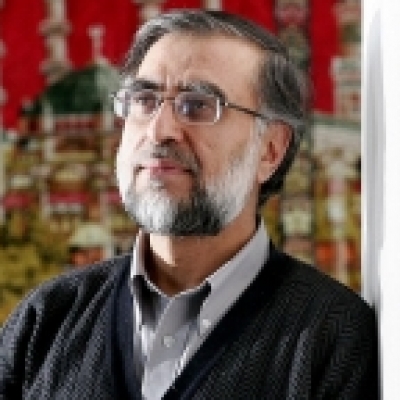
Zafar Bangash
Even if we ignore all its other achievements — and there are many — the very survival of the Islamic Republic of Iran, 40 years after the victory of the Islamic Revolution is a remarkable achievement. This has occurred despite unremitting hostility, sabotage, and aggression from a vast array of internal and external enemies that have spared no effort to destroy the Islamic Republic and the Islamic system of governance. Of this, the people of Iran led by muttaqi and self-sacrificing leadership can be truly proud.
Faced with similar or even less serious challenges, any other state or polity would have collapsed long ago. Not so the Islamic Republic. Instead, the people and leadership of Iran have made enormous sacrifices to maintain their independence and dignity standing up to virtually the entire world. It is not easy; an entrenched unjust global order whose tentacles have spread into all international institutions does not cede control easily. Similarly, with minor exceptions, most countries are also beholden to the predatory powers to serve their own narrow interests. Rule of law and principles of justice are meaningless expressions uttered from international platforms to camouflage the barbaric practices of the imperialists and Zionists and their puppets worldwide.
Maintaining one’s independence, especially based on Islamic principles, and standing up for truth and justice require enormous sacrifices. This is what Islamic Iran has done for 40 years. It has done more: the Islamic Republic has taken great strides in many vital fields despite facing seemingly insurmountable challenges.
For instance, on January 15, Iran launched two satellites into space using its indigenous technology. It has improved its missile systems for self-defence. Islamic Iran leads the Muslim world in scientific research and its scientists have published peer-reviewed articles in leading scientific journals. On the geostrategic level, Iran is now the preeminent power in the region. It has achieved all this despite 40 years of illegal sanctions imposed by the international thug and bully — the US — and its henchmen and puppets in the world.
To consider how far Iran has progressed, let us look at the history of the Islamic Revolution. In 1978–1979, the year of the revolution, the world was divided into two distinct camps. The Western camp was led by the US (First World) while the former Soviet Union led the eastern camp (Second World). The victors of the Second World War had imposed this global order following the disastrous war that resulted in 60 million deaths. For the vast majority of people in the world, this global order has been an unmitigated disaster but since it serves and continues to serve the predators’ interests, it has remained entrenched.
The Second World War, fought primarily in Europe (although the US dropped two atomic bombs on Japan, a non-European state, resulting in millions of deaths), left various colonial powers greatly weakened. Britain, France, Germany, Belgium, the Netherlands, Italy, and Portugal among others were no longer able to keep control of their colonial possessions in Asia and Africa. That even such two-bit European players as Belgium and the Netherlands, little larger than city-states, had colonial possessions is reflective of how weak the rest of the world had become.
For the colonized people of Asia and Africa, the Second World War turned out to be a blessing in disguise. With the weakening of the European colonial powers, people in Asia and Africa gained independence but it was nominal. The newly emerging states were also left with little choice but to join one or the other bloc for sheer survival. The two blocs were like vast prisons from where escape was virtually impossible. Countries existed as vassals of one or the “superpower.” True, there was the so-called non-aligned movement but this was little more than a label of convenience.
When the Islamic Revolution started, Iran was completely under US control. It is interesting to note that even as signs of discontent against the Shah’s regime were becoming visible, the US continued to support him. On a visit to Tehran, then US President Jimmy Carter described the Shah’s regime as an “island of stability.” At a state banquet on December 31, 1977, Carter toasting the Shah said, “Iran, because of the great leadership of the Shah, is an island of stability in one of the more troubled areas of the world. This is a great tribute to you, Your Majesty, and to your leadership and to the respect and the admiration and love which your people give you” (emphasis added). Anyone with even a rudimentary knowledge of the state of affairs in Iran would have found these words totally detached from reality. Within a year, Carter’s “island of stability” had been swept away by the tidal wave of the Islamic Revolution.
In praising the Shah, Carter was merely confirming that he was a loyal puppet and the US would keep him in power. The CIA had a huge presence in Iran. The Shah’s notorious secret service Savak was everywhere. It had such a vast network that people did not trust even their close relatives. Tens of thousands of people were imprisoned and tortured mercilessly.
In such an oppressive environment, the thought of success of the Islamic Revolution appeared remote. After all, the West had neutralized not only Christianity but it thought Islam too had been reduced to the same level: a set of rituals for individual salvation without intruding into the realm of state and politics. The West’s assumption was not entirely wrong; it was based on the sorry condition of Muslim states. Pakistan (officially called an “Islamic Republic”) and Saudi Arabia (claiming to be “governed by the Qur’an and the Prophet’s Sunnah”) offered ready examples.
What the Western policymakers and think-tankers had ignored vis-à-vis Iran was that the movement led by Imam Khomeini was entirely indigenous and rooted in purely Islamic principles. It was not contaminated by Western political thought or influenced by its ideas that bred an inferiority complex in non-Western people. There was also widespread belief among the educated elite in newly independent states that they could only survive if they belonged to one or the other camp.
This is where Imam Khomeini broke new ground. He did more: he overcame the inertia in Shi‘i political thought that had for centuries held the view that injustices in the world would end only with the appearance of Imam Mahdi (a). Imam Khomeini posited that Muslims, especially the ‘ulama’ must abandon their quietism and struggle to prepare the ground for Imam Mahdi’s arrival.
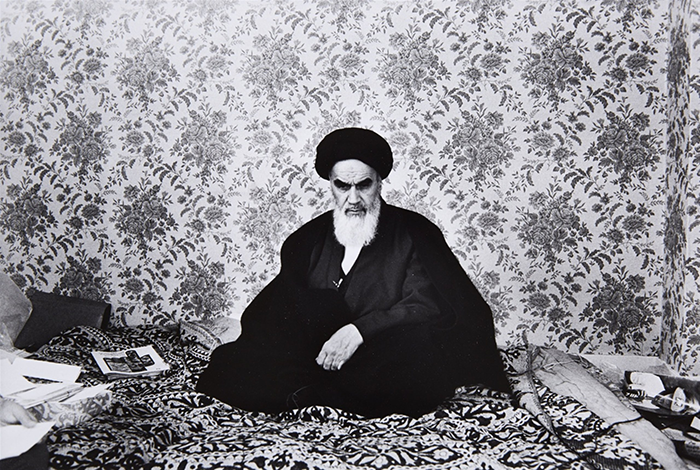
Long before Imam Khomeini came back to Iran to lead the new Islamic Republic, he was already committed to the realization that the world could only be misled by the prevailing superpowers and their ideologies, as they were running their programs of institutional injustice counter to the system and values Allah had chosen for humanity. And he broadly communicated his views, not only to the emergent revolutionaries in Iran, but to anyone else who would listen in the Muslim world and beyond. Apparently, enough of the people in power were listening, for none of their proxies in the Muslim world permitted the Imam to migrate there, forcing him to go to France until his final and triumphant return home.
In a series of lectures both in Iran and then in exile in Iraq, the Imam enlightened the people to take charge of their Islamic responsibilities. Titled Hukumat-e Islami (Islamic Government), these lectures were later published in English under the title, Islam and Revolution: Writings and Declarations of Imam Khomeini, edited and annotated by Professor Hamid Algar, the leading authority on Iran. In these lectures, the Imam outlined his reasons for the necessity of establishing the Islamic government and the rule of walayah al-faqih (rule of the jurist consult). Muslims sincere about understanding the nature, purpose, and ethos of the Islamic Revolution should study this book carefully.
Once the protests started in Qom in January 1978, they spread to other cities heralding the birth of the Islamic Revolution. It quickly gained momentum despite the regime’s brutal crackdown. Shooting unarmed protesters was the time tested method to crush dissent but the protests remained peaceful throughout the year until succeeding in February 1979. Referred to as Deh-e Fajr (“Ten Days of Dawn”), it takes its name from the Qur’anic ayat, “Wa-al-fajr, wa-layalin ‘ashr” (89:1–2).
Despite the regime’s indescribable brutality, the people’s resolve remained firm. This was primarily because of the Imam’s charismatic personality, leadership qualities, and foresight. At every critical juncture, the Imam provided guidance that proved invaluable. On January 16, 1979, the Shah fled the country leaving behind a puppet regime whose authority was confined to his office. Soon thereafter, the Imam arrived in Tehran from Paris and went straight to the Behesht-e Zahra Cemetery to pay homage to the tens of thousands of martyrs of the Revolution (most estimates put the number of people killed by the regime’s forces at 80,000 including women and children!). In his address to the massive crowd, he mentioned that the Shah’s so-called modernization had given us a graveyard full of martyrs.
With the Imam back in Iran, remnants of the regime began to crumble. The first ten days of February proved crucial. The Imam appointed a new government ignoring the regime left behind by the Shah. On the morning of February 11, that regime also crumbled. The revolution had finally succeeded in overthrowing one of the most oppressive regimes in contemporary history.
At this point, it may be pertinent to define the Islamic revolution. The late Dr. Kalim Siddiqui, one of the leading experts on the Islamic Revolution, defined it thus,
The Islamic revolution is that state of a society in which:
1. all the Muslims of an area become mobilized to the point where their collective will and effort becomes irresistible and undefeatable;
2. the Muslim society acquires a leadership that is positively committed to the civilizational goals of Islam and has no class or other interests of its own;
3. the energies thus released are capable of restructuring the society at all levels internally; and,
4. the social order acquires the confidence and the ability to deal with the external world on its own terms” (Zafar Bangash, editor, In Pursuit of the Power of Islam: Major Writings of Kalim Siddiqui, London, 1996; p.136).
True, there are some Muslims, perhaps many that are still not fully aware of or appreciate the importance of the Islamic Revolution. This is largely the result of relentless anti-Iran and anti-Islam Western propaganda beamed at the behest of their corporate or political masters. There are, however, other reasons as well for some Muslims’ antipathy toward the Islamic Revolution.
Part of this has to do with long-entrenched sectarian prejudices that are constantly highlighted by illegitimate regimes to divert attention from their own failures. Unfortunately, most Muslims’ understanding of Islam is quite superficial; they are generally unaware of the Qur’anic message or the Prophetic Sunnah and Sirah. The overwhelming majority of Muslims, even Arabic speaking ones, are woefully unaware of what Allah (swt) says in the noble Qur’an. This is both the result of the decline of Muslims as well as the secularization of Islam.
A state becomes Islamic when the legal system of Islam is implemented in that society as a natural outgrowth of its moral commitment to Allah (swt), His command, and His counsel. Only, then is it able to deal with its enemies on its own terms, not those dictated by others. Further, the Islamic executive, leadership, and temporal command instrument, otherwise called the state, is an essential requirement for establishing Islam in society, as exemplified by the noble Messenger (pbuh) when he migrated from Makkah to the prototypical Islamic State of Madinah.
Even those Muslims who understand the necessity of the Islamic state insist that unless it conforms to their peculiar fiqhi understanding, then the state is not Islamic. This is what has prevented some “Sunni” Muslims from appreciating the significance of the Islamic Revolution in Iran. They simply dismiss it as “Shi‘i,” as if Shi‘is are somehow not Muslims (nastaghfir-allah).
It may also be appropriate to mention the role of Crescent International in support of the Islamic Revolution. Throughout the year of the Revolution and since its success, the West’s poisonous propaganda has been unrelenting. Every attempt has been made to distort its reality and to create doubts in the minds of people, especially Muslims. This was to be expected since the West had lost a favorite client.

The current US President Donald Trump (right), then age 38, visiting Tehran along with US actors, Jack Nicholson (left) and Warren Beatty in 1978. Trump was planning to open a casino (one of the reasons he has close ties to today’s casino king, arch-Zionist Sheldon Adelson) and nightclub in the north of Iran, but his plans were scuttled because of the instability leading up to the culmination of the Revolution, which would occur the following year. One need not guess over Trump’s decades-old vendetta against Islamic Iran as it prevented him from expanding his criminal business empire (read that, his mob empire) in areas that would have been free and clear of US taxation. Not only did the new Islamic leadership reject his “business” initiatives in the country, but it took a principled stand against the predatory and rapacious practices of the American business elite, which was used to being accommodated with all sorts of luxuries and prostitutes during the proxy reign of the Shah.
Further, Islamic Iran had openly challenged the oppressive exploitative global order and defeated it in one geographical area. Left unchecked and unchallenged, its influence would spread. Despite massive anti-Iran and anti-Islam propaganda and sabotage, Islamic Iran has made enormous strides. Its influence has spread both at the intellectual as well as political and geostrategic levels. We in the Crescent International can claim some credit for acting as a bridge between Islamic Iran and the wider Muslim Ummah, indeed the rest of the world or that part of it where people are not totally blinded by Western propaganda.
It must also be mentioned that the resilience to survive these serious challenges came from one source: the Iranian leadership and people’s reliance on Allah (swt) and Allah alone. This is called the power of Islam. It needs elaboration. Every system is based on certain ideas, suppositions about human nature, and values (sometimes, these values are morals, while in other instances, material considerations). The former Soviet Union and its satellites were based on Marxist ideology. The West has pursued capitalism. Muslims have the Islamic system of governance but only one country — Iran — has truly adopted it in contemporary history.
Communism has long been abandoned while capitalism is on its deathbed because it has deepened global inequalities both within and between societies. This has resulted in immense suffering everywhere. The world is a deeply troubled place today.
If we focus on the Muslim East (aka the Middle East), the picture is not only dismal it is deeply problematic. There is hardly a country that is free of turmoil, degradation, and dysfunction, whether internally generated or externally imposed. Most regimes are also totally subservient to the imperialists and Zionists and exist at their mercy. Islamic Iran, on the other hand, despite four decades of illegitimate Western sanctions, has not only weathered these challenges but has emerged much stronger.
Others states, such as Iraq, that were subjected to similar sanctions, have suffered grievously, resulting in mass poverty, starvation, and the death of hundreds of thousands of people. In Iran’s case, far from bringing it to its knees, the leadership has used sanctions as an opportunity to develop a resistance economy, as repeatedly stressed by the Rahbar, Imam Seyyed Ali Khamenei. True, not every segment of the government machinery has followed this advice thereby resulting in problems for ordinary people. These, however, pale into insignificance compared to the very serious problems even some Western countries — France, Britain, and the US — are facing. The neo-liberal world is now in terminal decline, and in all cases, the problem is its obeisance to capitalism — a system that thrives on wealth inequality and class indignation. The US is on the run in the Muslim East. Can the Zionist regime be very far behind?
It also needs emphasizing that the Islamic Republic is not a perfect model of an Islamic state. There are good and not so good people in the government and state machinery. What is indisputable is that the overall ethos is Islamic and that the establishment is totally committed to and sincere about Islamic values and principles. The Rahbar is a modicum of wisdom and taqwa; he has been a truly worthy successor of Imam Khomeini.
Under his leadership, the resistance front has emerged stronger and is able to successfully challenge the oppressive powers. This is just as evident in Syria as it is in Yemen and now increasingly in Palestine. The days of imperialist and Zionist hegemony are over. Their nervousness is evident from the shrill propaganda they indulge in against Islamic Iran these days. Their client regimes are also destined to the dung heap of history, sooner rather than later, insha’allah.
 

Zafar Bangash

Tuesday, November 27, 2018

‘With Strong Faith in Allah, Resistance Movement Winning’ – The Rahbar

Crescent International


“Islamic awakening is spreading and with strong faith in Allah, the Resistance movement is winning,’ said the Rahbar, Imam Seyyed Ali Khamenei on Sunday November 25.
The Rahbar was addressing hundreds of foreign guests, ambassadors of Muslim and other countries in Tehran, senior government officials and ulama at the Rahbary (Office of the Rahbar).
The guests were invited to participate in the celebration of the birthdays of the Prophet (pbuh) and of Imam Jafar as Sadiq (as).
On the second of the three-day conference, foreign guests were taken from their hotels to the Rahbary. There was much anticipation in the air as the guests eagerly awaited the Rahbar’s arrival.
As he appeared from behind the curtains and moved to the centre of stage to take his seat, everyone in the massive hall immediately stood up shouting slogans in support of the Rahbar. He waved to the huge crowd as a kind and affectionate father would to his children.
He began by thanking Almighty Allah for all the favors bestowed upon the Muslim Ummah as well as sending the noor (light) of the Prophet (pbuh) to guide humanity. He congratulated the gathering on the birthdays of the noble Messenger (pbuh) and Imam Jafar as Sadiq (as).
The Rahbar then paid tribute to the late Imam Khomeini who led the Islamic revolution to success as well as to the martyrs whose sacrifices defended the revolution for 40 years.
He said that West Asia was undergoing great changes due to people’s reliance on Allah. This Islamic awakening, said the Rahbar, was causing great anxiety among arrogant powers led by the US.
“Anywhere that Islam has penetrated the hearts and minds of the people, the arrogant powers have been slapped. We strongly believe that these arrogant powers led by the US will be slapped again with increased Islamic awakening in this region,” the Rahbar added.
This was already evident in such places as Iraq, Syria, Lebanon and Palestine where resistance movements have already defeated Zionist-imperialist intrigue. Even in poor Yemen, the resistance movement, led by the valiant Ansarallah fighters, has frustrated the designs of the aggressors.
The Rahbar also drew attention to the 40-year struggle of the Islamic Republic against the intrigues of the imperialists and Zionists and their allies.
“From the day when our revolution was a small sampling 40 years ago to today that it has become a strong tree, the Islamic Republic has withstood the enemies’ intrigues. Today, the revolutionary people of Iran, especially the youth are making great strides in all fields. This is the direct result of their total reliance on the divine power of Allah.”
Referring to Islamic Iran’s experience and success, the Rahbar urged Islamic thinkers and scholars to “strengthen Islamic awakening and the resistance movement in the region as best they can, because the only way for the salvation of the region is to spread this spirit of resistance and pure Islamic thought.”
The Rahbar also paid rich tribute to the Palestinian Islamic resistance movements that have gradually gained confidence and strength and put the Zionists on the defensive.
This year’s International Islamic Unity Conference has been dedicated to the struggle for the liberation of al Quds and Palestine from the clutches of the Zionists.
Addressing rulers of regional countries, the Rahbar said, “Our advice to you is to return to the rule of Islam and come under the authority of Allah because the rule of America and Satan will not benefit you.”
He cited the case of Saudi Arabia and its allies that have become the target Donald Trump’s insults, saying such remarks are an insult to all Muslims.
“America, based on its arrogant nature, is humiliating these countries and, as everyone has seen, the ill-mannered president of the United States, has likened Saudi rulers to milking cows,” said Imam Khamenei.
The Rahbar also touched on the Saudi-led aggression against Yemen and its plans to forge close ties with Zionist Israel.
“Certain rulers of Muslim countries have allied with America in the twin criminal acts in Palestine and Yemen but victory will insha-Allah belong to the Palestinian and Yemeni people. America and its followers will be defeated,” declared the Rahbar with confidence and deep faith in Allah.
Imam Khamenei said the US and Israel are now much weaker than before. Their “desperation, foolish accusations and cruel and criminal acts” are due to the resistance of the Muslims “that will bear fruit.”
Stressing the significance of uniting around the light of the noble Prophet (pbuh), the Rahbar said Muslims would be able to overcome all challenges in the world.
“At a time when the world was immersed in the darkness of ignorance and deceit, Allah in His infinite mercy bestowed upon entire mankind the light of Prophet Muhammad. If we follow this light today, it will lead us to prosperity and salvation,” said the Rahbar.
“If humanity achieves the maturity to accept the Prophet’s invitation, all of its calamities would be resolved,” he added.
Imam Khamenei said that the world was engulfed in darkness because of the oppression unleashed by the dominant powers.
“Today, humanity is afflicted with numerous problems. This is not only the case in the Muslim world, rather countries that are apparently developed also suffer from such afflictions.”
He advised them to study Islam to find solutions to their problems in its pristine principles.
No wiser words could be said, Allahu Akbar!

Saturday, August 11, 2018

Perils could actually herald positive change

By Martin Love


NORTH CAROLINA - Sometimes, more often than not, I write against the U.S. as it was and as it has been since. I was born right after Fat Man and Little Boy were thrown at Hiroshima and Nagasaki. The public was told these two crimes against Japanese civilians, when Japan was already prepared to surrender, saved lives and shortened World War 2. It did neither. The war was already won in the Pacific The U.S. in fact was sending a message to the USSR, which more than any country had defeated Nazi Germany: “Look what we can do to you if you don’t behave.” Hundreds of thousands of Japanese perished to deliver what amounted, at bottom, to a threat to the USSR. And since then?
No doubt the U.S. government has done at least some good in isolated locations around the world, but on balance the idea and fact of “Empire” has gotten insanely out of hand since the turn of the century, and on balance the U.S. has caused more carnage and humiliation to others trying to maintain power and dominance than any other country in world history in the past century. Iran has suffered, beginning with the CIA and British coup against Mossadegh. But maybe, maybe the chickens are coming home to roost as the U.S. government as it has been, may be becoming of late more isolated and reviled, and if you ever imagined you might live in “interesting times”, they have arrived. And oddly enough, amid the dangers, there may be cause for some hope ahead. Consider that the geopolitical deck is getting reshuffled, at least slowly. Alliances and perceptions are changing. Currently, for examples, Turkey seems to be falling out with both the U.S. and the EU, the U.S. falling out with the EU, Canada and Mexico (and others), Saudi Arabia falling out with Canada, Turkey and Qatar, and tradition Western allies appearing incapable of getting along, among many other instances of discord.
While one cannot disagree with some moves Trump has made, including the appearance at least of Trump’s suggestions to reduce tensions with Vladimir Putin and the Russians, a suggestion which may literally threaten his Presidency, his greatest failings are, of course, his Middle East policies where the Zionists have been setting the agenda, particularly with regard to Iran. He can tweet and tweet idiotically, endlessly send out messages that he often contradicts the next day, but as long as he protects the super-rich oligarchs and permits the Zionists’ to control him, and allows the U.S. Military Industrial Complex to do its worldwide murder and to loot the U.S. Treasury, he will be allowed to carry on, and meanwhile the Democratic opposition, which claims to be more “sane”, really is not yet and its intentions though cast differently are just as inimical – until something breaks. And something will break. Perhaps it will be the faux health of the U.S. economy and its perilous finances. Perhaps it will be an overwhelming preponderance of breaks with allies like the EU that make it impossible for the U.S. government to maintain its desired status quo. Perhaps even some kind of revolution in the U.S. is brewing. No one is happy with the stance of Washington against Iran except the warmongers, and Neocons, and that includes many Americans. Do not be deluded: those who are pulling Trump’s strings with regard to the Middle East would like nothing more than for Iran to fall apart and be drowned in chaos of the sort that ensued in Assad’s Syria until recently. If Iranians were fully aware of this, they would hang tough through the sanctions and threats until they abate, and if Iran can manage somehow, they will abate.
And Americans are wising up through all the propaganda, at least at the margin, because they see that Republican Party domination in Washington of late is dismantling, or wants to dismantle, not only protections of free speech and the free press, but also environmental protections and cherished social programs like Medicare and Social Security – at the behest of greedy corporations and other “elites”.
Iranians must be aware that the American PEOPLE, by and large, have no ax to grind with Iran. In fact, even such media pundits as Geraldo Rivera of Fox news have lately questioned why Iran, and not Saudi Arabia, has been demonized by Washington. He went on to suggest that Iran ought to replace the Saudis as an “ally” of sorts in the Middle East…but of course that goes against the Zionists’ grip on foreign policy. And one must note that Jeremy Corbyn, leader of the Labor Party in the UK, attacked so viciously of late by Zionist zealots even in his own party, is actually gaining support among Jews in the UK even though he has long been a champion of human rights, has supported relief for the long-suffering Palestinians and claimed he would endorse Palestinian statehood. Grand it would be if Corbyn becomes Britain’s Prime Minister, which is a real possibility.
Just this week, another promising development. The state of Michigan is likely to send the very first Muslim woman to the U.S. House of Representatives in November. This is Democrat and atttorney Rashida Tlaib, 42, daughter of Palestinian immigrants who just won a primary election. Representing part of Detroit and Dearborn, she may be joined by a couple other Muslim candidates in Congress come November.
In any broad survey of the geopolitical landscape, which is being reshuffled like never before in decades, the one clear takeaway is the necessity for not just Iranians, but all people distressed by narrow and desperate U.S. imperialists, to maintain solidarity and cool heads whatever the pains as something better and new may be born not merely in the U.S., but worldwide.  

Thursday, August 02, 2018

Cutting US Support to Israel Should Be Primary Goal to Bring about A Just Peace - American Analyst


TEHRAN (FNA)- Independent political analyst Jeremy R. Hammond says that US financial, diplomatic, and military support to Israel is providing the regime with a feeling of impunity to continue with its crimes against the Palestinians.
Mr. Hammond, in an exclusive interview with FNA, said that the solution to the Palestinian issue lies in the hands of the people, and not governments. He also emphasized the need for activists and supporters of Palestine to work towards an end to American support for the Zionist regime.

Commenting on the role of the Arab states, he added “The Arab states issue lofty rhetoric about upholding Palestinians’ rights, but they are short on meaningful action and often do just the opposite.”
Jeremy R. Hammond is an independent political analyst, author and founding editor and publisher of Foreign Policy Journal. His latest book is “Obstacle to Peace: The US Role in the Israeli-Palestinian Conflict.”

FNA has conducted an interview with Jeremy R. Hammond about Trump’s relocation of the US embassy to Jerusalem Al-Quds and also the recent killings of Palestinian protesters by Israeli army.
Below you will find the full text of the interview.

Q: Delivering on his campaign promise and in defiance of all global warnings, Donald Trump moved US embassy to Jerusalem al-Quds. Many believe that this move by Trump has effectively killed fantasies that Washington is a neutral party in the Palestinian-Israeli conflict. How do you think that would play in the current and future developments surrounding the issue?

A: In my assessment, Trump has actually done the Palestinians a favor by totally eliminating any last semblances of perceived credibility of the so-called “peace process”, which is the means by which Israel and the US have long blocked implementation of the two-state solution. It opens up a political opportunity for Palestinian leaders to pursue legal remedy for Israel’s crimes against their people via the International Criminal Court. However, that would also require unity of purpose, which is lacking among the Palestinian leadership today.

Q: Since the beginning of the protests dubbed as the “Great March of Return”, Israeli forces killed and wounded many Palestinian civilians, including the protesters, members of the press and medical workers. It seems as if the regime in Tel Aviv feels an atmosphere of impunity where it can act beyond all international laws and conventions. Where do you think this feeling of immunity comes from?

A: It comes primarily from the fact that the US provides financial, diplomatic, and military support for Israel’s crimes against the Palestinians. Working toward seeing an end to this support must be a primary goal of activists seeking a just peace.

Q: The US Ambassador to the UN said “no country would act with greater restraint than Israel” as the world was witnessing the rise in the toll of Palestinian civilians killed and wounded by Israeli live fire. What do you think about this?

A: Nikki Haley is delusional. We heard this same line during Israel’s “Operation Cast Lead” as it was systematically bombing residential homes, schools, hospitals, and other civilian infrastructure in accordance with the IDF’s announced “Dahiya Doctrine” of using deliberately disproportionate force to punish the civilian population.

Q: Israel has rejected international calls for probes into recent killings and insisted that its open-fire rules for Gaza will not change. Some Western states, particularly the US and Britain, who call themselves champions of human rights, have supported the Israeli crimes against Palestinians. The UN has also failed to restore the rights of the people. What is your assessment? What role can nations of the world play in protecting the rights of the oppressed people of Palestine?

A: We cannot place our hope in the governments of the world to solve this problem. It is up to each of us as individuals to act in whatever capacity we have to affect the necessary paradigm shift. This requires waking others up to the realities of the conflict, as opposed to the delusions and myths propagated by the likes of Nikki Haley.

Q: Saudi Arabia’s crown prince, Mohammad bin Salman, has recently said that Israelis “have the right to have their own land” and that formal relations between Tel Aviv and Riyadh could be mutually beneficial. The Saudi regime once, at least apparently, opposed Israel’s right to exist. What do you think has changed in Riyadh to now come out as an apologist for the Zionist regime and betray the Palestinian cause? How do you think would other fellow Arab and Muslim nations think of the Kingdom?

A: There is no such thing as a “right” of a state “to exist”. The proper framework for discussion is the right to self-determination. Jews as well as Arabs have this right. But the Zionists rejected this right for the Arabs from the beginning of the conflict, and the “Jewish state” was established by ethnically cleansing 700,000 Arabs from their homes in Palestine.

So what Saudi Arabia has done is effectively deny the right of Palestinian refugees to return to their homeland, which is indeed a betrayal of Palestinians’ rights. But it is not surprising. The Arab states issue lofty rhetoric about upholding Palestinians’ rights, but they are short on meaningful action and often do just the opposite.

This is one of the reasons I say change will not come from governments, but from the people.

Saturday, February 04, 2017

Secret of Islamic Iran’s success

By Tahir Mustafa 


An Iranian girl shows her hand painted with the national flag colors during a ceremony marking the 36th anniversary of the Islamic Revolution (two years ago), at the Azadi (Freedom) Square in Tehran. Part of the reason the Islamic Republic has remained vibrant, despite ongoing attempts to overthrow the Islamic leadership, is that those who have been deputized to rule have deep roots within the people themselves, hence the people’s admiration and love for them, unlike the majority of Western democracies.
The Islamic Republic of Iran has survived 38 years of sabotage, wars and sanctions and still made immense progress because of the commitment of its leaders to the values of Islam and support of its masses. Taqwa has been institutionalized in the Islamic Republic making it impregnable to the enemies’ conspiracies.

Every February, the people of Iran and their friends and well wishers, globally, organize what are referred to as the “Ten Days of Dawn” celebrations. Based on the Qur’anic ayat, “Wa-al-fajr. Wa-layalin ‘ashr: By the dawn. And the ten nights,” the celebrations mark the victory of the Islamic Revolution in Iran in 1979.

This February marks 38 years of the Islamic Revolution. In the scale of history, this may be a mere speck but in terms of its impact on global affairs, it was an earth-shaking event because it was no ordinary revolution. It not only overthrew the oppressive regime of the Shah but also broke free from the shackles of the imperialist-imposed order. It was the first time in contemporary history that a country had achieved genuine independence. Other countries were sold a fraudulent independence with power remaining in the hands of Western-trained and appointed rulers. As far as the people were concerned, they witnessed little or no change in their lives compared to the period of direct colonialism.

The Islamic Revolution and, therefore, the Islamic Republic of Iran have survived for 38 years in an unrelentingly hostile environment. Its survival for this long is extremely significant when viewed against the backdrop of other developments in contemporary history. Since the end of the Second World War, many countries experienced coups and even revolutionary upheavals but they were either slapped back into line (such as Egypt and Indonesia) or were overthrown by Western-engineered coups (as witnessed in Iran in 1953, and Chile in 1973). Only the Islamic Revolution in Iran has survived despite numerous attempts, both internal and external, by the enemies of Islam to destroy the new order.

What has given the Islamic Revolution and, therefore, the Islamic Republic the resilience to survive these serious challenges? The simple answer is: the power of Islam. This needs elaboration. Every system is based on certain values. The former Soviet Union and its satellites were based on Marxist ideology. The West has pursued capitalism. The Muslim world has the Islamic system of governance although only one country — Iran — has truly adopted it in contemporary history. Communism has long been abandoned while capitalism is on its deathbed as witnessed through such developments as Brexit and now the election of Donald Trump as president of the United States. Capitalism has deepened global inequalities resulting in greater suffering everywhere. The world is a deeply troubled place today.

A quick glance at the Muslim East (aka the Middle East) reveals there is hardly a country that is free of turmoil, both internal and external. Most are also subservient to the imperialists and Zionists. Islamic Iran, on the other hand, despite three decades of widely punishing Western sanctions affecting its exports, especially oil, has not only weathered these challenges but has emerged much stronger. Hundreds of billions of dollars of Iranian assets, especially income from oil, were frozen and have still not been fully released. Even civilian aircraft spare parts were embargoed posing a serious threat to passenger safety. This would constitute a war crime but in the imperialist order, the rogue United States can do anything and get away it.

Others states, Iraq for example, that were subjected to similar sanctions, have suffered grievously, resulting in mass poverty and starvation. Far from crippling Iran’s economy, the leadership in Iran used the sanctions as a challenge and an opportunity to develop a resistance economy, as ordained by the Rahbar, Imam Seyyed Ali Khamenei. While there were some economic dislocations, Iran withstood these challenges stoically. Visitors to the Islamic Republic have come away impressed by the level and pace of development taking place in the country. Numerous highways cross-cross major cities, all designed by its own engineers and built by local companies. Even a sleepy town like Qom, the base of religious education, has become a sprawling metropolis with fine hotels and major shopping centres.

To appreciate the significance of these developments, one must view them against the backdrop of the eight-year imposed war against Iran launched through Iraq, but backed by the Arabian regimes and the imperialist West. There were no weapons, short of nuclear, that were not given to the Iraqi tyrant Saddam Hussein to try and destroy the Islamic Republic. Saddam committed every crime prohibited under international law but since he had the backing of the West, these were overlooked. When the war ended, Islamic Iran had achieved two of its three stated objectives: protection of the Islamic Revolution and liberation of every inch of its territory. The only objective it did not achieve immediately was the overthrow of Saddam and his trial as a war criminal. The West itself carried that out after Saddam had served his purpose. He was lured into a trap to invade and occupy Kuwait in August 1990. Thereafter, the same West and Saddam’s Arabian allies ganged up against him and attacked Iraq twice. On December 30, 2006, Saddam Hussein was hanged.

Perhaps no country in recent history has had to endure so much negative propaganda and unremitting hostility as the Islamic Republic. From internal sabotage through groups like the Mujahideen-e Khalq Organization (MKO), better known as the munafiqeen, to outright military invasion and trade embargoes, Islamic Iran has taken on all comers. Today it is the pre-eminent power in the region without whose approval and support, no policy can be successful.

While the Arabian regimes led by Bani Saud have tried to undermine Iran, far from achieving their nefarious agenda, they have suffered repeated failures instead. Many of these regimes are teetering on the brink. Their policies of sabotage and aggression, whether in Syria or Yemen, lie in ruin. The Saudi rulers are scared out of their wits and do not know how to get out of the quagmire in Yemen despite inflicting massive civilian casualties and causing much infrastructure damage in the poorest country in the Muslim East. The attack on Yemen has exposed the Saudi rulers to charges of war crimes. It is not inconceivable that one day they may be hauled before the International Criminal Court to face such charges. Their very friends in the West are likely to turn against them once they have outlived their usefulness, as they did with Saddam Hussein.

So the question we need to ask is: what has Iran, or more precisely its leadership, done that has enabled them to come out successful while others have failed? The first point to note is that Iran’s leadership is muttaqi. Its leaders do not work to advance their personal interests; they are genuinely committed to upholding the values of Islam by serving their people. Unlike rulers in neighboring countries, Iran’s leaders are humble and lead simple lives. They are not given to the trappings of power even though Iranians are very cultured and sophisticated people.

The second point is that decision-making is a collective responsibility. While the Rahbar, Imam Seyyed Ali Khamenei, has the final say in all matters, he does not do so without thorough discussion of the issues and taking different points of view into consideration. This has enabled the Islamic Republic to avoid the pitfalls of hasty decisions made by one man in secret. Even if the policy fails, it is not because the process was flawed but because other circumstances beyond their control influenced the outcome.

Third, the Islamic Republic has a system based on a constitution tailored to the needs of the people it is addressing. All decisions are made accordingly. Even at the height of the eight-year imposed war, the Islamic Republic did not suspend the constitution. Elections were held on time whether for the presidency or the Majlis. It is this level of trust and transparency that has enabled the leadership to retain the confidence of the masses.

Fourth, the leadership of the Islamic Republic has used the minbar (platform) of the Jumu‘ah Khutbah to keep the people informed about important developments. It is extremely gratifying to note that whoever delivers the Jumu‘ah Khutbah (and it includes the Rahbar himself at times), the burning issues of the day are highlighted and people are taken into confidence. Namaz-e Juma-eh, as the Jumu‘ah Salah is called in Iran, is an inspiring experience.

On the external front, Islamic Iran’s influence has continued to grow. It has gained important allies in the region from Hizbullah in Lebanon to Hamas and Islamic Jihad in Palestine. It has made sure that the imperialist-Zionist-Arabian conspiracy against Syria does not succeed. The conspirators’ designs have been frustrated. Iran has also gained the trust and confidence of Iraq, once its mortal enemy when ruled by Saddam. These developments have left Bani Saud and their tribal cousins in the region feeling nervous and suffering sleepless nights. And Iran has achieved all this without bragging about its prowess. Even Turkey under its brash president Recep Tayyip Erdogan has had to eat humble pie and change course on Syria. The Turkish ruler wanted to supplant Iran as the regional power, a quest in which he has demonstrably failed.

On the economic front, there is a major shift in global affairs. The centre of gravity of economic growth has shifted from North America and Europe to Eurasia. This is the next frontier where riches are to be made. Three things account for this change of direction: a large population base, huge landmass, and enormous natural and energy resources. Three countries — China, Iran, and Russia — also have a large pool of highly educated people. This talent is driving the economic growth of the region and with Iran now unshackled from illegal Western sanctions, its true potential is about to be realized.

What is, however, undeniable is that Iran’s development owes everything to the values it adopted 38 years ago. By adhering to Islamic principles and creating a society based on taqwa where the overriding concern is the well-being of ordinary people, success has come its way. Islam has given its people enormous self-confidence as well as enabled them to withstand all kinds of pressures and difficulties.

As Allah (swt) has promised in the noble Qur’an, “O you who are truly committed [to Allah], if you support the cause of Allah, He will surely help you and strengthen your foothold” (47:07). Verily, Allah (swt) has spoken the truth.

 
-Tahir Mustafa