Showing posts with label Philippines. Show all posts

Tuesday, December 17, 2019

I Never Saw a World So Fragmented!

Andre Vltchek

It is amazing how easily, without resistance, the Western empire is managing to destroy “rebellious” countries that are standing in its way.
I work in all corners of the planet, wherever Kafkaesque “conflicts” get ignited by Washington, London or Paris.
What I see and describe are not only those horrors which are taking place all around me; horrors that are ruining human lives, destroying villages, cities and entire countries. What I try to grasp is that on the television screens and on the pages of newspapers and the internet, the monstrous crimes against humanity somehow get covered (described), but the information becomes twisted and manipulated to such an extent, that readers and viewers in all parts of the world end up knowing close to nothing about their own suffering, and/or of the suffering of the other.
For instance, in 2015 and in 2019, I tried to sit down and reason with the Hong Kong rioters. It was a truly revealing experience! They knew nothing, absolutely zero about the crimes the West has been committing in places such as Afghanistan, Syria or Libya. When I tried to explain to them, how many Latin American democracies Washington had overthrown, they thought I was a lunatic. How could the good, tender, ‘democratic’ West murder millions, and bathe entire continents in blood? That is not what they were taught at their universities. That is not what the BBC, CNN or even the China Morning Post said and wrote.
Look, I am serious. I showed them photos from Afghanistan and Syria; photos stored in my phone. They must have understood that this was original, first hand stuff. Still, they looked, but their brains were not capable of processing what they were being shown. Images and words; these people were conditioned not to comprehend certain types of information.
But this is not only happening in Hong Kong, a former British colony.
You will maybe find it hard to believe, but even in a Communist country like Vietnam; a proud country, a country which suffered enormously from both French colonialism and the U.S. mad and brutal imperialism, people that I associated with (and I lived in Hanoi for 2 years) knew close to nothing about the horrendous crimes committed against the poor and defenseless neighboring Laos, by the U.S. and its allies during the so-called “Secret War”; crimes that included the bombing of peasants and water buffalos, day and night, by strategic B-52 bombers. And in Laos, where I covered de-mining efforts, people knew nothing about the same monstrosities that the West had committed in Cambodia; murdering hundreds of thousands of people by carpet bombing, displacing millions of peasants from their homes, triggering famine and opening the doors to the Khmer Rouge takeover.
When I am talking about this shocking lack of knowledge in Vietnam, regarding the region and what it was forced to go through, I am not speaking just about the shop-keepers or garment workers. It applies to Vietnamese intellectuals, artists, teachers. It is total amnesia, and it came with the so-called ‘opening up’ to the world, meaning with the consumption of Western mass media and later by the infiltration of social media.
At least Vietnam shares borders as well as a turbulent history with both Laos and Cambodia.
But imagine two huge countries with only maritime borders, like the Philippines and Indonesia. Some Manila dwellers I met thought that Indonesia was in Europe.
Now guess, how many Indonesians know about the massacres that the United States committed in the Philippines a century ago, or how the people in the Philippines were indoctrinated by Western propaganda about the entire South East Asia? Or, how many Filipinos know about the U.S.-triggered 1965 military coup, which deposed the internationalist President Sukarno, killing between 2-3 million intellectuals, teachers, Communists and unionists in “neighboring” Indonesia?
Look at the foreign sections of the Indonesian or Filipino newspapers, and what will you see; the same news from Reuters, AP, AFP. In fact, you will also see the same reports in the news outlets of Kenya, India, Uganda, Bangladesh, United Arab Emirates, Brazil, Guatemala, and the list goes on and on. It is designed to produce one and only one result: absolute fragmentation!
***
The fragmentation of the world is amazing, and it is increasing with time. Those who hoped that the internet would improve the situation, grossly miscalculated.
With a lack of knowledge, solidarity has disappeared, too.
Right now, all over the world, there are riots and revolutions. I am covering the most significant ones; in the Middle East, in Latin America, and in Hong Kong.
Let me be frank: there is absolutely no understanding in Lebanon about what is going on in Hong Kong, or in Bolivia, Chile and Colombia.
Western propaganda throws everything into one sack.
In Hong Kong, rioters indoctrinated by the West are portrayed as “pro-democracy protesters”. They kill, burn, beat up people, but they are still the West’s favorites. Because they are antagonizing the People’s Republic of China, now the greatest enemy of Washington. And because they were created and sustained by the West.
In Bolivia, the anti-imperialist President was overthrown in a Washington orchestrated coup, but the mostly indigenous people who are demanding his return are portrayed as rioters.
In Lebanon, as well as Iraq, protesters are treated kindly by both Europe and the United States, mainly because the West hopes that pro-Iranian Hezbollah and other Shi’a groups and parties could be weakened by the protests.
The clearly anti-capitalist and anti-neo-liberal revolution in Chile, as well as the legitimate protests in Colombia, are reported as some sort of combination of explosion of genuine grievances, and hooliganism and looting. Mike Pompeo recently warned that the United States will support right-wing South American governments, in their attempt to maintain order.
All this coverage is nonsense. In fact, it has one and only one goal: to confuse viewers and readers. To make sure that they know nothing or very little. And that, at the end of the day, they collapse on their couches with deep sighs: “Oh, the world is in turmoil!”
***
It also leads to the tremendous fragmentation of countries on each continent, and of the entire global south.
Asian countries know very little about each other. The same goes for Africa and the Middle East. In Latin America, it is Russia, China and Iran who are literally saving the life of Venezuela. Fellow Latin American nations, with the one shiny exception of Cuba, do zero to help. All Latin American revolutions are fragmented. All U.S. produced coups basically go unopposed.
The same situation is occurring all over the Middle East and Asia. There are no internationalist brigades defending countries destroyed by the West. The big predator comes and attacks its prey. It is a horrible sight, as a country dies in front of the world, in terrible agony. No one interferes. Everybody just watches.
One after another, countries are falling.
This is not how states in the 21st Century should behave. This is the law of attraction the jungle. When I used to live in Africa, making documentary films in Kenya, Rwanda, Congo, driving through the wilderness; this is how animals were behaving, not people. Big cats finding their victim. A zebra, or a gazelle. And the hunt would begin: a terrible occurrence. Then the slow killing; eating the victim alive.
Quite similar to the so-called Monroe doctrine.
The Empire has to kill. Periodically. With predictable regularity.
And no one does anything. The world is watching. Pretending that nothing extraordinary is taking place.
One wonders: can legitimate revolution succeed under such conditions? Can any democratically elected socialist government survive? Or does everything decent, hopeful, and optimistic always ends up as the prey to a degenerate, brutal and vulgar empire?
If that is the case, what’s the point of playing by the rules? Obviously, the rules are rotten. They exist only in order to uphold the status quo. They protect the colonizers, and castigate the rebellions victims.
But that’s not what I wanted to discuss here, today.
My point is: the victims are divided. They know very little about each other. The struggles for true freedom, are fragmented. Those who fight, and bleed, but fight nevertheless, are often antagonized by their less daring fellow victims.
I have never seen the world so divided. Is the Empire succeeding, after all?
Yes and no.
Russia, China, Iran, Venezuela – they have already woken up. They stood up. They are learning about each other, from each other.
Without solidarity, there can be no victory. Without knowledge, there can be no solidarity.
Intellectual courage is now clearly coming from Asia, from the “East”. In order to change the world, Western mass media has to be marginalized, confronted. All Western concepts, including “democracy”, “peace”, and “human rights” have to be questioned, and redefined.
And definitely, knowledge.
We need a new world, not an improved one.
The world does not need London, New York and Paris to teach it about itself.
Fragmentation has to end. Nations have to learn about each other, directly. If they do, true revolutions would soon succeed, while subversions and fake color revolutions like those in Hong Kong, Bolivia and all over the Middle East, will be regionally confronted, and prevented from ruining millions of human lives.

Andre Vltchek is philosopher, novelist, filmmaker and investigative journalist. He’s a creator of Vltchek’s World in Word and Images, and a writer that penned a number of books, including China and Ecological Civilization. He writes especially for the online magazine “New Eastern Outlook.”

Monday, May 06, 2019

Closing Military Bases, Opening a New World

By David Swanson, Executive Director of World BEYOND War, May 2, 2019


In a day and age when many of us are taught to overcome prejudice and behave respectfully toward all, mainstream U.S. media and school texts still habitually portray U.S. lives as the only lives that really matter. A plane crash that kills dozens of human beings is reported, just like a war, with the bulk of the coverage on the handful of U.S. lives lost. A U.S. military commander’s decision to bomb a village rather than subject his troops to ground combat is depicted as an act of enlightenment. The U.S. Civil War is almost universally labeled the deadliest of all U.S. wars, despite the fact that many U.S. wars have killed many more human beings — including U.S. human beings if Filipinos were U.S. citizens during the Philippine-American war or World War II.
In an age when we are generally taught to solve our problems nonviolently, the exception for the organized mass murder of war remains. But wars are increasingly marketed, not as protection from the Adolf Hitler of the Month (last month’s weapons customer), but as acts of philanthropy and benevolence, preventing massacres by bombing cities, or delivering humanitarian aid by bombing cities, or developing democracies by bombing cities.
So, why does the United States maintain troops in at least 175 countries, and roughly 1,000 major military bases in over 80 countries outside the United States and its colonies? This is a practice whose development depended on racism. When old-fashioned colonies became unnecessary for rubber, tin, and other materials that chemists could create, the exception of oil remained, and the desire to maintain troops near potential new wars (how ever progressively marketed) remained. Now that it is clear to most of us that oil will render the earth uninhabitable, that the United States can get its planes, ships, drones, and troops to any spot on earth rapidly without any nearby base, and that all human beings are equally capable of creating such splendorous monuments to self-government as the campaign ad, the gerrymandered district, and the unverifiable voting machine, it’s mostly the belief that non-U.S. people don’t matter that remains.
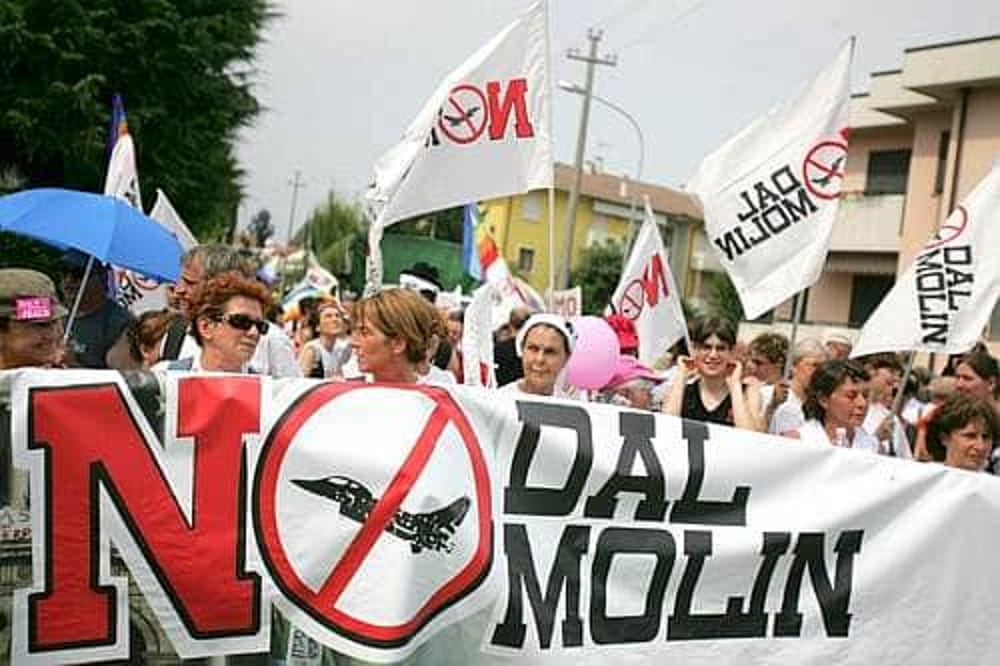
There are profits to be made, and weapons-buying or oil-selling or labor-exploiting dictatorships to be propped up. There’s the inertia of the way things are. There’s the perverse drive to dominate the globe. But the marketing scheme for the global archipelago of bases comes down to the need to police people for their own good, even though they mostly believe it harms them. The presence of not a single foreign U.S. or NATO base has been approved by a public referendum. Numerous such bases have been voted down by public referenda (including one in February 2019 in Okinawa), not a single one of which has been honored by the U.S. government. Many bases are the targets of massive nonviolent protests even before their construction, and for years or decades after.
Most bases are gated communities on steroids. The residents can come out, visit brothels, drink, crash their cars and sometimes airplanes, and commit crimes immune from local prosecution. The bases can emit pollutants and poisons, render the local drinking water deadly, and answer to nobody in the nation being “served” by the base. Those who live outside the base, unless employed there, cannot come in to visit the Little America built inside the walls: the super markets, fast food restaurants, schools, gyms, hospitals, childcare centers, golf courses.
An empire of bases is an empire of very little land, but it is no more land that was “available” than the Americas were empty and awaiting European “discovery.” Countless villages and farms have been eradicated, populations evicted from islands, those islands bombed and poisoned into uninhabitablity. This process describes significant portions of Hawaii, of the Aleutian Islands of Alaska, Bikini Atoll, Enewetak Atoll, Lib Island, Kwajalein Atoll, Ebeye, Vieques, Culebra, Okinawa, Thule, Diego Garcia, and other locations most people in the United States have never heard of. South Korea has evicted large numbers of people from their homes to make way for U.S. bases in recent years. Pagan Island is a new target for destruction.
While the rest of the world’s nations combined have a couple of dozen military bases outside their borders, and while the wealthier nations of the world are leaving the United States behind in health, happiness, life expectancy, education, and other measures of well-being, the United States goes right on building and maintaining more bases around the world at great expense (over $100 billion every year), and at great risk. This has been true during every recent U.S. presidency. President Donald Trump may yet get a big new base named for him in Poland, though it is in Asia and Africa that the heaviest base construction is underway.
Bases hold missiles as well as troops, and new bases in Romania and elsewhere have contributed to the highest ever risk of nuclear apocalypse. Bases have generated, motivated, and served as training grounds for terrorism, including such famous terrorist attacks as those of 9-11, driven by opposition to bases in Saudi Arabia, and groups like ISIS, organized in prison camps at U.S. bases in Iraq. An explicit purpose in launching and continuing many wars, including those on Afghanistan and Iraq, is to establish bases. Bases are also used as locations to torture people ostensibly outside the rule of any law. When Congress Members suspect that U.S. troops might someday leave Syria or South Korea, they are quick to insist upon a permanent presence, though they are somewhat mollified when White House officials suggest that any troops leaving Syria will only make it as far as Iraq, from which they will be able to quickly attack Iran as “needed.”
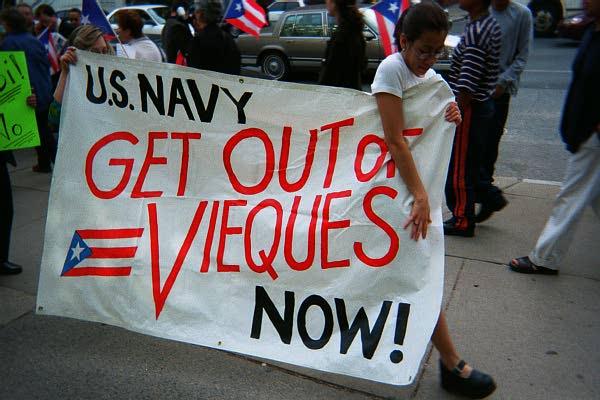
The good news is that sometimes people can shut down bases, as when farmers in Japanprevented the construction of a U.S. base in 1957, or when the people of Puerto Rico kicked the U.S. Navy out of Culebra in 1974, and after years of effort, out of Vieques in 2003. Native Americans evicted a Canadian military base from their land in 2013. People of the Marshall Islands shortened a U.S. base lease in 1983. The people of the Philippines kicked out all U.S. bases in 1992 (though the U.S. later returned). A women’s peace camp helped get U.S. missiles out of England in 1993. U.S. bases left Midway Island in 1993 and Bermuda in 1995. Hawaiians won back an island in 2003. In 2007 localities in the Czech Republic held referenda that matched national opinion polls and demonstrations; their opposition moved their government to refuse to host a U.S. base. Saudi Arabia closed its U.S. bases in 2003 (later reopened), as did Uzbekistan in 2005, Kyrgyzstan in 2009. The U.S. military decided it had done enough damage to Johnston/Kalama Atoll in 2004. In 2007, the President of Ecuador answered public demand, and exposed hypocrisy, by announcing the United States would need to host an Ecuadorean base or shut down its base in Ecuador.
There have been many incomplete victories. In Okinawa, when one base is blocked, another is proposed. But a broad and global movement is being built that is sharing strategies and providing assistance across borders. At World BEYOND War we are putting a major focus on this effort, and have helped to start up a D.C. insider coalition called Overseas Base Realignment and Closure Coalition, drawing heavily on the work of David Vine and his book Base Nation. We’ve also been part of launching a global activist coalition to educate and mobilize people for the closure of U.S. and NATO military bases. This effort has produced a conference in Baltimore, Md., in January 2018, and one in Dublin, Ireland, in November 2018.
Some of the angles finding traction and being shared around the world are environmental. U.S. bases are poisoning ground water, not just all over the United States, where the Pentagon is seeking to legalize such practices, but all over the world, where it needn’t bother. The reasons the Pentagon needn’t bother legalizing destruction abroad ultimately depend on the last remaining widely accepted bigotry in U.S. culture, namely that against every non-U.S. culture.
As the anti-base movement grows, it must work with activists who oppose Western Empire without opposing violence. Spreading the skills of nonviolent activism will be crucial. It must also figure out how to work with that uniquely U.S.ian creation: libertarianism. One way might be this: encourage pressure on Trump to continue demanding that nations occupied by (or “hosting”) U.S. bases pay larger fees for the “service.” We can do this while encouraging governments around the world to respond with a polite “Don’t let the door hit you on your way out.”
At the same time, we cannot lose track of the new world that would be made possible by moving resources away from the maintenance of bases, and away from the even more costly wars they instigate. With this kind of money, the United States could transformboth itself and global foreign aid.

David Swanson

David Swanson is an author, activist, journalist, and radio host. He is director of WorldBeyondWar.org and campaign coordinator for RootsAction.org. Swanson's books include War Is A Lie. He blogs at DavidSwanson.org and WarIsACrime.org. He hosts Talk Nation Radio and is a 2015 Nobel Peace Prize nominee.

Monday, January 28, 2019

From ASEAN Economic Development to Militarization

By Dan Steinbock

In both Africa and Asia, the Trump administration is aiming for increased militarization and arms sales at the expense of economic development.

In a recent editorial, The Manila Times expressed concern that relatively benign economic conditions may lead to a false sense of security as “the United States-China trade war may be starting to inflict collateral damage on the economy.”


In the short-term, it is a valid concern for the Philippines and other ASEAN economies that currently benefit relatively benign economic conditions.
But even if the worst excesses of the trade war could be deterred, there are darker clouds in the longer-term horizon. The Trump administration’s new trade protectionism is accompanied by increasingly military stance. The new US Africa strategy heralds changes in other regions as well, particularly Asia.

Setting a precedent in Africa

In 2017, the United States had a $39.0 billion in total goods trade with Sub-Saharan African countries and a trade deficit of $10.8 billion. US investment in Africa grew in the Bush years. But in the Obama 2010s, it collapsed.
In the past, US Africa strategy focused mainly on economic cooperation and aid, and secondarily on military cooperation. In the new strategy, the focus is reversed. It downplays economic efforts to boost African prosperity. Second, it sees Africa mainly as a base of Islamic terrorism, which must be defused in the continent. Third, it will no longer support UN peacekeeping missions.
Meanwhile, China’s economic engagement with Africa has soared. In 2016, the value of China-Africa trade was $128 billion, almost three times more than US trade with the continent. Also, China’s Africa investment significantly exceeds that of the US. And China is a large source of aid and the largest source of construction financing, which supports Africa’s ambitious infrastructure development.
Perhaps that’s why US Africa strategy misrepresents China’s One Road and Belt (OBOR) initiative as a plan of “Chinese global dominance.” Since economic facts do not support the White House’s narrative, it relies on ideological trashing.
Unfortunately, similar developments loom ahead in Southeast Asia—a region that is far more important economically and strategically.

ASEAN economic development or trade wars

In the past decade or so, US economic engagement in ASEAN has fallen, while that of China has soared. According to US Trade Representative, US trade with ASEAN amounted to $234 billion in 2016; that’s six times more than with Africa. Yet, China trades with ASEAN soared to $515 billion in 2017.
Indeed, China trades with ASEAN (20%) almost as much as ASEAN economies trade with each other (22%). It is the same story with foreign direct investment (FDI). In 2017, China and Hong Kong accounted for some 15% of all FDI to ASEAN. US figure has plunged to less than 5%.
Some observers argue that the US trade war will hurt China but may benefit ASEAN, thanks to redirected trade and investment. That’s a short-sighted view. While some ASEAN countries may benefit in some sectors for some time, continued US-Sino tensions would overshadow the entire region for years to come.

Moreover, US trade with ASEAN is now subject to the ‘America First’ stance. As the Trump administration puts it, “we need ASEAN to do more for us.” The White House seeks “rebalancing” in ASEAN trade ties. It wants to negotiate deals bilaterally with each ASEAN economy—to maximize its leverage.

The US has a combined trade deficit of $92 billion with ASEAN countries; that is higher than its deficit with Mexico ($71bn), Japan ($69bn) or Germany ($65bn)—all of which have already been hit by the Trump administration’s new protectionism.
In ASEAN, the first targets will be those countries with which US has major trade deficit; i.e., Vietnam ($34 billion), Malaysia ($24 billion), Thailand ($20 billion) and Indonesia ($13 billion), followed by the Philippines and Cambodia. Some will seek exemptions, but they require strategic favors that may prove even costlier over time.

The drive to militarize ASEAN

U.S. overall stance toward the ASEAN is changing. Ever since Obama’s security pivot to Asia, Pentagon has been aiming to move 60% it’s warships into the region. The White House has revised its stance accordingly. In the new 2017 National Security Strategy, China is portrayed as America’s “adversary” rather than a partner.
An enemy—real or perceived—is vital for arms sales.
In 2017, military expenditure in Africa was $43 billion (SIPRI). In Asia and Oceania, it amounted to $477 billion, which is almost 11 times more. Southeast Asia alone spends on arms almost as much as Africa.
The Pentagon already dominates sales to Australia, Japan, South Korea and Taiwan. Among the greatest arms importers in Southeast Asia, Indonesia buys a third of its military imports from the UK and US; Singapore more than two thirds from the US.
The Pentagon wants more deals with Vietnam (which favors Russia), Thailand (which relies on Ukraine and China), and Myanmar (which prefers China and Russia). Outside ASEAN, US wants to sell more to India (which relies mainly on Russia).
As US economic engagement has fallen in the region, rearmament would offset the losses – but that can only happen at the expense of ASEAN’s economic future.

The way out

Ultimately, the White House’s changing stances toward Africa and Asia stem from the neoconservative Wolfowitz Doctrine, which in the early ‘90s deemed that the US goal must be “to prevent the re-emergence of a new rival, either on the territory of the former Soviet Union or elsewhere that poses a threat.”
That’s why, like US Africa strategy; American ASEAN strategy is likely to seek to militarize Asia Pacific, which has potential to divide the region. In both regions, the White House seeks to drive rearmament, mainly at the expense of economic development that China promotes. And in both regions, the White House shuns peace-keeping activities in which China is the world’s leading actor today.
Yet, what ASEAN needs is economic development. Destabilization and rearmament are the best way to undermine the quest for Asian Century. Catch-up growth and rising prosperity are not viable without peace and stability.
ASEAN does not need to choose between the US and China. Good diplomacy will choose both. Dishonest diplomacy will choose only one and trash the other.


Dan Steinbock

Dr Dan Steinbock is an internationally recognized strategist of the 
multipolar world. and the founder of Difference Group. He has served 
at the India, China and America Institute (USA) , the Shanghai Institutes 
for International Studies (China) and the EU Center (Singapore).