Showing posts with label Africa. Show all posts

Sunday, December 01, 2019

ISIS in Mozambique: Is it Africa’s Turn Now?

Mustafa Mheta

Ever since the discovery of natural gas (that is converted into Liquefied Natural Gas — LNG — for export) in the Mozambican province of Cabo Delgado, the army has been battling insurgents claiming to be “Islamists.” Civilians have been the main targets of militant attacks. The leading insurgent faction is Ansar al-Sunnah, a native extremist group with tenuous international connections. There are reports that since mid-2018, the Islamic State of Iraq and the Levant (ISIL) has become actively involved in northern Mozambique and claimed its first attack against Mozambican security forces in June 2019.
Concerning the so-called “terrorism” in Africa, there is a certain pattern unfolding that raises many serious questions. First, why is this so-called Islamic terrorism in Africa concentrated in highly resourced areas? Second, is this just a coincidence? When one looks at the geographical locations of so-called “Islamic terrorism,” one notices that it is concentrated in mineral, oil, and gas rich areas.
From Mali, where there is abundance of gold, to Niger where uranium is mined, Burkina Faso, and the Central African Republic with rich deposits of diamonds, in one way or another, they are battling terrorism.
Ansar al-Sunnah, also known by its original name “Ahl al-Sunnah wa-al-Jama‘ah” (“adepts of the prophetic tradition”), was initially a religious movement in the northern districts of Cabo Delgado, which first appeared around 2015. It was formed by followers of the radical Kenyan cleric AboudRogo, who was killed in 2012. Thereafter, some members of his movement settled in Kibiti, Tanzania, before moving into Mozambique.
Ansar al-Sunnah claims that Islam as practised in Mozambique has been corrupted and no longer follows the teachings of the Prophet Muhammad (pbuh). Whatever the truth in such allegations, the group’s members carrying weapons entered traditional masjids in order to threaten worshippers to follow their radical beliefs. The group also espouses anti-Christian and anti-Western rhetoric and has tried to prevent people from attending hospitals or schools that it considers secular and anti-Islamic. Such behavior alienated most of the local population. Instead of converting them to Ahl al-Sunnah wa-al-Jama‘ah, the group’s members broke away from the main body and formed their own places of worship.
Over time, the group became increasingly violent. It called for “Shari‘ah” to be implemented in the country without clarifying what that means, no longer recognized the Mozambican government, and started to form secret training camps in Macomia District, Mocímboa da Praia District, and Montepuez District. Former policemen and ex-frontier guards who had been fired and held grudges against the government started to train Ansar al-Sunnah militants in these camps.
The group contacted other militant outfits in East Africa, and reportedly hired al-Shabab trainers from Somalia, Tanzania, and Kenya. Al-Shabab trainers acted as mercenaries. They aided Ansar al-Sunnah not out of any ideological affiliation or actual connection, but due to the money they received from the group. Some of the Ansar al-Sunnah militants have also gone abroad to receive direct training from other militant groups.
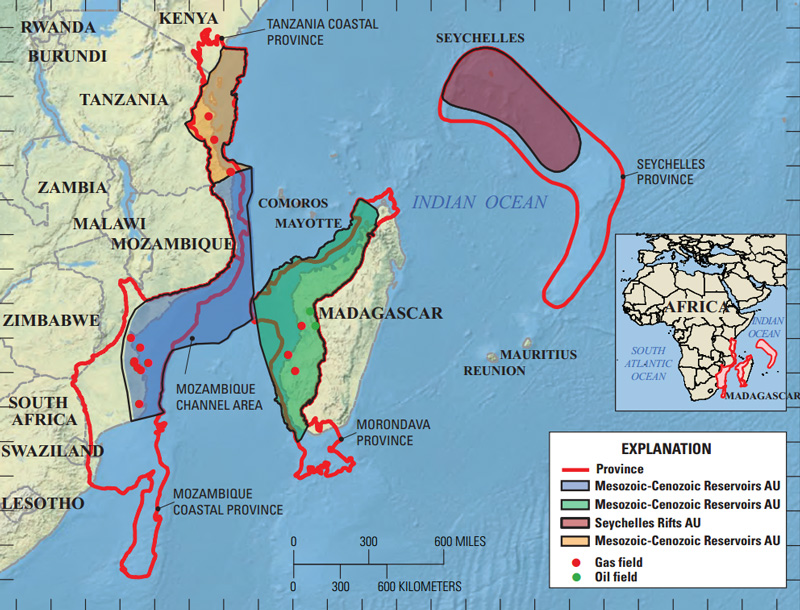
Areas in or off the coast of Mozambique and other East African countries where underground oil and gas reserves have been dis-covered; when developed, they are expected to start generating some $38+ billion in annual revenues by 2035. Not surprisingly Exxon-Mobil along with a host of other vulturistic oil conglomerates have already been licensed by the Mozambique government to start developing block allocations, which have been awarded without due process, no doubt for hefty kickbacks. Though the right of the people to protest business as usual by the elites and demand a fair development of their resources so that the wealth finances the growth of indigenous institutions for education, healthcare, and technology infrastructure is legitimate, the eruption of ISIS cells in the country and surrounding areas suggests that those demands will be sacrificed in favor of security guarantees for the extraction of the fossil fuel resources, which ultimately will be paid for by the value of such resources, the money finding its way into Western banks.
The militants are not unified; they are scattered into different cells without appearing to have any coordination for their activities. By August 2018, the Mozambican police had identified six men as leaders of the militants in Cabo Delgado: Abdul Faizal, Abdul Raim, Abdul Remane, Ibn Omar, “Salimo,” and Nuno Remane.
Like other militant groups, Ansar al-Sunnah also funds itself through illicit trade including selling heroin, contraband, and ivory. A genuine Islamic organization would never fund its activities through drug money or any other haram (forbidden) sources, such as drugs that are forbidden in Islam.
While religion does play a role, albeit limited, in the conflict, some analysts believe the most important factors in the insurgency are widespread social, economic, and political problems in Mozambique. Unemployment and especially youth unemployment are considered the main causes for locals to join the rebels. Increasing inequalities have led many young people to be easily attracted by such a radical movement. Ansar al-Sunnah promises that its form of Islam will act as an antidote to the existing “corrupt, elitist rule.” The question, however, is that these people have lived in poverty for centuries; why the sudden urge now to fight for riches? The timing of their emergence is highly suspicious.
The fact that the uprising began immediately after gas was discovered in Mozambique makes it very dubious. Also of interest is the sudden appearance of key international players like the Americans and the Russians, who have all pledged to protect the newly found gas. This “protection” will come at a price that the poor will have to pay. On September 25, Russian military hardware, namely two Mi-17 helicopters, was delivered via a Russian Air Force An-124 (registration RA-82038) transport plane that landed at Nacala. The Russian and Mozambican governments had signed an agreement on military and technical cooperation in late-January 2017.
In October 2019, the Mozambican military announced that it had detained 34 individuals traveling from Nampula to Cabo Delgado who are suspected of trying to join the ISIL-affiliated insurgent group. The same month, the rebels reportedly killed seven Russian mercenaries and defence contractors from the Wagner Group and 20 Mozambican soldiers in Cabo Delgado Province during two ambushes. The attacks were attributed to the “Islamic State’s” Central Africa Province. Then last month, a number of government troops and five fighters from the Russian mercenary Wagner Group were killed in an ambush. ISIL claimed responsibility for the attack.
There is lack of access to reliable information in the region due to journalists being intimidated by government and military personnel. On January 5, 2019, Mozambican authorities also unlawfully detained journalist Amade Abubacar who had reported on the insurgency. He was subsequently subjected to torture, and only released on bail after 107 days in detention. Why would the Mozambique government play hide and seek if it is an obvious and transparent terrorist war being fought in Cabo Delgado?
It has been reported that oil and gas reserves have been discovered off the Western Cape, South Africa near Mossell Bay. Should South Africans be worried in view of developments in neighboring Mozambique? Professor Hussein Solomon of the University of the Free State has claimed that ISIS has training cells in South Africa but he has provided no evidence. While vigilance is necessary, in the absence of clear proof, such pronouncements, even by academics, remain speculative.
Dr. Mustafa Mheta is Head Re-searcher/Head of Africa Desk with the Media Review Network, Johannesburg, South Africa.

Tuesday, October 29, 2019

Matthew EHRET

A long night of suffering has kept one of the richest continents on the globe in a state of virtual dark age for over a century. Although the age of science has given humanity the means to access the highest standards of living in world history, 2019 has seen 15 000 children die of preventable deaths every day (illness, starvation and murder) with half occurring in Sub Saharan Africa. In a world of advanced energy technology, only five of 54 African countries have access to 100% electrification and all are North African.
Africa’s dark situation was never due to simplistic terms like “corruption” or “incompetence”, nor was Africa ever “culturally incompatible” with western technology as some racists have taught in social science classes. The truth is that Africa was never given true independence as is popularly believed. Sure there was nominal independence, but the economic independence needed to become a sovereign country was never granted by the empire.
This is why the growing presence of nations such as China and Russia on the continent are increasingly seen as beacons of hope for a new generation of Africans who recognise in this Eurasian alliance an opportunity to capture the future they were robbed of over half a century ago.
The Russian African Summit in Sochi
A watershed moment in this systemic change has occurred with the first Russia-Africa Economic and Security Summit in Sochi (Oct. 23-24) co-chaired by President Putin and Egypt’s President el-Sisi, featuring 50 African heads of State alongside 3000 representatives of business, government, and finance. This summit was the first of its kind, and followed hot off the heels of China’s first China-Africa Economic and Security Summit which was held in July 2019. In the past two years, 40 African states have signed onto China’s Belt and Road Initiative which has scared many imperially minded technocrats in the west.
In an interview leading up to the Summit, President Putin beautifully echoed the Chinese philosophy of win-win development for Africa:“We are not going to participate in a new ‘repartition’ of the continent’s wealth; rather, we are ready to engage in competition for cooperation with Africa, provided that this competition is civilized and develops in compliance with the law. We have a lot to offer to our African friends.”
While it does not have the same level of investments as China (which leads the world with $200 billion/year), Russia’s investments have quadrupled since 2009 now clocking it at $20 billion/year and growing with a focus on rail, energy diplomacy, education, culture sharing and military assistance. Russia is currently building Egypt’s first nuclear reactor in El Dabaa, and is negotiating with several other nations such as Ethiopia, Nigeria and Kenya to go nuclear which will end the policy of technological apartheid imposed onto Africa for decades. Russia has announced the construction of an Africa Center of Excellence and Nuclear Power in Ethiopia and the Russian Academy of Sciences announced branches opening up across Africa. A vital driver for development, Russian Railways is working to construct trans-border and intra-border rail in Ghana, Burkina Faso, Nigeria, Libya, Egypt and East Africa (just to name a few). During the summit, Russia announced a cancellation of a $20 billion African debt as an act of goodwill.
President Putin pointed out the elephant in the room when he said: “We see a number of Western states resorting to pressure, intimidation, and blackmail against governments of sovereign African countries. They hope it will help them win back their lost influence and dominant positions in former colonies and seek—this time in a ‘new wrapper’—to reap excess profits and exploit the continent’s resources without any regard for its population, environmental or other risks. They are also hampering the establishment of closer relations between Russia and Africa—apparently, so that nobody would interfere with their plans”
Unlike the west, Russia has the advantage of having encouraged African development during the dark days of the Cold War and is thus infinitely more trusted than the west, whose positive attempts to genuinely help Africa develop (as seen under the leadership of John F. Kennedy, Italian Industrialist Enrico Mattei or President de Gaulle) ended with either assassinations or coups.
Some may call Putin’s words anti-west hyperbole, but a comparison of the quality of investments Russian vs American into Africa demonstrates the two opposing intentions referenced by Putin.
The Trap of Conditionalities
Where US Aid, the World Bank and IMF have poured billions of dollars into Africa over decades, standards of living, and stability of those recipient nations have only plummeted. This is the opposite result one would expect from such “generous” behaviour. Why?
The answer can be partly be found in the shift towards IMF/World Bank conditionalities which grew out of a monstrous paradigm shift that occurred in the 1950s-1970s. Where leaders such as Franklin Roosevelt and his ally Henry Wallace envisioned an industrialized Africa liberated from colonialism, the Bretton Woods instruments they created to provide long term low interest loans internationally were cleansed of anti-colonial leaders and replaced with deep state tools early in the Cold War ensuring that any credit issued would be tied to deadly conditionalities as exposed by John Perkins in his book Confessions of an Economic Hitman.
Under this neo-colonial formula, Africa was allowed to get money. But those dollars would no longer be “permitted” to be invested into genuine nation building or advanced technological progress as Patrice Lumumba, Kwame Nkrumah or Thomas Sankara intended. Only “appropriate technologies” such as windmills or solar panels were permitted. Small wells were ok, but major water/energy projects like hydroelectric dams or Great Manmade Rivers were not allowed. Certainly no nuclear power was permitted (unless you happened to be an apartheid state run by white racists of course). Oil drilling and mining investments were ok, but only if foreign companies like Barak Gold or Standard Oil did the work and none of the revenue or electricity benefited the people. Without the means of producing real wealth (defined as combination of material, intellectual and spiritual growth), Africa’s productive powers of labor collapsed with their sovereignty and the debts only grew.
Hysterical Neocons Lash out
It is no secret that just as China began outpacing the Americans in African investment in 2007. Rather than acting intelligently to increase genuine infrastructure funding as the Chinese had done, the US Deep State not only continued its outdated debt-slavery practices, but created AFRICOM as a military arm across the continent. Ironically AFRICOM’s presence coincided with a doubling of militant Islamist activities since 2010 with 24 groups now identified (up from only 5 in 2010) and a 960% increase in violent attacks from 2009-2018. Just as western lending has caused a pandemic of slavery, so too has western security forces only spread mass insecurity.
The fact is that the neo cons infesting the Military Industrial Complex have openly identified both countries as co-equal enemies to the USA and understand that this alliance represents an existential threat to their hegemony. Speaking at the Heritage Foundation last year, former National Security Advisor John Bolton said (without blushing): “The predatory practices pursued by China and Russia stunt economic growth in Africa; threaten the financial independence of African Nations; inhibit opportunities for US investment… and pose a threat to US national security interests.”
His words were bolstered by acting head of AFRICOM Thomas Waldauser in Feb. 2019 “To thwart Russian exploitative efforts, USA AFRICOM continues to work with a host of partners to be the military partner of choice in Africa.”
Luckily for the world, Bolton and Waldauser were both flushed from their posts by an American President who has chosen to ally with Russia and China rather than risk World War III. However, the dangerous ideology and deep state power structure they represent is not yet defeated, and with Trump’s intention to pull troops out of Syria, these psychotic forces are as dangerous as ever.

Tuesday, October 15, 2019

Ethiopian Prime Minister Abiy Ahmed wins the Nobel Peace Prize


The 2019 Nobel Peace Prize has been awarded to Abiy Ahmed, the Prime Minister of Ethiopia, for his efforts to “achieve peace and international cooperation”. Prime Minister Abiy Ahmed has been praised for ending a 20 year military stalemate with bordering Eritrea, with his peace deal finally bringing closure to the border war of 1998-2000.
Set to receive the award in December of this year in Oslo, Prime Minister Abiy Ahmed will be the 100th winner since the establishment of the ceremonies. The award is worth around $900,000.
Speaking on the phone with the Secretary of the Norwegian Nobel Committee, Olav Njølstad, Prime Minister Abiy Ahmed stated:
It is a prize given to Africa, given to Ethiopia and I can imagine how the rest of Africa’s leaders will take it positively to work on [the] peace-building process on our continent.”
WORLD EXCLUSIVE:
Listen to the call between Ethiopian Prime Minister Abiy Ahmed Ali and Olav Njølstad, Secretary of the Norwegian Nobel Committee, recorded shortly after the announcement of the 2019 Nobel Peace Prize.https://www.youtube.com/watch?v=_D2E3yxeUtg&feature=youtu.be …
317 people are talking about this
Ethiopia’s Prime Minister was elected in April of 2018, and has been praised for not only his peace deal with Eritrea, but also in supporting massive reforms within his own country as well. Freeing thousands of opposition activists from prison and allowing exiled dissidents and human rights activists to return back to Ethiopia, Prime Minister Abiy Ahmed has encouraged the country to open up to reform.
The Norwegian Nobel Committee recognized his efforts in both domestic and international peace, stating that they hope this prize will help continue the peace process of the entire region:
The prize is also meant to recognize all the stakeholders working for peace and reconciliation in Ethiopia and in the East and Northeast African regions. Peace does not arise from the actions of one party alone…the Norwegian Nobel Committee hopes the peace agreement will help to bring about positive change for the entire populations of Ethiopia and Eritrea.”

The Nobel Peace Prize is one of five different categories established by Alfred Nobel in 1901. The recipient of the Peace Prize is chosen by a five-member committee appointed by the Parliament of Norway. Prime Minister Abiy Ahmed will receive this award on the 10th of December in Oslo City Hall.

Tuesday, September 03, 2019

The little known history of the UAE’s relationship with India and East Africa

Although many of the East African slaves brought to the Arabian Peninsula went through Oman and Yemen, it is still important to note the participation of the UAE in this dark chapter of human history.


Although the United Arab Emirates today is known for glitzy Dubai and it’s modernistic cityscapes, the UAE has had a long and sometimes dark history with the two giants that have influenced so much of the country today: India to the east and East Africa to the south. From the language to the food, and from the politics and flow of peoples, the little known history of the UAE and its deep relationship with India and East Africa is interesting for all who are curious about this corner of the world.

The UAE and mother India

Nestled comfortably in the Arabian Peninsula, with access to trade in Europe, Asia, the Middle East, and Africa, the UAE has a long and historical relationship with the former Empire, and now country, of India. With trade and an exchange of culture, traditions, and religions that stem back centuries, the UAE and India’s colourful history is one not to be brushed over when talking about the world’s most interesting international relationships.
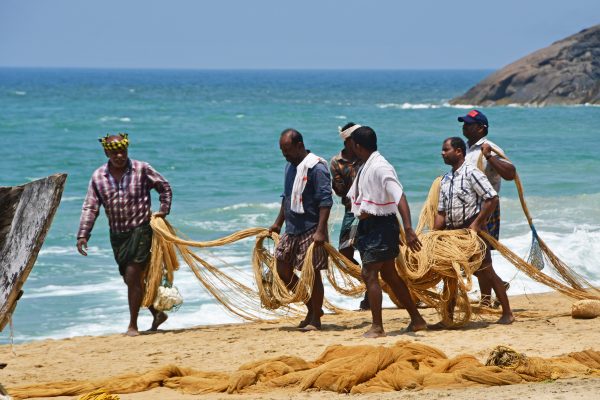
Kerala, in India, has long been a historical hub for commerce and trading in the Indian Ocean.
Because of the UAE’s strategic location between India and the rest of the Middle East, trade and commerce have long been a part of the historic relationship between these two colourful nations. Indian sailors and fishermen, using the winds of the monsoon season, sailed to the Arabian Peninsula to trade and sell goods, with merchants in what is now the UAE actively part of this international trade in the Indian Ocean from as early as 5,000 years ago.
Indian merchants from the Indus Valley brought timber, spices, and grain, while merchants in modern-day Sharjah and Ras Al Khaimah in the UAE traded copper, pottery, and beadwork. It’s no wonder that Indian culture, food, fabrics, and architecture can still be seen in the UAE with such an intricate mix of the two regions mingling over the course of thousands of years.
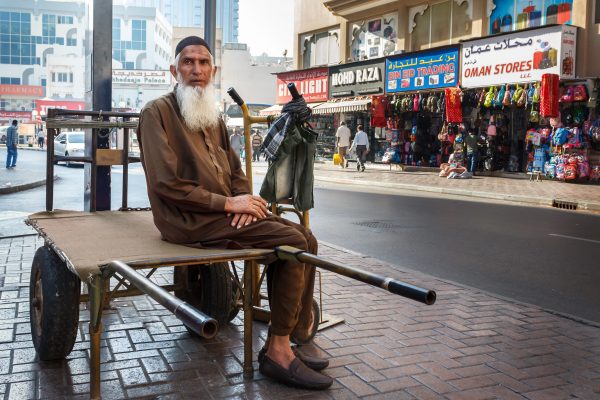
Although both India and the UAE eventually became their own independent nation-states with wider international trading partners, the two countries still share a deep connection. Today, Indian migrants make up the highest number of foreign expats in the UAE, with more than 2.5 million workers of Indian origin living in the country today. This makes the entire population of the UAE almost 27% Indian.
Most agree that the economy in cities like Dubai would collapse without its Indian workforce.
The two countries have much more in common than often admitted by both sides, as seen in the blending of culture, food, and language. In fact, many words in the Emirati Arabic dialect stem from Urdu or Hindi and some of what is considered to be ‘traditional’ Emirati food is known by many to actually have quite obvious Indian origins.
The bond between the UAE and India stems from a long and colourful relationship from before the two even dreamt of becoming modern nation-states, with trade and exchanges of culture, goods, and ideas beginning at least five millennia ago. This relationship between the UAE and India is just one example of how countries, no matter how extravagant and rich they may be today, can never build themselves up completely on their own. It’s safe to say that, without the historical trade and exchanges with India, cities like Dubai would never have grown into the powerhouses they are today.
The UAE and the slave trade from East Africa
While the UAE may have a bright and dazzling image today, it’s important to recognize the darker parts of its history, particularly in relation to East Africa and the slave trade. Although many of the East African slaves brought to the Arabian Peninsula went through Oman and Yemen, it is still important to note the participation of the UAE in this dark chapter of human history.
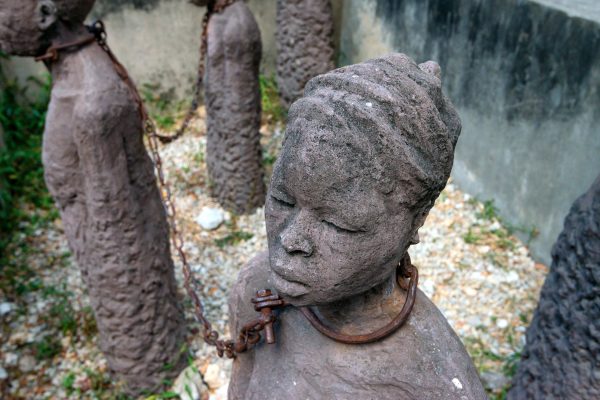
Stone Town in Zanzibar commemorates the horrendous history of the slave market that happened on the island.
Although the number is likely higher, it is generally recognized that around 80,000–100,000 East Africans were kidnapped and forced into slavery in the Arabian Peninsula during the height of the slave trade in the 18th and 19th centuries. Many of the slaves were first forced to gather on the island of Zanzibar; they were then taken to ports in Oman and Yemen where families and businesses from around the Arabian Peninsula would buy them. The areas and families in what is now modern-day UAE actively partook in this dark chapter of human history, and it is important to recognize the brutality and abuses that went unrecorded for centuries during the slave trade.
However, East Africans, mainly from richer family backgrounds, also started to move on their own accords after the slave trade began to get socially outlawed by the 1800–1900s, and many settled down in what is now modern-day UAE and are recognized as local Emirati citizens today. Many have completely adapted to mainstream Emirati culture and language, although some families continue to enjoy East African foods and dialects even while considering themselves local Emiratis. Emirati names such as Al Hammadi, Al Darmaki, and Al Mazroui are said by many to be of East African origin.
By the 1900s, Arab Emiratis were also exploring places such as Zanzibar in East Africa and exchanging in trade and adventure. Using the tide from the monsoon seasons, many Emiratis took the long journey with their traditional dhow boats, arriving in Zanzibar, Mogadishu, and Mombasa with goods to trade and sell.
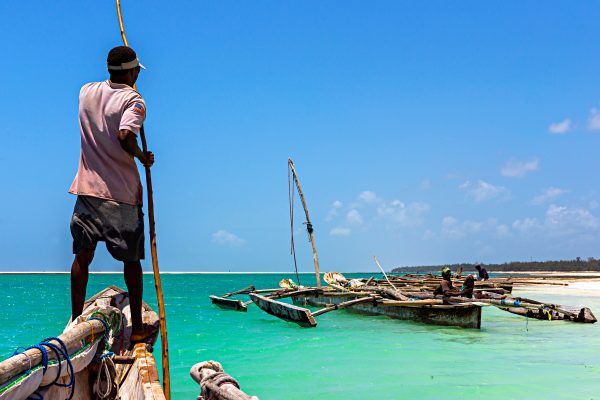
The style of fishing boats in Zanzibar are said to have been styled after the traditional Emirati dhow boats.
Emirati merchants mainly traded mangrove wood in exchange for raisins, corn, and other foodstuffs from East Africa. This strong relationship of trade and cooperation, after a dark history of the slave trade, changed the relationship between the two regions for the better.
Today, the UAE still shares a deep connection with East Africa, with many Africans from the eastern regions of the continent continuing to migrate to the UAE for opportunities and entrepreneurship. Cultures, languages, food, and religion have continued to spread and mix between the two regions, setting an example for the rest of the world of how interconnected we all really are, despite the sometimes horrendous events of the past.

Friday, August 09, 2019

Has the UAE jumped the Saudi ship in Yemen?

Two days ago, Dubai-based academic Dr Abdul Khaliq Abdullah said that the war in Yemen is over for the UAE. Of course, we can’t say that his tweet was posted by an official individual, but it does indeed represent a new trend in the Emirates, which has taken a sharp turn on Yemen and relations with Iran. It is worth noting that this new position has appeared suddenly, and there is nothing to suggest any coordination between Riyadh and Abu Dhabi recently.
The UAE entered a coalition with Saudi Arabia with the intention of defeating Iran and its proxies in Yemen. It is also an original partner in the blockade of Qatar, based on the fact that the government in Doha has ties with Tehran.
In this sense, Saudi Arabia and the UAE have been in step, which some saw as making a difference in international and regional politics. However, the UAE’s measures over the past two weeks reflect a change in its reading of its role and abilities, as well as the threats to its policies.
Abu Dhabi has realised that the war in Yemen will not be settled militarily. Four years into the coalition’s involvement, there is no indication of a victory any time soon. On the contrary, the UAE has become an occupying force opposed by the Yemenis, who accuse it of seeking to divide Yemen into two distinct entities.
The ballistic missile and drone attacks by the Houthis have posed a new threat which Abu Dhabi did not take into consideration when it agreed to join the Saud-led coalition. There is also no doubt that the UAE has started to read US intentions more precisely, as President Donald Trump is not intending to engage in a war with Iran, especially while he is preparing a re-election campaign. Moreover, the warnings by Iranian-backed Hezbollah leader Hassan Nasrallah to the UAE have set alarm bells ringing; his talk of the high price that the “glass cities” will pay has prompted Emirati leaders to accelerate their withdrawal from Yemen and rapprochement with Iran. The withdrawal was not phased, and until recently the Emirates had behaved like any other colonial force in southern Yemen.
Houthis patrol Sanaa, Yemen on 5 December 2017 [Mohammed Hamoud/Anadolu Agency]
We do not know the exact degree of coordination between Abu Dhabi and Riyadh, but we do know that Saudi Arabia tried to dissuade the Emirates from withdrawing from Yemen, but to no avail, apparently. The UAE has started to reconsider its positions and it seems that it does not want to be cannon fodder in an upcoming war. Distancing itself from Saudi Arabia and its policies in the region has become its means of survival in advance of the storm clouds gathering.
Such independent moves are expected to anger the Saudis. Ultimately, though, the Emirates’ decision to withdraw and reach an understanding with Iran is realistic and rational. There are signs that Dubai in particular does not agree with the official UAE policy. The wealthy emirate acted as the trade outlet for the Iranians, but this has declined as a result of the sanctions imposed on Tehran and the UAE’s alignment with Saudi Arabia in its approach to Iran. The attacks on oil tankers in Fujairah port was another cause for concern about the future of the UAE’s political, economic and security stability.
The leaders of the Emirates may have noticed that the US has pulled back in its threats to Iran. They may also have reasoned that playing such games with the Iranians will not happen without the UAE paying a heavy price.
In short, the UAE has realised that the Saudi boat is no longer safe and that it will, almost inevitably, sink; this has pushed Abu Dhabi to jump ship and seek safety. It would not come as a surprise if Riyadh eventually follows suit and also pulls out of Yemen, prompting a similar change in policy with regard to Iran.

Sunday, July 07, 2019

A conspiracy that will fail

By Hanif Ghaffari

TEHRAN- While based on evidence the U.S. and its allies have a direct and significant role in creating chronic security crises in Africa, Western media outlets, in coordination with U.S .intelligence agencies, plan to bring accusations against Iran. Such a policy is being followed by the Daily Telegraph as well.
The Daily Telegraph has accused Iran of devastating activities in Africa, while Washington, Riyadh and Tel Aviv are continuing to plunder the rich African continent under the shadow of news cover-up by the Western media outlets. There should be a lot of focus on the role of Israel in this campaign.
About six decades ago, Golda Meir put a great emphasis on the African continent in line with the interests of Israel. As a result, Mossad officers were scattered across the continent as a cancerous tumor so that the U.S. can find another partner in its efforts to loot African riches. Now, Ethiopia, Sudan and Kenya are important for Tel Aviv in terms of their geographic and strategic location.
Located in the Horn of Africa, these countries overlook Saudi Arabia, Egypt and Yemen. In any case, Israel has new plans to interfere in the internal affairs of Africa.
Israel is now facing water crisis. The glow of the Nile waters is making the eyes of the Zionist regime look greedy to Egypt. Israel is struggling to expand its influence in the Horn of Africa to find a foothold in the entrance of the Red Sea.
Undoubtedly, in the near future documents will be released on U.S. and other Western countries’ support for Tel Aviv in its plundering of African. Beyond that, intervention by France, Britain and some other European countries in northern and some other parts of Africa is continuing unabatedly like the past centuries.
Injection of security crisis is the formula used by Western countries to maintain and continue their involvement in Africa. In the history of international relations, millions of people in African have been the victims of direct and indirect policies of Western countries. Under such circumstances, accusations by the media arm of Western intelligence and security agencies that Iran is interfering in Africa will have no result but a scandal for the U.S. and its allies.

Monday, January 28, 2019

From ASEAN Economic Development to Militarization

By Dan Steinbock

In both Africa and Asia, the Trump administration is aiming for increased militarization and arms sales at the expense of economic development.

In a recent editorial, The Manila Times expressed concern that relatively benign economic conditions may lead to a false sense of security as “the United States-China trade war may be starting to inflict collateral damage on the economy.”


In the short-term, it is a valid concern for the Philippines and other ASEAN economies that currently benefit relatively benign economic conditions.
But even if the worst excesses of the trade war could be deterred, there are darker clouds in the longer-term horizon. The Trump administration’s new trade protectionism is accompanied by increasingly military stance. The new US Africa strategy heralds changes in other regions as well, particularly Asia.

Setting a precedent in Africa

In 2017, the United States had a $39.0 billion in total goods trade with Sub-Saharan African countries and a trade deficit of $10.8 billion. US investment in Africa grew in the Bush years. But in the Obama 2010s, it collapsed.
In the past, US Africa strategy focused mainly on economic cooperation and aid, and secondarily on military cooperation. In the new strategy, the focus is reversed. It downplays economic efforts to boost African prosperity. Second, it sees Africa mainly as a base of Islamic terrorism, which must be defused in the continent. Third, it will no longer support UN peacekeeping missions.
Meanwhile, China’s economic engagement with Africa has soared. In 2016, the value of China-Africa trade was $128 billion, almost three times more than US trade with the continent. Also, China’s Africa investment significantly exceeds that of the US. And China is a large source of aid and the largest source of construction financing, which supports Africa’s ambitious infrastructure development.
Perhaps that’s why US Africa strategy misrepresents China’s One Road and Belt (OBOR) initiative as a plan of “Chinese global dominance.” Since economic facts do not support the White House’s narrative, it relies on ideological trashing.
Unfortunately, similar developments loom ahead in Southeast Asia—a region that is far more important economically and strategically.

ASEAN economic development or trade wars

In the past decade or so, US economic engagement in ASEAN has fallen, while that of China has soared. According to US Trade Representative, US trade with ASEAN amounted to $234 billion in 2016; that’s six times more than with Africa. Yet, China trades with ASEAN soared to $515 billion in 2017.
Indeed, China trades with ASEAN (20%) almost as much as ASEAN economies trade with each other (22%). It is the same story with foreign direct investment (FDI). In 2017, China and Hong Kong accounted for some 15% of all FDI to ASEAN. US figure has plunged to less than 5%.
Some observers argue that the US trade war will hurt China but may benefit ASEAN, thanks to redirected trade and investment. That’s a short-sighted view. While some ASEAN countries may benefit in some sectors for some time, continued US-Sino tensions would overshadow the entire region for years to come.

Moreover, US trade with ASEAN is now subject to the ‘America First’ stance. As the Trump administration puts it, “we need ASEAN to do more for us.” The White House seeks “rebalancing” in ASEAN trade ties. It wants to negotiate deals bilaterally with each ASEAN economy—to maximize its leverage.

The US has a combined trade deficit of $92 billion with ASEAN countries; that is higher than its deficit with Mexico ($71bn), Japan ($69bn) or Germany ($65bn)—all of which have already been hit by the Trump administration’s new protectionism.
In ASEAN, the first targets will be those countries with which US has major trade deficit; i.e., Vietnam ($34 billion), Malaysia ($24 billion), Thailand ($20 billion) and Indonesia ($13 billion), followed by the Philippines and Cambodia. Some will seek exemptions, but they require strategic favors that may prove even costlier over time.

The drive to militarize ASEAN

U.S. overall stance toward the ASEAN is changing. Ever since Obama’s security pivot to Asia, Pentagon has been aiming to move 60% it’s warships into the region. The White House has revised its stance accordingly. In the new 2017 National Security Strategy, China is portrayed as America’s “adversary” rather than a partner.
An enemy—real or perceived—is vital for arms sales.
In 2017, military expenditure in Africa was $43 billion (SIPRI). In Asia and Oceania, it amounted to $477 billion, which is almost 11 times more. Southeast Asia alone spends on arms almost as much as Africa.
The Pentagon already dominates sales to Australia, Japan, South Korea and Taiwan. Among the greatest arms importers in Southeast Asia, Indonesia buys a third of its military imports from the UK and US; Singapore more than two thirds from the US.
The Pentagon wants more deals with Vietnam (which favors Russia), Thailand (which relies on Ukraine and China), and Myanmar (which prefers China and Russia). Outside ASEAN, US wants to sell more to India (which relies mainly on Russia).
As US economic engagement has fallen in the region, rearmament would offset the losses – but that can only happen at the expense of ASEAN’s economic future.

The way out

Ultimately, the White House’s changing stances toward Africa and Asia stem from the neoconservative Wolfowitz Doctrine, which in the early ‘90s deemed that the US goal must be “to prevent the re-emergence of a new rival, either on the territory of the former Soviet Union or elsewhere that poses a threat.”
That’s why, like US Africa strategy; American ASEAN strategy is likely to seek to militarize Asia Pacific, which has potential to divide the region. In both regions, the White House seeks to drive rearmament, mainly at the expense of economic development that China promotes. And in both regions, the White House shuns peace-keeping activities in which China is the world’s leading actor today.
Yet, what ASEAN needs is economic development. Destabilization and rearmament are the best way to undermine the quest for Asian Century. Catch-up growth and rising prosperity are not viable without peace and stability.
ASEAN does not need to choose between the US and China. Good diplomacy will choose both. Dishonest diplomacy will choose only one and trash the other.


Dan Steinbock

Dr Dan Steinbock is an internationally recognized strategist of the 
multipolar world. and the founder of Difference Group. He has served 
at the India, China and America Institute (USA) , the Shanghai Institutes 
for International Studies (China) and the EU Center (Singapore).