Showing posts with label Tel Aviv. Show all posts

Wednesday, December 18, 2019

Syria Gearing Up to End Illegal U.S. Presence

By: Kayhan Int’l 

Donald Trump despite his bravado has no other choice but to end the U.S. occupation of the Syrian oil fields as well as the other places in Syria, such as Tanf on the Iraqi border, where the uninvited American troops continue their illegal presence.
In case the U.S. President, pressured by his idiotic advisers, who had opposed his earlier plans to leave Syria, decides further delays, he will be committing a big blunder by making his soldiers the sacrificial goats.
If the events of the past eight years are any proof, there is no military solution to the crisis created in Syria by Washington in complicity with its comrades-in-crimes in Tel Aviv, London, and Riyadh.
Terrorists of all hue and colour, including the macabrely murderous Takfiris (Daesh and its affiliates) have been routed by the Syrian army and its allies, and it is only a matter of time before the remnants of these criminals will be flushed out of Idlib.
This means, the so-called Syrian Democratic Forces (SDF), made up of the local Kurds in the eastern Euphrates regions, will sooner or later enter into agreement with the government in Damascus, rather than accept the American occupation of their ancestral lands.
This was the message of President Bashar al-Assad in one of his recent interviews with the foreign press, when he said Syrian groups outside the government’s command at present would eventually be persuaded to reconcile with Damascus, which means the U.S. military may find itself entrenched in a new conflict if its troops were not withdrawn.
Dr. Bashar, the elected Head of the Syrian nation who is an ophthalmologist by training, has shown clear perception in defeating the multinational bid to oust him from power.
He held Washington responsible for any consequences in view of its backing of terrorists and of exploiting the oil fields, warning that if the U.S. troops refused to leave, they will face popular resistance and pay the price which Trump – faced with the prospects of impeachment on the threshold of presidential elections – cannot afford.
Although by West Asian standards Syria neither has large oil deposits not does it produce much oil, which in 2010 before the start of the current crisis used to amount to 385,000 barrels of crude per day, accounting for 25 percent of the national revenues, Damascus cannot allow the U.S. or any other country and group, including Turkey, to occupy part of its soil – whether it is the oil fields or the Idlib region, where the terrorists are on their last legs.
Incidentally, in their recent meeting in Kazakhstan, the foreign ministers of Iran, Russia, and Turkey, took note of the presence of terrorist groups in Syria’s Idlib province, and pledged to coordinate actions aimed at eliminating these dangerous militants.
The trilateral talks were also attended by representatives of the Damascus government and the Syrian opposition, indicating that efforts are underway to resolve the crisis, including the thwarting of the illegitimate U.S. initiative for so-called self-rule in favour of its clients.
Reconstruction has already started in Syria with the cooperation of its trusted friends, like Iran and Russia, and thus Damascus cannot afford to tolerate any more the illegal American seizure and stealing of oil revenues, even if the amount is meagre.
As for Tehran and Moscow, in accordance with international laws and the U.N. Charter, they have stood steadfast beside the legal government in Damascus, and will not hesitate to help Syria in standing on its feet and that includes liberating the last remaining parts of its soil under occupation.

Wednesday, October 09, 2019

Tel Aviv’s proposal for non-aggression pact with Arabs

By Fatemeh Salehi

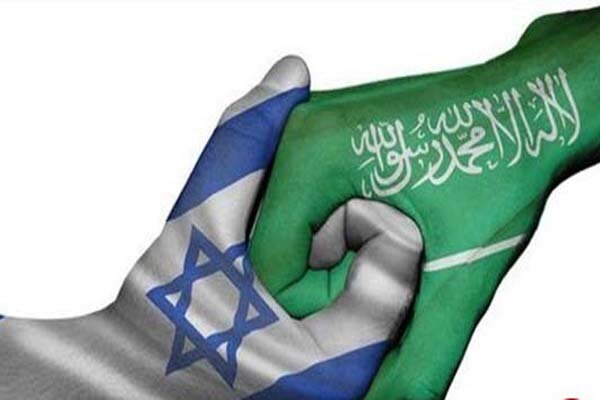
In the shadow of current changes in the region, Netanyahu revealed a new Zionist regime’s plan for striking an agreement with the Arabs against Iran, which sends important messages. 
It seems that while all media outlets and public opinion are focused on recent protests in Iraq, Israeli officials are trying to contact Arab states of the Persian Gulf that are too reactionary. The Tel Aviv regime also is seeking to reinforce its hidden relations with the Arabs in the wake of regional developments. 
Over the last few days, Iraq witnessed disturbances that initially started with civil and anti-corruption protests, but soon after turned into anti-Iran slogans. The protests are being led by social media and foreign elements.   
By a review of the world news, we will notice that the protests have become their headline. Contradictory analyses and news regarding these events are spreading across Iraq. 
In the meanwhile, on the anniversary of the October war (the 1973 Arab-Israeli war) Israeli Foreign Minister Israel Katz claimed that he has presented a plan to Persian Gulf Arab states to reach an agreement with Tel Aviv and put an end to existing tensions. 
Katz, as Netanyahu’s right-hand man, presented the plan during a meeting with some these countries’ foreign ministers on the sidelines of the recent annual UN conference. The plan also has been presented to Jason Greenblatt, Trump’s special envoy for the Middle East.
According to the reports, the plan has four articles: the first one is about developing friendship and cooperation between Israel and Persian Gulf Arab states based on the UN Convention and the principles of international law.
The second article states that “necessary and effective measures” will be taken to ensure that none of the parties engage in activities such as war, hostility, sabotage and incitement against one another.
According to the third article, neither party shall involve in coalition, organization or alliance with a third country with military or security nature. Neither party should cooperate with or promote these coalitions and organizations. 
As the fourth article states all disagreements between parties regarding the agreement shall be resolved by consultation. 
The Israeli regime is pursuing several goals by presenting the plan. First, to stop Arabs from joining Iran’s peace initiative to secure the Persian Gulf with the participation of the regional countries, since it is considered as a danger for Israel.
Second, to not allow Arab countries to form a coalition against itself and hold these countries responsible for the actions of the resistance groups. 
The third goal is speeding up the process of normalization of political and economic relations and formalize them. 
Fourth, maybe the conditions would be better provided for the implementation of the American Deal of the Century project to completely eliminate Palestine. 
Fifth, the Zionist regime will no longer be recognized as the number one enemy of the Arabs and Islam. This time, Iran will be regarded as an imaginary enemy for the region and the Arabs. 
It seems that the regime is trying to form a coalition by taking advantage of political and natural disagreements between Iran and some Arab countries in the Persian Gulf. Israel knows that some reactionary states in the Persian Gulf are at odds with Iran, and is trying to secure itself by highlighting these disagreements. 
Netanyahu claimed that the plan is a “historic measure” that would end the conflicts between the Zionist regime and Arabs. It should be noted that the main reason of the conflict between Israel and Arabs is not the question of Iran, rather it is the question of the Israeli occupation of Palestine.
However, we should wait and see which countries will agree with the Zionist regime’s plan that has targeted security and peaceful co-existence in the region. The public opinion in Arab countries will not easily get along with formal agreement between their governments and the Zionist regime. It is likely that just like what happened in the Deal of the Century project, the plan will not reach its desired goals.
Those Arab leaders who have assisted the Zionist regime to promote Anti-Iranian sentiment without paying attention to the Palestine issue, have not been popular in the history.

Monday, September 16, 2019

When Tel Aviv crosses the red lines

By Fatemeh Salehi

TEHRAN - A review of Zionist regime’s recent actions and its military aggression against the Axis of Resistance in the region shows that these attacks and aggressions have been intensified over the recent days against Lebanon, Syria, Iraq and Palestine, indicating that the Zionist regime and its allies such as U.S. have crossed the red lines.
According to a Syrian security source, the Zionist regime recently bombarded a military base in Al Bukamal in eastern Syria through the Jordan airspace and with the assistance of Americans and their military base in Al-Tanf. The source added that the U.S. and the Zionist regime are responsible for these adversarial actions.
The source said, “They have crossed the red lines. This military base belonged to the Syrian army and was under construction when it was attacked by the Zionist regime. We teach aggressors a lesson that they will never forget.”
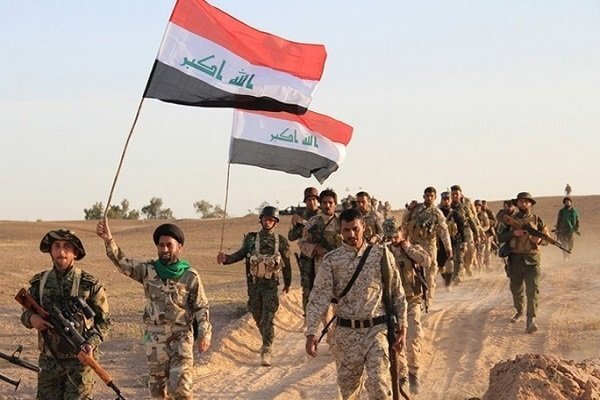
Previously, some sources had reported about the Israeli air raids on the Popular Mobilization Units (PMU) forces near the Iraq borders. These sources declared that the bombings were carried out inside the Al Bukamal, pointing out that these attacks were carried out five times at the intervals less than one minute.
Popular Mobilization Units’ military positions have also been targeted by suspicious fires that have caused extensive damages. While government officials said that these fires caused by unidentified air raids, Israel and the U.S. are in charge for this aggressive action. 
The Hezbollah base in Syria was recently targeted by the Zionist regime, in which two Hezbollah resistance forces were martyred, and in a quick response, Hezbollah targeted the Zionist regime’s armored vehicle at the border.
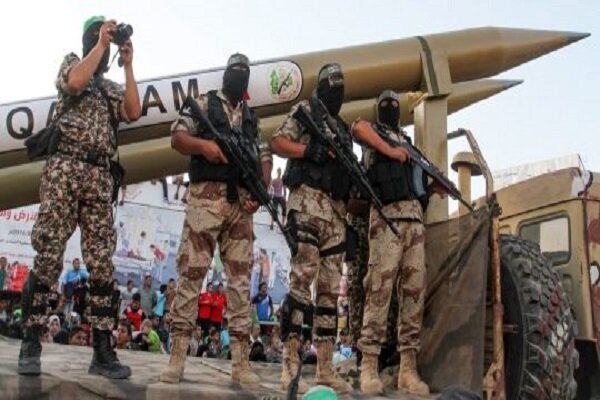
Occasional attacks of the Israeli fighter jets against the Palestinian resistance forces’ positions, including Hamas, have intensified in various parts of Gaza in recent days.
These attacks are being carried out while Resistance forces are not indifferent, and they show their readiness to respond to the Zionist regime’s aggression.
In this regard, Palestinian resistance forces managed to shoot down an Israeli drone in eastern Rafah, south of Gaza. The Zionist regime’s army confirmed in a statement that drone was shot down in the south of the Gaza Strip. Hezbollah forces also succeeded to shoot down an Israeli spy drone over the past few days. Israeli forces affirmed the downing of the drone by Lebanese resistance fighters.
Today, political groups in Iraq want to seriously react to occasional attacks of the Israeli forces against PMU positions in the country, as the Fatah Alliance responded to the Zionist regime’s attacks and emphasized that it should react to the attacks.
The intensification of the aggressive attacks against the positions of Resistance forces in the region, as the Israeli regime’s parliamentary election approaches, indicates that the regime’s officials, and above all, Benjamin Netanyahu, the prime minister, are trying to show that they can deal with Resistance groups in the region and carry out their threats against them through propaganda campaigns. Therefore, the residents of the occupied territories should not worry about attacks by these groups and ensure their security with a vote for Netanyahu and his party.
The Israeli attacks against Resistance forces in the region are carried out after the terrible defeat of the Zionist regime in the face of Hezbollah missile strikes, so Netanyahu seeks to attack other positions of the Resistance forces to underplay this terrible defeat in the minds of the Zionists. Of course, the attack on an empty base which was under construction in Syria indicates that the Zionist regime intended to carry out a propaganda show at home.
The significant point in reviewing the Zionist regime’s attacks on Resistance groups’ positions is that these groups are not indifferent about these attacks anymore, and given the recent remarks by Hassan Nasrallah, the Hezbollah secretary general, “the rules of the game in the region have changed and we will react properly to any attack.”
Netanyahu appears to be in the midst of many crises that have forced him to try hard to gain a reputation for himself and the Likud party. Netanyahu's inability in forming a new cabinet due to internal disputes with his opponents, Yisrael Beiteinu party leader Avigdor Lieberman and Blue-White coalition leader Benny Gantz, , along with extensive accusation of corruption against him and his wife Sarah Netanyahu for bribery and use of government facilities coupled with the Resistance groups’ solid response to the Israeli aggressions that has spread to the occupied territories, as well as increasing dissatisfaction of settlers due to lack of security altogether led to an escalation of Tel Aviv’s military attacks against the Resistance positions in the region.
The Zionist regime should know that the Resistance groups from Syria to Lebanon, Palestine and Iraq can launch thousands of missiles and rockets at any moment at the occupied territories and Tel Aviv, and the Zionist leaders, given that they are under siege, have to reconsider their calculation and plan for military attacks against the position of these groups, especially when Hassan Nasrallah said that the rules of the game have changed in the region and they will respond properly to any aggression. So, Tel Aviv should not make the Resistance groups to do so, because it will not end well for the Zionists.

Sunday, August 25, 2019

Ramping up the Pressure won't Weaken Hezbollah

By Sondoss Al Asaad

BEIRUT - The Lebanese resistance of Hezbollah has evolved significantly from a resistance movement in the early 80s into a major political and military force, with highly advanced capabilities and worldwide presence. It has also created its own charitable, educational, social, economic, touristic, media and agricultural institutions. As a result, Hezbollah today wields significant influence across the Lebanese community. Recently, some have reiterated that the resistance would soon collapse due to the U.S. punitive measures. However, this assumption is far-fetched beyond reality and the measures will not suffice much longer for various reasons.
Let's first remark that Hezbollah represents the multicultural fabric of the Lebanese people, who repeatedly stress their rejection to Western aggression. The strategy of sanctions will not succeed in the face of the strong will of Lebanese people, who have over and over again managed to thwart Washington and Tel Aviv's schemes. Eventually, Hezbollah will emerge victorious over these malicious sanctions for it is a legitimate resistance that owes national duty to defend and safeguard Lebanon's rights and interests. Indeed, the sanctions have been imposed against the resistance due to its courageous and firm stances in the face of the Zionist and imperialist conspiracies.
Since its emergence, Hezbollah's self fundraising is intended to guarantee the movement's future independence and to ensure it would function on its own.
Undeniably, Iran and Syria are not only believed to fund Hezbollah, supply it with heavy arms and provide training and logistical support to its military units, but there is major cooperation at various levels. The resistance also receives significant financial support from supporters living abroad, particularly from Lebanese wealthy nationals.
The resistance receives also funds from diversified charities that are not directly tied to Hezbollah, Lebanese and non-Lebanese, Islamic, Christian and secular supporters, out of national and ideological affinity.
Besides, Hezbollah relies on fellow sympathisers and members of local expatriate communities to run health, social, agricultural, industrial and educational institutions, which provide needy citizens with health care, utilities, and construction services. Lebanon's President Michal Aoun, the first president to openly align himself with Hezbollah, argues that Hezbollah's weapon will no longer be a problem when the causes behind its existence disappear. In February 2006, Hezbollah and the (Christian) Free Patriotic Movement, formerly led by Aoun, signed a memorandum of understanding, forming a political alliance.
The vast majority of Lebanese people show utmost readiness to serve their resistance, to preserve its achievements and to be a resounding voice in the defence of its cause to the fullest, in face of regional and international conspiracies. They are fully aware that the Saudis are ready to pay billions of dollars to incite their U.S. and Zionist allies to wage war against their hometown. Unfortunately, they would not remain silent about the failure of their scheme in Syria, Iraq and Lebanon, but would work hard to provoke regional sensitivities.
Therefore, the sanctions would never compensate for their failure in military confrontations. Such a measure is nothing but an idiot psychological war, which definitely fail to tarnish the resistance's image. The U.S. sanctions would fail to change the policy of the Lebanese government towards this part and parcel of the national fabric, which has governmental and parliamentary representatives, elected by the Lebanese people in a fair election monitored by international bodies.
As expressed by Hezbollah's leaders and officials, the sanctions are a medal of honour on the chest of the resistance's people who have all resisted the occupation and forced the Zionists to withdraw unconditionally from southern Lebanon, in 2000, and did so also in 2006. Despite all the challenges, Hezbollah still has solid support in Lebanon. The U.S. sanctions have no value because of the people's keen interest in undermining colonial goals and commitment to resist the illegitimate Zionist entity and its Takfiri terrorist offspring. 

Wednesday, August 21, 2019

Tel Aviv’s new plot against Iraq’s Hashd al-Shaabi

By Ramin Hosein Abadian

TEHRAN - Recently, some news are published in the media about suspicious activities of the Zionist regime in Iraq. Apparently, the Zionists are preparing some plans against the Popular Mobilization Forces (PMF) (al-Hashd al-Shaabi). 
In this regard, a security analyst who has close relations with Iraqi intelligence services, Fazil Abu Raqif has announced that the Zionist regime aims to bombard the weapon storage of Iraq’s Popular Mobilization Forces (PMF). 
Raqif made the remarks in an interview with Russia Alyawm (RT Arabic). 
Moreover, around a month ago, an air strike was lunched on one of PMF’s bases in the city of Amerli in Saladin Governorate of Iraq. 
According to a Lebanese news agency, Alahednews, in three strikes, three spinning explosive warheads attacked PMF’s stored weapons which were mostly IAI Harop, a loitering munition developed by the MBT division of Israel Aerospace Industries.
Alahednews noted that the explosive warheads are either automatic or controlled from a ground base and can fly up to 1,000 kilometers and be on the air for six hours. 
According Alahednews, the Zionist regime is the only entity in the region who has this type of weapons. Iraqi news agency, Almasalah also quoted the British news ELINT which had also reported of the invasion of the Zionist regime on PMF’s bases in Iraq. 
Anyway, it is crystal clear that the Zionist regime, like its close ally the United States, is trying to run different schemes in Iraq and cause turmoil and division in the country. 
To carry out this plan, Washington tries to make it look like that different political parties and movements who criticize the government are trying to topple the current government ruled by Adil Abdul-Mahdi, but in fact the reports reveal that it is Americans themselves who are trying to overthrow the Iraqi government. 
The truth is that none of the Iraqi parties and political movements who criticize the government wants to cause turmoil or division in the country as they fully understand that Iraq can only make progress if the country is in peace and stability. 
This is exactly the reason that Americans are so furious, as they know that this kind of attitude will not result in the failure of Iraq’s current government that is indeed the goal of Washington and Tel Aviv, not the Iraqi political parties. 
Anyway, it seems that the U.S. and the Zionist regime are adamant to create crises in Iraq and bring back instability and insecurity to Iraq. Americans are well aware that if Iraq becomes a powerful and independent country, the power of the Zionist regime in the region will decrease, so they do everything to ensure that it will not happen. 

Wednesday, June 26, 2019

Utter Confusion in Mentally-Retarded White House

By: Kayhan Int’l 

Washington, or more properly the administration of the quixotic Donald Trump, is in the grip of utter confusion, following failure of the "mentally-retarded” White House’s policy of economic terrorism against Iran, as well as its futile attempts to frighten the Islamic Republic through flexing of the US’ old, aching, and over-inflated military muscles.
Frantic senior US officials, having lost their mental equilibrium following Iran’s dexterous display of its defence capabilities in downing their most advanced and expensive radar-evading drone by the very missiles it was designed to dodge, are uttering nonsensical remarks against Tehran as they make desperate dashes around West Asia, to assure their scared clients in Riyadh, Tel Aviv, Abu Dhabi and elsewhere of Washington’s waning power.
These utterances, whether by the gangster Mike Pompeo or the bespectacled bozo John Bolton, betray the political and intellectual bankruptcy at both the State Department and the National Security Department, as well as at the Pentagon, the war headquarters of the US.
Donald the Dotard appeared the most delirious of them of all on Tuesday, when he used the last obsolete option on his rusting table by signing what he called sanctions on the assets of the Leader of the Islamic Revolution, Ayatollah Seyyed Ali Khamenei.
He then went on to threaten Iran with total obliteration from the face of the earth.
What a harebrained fool! Trump is neither aware of the current international affairs nor does he know the history, geography, culture, and spiritual power of Iran.
First of all, the most revered person in the Islamic Republic doesn’t have any dollar or foreign currency account.
Secondly, senior commanders of the Islamic Revolution Guards Corps (IRGC), at the mention of whose name, the CENTCOM terrorists violently shake with fear, are not persons to play pranks with.
It seems the whole US apparatus, including its military, are on the horns of dilemma on having seen a single instance of Iran’s defence capabilities in downing the drone, and are wondering what other powerful deterrents the Islamic Republic possesses to ward off any would-be aggressor.
Trump and his thugs have sent the cream of their naval and air forces to the Persian Gulf region, but now as an old English adage says about a shivering pigeon at the sight of an approaching falcon, they are: "Afraid to stay and afraid to fly.”
Anyone with some knowledge of history and the current developments are fully aware that Iran and the Iranian people have withstood the test of times in the face of heavy odds for the past two-and-a-half millenniums of cultural glories. 
Islam bestowed Iran with spiritual power that helped the Iranian people triumph over some of the most bloodthirsty marauders, including the modern day Ba’thist tyrant Saddam and the macabrely murderous Takfiri terrorists.
Under the circumstances, the best thing for the US and its president to avoid further defeats and humility that will surely drag them to the abysmal depths of the eternal inferno, is to pull back their forces from the entire Asia-African region, and accept the fact that the Islamic Republic system of government will stay even after the US ceases to be a superpower. 
It is the Muslim Ummah which has assured by God of final victory, as Iran has been saying by advocating Islamic unity, which means neither Israel will remain on the map of West Asia for long nor the fiefdoms that Britain created after World War.

Friday, January 11, 2019

Minister’s death blow to Tel Aviv with trampling on the occupation symbol

By: Mohammad Ghaderi


Minister’s death blow to Tel Aviv with trampling on the occupation symbol

TEHRAN, Jan. 08 (MNA) – While some of the Arab leaders, particularly in the Persian Gulf region, are normalizing relations with the Zionist regime, the people of these states deeply despise the Zionists.
To show their protest, they normally set the Zionist flags on fire or they trample it down. Just recently Jordan's current Minister of State for Media Affairs and Government Spokesperson Jumana Ghunaimat walked over an Israeli flag painted on the floor of the headquarters of Jordan's professional Unions complex in Amman.
She was on her way to attend a meeting between Jordanian Prime Minister Omar al Razzaz and union representatives. Razzaz, however, entered the building through a rear door, avoiding having to walk over the flag.
In response, Israel’s Foreign Ministry, on Sunday said that it filed a strong condemnation with the Jordanian government over a photo of the Jordanian Information Minister Jumana Ghunaimat stepping on the Israeli flag in the engineers' union building in Amman, which it described as an “act of disrespect.” The ministry called the acting Jordanian ambassador in Israel, Mohammad Hmeid, to its offices for “clarifications.”
Jordanian Members of Parliament strongly supported Ghunaimat action. Yahya Saud, the chairman of the Jordanian parliament's Palestine Committee, said that Ghunamiat’s action was the least she could do, and that the Zionist flag should be painted at the entrance of all Jordanian ministries and institutions for Jordanian citizens to walk on it.
“Every day Israel tramples human, moral and religious values down, and the Jordanian minister action represents the position of the Jordanian people” he added.
Jordanian MP Nabil Gishan called on the entire 130 Jordanian representatives to walk over Israeli flag at the entrance of the headquarters of Jordan's professional Unions complex. “As long as the Palestinian cities, including al-Quds, al-Khalil (Hebron) and Bethlehem, are occupied, we will trample on the flag of the Zionist regime,” he said.
Gishan added the complaint coming from a regime that kills and displaces Palestinians is not very strange.
Ray al-Youm newspaper writes: the Israeli occupation didn’t step on our flags, but they trample on Arabs and Muslims’ rights and dignity on a daily basis, through their criminal acts in Gaza and the West Bank. Israelis shot and kill innocent Palestinian civilians who demonstrate for peace or protest against Israeli settlements.
The Jordanian government should not pay heed to Israeli protests and show the occupiers that they have committed unpardonable insults. For instance, when one of the Israeli security guards at Israeli embassy in Amman cold-heartedly opened fire on Jordanian citizens and killed them, Benjamin Netanyahu gave the cold shoulder to the Jordanian officials’ formal demand to hold a murder trial for the offender and returned to Tel Aviv a day after the incident.
The flag of Israel is a symbol of occupation, aggression and bloodshed, and stepping on it is a way of demonstrating resistance. If Israelis have forgotten or ignored this fact, one must remind them of it, and Jordanian Minister Ghunaimat did just that.
Jordan shouldn’t turn into a plaything for the Zionist regime and answer Israel’s demands. The Jordanian government should strongly support Minister Ghunaimat’s act and ignores Israel’s huff and puff, because simply her steps on Israel’s flag shows Jordanian anger towards the occupation regime and its crimes.”
In any case, Arabs have proven to hate the invaders of the Muslims lands and have admiration for those rising against the Zionist regime.
Such measures are remarkable at a time when the Arab rulers are warming up to Tel Aviv. The agreement between Israel, Egypt and Jordan hasn’t lessened the hatred for Tel Aviv, because the accord is just a piece of paper and has had no effect on the viewpoint of the Arab people of Israel.
Maeir Uzul, a political analyst at Maariv, a national Hebrew-language daily newspaper in Israel, acknowledged, “Israel has a hateful and negative atmosphere against itself.  All stratum of society in Egypt, from journalists, lawyers, teachers, engineers to workers, business owners and ordinary people hate Israel. They do not want to interact with us, and the word ‘normalization of relations with Tel Aviv’ is like a major and unforgivable crime.”

Tuesday, January 08, 2019

Tel Aviv’ fears the future; what Zionists are concerned most about

By Ramin Hossein Abadian
TEHRAN - These days, Israeli officials are not feeling so hot, and are extremely concerned about the future, as it is quite evident in Tel Aviv's statements. 
Recent developments in Syria are one of the challenges Israel faces, particularly following the U.S. President Donald Trump’s announcement to withdraw U.S. troops from Syria in the next four months. The news came as a shock to Israel. 
 Balancing power in Syria
The Zionist regime knows all too well that, in the wake of a series of victories and widespread gains by the Syrian resistance, the balance of power in Syria has changed in favor of Damascus.
The visits of the leaders of Arab states and their delegations to Syria, as well as the opening of some Arab and non-Arab embassies in Damascus, are among the new developments in that country. In this regard, Lebanese regional expert Hassan Hurdan said: “Zionists feel much worried about their future in the region because of the developments in Syria. Syrian developments have signaled this clear message to Israel that Bashar al-Assad is the ultimate victor.”
 “The Arab countries that once turned the Arab League into a situation room for terrorist operations in Syria and to overthrow Assad, today are returning to Damascus one after the other, to acknowledge their failure. The Zionist regime understands this new development and are apprehensive about it,” he added. 
 The fear of repeating past bitter experiences
The resistance of the Iraqi government and nation had Washington to end Iraq’s occupation in 2011, without Israel’s approval. To Tel Aviv officials, history is repeating itself in Syria. Their concern intensifies as they simultaneously face many other security challenges and crises, including the Palestinian issue, the Great March of Return rallies, resistance operations and increased military and defense strength of resistance groups such as Hamas and Islamic jihad movements.
The resistance movement boosts defense, military strength 
Israelis are also worried about their future position in the region as the military and defense power of the resistance axis increases. The Zionist authorities know well that the Syrian resistance has learned various types of combat skills in different conditions over the past eight years, and the skills can help Syrians overcome any battle. 
Currently, Syrian resistance forces are well-versed in various classical, urban and erosional wars, and have advanced military weapons to reach their military objectives. Damascus's acquisition of the S-300's defense system has also doubled its defense capability.
In addition to Damascus, Lebanon's Hezbollah has gained much military and defensive power over the last few years, an issue that even the Zionist authorities and senior commanders have pointed out repeatedly on various occasions. For example, Israeli commanders have repeatedly said that Hezbollah has more than 100,000 advanced missiles that can be used any time. Earlier, the Israel's Minister of Energy, Yuval Steinitz reaffirmed, “Hezbollah missiles may target the entire Israel.”
Inability to enter the war
In Palestine, the situation is the same, and the Zionists are not able to confront the resistance groups and their missiles; however, the way the Palestinian groups responded to the latest Zionist operations against Gaza shocked Tel Aviv authorities. In any case, now the Zionists themselves admit their weaknesses against the resistance. A prominent official with the Israeli Ministry of Defense acknowledged that the regime's military is not ready at all to conduct military operations in the next wars.
This Israeli official, who requested to remain anonymous, said that Israel's ground forces were ready to fight at the lowest possible level over the past years, and the Zionist community must know that in the event of a war, the regime will pay a very high price. He pointed out that Former IDF chief of staff Benny Gantz was incapable of restoring the military's ability following their defeat in the 2006 Lebanon War.
 The spirit of warfare is gone 
The Russian alliance with the Damascus government is also seen as a threat to Israel in the region, especially after Washington decided to withdraw troops from Syria. Tel Aviv is well aware that Russia’s ongoing legal presence in Syria has led to the weakening of the United States in Damascus and even the region, which could have very dangerous consequences for it.
Political analyst Hassan Hurdan said, “Russia's alliance with the axis of resistance on the one hand, and the hike of Iran’s regional power and its allies on the other hand, have raised Israel’s security and intelligence services’ concern, because they feel that the Zionist army is no longer capable of much achievements in the war… Today, contrary to public belief, the Zionist regime is under the siege of the resistance forces and its military power is crippled. Today, the Zionists have neither the spirit to fight nor the spirit to win.”

Tel Aviv fears Hezbollah more than ever

Tel Aviv fears Hezbollah more than ever


By: Mohammad Ghaderi

TEHRAN, Jan. 07 (MNA) – Israelis are riddled with fear, fear of Hezbollah missile capability and the invaluable experience of Lebanese resistance fighters in the Syrian War.
Israeli troops in the newly created Gates of Fire Battalion simulated war with Hezbollah in northern occupied land in December 2018. The battalion held a training program during the past month in which it practiced a wide range of scenarios it might encounter during a war.
Israeli newspaper Yedioth Ahronoth quoted Yuval Steinitz, Israel's Minister of Energy, saying that “Hezbollah missiles may target all of Israel. Zionists consider Hezbollah a very dangerous and highly experienced enemy.”
The Israeli Defense Forces, referring to the precision of the Lebanese Hezbollah missiles, writes: “Hezbollah is capable of targeting Israel's critical facilities, and the 2006 Lebanon War seems nothing compared to a conflict with Hezbollah in future.”
Daniel “Danny” Rubinstein, an Israeli journalist, said that “Hassan Nasrallah is a great figure. Gamal Abdel Nasser fought for six days, but Hassan Nasrallah kept Israelis four weeks in their place in 2006.”
Tamir Yadai, the head of Israel's Home Front Command warned that “Hezbollah is capable of targeting deep inside Israel massively. In 2019 there will be a more complex and challenging threat to Israel.”
Today, Hezbollah has an arsenal that stores high-precision missiles that can reach all over Israel.
Hezbollah is now considered Israel’s first enemy, and this prediction says it all. The Israeli regime has announced a plan to evacuate 22 settlements in the northern part of occupied Palestine in the wake of a war with Hezbollah.
Lately, in a video message with Hebrew subtitles, the Lebanese Hezbollah movement has warned Israel against any offense in Lebanon. The video titled, “If you are impudent, you will regret it”, is part of Nasrallah’s speech against the Zionist regime. The Lebanese Secretary-General says in the clip that any Zionist attack on Lebanon will have a response by Hezbollah. “We will definitely answer any aggression, air strike, and bombing of Lebanon.” The video has brought terror among the Israelis, particularly that 80 percent of Israelis who believe what Nasrallah says while having no faith in their own officials.
They are fearful of Nasrallah's threats because they know all too well that the Hezbollah Secretary-General Nasrullah does what he says he will.
An Israeli expert bin Ami says, “The problem that Israel faces is that Nasrallah has already proved to be honest and he continues to deter a battle with his threats.”
In contrast, Zionist authorities, especially Prime Minister Benjamin Netanyahu, have taken measures to fight Hezbollah to reassure the Israeli Home Front Command. For example, they launched the so-called Operation Northern Shield on December 4 to allegedly locate and destroy Hezbollah tunnels that cross the Blue Line from Lebanon into northern Israel.
On Nasrallah’s reaction to the Israeli operation, Ray Al-Youm newspaper wrote “since Israel started the Operation Northern Shield to destroy the alleged Hezbollah tunnels, the Israeli media have not been able to get a reaction from the Lebanese Secretary-General, and that has frustrated the Tel Aviv policymakers.” The print media also points out the dispute between Prime Minister Netanyahu and commanders of the Israeli army and says that “Netanyahu has called for the renaming of the operation, but the commanders of the Israeli army opposed it.”
At the request of the US - to discuss Hezbollah's cross-border attack tunnels - the UN Security Council was scheduled to meet on December 19. However, the United Nations Interim Force in Lebanon (UNIFIL) confirmed the tunnels do not appear to surface in Israel and thus far to have exit points on the Israeli side.
Following that failed Operation Northern Shield in the early days of the New Year, Israelis established a new battalion, called the Fire Gates, to defend the Northern Front against Hezbollah.
According to the Times of Israel, the newly formed battalion is under the command of Amir Baram Brigade general in the northern Palestine territories. The unit is made up of reservists freshly released from the Golani Infantry Brigade's Reconnaissance Battalion. The drill lasting about five days and focused on “conquering Hezbollah.”
The Israelis Gates of Fire battalion has been ridiculed in Lebanon. Ali Shoeib, a prominent Lebanese journalist said on his Twitter “thank God we live in a time when our enemies, because of the fear of our resistance, launch defensive battalions, after they said they were capable of occupying our capital with only military music.”
What remains certain is that the operations carried by the Israeli forces show they fear the Lebanese and Palestinian resistance fighters and live in fear. 

Sunday, December 17, 2017

The usurpation of Palestine from Balfour to Trump

By Yuram Abdullah Weiler

“Palestinian Arabs might have ended up governing their own country if a Russian Jew living in Manchester had not developed a chemical process for extracting nail-varnish remover from horse-chestnuts.” —Karl Sabbagh
In a lackluster speech on December 6, 2017, U.S. president Donald Trump announced the official recognition of Jerusalem al-Quds as the capital of the Israeli entity and directed the U.S. state department to make arrangements to move the U.S. embassy there from Tel Aviv.  While Jerusalem was acknowledged as the Israeli capital by U.S. Senate Concurrent Resolution 106 in 1990 and the embassy move was mandated by the Jerusalem Embassy Act of 1995, Trump has once again managed to spark worldwide outrage by declaring publicly what most intelligent observers had long since surmised.
The timing of Trump’s address on al-Quds was ironic, for one hundred years earlier British General Edmund Allenby, after having captured the city, which had been under the rule of the Ottoman Turks, spoke of “the establishment of national governments and administrations in those countries deriving authority from the initiative and free will of those people themselves.”  Allenby’s words, however, had previously been neutered by the now notorious Balfour Declaration of November 2, 1917, which declared the British government to “view with favour the establishment of a national home for the Jewish people, and will use its best endeavours to facilitate the achievement of this object,” and indeed “His Majesty’s Government” did.
The Balfour Declaration would never have materialized without the strident efforts of a Jewish chemist named Chaim Weizmann, a Zionist who later became the first president of the Israeli entity.  Originally from southern Russia in the Pale of Settlement, Weizmann left his homeland for Switzerland where he earned a doctorate in chemistry in 1904 from the University of Geneva.  Later he immigrated to Britain where he accepted a position at the University of Manchester until he was tapped by the British government in 1916 to work on munitions.  Weizmann developed a new process to make acetone, which is used in nail polish remover and for making cordite, a propellant used in British artillery projectiles, and when Munitions minister David Lloyd George was faced with a shortage of acetone, Weizmann came to his rescue.  Lloyd George later remarked, “Acetone converted me to Zionism,” and after becoming prime minister in December 1916, he rewarded Weizmann by his full support for a “national home for the Jewish people” in Palestine.
To be understood, the Balfour Declaration must be viewed through the lens of Britain at war against Germany shortly after the Russian Revolution and a mutiny by French troops, events that threatened to leave the British without allies.  Further fueling British fears of fighting the war singlehandedly were rumors that Germany was contemplating a pro-Zionist declaration to entice the Russians to leave the war, which the Bolsheviks did on November 7, 1917 when they entered into peace negotiations with the Germans.  Compounding British anxiety was the reality that most American Jews at the time favored supporting Germany over Britain; those from Germany retained fond memories of their former homeland while those from Russia recalled the Tsar’s pogroms and transferred this antipathy to Britain, Russia’s ally.
Knowing that U.S. president Woodrow Wilson held strong convictions concerning self-determination of peoples, British prime minister Lloyd George sought the help of American Jews to convince Wilson of the strategic importance of a British invasion and occupation of Palestine towards victory in the First World War.  The plan conceived with the help of Chaim Weizmann was to portray the Zionist project to Wilson as Jewish self-determination in Palestine, thereby averting any accusations of post-war annexation of conquered lands.   American Jewry had to be enticed to support the British war effort, so in exchange, Britain pledged to support the Zionist objectives in Palestine, but this also required the help of such notables as U.S. Supreme Court justice Louis Brandeis, who headed the Zionist organization in the U.S. and was close to president Wilson.  It was Brandeis who informed Weizmann of the U.S. president’s interest in Zionism.
The other side that had to be convinced to join with Britain in the war effort against the Ottoman Empire and Germany was the Arabs, who were also anticipating their own self-determination at the end of the First World War.  To that end, British diplomat Mark Sykes wrote a declaration of assurances to Sharif Hussein bin Ali, the leader of the Arab Revolt, which Hussein declared against the Turks in 1916. Sykes assured that the Palestinian Arabs would be granted political freedom and that the Balfour Declaration announcing British support for a Jewish homeland would be applied only as would be “compatible with the freedom of the existing population, both economic and political.” As a result, Hussein was deliberately duped by Sykes into accepting the idea that Jewish immigration into Palestine would not amount to much.  The British charade became apparent in 1918 when the Bolsheviks published copies of the British and French secret plans to carve up the Middle East at war’s end based on their respective self-interests.
It should be mentioned that the Zionists hedged their political bets in case Britain did not emerge from the First World War victorious by approaching the German and Turkish governments with proposals delivered by the Zionist organization’s representative in Istanbul, Richard Lichtheim.  Pointing out the anticipated gratitude of Jewish Americans, Lichtheim listed the advantages of German support for the Zionist project in Palestine, noting the common German language and emphasizing the business connections of the Jews already there.  To sweeten the deal, Lichtheim even offered to arrange for a Zionist armed force to fight against the British in the Middle East alongside their Turkish and German allies.  As Palestinian author Karl Sabbagh explained, “The unique status of Jews in global politics made this sort of double-dealing possible.”
Britain emerged from the First World War with a mandate for Palestine, which was granted at the San Remo Conference in April 1920.  The Balfour Declaration was also included in the obligations for the mandatory power, enshrining the document in an international agreement and thereby forcing Britain to abide by its terms to facilitate a Zionist colonization project in Palestine.  This was while the terms of the mandate also demanded of Britain that it preserve the rights of the existing inhabitants of Palestine.  However, the mandate document itself failed to mention the word “Arab” even once; instead it referred to “non-Jewish” inhabitants as if the overwhelming majority of the population of Palestine at the time were nothing more than a numerically inconsequential minority.
Unsurprisingly, conflict arose almost immediately, as European Jewish immigrants poured into Palestine, the first of which occurred during the Palestinian Muslim festival of Nabi Musa, which took place in April 1920.  Nine people were killed and over 200 wounded in the clashes along with much destruction and looting of property.  The chief Zionist political officer, Richard Meinhertzhagen, even accused the British of having foreknowledge of the riots and allowing them to happen, despite having told the British foreign office four days earlier that he did not anticipate any trouble.  To investigate the causes, the Palin Commission was formed, and after interviewing 152 witnesses, reported that while the violence may have been initiated by Arabs, these were “people who see themselves menaced with deprivation by a race they have hitherto held in dislike and contempt.”
Through the 1920s and 1930s, the conflict created by Balfour’s letter to Lord Rothschild continued to escalate as the native Palestinian Arab majority protested the wholesale colonization of their ancestral land by European Zionists.  Until 1928, the British government attempted to maintain “parity” in its treatment of the indigenous Palestinian Arab population, none of whom had access to British notables, and the incessant demands of the Zionists, who through Weizmann and others enjoyed close relations with British prime ministers and MPs.  While rejecting the concept of parity at first, Palestinian leaders finally agreed to accept the principle only to see their efforts at peaceful compromise summarily rejected by the Zionists.  The result was twofold: first, Palestinians launched a massive uprising in 1929 against the mandatory government, which they rightly saw as favoring the Zionists; and second, a pattern of Palestinian compromise and Zionist intransigency was established, which has held to the present.
Throughout the mandatory period, whenever the British government exhibited tendencies towards acknowledging and correcting the injustices committed against the Palestinians, the Zionists, with their close ties to His Majesty’s Government, managed to force a return to the Balfour colonization track.  This, of course, resulted in additional protests and uprisings by Palestinians, culminating in 1936 with the Arab Revolt, which lasted until 1939 before the British managed to suppress it by sending more troops to Palestine. In the meantime, the Zionists took full advantage of a proposal by the British Peel Commission to divide Palestine into separate Arab and Jewish states, and worked feverishly to establish an autonomous Jewish enclave.  By 1942, Zionist leaders were demanding all of Palestine, and drawing up plans for the ethnic cleansing that would be necessary to rid Palestine of her native Arab population.
Throughout the Second World War Palestinians and Zionists alike sensed that another clash was coming, as foreshadowed by the increasing number of British casualties and the pace of Zionist terrorist attacks such as the July 1946 bombing by the Stern Gang of the British headquarters in the King David Hotel in al-Quds.  The British government, with dire economic woes at home, decided it could no longer afford the expense of maintaining a standing army in Palestine larger than the one it had in India, and handed the entire Palestinian conundrum over to the fledgling United Nations in February 1947, announcing its intension to withdraw by mid-May in 1948.  By July 1947 the U.N. Special Commission on Palestine recommended partition of the country and the proposal was approved in the U.N. General Assembly on November 29.  Concurrently, the Hashemite leadership of Transjordan entered into secret talks with the Zionist leadership in hopes of gaining a share of the vacated mandate.  The stage was now set for the Nakbah, the 1948 expulsion of native Palestinians from their country.
In anticipation of the termination of the British mandate on May 15, 1948, the Zionists under the leadership of David Ben-Gurion declared the establishment of the “State of Israel” the day before.  On May 15, U.S. president Harry Truman instructed the U.S. delegation to the U.N. to announce America’s recognition of the newly-created Israeli entity, making the United States the first country to convey diplomatic legitimacy to the Zionists’ usurpation of Palestine.  On the same day, armed forces from Iraq, Syria, Lebanon, Egypt and Jordan, with a small number from Saudi Arabia, invaded Palestine in a futile attempt to liberate the land from its Zionist usurpers.  Apparently, even then, Saudi Arabia was not greatly concerned about the Zionist threat, and was even viewed as a collaborator given the kingdom’s extensive ties with the United States.  In any case, Palestine was not liberated, and some 450,000 Palestinians lost their homes in the ensuing war while hundreds of thousands of Jewish immigrants poured in from abroad.
It is beyond the scope of this article to discuss the ongoing theft of Palestinian lands since 1949 by the regime in Tel Aviv, which has enjoyed ever-increasing economic and political support from Washington.   Suffice it to say that the 1967 war, which by Menachem Begin’s own admission was a “war of choice” for the Zionists, created 275,000 additional displaced Palestinians and gave the Israeli entity de facto control over most of what had been called Mandate Palestine.  By 1973, when Syria and Egypt launched limited military strikes hoping to recoup losses of the Golan and Sinai respectively, “Eretz-Israel” not only had massive conventional armed forces but also had become a nuclear-armed state. Peace treaties with Egypt in 1979 and Jordan in 1994, and the much-vaunted Oslo Accord of 1993 notwithstanding, Palestinian negotiator Haydar Abd al-Shafi correctly predicted that Israel had “no intention of ever allowing a [Palestinian] state.”
How ironic that a former New York real estate developer, who managed to become the U.S. president, has now cut a deal with the Zionists involving a piece of priceless Palestinian real estate, namely al-Quds, which incidentally was not his in the first place.  While the move marks the death knell of any “peace process,” yet Trump continues to pontificate about “building a future of peace and security in the Middle East.”  No doubt, Lord Balfour would be pleased.

Friday, October 01, 2010

Islamic Iran’s determined self-assertion and self-sufficiency


The Islamic Republic’s successful test in late May of a medium-range, solid-fuel missile diminishes Tel Aviv’s potential threat to the Islamic East. This should be the conviction of all Islamic observers, whether they are totally involved in or operating at the periphery of the global Islamic movement. This development coupled with the progressive power-increase of the Islamic State could either cement or crack the American-Israeli duet.

The US Secretary of War Robert M. Gates commenting on the Sejjil-2 surface-to-surface missile’s range as being about 1,200 to 1,500 miles said “it was a successful flight test.”


The Sejjil-2 missile can be launched more quickly and with a shorter warning time than a liquid-fuel missile. Liquid fuel rockets are more vulnerable to preemptive strikes because it takes hours or even days to fuel them. Insiders say that this is the first time Islamic Iran successfully launched a solid-fuel missile of this range. Solid fuel rockets can be launched with greater frequency and are more mobile. The advantage of solid fuel is that it can be put on a truck and driven around or even stored in a cave, according to one expert on the subject.
Another technical breakthrough for the self-reliant military industry in Islamic Iran is that it was a two-stage missile. Such a rocket can go farther because it jettisons some of its weight in mid-flight. A country has to develop a two-stage system in order to build intercontinental ballistic missile systems.

Whether or not the timing of this launch had anything to do with the June 12th presidential elections in Iran is anyone’s guess. If members of the Islamic movement were to vote in the upcoming presidential elections, the overwhelming majority would vote for president Mahmoud Ahmadinejad who has been fearlessly breaking diplomatic ice and political new ground for this type of military industry to proceed at full strength and intensity.


The Israeli crowd is nervous and their Zionist supporters are on edge, watching the only Islamic political orientation in the world acquire war technology at a pace that challenges the Zionist and imperialist schemes within the “house of Islam.” Imperialist talk about countering Iran with a buildup of missile sites in Europe is a distraction from the real policies of Washington and Tel Aviv: the beefing-up of military bases in Asia.

From now on, Washington’s political class should know that acquisition of weapons and weapon-systems by an Islamic State is for the security of Muslim peoples, and that the time when militant supporters of Zionism could flash their military credentials as the bullies on the block is coming to an end. Tel Aviv’s nuclear arsenal and the means to deliver will no longer go unchallenged. And this is only the beginning. It should be clear that a nuclear-armed Israel with deliverable weapons systems is the reason and has always been the reason for an arms race in the Islamic East.


Israel reacted to this development by saying that Europe and the United States should share Israel’s goal of stopping Iran’s missile program. Therefore it only makes sense for the Islamic world to say back to Israel: all the Muslims share Islamic Iran’s goal of checking Israel’s military hegemony in the region.

Israel’s Deputy Foreign minister Danny Ayalon, ever anxious to bring the US into the picture, said, “Israel believes that Iran is also trying to develop a ballistic missile with a range of 6,250 miles, which could reach the United States!”

The Islamic Republic of Iran has not forgotten the war lessons of the past 30 years: hot wars and cold wars, psychological warfare and economic warfare… And true to its Islamic nature and future it builds its military might to defend against all enemies: domestic and foreign. The regimes in the Arabian countries have recently joined the chorus of a “Persian nuclear threat.” We think they are still in deep slumber but their Zionist and imperialist masters are trying to scare them by painting a nightmare scenario of a nuclear Iran. Nuclear Israel has never been of any concern to these heads-and-butts of state. Nor were they alarmed or intimidated by an Israel that hides its nuclear arsenal from the public eye but which these rulers are well aware of. Now all of a sudden Egypt, Saudi Arabia, and even minuscule Jordan are thinking about going nuclear! There must be something very Islamic about Iran that has caused the Zionists and the Arabian political hypocrites to embrace each other. Voices are heard now in the West saying that for the first time since the creation of the Zionist nation-state, “Jews” and “Arabs” see eye to eye concerning the strategic threat a nuclear Iran would present. The truth is beginning to come out — that Arabian leaders say one thing to their friends and something quite different to their enemies.


Let us make one thing very clear, the regimes in the Islamic world are companions of Zionism and imperialism, while the peoples in the Islamic world are supporters of the Islamic leadership in Iran. President Ahmadinejad may not be all that popular in the elitist and upper crust ranks of Iranian and Arabian societies but he is very popular throughout the Muslim and oppressed worlds. When he took to the podium at the Durban II anti-racism conference in Switzerland in April and spoke words of honesty and certainty about the Zionist regime, he captured the hearts of Muslims everywhere. Some Muslims came to realize that president Ahmadinejad, who is not a Palestinian, said what Mahmud ‘Abbas knew but would not dare utter. Ahmadinejad, who is not an Arabian, said what all other Arabian rulers knew but would not dare to say either. Many individuals when they heard an Islamic head of state pronounce the truth about Zionism said: He makes me feel proud of being a Muslim. Others in Arab countries said: When I heard him speak, even though I am an Arab, I wished I were a Persian! (This of course is no nationalist statement, it simply says that finally a Persian speaking person spoke the truth that no Arabian president or king could speak at such an international conference).

This man comes from the generation that suffered the brunt of war — in all its horrible manifestations. Along with him are millions of others who lived through an American-Zionist imposed war on their own country — for no other reason than the desire to be an Islamic country. How can this war-hardened generation have any confidence in imperialist and Zionist officials who are still incapable of confessing their political sins and their war crimes?

Pity the individuals and officials in Islamic Iran who have lost sight of imperialism and Zionism. Pity some ex-revolutionaries who regret their anti-imperialist past and have an earnest and strong desire to let imperialist bygones be bygones and want to live and let live with the imperialist shaytan. Meanwhile, the shaytani officials in Washington and its sister city Tel Aviv are thinking war, planning war, and preparing for war against any Islamic self-determination anywhere in the world.

Twenty years after Imam Khomeini passed on to heavenly company, some officials in Islamic Iran are still true to their Imam while others have found their secular, sectarian, or money-making escape routes away from him. Muslims beware: a Mu‘awiyah lurks beneath the surface.