Showing posts with label Abu Dhabi. Show all posts

Tuesday, August 06, 2019

The UAE And Iran’s Maritime Talks

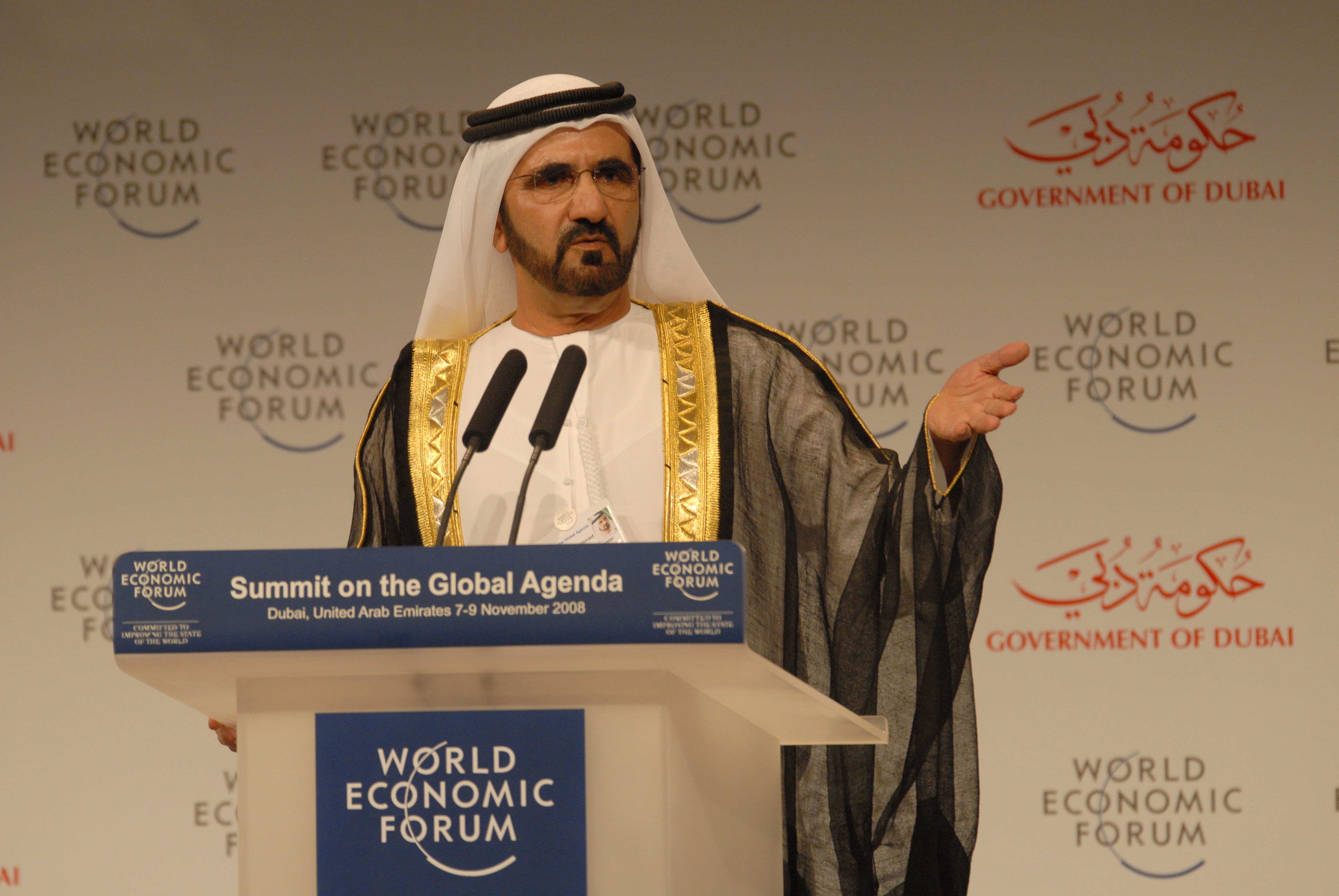
Dubai Emir and UAE Vice President/Prime Minister Mohammed Bin Rashid Al Maktoum (World Economic Forum via Wikimedia Commons)
by Giorgio Cafiero and Dr. Khalid al-Jaber
Just over three and a half years ago, the United Arab Emirates (UAE) downgraded its relations with the Islamic Republic of Iran. In doing so, Emirati leaders reinforced their support for Riyadh in the longstanding Iranian-Saudi rivalry that flared up following the Saudis’ execution of Shia Sheikh Nimr Baqir al-Nimr and the subsequent violence directed against Saudi diplomatic missions in Tehran and Mashhad in January 2016. The decision to downgrade relations also came ten months after the UAE and Saudi Arabia launched their military operations against Iran-allied Houthi rebels in Yemen. Throughout Donald Trump’s presidency, Abu Dhabi has strongly supported the White House’s efforts to counter Iranian influence in the Middle East, making the UAE a critical player in the U.S. administration’s “maximum pressure” agenda against Tehran.
In May 2018, Abu Dhabi supported the White House’s decision to pull Washington out of the Iranian nuclear deal and the UAE’s leadership has strongly backed the imposition of U.S. sanctions on Iran that followed. Since May, Tehran has allegedly carried out low-intensity military actions against the UAE and its interests in the Sea of Oman, such as sabotaging oil tankers, in response to Abu Dhabi’s support for the Trump’s anti-Iranian agenda. If Iran bears responsibility for recent attacks against tankers in the area, such maritime actions could be best understood as Tehran targeting Emirati and Saudi oil/petrochemical exports to showcase the Islamic Republic’s ability to make Arab Persian Gulf monarchies pay a steep price for backing Trump’s Iran policy.
Despite such friction, two Emirati delegations went to Tehran last month. On July 26, an Emirati “peace delegation” (as the Iranian government described it to the media) visited Tehran for discussions, the topics of which remain unknown to the general public. Abu Dhabi did not deny dispatching this delegation to Iran. Four days later, another delegation led by coast guard commander Brigadier General Mohammed Ali Musleh al-Ahbabi went to Tehran too.
During the second delegation’s visit, officials from the two countries discussed maritime security against the backdrop of dangerous developments that have made the Persian Gulf’s security environment increasingly tense. Significantly, this was the first time in six years that officials from Abu Dhabi and Tehran held such a meeting, raising major questions about a possible change in Emirati foreign policy vis-à-vis the Islamic Republic.
An official in Abu Dhabi stated that the July 30 meeting addressed matters pertaining to border security and navigation in waters shared by the countries of the Persian Gulf. He explained that the talks represented “nothing new” and had no relation to political tensions between Abu Dhabi and Tehran. The UAE’s foreign ministry said that the meeting focused illegal entries, illicit activities, fishing, shared borders, and maritime issues in bilateral affairs. The director of the UAE’s International Security Cooperation Department, Salem Mohammed al-Zaabi, expressed satisfaction with the meeting. As he put it, “The objective behind the meeting is to ensure the safety of UAE citizens, including the country’s fishermen.”
Etemad (an Iranian daily) reported that the meeting’s purpose was to improve bilateral maritime security cooperation and that the UAE delegation met with General Ghasem Rezaei, Iran’s police border guard commander. Countless Iranian websites displayed photos of Rezaei shaking al-Ahbabi’s hand at their meeting in Tehran.
What drove the UAE’s decision to send these delegations to Iran? If Abu Dhabi was extremely supportive of the Trump administration’s efforts to isolate Tehran to the full extent possible, wouldn’t such public engagement with Iranian officials, especially in Iran’s capital, undermine this agenda?
Various analysts have attempted to explain the UAE’s motives. Some have speculated that the Emiratis are attempting to fundamentally change their relationship with Tehran by pursuing a “rapprochement.” Yet others dismissed the meeting as relatively insignificant, routine, and only related to fishing issues. The truth possibly lies in between. It appears that the UAE is seeking dialogue with Iran to better manage the risks of a major conflict erupting in the Persian Gulf, which would carry extremely dire implications for the UAE’s economic and security interests. In doing so, Emirati leaders are pragmatically utilizing their links with Iran, which have remained open notwithstanding mounting political tension between Abu Dhabi (and other Arab capitals) and Tehran in recent years, to foster badly needed dialogue.
For starters, in early 2016, the UAE (unlike Saudi Arabia, Bahrain, and Sudan) did not completely sever relations with Iran but instead merely downgraded them. By striking this balance, the UAE has kept open its embassy in Tehran while Dubai has continued welcoming Iranian tourists over the past three and a half years. Although Abu Dhabi drives much of UAE foreign policy, the concerns of Dubai and other northern emirates have tempered the UAE’s policy toward Iran, especially when compared with that of Saudi Arabia. Based on strong economic and cultural ties, Dubai’s links to Tehran have been historically special and markedly different from Abu Dhabi’s relationship with Tehran.
Dubai’s leaders look at their relationship with Iran through a commercial lens, prioritizing business relations above politics. Yet the Al Nahyan rulers in Abu Dhabi, who have consolidated their control over the UAE since the financial crash in 2009, view Iran through a security prism. In this respect, Abu Dhabi’s approach toward Iran is more like the leadership in Saudi Arabia and Bahrain. These fundamental differences between Abu Dhabi and Dubai have complicated the bilateral relationship between the UAE and Iran. Notably, the ruler of Dubai, Sheikh Mohammed bin Rashid Al Maktoum, welcomed the idea of lifting sanctions on Iran shortly after the interim nuclear agreement was signed in November 2013, leading to strong condemnation from a Saudi government adviser who blasted his comments as “mind boggling.” Unquestionably, the sanctions imposed on Iran as well as the blockade of Qatar have been received differently in Dubai than in Abu Dhabi. Dubai has suffered financially from both the US-led “maximum pressure” campaign against Tehran as well as the siege of Doha, both of which Abu Dhabi has strongly supported.
Despite Abu Dhabi’s close alignment with Riyadh against Tehran, the Emiratis and Iranians have maintained a “quiet intelligence backchannel” between their two countries. At this juncture, the UAE is seeking to take advantage of their channels of communication with Iran to promote dialogue. Doing so, from Abu Dhabi’s perspective, is key to avoiding scenarios that could result in the Emirates being caught in the middle of an international armed conflict beyond any one state’s control—a conflict that would likely be fought, at least partially, on Emirati land and/or in its waters.
Indeed, this meeting in Iran’s capital took place against the backdrop of numerous developments in the region that have concerned Abu Dhabi. The Emirati delegation’s visit to Tehran must be viewed in the context of the UAE’s much reported partial pullout from Yemen. Also, Abu Dhabi’s cautious response to the tanker attacks off the UAE’s east coast on May 12—refusing to join Washington and Riyadh in explicitly blaming Iran—pointed to Emirati concerns about moves that could result in tension boiling over into a military confrontation that could easily spiral out of control.
While supportive of the Trump administration’s ramped up pressure on Tehran, officials in Abu Dhabi do not want to see a new war break out in the Persian Gulf. As Emirati Minister of State for Foreign Affairs Anwar Gargash said on May 15, “We need to address Iran’s behavior clearly, but at the same time not to be baited into crisis… This is the region we live in and it’s important for us that we manage this crisis.” This view articulated by Gargash is pragmatic, given that any escalation in the Persian Gulf could severely undermine the UAE’s vital interests. From Abu Dhabi’s perspective, there is incentive to engage the Islamic Republic’s leadership and attempt to de-escalate tensions through a dialogue rather than risk the UAE or UAE-related interests becoming Iran’s future targets.
It will be important to see to what extent the UAE and Iran’s recent maritime talks can build into something greater and, if they do, how Washington and Riyadh will react. The lack of any official response, to date, from the Trump administration suggests that perhaps the White House has taken a wait-and-see approach. As Middle East expert Hussein Ibish explained, “If [the Emirati outreach to Tehran] succeeds and builds, perhaps there will be something for Trump to work with. If it fails, that comes at no cost to the U.S. administration.” If something fruitful can be achieved from this dialogue, the U.S. could potentially become a major beneficiary. Trump, who for mainly domestic factors has vested interests in appearing “tough” on Iran yet not bringing war-weary America into a new Middle Eastern conflict, may have seen the Emirati-Iranian meetings in Tehran positively.
The View from Riyadh
In terms of Saudi Arabia, it is not clear how the Kingdom’s leadership views Abu Dhabi’s outreach to the Iranian government. On one hand, it is easy to imagine how the Saudis could see this as further Emirati “betrayal” in the aftermath of the UAE’s partial pullout from Yemen. Indeed, sensitive questions remain open about how the UAE withdrawal will impact the relationship between Saudi Crown Prince Mohammed bin Salman (MbS) and his mentor, Abu Dhabi Crown Prince Mohammed bin Zayed (MbZ). The Emiratis have been working with proxies on the ground to establish a newly independent South Yemen. This vision inevitably clashes with Riyadh’s interest in preserving Yemen’s post-1990 north-south unity. Furthermore, now that the UAE has redeployed a significant number of its troops out of Yemen, the Saudis face a far more difficult war against the Houthis. The Saudi military, which is markedly less capable than the UAE’s, will need to fight the Houthis basically all on its own.
By the same token, Riyadh could see the Emirati-Iranian meetings in Tehran last month as a potential opportunity to see the extent to which Iranian officials might be willing to go to demonstrate their commitment to dialogue. As Ibish put it: “While this outreach to Iran signals a shift in the UAE’s diplomatic tactics, it is important not to mistake these gestures for a significant change in policy. The same, of course, applies to Iran. But the door between the UAE and Iran, while never fully shut, has been cracked open a bit more and over time, that could enhance the prospects for dialogue between the United States, or Saudi Arabia, and Iran as well.”
In any event, Saudi media is putting its spin on events and pushing its own narratives. As Samuel Ramani explained, media platforms in the Kingdom have emphasized three key points. First, they’ve stressed that the UAE is not abandoning Yemen. Second, they’ve alleged that any talk of a rift in the Saudi-Emirati alliance comes exclusively from Qatari and Iranian propaganda. Third, they’ve argued that any disagreements between the Kingdom and the UAE are merely tactical, like disagreements that Riyadh has with Cairo and Kuwait City.
Need for Sober Assessment 
In the interest of cooling tensions in the Persian Gulf and across the Middle East, there is some reason to view these recent meetings in Tehran optimistically. But it would be misguided to make too much of them. Undoubtedly, the UAE and Iran will remain opposing stakeholders in countless regional hotspots from Iraq to Yemen and Bahrain to Lebanon. The two countries’ sovereign dispute over three Persian Gulf islands also remains a major stumbling block to any significant improvement in bilateral ties.
MbZ and those in his inner circle will continue viewing the Iranian regime that has been in power for the past 40 years as a predatory actor that represents an overwhelming threat to the UAE and other Arabian states. In mid-2010, the UAE’s ambassador to Washington explained the Emirati perspective on Iran’s regime: “I think out of every country in the region, the UAE is most vulnerable to Iran. Our military, who has existed for the past 40 years, wake up, dream, breathe, eat, sleep the Iranian threat. It’s the only conventional military threat our military plans for, trains for, equips for, that’s it, there’s no other threat, there’s no country in the region that is a threat to the UAE, it’s only Iran.” Abu Dhabi’s narrative about the Iranian threat has not changed over the past nine years. The Emirati delegation’s recent visit to Iran, or any other upcoming diplomatic engagement, will not change the realities that have led to an overall extremely negative relationship between Abu Dhabi and Tehran.
Ultimately, the UAE’s modest outreach to Tehran is not about any Emirati plans for a rapprochement. Rather, the decision to dispatch two delegations to Iran was driven by a realization of the ways in the UAE stands to gain by reevaluating its strategies for dealing with regional crises that involve Iran.

Wednesday, July 24, 2019

'The Bolton Gambit Succeeded': Critics Warn Top Trump Adviser Has Put UK on Path to War With Iran

"By threatening Iran with 'serious consequences,' without knowing what that may entail, Britain blindly dances to the beat of [U.S. national security adviser John] Bolton's war drums."


by

U.S. national security adviser John Bolton in the White House Press Briefing room at the White House in Washington, D.C. (Photo: Michael Brochstein/SOPA Images/LightRocket via Getty Images)
With the United Kingdom and Iran in the midst of a tense and dangerous standoff after the tit-for-tat seizure of oil tankers in the Strait of Hormuz, international observers are warning that the British government has fallen into a trap set by hawkish U.S. national security adviser John Bolton that could lead to a devastating military conflict.
After British commandos earlier this month swarmed and detained Iran's Grace 1 oil supertanker in waters east of Gibraltar, Bolton applauded the move as "excellent news" and said "America and our allies will continue to prevent regimes in Tehran and Damascus from profiting off this illicit trade."
"The Bolton gambit succeeded. Despite its misgivings, Britain has been co-opted on to the front line of Washington's confrontation with Iran." 
—Simon Tisdall, The Guardian
Simon Tisdall, foreign affairs editor and commentator for The Guardianwrote over the weekend that "Bolton's delighted reaction suggested the seizure was a surprise."
"But accumulating evidence suggests the opposite is true, and that Bolton's national security team was directly involved in manufacturing the Gibraltar incident," wrote Tisdall. "The suspicion is that Conservative politicians, distracted by picking a new prime minister, jockeying for power, and preoccupied with Brexit, stumbled into an American trap."
Shortly after British forces seized Grace 1, Spanish Foreign Minister Josep Borrell said the U.K.'s capture of the tanker was carried out under orders from the United States.
Tisdall pointed to a story last week by Spanish newspaper El Pais, which reported that the Iranian tanker "had been under surveillance by U.S. satellites since April."
"Although Spanish officials, speaking after the event, said they would have intercepted the ship 'if we had had the information and the opportunity,' Spain took no action at the time," Tisdall wrote. "But Bolton, in any case, was not relying on Madrid. The U.S. had already tipped off Britain. On 4 July, after Grace 1 entered British-Gibraltar territorial waters, the fateful order was issued in London—it is not known by whom—and 30 marines stormed aboard."
The U.K.'s seizure of Grace 1—denounced by the Iranian government as an act of "maritime piracy"—led Iran to counter on Friday by capturing a British tanker in the Strait of Hormuz, ratcheting up tensions in the Persian Gulf and prompting the British government to warn of "serious consequences" if the tanker was not released.
The perilous standoff, Tisdall argued, is precisely the outcome Bolton was seeking.
"The Bolton gambit succeeded," Tisdall wrote. "Despite its misgivings, Britain has been co-opted on to the front line of Washington's confrontation with Iran. The process of polarization, on both sides, is accelerating. The nuclear deal is closer to total collapse. And by threatening Iran with 'serious consequences,' without knowing what that may entail, Britain blindly dances to the beat of Bolton's war drums."
Iranian Foreign Minister Javad Zarif offered a similar assessment in a series of tweetson Sunday.


Make no mistake: Having failed to lure into War of the Century, and fearing collapse of his , is turning his venom against the UK in hopes of dragging it into a quagmire. Only prudence and foresight can thwart such ploys.

The B Team is the name Zarif has given to a group of officials that consists of Bolton, Saudi Crown Prince Mohammed bin Salman, Abu Dhabi Crown Prince Mohammed bin Zayed, and Israeli Prime Minister Benjamin Netanyahu.
Bolton in particular has been at the center of escalating military tensions between the U.S. and Iran, which were sparked by Trump's decision last year to violate the Iran nuclear accord.
As Common Dreams reported in May, Bolton used the routine deployment of a U.S. bomber task force to the Middle East to threaten Iran with "unrelenting force."
After Iran in June shot down an unmanned U.S. drone that it said violated its airspace, Bolton was among the group of officials urging Trump to retaliate with airstrikes. The president approved the strikes then backed off at the last minute.
Trita Parsi, executive vice president of the Quincy Institute for Responsible Statecraft, warned Sunday that by following Washington's orders in the Gulf, the U.K. is repeating the mistakes it made in the lead-up to the U.S.-led invasion if Iraq.
"In 2003, the U.K. broke with the E.U. and foolishly sided with Bush over Iraq. London not only devastated the Middle East, it also undermined the E.U.," Parsi tweeted. "Now, the U.K. is at it again by doing Bolton's bidding and allowing him to make the U.K./E.U. collateral damage in his war plans with Iran."
"Why did the U.K. agree to Bolton's request to confiscate an Iranian oil tanker, knowing very well Iran would retaliate by taking a British one in return?" Parsi asked. "Does the U.K. want war? Does E.U. interest not matter to London? Stunned these questions haven't been asked. Answers are needed."

Wednesday, June 26, 2019

Utter Confusion in Mentally-Retarded White House

By: Kayhan Int’l 

Washington, or more properly the administration of the quixotic Donald Trump, is in the grip of utter confusion, following failure of the "mentally-retarded” White House’s policy of economic terrorism against Iran, as well as its futile attempts to frighten the Islamic Republic through flexing of the US’ old, aching, and over-inflated military muscles.
Frantic senior US officials, having lost their mental equilibrium following Iran’s dexterous display of its defence capabilities in downing their most advanced and expensive radar-evading drone by the very missiles it was designed to dodge, are uttering nonsensical remarks against Tehran as they make desperate dashes around West Asia, to assure their scared clients in Riyadh, Tel Aviv, Abu Dhabi and elsewhere of Washington’s waning power.
These utterances, whether by the gangster Mike Pompeo or the bespectacled bozo John Bolton, betray the political and intellectual bankruptcy at both the State Department and the National Security Department, as well as at the Pentagon, the war headquarters of the US.
Donald the Dotard appeared the most delirious of them of all on Tuesday, when he used the last obsolete option on his rusting table by signing what he called sanctions on the assets of the Leader of the Islamic Revolution, Ayatollah Seyyed Ali Khamenei.
He then went on to threaten Iran with total obliteration from the face of the earth.
What a harebrained fool! Trump is neither aware of the current international affairs nor does he know the history, geography, culture, and spiritual power of Iran.
First of all, the most revered person in the Islamic Republic doesn’t have any dollar or foreign currency account.
Secondly, senior commanders of the Islamic Revolution Guards Corps (IRGC), at the mention of whose name, the CENTCOM terrorists violently shake with fear, are not persons to play pranks with.
It seems the whole US apparatus, including its military, are on the horns of dilemma on having seen a single instance of Iran’s defence capabilities in downing the drone, and are wondering what other powerful deterrents the Islamic Republic possesses to ward off any would-be aggressor.
Trump and his thugs have sent the cream of their naval and air forces to the Persian Gulf region, but now as an old English adage says about a shivering pigeon at the sight of an approaching falcon, they are: "Afraid to stay and afraid to fly.”
Anyone with some knowledge of history and the current developments are fully aware that Iran and the Iranian people have withstood the test of times in the face of heavy odds for the past two-and-a-half millenniums of cultural glories. 
Islam bestowed Iran with spiritual power that helped the Iranian people triumph over some of the most bloodthirsty marauders, including the modern day Ba’thist tyrant Saddam and the macabrely murderous Takfiri terrorists.
Under the circumstances, the best thing for the US and its president to avoid further defeats and humility that will surely drag them to the abysmal depths of the eternal inferno, is to pull back their forces from the entire Asia-African region, and accept the fact that the Islamic Republic system of government will stay even after the US ceases to be a superpower. 
It is the Muslim Ummah which has assured by God of final victory, as Iran has been saying by advocating Islamic unity, which means neither Israel will remain on the map of West Asia for long nor the fiefdoms that Britain created after World War.

Friday, April 12, 2019

The Dis-United Arab Emirates

The Dis-United Arab Emirates
A recent Beverly Hills, California political campaign fundraiser for Donald Trump, co-sponsored by Republican National Committee deputy national finance chairman Elliott Broidy – whose Los Angeles office was raided in March of this year by the Federal Bureau of Investigation – is raising eyebrows in Middle Eastern capitals. Broidy, a major figure in the Republican Jewish Coalition, is under law enforcement investigation for selling access to Trump and other administration officials. FBI agents seized documents in Broidy’s office related to potentially illegal “pay-to-play” operations involving Broidy’s firms and the United Arab Emirates and Saudi Arabia, in addition to a Broidy extortion attempt against Qatar.
FBI agents also raided the Colfax Law Office, the Beverly Hills law practice founded by Robin Rosenzweig, Broidy’s wife. Broidy and his wife represent the apex of Israel’s influence-peddling moguls in the Los Angeles area and they are major players in both Trump campaign fundraising among the Hollywood elite. The FBI is particularly interested in Broidy’s reported attempt to raise $1 billion in contracts for his private security company from the Saudis and Emiratis, in return for pressing Trump to steer US foreign policy toward Saudi Arabia and the UAE, and away from Qatar.
Broidy’s association with the Saudis and Emiratis remains very suspect in the eyes of US law enforcement, as well as Arab interests skeptical of the close relationships between Riyadh and Abu Dhabi and Broidy and other agents of influence for Israel, such as Trump’s son-in-law, Jared Kushner. After attending the Beverly Hills fundraiser, an event that was not attended by a single Hollywood A-List celebrity, Trump flew off to Las Vegas to speak to the annual meeting of the Republican Jewish Coalition. In the audience was Adelson, a deep-pocketed donor to Trump and other Republicans, who was wearing a red yarmulke bearing the name “Trump.”
Pro-Israeli billionaires like Adelson have gotten their money’s worth from Trump. Trump has done everything asked of him by the Binyamin Netanyahu government of Israel, including withdrawing from the Joint Comprehensive Plan of Action (JCPOA) on Iran’s nuclear program, recognizing Jerusalem as the Israeli capital and moving the American embassy there from Tel Aviv, recognizing Israeli sovereignty over Syria’s Golan Heights, and declaring the Iranian Revolutionary Guard Corps a “foreign terrorist organization.” There is a strong belief that Netanyahu has such a hold on Trump, via the influence of individuals like Adelson, Kushner, Broidy, and others, that Trump will soon commute the prison sentence of convicted Israeli spy Jonathan Pollards and be among the first to recognize Israeli sovereignty over the West Bank.
Therefore, the close relationship between Broidy and the UAE, particularly its Crown Prince, Mohammed bin Zayed (MbZ) al Nahayan, has many Emiratis questioning the loyalty of MbZ and the Nahayan clan to the Palestinian cause. The aggressiveness of the Nahayan family toward Iran, with which the northern emirates have close commercial relations, and Qatar, which almost became a member of a wider federation of emirates after Britain’s announcement that it was pulling out of the region in 1968. The federation between Bahrain, Qatar, and the seven Trucial States never materialized because of in-fighting between the prospective members. In December 1971, six of the seven Trucial States formed the UAE at a meeting in Dubai. The seventh, Ras al-Khaimah, was reluctant to join. However, in January 1972, Ras al-Khaimah acceded to the new union.
Iran, then ruled by the Shah, invaded three islands, Greater Tunb and Lesser Tunb, which were claimed by Ras al-Khaimah, and Abu Musa, claimed by Sharjah. The emir of Sharjah, Sheikh Khalid bin Mohammed Al Qasimi, negotiated a deal with Iran, whereby the Iranians leased Abu Musa for $3 million a year. Around the time of the agreement with Iran, Sheikh Khalid was killed while trying to put down a Nasserite coup by his cousin, Sheikh Saqr bin Sultan Al Qasimi, who was the emir of Sharjah, but was deposed by his family and exiled to Cairo in 1965. The mercenary force that Sheikh Saqr led to Sharjah was loyal to anti-UAE members of the Qasimi royal family, which ruled both Sharjah and Ras al-Khaimah. The plans by Sheikh Saqr to lead Sharjah out of the UAE and Ras al-Khaimah’s initial reluctance to join the federation continue to influence inter-emirate relations in the UAE.
From the outset, the ruling families of the seven UAE states bickered over everything from territory to sharing financial resources. The Nahayan family used its influence to have Abu Dhabi declared the UAE capital and the Emir of Abu Dhabi, Sheikh Zayed bin Sultan Al Nahayan and his successors named as presidents of the UAE.
Although Dubai soon became the commercial and architectural gem of the Arabian Peninsula, Abu Dhabi and the Nahayan family continued to exercise strong political control over the UAE. Two deaths of two of the founders of the UAE, Sheikh Zayed bin Sultan Al Nahayan of Abu Dhabi in 2004 and Sheikh Maktoum bin Rashid Al Maktoum of Dubai in 2006, brought to power in Abu Dhabi Sheikh Zayed’s son, Sheikh Khalifa bin Zayed Al Nahayan, and Sheikh Mohammed bin Rashid Al Maktoum in Dubai. Although Khalifa bin Zayed became the president of the UAE, Mohammed bin Rashid held the positions of vice president and prime minister of the federation. Suspicions remain about the sudden death of Sheikh Maktoum. He reportedly died of a sudden heart attack at the age of 62 while staying at the Palazzo Versace Hotel in Queensland, Australia. His brother, Sheikh Mohammed bin Rashid, succeeded him. But, in 2015, the second oldest son of the Dubai emir and nephew of the late Sheikh Maktoum, Sheikh Rashid bin Mohammed bin Rashid, died of a heart attack in Dubai at the age of 33.
In 2008, Rashid bin Mohammed, the Crown Prince of Dubai since his older brother, Marwan, had a Greek mother and was ineligible, was fired as Crown Prince because he reportedly killed a servant in a drug-induced pique of anger. Rashid bin Mohammed’s younger brother, Hamdan, was named Crown Prince.
Emir Rashid turned Dubai into a global city and major financial and transportation and shipping hub. However, he overextended himself financially by building the Burj Dubai, the world’s tallest building. When Dubai’s finances faltered, it was Abu Dhabi that bailed out Rashid and his building. In return, the building was named the Burj Khalifa, in honor of the UAE president and Emir of Abu Dhabi.
Rashid’s relationship with Abu Dhabi’s Crown Prince and UAE Minister of Defense Sheikh Mohammed bin Zayed (MbZ). However, MbZ’s close ties to Saudi Arabia’s impetuous Crown Prince, Mohammed bin Salman (MbS), and pro-Israelis close to the Trump administration like Broidy and Kushner has irritated Dubai’s business community and the northern UAE states that have profited from commerce with Iran. MbS and MbZ have supported the Gulf Cooperation Council’s (GCC) sanctions on Qatar, primarily because that nation refused to join the GCC and the United States in increasing diplomatic and economic pressure on Iran.
A split began to emerge among the seven emirs. The smaller and poorer emirates of the north – Sharjah, Ajman, Ras-al Khaimah, and Umm al Qaiwain – were envious of the power wielded by the rulers of Abu Dhabi and Dubai.
Another royal rivalry has broken out in Ras al-Khaimah. In 1974 Sheikh Saqr bin Moḥammed Al Qasimi appointed his oldest son, Sheikh Khalid bin Saqr Al Qasimi, as Crown Prince. In 2003, Saqr replaced Khalid as Crown Prince with another son, Sheikh Sheikh Saud bin Saqr Al Qasimi. Khalid was exiled to Muscat, Oman amid UAE tanks and troops being stationed at all of Ras al-Khaimah’s sensitive facilities. Khalid, like his cousin, Sheikh Saqr bin Sultan Al Qasimi – who launched the unsuccessful coup in Sharjah – is a reformer and possibly not so keen on the autocrats in Abu Dhabi and Dubai calling all the shots in the UAE. It is known that Khalid opposed the US invasion of Iraq and even burnt an American flag in protest. In October 2010, when Ras al-Khaimah emir Saqr died and Crown Prince Saud acceded to the throne, Sheikh Khalid sent out a video on the Internet proclaiming himself as the rightful emir of Ras al-Khaimah.
In 2009, Sheikh Khalid hired the Washington, DC lobbying firm, SNS Global, to advance his cause. SNS Global’s chief is Glenn Simpson, the former Wall Street Journal reporter who is also the co-founder of Fusion GPS, the private intelligence firm at the center of the controversies surrounding the 2016 US presidential election. It is known that Sheik Khalid attended Barack Obama’s inauguration in 2009.
As can be seen with the palace rivalries among the emirates of the UAE and the monarchies in the GCC, the region is prone to outside provocateurs and influence-peddlers. The fact that Broidy, Kushner, and Blackwater founder Erik Prince – whose sister is Donald Trump’s Education Secretary – have all shown up in the area marketing their “wares,” comes as no surprise.
Wayne MADSEN
Investigative journalist, author and syndicated columnist. A member of the Society of Professional Journalists (SPJ) and the National Press Club