Showing posts with label London. Show all posts

Wednesday, December 18, 2019

Syria Gearing Up to End Illegal U.S. Presence

By: Kayhan Int’l 

Donald Trump despite his bravado has no other choice but to end the U.S. occupation of the Syrian oil fields as well as the other places in Syria, such as Tanf on the Iraqi border, where the uninvited American troops continue their illegal presence.
In case the U.S. President, pressured by his idiotic advisers, who had opposed his earlier plans to leave Syria, decides further delays, he will be committing a big blunder by making his soldiers the sacrificial goats.
If the events of the past eight years are any proof, there is no military solution to the crisis created in Syria by Washington in complicity with its comrades-in-crimes in Tel Aviv, London, and Riyadh.
Terrorists of all hue and colour, including the macabrely murderous Takfiris (Daesh and its affiliates) have been routed by the Syrian army and its allies, and it is only a matter of time before the remnants of these criminals will be flushed out of Idlib.
This means, the so-called Syrian Democratic Forces (SDF), made up of the local Kurds in the eastern Euphrates regions, will sooner or later enter into agreement with the government in Damascus, rather than accept the American occupation of their ancestral lands.
This was the message of President Bashar al-Assad in one of his recent interviews with the foreign press, when he said Syrian groups outside the government’s command at present would eventually be persuaded to reconcile with Damascus, which means the U.S. military may find itself entrenched in a new conflict if its troops were not withdrawn.
Dr. Bashar, the elected Head of the Syrian nation who is an ophthalmologist by training, has shown clear perception in defeating the multinational bid to oust him from power.
He held Washington responsible for any consequences in view of its backing of terrorists and of exploiting the oil fields, warning that if the U.S. troops refused to leave, they will face popular resistance and pay the price which Trump – faced with the prospects of impeachment on the threshold of presidential elections – cannot afford.
Although by West Asian standards Syria neither has large oil deposits not does it produce much oil, which in 2010 before the start of the current crisis used to amount to 385,000 barrels of crude per day, accounting for 25 percent of the national revenues, Damascus cannot allow the U.S. or any other country and group, including Turkey, to occupy part of its soil – whether it is the oil fields or the Idlib region, where the terrorists are on their last legs.
Incidentally, in their recent meeting in Kazakhstan, the foreign ministers of Iran, Russia, and Turkey, took note of the presence of terrorist groups in Syria’s Idlib province, and pledged to coordinate actions aimed at eliminating these dangerous militants.
The trilateral talks were also attended by representatives of the Damascus government and the Syrian opposition, indicating that efforts are underway to resolve the crisis, including the thwarting of the illegitimate U.S. initiative for so-called self-rule in favour of its clients.
Reconstruction has already started in Syria with the cooperation of its trusted friends, like Iran and Russia, and thus Damascus cannot afford to tolerate any more the illegal American seizure and stealing of oil revenues, even if the amount is meagre.
As for Tehran and Moscow, in accordance with international laws and the U.N. Charter, they have stood steadfast beside the legal government in Damascus, and will not hesitate to help Syria in standing on its feet and that includes liberating the last remaining parts of its soil under occupation.

Monday, June 17, 2019

London’s costly mistake in following U.S. foreign policy

By Hanif Ghaffari

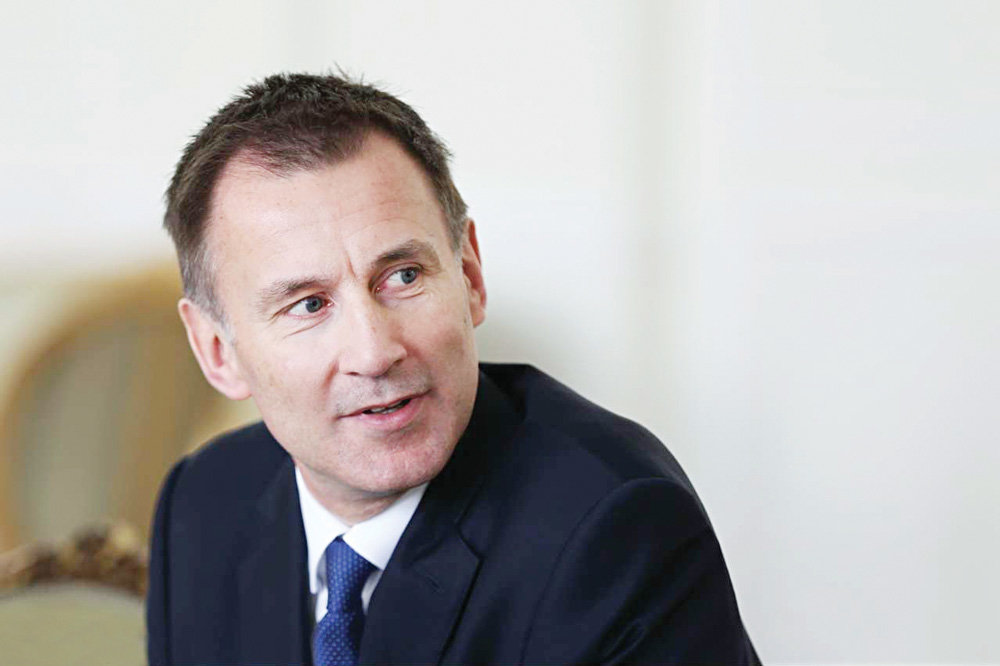
United Kingdom Foreign Secretary Jeremy Hunt once again accused Iran of being behind the explosions off the port of Fujairah in the Gulf of Oman. 
He has claimed that Iran is “almost certainly” responsible for the attacks on oil tankers in the Gulf of Oman, and the operation was carried out by a branch of Iran military force and no other governmental or non-governmental state can be responsible for this incident.
Undoubtedly, U.K. government is trying to falsely accuse Iran of the attacks, to help Trump administration in spreading anti-Iran propaganda. It seems that London is blindly following Trump’s high-risk strategies in the Middle East, but 10 Downing Street (headquarters of U.K. government) has already paid a big price for following U.S. games. Taking part in Yemen War and starting Brexit, majorly supported by Trump, are only a small part of these costs. 
U.K. will pay a high price for blindly supporting White House war-mongering and anti-Iran policies. U.K. support for U.S. regional strategies is surely based on Britain’s traditional policy to stay in the corners and take a share of the final profits, but this time, given the upcoming crisis, it seems that London will not receive the benefits it seeks. 
Since 2000, U.K. citizens have been severely burdened by high prices that they had to pay for government projects such as supporting George W. Bush in Afghanistan and Iraq war, constant interference in Persian Gulf and constructing military bases in this region, supporting Saudi Arabia regime in attacking Yemen, supporting the Zionist regime in many attacks against Palestinian resistance groups and giving large amounts of money and arms to terrorist and Takfiri groups such as ISIS and Al-Nusra Front. 
UK, with following Trump’s regional polices will be incurring just more high costs on the country and will surely become the “complete loser” of this game. It is no surprise that many U.K. citizens are constantly protesting against the government and ask them to stop following Washington in their international policies. Undoubtedly, regarding U.K. notorious history in their political, economic and diplomatic relations with Iran, this kind of accusations will be a “risky regional policy” for Britain to take. 
U.K. doesn’t have the right or capacity to get itself into these kind of challenges, and with continuing this behavior, it will only make itself more vulnerable to political and economic risks and promote the already negative worldview about the country’s long-standing interference in Middle East.

Wednesday, January 16, 2019

Fall of Empires: London, Washington & Paris on brink of collapse

by George Galloway

George Galloway
George Galloway was a member of the British Parliament for nearly 30 years. He presents TV and radio shows (including on RT). He is a film-maker, writer and a renowned orator.
Fall of Empires: London, Washington & Paris on brink of collapse (by George Galloway)
Washington, London, and Paris – the three capitals of the Empire – are today effectively ungoverned, shutdown, tottering on the brink of collapse or under siege by their own 
people.
Their self-chosen Nemeses – Moscow and Beijing – meanwhile toast the New Year in a state of considerable optimism and self-confidence. These are the facts, this is the news.
We should start at the top of the Empire. The United States government has closed down amid stasis and a barrage of inter-governmental howitzers.
The defense secretary, 'Mad Dog' Mattis, has resigned as have other uniformed subalterns angry at the president's re-found determination to withdraw from costly and losing foreign wars. The actual "mad dog" – John Bolton – openly defies President Trump over Syria, Mueller closes in, and the new Democratic majority in the House gears up to "impeach the mother***er."

Nobody knows if President Trump will be around for much longer, and the merest glance at the views of his putative successor – Vice President Mike Pence – recalls the famous picture of President Nixon with his vice president, Spiro Agnew, standing behind him. The satirical speech bubble had Nixon pointing over his shoulder and saying "nobody is going to shoot me with this guy next in line."
In London, British Prime Minister Theresa May is a dead woman walking; Britain's exit from the European Union is still a matter of total uncertainty, yet a mere 80 days away. Violence outside the Parliament has begun to erupt, no faction can command a majority, an election cannot be held because its most likely result would be the election of veteran anti-imperialist Jeremy Corbyn whom the 'deep state' would sooner see under arrest (alongside this writer, according to the coup-apparatus Integrity Initiative).
A no-deal Brexit will see the south of England grind to a halt given the lack of preparation for it, as trucks headed to and from the continent turn Kent, the 'Garden of England', into a car-park.
A Brexit in name only – otherwise known as Theresa May's deal – cannot pass in the House of Commons next week given Labour's opposition together with at least 50 of the government's own MPs and the 10 members of the coalition partners, the DUP.
A third option, a new referendum, runs the risk of the same scenario being played out (but almost entirely unreported here) on the streets of Paris and other French cities. Defying the result of the first referendum, cheating 17.4 million people of that which they voted for, risks social peace in England. Millions of Brexit voters are among those in Britain with nothing left to lose.
In France, the Elysee has become Macron's Bastille and it is not at all inconceivable that it will be stormed.
Last weekend his own spokesman had to be smuggled out of a back-door after a truck hijacked by protestors smashed through the door of his government building. The very conditions Macron strove so very hard to bring about in Damascus and that France DID help bring about in Kiev are now rocking the very foundations of the French Republic.
No amount of turning the 'Nelson's Eye' (when famously England's Admiral Lord Nelson at the Battle of Trafalgar was told that the French Navy were advancing on him, he put his telescope to the black patch covering his missing eye and said "I see no ships" – will alter the fact that for eight weeks and counting, hundreds of thousands of French people of all political stripes have been – increasingly violently – on the streets of cities throughout the country demanding that their president resign. And that Macron showering Euros down the Champs Elysees in concessions – in absolute defiance of the EU's fiscal rules – has merely encouraged 'les autres' to keep on demonstrating.
This week, the EU (and NATO) government of Italy joined the side of the 'Gilets-Jaunes', with Italy's Salvini personally denouncing the French president as being "against his own people."
This Saturday, a mammoth demonstration will take place in London,leveling the same raft of anti-austerity demands on the British government as the Yellow Vests are making of Macron. The center cannot hold.
The old order is dying; the new one cannot be born. If we are not careful we will soon be alive in the time of monsters.

Monday, November 05, 2018

The British Museum's new gallery: A history of Islam in over a thousand objects

The British Museum's Albukhary Foundation Gallery of the Islamic World celebrates the influence of Islamic art across the globe

Star and cross tiles, AH 664–65 (AD 1266–67). Iran, probably Kashan. Stonepaste, moulded and painted in blue, turquoise and lustre over an opaque white glaze. © The Trustees of the British Museum
Georgia Beeston's picture
Georgia Beeston

The Albukhary Foundation Gallery of Islamic World ©Stanton Williams
Speaking to Middle East Eye from the gallery floor, curator Dr Ladan Akbarnia explains that the Islamic art was originally housed on the lowest level of the museum, frequently overlooked by visitors.
Now the collection has been relocated to the heart of the museum in two galleries, increasing the space by a third. The new wing, supported by Albukhary Foundation, a non-profit organisation based in Malaysia, shows pieces that have never been displayed before.
Being able to listen to the oud as you look at the Arabic lutes on display, or watching a calligrapher write in Arabic as you look at the scripture, brings the works to life in a new way
"In our previous gallery, we showed mainly the central Islamic lands: the Arab lands, Iran, Central Asia, and parts of India. In this gallery, we really extended so that it would be much more true to the reality of Islamic visual culture," she explains. 
The two rooms are divided between the rise of Islam in the 7th century up until the 1500s, and from the 1500s to the present day. The central spine follows a chronological order, allowing for the thematic exploration of the history of Islamic art on the edges of the gallery, such as objects from daily life, and the spoken and written word.

Cross-cultural influences

Alongside the artefacts are quotes, translations, and video and audio extracts that give the viewer a sense of the Islamic world as it was at the time.
Being able to listen to the oud as you look at the Arabic lutes on display, or watching a calligrapher write in Arabic as you look at the scripture, brings the works to life in a new way.
"The thing we wanted to do within these cases was not just name dynasties and time periods ... but evoke something about the world and the time and the place people lived in."
On entering the gallery, one of the first display cases to the right hosts a wonderful assortment of fragmented artefacts, excavated from Samarra city, in central Iraq.
I was under the impression that paintings of humans and animals were prohibited in Islamic art, so it is quite a surprise to see it here
- Julie, a visitor to the gallery
An anonymous viewer at the time wrote: "He who sees it is delighted," reflecting on his experience of the city.
From abstract motifs carved in plaster, to glass mosaics and mother of pearls to paintings, the collection gives us a glimpse of the immense splendour of the palaces and private homes of Samarra, which was founded as the imperial capital city in the 9th century by the Abbasid Caliph al-Mu'tasim.
Julie, one of the first visitors to the new gallery, looks at a figure painted in stucco from the 9thcentury. She remarks: "I was under the impression that paintings of humans and animals were prohibited in Islamic art, so it is quite a surprise to see it here."
Painted stucco, 9th century, Iraq, excavated at Samarra. © The Trustees of the British Museum
The work in question, titled Painted Stucco, is a fragmentary remain of what is thought to be a depiction of a ghulam (servant) in semi-profile that formed part of a paradisiacal scene. During the excavations of the city of Samarra in the early 20th century, fragments of friezes were found that depicted courtly scenes of dancing, banqueting and musical instruments being played. 
Progressing through the dynasties, it is fascinating to see how the unique Islamic style became more intricate and defined over the ages.  

Symmetry and geometry

Star and Cross Tiles from Iran is particularly exquisite. Dating from the late-13th century AD, the combination of star and cross tiles exemplifies the symmetry and geometry that has come to define Islamic art. 
The tiles are thought to have once belonged to the interior of the Imamzadeh Ja'far shrine in Damghan, Iran. Rabbits, wolves and wild cats mirror each other in between blossoming foliage.  
Persian calligraphy recounting passages from the Shahanama (Book of Kings), which is more than 1,000 years old, borders the sides. An epic poem of 50,000 verses, the Shahanama explores the reign of 50 monarchs from the start of documented Arab conquests of Iran. 
One of the things that people might be surprised about is that [globalisation] is not new ... it is as old as time
- Dr Ladan Akbarnia, curator
The rest of the room is filled with ceramics and lamps. Some are made of enamelled glass embellished with blue Arabic scripture quoting the Quran, while others combine blue and red to create floral motifs that strongly resonate with the Chinese lotus. There are also inlaid incense burners andastrolabes, a device used by early astronomers to tell time by measuring the altitude of the sun, moon and stars, as well as a navigational device.
Such objects reflect the phenomenal advances in science, algebra, astrology, and literature that occurred in Baghdad, Cairo and Cordoba during the Islamic Golden Age from the 8th century to the 13th, while Eastern Europe was deep in its dark ages. For over 700 years, theinternational language of science was Arabic.
Iznik basin, c. 1545–1550, Ottoman dynasty, Iznik, Turkey. Made of cobalt, green, turquoise painted and glazed stonepaste. © The Trustees of the British Museum
As the first room comes to a close, the spread of influence of Islamic art is demonstrated in non-Islamic countries like China, which began to mimic Islamic motifs by the 1500s.
For example, there is a 15th-century tray emanating from the porcelain centre of Jingdezhen in China which resembles a similar one from the Mamluk Sultanate, replacing brass with traditional blue and white Chinese porcelain.  
"One of the things that people might be surprised about is that [globalisation] is not new ... it is as old as time,” says Akbarnia.
The cross-cultural influence is even clearer in the second room, which explores the Islamic world from the 1500s to the present day. The central part of the exhibition delves into the art from the three major dynasties of the period: the Ottomans, Safavids and Mughals.
A highlight from the Ottoman dynasty includes the Iznik Basin. Dated to the 16th century, the basin blends the typical Islamic blue found in the earliest architecture of Islam with Chinese floral imagery to create a style unique to the town of Iznik, southeast of Istanbul.
On the side of the galleries, the displays continue to explore the wonderful objects from quotidian life: from textiles to oral traditions, to music and puppetry.
The textiles are particularly fascinating as they show how worldwide influences impacted the fashion of the time. Child’s Outfit shows a chemise, split skirt, and leggings designed for a young girl. Dating from the 19th century, Akbarnia explains that the style became in-vogue when a ruler of the Qajar dynasty, who reigned over Iran from 1848-1896, travelled to Europe.
"Nasir al-Din Shah was one of the most famous Qajar rulers," she says. "[He travels to] Paris and sees the ballet and is so obsessed with the fashion that he brings it back for his entire harem." Thus, Western styles became interwoven in the fashion of Qajar Iran. 
Seated youth reading, c. 1625–26. Isfahan, Iran. Ink, opaque watercolour and gold on paper. © The Trustees of the British Museum
Towards the end of the gallery is an entire section dedicated to the literary tradition of the Islamic world, displaying a vast array of illustrated manuscripts and albums, rarely displayed before.
"We have a whole section dedicated to storytelling, starting with oral traditions and how stories were told over time, translated into other languages ... and became illustrated in books," Akbarnia explains.
One striking work is a manuscript from the Hamzanama from the 16th century, based on a series of legends about Amir Hamza, the uncle of Prophet Muhammad, which were passed down the generations through storytelling and describe him in a variety of valiant acts, such as his defeat of a two-headed lion with one blow of his sword. 
On display is a page from a manuscript commissioned by Akbar, considered the greatest of all Mughal emperors and who ruled most of India and Pakistan in the 16th and 17th centuries. "He [Akbar] liked listening to these stories being recited so much that he commissioned a royal manuscript to be made," says Akbarnia.

Rhapsody in blue

One of the paintings depicts the prophet Elijah, known to Muslims as Ilyas, who is mentioned in both the Bible and in the Quran, saving Nur ad-Dahr, the grandson of Amir Hamza from drowning. Water gushes out of an idyllic landscape of fruitful trees, blossoming flowers and animals, leaving one visitor to remark that it "looks like paradise".
The Hamzanama, c.1558–73. India. Image side ink and opaque watercolour on cloth; text side ink on paper. © The Trustees of the British Museum
In keeping with the curators' aim of bringing the works to life, Seated Youth Reading, a beautiful watercolour from 17th century Isfahan, Iran, is placed next to a reimagining of the work by contemporary Iranian artist Farkhondeh Ahmadzadeh. Visitors can watch him completing the image on a screen nearby.
Akbarnia describes a "great collaboration with the Prince's School of Traditional arts, where we've had an artist filmed recreating the image so that people could see how the illuminations get to this point."
Against the back wall of the gallery is an immense series of works by contemporary British-Pakistani artist Idris Khan. The series, titled 21 Stones, references the ritual that takes place during the Hajj pilgrimage when stones are thrown at pillars to symbolise the Stoning of the Devil. Twenty-one blue canvases line the wall recreating the impact of the stone hitting the pillar.
21 Stones, 2018, by Idris Khan © Idris Khan. Photograph The Trustees of the British Museum
That same blue colour, repeated throughout Islamic art, connects the entire collection together as it draws to a close.
The gallery also holds a space for temporary exhibitions, which will change every six months to two years. The first temporary exhibition hosts a wonderful collection of textiles and artefacts drawn from the collection of the Islamic Arts Museum in Malaysia, established by the Albukhary Foundation, which uses the space to explore the popular Arabesque motif seen throughout Islamic art.
The Albukhary Foundation Gallery of the Islamic World is an outstanding achievement which attests that the influence of Islamic art extends far beyond the Middle East and continues to inspire artists.