Showing posts with label Shia. Show all posts

Wednesday, October 09, 2019

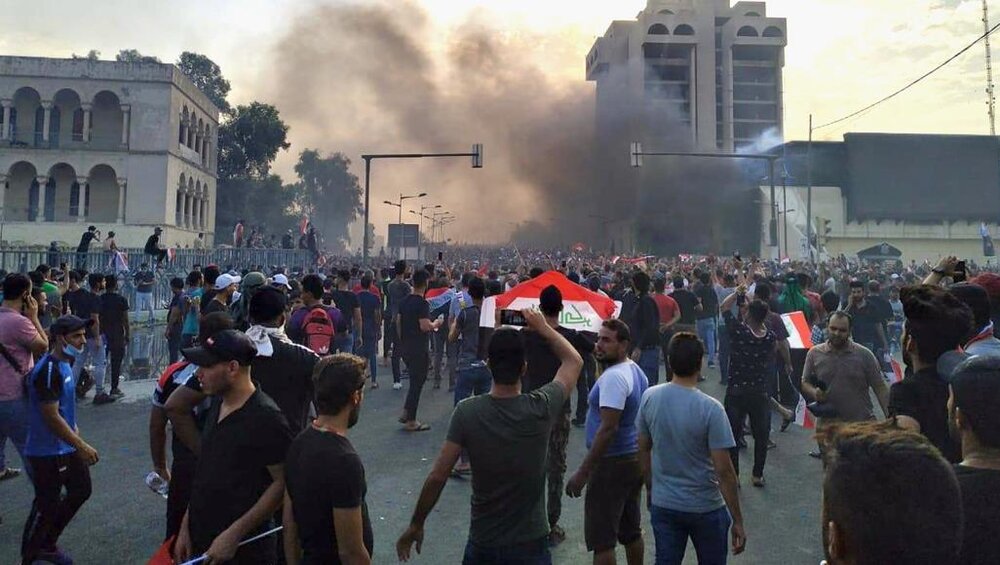
Iraqi protests, spontaneous or conspiracy?

By Hossein Amiri
Iraq witnessed protests in recent days about the inadequate public service situation, lack of job opportunities and corruption, but these protests have turned violent and have killed and injured dozens.
There are shreds of evidence indicates that what is happening in Iraq is a "goal-oriented-conspiracy". There are several reasons for this.
First, there are pictures on social networks from Iraqi protesters that are both fake and completely suspicious. Some images of the protesters have slogans against the Shia clerics and Ayatollahs. At the same time, there are mottos in which people demanding the overthrow of the Iraqi government. This is while the Iraqi people deeply believe in Shia's religious authority and its constructive role in the country, and the best example for this the Iraqi people's welcoming to Ayatollah Sistani's 2014 fatwa to mobilize people to fight against ISIL terrorism. On the other hand, the government in Iraq has won the elections and its people have voted for Shia groups to form a government.
Second, the demonstrations in Iraq coincided with the Arba'een Trek. It seems that these demonstrations have targeted Arb'aeen's Trek. The goal is to prevent the Grand March being held in Iraq, on the one hand, and to prevent people from other countries, especially Iran, to go to Iraq to attend the indelible event. This is one of the reasons behind the anti-Iranian slogans in demonstrations in some Iraqi cities.
Third, the demonstrations in Iraq coincided with the Yemeni hegemony against Saudi Arabia as well as with the political stalemate in the occupied territories to form a cabinet.
Iraq is one of those countries that has an independent foreign policy and opposes the Saudi war against Yemen and it is also against the normalization of the ties between some Arab countries with the Zionist regime.
On the other hand, the Popular Mobilization Forces (PMF) "al-Hashd ash-Shaabi" has close relations with the Islamic Republic of Iran. Due to these ties, Iraq has been targeting by the Arab-Israeli-Western axis.
Secretary-general of Asa'ib Ahl al-Haq, Qais al-Khazali an Iraqi Shi'a paramilitary group, said last August that some political opponents in Iraq are preparing to hold demonstrations with the support of foreign powers because they are unhappy with Iraqi foreign policy. The problem is "Deal of the Century". They want to obey the Iraqi government ... so we will see demonstrations in Iraq again. The demonstrations are scheduled to begin in October.
Fourth, the demonstrations in Iraq also coincided with the government announcing an inquiry's output into the bombing of PMF's garrisons and Iraqi Prime Minister Adel Abdul Mahdi's emphasis on the direct role of the Zionist regime in the incident.
Meanwhile, in the ongoing violence in Iraqi, Western and Arab media focused on inducing PMF as a force against the protesters. The behavior of the main media stream also shows that what is going on in Iraq is a "concerted conspiracy", which is aimed at weakening the Iraqi security and military forces, especially the PMF.
Fifth, the protests in Iraq were backed by some elements of the Ba'athist regime. As the protests began, the daughter of Iraq's ousted dictator Raghad Saddam, tweeted in support of the protests, calling them "the generation of Qadisiyah" and writing "The whole of Iraq is with you" and "God bless our martyrs."
It is real that the economic problems and corruption exist in Iraq and that is undeniable, but the violence that occurred during the recent protests and the way the Western and Arab media reported and covered the protests suggests that Iraqis should be vigilant.

Sunday, September 29, 2019

How the Saudi Oil Field Attack Overturned America’s Apple Cart

For all their overwhelming firepower, the U.S. and its allies can cause a lot of misery in the Middle East, but still can’t govern the course of events.
In many ways it doesn’t really matter who — Houthis in Yemen? Iranians? Shiites in Iraq? — launched those missiles and drones at Saudi Arabia. Whoever did it changed the rules of the game, and not just in the Middle East. “It’s a moment when offense laps defense, when the strong have reason to fear the weak,” observes military historian Jack Radey.
In spite of a $68 billion a year defense budget — the third highest spending of any country in the world — with a world-class air force and supposed state-of-the-art anti-aircraft system, a handful of bargain basement drones and cruise missiles slipped through the Saudi radar and devastated Riyadh’s oil economy. All those $18 million fighter planes and $3 million a pop Patriot anti-aircraft missiles suddenly look pretty irrelevant. 
This is hardly an historical first. British dragoons at Concord were better trained and armed than a bunch of Massachusetts farmers, but the former were 5,000 miles from home and there were lots more of the latter, and so the English got whipped. The French army in Vietnam was far superior in firepower than the Viet Minh, but that didn’t count for much in the jungles of Southeast Asia. And the U.S. was vastly more powerful than the insurgents in Afghanistan and Iraq, but we still lost both wars.
The September 14 attack on Saudi Arabia’s Aramco refineries at Abqaiq and Khurais did more than knock out 50 percent of Saudi Arabia’s oil production — it shook the pillars of Washington’s foreign policy in the region and demonstrated the fragility of the world’s energy supply. 
The End of the Carter Doctrine?
Since 1945, Washington’s policy in the Middle East has been to control the world’s major energy supplies by politically and militarily dominating the Persian Gulf, which represents about 15 percent of the globe’s resources. The 1979 Carter Doctrine explicitly stated that the U.S. reserved the right to use military force in the case of any threat to the region’s oil and gas.
To that end, Washington has spread a network of bases throughout the area and keeps one of its major naval fleets, the Fifth, headquartered in the Gulf. It has armed its allies and fought several wars to ensure its primacy in the region.
And all that just got knocked into a cocked hat.
Washington blames Iran, but the evidence for that is dodgy. The Americans have yet to produce a radar map showing where the missiles originated, and even the Trump administration and the Saudis have scaled back blaming Tehran directly, instead saying the Iranians “sponsored” the attack.
Part of that is plain old-fashioned colonial thought patterns: the “primitive” Houthis couldn’t pull this off. In fact, the Houthis have been improving their drone and missile targeting for several years and have demonstrated considerable skill with the emerging technology. 
The U.S. — and, for that matter, the Saudis — have enormous firepower, but the possible consequences of such a response are simply too costly. If 18 drones and seven cruise missiles did this much damage, how much could hundreds do? World oil prices have already jumped 20 percent. How high would they go if there were more successful attacks?
The only way to take out all the missiles and drones would be a ground attack and occupation. And who is going to do that? 
The United Arab Emirates (UAE) has already begun withdrawing its troops from Yemen and has been holding talks with the Houthis since July (which is likely why UAE oil facilities were not attacked this time around). The Saudi army is designed for keeping internal order, especially among Shiites in its Eastern provinces and Bahrain. The princes in Riyadh are far too paranoid about the possibility of a coup to build a regular army.
Would the U.S.? Going into an election with prices already rising at the pump?  The U.S. military wants nothing to do with another war in the Middle East, not, mind you, because they have suddenly become sensible, but as Gen. Joseph F. Dunford Jr., chair of the Joints Chiefs of Staff put it, it drains resources from confronting China.
Starting with the administration of George W. Bush, and accelerated during the Obama presidency’s “Asia Pivot,” the U.S. military has been preparing for a confrontation with China in the South and/or East China Sea. The Pentagon also has plans to face off Russia in the Baltic.
One suspects that the generals made it clear that, while they can blow up a lot of Iranians, a shooting war would not be cost free. U.S. Patriot missiles can’t defend our allies’ oil fields (or American bases in the region), and while the anti-missile capabilities on some U.S. naval ships are pretty good, not on all of them are armed with effective systems like the Sea Sparrow. Americans would be coming home in boxes just as the fall election campaign kicked into high gear.
Whether the military got that message through to the Oval Office is not clear, but Trump’s dialing down of his rhetoric over Iran suggests it may have. 
Making Good on a Stalemate
What happens now? The White House has clearly ruled out a military response in the short run. 
Trump’s speech at the UN focused on attacking globalism and international cooperation, not Iran. But the standoff is likely to continue unless the Americans are willing to relax some of their “maximum pressure” sanctions as a prelude to a diplomatic solution. 
The U.S. is certainly not withdrawing from the Middle East. In spite of the fact that shale oil has turned the United States into the world’s largest oil producer, we still import around one million barrels per day from Saudi Arabia. Europe is much more dependent on Gulf oil, as are the Chinese and Indians. The U.S. is not about to walk away from its 70 plus year grip on the region.
But the chessboard is not the same as it was six months ago. The Americans may have overwhelming military force in the Middle East, but using it might tank world oil prices and send the West — as well as India and China — into a major recession. 
Israel is still the dominant local power, but if it picks a fight with Iran or Hezbollah, those drones and cruises will be headed its way. Israel relies on its “Iron Dome” anti-missile system, but while Iron Dome may do a pretty good job against the primitive missiles used by Hamas, mobile cruises and drones are another matter. While Israel could inflict enormous damage on any of its foes, the price tag could be considerably higher than in the past.
Stalemates can be dangerous because there is an incentive to try and break them by introducing some game changing weapon system. But stalemates also create the possibility for diplomatic solutions. That is certainly the case now. 
If a more centrist government emerges from this last round of Israeli elections, Israel may step back from Prime Minister Benjamin Netanyahu’s relentless campaign against Teheran. And Trump likes “deals,” even though he is not very good at them.
“This is the new strategic balance,” says Newclick Editor-In-Chief Prabir Purkayastha in the Asia Times, “and the sooner the U.S. and its NATO partners accept it, the quicker we will look for peace in the region.”

Monday, July 01, 2019

Dalai Lama Attends Shia, Sunni Conference in New Delhi

TEHRAN (IQNA) – A conference on unity and peaceful 
coexistence among Shia and Sunni Muslims was held 
in New Delhi, India, on Monday.
 Tibetan Buddhist Leader Dalai Lama was present at the gathering and addressed the event.
He said Muslims should put an end to disputes between Shia and Sunnis.
He added that the message of all religions is truthfulness and unity.
“War and conflicts are not a good solution for resolving problems,” Dalai Lama went on to say.
Also addressing the conference was Mohammad Hamed Ansari, the 12th vice president of India from 2007 to 2017, who underlined the need for unity among all Muslims.
He also hailed the culture of peaceful coexistence in India.
Another speaker, Seyed Mahmood Assad Madani, secretary general of India’s Muslim organization Jamiat Ulama-i-Hind, stressed rejection of extremism and said all should live based on tolerance.

Thursday, April 25, 2019

Saudi bloodletting of Shias - Where is the outrage?

By Syed Zafar Mehdi

TEHRAN - The custodians of Islam’s holiest places have turned the country into a slaughterhouse, spilling blood of innocents in utter contempt to the teachings of the man who many centuries ago had campaigned against ignorance, misrule and anarchy in the same land.
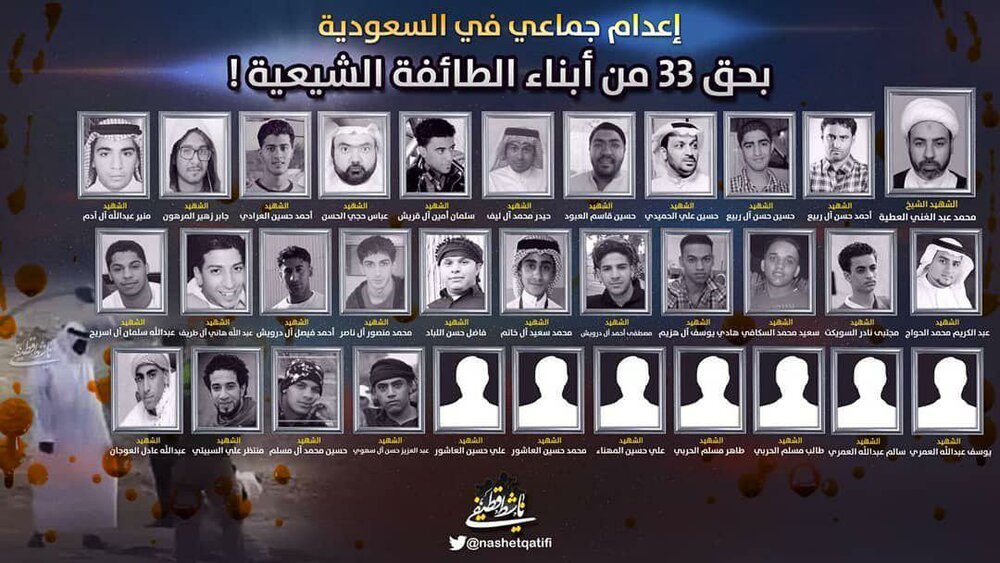
In a throwback to the ‘age of ignorance’ before the advent of Islam in the Arab world, Saudi rulers ordered the execution of 37 Saudi citizens on Tuesday, at least 34 of them Shias.
It has been described as the ‘biggest mass execution’ in the kingdom in last three years. Of course the Shias in Saudi Arabia have seen worst.
Among those executed include Sheikh Mohammad AlAttiyah, a prominent Shia scholar in Saudi Arabia, who like others was falsely accused of sedition and denied the opportunity to defend himself.
According to Saudi journalist Ali AlAhmad, AlAttiyah’s charge was moving to Jeddah to serve the local Shia community there.
Activist Abdullah AlSuriah was also among those executed on Tuesday. AlSuriah was a strong voice against the despotic regime in Riyadh and lived in a shanty house close to the world’s largest oil port.
Mujtaba Al Suwayket, who had been accepted into Michigan State University for his higher studies, was also executed for ‘participating in pro-democracy protests’. He was arrested at the airport.
Abdullah Hani Al-Tarif, who was arrested on sham charges and forced to confess to crimes like ‘chanting slogans and promoting social media propaganda’ was also executed on Tuesday.
Abdulkareem Al-Hawaj was a teenager when he was arrested in 2011 for being “near a protest”. After being on death row for eight years, he was finally executed, and like others denied fair trial.
Salman Qureish used his social media prowess to organize pro-democracy protests in 2011-12. He was 18 when he was arrested and finally executed on Tuesday.
Abbas Al-Hassan was married with four children and was arrested in 2013 on charges including ‘spreading Shia beliefs’ and ‘campaigning for human rights in the kingdom’. He was also executed on Tuesday.
Ahmad Hassan Ali, 34, was executed for ‘attending pro-democracy demonstrations and chanting anti-regime slogans’. He was brutally tortured in the custody and had fallen sick.
Munir al-Adam was sent to gallows for ‘participating in anti-regime protests’. According to reports, he was tortured in custody so ruthlessly that he turned fully deaf and partially blind.
Hussain Al-Rabi was a young activist from Qatif who belonged to a poor family. He fought for people’s rights and was executed for same. His younger brother was also killed in 2014.
Many of those executed were young Shia citizens of Qatif, Madina and Al-Ahsa and were active in their communities. They demanded equal rights and an end to discrimination, abuse, exploitation and killings.
Shias in Saudi Arabia have faced persecution throughout the country’s history, but the crackdown has intensified in recent years, especially since MBS took over in June 2017 following a bloodless coup.
Hundreds of Shia citizens have been executed in recent years on false charges and scores of others continue to be on death row, including Ali al-Nimr, Dawood al-Marhoon and Abdollah al-Zaher.
Most of them were arrested in anti-government protests in 2011-2012, which rocked the country's eastern province, with predominantly Shia population, who have been quite legitimately demanding an end to anti-Shia discrimination and the release of political prisoners.
The protests led to the execution of top Shia cleric Sheikh Baqir al-Nimr in 2016, who was put to death along with 46 other prisoners in the largest mass execution in Saudi Arabia since 1980.
Amnesty International said the sentence was carried out “after grossly unfair trial” and said there were “questions about the fairness of the trial in a monstrous and irreversible injustice”.
In 2017, fierce clashes broke out between Saudi security forces and Shias in the eastern province following demolitions in the Shia town of Awamiya. At least 20 civilians were killed.
In July last year, after the execution of four Shiite men in country’s Shia-dominated eastern province, Amnesty said the Saudi regime was employing the death penalty as a “political weapon to silence dissent”.
The latest massacre and display of a mutilated body on a pole has sparked anger and outrage from human rights campaigners across the world. But the world leaders are silent.
Amnesty International, Human Rights Watch and other watchdog bodies said the executions were carried out after “sham trials” and were “a chilling demonstration of the Saudi Arabian authorities’ callous disregard for human life.”
Saudi Interior Ministry said the men were executed for their role in ‘spreading extremist ideologies, forming terrorist cells, fueling sectarian tension and plunging the country into chaos’.
The same old sweeping and vague charges the dictatorial regimes employ as a tool to crush voices of dissent, said Taha Hussain, a Lebanon-based human rights activist.
Lynn Maalouf, Amnesty's Middle East director, said the men were convicted after “sham trials” and were forced to confess to the crimes under torture.
“It is also yet another gruesome indication of how the death penalty is being used as a political tool to crush dissent from within the country's Shi'a minority,” she said.
“The use of the death penalty is always appalling but it is even more shocking when it is applied after unfair trials or against people who were under 18 at the time of the crime, in flagrant violation of international law,” she added.
Saudi Arabia have executed over 100 people since the beginning of the year and is on its course to surpass the last year's number if it continues at the same pace, said the watchdog.
Human Rights Watch described the executions as “grotesque,” and said it represented a “day we have feared.”
“Today's mass execution of mostly Shia citizens is a day we have feared for several years. The punishments are especially grotesque when they result from a flawed justice system that ignores torture allegations,” said Adam Coogle, Middle East researcher at HRW.
Shia citizens of Saudi Arabia make up 10-15 percent of the country's population a`nd have long faced discrimination and exploitation from the country’s rulers.
Social media has been abuzz since yesterday with posts denouncing the Saudi regime over its blatant disregard for international humanitarian laws and criminal silence of the international community over it.
“These citizens were detained because they spoke out against the oppressive Aal e Saud regime… They were not terrorists, nor were they a threat to other citizens,” UK-based human rights activist Ruhi Rizvi wrote on her Facebook page.
U.S.-based prominent journalist Mahdi Hasan took to Twitter to slam a pro-MBS Saudi journalist for his silence over the Saudi executions.
“Dear @aliShihabi, you spent much of today tweeting about Iranian oil exports and sanctions but haven’t tweeted one word about the mass executions in Saudi, most of them Shias, some of them arrested as kids. Have you come up with an attempted justification/defense of MBS yet,” he wrote.
Saudi dissident Mustafa Al-Sadah in a tweet said the Saudi crown prince was misusing terrorism laws to get rid of his opponents.
“If the Saudi government has nothing to hide and believes its juridical system is fair and just, then why judges are conducting trials in secret? Why Saudis are being beheaded and crucified without specific charges,” he asked.
“Where is the outrage,” asked a Twitter user Salah. “Why can’t the governments around the world keep their business interests aside and condemn this barbarism and murder of humanity.”

Sunday, April 21, 2019

Why are we ignoring the persecution of the Hazaras?

Jessica Aya Harn

Since 2013, than 500 Harazas have been targeted and killed in Quetta, although many Hazara rights activists are claiming that number is easily in the thousands.

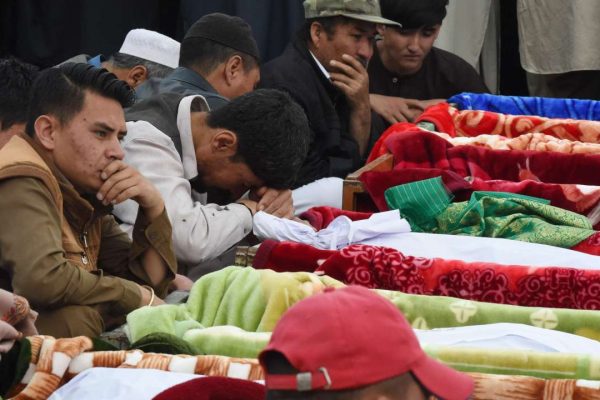
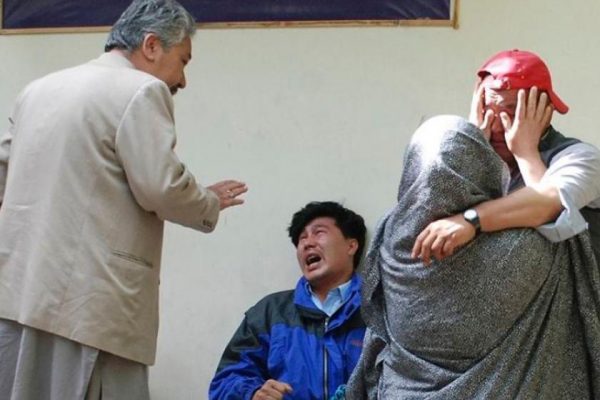
On Friday, the 12th of April, a bomb exploded in the Hazarganji fruit and vegetable market in Quetta, Balochistan in southwestern Pakistan, killing 24 people and injuring almost 50. Those targeted and killed were from the Hazara Shia minority, a group that has been at the centre of targeted attacks and killings in the region for years.
The Hazaras, who are predominantly Shia Muslim and a Persian speaking ethnic group native to the Hazarajat region of central Afghanistan, are said to originally be of Mongolian and Central Asian descent. A mixture of historical evidence and legend say that the Hazaras are descendants of Genghis Khan himself, who with his army invaded Afghanistan in the 13th century. The Hazaras are the third largest ethnic group in Afghanistan, and in Pakistan, where many have immigrated to, they make up one of the largest minority groups in the country. Roughly half a million Hazara live in Quetta, in the Balochistan province of Pakistan.
Hazara mourners after Friday’s bomb attack (DNA India)
Friday’s horrific attack on the Hazara community was claimed by both the Pakistani Taliban as well as IS, who regularly target the Hazara because of their Shia beliefs. Since 2013, more than 500 Harazas have been targeted and killed in this specific area, although many Hazara rights activists are claiming that number is easily in the thousands.
Amnesty International’s Deputy South Asia Director, Omar Waraich, stated after Friday’s attack:
This horrific loss of life is a painful reminder of the threats that Quetta’s Hazara community continues to face. Targeted for their religion by sectarian armed groups, they have suffered many such tragedies over several years. Each time, there are promises that more will be done to protect them, and each time those promises have failed to materialize”.
In 2013 alone, more than 200 Hazaras were killed in a series of bombs, and one year ago in April of 2018, a series of targeted shootings killed Hazara members indiscriminately in the region. The city of Quetta is highly divided and segregated, with the ethnic Baloch, Pashtun, and Hazara communities living in distinctly separated corners of the city. Many have also pointed to a complete lack of protection from Pakistani authorities, as the Hazara community continue to face targeted killings and prosecution by armed sectarian groups.
Since last week’s bombing, hundreds of Hazara have protested on the streets of Quetta and around the region, demanding better rights and protection from the government as well as an end to what many have labeled as a Shia genocide.
The Hazara have been under continued attack for years (Dawn News)
Worryingly, the persecution of the Hazara Shia minority has remained largely unheard of and ignored by most of the world. Not only do they remain a minority within their own country ethnically, but because of the large majority of Hazaras being Shia, it becomes worrying when larger, Sunni-dominated Muslim countries turn a blind eye to the indiscriminate killings of the Hazaras.
Pakistan’s Prime Minister Imran Khan has yet to visit the victims or the community, however State Minister Afridi and the PM’s Special Assistant on Overseas Pakistanis and Human Resource Development Zulfiqar Bukhari visited the area. Speaking to media and news outlets after his visit, Afridi stated:
The federal government will play its role in making sure that these henious crimes end. I stand with the community and I assure you that the government has been working to ensure that such crimes end.”
While the Hazaras have heard such rhetoric before, many hope that with wider media and international attention, they might begin to face better protection against the indiscriminate killings and persecution. As of now, however, after burying the recently killed, many cannot see a hopeful future in where the Hazara are not targeted.
Zair Agha, one of the speakers at the recent protests seen across Balochistan, told local media: “Our neighborhoods have been turned into orphanages. Our blood has become cheaper than water.” As of now, the Hazara, without any concrete protection from the state, remain in uncertainty and fear over when the next attack could be.

Monday, February 18, 2019

Coexistence between Sunnis and Shias must be a primary goal

By Martin Love

NORTH CAROLINA - It may seem improbable but the very key to whether the world enjoys real (and somewhat relative, if not absolute) "peace" going forward, as well as the fate of the U.S. as any kind of somewhat respected but former imperial (and absurdly imperious) power, depends on two things: the end of U.S. disrespect for international laws, most evident in the “regime change” wars, and on the fate of the Palestinians and whether they are given civil rights and released from bondage in their own country.
 Listening to honest voices, for a change, anywhere in the US will be the country's salvation and turn the U.S. in the right direction after three decades at least of what the wisest Americans could call a treasonous misdirection.
One such honest voice of late is Ilhan Omar, the first Muslim Somali-American woman of color ever in the U.S. House of Representatives. Twice in the past week, she fearlessly brought condemnation upon herself by the usual culprits (most of the corrupted U.S. Congress and Trump himself) by calling out the undue and obvious influence of the lobby group known as AIPAC on matters pertaining to the Zionists and Israel. Her comments were deemed “anti-Semitic” and in fact, they were not.
And then a couple days later she, as a member of the House Foreign Affairs Committee, grilled Eliot Abrams, appointed to oversee the attempt at “regime change” in Venezuela. Omar publicly exposed Abrams for the responsibility he bears for actions in Central America in the 1980s that resulted in the deaths of many thousands of innocent people -- something that could easily happen in Venezuela if the U.S in some way invades directly or by proxy to install unelected Juan Guaido. (It is vaguely similar to the final installation of the Shah in Iran in the 1950s as a U.S. puppet until the Revolution, which marked a release of years of pent up anger and frustration in Iran which may have been too extreme in the years immediately following 1979, because some innocents suffered, however natural it was given the circumstances. The U.S. certainly latched on to this, and the hostage crisis, to turn Iran into an “enemy”.
In any case, this diminutive young woman, Omar, while apologizing for suggesting a so-called anti-Semitic “trope” prevalent during the Nazi era, has not substantially backed down in any respect in calling out AIPAC and other lobby influence on U.S. lawmakers. And she has gotten quite a lot of respect for doing so, at least among the best journalists and commentators. As one AIPAC staffer once said: “The lobby thrives in the dark.” But it is no longer so much in the dark.
But perhaps even more striking is the failure of the conclave in Warsaw, originally aimed at drumming up hostility to Iran and even war. Many European leaders did not attend, for one thing, and U.S. VP Mike Pence made a fool of himself there, as did Netanyahu. Regarding Pence, he sanctimoniously reprimanded major European countries for the creation of INSTEX, and made other comments which firmly suggest that Pence has nothing so much on his mind, if he has one, as the concept of Armageddon and the absurd return of “Jesus” and the “end of days”. Now it’s one thing for the Shia faithful to believe that someday the Mahdi may someday appear from occultation to institute a reign of justice and peace, but quite another to invoke an Armageddon scenario based on evangelism and the reappearance of Jesus.
But Pence went further in exhorting European signatories to the JCPOA to abandon the deal, as Trump and minions did. Pence, incredibly, accused Iran of plotting a “new Holocaust” which, if this were true, the many thousands of minority Jews in Iran would have already been extinguished. And Iran’s leaders have explained what the chants of “death to America” (or Israel) means: not the “death” of the citizens of the two countries but the end of the imperialist warmongers presence in high positions in both countries. However, the Warsaw conclave failed to keep the spotlight on Iran specifically and dissolved into an appeal for “stability” in the Middle East.
Well, who of sane mind does NOT want stability anywhere, but the word itself has just one meaning to Pence and the Trump Administration and related Neocons: Mideast countries that do nothing but the bidding of the U.S. and the Israelis. And this same faux “stability” is sought in South America: if, for example, Guaido is fully installed and Maduro goes into exile from Venezuela, no question that Cuba will be the next target, and then maybe Bolivia, and so on. But Venezuela is the key target for now because, like Iran, it has vast petroleum and other resources.
Meanwhile, the U.S. has been trying to foment a war between the Shias (namely Iran) and the Sunnis (namely Saudi Arabia) if for no other reason but that a divided Islamic world suits the predatory and hegemonic designs of the U.S. Efforts simply to divide Muslims have been prevalent for the past century at least. But people like Eliot Abrams, Trump’s point man for Venezuela, a convicted (but Bush pardoned) felon, and a Jewish Neocon (are there any of note who are not Jewish?), like many others, fail to understand the fervor and courage Iranians displayed in pushing back Saddam Hussein for six years in the 1980s. Pence has the idea that sanctions and other threats will lead to the dissolution of the Islamic Republic. This is highly unlikely.
Iran, as far as one can tell, has not been as claimed by ignoramuses like Pence and Trump a “state sponsor of terrorism” but rather a state eager to achieve co-existence with other Muslims, if only it could. THAT, in essence, implies a more or less united (if that’s not too strong a word) Islamic world. And THAT is what terrifies the Western imperialists. A reasonable coexistence between Sunnis and Shias has existed before, and the tragedy is that it apparently does not exist today, largely because of the U.S. and the Zionists.

Monday, November 05, 2018

How Jamal Khashoggi's murder could reshape the Middle East order

The journalist's brutal killing could threaten the US-Saudi relations and Saudi crown prince's grip on power, and dramatically affecting the calculations of Israel and the US


Marco Carnelos's picture
Marco Carnelos


The shifting power balance in the Middle East over the last 15 years recalls the European experience in the 16th and 17th centuries, between the 1517 Protestant Reformation and the 1648 Peace of Westphalia. What took more than a century in Europe is happening in just a fraction of that time in the Middle East.
It is difficult to determine whether we are already in the more acute phase of the conflict, like the Thirty Years' War (1618-48) that destroyed Europe four centuries ago, or whether the worst has already passed.
President Recep Tayyip Erdogan is carrying out a slow and calculated leaking strategy to pressure Saudi Arabia and burn Riyadh’s clumsy narrative on Khashoggi’s killing
The Thirty Years' War led an exhausted and devastated Europe to the Peace of Westphalia, which finally ended the continent's religious wars and laid down rules of the international system. It is time now for a Westphalian peace in the Middle East, hopefully without another major war.
The Middle East today resembles the TV series Game of Thrones, with a wide-ranging power struggle among kingdoms, states, militias, religious groups and external actors - all entangled in conspiracies, plots, dynastic rivalries, sudden changes of alliances, competing interests, contradictory behaviour, assassinations and a widespread zero-sum mentality.

'Arab NATO' vs 'Axis of Resistance'

Oversimplifying to the extreme, there are two fronts: the so-called "Arab Nato" and the "Axis of Resistance".
Arab Nato is an array of Western states, Arab kingdoms and autocracies committed to protecting the old Arab order in the region. It is anchored to the leadership of the United States, and its core group comprises the US, Saudi Arabia, Egypt and the UAE, with Israel leading from behind the scenes. Its main purpose is to paint Iran and its regional allies and proxies as the main threat to regional stability.
Iran and its partners are confident that certain Arab kingdoms and autocracies are doomed - because they are unpopular, ruthless, illegitimate and, apparently, self-destructive
This group aims to reach a renewed Pax Americana that is sensitive to the interests of Israeli and Arab rulers, including a US-brokered deal, the deal of the century, between Israel and Palestine as a step towards a comprehensive Israeli-Arab peace; increased economic sanctions on Iran to prompt regime change; and reshaping political Islam in a way that does not threaten the old Arab order.
These achievements would usher in a new era of political harmony, economic cooperation and development as envisaged by Saudi Crown Prince Mohammed bin Salman’s Vision 2030.
Currently, the main threat to this project involves the global reaction to the murder of Jamal Khashoggi, which could threaten the US-Saudi relationship and the crown prince's grip on power.
Mohammed Bin Salman was supposed to be the cornerstone of the Arab NATO strategy; now, he appears to be its main weakness. The consequences of Khashoggi’s brutal killing could, once again, reshape the regional power balance, relegating Vision 2030 to a mirage and dramatically affecting the calculations of Israel and the US.

Competing agendas

The "Axis of Resistance" has a different agenda. What Arab NATO calls US "leadership", the axis defines as US hegemony. Iran, alongside Shia Iraqi political forces, "useful Syria", Hezbollah and other militias are its main shareholders.
As the “Axis of Resistance”, this group rejects the perceived US-Israel hegemony and their respective plans for the region. It also rejects Western values and the liberal order, considered as a form of cultural, political and economic imperialism.
To an extent, this axis represents what Martin Luther’s thesis represented in 16th-century Europe; their irregular militias are a sort of reissue of the French Revolution's Ragamuffins of Valmy. They are poorer and far less equipped than Arab NATO but animated by a much stronger resilience and revolutionary zeal.
Saudi women stand next to a Saudi Vision 2030 pavilion in Dubai on 16 October 2018 (AFP)
The Axis of Resistance members believe that the US-brokered peace deal between Israelis and Palestinians will be an imposition and a humiliation for the latter. It considers US sanctions against Iran a punishment for the country's refusal to bow to US hegemony, and it is convinced that it is impossible to suppress or harness political Islam in a way that would be functional to Arab kingdoms' interests.
Iran and its partners are confident that certain Arab kingdoms and autocracies are doomed - not as a result of the axis' destabilising actions, but because they are unpopular, ruthless, illegitimate and, apparently, self-destructive. At the moment, the main threat to the axis is the effect that renewed US sanctions on Iran will have on Tehran and its partners’ resilience.

Russia, China and Turkey

The political agendas of both Arab NATO and Axis of Resistance are chimeras. The first will never have the stamina, cohesion, patience and intellect necessary to implement its agenda. The second has all the qualities that Arab NATO is missing, plus enough critical mass to disrupt the other’s agenda - although, most probably, not enough to impose its own.
Russia, China and Turkey are watching from the sidelines. Russia is more active in supporting the axis, while China is more cautious; nonetheless, both Moscow and Beijing underwrite the axis's refusal to accept the Western political, economic and financial order.

Inside the Arab NATO-Axis of Resistance confrontation is a major battle for the leadership of the Arab-Islamic world.Turkey, so far, has played its cards smartly, especially on Khashoggi’s murder. President Recep Tayyip Erdogan is carrying out a slow and calculated leaking strategy to pressure Saudi Arabia and burn Riyadh’s clumsy narrative on Khashoggi’s killing. The Turkish leader appears to be using this event to further promote his own leadership of the Arab world, as an alternative to the Saudis.
There are enough elements for another major geopolitical earthquake in the region. The sooner the main local actors, and their external partners and sponsors, put aside their respective agendas and zero-sum approaches, the better.
A broader mechanism to settle their respective disputes and grievances should be found. The experience of Westphalia could be enlightening.
Marco Carnelos is a former Italian diplomat. He has been assigned to Somalia, Australia and the United Nations. He has served in the foreign policy staff of three Italian prime ministers between 1995 and 2011. More recently he has been Middle East Peace Process Coordinator Special Envoy for Syria for the Italian government and, until November 2017, ambassador of Italy to Iraq.

Monday, July 16, 2018

What’s the reason for all the blind hatred against Iran?

By Saber al-Daghamseh*
IRNA - Every morning, after having each meal and before falling asleep at night, they swear at Iran and insult the country, labeling it as an evil, adding they are afraid of an imaginary demon called ‘Shia’. What’s the reason for all the blind hatred against Iran? Out of stupidity, you fail to know that more than 20 million Sunnis live in Iran, Sunnis who have not been forced to convert to Shia at gunpoint. Throughout Iran’s history, none of them has converted to Shia. Given this, the question is, where does this blind hatred expressed by some Arabs toward Iran stem from? Does it stem from an inferiority complex these Arab states have developed as a consequence of witnessing that during the past 35 years, although the country has been under the severest sanctions and suffered the harshest penalties mankind has ever seen, it has not been brought to its knees and has even convinced the world to recognize its right to have peaceful nuclear technology? Are the hatred and inferiority complex due to the fact that despite the numerous strict sanctions, Iran has turned into an economic power and a global scientific, industrial and military fortress? Is this grudge harbored against Iran because it has absolute sovereignty which prevents ferocious Wahhabis in Iraq, Syria, Libya, Lebanon and Yemen from even thinking of getting close to the borders of the country? Or is it because of the fact that it is a country within which there are no Daesh terrorists to dare to harm or intimidate its people, damage the ancient sights and artefacts or destroy the tombs and sacred places?
Is this hatred due to the fact that Iran is a country that has been holding its elections regularly every four years since the victory of its 1979 Islamic Revolution, uncovers plots by some Arab states and exposes their deception and teaches them lessons they had been incapable of understanding during their reign. Or does it stem from the fact that since 1980 Iran has been vigorously supporting the heroes who defeated their enemies (Baathists), liberated their territory entirely and brought back their prisoners of war to their families? This comes as, currently, some Arabs are being obsequious to Israel, insolently form a coalition with it, and express happiness with their betrayal. I understand very well the psychological crisis and depression of those who have spent billions of dollars to establish the terrorist government headed by Zahran Alloush and Abu Mohammad al-Julani in Syria. I am speaking to that Jordanian citizen who has not met an Iranian during his entire life. Where, then, does this bigotry come from? Unfortunately, and undoubtedly, the main reason for spreading these maniacal propaganda against Iran is to stir up intense hatred toward the country and racially provoke Wahhabis.
Wahhabis are a tribe who publish the findings of their religious sciences and scientific experiences after 100 years solely in the form of dissertations on what is halal and what is haram (forbidden), marriage, privy parts of man and women, sexual intercourse and copulation and other similar subjects. While Iran ranks first in the world in the field of research and experiment on stem cells and the country’s Tehran Symphony Orchestra performs classical music in European churches, by gifting the terrorist groups, such as Daesh and al-Nusra Front, to the world, the Wahhabis have only taught people how to crucify people, eat the liver of those whom they have murdered, enslave women and girls and sell them in markets, decapitate children, burn and drown people, throw dead bodies from the rooves of buildings, exhume bodies, plant bombs, destroy mosques and museums, set churches on fire, abduct nuns and ruin ancient cities and sacred places. Moreover, they celebrate their heinous actions. *Saber al-Daghamseh is a Jordanian author and essayist.

Wednesday, July 11, 2018

Saudi Sectarianism: A Disease Characterized by Hardening of the Categories

By Abu Dharr

Deceptions, dishonesties, defamations, denigrations — these are the words that summarize the attitude of individuals, the media, and institutions that have been and still are contentious toward the trailblazing efforts of a leadership and population who are pioneering a momentous change within the human family. This begins with its Islamic members. Obviously we cannot cover the broad range of cantankerous characters and grumpy governments that have displayed their combination of ignorance and malice toward an Iran that is Islamic and a leadership that is free from foreign exploitation and domestic manipulation. What concerns us is a particular type of Islamic literati who perceive of “Iran” as an existential threat — so much so that Israel has become their political pal and strategic supporter.
These “Islamic pundits” are in high demand by the corporate mass media to convince their particular audience that Iran is pursuing an agenda of control, manipulation, domination, and hegemony! These pundits are located in an assortment of countries — some of them Muslim and others foreign. Briefly, their probe and breakdown of Islamic Iran relies on two canards. The first is that Iran is in reality a sectarian nation-state. The second is that Iran is a “Majusi” (Magian/Zoroastrian) country. They never refer to the Iranian people or the Iranian government with the word Islamic. The people in Iran, according to their descriptions, are either Persian, Safawis, Shi‘is or some other description that sounds like it is incompatible with Islam.
One of the falsehoods, which can only be peddled to the naive, is the conflation, by some of these commentators, of Iran’s Safawi past with its Islamic present. The sectarian bug has circulated so profoundly in the bloodstream of these analysts that they no longer are able to realize that Islamic Iran has broken away from its past Safawi sectarianism as surely as it broke away from its contemporary Pahlavi interventionism. It should be noted here that even though there is a strong Islamic current in today’s Turkey, that current carries within it a deep-seated affinity with its Ottoman past and wants to compel a Pax ‘Uthmania (Ottomanica) wherever it can extend its Islamic influence. There is no doubt that both histories (Persian and Turkic) had elements of a sectarian trend in them, as there is no doubt that both countries still have sectarian trends within them today. The difference is that the Islamic inclination in Turkey with all its secular foils has not been able to make a clean break from the mistakes of the past (without disparaging the accomplishments of that same past) and join hands with Islamic Iran on a post-sectarian strategy that has the very real potential of reviving the Muslim Ummah.
With the prudent guidance of its historically experienced ‘ulama and decision makers, Islamic Iran has been, with Allah’s helping hand, able to tame the sectarian beast within its own ranks, and therefore muzzle the voices of its schismatic Shi‘is. This was most recently demonstrated by the vocal objection of the committed ‘ulama in Islamic Iran to the Shirazi schismatic and divisive Shi‘is whose client relationship with not-so-great Britain was presented to the public without any “Shi‘i”-first bias. Compare the frank and brave drawing of a red line between the conviction of the “Shi‘i” Imams and “Shi‘is” of Isma‘il Safawi’s conviction. And here you may even go a step further and ask yourself: will the time come when members of the “Sunni” Islamic movements have the candor and courage to draw their red line between the conviction of the “Sunni” khulafa’ and the “Sunnis” of Muhammad ibn ‘Abd al-Wahhab’s conviction? The Safawi dynasty produced generations of “Shi‘i” fanatics. Likewise, the Wahhabi dynasty is responsible for generations of “Sunni” fanatics. The difference is the Safawi dynasty is long gone and dead, even though there are still pockets of their fanaticism — as subtle and substantial as it is in its own enclaves — that linger on here and there, especially in scattered communities from its starting point in Tabriz (hundreds of years ago) to its headquarters (nowadays) in London.
But the Wahhabi dynasty is still alive. And there are more than just pockets of Wahhabis and their vicious fanatics located throughout the world. Their influence, unlike the subtlety of their Safawi sectarian counterparts, is barefaced and brazen. Their notorious call to arms via their takfiri creed should be a wakeup call for the “Sunni” Islamic movements, and especially for Turkey. Their crimes against Muslims resulted in smoldering countries: Afghanistan, Iraq, Libya, Somalia, Syria, Yemen, and perhaps more yet to come.
The analysts and authorities who are peddling an anti-Islamic oratory when they do express themselves against Islamic self-governance in Iran never explain to us why the Saudi-Wahhabi strategy of political sectarianism (they claim to represent the Sunnis of the world) and its officials are entering into a political marriage with the Zionist bandits who stole Palestine and dispossessed millions of “Sunni” Palestinians! Can these analysts explain and tell us whether it is a coincidence that Saudi-Wahhabi spokespersons happen to be bad-mouthing Islamic Iran and sweet-talking Zionist Israel at the same time?!
The malicious minds of the debased British diplomats and spies did very well in recruiting the Saudi-Wahhabi dynasty to the colonialist, imperialist, and Zionist causes. The degree of their success can be gauged by the fact that hundreds of thousands of otherwise sincere Muslims were conscripted into imperialist and Zionist wars against the teachings of Islam. The wars in Syria and Yemen would have been impossible to execute without a “religious” justification. The Wahhabi-Salafi underlings of the Saudi ruling family were turned into convenient recruiters for the wars that are raging in and around the Holy Land. And if there are Wahhabi-Salafi ‘ulama who object or may object to this abuse of Islam by the Saudi functionaries of Tel Aviv and Washington, well then, lock them up. And that is where many of them are today: in Saudi prisons. They are left to hang there — high and dry. No one seems to care for them. Barely anyone mentions them. When Muhammad bin Salman (MBS) apprehended and imprisoned hundreds of millionaires and billionaires the mainstream media was a cacophony of news about their most celebrated one: al-Walid ibn Talal… along with a few others. But no one in the mainstream media mentions Hasan Farhan al-Maliki, or Salman al-‘Awdah, or the hundreds of other scholars who are languishing behind bars.
The “intellectual poison” that has injured our understanding of Islam and corrupted the character of certain scholars is in need of an antidote. And that type of cure is not going to come from an article in a magazine or a book in the library — as important as they are. The medicine for this sectarian sickness is the grand jihad beginning with Islamic Iran 39 years ago that has outwitted the Zionist minds, thwarted the imperialist militaries, and stopped the Zionists dead in their tracks.
The “intellectual poison” trying to take effect within the Muslim public mind would have us believe that Iran is anti-Islam and Israel and the US are pro-Islam. No amount of misquoting ayat and misrepresenting hadiths will be able to obscure the slow but sure uncloaking of the Saudi schemers,
And there are people who say, “We affirm and commit to Allah and the Final Day” — but, in fact, they are not committed. They make an effort to deceive Allah and the committed Muslims and in reality they deceive no one but themselves, and they do not sense [what they are doing] (2:8–9).

Wednesday, April 05, 2017

Sectarians open their mouths and shut their eyes

By Abu Dharr
Unless Muslims begin to think outside the Sunni-Shia box, they will remain vulnerable to manipulation by the enemies of Islam as is happening today. As any committed Muslim with listening ears and observing eyes would confess, the Muslims from the most ignorant to the most educated are living through times of trials and ordeals. These pivot around the sectarian psychology that has taken possession of those who say they are Sunnis as well as those who say they are Shi‘is. Fortunately, though, there are Muslims with free souls who have not fallen into this sectarian sinkhole. Let us try to deconstruct the sectarian centered information in a way that will enlighten our minds but may hurt our inherited emotions or cut through our local cultures. In the previous year some scholars convened to define who is a Sunni. That was done, by and large, because the Wahhabi wealthies hijacked the word Sunni and gave it a Wahhabi image. An impartial consideration of who is a Sunni would have us visit the scholars who themselves had an input into defining who a Sunni is. Political establishments from the time of king Mu‘awiyah did their best to own the definition of who is a Sunni. All Muslims who say they are Sunnis are in agreement to the Prophet’s hadith that the era of the khulafa (Abu Bakr, ‘Umar, ‘Uthman, and ‘Ali) is to be followed by a despotic monarchy [mulk ‘adud]. If we were to visit the history of the Sunni fuqaha’ we will definitely find that Abu Hanifah, al-Shafi‘, and Malik, not to mention others, to have sided with the struggle/opposition of the Ahl al-Bayt. Ahmad ibn Hanbal is considered by some to be more of a scholar of hadith than a faqih. There are thousands of hadiths attributed to his scholarly effort. One of the rulers during the time of Ahmad ibn Hanbal was killed in a venue of amusement and enjoyment with the drinking that goes with it as well as hundreds of concubines (jawari). For those who are emotionally jarred by this, refer to the books of the ardent Sunni al-Suyuti. Among the Sunnis were scholars who developed ideas relying on the Qur’an and Hadith as well as scholars who kept to a literalist reading of the divine Book and the Hadith. This dynamic gave the Muslims the historical “controversy” of whether the Qur’an is created or not. These two sets of scholars then and now do not give us a satisfactory definition of the word Sunni. Then we have that scholarly effort to find a happy medium between the literalist reading of the Qur’an and Sunnah and the extended rational reading of them. These are referred to as the Ash‘aris. It is said that one of the takfiris (Abu Mus‘ab al-Zarqawi) distrusted the late leader of the Taliban (Mulla ‘Umar) because the latter considered himself an Ash‘ari-Maturidi. The fact of the matter is that the average Sunni, as far as we can tell, does not see himself, per say, as an Asha‘ari, even though he may very well be one. In the climate of our turbulent times, there is a growing impression among this general body of Sunnis that there is a diabolic sectarian war [undeclared] against them; in exclusion to other Muslims. Some Wahhabi obsessed among them go as far as accusing Shi‘is of entering into a scheme by the US and others to eliminate Sunnis in places like ‘Iraq, Syria, etc… Mind you, the Zionists and imperialists manipulate this sectarian impression to extend their pilfering of Muslim resources and their penetration and manipulation of Muslims markets. The simple, but undetected, truth of the matter is that all these intra-Islamic confrontations and conflicts as they swing from near-victory to near-defeat are the result of a profound public ignorance of our own selves – Sunnis and Shi‘is. The old-hand Zionists and their co-politicos the imperialists are draining the pool of Islamic potential as they have experience from playing off Muslims during their era of colonialism and interventionism in the past centuries throughout Asia and Africa. When we the Muslims cannot think outside the Sunni-Shi‘i box we become easy targets for their thought-out wars. The intensity of our common ignorance has some of us referring to the regime of Saddam Husain as a Sunni regime – a Sunni government that persecuted the Shi‘is! Saddam Husain and his Ba‘thi comrades are turning in their graves and feeling insulted to have anything to do with Islam – of course unless it serves a sectarian purpose. If the Sunnis are being sought out by Shi‘is for extermination, as some sectarians would like us to believe, then explain to us what is happening in Libya and Egypt. Explain to us what happened in Algeria a couple of decades ago. Ask yourself beyond your emotional trigger-points, who is arming and financing some Muslims to kill other Muslims? The Muslim Egyptians are practically 99% Sunnis. Its army and institutions are manned by Sunnis. So who and with the help of whom are innocent Egyptians being killed? Libya is 99% Sunni. Are there any Shi‘is involved in the wars among the tribes, cities and regions of Libya? In the conflict between Azerbaijan and Armenia why did the “Sunni” governments of the Organization of Islamic Cooperation (OIC) support the “Shi‘i” government in Azerbaijan while the government in Iran stood with Christian Armenia? If the Shi‘is are the number one enemy as we hear from some sectarian quarters? Sunnis are Sunnis because they have a history of tolerance and coexistence with all Muslims. But now is the time to ask: will the Sunnis tolerate the Wahhabis who are prejudiced, segregationists, and sectarians? Even within the Wahhabi kingdom of Saudi ruling family the bigotry and intolerance of the Saudi rulers took issue with the Wahhabi bias in the battle of al-Sablah in 1929 and once again during the rebellion of Juhayman al-‘Utaibi some 37 years ago (November 1979). Can we or will the common enemy consider Turkey a homogeneous Sunni country with its solid bloc of the Hanafi madh-hab? Or is it an entity waiting for serious fragmentation along the lines of a strong Sufi tradition (especially the tariqah Jalal al-Din al-Rumi) as opposed to the Baktashi tariqah (the Sufi order favored by the Sultans) and the Janissaries for several centuries? Are we, in our self-destructive ignorance, awaiting the time when the enemy plays on the historical events when the Ottoman Sultans leveled some edifices related to Ahmad ibn Hanbal and built in their stead structures honoring Ibn ‘Arabi? On the other hand, the common Zionist-imperialist enemy can set off our emotions by reminding us in our ignorance of our own selves of the antagonism and war between the Ottomans and the Mamluks in Egypt! Who here represents the Sunnis, may we ask? Back in the 1960’s when Yemen threw off the monarchy and declared itself a republic, the Egyptian (Sunni) government supported those who were pro-republic while the Saudi (Wahhabi) regime supported the pro-monarchists (Zaydi Shi‘is)? That may have been the exception to the rule as the Zaydi Shi‘is have been in a historical struggle against the literalists Wahhabis who disparage the Zaydis for their affinity with the rational Mu‘tazilites). Suffice it to say the wars here and there among the Muslims had nothing to do with sober Islamic ijtihad as much as it had to do with evil politicians and cunning strategists who want to target the Muslims’ Achilles’ heel. Now to that most seditious of all: Syria. There are some pieces of information that need to be taken into consideration. Going back to the bombardment of Hamah in the 1960’s, those generals who executed and participated in the assault on Hamah were “Sunnis” and Ba‘this. Were they doing what they did as Sunnis? Or did they do what they did as Ba‘this? Remember the ‘Alawis/Ba‘this came to power in 1970 after the first bombardment of Hamah. Who were those Sunnis and Ba‘this? To name a few: ‘Abd al-Halim Khaddam, Nur al-Din al-Atasi and their president was the “Sunni” and Ba‘thi Muhammad Amin al-Hafiz. The Corrective Movement (the coup de etat) of 1970 undertaken by General Hafiz al-Asad (‘Alawi-Ba‘thi) relied heavily upon “Sunni” but Ba‘thi generals the likes of Hikmat al-Shihabi and Naji Jamil. The coup was substantially supported by the preponderantly “Sunni” Chamber of Commerce in Damascus. Now to the leap of logic. What happened in 1979 and thereafter was not a sectarian conflict – even though many were led to believe it was. It was actually a clash between a regime that refused to be drawn into the trap of Camp David on one side and the advocates of Camp David who gave support and logistics to the rebels. There was a weapon delivery route extending from Egypt to Israel to the Lebanese port cities of Junieh and Tripoli and from there onwards into the Syrian interior. In that context the Israeli military went into action against the Palestinian resistance, the Syrian armed forces, and the patriotic/nationalist Lebanese movement during 1982. If Syria comes out of the current crisis (which again is not a Sunni-Shi‘i conflict), it will reverse the Zionist and imperialist invasion and settlement in ‘Iraq. That will result in the consolidation of a 200 million bloc of Muslims extending from Central Asia to the Mediterranean. When this happens and it is bound to happen, the sectarian canard will be exposed. The Islamic tide will, in a massive way, turn in favor of the final march towards the Holy Land. And the hitherto sectarians will then see the light of day. With Allah rests all power of decision, first and last, and on that day the committed Muslims will have cause to rejoice in Allah’s support: for HE supports whomever HE wills, since HE alone is almighty, very gracious. (Surat al-Rum, ayat 4-5.)