Showing posts with label war. Show all posts

Sunday, December 01, 2019

Sanctions are weapons of war if they are comprehensive and prolonged

By: Kourosh Ziabari
More than a year after the US withdrawal from the Joint Comprehensive Plan of Action, President Donald Trump’s contentious decision is still being debated by the media, think tanks and academic circles worldwide. In implementing a “maximum pressure” policy combining hard-hitting economic sanctions and diplomatic pressure, the Trump administration is pulling out all the stops to squeeze Iran into capitulation and bring the Islamic Republic back to the negotiating table to sign a new deal.

JCPOA is a detailed, 159-page agreement reached by Iran and six world powers as well as the European Union in July 2015. Its implementation signaled the normalization of relations between Iran and the international community, and served to diffuse tensions between Tehran and Washington, the two traditional adversaries. The landmark historical agreement between extreme opponents was not simply a political achievement but represented a major leap forward in nuclear non-proliferation.
The US pullout from the deal in May 2018 weakened it significantly and the remaining parties have been working hard to save it ever since. Some observers note although the JCPOA is not dead, it’s in serious trouble without the United States. As the Trump administration has reinstated broad-ranging economic sanctions against Iran that were removed following the signing of the Iran deal, and while it has threatened Iran’s trade partners and oil clients with tough secondary sanctions, the survival of the JCPOA appears to stand on shaky ground. In response to the tightening US sanctions, Iran has scaled back some of its commitments under the JCPOA, including taking its low-enriched uranium limit over the threshold agreed in the deal. This is while the UN’s atomic watchdog, the IAEA, had confirmed in 15 consecutive reports that Iran had met its side of the bargain and fulfilled its technical commitments in the pact.
Prof. Nader Entessar is Professor Emeritus and former Chair of the Department of Political Science and Criminal Justice at the University of South Alabama. In an interview with Organization for Defending Victims of Violence, Prof. Nader Entessar shared his views about the fate of the Iran deal, the US campaign of economic sanctions against Iran and the role of international organizations in alleviating the negative impact of US sanctions on the Iranian populace. The transcript has been lightly edited for clarity.

Q: Tensions are running high between Iran and the United States and the proponents of war are hopeful that a military confrontation takes place between the two rivals. Do you blame the unilateral withdrawal of the United States from the Iran nuclear deal in May 2018 for the emergence of the current crisis?
A: The unilateral withdrawal of the United States from the Iran nuclear deal, or JCPOA, and the re-imposition of secondary sanctions on other countries trading with Iran were certainly significant contributing factors to the current crisis between Washington and Tehran. However, the root of the current crisis dates to the establishment of the Islamic Republic of Iran after the 1978-79 revolution and the challenges it represented to the US policy in the Persian Gulf and the broader Middle East.
Various US administrations have sought to undermine the stability of the Iranian system by different means. Even the Obama administration was never fully committed to change the US approach towards the Islamic Republic in a meaningful way. For example, the Obama administration never fully implemented Washington’s commitments under the JCPOA and evaded the implementation of its obligations by using every loophole it could find in the nuclear deal. In short, the thrust of the US foreign policy towards the post-revolutionary Iran has been to find ways to weaken the Iranian system and replace it with a Western-friendly one. The different US administrations have used different tactics but their strategic goal towards the Islamic Republic has been consistent in the past forty years.

Q: The Joint Comprehensive Plan of Action was an international agreement supported by the UN Security Council. Have the other signatories of the accord been able to work to save it from collapsing after the US withdrawal? Did they do their best to make sure the outcome of two years of active diplomacy will be preserved?
A: I am afraid the answer to your questions is no. The other signatories to the nuclear agreement, especially the E3 – France, UK and Germany – have been guilty of reneging in implementing their own obligations. They have been either unwilling or unable to stand up to Washington and thus damaging the nuclear deal and, more broadly, the integrity of the international political and legal order. The only signatory of the JCPOA that kept its side of the bargain was Iran. No agreement can work or even be considered legal if only one side implements its obligations while the rest of the signatories ignore their commitments. Issuing statements in support of the JCPOA is meaningless if the Europeans do not have the courage or desire to tell Washington that they intend to honor their legal obligations.

Q: From the point of view of international law, are the sanctions slapped on Iran by the United States since last May justifiable? Are the different world countries obliged to follow suit in cutting off their trade ties and business with Iran while the UN Security Council doesn’t back the new sanctions?
A: Under international law, any country can impose sanctions on another country, and the United States can invoke both international law and its own domestic statutes and legislation to impose sanctions on Iran. The problem emerges when one country tries to impose its own jurisdiction on other countries and uses extraterritoriality to extend its own domestic jurisdiction in the form of secondary sanctions. Broadly speaking, secondary sanctions are not legal under international law unless such sanctions are mandated by the UN Security Council. Washington’s current secondary sanctions against Iran do not meet the standards of legality under international law. They are simply economic, political and military tools by the United States to impose its own laws on the rest of the international community.

Q: What’s your opinion on the human impact of the US sanctions against Iran and the suffering of ordinary citizens as a result of these punitive measures? Do the international organizations have a responsibility to alleviate the pressure the ordinary citizens undergo because of the sanctions?
A: Economic sanctions, especially if they are comprehensive and sustained over a long period, are weapons of war. Irrespective of the stated goals of economic sanctions, the principal victims of comprehensive economic sanctions are and will always be ordinary citizens of the target country. Of course, appropriate international organizations do get involved in alleviating the impact of such sanctions on ordinary people, but such organizations neither have the resources nor the political muscle to confront enormous challenges that economic and war managers of the world present. After all, international organizations are only as powerful as their constituent member states allowed them to be. The international order is a hierarchical one, and those at the top have the means to dictate how these organizations ought to behave.

Q: How do you think the unilateral coercive measures and economic sanctions influence the ability of Iran to fight drug trafficking, considering that it is located next to the biggest producer of opium in the world?
A: As many international entities, including the United Nations and the European Union, have acknowledged time and again, Iran has been a crucial country in combating drug trafficking in the past decades. In fact, Iran has fought the battle against drug trafficking by sacrificing a lot of its own human and economic resources without adequate compensation from international organizations. As sanctions continue to squeeze Iran economically, Iran will certainly have to prioritize where its declining resources must go. Fighting drug trafficking to prevent illicit substances to reach Europe may not be the best allocation of resources under economic and budgetary pressure. As a participant in the current economic war against Iran, Europe should not expect to have its cake and eat it too.

Q: JCPOA was not the only multilateral accord that President Donald Trump exited. In your view, what are the reasons for the US President’s disregard for multilateralism and his frequent application of unilateral coercive measures including the threat of force, economic sanctions and leaving international arrangements and treaties? Doesn’t this style of governance undermine global order?
A: There has long been an undercurrent of contempt for multinational international agreements and norms among a segment of the American electorate. The sentiment among this segment of the population is that the United States should never sacrifice its own laws for international law and agreements. Also, there has also been a misperception among some Americans that the United States is doing the rest of the world a favor anytime it signs an international agreement. Donald Trump more than any other presidential candidate in the 2010 elections recognized this sentiment and captured the heart and soul of this segment of the electorate.
When Trump said he wants to make America great again by attacking many of America’s international agreements, he knew exactly what he was doing to catapult himself to presidency. As president, Trump delivered on what he promised his so-called base. I believe, this type of behavior will be a winning strategy again for Trump’s 2020 presidential campaign. Of course, leaving international arrangements and treaties has undermined international order, but this is not something that Trump, his close associates, and his base are concerned about. We also must remember that some high-level officials in the Trump administration, John Bolton chief among them, have a long history of opposing multilateralism and contempt for international law and norms if they conflict with their view of the world.

Q: At the moment, the Department of State, Department of Commerce and Department of Treasury oversee economic sanctions against nearly 30 countries. Has the United States government been able to achieve its goals through these wide-ranging sanctions or has it merely contributed to the plight and suffering of average citizens in those countries?
A: What I call “sanctionomics” has become an integral part of American foreign policy. As you have noted, Washington has imposed economic sanctions on a wide range of countries with varying degrees of success. The current sanctions against Iran are the most extreme case. Some proponents of US sanctions have argued that economic sanctions are a better alternative to military confrontation and are a cost-effective way of pursuing Washington’s foreign policy goals. This contention is debatable. The success of US economic sanctions has varied based on their method of implementation. Bilateral or multilateral sanctions have been more effective than unilateral sanctions, but the success rate, in general, has been low. The Iran case is unique in many ways because the United States has been able to convince, force, or bludgeon many countries to follow its diktat on Iran for a long period. In many circumstances, sanctions have caused economic harm without changing the target country's policies, and so far, this has been the case with Iran too where the Trump administration’s “maximum pressure” policy has not borne fruit for Washington. Also, since economic sanctions are ultimately blunt tools of foreign policy, their deployment is rarely precise enough to affect only the target economy. Therefore, they impact a large segment of the targeted country, especially the most vulnerable part of the society. Because economic sanctions presuppose that economic harm will lead to the sort of political pressure that will benefit the instigating country, they have become popular with the American establishment.

Q: What is the most prudent and smart way through which Iran can resist the US campaign of extensive economic sanctions to protect the rights of its citizens?
A: There is no magic wand Iran can use to overcome its current predicament. The process of overcoming US economic warfare against Iran may take some time and will require adopting policies to convince a critical number of countries to challenge US threats. This requires, inter alia, adroit diplomacy and a realistic perception of how the world works. Issuing meaningless slogans will not do the job and may even be counterproductive. As I alluded to in my previous answer, US sanctions cannot work against Iran if they become unilateral in nature. Also, the Iranian economy needs a wholesale restructuring and complete transparency. The productive capacity of Iran’s population must be unleashed, again not by issuing vacuous statements and slogans, but by implementing policies that will allow the country’s productive forces to blossom. Iran’s is blessed to have the manpower and resources to thrive if the correct policies are implemented immediately.

Saturday, November 23, 2019

Propaganda war against Iran: Objectives, techniques and tactics

*By Mohammad Ghaderi

TEHRAN – Rancorous satellite networks as well as a number of official and private accounts in social networks, especially in Twitter, have embarked on waging a full-scale war of attrition against the Islamic Revolution’s media outlets.
These propagandistic moves are being run by directors of notorious social networks against pro-Iran accounts and hashtags over the last couple of days, when protests erupted over a substantial rise in price of subsidized gasoline in Iran.
This is being done while Iranian media outlets are under a series of unfair restrictions.   
The main war against the Islamic establishment of Iran is propaganda war. It is an unfair war whose key tool is to spread lies to the extent possible. They intentionally mix true and untrue reports. 
Objectives:
*To induct hopelessness to the people about their fate and future;
*To induct the Islamic establishment’s inability in managing the country’s economy and security;
*To create a gap between people and the establishment,
*To induct the establishment’s oppressive behavior towards the people;
*To deepen the idea of social inequality;
*To provide some documentaries whose main core is human rights issue to present to the international organizations to pave the ground for imposing more sanctions against Iran;
*To weaken the Islamic establishment’s creditability inside and outside the country and presenting a dictatorial appearance from the most democratic establishment at least in western Asia;
*To complete maximum pressure strategy puzzle to force the country surrender to the enemies’ excessive demands; 
*To manage and then push the situation towards a regime change project. 
Techniques and tactics:
*To voice support for the people’s protests as a sympathetic supporter;
*To provoke the people to pour into the streets in an uncommon way;
*To spread anarchist slogans against the Islamic establishment’s pillar; 
*To use psychological war techniques by reliance on undocumented reports from inside the country;
*To use cross-sectional and biased images and videos;
*To provide fake death toll of protestors via providing fake statistics;
*To attribute damaging properties to the protesting people to highlight gap created between the people and the ruling system;
*To attribute killing of the protesting people to the security forces; 
*To ignore participation of anti-Revolution armed agents and massacre of the people by them;
*To create hashtags and utilize provocative keywords including massacre of people, internet cutoff, plainclothes forces, …. 
The whole above-mentioned processes are occurring despite claims by hostile media outlets and their reporters over their efforts to provide supports for the Iranian people, but not only none of the mentioned media outlets have thus far opposed or criticized the global arrogance’s  oppressive sanctions and economic terrorism against the Iranian people but instead they have voiced their full support for the illegal sanctions and even have prepared the bedrock for tightening sanctions’ noose on the country. 

Wednesday, August 07, 2019

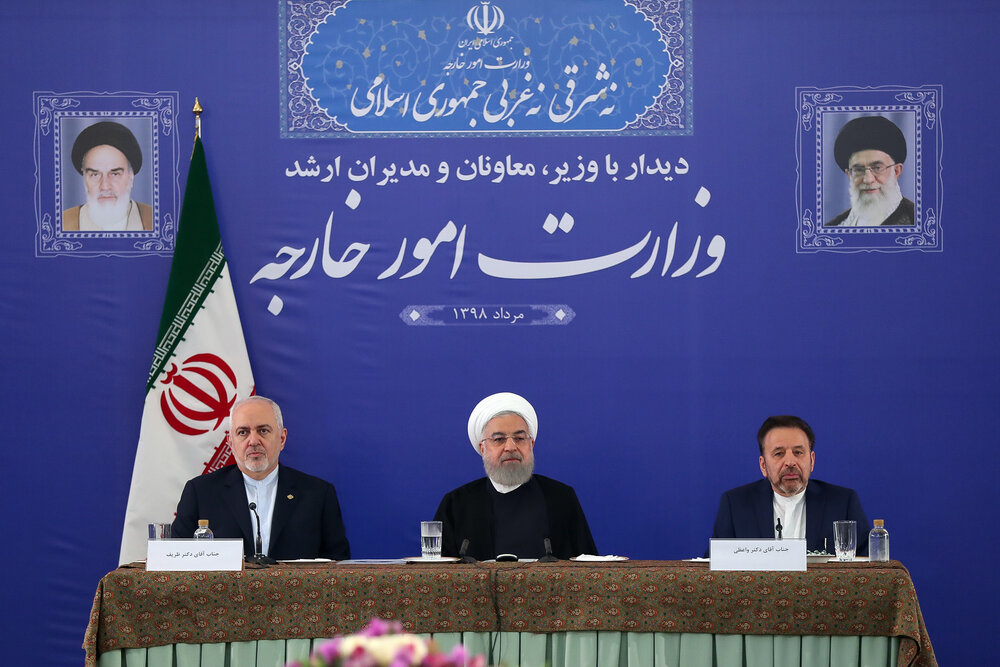
Rouhani says war with Iran will be ‘mother of all wars’ and peace ‘mother of all peace’

TEHRAN – President Hassan Rouhani said on Tuesday that peace with Iran will be “mother of all peace” and war with Iran will be “mother of all wars”.
Rouhani made the remarks as he visited the Foreign Ministry for a meeting with Foreign Minister Zarif, who was sanctioned by the U.S. on July 31, his deputies and other top ministry officials.
“Security for security, peace for peace. You cannot harm our security and expect security for yourself. Peace for peace and oil for oil,” Rouhani said in an open reference to the administration of Donald Trump which has launched an economic war on Iran by banning a total ban against Iran’s oil exports and deployed aircraft carriers, B-52 bombers, F-22 fighter jets, and tens of hundreds of troops in the Persian Gulf region under the pretext that it wants to counter possible threats by Iran.
Rouhani added, “Today, you are aware that we are powerful and capable to do what we have said. You are aware that we shot down your modern drone by missile which was built by Iran in the Defense Ministry of the 11th and 12th governments and shot precisely by the Islamic Revolution Guards Corps.”
Rouhani tells the Trump administration: “Today, you are aware that we are powerful and capable to do what we have said. You are aware that we shot down your modern drone by missile which was built by Iran."
The IRGC shot down an unmanned U.S. surveillance drone on June 20 after it breached Iran’s airspace. The IRGC brought the drone down by firing a surface-to-air missile at it.
“Constructive interaction is basis of foreign policy”
Rouhani also said that constructive interaction is a difficult thing to do and is the basis of foreign policy.
“Confrontation with the world is the easiest thing to do. Insulting and speaking against the world is not a skill,” he said.

“Foreign minister represents the entire Iran”
Pointing to U.S. sanctions on Zarif, Rouhani said that the Iranian foreign minister is more “popular” and “powerful” than ever.
“You have been mistaken if you sanctioned our foreign minister to cause division,” he said.
Foreign minister is the “representative of the entire Iranian nation and not a group or faction.”
In separate statements on July 31, the U.S. Treasury and State Department announced imposition of sanctions against Zarif, a move which was interpreted as a total rejection of diplomacy repeatedly claimed by the Trump administration.

“Trump was right that Iranians never lost a negotiation”
Rouhani also said that Trump was right when he said that “Iranians never lost a negotiation” in a tweet message in July.
He noted that Trump was deceived by his team and he quit the 2015 nuclear deal, known as the JCPOA.
Rouhani added that the Trump administration does not deserve talks for his economic terrorism against Iran.
“They said that they seek to negotiate with Iran without any condition. However, they would have abandoned economic terrorism and become polite if they had been wise enough and sought to negotiate,” the president stated.
Rouhani insisted that the U.S. must remove all sanctions if it seeks to negotiate with Iran.
Rouhani called the U.S. sanctions against Iran an instance of “economic terrorism” and branded those who enforce such sanctions as “criminal” whom Tehran cannot negotiate with.
“If America wants negotiations it must lift sanctions before anything else so that it would not be a criminal against the rights of humans. We cannot talk to a criminal,” Rouhani remarked.
 
The president told Trump, “If you want the path laid out for negotiation you must repent.”
Pointing to Iran’s action in reducing nuclear commitments, he said the timing of the move was right and nobody can criticize Iran legally and politically.
On May 8, exactly one year after the U.S. abandoned the multi-nation nuclear agreement and reimposed sanctions on Iran, Tehran said its “strategic patience” is over and announced a partial withdrawal from some aspects of the pact, saying that the country would no longer adhere to some of the limits on its nuclear activities. It also threatened to step up uranium enrichment if an agreement is not made within 60 days to protect it from the sanctions’ effects.
In follow-up to that deadline, on July 7 Iran announced that it has started enriching uranium to a higher purity than the 3.67% as the Europeans missed the 60-day deadline to devise a concrete mechanism to protect the country from the U.S. sanctions.
“Success in The Hague was greater than Mosaddegh’s”
Rouhani also said the ruling against sanctions in The Hague was more important than the vote for Prime Minister Mohammad Mosaddegh for nationalization of Iranian oil in his battle against Britons in 1952.
Iranian Prime Minister Mohammad Mosaddegh’s government nationalized Iran’s oil industry in April 1951. In September 1951, Britain froze Iran’s sterling assets and banned export of goods to Iran. It challenged the legality of the oil nationalization and took its case against Iran to the International Court of Justice at The Hague.
In July 1952, the ICJ ruled in favor of Iran by a vote of 9 to 5 that it had no jurisdiction in the British-Iranian dispute over oil nationalization.
Rouhani said, “Certain people just see failures. We achieved a success in The Hague court greater than Mosaddegh’s success.”
The Hague-based UN’s top court ordered the U.S. in October 2018 to ease some sanctions against Iran, including those related to the supply of humanitarian goods and the safety of civil aviation.
The ruling was made in response to a plea from Tehran after Washington’s withdrawal from the JCPOA and re-imposition of sanctions against Iran.

“Answering to Obama’s phone call accelerated Geneva agreement”
Rouhani also said that his answer to a phone call by President Barack Obama accelerated the process of reaching the Geneva agreement in 2013.
On 24 November 2013, the Joint Plan of Action also known as the Geneva interim agreement was a pact signed between Iran and the P5+1 countries [China, France, Russia, the United Kingdom, and the United States; plus Germany] in Geneva.

Sunday, August 04, 2019

How to Prevent a War with Iran


The window to change course is still open, but it is closing fast.

President Donald Trump has bought into a maximum pressure strategy that has undermined diplomatic opportunities and brought the United States and Iran to the brink of war. However, there are signs that the president is growing frustrated with the lack of results and is exploring opportunities to re-open the diplomatic window that he has willingly closed. At this critical juncture, the Trump administration still has time to shift from dead-end pressure to serious diplomacy. Fortunately, a number of foreign policy practitioners from both sides of the aisle recently joined together to outline a series of achievable steps that could be taken to reduce the likelihood of war and open up space for serious diplomacy.
To start, the United States and Iran are locked into stiff negotiating positions. Tehran insists it will not negotiate under pressure, while Washington shows no sign that it will back off pressure for Iranian concessions. Given that it was the U.S. decision to violate the nuclear deal in pursuit of maximum pressure that undermined hopes for future negotiations, it is incumbent on the United States to take the first step to open up space for diplomacy. As a result, Washington should suspend recent sanctions it has imposed, including by extending waivers for foreign purchasers of Iranian oil. Doing so would not necessarily be an abandonment of maximum pressure, which has already been demonstrated, but is necessary for Iran to show its bottom line has been met to engage in talks.
In tandem, Iran should welcome the suspension of U.S. sanctions by returning to full, voluntary compliance with the nuclear deal. Such a move would further calm tensions and demonstrate to President Trump that investing in diplomacy could bear further fruit.
Once tensions are calmed by these reciprocal actions, the Trump administration and Iran should capitalize on the opening to engage in serious diplomacy. For the United States, the appointment of a credible and empowered Iran envoy with a mandate to establish clear lines of communication with Iran, and help defuse crises that may arise, is an absolute necessity. Unfortunately, neither John Bolton nor Mike Pompeo have the credibility to engage in serious negotiations with Iran. Both have been chief proponents of sanctions and war who have taken pride in their efforts to sabotage Iran diplomacy. Additionally, reports indicate that Pompeo is reluctant to engage in negotiations with Iran as it could haunt his future political aspirations, which would likely include a run for president in 2024.
As a result, the decision to use Senator Rand Paul as an envoy for backchannel talks with Iran appears to be a wise choice for the interim. Paul has the ear of the president, voted against Iran sanctions and warned Pompeo that he does not have authority for war against Iran. However, given that future negotiations would likely last many months, finding a more permanent envoy to lead Iran negotiations would be necessary.
While far from easy, the lowest hanging fruit for diplomacy with Iran may be a prisoner swap. If such negotiations are already underway, they should be intensified. If not, they should be opened immediately. Such swaps have been negotiated in the past, Iran has hinted both privately and publicly that it is open to such talks, and the president himself has demonstrated an interest in bringing Americans home. Not only does the United States owe it to the prisoners and their families to seriously pursue their freedom, but it serves U.S. interests as it could build confidence for broader diplomacy.
Additionally, while the risks of war with Iran are substantial in several theaters, the numerous recent run-ins in the Persian Gulf underscore the need for an Incidents at Sea agreement between Washington and Tehran. The United States and Soviet Union hammered out such an arrangement to avoid unnecessary collisions and miscalculations at the height of the Cold War in 1972, which succeeded in reducing the number of dangerous naval encounters between the two rivals. Striking such an arrangement with Iran would be feasible, provided U.S. pressure on Iran’s oil shipments are relieved, and help protect international shipping moving forward.
There are roles for other actors, as well. Europe has been caught between a rock and a hard place, committed to keeping the deal alive but limited in its ability to effectively counter U.S. sanctions. Europe should capitalize on a diplomatic opening to enable the trade and economic benefits promised under the nuclear deal, which would help stabilize tensions and prevent backsliding. Moreover, Congress should not bank on the president overruling Bolton and Pompeo to step away from the war track, and must pass legislation ruling out an unauthorized war with Iran.
A U.S. war with Iran is not inevitable. Both nations have demonstrated a desire to avoid a costly conflict even as they engage in escalation. There remain numerous steps that can take the United States off the path to a war that could be far more devastating than the 2003 invasion of Iraq. The president claims to have learned the lessons from that disastrous conflict. Yet, the onus is on him to take the first step and pursue a different track with Iran. The window to change course is still open, but it is closing fast.

Jamal Abdi is president of the National Iranian American Council.
Ryan Costello is policy director of the National Iranian American Council.

Monday, July 01, 2019

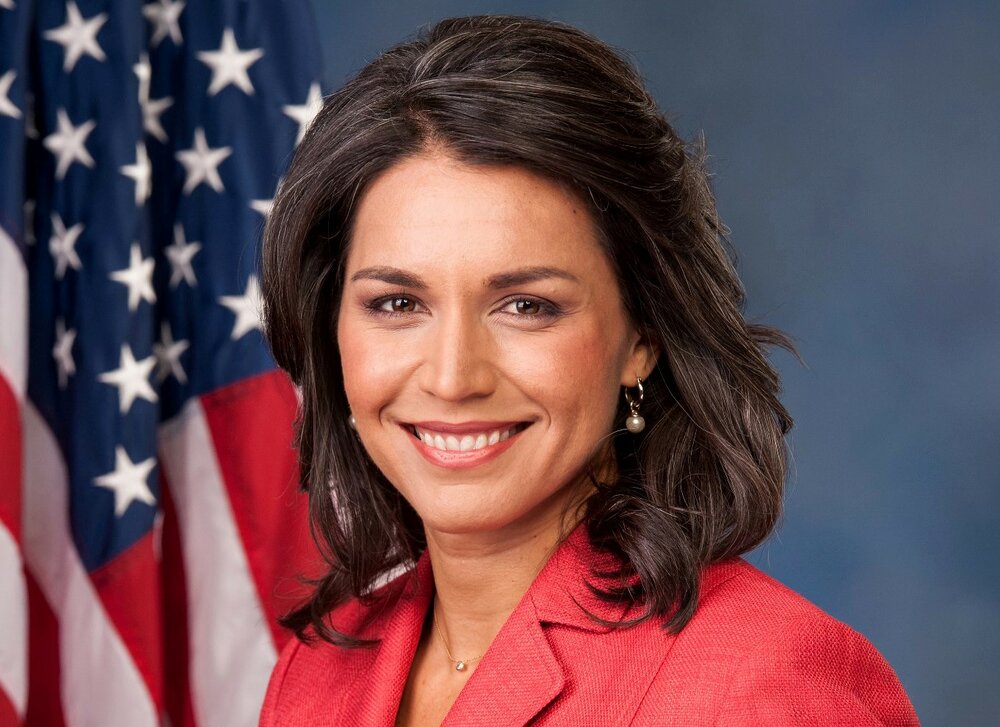
Tulsi Gabbard: Neocons, Netanyahu, and Saudi Arabia have made it difficult for Trump to avoid war with Iran

TEHRAN - Democratic candidate and Hawaii Rep. Tulsi Gabbard has weighed in on foreign policy and her performance in the first primary debate on Thursday’s edition of FNC’s ‘Tucker Carlson Tonight.’ 
Gabbard said a war with Iran would make the Iraq War look like a “picnic,” according to a report of the interview posted on ealclearpolitics.com.
“The neocons in the Trump administration and Saudi Arabia and Netanyahu have created a situation where it's going to be very difficult for President Trump to avoid a war with Iran,” Gabbard said.
“This is why the neocons hate you more than anybody,” Carlson told Gabbard.
Gabbard responded by saying, “We hear a lot of politicians say the same argument that we've got to stay engaged in the world otherwise we'll be isolationists as though the only way the United States can engage with other countries is by blowing them up or strangling them with economic sanctions by smashing them and trying to overthrow their governments.”
“This is exactly what's wrong with this whole premise and the whole view in which too many politicians, too many leaders in this country are viewing the United States role in the world. How about the United States be a leader in the world, work out differences and build relationships with negotiations and diplomacy and finding common interests and seeing how we can work together so that we can stop sending our men and women in uniform into harm's way serving in missions that do not serve the interests of the American people that make our country look less safe and end up causing more harm and more damage to the people in the countries where we wage these wasteful regime-change wars.”
The presidential hopeful added, “A war with Iran would make that war with Iraq look like a picnic. Escalating these crippling sanctions, withdrawing from the Iran nuclear deal, designating Iran's military as a terrorist organization, something unprecedented, and continuing to deploy more and more U.S. troops. The neocons in the Trump administration and Saudi Arabia and Netanyahu have created a situation where it's going to be very difficult for President Trump to avoid a war with Iran.”
“They have built all the building blocks, placed the dynamite and lit the fuse. And it's going to be up to Donald Trump and his leadership whether or not he is going to cut that fuse and say, hey, we need to get back on track and put the interests of the American people in our country first and avoid a war with Iran. Get back in that Iran nuclear agreement.”
Trump has imposed a series of tough economic sanctions on Iran since he pulled out of the landmark international agreement on the country’s nuclear program in May 2018.
Waiting a year for other parties to the 2015 deal to move to save it, Iran responded in May by restricting some of its commitments under the agreement.
Iran has indicated that it will step up nuclear enrichment if it is not protected from American sanctions.
Tensions between Iran and the United States escalated earlier this month after Iran shot down an intruding American drone above its territorial waters in the Persian Gulf.
Facing growing criticism over his policy on Iran, Trump said hours after the drone incident that he had abruptly cancelled a counter attack merely out of concerns for civilian lives.

Friday, March 01, 2019

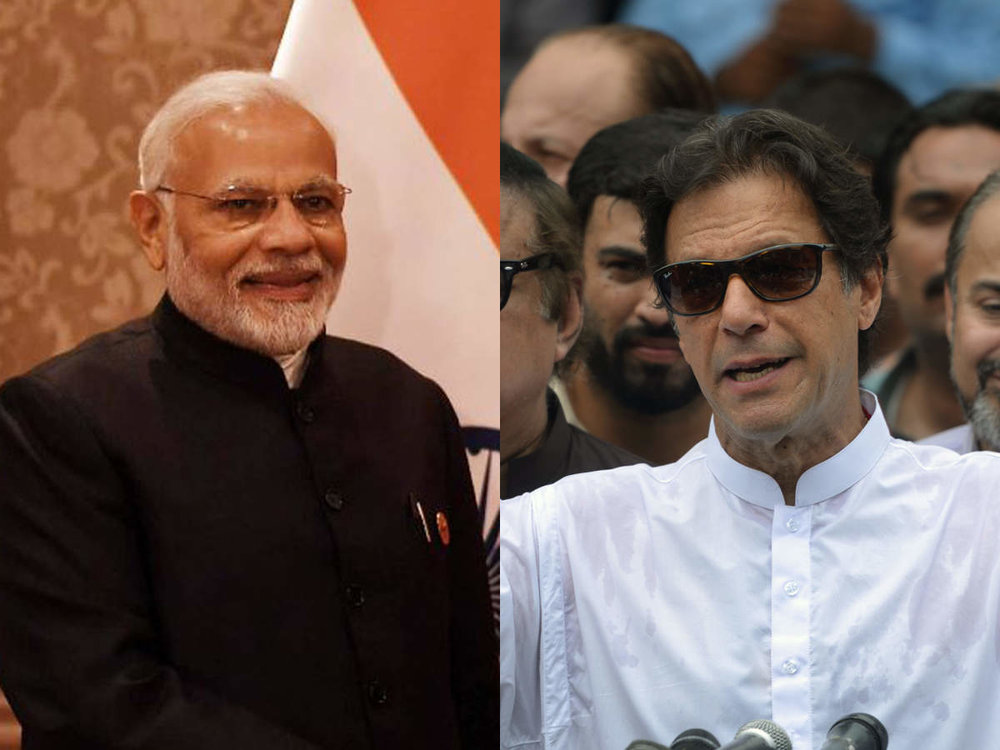
It’s official: India, Pakistan are at war, again

By Syed Zafar Mehdi
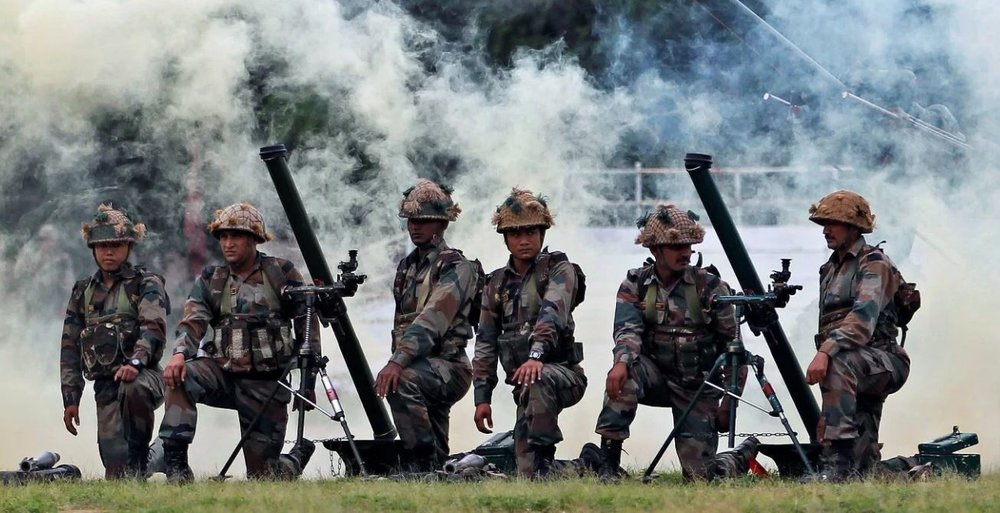
TEHRAN - After days of shrill war rhetoric and saber-rattling, India claimed to have conducted a surgical strike in Balakot, a small hamlet in Pakistan-controlled Kashmir, early Tuesday morning.
Indian government termed it a “non-military, pre-emptive action” against a major terror sanctuary of Jaish e Mohammad (JeM), a terror group that claimed responsibility for an attack in Indian controlled Kashmir two weeks ago, which killed 44 members of India’s paramilitary police force.
More than 200 militants were killed in the precision strike, Indian officials and military analysts claimed from run-of-the-million television studios.
Pakistan debunked the claim and said Indian military planes had violated the Line of Control (LoC), intruding from Pakistan controlled Kashmir, after which “Pakistan Air Force immediately scrambled” and Indian military planes headed back.
Maj. Gen. Asif Ghafoor, spokesperson of Pakistan military, said it was time for India to wait for Pakistan’s “befitting response”, which he said will come “at a point and time of our choosing”.
On Wednesday morning, Pakistan announced that it had carried out air raids in Indian controlled Kashmir and shot down two Indian fighter jets, one of them in central Kashmir’s Budgam district. It also claimed to have arrested one of the Indian fighter jet pilots.
India said three Pakistani combat jets had entered the airspace over Indian controlled Kashmir but made their way back to Pakistan after being intercepted by Indian planes.
At least four airports in northern India have been indefinitely shut down amid fears of a retaliatory attack from Pakistan. On Pakistani side too, preparations are afoot to repel any attack from India.
So, it’s official: the two South Asian nuclear-armed neighbors are at war. The season of madness has begun, and this time India has jumped the bandwagon, seeking ‘justice’ for Pulwama attack.
Amidst this mindless cacophony of war, revenge and retaliation, sane voices on both sides of the border have been calling for restraint and calm. They have urged both warring parties to give peace a chance, while denouncing military adventurism.
Even Pakistan Prime Minister Imran Khan on Wednesday afternoon reiterated that he was bating for peace, because “it was not in Pakistan’s interest to let our land be used for terrorism”.
He said the “sole purpose” of Pakistan’s retaliatory attack was to “convey that if you come into our country, we can do the same”, he said while addressing the nation.
However, he added that it was important to “use our heads and act with wisdom”. “All wars are miscalculated and no one knows where they lead to. World War I was supposed to end in weeks, it took six years,” the Pakistani premier said.
“I ask India: with the weapons you have and the weapons we have, can we really afford such a miscalculation,” he said. “If this escalates, things will no longer be in my control of in Modi’s.”
Interestingly, the strike comes barely two months ahead of general elections in India, with Narendra Modi seeking another term as prime minister. War frenzy, experts say, gives him a clear advantage.
But, what Modi and his right-wing fan-boys, shamelessly cheerleading for war, don’t understand are the catastrophic implications of a full-blown war between the two nuclear powers.
According to a 2007 study by researchers from Rutgers University, University of Colorado-Boulder and University of California, if India and Pakistan fought a war detonating 100 nuclear warheads, more than 21 million people will be killed, about half the world’s protective ozone layer would be destroyed, and a ‘nuclear winter’ would devastate monsoons and agriculture worldwide.
This death toll would be 2,221 times the number of civilians and security forces killed in India over 9 years to 2015, according to an IndiaSpend analysis of South Asia Terrorism Portal data.
Also, two billion people worldwide would face risks of severe starvation due to climatic effects of the use of nuclear weapons in the subcontinent, according to 2013 study by International Physicians for Prevention of Nuclear War.
Taking that into account, since the news about India’s surgical strike broke out early on Tuesday, social media has been abuzz with people denouncing war and calling for restraint.
Prominent filmmaker and activist Anand Patwardan in a Facebook post said “war, violence and hate” are always in the interest of ruling class.
“Before elections there will be a terror attack. There will be retaliation. There will then probably be counter-retaliation and so on and on. War, violence and hate is what rulers need to survive. But we in India and in Pakistan, must survive our rulers,” he wrote.
Kashmiri journalist and writer Murtaza Shibli said it was ‘frightening’ to see calls for ‘retaliation’.
“I am watching with utter fright that now a large number of Pakistani commentators, including many of my friends, are calling for escalation through counter attacks on India. Are we sleepwalking into a disaster,” he wrote. “I sincerely hope there is deep introspection and that Pakistan will chose diplomatic space than war as the only option.”
Pakistan’s former envoy to U.S. Hussain Haqqani took to Twitter to express his anxiety over heightened tensions between the two warring nations.
“War is never the solution. India and Pakistan must de-escalate, including on the propaganda front. Time also for serious Pakistani action against LeT and JeM terrorists,” he wrote.
Noted Pakistani writer and commentator Raza Rumi reminded the two countries of the ‘ramifications’ of military escalation.
“The prospect of war between nuclear India and Pakistan is chilling for if it gets out of hand, it can have ramifications for the world. There is urgent need for dialogue and finding a common ground rather than threats and counter threats. Why can’t the PMs and Army Chiefs call and talk,” he wrote.
Indian writer and political analyst Sudheendra Kulkarni called for ‘summoning shared civilizational wisdom’ to avoid another war.
“The best 'war' is one in which no bullet, missile or bomb is used. The best 'war' is one in which both countries are winners, & no side is a loser,” he tweeted. “Can India & #Pakistan not fight such a war-less 'war' to eliminate terrorism by both summoning our shared civilisational wisdom.”
Samarth Pathak, who works with a UN agency in New Delhi, said in the end, a soldier’s family appreciates national calls for peace and restraint, more than war-thirst and jingoistic appeals for revenge.
“Which war in history has resulted in lasting peace and a complete end to violence? It is a question worth pondering on, in these times of instant TV/social media patriotic gratification,” he wrote.
A Twitter user Sarmad Palijo said war can never be a solution. “Everyone is talking about revenge. I refuse. I don’t stand with war. War is devastating. War is immoral. War is unjust in almost all conditions. We can stand tall by refusing to retaliate. We can show the world how it’s done. Stand down and stand with peace,” he wrote.
Another user Nuzhat Siddiqi, taking a jibe at New Delhi and Islamabad, said two nations with issues of climate change, species depletion, food and water scarcity, population boom, malnutrition, infant mortality, various cancers and AIDS issues, natural resource exploitation and crippling poverty “need war urgently to fix everything”.
The message is loud and clear: war has very few takers in the region. It may help politicians gain power, but it renders everyone else powerless and helpless in a state of misery and despondency.

Thursday, February 28, 2019

India and Pakistan on the warpath again

By Sanjay Kapoor

TEHRAN - On February 14, a suicide bomber rammed his explosives-laden vehicle into a convoy of para-military police force returning to trouble-torn Kashmir valley. When the haze cleared after the earth-shaking blast, the survivors of the large convoy carrying 2500 soldiers found only the mangled remains of what was a bus carrying 41 of their colleagues.
The suicide bomber, a Kashmiri national, in a recorded video claimed to be a member of Jaish-e-Muhammad, a Pakistan based militant organization responsible for many attacks at Indian installations.
Angry protesters baying for Pakistan’s blood have spilled over to many cities of the country. Social media too is on fire. The general view was not whether there would be war between the two nuclear-armed neighbors or not, but when.
Pakistan Prime Minister Imran Khan has denied India’s allegations of his country’s involvement in the terror attack and promised to retaliate if India decides to attack his country. Khan promised to probe the attack from his side if any evidence was shared with his government by Delhi. He has accused Indian Prime Minister Narendra Modi of using the terror attack to win parliamentary elections a month from now.
Modi has handed over the responsibility of taking a decision on the time, place and scale of the response to the terrorist violence to the Indian Defense Forces. The big question is: Can the armed forces really take a decision on attacking Pakistan, which would have serious geo-political and domestic implications at a time the country is going for elections? Indian elections take place in April/May.  
Tensions between India and Pakistan have escalated in recent years- aggravated after each militant attack in the violence-racked states of Kashmir and Punjab.
Evidently, terror attacks are milestones of this blood-spattered journey of the ties between the two neighbors that couldn’t really reconcile to their post-partition identities.
Pakistan decided to be the Islamic Republic, and India chose to go secular- now being challenged by the Hindu right wing that is in power.
India and Pakistan have fought three big wars and hundreds of border skirmishes since the two countries were partitioned on August 15, 1947.
When they are not fighting, the two sides have played cricket, and Pakistani artists have sang together with Indians. Many times in the 70 years post- partition history, there have been periods of peace and bonhomie. As Minister of State for Foreign Affairs, General V K Singh candidly pointed out that there was peace in the Kashmir valley when the UPA was in power until 2013.
When the BJP won the elections in 2014, there was initially a lot of hope in the valley, but thereafter the situation began to rapidly slide. The nub of the problem is in the way the administration had been configured by the central government in Kashmir. The BJP followed a two-track approach, on the one hand, they formed a coalition government with a regional party considered to be close to those who want freedom or azadi from India.
On the other hand, they used the army and security forces to come down heavily on the restive youth. Pellet guns were used against the protesters that maimed hundreds of youth and caused international outrage. The reaction that followed saw a rise in homegrown terrorists with a leader of a militant outfit, Burhan Wani, getting killed in an encounter.
Wani’s death is considered to be the turning point when it comes to the rise in homegrown militancy in recent years. Since then, more and more young people have joined terror outfits with their bases in Pakistan.
In 2016, four armed militants attacked the Indian army’s cantonment at Uri in Kashmir, and 19 Indian soldiers died in it. Similar to the public protests that are sweeping the country now, at that time the BJP’s supporters demanded firm action against Pakistan for sending these terrorists to India.
A few months after the incident, the Indian army launched a surgical strike hitting at alleged terrorist bases across the border. Pakistan again denied that the Indian Special Forces had attacked any installations on their soil.
The terror attack was followed by a “surgical strike” which was converted into a Bollywood film that did very well at the box office, with many of the BJP ministers joyfully mouthing the film’s dialogue like “how’s the josh” (enthusiasm).
The success of the film “Uri” also reflected the nationalist fervour that the BJP and its front organisations had been able to create in the country.
Quite expectedly, when the Pulwama attack took place, there was a bewildering mobilization of those who wanted Pakistan to be punished for the incident.
The Congress party, which is putting up a spirited challenge to the BJP in the last few months, was the target of the attack. Photoshopped images of Congress President Rahul Gandhi in the company of the Pulwama bomber, and his sister Priyanka in the company of Pakistan Army Chief General Bajwa, began to circulate on Facebook and Whatsapp. These images were challenged by fact-checking websites.
In the coming weeks, India’s Election Commission will announce the date of the elections. The ruling BJP will try to ensure that its supporters continue to have “josh” (enthusiasm) on issues of nationalism, and are not swayed by the opposition demanding answers on alleged corruption in the purchase of the Rafale jet fighter from France, or “ jobless growth.”
Modi was seen to be in a corner until the recent terror attack provided him and his party with an opportunity to shut the opposition up, and harp on the issue of the threat of terrorism from Pakistan. Harping on Islamic terrorism is the BJP’s comfort zone, as it also brings about majority consolidation and dis-empowers the Muslim minority of 19% in the country, which traditionally supports the Congress party.
The BJP, which was on the threshold of losing the Parliamentary elections, may have gotten a new lease on life after the Pulwama terror attack. If India indeed goes to war during this electoral period, then opposition parties would be hard put to weave a narrative that gets them back into the reckoning.
Author is a New Delhi based journalist and author, editor of Hard News magazine.

Sunday, January 13, 2019

India hits back at Pakistan PM, says offers for dialogue ‘not serious’

TEHRAN - The blame games continue between India and Pakistan, as the two estranged South Asian neighbors accuse each other of creating roadblocks for peace process.
On Friday, India hit back at Pakistan Prime Minister Imran Khan that the Indian government was unresponsive to his peace overtures, saying Islamabad’s offers for dialogue were not serious.
At a media briefing in New Delhi, India’s foreign ministry spokesman Raveesh Kumar said Pakistan’s attempts to mainstream terrorist groups operating from its soil belied claims of Khan.
Citing instances of Pakistani ministers meeting “proscribed terrorists” and expressing support for them, the spokesperson said if Pakistan is ready for talks it should take action against the terror groups.
The remarks were in response to Khan’s interview to a Turkish media group earlier this week, where he said India was not responding to his peace initiatives and that any war between two nuclear-armed nations would be suicidal.
In the interview, Khan expressed his desire for talks with India. He said that even a Cold War was not in the interests of the two countries.
“Two nuclear-armed countries should not even think of war; not even a Cold War because it could worsen any time. The only way is bilateral talks. Two nuclear-armed countries at war is like a suicide," he was quoted as saying.
He said that India did not respond to his peace overtures. India has been maintaining that terror and talks cannot go together. "India was offered to take one step towards and we shall take two. But India rejected Pakistan's offer for talks several times," Khan said.
Khan also said that India would never be able to suppress the rights of the Kashmiri people
Responding to his remarks, India’s foreign ministry posed a series of questions to Khan and his government noting that even before Khan was sworn in as the prime minister in August, Prime Minister Narendra Modi had called him and congratulated him on his election win.
“When they say they are ready for talks, then why do their ministers share platform with internationally designated terrorists. There have been many instances in the past few months when their ministers have shared a platform with such people,” Kumar asked.
“If Pakistan is ready for talks then why no action has been taken against terrorists involved in the (2008) Mumbai and (January 2016) Pathankot terrorist attacks,” he said, adding, organisations such as the JuD and its charity front, the Falah-i-Insaniyat Foundation (FIF), were no longer on the list of proscribed organisations after an ordinance banning them lapsed.
“It is clear that the explicit support that banned organisations used to get from Pakistan is still continuing. There has been no change in that,” Kumar said. “So this statement that they want to have talks, there is no seriousness in it and it should be backed up by some action.”
Responding to questions on Afghanistan and whether India had changed its policy vis a vis talks with the Taliban, Kumar said India’s position was “very clear and consistent.”
“We have said in the past that we support the peace and reconciliation process in Afghanistan. We have also said that we support the process which is inclusive in achieving this goal,” he stressed.
Indian army chief Bipin Rawat’s last week said that India should consider talks with the group that controls large area of the war-ravaged country. His comments coincided with a visit of U.S. special envoy for Afghanistan Zalmay Khalilzad to New Delhi.
“Many (countries) are engaging with Taliban for having peace. We should engage unconditionally to the extent of having a sense as to what is happening. India has contributed immensely to peace in Afghanistan and plans to do so.”
“We have interests in Afghanistan. We can’t be out of the bandwagon,” he said.

Wednesday, January 02, 2019

Mohammed bin Salman's awful year

By Bruce Riedel
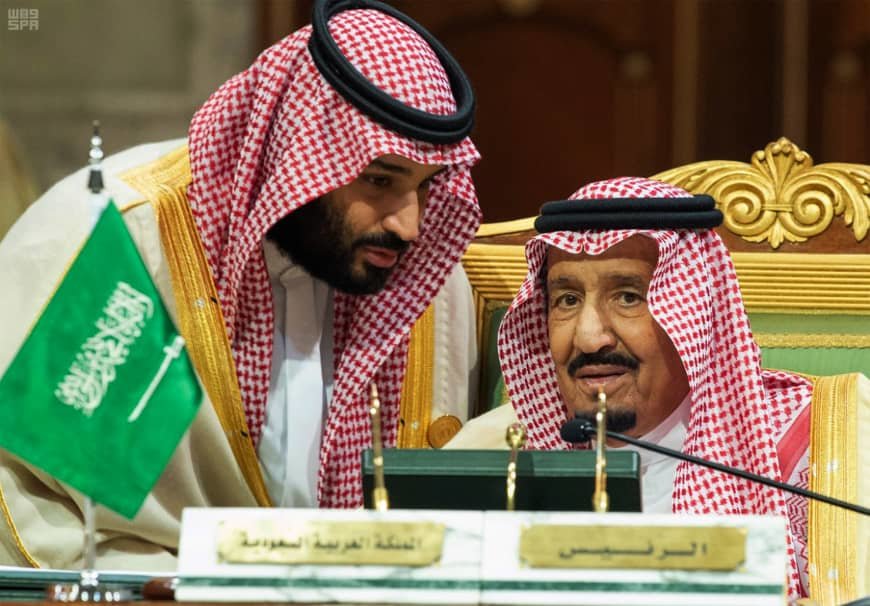
Saudi Arabian Crown Prince Mohammed bin Salman has had a tumultuous 2018. He has gone from being hailed a revolutionary who would bring a Saudi Arab Spring to being censured unanimously by the U.S. Senate for the premeditated murder of Jamal Khashoggi. The 33-year-old crown prince is now increasingly regarded as a dangerous and reckless despot implicated in war crimes and mass starvation. The Congress and media are likely to be more hostile in 2019. It has been a stunning fall from grace.
The crown prince began the year with highly touted visits to the United Kingdom and the United States. Empowered by an expensive lobbying campaign and public relations machine, the visits attracted enormous attention. In England he was received by Queen Elizabeth II and the prime minister. The UK provides about one-third of the Royal Saudi Air Force’s inventory of aircraft and there was talk of a big new arms deal.
The tour of the United States was almost three weeks long in March and April. At the White House the president welcomed the prince with big photos of America’s latest arms deals and urged him to buy more American weapons. His trip took him to Cambridge, Wall Street, Seattle, Hollywood, Silicon Valley and Houston. Oprah Winfrey, Michael Bloomberg, Bill Clinton and a host of other celebrities had their picture taken with the prince. In Texas he met with the two Bush presidents. Extravagant deals were promised to invest in Saudi Vision 2030, the prince’s plan to reduce Saudi dependence on oil and reform the economy and society. Only a handful of critics urged caution in embracing the impulsive prince.
The crown prince’s survival is solely in the hands of his father. The king has dismissed two crown princes in his four-year reign but seems determined to stand by his son. So the kingdom may be burdened with a pariah for years to come. This will be the year it all went bad for the crown prince and the kingdom.The crown prince’s appeal was in part his much-needed program of socio-economic change highlighted by giving women driver's licenses. But a big piece was the promise that he was going to be softer on Israel than the traditional Saudi posture. In particular the Saudi prince was said to favor Jared Kushner’s much-discussed “deal of the century” to resolve the Israeli-Palestinian conflict. The evidence for this was always slim.
In any case, King Salman bin Abdul-Aziz Al Saud quickly made clear that he was not on board for any alterations of the Saudi positions regarding Palestinian rights, the two-state solution and especially the status of East Jerusalem. In virtually every public appearance in 2018, the king has been clear that the Saudi priority is Palestinian statehood with its capital in Jerusalem. The recent Saudi announcement of a consortium of Red Sea states to promote security in the vital shipping lanes notably did not include Israel. The covert contacts between Israel and Saudi Arabia have, not surprisingly, cooled since Khashoggi’s assassination, according to the media.
Yemen got little attention during the crown prince’s parade from coast to coast, but behind the scenes opposition to the Saudi coalition’s war was building in the Senate. Led by Sen. Chris Murphy, D-Conn., the opposition sought an end to America’s support for the Saudi war effort. The United Nations says 16 million Yemenis are now at risk of malnutrition. It is the worst humanitarian catastrophe in the world. It’s also Mohammed's signature policy initiative.
If the war is not headed for a comprehensive cease-fire by early January, the Hill is likely to take further action to sanction the crown prince and end American involvement in his war. The president will try to defend his favorite Saudi, but Trump's own mounting legal difficulties will make him a weak defender.
The crown prince’s reputation is toxic. There is no simple way to restore it. More likely is further malfeasance as he gropes with his troubles. Canada, another victim of his temper tantrums in 2018, is considering canceling a $15 billion weapons sale to the Saudi Arabian National Guard. If Ottawa does so, it will be the largest arms deal ever canceled with the kingdom.
The resolutions on the Hill and the debate in Ottawa are primarily about symbols. But the symbolism is powerful. The crown prince’s survival is solely in the hands of his father. The king has dismissed two crown princes in his four-year reign but seems determined to stand by his son. So the kingdom may be burdened with a pariah for years to come. This will be the year it all went bad for the crown prince and the kingdom.
The consequences will be long-standing. The American security blanket has been the kingdom’s crucial alliance for 75 years. It has saved it from Nasserism, the Soviets, Saddam Hussein. The Saudis need Washington much more than Washington needs Saudi Arabia and its oil.
The funeral of former President George H.W. Bush offered another poignant symbol. The ranking Arab leader in attendance was King Abdullah II of Jordan. His father, King Hussein, was vilified by the Saudis in 1990 and 1991 for his stance on Iraq’s invasion of Kuwait. But it was Abdullah at 41’s funeral, not the crown prince.
(Source: Al Monitor)