On May 8, 2019, which was the anniversary of the US withdrawal from the Iran nuclear deal, Iran announced that it would reduce its commitments on a step by step manner until it finds a balance between obligations and gains. Iran took this decision after the Europeans failed to fulfill their commitments.
On November 6, Iran took its 4th step in reducing its nuclear commitments. But what exactly was this 4th step, and Why does it matter?

News And Views
Showing posts with label 2015 Iran nuclear deal. Show all posts
Showing posts with label 2015 Iran nuclear deal. Show all posts
Friday, November 22, 2019

Thursday, November 21, 2019
JCPOA Saga: Iran Will Act if the Lame E3 Doesn’t

Ever since the US’ unilateral exit from the 2015 Iran nuclear deal, known as JCPOA, the EU members of the deal – France, Britain and Germany (E3) – have been trying to find ways to salvage the deal. The E3 first restored to ‘defying’ the US and created a so-called “special purpose vehicle” called INSTEX for Europe-Iran trade. Ever since then, they have failed to operationalise it, mainly out of their inability to actually defy the US and adopt an independent policy. At the same time, the economic benefits that Iran/Iranian economic market offers to Europe are abundant and too big for Europe to ignore. Europe is, therefore, in a fix. It recently threated Iran with invoking the dispute mechanism of JCPOA to resolve the issues related to Iran’s implementation of JCPOA, but it can hardly do so—and Iran knows it—unless other members of JCPOA i.e., Russia and China agree to it; hence, the E3’s dilemma whereby it can neither force the US to lift sanctions on Iran or force Iran to not resort to what is a legitimate course of action even according to the terms and conditions of the deal.
One important reason why Europe, unlike the US, continues to somehow cling to the deal is the economic potential Iran offers for the Europeans. For instance, as the latest available data indicate, the total value of Europe’s technology—industrial equipment and machinery— related exports to Iran have reduced by almost 50 per cent. Before the US sanctions resumed in November 2018, Europe’s average monthly technological export stood at US$970 million, falling to an average of US$433 million in 10 months subsequent to the sanctions. The continuing trade despite sanctions is between European companies and Iran’s private enterprises not covered under the US sanctions. Another worrying thing for Europe is that even a small decline in their exports to Iran is readily filled by China, which sees Iran as a key territorial link towards westward expansions of its Belt and Road Initiative (BRI). Chinese expansion in terms of providing Iran with crucial industrial equipment and machinery is especially worrying some for Europe because Iran, ever since its last major industrial transformation in early 2000s, has been a buyer of European technology. While dependence on European technology may make it difficult for Iran to rapidly distance itself from Europe, Iran’s recent actions indicate that between industrial path-dependency and economic survival, it will choose the latter imperative; hence, Iran’s continuing distancing from JCPOA because of E3’s non-compliance.
Accordingly, on November 7 Iran announced that it has begun refining uranium at Fordow, a secretive site built inside a mountain to the north of the holy city of Qom, leading the E3 to criticise this step and linking it with (real or imaginary) “severe proliferation implications.” Iranian response, however, sounded not only adequately strong but potentially defiant. On November 11, Iran’s envoy to the United Nations Ali Nasimfar said in categorical words that “ Iran alone cannot, shall not and will not take all of the burdens anymore to preserve the JCPOA, adding further that “If timely adequate, serious and practical measures are not taken by other JCPOA participants, Iran will be forced to exercise its right under the JCPOA Paragraphs 26 and 36 to further limit the implementation of its commitment every 60 days.”
The reason why Iran remains defiant in the face of EU despite knowing that the EU might hit back with its own sanctions is the support it continues to receive from Russia and China. When Macron recently visited China and discussed with the Chinese the JCPOA, he was forced to emphasise, yet again, the need to lift some of the US sanctions to open a path of dialogue, adding that any pressure on Iran to force it to return to full compliance with JCPOA “must be accompanied by an easing of some [US] sanctions”, meaning thereby US unilateralism could not be hoped to ease the situation.
Russia, too, remains a critics of the E3’s position on JCPOA. Russian foreign ministry spokesperson, Maria Zakharova, recently said in an interview that “European partners” have “showed an inability to guarantee the conditions proposed to Iran.”
This support is in addition to the support Russian continues to provide Iran in developing its nuclear power plant capacity. On November 10, just when the E3 were gearing up to meet next day to consider Iran’s actions and issue their warning, Russia and Iran began pouring concrete for a second reactor at Iran’s sole nuclear power plant in Bushehr on the Gulf coast, sending a clear message to both the E3 and the US, and compounding the E3’s ‘to be or not to be’ nuclear-deal dilemma. No matter what actions E3 might take, Iran will continue to act in a way that suits its interests.
Salman Rafi Sheikh, research-analyst of International Relations and Pakistan’s foreign and domestic affairs, exclusively for the online magazine “New Eastern Outlook”.
Friday, November 08, 2019
Malaysian PM Dr. Mahathir: No Country Can Impose Sanctions on Other Countries
By Press TV

Malaysian Prime Minister Mahathir Mohamad says his country cannot carry out trade with Iran, one of its big trading partners, as a result of Washington’s unilateral sanctions against Tehran, noting that US bans on Iran contravene the United Nations’ provisions.
Mahathir made the remarks while speaking at a press conference on the sidelines of the 35th ASEAN Summit and Related Summits in Thailand on Sunday.
“There is no provision in the United Nations that a country, which is dissatisfied with another country, can impose sanctions on that country and other countries trading with that nation,” the Malaysian prime minister said, while criticizing the inhibitory impact of US unilateral sanctions against Iran on Kuala Lumpur’s trade with Tehran.
He also dismissed applying sanctions against countries as an act “against the law.”
“The sanctions don’t apply to one country alone,” he said, adding that Malaysia is now being sanctioned.
The Malaysian premier further criticized those who “talk so much” about the rule of law, rule-based trade and relations, but fail to adhere to their own principles without singling out any country.
Mahathir’s remarks came amid reports denoting that banks in Malaysia are closing the accounts of Iranian individuals and companies, in what is believed to be a measure linked to sanctions imposed by Washington against Tehran after the former left the landmark Iran nuclear deal, officially known as the Joint Comprehensive Plan of Action (JCPOA).
Since quitting the JCPOA, US President Donald Trump has been running what he refers to as a “maximum pressure” campaign, which seeks to pressure Iran into negotiating a new deal that addresses its ballistic missile program and regional influence.
The spokesman for Iran’s Foreign Ministry said on Thursday that the country’s embassy in Malaysia is doing its best to solve problems resulting from banking restrictions considered for Iranian nationals by some financial institutions in Malaysia.
Mousavi said,
“Unfortunately, under the influence of the United States’ economic terrorism, some Malaysian banks have considered restrictions for opening accounts and providing services to Iranian nationals.”
Malaysia has maintained good diplomatic relations with Iran despite sanctions Washington imposed against Tehran. Iranian Foreign Minister Mohammad Javad Zarif made an official visit to Kuala Lumpur in August on the last leg of his three-nation Asian tour, which also took him to China and Japan.
Time Is Running Out to Salvage the Iran Nuclear Deal
By Sarah Abed

This week, Iran’s atomic energy authority confirmed it would commence enriching uranium past the 3.67 percent cap to 5 percent at its Fordow plant starting Wednesday. This is Tehran’s fourth step in scaling back its commitments under the 2015 Iran Nuclear Deal also known as the Joint Comprehensive Plan of Action (JCPOA) in response to the US’s unilateral withdrawal last year, and consequently imposing crippling sanctions, as well as Europe’s inability to offer relief, as was promised.
Tehran plans on continuing to scale back its commitments every sixty days till the United States returns to the deal or European nations can provide adequate sanctions relief. Iranian officials have stated that these steps are entirely reversible. The United States loves to harp on these symbolic moves meant to pressure the United States into returning to the JCPOA, as being grave steps in the wrong direction, when ultimately the first and most serious offense was taken by the Trump administration when they withdrew and started to impose sanctions on Iran.
Although the European members that are part of the deal are still committed to its implementation and have suggested measures to help ease suffering under the sanctions, not enough is being done to pressure the United States into lifting sanctions which is Iran’s requirement prior to negotiations.
The JCPOA is flawed in its inadequate dispute settlement process, when a party leaves the deal (as did the United States) Iran’s only option is to return to the pre-deal situation. Hoping that a better solution would present itself Iran stayed in compliance for an entire year after President Trump unilaterally withdrew.
US Secretary of State Mike Pompeo in his usual hysterical manner is accusing Iran of preparing for a “rapid nuclear breakout”. Completely dismissing how and why we got to his point. The United States set the stage for this downhill escalation by withdrawing from the multinational deal and applying crippling sanctions made to destroy the country’s oil industry and reduce exports to zero.
What did the Trump administration expect to happen by making conditions unbearable, and by trying to collapse Iran’s economy, government, and society and unsuccessfully force “regime change”? Brutal compounded sanctions have been affecting the most vulnerable members of society, with even food and medicine feeling the harsh effects of Washington’s “maximum pressure campaign”.
With tensions high and frustration looming, each scale back raises concern that the European signatories might see it as crossing the red line and therefore killing the deal, which only the United States is in favor of.
President Trump recently signed sanctions waivers for China and Russia and Europe to continue to assist Iran in its peaceful nuclear development. These periodic waivers grant exemptions from US sanctions against Iran and allow foreign companies to collaborate on civilian nuclear programs with Iran’s Atomic Energy Organization. Some believe that this might be a sign that President Trump wants to negotiate a deal with Iran, which he certainly can, if he lifts sanctions first.
On Thursday, Iran claimed that an International Atomic Energy Agency (IAEA) inspector was prohibited from entering the Natanz facility after a detector for explosive nitrates went off. While officials were looking for a female to search her, the inspector went into the bathroom and when she returned, she no longer tested positive, sparking concerns of foul play.
In response to failure by European signatories (Britain, France, and Germany) to fulfill their obligations under the Nuclear Non-Proliferation Treaty (NPT) and countering crippling sanctions imposed by the Trump administration, some influential Iranian figures are advocating for Iran’s departure from NPT. They are stating that these nations have failed to establish an adequate financial structure to enable companies to trade with Iran while US imposes harsh sanctions.
There’s a difference of opinion between Iran’s President Hassan Rouhani and other Iranian figures about whether Iran should remain in the NPT. President Rouhani and the government of Iran are of the opinion that it would not be in Iran’s best interest to withdrawal whereas others say that Iran is not benefiting from its membership in the NPT and point out that India, Pakistan, and Israel are not part of the NPT and North Korea is continuing on a path of acquiring a nuclear arsenal.
It’s worth mentioning that Supreme Leader, Ayatollah Ali Khamenei has issued a fatwa or religious order against the country having nuclear weapons. Iranian figures have also stated numerous times that it is not Iran’s intentions to develop nuclear weapons. Little trust or interest remains in having dialogue with the United States, especially with the open hostility that’s become the norm in Washington towards Iran.
Europe and specifically France has proposed options to help with sanctions relief such as a $15 billion dollar line of credit and INSTEX but neither has been implemented. INSTEX was set up as a payment channel by the UK, Germany and France to help Iran continue to trade and circumvent US sanctions. Without proper implantation, Iran will be taking its fifth step away from the JCPOA commitments, and this is all meant to pressure these nations to resolve the current situation. Each measure that Iran takes is calculated and reversible, but of course with each step comes the risk that other members will follow the US’s move and withdrawal from the deal.
The decision to inject uranium gas into centrifuges in the underground Fordow facility along with the previous three steps taken by Iran are meant as a wakeup call to the signatories. Iran can’t be expected to unilaterally fulfill its obligations while other parties renege on theirs. By taking these measures Iran hopes to send a strong and serious message that all other parties must come back to the deal, before it’s too late.
*Sarah Abed is an independent journalist and political commentator. Focused on exposing the lies and propaganda in mainstream media news, as it relates to domestic and foreign policy with an emphasis on the Middle East. Contributed to various radio shows, news publications and spoken at forums.
Tuesday, October 22, 2019
Can Imran Khan Mediate The Persian Gulf Crisis?
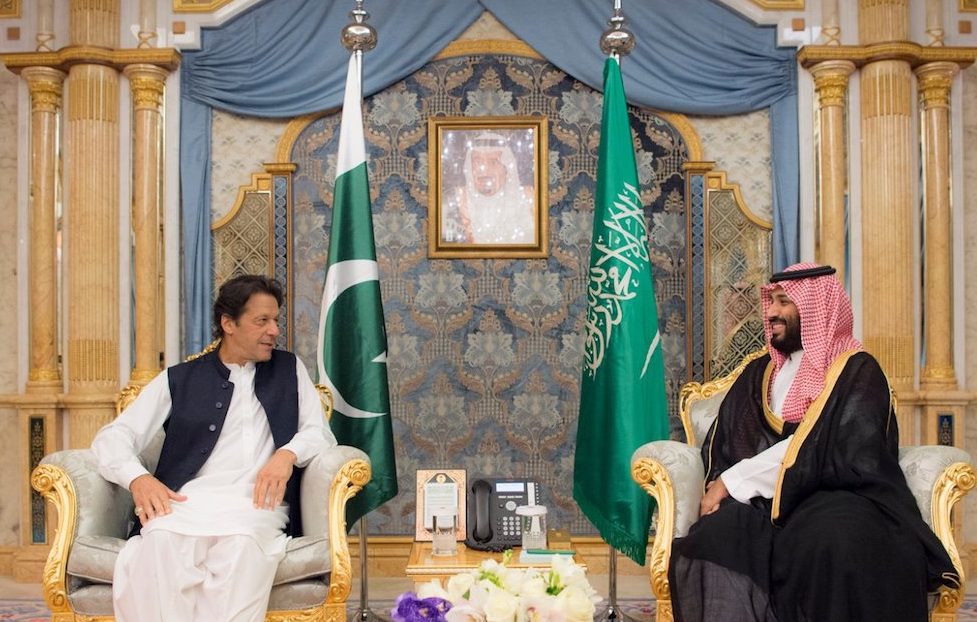
Pakistani Prime Minister Imran Khan and Saudi Crown Prince Mohammad bin Salman
by Fatemeh Aman
In recent days, Pakistani Prime Minister Imran Khan has visited both Iran and Saudi Arabia amid reports that he’s been asked by U.S. President Donald Trump to mediate between the two Persian Gulf rivals and, potentially, between Iran and the United States. To better understand Khan’s potential role and what it might mean for Pakistan and the Middle East-South Asia region, LobeLog turned to our South Asia expert, Fatemeh Aman, to get her thoughts.
Q) There have been reports that Saudi and U.S. officials asked Pakistani Prime Minister Imran Khan to mediate between the Trump administration and Iran. If true, do you consider Khan well-placed to mediate between Iran and the U.S.?
A) The reports seem to be credible. According to Khan, Donald Trump has asked him to “try and be a go-between with Iran and the United States.” There are two possibilities here. Either Trump’s suggestion was one of those impulsive decisions he frequently seems to make only to later walk back, or he genuinely meant it. Either way, I don’t think he intends for Khan to be a reasonable mediator. Relations between Iran and the United States are very complicated and yet could be improved easily. Trump’s so-called “maximum pressure” campaign against Iran, imposing crippling sanctions on the Iranian economy, have had the exact opposite of their intended effect. They have worsened Iran’s behavior and brought the entire region close to a catastrophe. It has radicalized some of Iran’s moderate positions and strengthened hardliners in Tehran. In fact, according to a new poll, the IRGC is becoming more popular than before and hardliners more acceptable to the Iranian public.
There was a clear solution to the issue of Iran-U.S. relations, which unfortunately was killed by the Trump administration. By that I mean the 2015 Iran nuclear deal (Joint Comprehensive Plan of Action or JCPOA). But back to Khan’s possible mediation efforts between Iran and the United States, what Trump probably had in mind was just for Khan to arrange a meeting with Iranian leaders, similar to the attempt to bring Iran Foreign Minister Javad Zarif to the White House for publicity purposes, which apparently was rejected by Zarif.
Q) Meanwhile, there are increasing hints that Saudi Arabia and Iran are moving to some kind of détente. Pakistan would presumably serve as a kind of interlocutor in that case as well. Is there any evidence that Pakistan is playing a role, if indeed such a détente is underway? Is Khan well-placed to facilitate that process? Why, or why not?
A) Either India or Pakistan would have been very suitable for mediation. Indian Prime Minister Narendra Modi has chosen not to get involved. In this he mirrors past Pakistani PMs, who have also chosen not to mediate between Riyadh and Tehran. But Khan is different. He is well-liked both in Iran and in Saudi Arabia and is perhaps the most suitable person to mediate between those two countries. He’s talked of the need to improve Iran-Saudi relations from the very beginning of his term last August. He and his party, the Pakistan Tehreek-i-Insaf (PTI), were against the Yemen war and Pakistan’s participation in it. The PTI even opposed the appointment of retired Pakistani General Rahee Sharif to lead the Saudi-led Islamic Military Alliance to Fight Terrorism (IMAFT) coalition.
The rivalry between Iran and Saudi Arabia has impacted both countries’ neighbors. It has fueled the rise of violent extremism, a decline in tolerance, and proxy wars, and these have all destabilized the Middle East and South Asia. No regional player has been untouched by these conflicts. More and more countries find themselves caught in the competition between Tehran and Riyadh. For example, Iran firmly believes that the Saudis are financing Sunni extremist groups in Pakistan and Afghanistan. But Iran’s deployment of Pakistani and Afghan Shia militias to Syria, has deepened religious division in those countries and brought them to the edge of internal conflict. I am not saying these divisions started with Iran’s Syria deployment, as Shia-Sunni rivalries go back very far. But because of Iranian and Saudi actions, these rivalries have intensified and become more visible.
Q) Obviously, Pakistan has been a critical actor with respect to Washington’s efforts to get some kind of settlement with the Taliban in Afghanistan as well. How has that been going, and how would it affect any mediation effort between Iran and the U.S. if at all?
A) The talks with the Taliban are on hold. I don’t think the peace process is over but it is definitely not high on Trump’s agenda at this moment. I believe what’s happening right now between the Kurds and Turkey in Syria will prompt the administration to slow down its push for leaving Afghanistan quickly. Khan was instrumental in the peace talks with the Taliban but I believe he overlooked Trump’s tendency to act on impulse. The secrecy surrounding Trump’s decision to invite Taliban officials to Camp David and, even stranger, then announcing the cancellation of that meeting on Twitter, were unexpected.
Reasonable negotiations between the U.S. and Iran would benefit the entire region but it would especially benefit Afghanistan. Iran’s cooperation was essential in the 2001 Bonn conference that created the first post-Taliban government in Afghanistan. In the decades since the existence of the Islamic Republic, Iran and the United States always left open some channels for communication. Unfortunately, the Trump administration has cut all those channels, and this is very worrisome. Excluding Iran from negotiations over the future of Afghanistan, especially when other countries are involved, is not wise and probably will not lead to any lasting solution.
Q) Of course, the Pakistani military no doubt exerts a strong influence on the country’s foreign policy. Do you think it diverges from Khan’s views on possible mediation between Iran and the U.S. and Iran and Saudi Arabia? If so, what interests could the military seek to protect from Khan’s diplomacy in both cases? Or would it be completely on board?
A) In his trip to Iran in April this year, Khan also took the head of Pakistan’s Inter-Service Intelligence (ISI), General Asim Munir, with him. That was to assure Tehran that he had blessing of the military to increase cooperation with Iran. So I believe Pakistan’s military is supporting him in his mediation efforts. One of the reasons is that the military’s focus at this point is Kashmir, perhaps more than ever before, and defusing tensions in the neighborhood and improving Pakistan’s image would be helpful.
Q) How does the situation in Kashmir affect Pakistan’s possible role as mediator, if at all?
A) Khan’s foreign policy has not effective in drawing attention to events in Kashmir and rally Islamic countries to effectively oppose India’s decision to revoke Kashmiri autonomy. If Khan were to take the role of mediator between Iran and Saudi Arabia, and/or Iran and the United States, it will boost his international prominence and potentially help Pakistan draw more visibility to the Kashmir issue.
Q) How might Khan’s mediation efforts impact him politically?
A) Khan is facing deep domestic challenges, such as a very weak economy that he inherited but has not been able to improve since he took office. The tax system he has implemented has been, to a population that is not used to paying taxes, highly unpopular and may cause him to lose the support of his middle class base.
However, Khan now has the potential to do something extraordinary that no Pakistani PM has ever done. If he manages to bring rivals Iran and Saudi Arabia closer together and ease tensions between them, it would be a remarkable legacy and could dramatically improve Pakistan’s—and his—image in the world.
Q) And how does Trump’s abrupt withdrawal of U.S. troops in northeast Syria potentially affect Pakistan’s mediation efforts, if at all?
A) It will not impact Pakistan’s mediation effort. Historically, Turkey and Pakistan have close relations that go back many decades. Turkey has generally supported Pakistan’s position on Kashmir and Pakistan has expressed “support and solidarity” with Turkey. So events in northeastern Syria will not be of any concern to Pakistan and will not impact any mediation efforts.

Friday, August 09, 2019
Asia Times: Sanctioning Zarif will not rattle Iran’s government
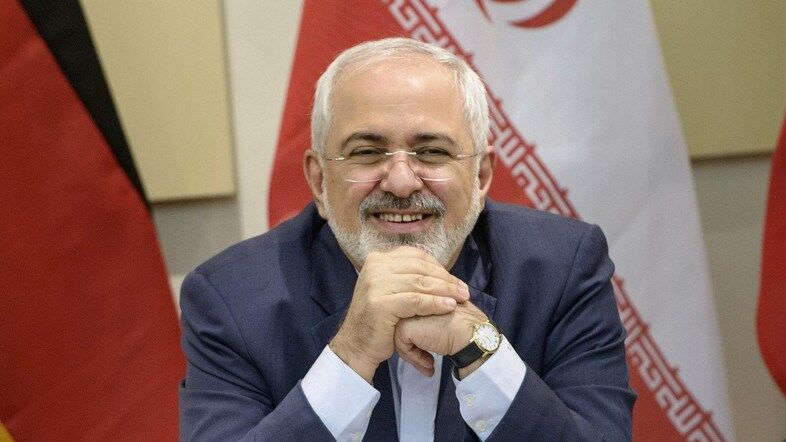
Beijing, Aug 8, IRNA – US President Donald Trump’s decision to sanction Iran’s Foreign Minister Mohammad-Javad Zarif did not seem to rattle the government in Tehran, Hong-Kong-based news website Asia Times reported.
The US Department of the Treasury last week imposed sanctions against Iranian Foreign Minister for working for the Supreme Leader Ayatollah Seyyed Ali Khamenei. The moves came on the heels of the movement restrictions against the Iranian foreign minister when it was in New York for a UN meeting.
Addressing the issue, Asia Times reported that “The buzz in Washington suggests that both Trump and his Secretary of State Mike Pompeo were unhappy with Zarif’s interactions with the US media."
The media added that Zarif, who studied in the United States, is comfortable with television cameras and has proven more than capable of making a rational case against the US unilateral withdrawal from the 2015 Iran nuclear deal.
Referring that Zarif is indeed urbane and eloquent, but those are not his only strengths, the news website added: “He has the additional advantage of having the facts on his side. United Nations agencies all say that Iran has confirmed that it will abide by the terms of the JCPOA, and that there is no reason for unilateral sanctions imposed by the US. This is a view accepted by the European Union.”
Asia Times added that Trump’s main problem is that the United States does not have a legitimate case to make against Iran. If the US mounts an enormous assault on Iran, the war will widen from Lebanon to Afghanistan. No rational person would support this.
“The Zarif issue is actually a red herring. Even before the sanctions on him personally, the United States showed no appetite for diplomacy. Iran spent several years negotiating with the five permanent members of the UN Security Council, as well as with Germany and the European Union, to produce the JCPOA, which was then ratified by the United Nations in 2015.”, the media said.
The Hong-Kong-based news website added that after the US withdrew from the deal, Iran continued to indicate its desire for a diplomatic solution while Washington refused to come to the table.
The Europeans say that they will continue to work with Zarif to maintain open diplomatic channels, according to the Asia Times.
Some observers believe that the sanctions imposed on Zarif is not only symbolic but also indicate how Washington is afraid of Iran’s diplomacy influence.
Zarif, who has been Iran’s foreign minister since 2013, was the chief negotiator in the multinational nuclear deal known as the Joint Comprehensive Plan of Action.
In a recent interview with the New York Times, Zarif said "Everyone who knows me knows that I, or my family, do not own any property outside Iran. I personally do not even have a bank account outside Iran. Iran is my entire life and my sole commitment. So I have no personal problem with possible sanctions."
He added: "The only impact--and possibly the sole objective--of a possible designation would be to limit my ability to communicate. And I doubt that would serve anyone. Certainly, it would limit the possibility of informed decision making in Washington."
Friday, March 22, 2019
Ayatollah Khamenei Describes Europe's Financial Channel with Iran as “Sad Joke”
TEHRAN (Tasnim) – Leader of the Islamic Revolution Ayatollah Seyed Ali Khamenei lashed out at the European states’ for their lack of commitment to fulfilling undertakings under 2015 Iran nuclear deal.

“What has recently been said about the new financial channel they created is more like a joke. This is a sad joke, a nonsensical joke. Their duty is totally different from what they are suggesting to do. In our most recent international affair, the Europeans betrayed us again,” Ayatollah Khamenei said on the first day of the 1398 Persian New Year at the Shrine of Imam Reza (AS) in Iran’s northeastern city of Mashhad, wherein he delivered his annual speech to the pilgrims and residents of the area.
According to official website of Ayatollah Khamenei, after congratulating the Iranian nation as well as all nations that celebrate Nowruz, Ayatollah Khamenei addressed his audience by calling the new Persian Year as the year of opportunities.
His Eminence asserted: Some have suggested that this year is a year of threats. I do not believe in that at all. I believe the Persian year 1398 is the year of opportunities, by God's grace, the year of productivity and success.
The Leader described those inside the country who constantly talk negatively about the year ahead as influenced by the propaganda of the enemies and held: Of course those who suggest other views, and constantly threaten that unfavorable things will happen, are under the influence of the enemies' propaganda, whether knowingly or unknowingly. The enemies of this nation, in addition to all other things they do, they also engage in a psychological warfare and spread propaganda. These propagandas must be known as they are. They had the same propaganda for the year 1397 aimed at trying to frighten people.
Referring to U.S. officials the Leader once named ‘First-rate Idiots’, Ayatollah Khamenei stressed that the United States has failed in their calculations about Iran, and said: One of those idiots said that if they withdrew from the JCPOA, the people of Iran would go on riots and the people would not be able to afford even bread. Another of these idiots suggested that U.S. officials would celebrate 2019 in Tehran.
Imam Khamenei pointed to the faulty analysis offered by the United States regarding Iran’s situation and elaborated on the reason behind these poor analyses by stating that: Is their analysis really so out of touch regarding the events in the region and the country? Are they seriously suggesting such analysis, which is only another sign of their idiocy? Or do they offer such analysis as part of their psychological warfare, so they are publicizing these words all over the world out of malice? I am not sure which the case is. It could be both idiocy and malice.
The Leader elaborated on the enemies of Iran’s efforts to stage economic and psychological wars against the Iranian nation by asserting that: Today the enemy is engaged in an economic war against us. Well the fact that the enemy is fighting against us is now recognized by all; the officials have understood that the enemy has initiated a war on us. Wars are not fought only by armaments; security and intellectual war is also a type of war, and can at times be more dangerous than a military war. This type of war can be seen in economic affairs. We must defeat the enemy in this war; and by God's grace, we will defeat them.
His Eminence went on to mention that: But this is not enough. My request from the various actors in the country-- government officials, academia, or in public sectors-- is different. In addition to defeating the enemy, we should repel the enemy. Sometimes, you might defeat the enemy but the enemy might wait for another opportunity to strike a blow; this is useless.
He stressed that Iran needs to achieve a deterrence level where enemies cannot harm the country’s economy; he asserted: We must achieve a level where we repel the enemy, too. So the enemy sees they cannot harm us in the economy. Repelling is possible, just as has been the case with our military power. There was a time when the enemy bombarded our cities and we could not defend. Now that we have developed our equipment, the enemies in the region know that we can counter any enemy in the region by our precision-guided missiles.
Ayatollah Khamenei further slammed the Saudi regime for its despotic and dependent inclinations and held: I do not know any state in this region, or maybe anywhere in the world, worse than the Saudi regime. It is a despotic, dictatorial, corrupt, tyrannical and dependent regime. They provide such a regime with nuclear infrastructure. They announced that they would build a nuclear plant for it.
Ayatollah Khamenei declared that he does not worry about Saudi Arabia’s developing nuclear plants as he predicts the fall of the Saudi regime in the near future. His Eminence held: They announced they would build missile producing sections. There, it is okay to build them because that country is dependent on them, and it belongs to them! Now even if they build them, I would not worry, because I know in the near future they will be in the hands of Islamic warriors, God willing.
The Leader of the Islamic Revolution slammed Western coverage of the Christchurch terrorist attack for their double standards and Islamophobic motives and asked: Was not the recent incident in New Zealand—which entailed the massacre of Muslims—an incident of terrorist nature in their view? The Europeans, neither the politicians nor their media, would not call it a terrorist attack. They called it an armed attack instead. Whenever there is an action against someone supported by the West, terrorism and human rights are used to oppose it. But in this case - the attack in New Zealand- they would not call it a terrorist action. They are like this.
Ayatollah Khamenei criticized the European partners of the JCPOA for having breached their commitments by not standing against the United States and held: What was the responsibility of Europeans in the matter of the JCPOA? An agreement was achieved between six countries and Iran. One party was the United States which has already withdrawn. What did the other signatories commit to do? Europeans should have stood up to the US, saying that they would adhere to their commitments. Their commitment was to remove all sanctions. They should have resisted strongly.
His Eminence stressed that Europeans made excuse to evade their commitments and even went as far as imposing new sanctions on Iran, adding that: However they did not resist on the pretext of numerous excuses. Not only they did not stand up to the US, they also practically withdrew from the JCPOA even though they had insisted that we should keep to it. That is, they even imposed new sanctions against Iran.
The Leader went on to say: When Europeans act in this manner, what can we expect them? What has recently been said about the new financial channel they created is more like a joke. This is a sad joke, a nonsensical joke. Their duty is totally different from what they are suggesting to do. In our most recent international affair, the Europeans betrayed us again. We cannot expect them [to act appropriately].
Wednesday, September 12, 2018
Trump acts like a criminal who pretends innocence
By M.A. Saki
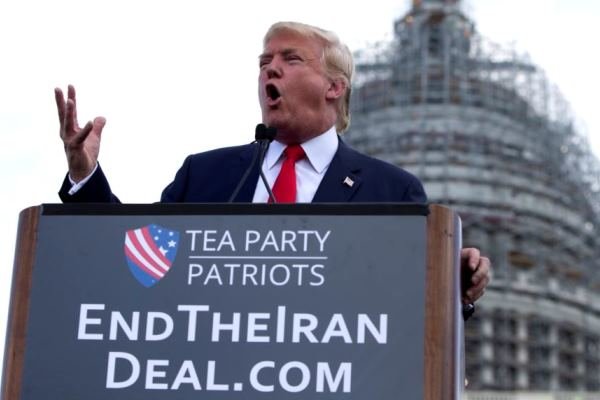
It is shameful that U.S. President Donald Trump who has flouted the UN Security Council Resolution 2231 endorsing the Iran nuclear agreement is going to chair the UN council meeting this month and talk against Iran.
Such a move is actually an insult to the philosophy of Security Council and also an affront to the wisdom of the world.
A president whose reckless and impulsive decisions are pushing the world toward anarchy must be too rude and impudent to appear at the Security Council that its main task is to preserve the global peace and security.
The essence and mandate of the Security Council is alien to Trump’s cult personality. He is going to address a global body that he is completely acting against.
He is like a criminal who now pretends injustice.
Most often, hardline politicians soften their approach when they face realities, however, Trump has proven the opposite. He is becoming more impudent and vulgar day by day. His personality is filled with hatred which he directs at others.
He called the global warming a “hoax” invented by the Chinese and left the Paris climate agreement. This happened despite the fact that the world is close to catastrophe due to global warming.
He ordered the U.S. withdrawal from the agreement despite the fact the U.S. alone accounted for a third of greenhouse gas emissions before it was being replace by China in the last few years.
It is for these reasons that more than two thirds of Germans believe that Trump’s policies are “making the world a more dangerous place”. According to the “Fears of Germans” survey, German citizens have cited Trump’s decision to pull out of the Iran nuclear deal and Paris climate accord - along with his hostility towards Germany - as the main reasons for ranking him their biggest single worry.
Former German Ambassador to Washington Wolfgang Ischinger has also said that the U.S. president is endangering the world order. “No politician has unsettled the world to the degree Donald Trump has,” Ischinger told Der Spiegel.
Trump is a person who has animosity toward the world and there seems to be no limit for his hatred of others. Now instead of being held accountable for his violation of the Resolution 2231, he is shamefully emerging as a complainant.
Wednesday, September 05, 2018
Pakistan continues to rebuff U.S., supports Iran’s stand on JCPOA
By Syed Zafar Mehdi

TEHRAN - Much to the chagrin of hawks in Washington and Riyadh, neighbors Iran and Pakistan have reaffirmed their commitment to bolster bilateral ties and open a new chapter in their relationship.
The ties between the two countries, although historic, have been marked by ambiguity in recent years, especially during the previous government led by Nawaz Sharif, who was seen heavily tilted towards Riyadh. With the new government in Islamabad now, led by the charismatic cricketer-turned-politician Imran Khan, Iran-Pakistan ties are expected to become stronger.
As a sign of growing proximity between the two countries, Iran’s foreign minister Javad Zarif became the first foreign official to visit Pakistan this week since the change of guard in Islamabad. Zarif, who has been to Pakistan eight times, held wide-ranging deliberations with the top political and military leadership of Pakistan, including prime minister, foreign minister, army chief and parliament speaker.
In a tweet, the social media-savvy foreign minister termed the meetings “fruitful”, in which the two sides laid emphasis on “expanding bilateral, regional, and global partnership”, adding that neighbors were Iran’s “priority”. Zarif’s visit to Pakistan came at a crucial time when the relations between Islamabad and Washington are undergoing a tectonic shift, and Pakistan is finally coming out of the ominous shadow of U.S. and Saudi Arabia.
Imran Khan led government has made a great start by outlining its foreign policies very clearly. On Friday, following the meeting between Zarif and his Pakistani counterpart Shah Mehmood Qureshi, Pakistan said it supported Iran’s “principled stance” regarding its nuclear deal with major world powers. “Pakistan stands with Iran in this hour of need,” Qureshi said, joining the growing league of countries that have backed Iran’s peaceful nuclear energy program and refused to buckle under the U.S. pressure to cut trade ties with Tehran.
An official statement issued by Khan’s office said the prime minister received the Iranian foreign minister for a meeting, who conveyed to him the greetings and best wishes of the people and leadership of Iran on assuming office.
Zarif stated that Iran wished continued progress and prosperity to the people of Pakistan and delivered a message of Iranian President Hassan Rouhani, inviting Khan for the upcoming Asian Cooperation Dialogue (ACD) summit in Iran in October 2018. Both Pakistan and Iran are members of ACD and Iran currently holds the chair of the organisation.
Khan thanked the Iranian supreme leader’s support for Kashmiris in their struggle for self-determination and the manner in which Pakistan’s Independence Day was celebrated in Iran this year, the statement said, adding that Pakistan and Iran were “connected by inseparable bonds of historic, religious and cultural affinities”.
Zarif also held formal talks with his counterpart Shah Mehmood Qureshi during which they discussed wide-ranging issues. Both the sides underlined the importance of deepening cooperation in areas of mutual interest. The statement issued by Pakistan’s foreign office said the two officials held detailed discussions on regional and global issues — including the situation in Afghanistan and America’s unilateral decision to withdraw from the JCPOA.
It was agreed that the next round of Bilateral Political Consultations and the Joint Economic Commission will be held at early date.
While supporting Iran’s principled stance on the Iran nuclear deal, Qureshi expressed hope that remaining parties to the agreement would uphold their commitments in letter and spirit. “This is important given IAEA’s repeated verification that Iran has strictly adhered to the terms of agreement,” the foreign minister said.
A few weeks ago, Pakistan’s foreign office spokesperson Dr Muhammad Faisal had stressed that Pakistan reserves the right to ‘pursue legitimate economic and commercial interests’ with Iran in the wake of re-imposition of sanctions on Tehran by U.S. “We are examining the implications of the U.S.’ re-imposed sanctions on Iran,” he said, “however, Pakistan, being a sovereign state, reserves the right to pursue legitimate economic and commercial interests while respecting the international legal regime.”
Meanwhile, on Sunday, in a fresh blow to Pakistan-U.S. relations, the U.S. military said it has made a final decision to annul $300 million aid to Pakistan that had been suspended over Islamabad’s perceived failure to take decisive action against militants. President Donald Trump had in his New Year tweet lambasted Pakistan and threatened to withhold military aid.
These developments are significant and must be seen in the context of changing regional dynamics – Pakistan getting closer to China, Iran and Pakistan embarking on a new journey, and the new government in Islamabad defying the coercive and manipulative tactics of Trump administration.
Imran Khan, who has on many occasions in the past criticized America’s policy for South Asia, had also opposed the idea of Pakistan sending troops to Yemen to fight Houthi rebels. Khan’s foreign policy, observer believe, is rooted in pragmatism and national interest. Better relations with Iran, they stress, are in Pakistan’s best national interest.
Following his historic victory in general election, Khan had vowed to improve ties with all regional countries, including Iran. Unlike his predecessor, he has shown an inclination to maintain a healthy balance in ties between regional rivals Saudi Arabia and Iran.
During the meeting between Khan and Iranian envoy to Pakistan recently, Khan also expressed his willingness to revive the Iran-Pakistan gap pipeline project or ‘peace pipeline’, which can play a key role in resolving the energy crisis facing Pakistan. It is a historic opportunity for the two countries to transform their relationship into energy partners.
Thursday, August 16, 2018
Trump has gone beyond threatening Iran: Princeton researcher
'Trump pressing permanent UN Security Council members to violate nuclear deal'
 |
| Seyed Hossein Mousavian, a Princeton University researcher and former Iranian ambassador, says U.S. President Donald Trump “has gone beyond threatening Iran”. |
“Trump publicly has announced economic war, political war with Iran, short of military war,” Mousavian tells Democracy Now.
Following is a rush transcript of the interview sent to the Tehran Times:
Q: On Sunday, the U.S. Ambassador to Britain Woody Johnson wrote an op-ed in The Telegraph urging Britain to withdraw its support of the landmark 2015 Iran nuclear deal. Ambassador Johnson wrote, “America is turning up the pressure and we want the UK by our side.” Your answer please.
A: As you know, the Iranian nuclear deal was the result of 13 years of negotiation between Iran and the world powers. The U.S. engaged in negotiation in 2013 and had also bilateral meetings—intrusive, frequent bilateral meetings—from 2013 to 2015. Ultimately, Iran and the U.S., Iran, the world powers, agreed on the nuclear deal. The United Nations Security Council passed a resolution approving the deal. And two years after deal, Iran has fully complied with all its commitments. The IAEA, International Atomic Energy Agency, which is the sole agency responsible for supervising the nuclear program of member states, has 11 times since 2016 confirmed Iran’s full compliance with the nuclear deal.
Trump would not be able to create international consensus to reimpose new sanctions on Iran.Now, the U.S. is the only UN Security Council member who withdrew from the deal, who violated the deal. This is bad. This is a big mistake. This is a violation of international law and regulations by the United States of America. However, what you mentioned, the U.S. ambassador wrote an op-ed in London pressuring the UK to join the U.S. to violate the United Nations Security Council, and to withdraw from the deal. The U.S. is doing such a move with every European member. The U.S. is pushing all international community, all other countries, and this is really something very strange and perhaps unprecedented.
The United States is the most powerful country in the world and the most powerful member of the United Nations Security Council, which all five permanent members are responsible for full implementation of the UN Security Council resolutions passed by themselves. Now, not only the U.S. is violating the deal itself, but pushing the other international—other countries, other members of permanent Security Council, to violate the UN Security Council. This is really something unprecedented and very, very strange, and at the same time very dangerous for international peace, order and security.
The United States is the most powerful country in the world and the most powerful member of the United Nations Security Council, which all five permanent members are responsible for full implementation of the UN Security Council resolutions passed by themselves. Now, not only the U.S. is violating the deal itself, but pushing the other international—other countries, other members of permanent Security Council, to violate the UN Security Council. This is really something unprecedented and very, very strange, and at the same time very dangerous for international peace, order and security.
Q: Can you talk about the effects of the sanctions reimposed last week by President Trump against Iran?
A: I would say there would be an effect on Iranian economy. Iranians definitely would be harmed. I have no doubt about it. Already we have seen some negative consequences on the Iranian economy. However, I need to mention perhaps three points. The first point is the fact that Iran has been under U.S. sanctions for 40 years.
Therefore, I can say Iranians are the most experienced country and nation on the U.S. sanctions. They have been able to handle the U.S. sanctions, international sanctions, multilateral sanctions and survive and continue their strategies, domestically or regionally or internationally.
The second point is that during the first term of President Obama, the U.S. was able to create international consensus to bring UN Security Council sanction Iran. It means it was international consensus. Russia agreed. China agreed. It was because there were six UN resolutions on the Iranian nuclear program which Iran was not ready to accept. However, this time, while the deal has been achieved, while Iran has signed, the U.S. signed, the other permanent members of the United Nations Security Council signed, the UN passed resolution and Iran has fully complied with every commitment.
Now the U.S. is practically isolated to bringing new sanctions or re-imposing the sanctions, and therefore the other countries like Russia, China, Europe, India, they are not going to violate the United Nations Security Council and they are going to continue business with Iran. Therefore, I believe President Trump would not be able to create international consensus reimposing the new sanctions. This is the second issue.
President Trump would fail to capitulate Iran to come to negotiations under sanctions and pressures.The third issue, which is I believe is more important—Iranian economy is under many, many difficulties like corruption, like dysfunctionality, like smuggling, like inflation and they have a lot of problems. This has been problem since 1979 when Saddam invaded Iran, Iran had eight years of war, and after war, the U.S. pushed for many, many sanctions against Iran. However, I believe at least 50 percent of the Iranian domestic economic problem is not because of the sanctions. They are because of the domestic dysfunctionality of different system, but this is the government or other system.
Therefore, if Iran is going to resist the sanctions, they would need to address the dysfunctionalities of their own system. Therefore, this is one reality about dysfunctionality of Iranian domestic economic system. The other reality is that the U.S. is not going to be able to create international consensus, and therefore, I believe Iran would be harmed, but President Trump would fail to capitulate Iran to come to negotiations under sanctions and pressures.
Q: Let me ask you about President Trump and his increasing threats against Iran in all caps tweet. Later, National Security Advisor John Bolton doubled down, saying, “President Trump told me that if Iran does anything at all to the negative, they will pay a price like few countries have ever paid before.” This comes after, in May, Secretary of State Mike Pompeo using his first policy address as secretary of state to threaten Iran with the strongest sanctions in history. Ambassador Seyed Hossein Mousavian, talk about what this means and also the possibility that Trump might meet with Rouhani in a kind of side meeting in New York at the UN General Assembly when world leaders come.
A: Let me respond to your questions. You have two questions. The first one is about threatening. I believe threatening is really bad, is against the United Nations charter. Whether if Iran is threatening the U.S. or the U.S. is threatening the Iranians, this is a clear violation of the UN charter. However, the fact is that President Trump has started to threaten Iran.
The first threatening was violation of the nuclear deal, violation of the United Nations Security Council resolution, violation of 11 resolutions of the IAEA, International Atomic Energy Agency. The second threat came by President Trump administration was the official statement by John Bolton and Pompeo for regime change in Iran. They frequently mention that they are after regime change in Iran.
The third threat from the U.S. side was when the U.S. said they are going to bring Iranian oil export to zero. Therefore, I think already President Trump started, clicked the trend of threatening by regime change strategy, by all options on the table, including literally a strike on Iran by sanctioning Iran, by violating the nuclear deal, and by, for the first time it was a statement from the United States of America to say that they are going to bring Iranian oil export to zero. Even during the war, Saddam’s invasion of Iran, 1980 to 1988, when the U.S. was supporting Saddam in war against Iran, never the U.S. said that “I’m going to bring Iranian oil export to zero.”
That’s why I believe President Trump has gone beyond threatening Iran. President Trump publicly has announced economic war, political war with Iran, short of military war. Therefore, Iranians also they would respond and they would threaten the U.S. by closing the Strait of Hormuz in order not to let any other country to export oil if Iran is not permitted to export oil. That is why a threat is [inaudible] came for the first time from the U.S. side.

Now, about your second question, whether any negotiation would be possible or not. My first response is that while Iran and the U.S. already agreed on a deal and the U.S. violated it, how can Iranians trust the U.S. to enter a new negotiation? Let’s say there would be a new negotiation. Let’s say there would be an agreement with President Trump. Who can guarantee the next U.S. president would not come and would not violate it? President Obama agreed. It was not bilateral agreement; it was an international agreement.
It had UN resolution. Despite of all this, President Trump, after Obama, publicly said it was a bad mistake and, “Oh, I am going to kill it.” How the U.S. can assure Iranians if there is a negotiation, if there is an agreement, the next U.S. president is not going to do what President Trump did with Obama’s negotiation? This is the first question.
I can say Iranians are the most experienced country and nation on the U.S. sanctions. They have been able to handle the U.S. sanctions, international sanctions, multilateral sanctions and survive and continue their strategies, domestically or regionally or internationally.Second, what is the base? President Trump, if he really wants a normal relation with Iran, then we have three criteria. The first criteria is a Treaty of Amity between Iran and the U.S. signed 1955, which is for economic relations and consular rights. Yes, Iran and the U.S., they have many problems about their citizens in Iran, in the U.S., and there is already a treaty between Iran and the U.S. resolving all consular and citizen issues. Yes, President Trump is willing to have a share of the nuclear deal, to have economic share, to have some share for the U.S., but 1955 treaty has defined excellent economic relations between Iran and the U.S.
Iran recently has filed a lawsuit against the new sanctions imposed by the U.S. at the International Court in Hague, based on Treaty of Amity, 1955. When Iran is filing a lawsuit against the U.S. based on this amity treaty, it means Iran practically recognizes this amity. Now, this can be a criteria number one for President Trump to go back to the Treaty of Amity 1955 between Iran and the U.S.
The second is 1981 accord between Iran and the U.S. After 25 years of U.S. support for shah in Iran, dictatorship dominating Iran, there was a revolution. Iranians took some Americans as hostages in Iran. There was a big problem. Ultimately, Iran and the U.S. in 1981 met each other in Algeria and they signed an accord defining how Iran and the U.S. can have normal relations based on mutual respect and noninterference. This accord was signed between Iran and the U.S. Right after the signature, Iran freed the hostages and the U.S., rather than implementing this accord for a normal relation with Iran, the U.S. cut the relation with Iran and went to support Saddam Hussein invading Iran, participated in a war against Iran.
The third criteria is the nuclear deal, signed by the U.S., approved by the United Nations Security Council. President Trump should tell Iranian which of these treaties, agreements, accords, are going to be criteria for the future of Iran and the U.S. I think Iran and the U.S. already have two major accords, which really can create a new relation, can be foundation for a new relation between Iran and the U.S., but President Trump should assure Iran about the basis, about the foundation, about the criteria. The U.S. violated 1955 Treaty of Amity, the U.S. violated 1985 accord, and the U.S. violated the 2015 nuclear deal. Then what?
Q: What about President Trump threatening any country that does business with Iran, saying the U.S. won’t do business with them?
A: This is exactly what I said, a new and unprecedented phenomenon in international relations, because the nuclear deal has—it clearly states in the nuclear—I mean, you would see in the nuclear deal stating that all member, all signatories are committed to facilitate normal economic relation with Iran. Therefore, based on the nuclear deal, all signatories—Germany, Europeans, UK, France, Russia, China, and all other countries, including the U.S.-which is the signatory of the deal, is responsible for facilitating normal economic relation of other countries, between other countries and Iran.
Now, the U.S. withdrew from the deal, violated that agreement, imposed new sanctions. This is one big issue. The United Nations Security Council is violating its own resolution, the UN resolution. And the second unprecedented phenomenon is that the U.S. is pushing the other member states of United Nations Security Council to violate United Nations Security Council resolution to stop business with Iran. Therefore, the U.S. also should say, should tell its own people, international community—is really the United States of America responsible for implementation of United Nations Security Council resolution or blocking of implementation of United Nations Security Council resolutions?
Q: As you teach at Princeton University, what do you think is the greatest misconception Americans have about Iran?
A: Iran and the U.S., they’ve had no relation for 40 years. Therefore, it is normal, it is natural that there are many misunderstandings, miscalculations, misperceptions on the American side and even on the Iranian side, to be fair. Iranians also they really cannot understand exactly what is going on in the U.S. The realities of United States is not well-known to Iranians. And more, the realities of Iranian domestic situation, political situation is not known to Americans.
Unfortunately, the President Trump administration has relied on enemies of Iran like terrorist groups of MEK, in Washington, getting their agenda from these terrorist groups. They are a terrorist group like ISIS, like Al-Qaeda. The biggest I think misperception and misunderstanding is that they think Iran is after destabilizing the region, while Iran is really after stabilizing the region because a dis-stable region, Iran would be the first or among the most important countries to suffer.
Iran really has invested in Iraq and Syria to fight ISIS in order to bring stability. Iran cooperated with the United States of America 2005 after the U.S. announced the War on Terror and attacked Afghanistan. Iran shaked hands with the United States to cooperate with the U.S. to fight [inaudible] and Taliban in Afghanistan. And after the fall of Saddam, practically Iranian allies, they supported, they cooperated with the U.S. to bring a new structure in Iraq which was based on the rule of majority, power-sharing, free election, new constitution. It was exactly what Iran and the U.S. experienced in Afghanistan in a joint cooperation, Iran and the U.S. experienced in Iraq, in a joint cooperation, and they have been fighting ISIS together, despite of all animosities and hostilities. Therefore, this is very important for the United States of America to understand what a real, legitimate security concern Iran has in the region in order to understand Iranian regional behavior.
The second big misunderstanding on the U.S. policy is that all administrations of the United States of America, they had the dual track policy, pressure and sanction, coercion strategy, and at the same time, asking for negotiation. They were thinking Iran would capitulate under pressures and sanctions and they would come to the negotiation table and they would accept whatever the United States is asking. This has been experience for 40 years by every administration, by the Democrat and Republican, and all have failed. And now the main U.S. concern today, after 40 years of military war, economic war, political war, intelligence war, covert war, cyber war against Iran—now the main U.S. complaint is that why Iran is the most powerful, most influential country in the region?
Now I am telling President Trump, if the United States has experienced every coercion strategy against Iran and failed after 40 years, now why you are going to experience again the policies which already has failed? Therefore, it is better to go back to the treaties already signed between Iran and the U.S.
Subscribe to:
Posts (Atom)