Showing posts with label Islamic Movement. Show all posts
Friday, November 01, 2019
Sunday, February 07, 2016
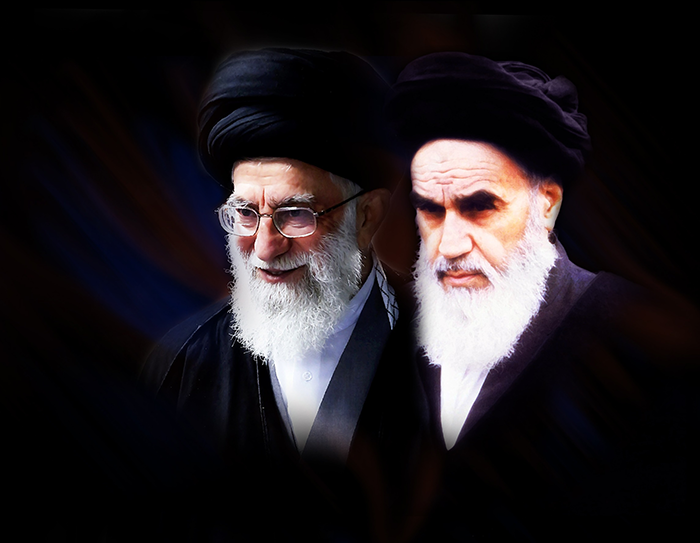
The Imam’s ijtihad on the Islamic state
'The Imam’s great contribution was that he moved beyond the traditional Shi‘i political thought to urge establishment of the Islamic government even in the absence of the Twelfth Imam. This was revolutionary at several levels, the most important of which was that it went against 1,300 years of Shi‘i theology.'
by Tahir Mustafa
As Muslims worldwide commemorate the late Imam’s 27th anniversary, we reflect on some of his greatest achievements, among them his ijtihad on Islamic government.
The late Imam Khomeini, whose 27th anniversary will be commemorated on June 3 with ceremonies in many parts of the world, was a towering personality of the last century. It would be no exaggeration to say that he had the most profound impact on global politics by bringing about a revolution that was completely Islamic in nature. In fact, almost every event since February 1979 when the Islamic Revolution achieved total victory over the forces of darkness and oppression led by the Shah of Iran, can be traced to the movement led by the late Imam. Equally remarkable is the fact that the Imam was at the advanced age of 77 when he led the Islamic movement in Iran to victory.
The late Dr. Kalim Siddiqui — a great admirer and supporter of the Imam — described the Islamic Revolution as that point in the struggle of the Islamic movement when it completely overwhelms the forces of oppression, demolishing the old order to usher in a new order based on the teachings of Islam. This is what occurred in Iran after a year of relentless struggle in which an estimated 80,000 people were martyred. Unlike other revolutions, the Islamic Revolution in Iran was completely peaceful in the sense that no violence was resorted to for the overthrow of the old order.
The Western-backed established order was the one that used excessive force to crush the people’s aspirations for change. It needs emphasizing that despite appeals by his supporters to either use force against the Shah’s soldiers or compromise with him, the Imam stood firm. He had unshakable faith in Allah (swt) and was confident that ultimately the committed Muslims will triumph.
It needs recalling that unlike revolutions in other places like Russia or China, the Islamic Revolution in Iran did not come about when the old order had been weakened by wars or internal turmoil. The Shah’s regime was seen as one of the strongest bastions of Western imperial domination. Only a few months prior to the start of the Islamic Revolution, then US President Jimmy Carter had described Iran under the Shah (November 1977) as an “island of stability” in a sea of turbulence. The Islamic revolutionary tide swept the so-called island of stability into the dustbin of history. It did more: the Islamic Revolution irrevocably changed the global political landscape.
Those willing to remove their sectarian blinkers would be able to see that despite decades of illegal sanctions, the Islamic Republic of Iran is the only country in the region — indeed one might venture to add, the whole world — that is truly independent and has gained strength and influence. This also explains the imperialists and Zionists’ relentless and vicious propaganda against the Islamic Republic. American exceptionalists may take issue with the claim about Iran being the only truly independent country but they should note that the US is virtually a Zionist colony. Numerous American academics have expressed concern about this reality.
The Rahbar, Imam Seyyed Ali Khamenei drew attention to the imperialists’ enmity toward Iran in his address at the commencement ceremony for graduates at Imam Husayn Military Academy in Tehran on May 23. “The main cause of all these enmities and fabrication of pretexts is [Iran’s] defiance of istikbar [a Qur’anic term used for arrogant and hegemonic powers],” the Rahbar said. It must be noted that unlike any other Muslim leaders, the Rahbar often uses Qur’anic terms and references to explain global reality. This is the hallmark of a true Islamic personality that is grounded in the Qur’an and the Sunnah and Sirah of the noble Messenger (pbuh). It also highlights the fact that the Rahbar is a faithful student of the late Imam Khomeini who was deeply spiritual and surrendered totally to Allah (swt).
The imperialists and Zionists and their regional puppets, like the Najdi Bedouins cut from the same cloth as the Shah of Iran, have also come out openly against the Islamic Republic. They allege that by strengthening its defences such as building an indigenous missile program, Iran is destabilizing the region. They also falsely accuse Tehran of having a military nuclear program when in fact, its nuclear portfolio is completely peaceful and within its right. Most of the accusers — the US, Zionist Israel et al. — are themselves nuclear powers yet they shamelessly hurl allegations against Iran.
“Were the Iranian people ready to surrender, they [the arrogant powers] would have glossed over [Iran’s] missile development and nuclear energy and they would have made no mention of human rights,” said the Rahbar. He said US officials have admitted that Iran’s refusal to submit to bullying tactics by the arrogant powers is due to its firm adherence to Islamic ideology. The Rahbar then reiterated that “steadfastness,” “defiance of the enemy,” and “safeguarding the revolutionary and Islamic identity” are the main factors of the strength of the Islamic establishment and the Iranian people.
The strength and power of the Islamic Republic emanate directly from its adherence to Islamic principles. The Islamic system of governance established by the late Imam Khomeini after the victory of the Islamic Revolution is what gives strength and power to the valiant people of Iran. It is also Islam that enables them to make great sacrifices. Anyone with even rudimentary knowledge of the affairs of the Muslim East (aka the Middle East) would see that there is utter chaos and confusion in many countries. Islamic Iran is the only stable country that has weathered all the challenges — internal sabotage, external invasion and sanctions — and come out stronger.
While not educated in the West and having had little contact with it, the late Imam Khomeini fully understood the injustices inherent in the Western system. This has come to be acknowledged by many fair-minded Western writers as well. We witness this for instance in the manner in which Senator Bernie Sanders has come out against the corrupt system in the US. Similarly, the British Labor Party leader Jeremy Corbyn has also exposed the injustices inherent in the British system and policies. If Muslims want to rid themselves of this unjust imposed system, why should that be such a bad idea?
The Imam showed great wisdom in understanding the imposed global order. His solution was to mobilize the Muslim masses of Iran to rise up against this corrupt order so that at least one part of the Ummah — in Iran — would become truly independent, live according to Islamic principles and be a model for other Muslims as well as non-Muslims. Since 1979, Islamic Iran has tried to present this model in the most difficult circumstances.
Since the abolition of the khilafah — although it had been reduced to a mere shell by the time Mustafa Kemal delivered the final blow in 1924 replacing it with a secular system in Turkey — Muslims have been struggling to re-establish the Islamic system of government. Attempts in Egypt by Hasan al-Banna through al-Ikhwan al-Muslimoon (Muslim Brotherhood — MB), and by Maulana Abu al-‘Ala Maududi who established the Jamaat-e Islami in hopes of ushering the Islamic State have not yielded the desired results. Only Imam Khomeini succeeded in establishing the Islamic order in society.
Even in Iran, prior to the Imam’s movement, there were several other uprisings especially against British interference culminating in the Constitutional movement of 1905–1907 as well as the uprising against the Shah in 1951–1953. Those movements, however, suffered from the weakness that the ‘ulama had not made the ideological leap to establish the Islamic state in the absence of the Twelfth Imam. Their struggle was largely confined to addressing specific issues without addressing the fundamental need to overthrow the illegitimate Western-backed monarchy to establish the Islamic state.
The Imam’s great contribution was that he moved beyond the traditional Shi‘i political thought to urge establishment of the Islamic government even in the absence of the Twelfth Imam. This was revolutionary at several levels, the most important of which was that it went against 1,300 years of Shi‘i theology. Not surprisingly, the traditional Shi‘i ‘ulama in Najaf (where the Imam was living in exile) did not view his ijtihad on political thought and the Islamic state with favor. In fact, many of them actively opposed it (there is still opposition to the Imam’s ijtihad in some traditional Shi‘i circles).
It was the body of younger ‘ulama as well as the masses in Iran that responded to the Imam’s call. One of the Imam’s remarkable qualities was that he reached out to ‘ulama of all schools of thought — Sunni and Shi‘i — and encouraged them to struggle for truth and justice. This is the hallmark of a great Islamic scholar.
Since the victory of the Islamic Revolution, the people of Iran have paid a huge price in life and blood but they have withstood all pressures, both internal and external. While it was expected that imperialists and Zionists would spare no effort to undermine the Islamic Republic because it challenged the colonial imposed order, what is revealing is that the success of the Islamic Revolution also exposed the puppet regimes in the Muslim world. Their hatred of the Islamic Republic is now visible even if initially they were able to camouflage their hatred in sophistry. The Najdi Bedouins’ vicious propaganda against Islamic Iran is ample proof of their hatred of Islam. They have by their own conduct also exposed themselves as agents of imperialism and Zionism.
As part of their propaganda, the proxy regimes in Muslim countries that are subservient to imperialism and Zionism have branded the Islamic Revolution as “Shi‘i.” This is meant to detach the “Sunni” majority in the Muslim world from the Islamic Revolution but they have failed to offer a “Sunni” alternative. The “Shi‘i” label is meant to play on the sectarianism of ill-informed Muslims. If the Da‘ish takfiri model of an “Islamic” state is all that these so-called “Sunni” regimes can offer then the Muslim world faces a very serious problem.
In the context of the Islamic Revolution, Muslims must keep in mind the ayah of the noble Qur’an in which Allah (swt) warns Muslims during the time of the Prophet (pbuh), “…And if you turn away [from Allah], He will cause other people to take your place and they will not be the likes of you” (47:38). In his explanation, Ibn Kathir narrates that the companions of the Messenger (pbuh) were surprised to hear this ayah and asked him who these people were that would replace them (the Arabs)? The noble Messenger (pbuh) put his hand on the shoulder of Salman al-Farsi (ra) standing beside him and said, they will belong to his people. It must be noted that Ibn Kathir is considered one of the more conservative mufassirs of the Qur’an.
As the Arabians have abandoned Allah’s (swt) din, the progeny of Salman al-Farsi (ra) have grasped the message of the noble Qur’an and are trying to implement it in their lives. The Islamic Revolution brought about by Imam Khomeini is the fulfillment of the Qur’anic ayah and the explanation offered by the noble Messenger (pbuh). No amount of hateful propaganda can detract from this fact.
Pull quote:
The Imam’s great contribution was that he moved beyond the traditional Shi‘i political thought to urge establishment of the Islamic government even in the absence of the Twelfth Imam. This was revolutionary at several levels, the most important of which was that it went against 1,300 years of Shi‘i theology.
Monday, December 01, 2014
What ails the Muslim world?
Zafar Bangash
Muslim countries may have achieved nominal independence but they continue to suffer from the debilitating legacy of the colonial imposed order in their societies.
The Muslim world is not in good shape. Much has been written on the subject. What is needed is not more commentary but identification of the innate factors and probable causes behind this tragedy.
Civilizations are built on ideas that give birth to systems that in turn sustain a society’s growth and development. Unfortunately, some people confuse material progress — makings cars, planes, tanks or erecting tall buildings — with civilization.
Civilizations are built on ideas that give birth to systems that in turn sustain a society’s growth and development. Unfortunately, some people confuse material progress — makings cars, planes, tanks or erecting tall buildings — with civilization. Were tall structures the hallmark of a civilization, the Saudis and Emiratis would be leading the world. Muslims gave the world a civilization that lasted more than 1,000 years. The Islamic civilization was not based on material progress; it was based on ideas that resonated with human nature. Today, unfortunately Muslims are not in the driving seat of history.
The ruling elites are taking them in a direction the masses do not wish to go resulting in conflict in society. Unfortunately in most Muslim societies even the ‘ulama, that should be providing leadership, have been co-opted to do the bidding of the corrupt elite.
The basic reason is that the systems under which they operate are illegitimate. These were imposed by the colonial masters who also installed the ruling elites. The Muslim masses had no input in this process and thus no attachment to these systems. The ruling elites are taking them in a direction the masses do not wish to go resulting in conflict in society. Unfortunately in most Muslim societies even the ‘ulama, that should be providing leadership, have been co-opted to do the bidding of the corrupt elite. Personal interest trumps principles.
Before departing, the colonialists also burdened Muslim societies with numerous political and boundary problems. Palestine, Kashmir, Kurdistan, Sudan and a host of others continue to frustrate Muslim efforts to build their societies. The various institutions of state — military, bureaucracy, business and political elites — have proven unequal to the task. Instead, these institutions have developed their own interests and safeguard them at the expense of the greater good of society.
The question that must be asked is: what should Muslims do to get out of this rut? The Muslim world is not short of resources. What is lacking is their judicious use. Further, there is rampant corruption and gross inequality in almost every Muslim country. Whenever muttaqi leadership has emerged in any Muslim society — Islamic Iran, Lebanon (Hizbullah), Gaza (Hamas and Islamic Jihad), it has performed near miracles. The first point Muslims must therefore, realize is that they must work to overthrow the corrupt order in their societies. It will not be easy; the beneficiaries of the existing systems will fight hard to retain their privileges. No ruling class has ever given up power voluntarily. Their external masters will also work to frustrate the Muslims’ aspirations.
The Muslim masses must become part of the Islamic movement to bring about lasting change in society. The Islamic movement as an open system welcomes all into its fold.
The Muslim masses must become part of the Islamic movement to bring about lasting change in society. The Islamic movement as an open system welcomes all into its fold. This is also the Sunnah of the Prophet (pbuh); he led the first Islamic movement in history. He did not organize people on the basis of tribe, clan or class. Anyone who accepted Islam immediately became part of the Islamic movement.
Only muttaqi leadership operating above personal or class interests can lead the Islamic movement. Leadership in Islam is not sought; it is conferred on the most committed and dedicated people that emerge through many years of struggle and sacrifice. The goal must be to uphold the principles of Islam.
The leadership must then set a directional course and motivate people to pursue these goals. This is also according to the Sunnah of the noble Messenger (pbuh). It is these principles that will set Muslims on the path to secure freedom from taghut and begin a life of dignity and respect. Clarity of thought is a pre-requisite for achieving these lofty objectives. There are no shortcuts in this struggle.
Tuesday, March 13, 2012
Arabian monarchs and the crisis in Syria
A year after two long-entrenched dictators were consigned to the dustbin of history, the shell-shocked monarchies of the Muslim East appear to have regained their composure somewhat. Initially, they appeared to be teetering on the brink but today they are striking back both at home and abroad. Mass arrests of protesters coupled with huge bribes have provided them some breathing room. But even this would not have saved their thrones were they not supported by their western masters in Washington, London and Paris. The tribal monarchies are presenting themselves as champions of democracy and supporters of people’s rights, provided these apply to regimes they do not like. They appear to be having some success in places like Libya and Syria where the uprisings have had open support from such primitive family-based regimes as those in Saudi Arabia, Qatar and the United Arab Emirates (UAE).
An Iranian artist’s rendition of what is happening in Syria.
At home, these regimes have clamped down hard on protesters and dispatched troops to places like Bahrain to crush the people’s legitimate demands expressed through entirely peaceful means. The Saudi regime holds more than 30,000 political prisoners and this number is rising but one would be hard pressed to read about this in the New York Times or hear about it on al-Jazeera, for instance. The tribal-owned network has been a handy tool in the hands of the dinosaurs that rule the kingdoms and sheikhdoms. Like CNN and Fox News, it has gained notoriety for spreading disinformation.
To understand what has transpired and what can be expected in the future, it is important to categorize countries based on their current situation. Tunisia, Egypt and Morocco form the first tier of countries where some changes have occurred following elections. The second group comprises countries like Libya and Yemen where rulers have either been killed (Colonel Muammar Qaddafi of Libya) or forced out of office (Ali Abdullah Saleh of Yemen). In the third category lies Syria where a foreign-backed uprising is underway and has become an open battleground for influence in the Muslim East. What happens in Syria will shape the destiny of the entire region. Ironically, while change in Syria is desirable, its consequences for the larger struggle in the Muslim East will be disastrous. The last category is that of the primitive monarchies in Saudi Arabia, Qatar, UAE, Jordan and Kuwait. To varying degrees, they are all fighting for survival by waging battles on someone else’s territory.
It would be tempting but wrong to conclude that just because elections have been held in Egypt, Tunisia and Morocco that the people’s problems have been solved. The old systems remain entrenched together with their institutional support mechanisms. A few new faces from groups that were traditionally hounded and suppressed have been co-opted into the system but little else has changed. The danger for Islamic parties, whether in Tunisia, Egypt or Morocco is that while they will have to solve the problems bequeathed by the old regimes, they are not free to formulate their own policies. With their hands tied behind their backs, they will be blamed for all the failures. This is what happens to political parties, even those with an Islamic tag, that opt to work within the old corrupt system. It is impossible not to get contaminated by stepping into filth. Some people in Egypt appear to understand this and the youth have still not given up. How far and long they will continue to challenge the old order is difficult to predict.
It is, however, the struggle in Syria and the role played by such tribal monarchies as Qatar and Saudi Arabia that are crucial to understanding the future of the Muslim East. The struggle in Syria is not merely for people’s rights. The more crucial aspect is the assault on the resistance front comprising Hizbullah, Syria, Hamas and Islamic Iran against Zionist Israel. The US is and has always been fully committed to the Zionist entity even at the expense of its own people. It is the dinosaurs of the desert that have now come out of their caves to support Israel openly. The Arabian regimes have always functioned as the first line of defence for Israel even if they tried to hide their subservience behind loud rhetoric. If was the repeated humiliations of these regimes and their spectacular failures to redress Palestinian grievances that gave rise to such movements as Islamic Jihad, Hamas and Hizbullah.
Subservience comes naturally to the Arabian rulers and treachery runs in their blood. They have never had any legitimacy even if defined in the narrow sense of people’s approval of their rule. On the broader canvas, kingship is forbidden in Islam and legitimacy is obtained only when rulers apply divinely ordained laws. On all counts, these rulers are illegitimate and must not be allowed to remain in power. Only the support of Western imperialists keeps them in power. This merely confirms their illegitimacy as far as the people are concerned.
They use such weapons as ethnic, tribal and sectarian divisions to cling to power. The sectarian card is the most potent weapon but they also play the others. Migrant workers from Pakistan, India, Bangladesh and Indonesia, for instance, are treated like slaves by the tribal-based monarchies. Physical and sexual abuse of workers who have no rights is rampant. Sectarianism is always invoked when these illegitimate rulers feel threatened. It is being used in Syria with devastating effect. What is tragic and shocking is that some members of the Islamic movement and ‘ulama’ have also fallen for this. True, the ‘ulama’ have been co-opted through bribes but it is a telling reflection of the sad state of affairs that a Syrian ‘alim, Sheikh ‘Adnan al-‘Arour (residing in Saudi Arabia) would appeal to the Israelis to save the people of Syria without the Saudi regime, that has no diplomatic relations with the Zionist entity, arresting him. If some ‘alim in Saudi Arabia were to call upon Islamic Iran to help the people, it is safe to assume he would be immediately arrested. For the Saudi regime, Islamic Iran is an enemy but Zionist Israel is a friend!
If the people of Syria do not wake up to this reality, they might end up in worse shape than what they currently face. They must ask themselves: do they want to live in subservience to the US and Zionist Israel or even worse divide Syria along sectarian or ethnic lines? A century ago, the British came promising “liberation” of the Arabians from “Ottoman imperialism.” The result was breakup of the Muslim East into unstable nation-states. Do they want to repeat the same mistake all over again?
An Iranian artist’s rendition of what is happening in Syria.At home, these regimes have clamped down hard on protesters and dispatched troops to places like Bahrain to crush the people’s legitimate demands expressed through entirely peaceful means. The Saudi regime holds more than 30,000 political prisoners and this number is rising but one would be hard pressed to read about this in the New York Times or hear about it on al-Jazeera, for instance. The tribal-owned network has been a handy tool in the hands of the dinosaurs that rule the kingdoms and sheikhdoms. Like CNN and Fox News, it has gained notoriety for spreading disinformation.
To understand what has transpired and what can be expected in the future, it is important to categorize countries based on their current situation. Tunisia, Egypt and Morocco form the first tier of countries where some changes have occurred following elections. The second group comprises countries like Libya and Yemen where rulers have either been killed (Colonel Muammar Qaddafi of Libya) or forced out of office (Ali Abdullah Saleh of Yemen). In the third category lies Syria where a foreign-backed uprising is underway and has become an open battleground for influence in the Muslim East. What happens in Syria will shape the destiny of the entire region. Ironically, while change in Syria is desirable, its consequences for the larger struggle in the Muslim East will be disastrous. The last category is that of the primitive monarchies in Saudi Arabia, Qatar, UAE, Jordan and Kuwait. To varying degrees, they are all fighting for survival by waging battles on someone else’s territory.
It would be tempting but wrong to conclude that just because elections have been held in Egypt, Tunisia and Morocco that the people’s problems have been solved. The old systems remain entrenched together with their institutional support mechanisms. A few new faces from groups that were traditionally hounded and suppressed have been co-opted into the system but little else has changed. The danger for Islamic parties, whether in Tunisia, Egypt or Morocco is that while they will have to solve the problems bequeathed by the old regimes, they are not free to formulate their own policies. With their hands tied behind their backs, they will be blamed for all the failures. This is what happens to political parties, even those with an Islamic tag, that opt to work within the old corrupt system. It is impossible not to get contaminated by stepping into filth. Some people in Egypt appear to understand this and the youth have still not given up. How far and long they will continue to challenge the old order is difficult to predict.
It is, however, the struggle in Syria and the role played by such tribal monarchies as Qatar and Saudi Arabia that are crucial to understanding the future of the Muslim East. The struggle in Syria is not merely for people’s rights. The more crucial aspect is the assault on the resistance front comprising Hizbullah, Syria, Hamas and Islamic Iran against Zionist Israel. The US is and has always been fully committed to the Zionist entity even at the expense of its own people. It is the dinosaurs of the desert that have now come out of their caves to support Israel openly. The Arabian regimes have always functioned as the first line of defence for Israel even if they tried to hide their subservience behind loud rhetoric. If was the repeated humiliations of these regimes and their spectacular failures to redress Palestinian grievances that gave rise to such movements as Islamic Jihad, Hamas and Hizbullah.
Subservience comes naturally to the Arabian rulers and treachery runs in their blood. They have never had any legitimacy even if defined in the narrow sense of people’s approval of their rule. On the broader canvas, kingship is forbidden in Islam and legitimacy is obtained only when rulers apply divinely ordained laws. On all counts, these rulers are illegitimate and must not be allowed to remain in power. Only the support of Western imperialists keeps them in power. This merely confirms their illegitimacy as far as the people are concerned.
They use such weapons as ethnic, tribal and sectarian divisions to cling to power. The sectarian card is the most potent weapon but they also play the others. Migrant workers from Pakistan, India, Bangladesh and Indonesia, for instance, are treated like slaves by the tribal-based monarchies. Physical and sexual abuse of workers who have no rights is rampant. Sectarianism is always invoked when these illegitimate rulers feel threatened. It is being used in Syria with devastating effect. What is tragic and shocking is that some members of the Islamic movement and ‘ulama’ have also fallen for this. True, the ‘ulama’ have been co-opted through bribes but it is a telling reflection of the sad state of affairs that a Syrian ‘alim, Sheikh ‘Adnan al-‘Arour (residing in Saudi Arabia) would appeal to the Israelis to save the people of Syria without the Saudi regime, that has no diplomatic relations with the Zionist entity, arresting him. If some ‘alim in Saudi Arabia were to call upon Islamic Iran to help the people, it is safe to assume he would be immediately arrested. For the Saudi regime, Islamic Iran is an enemy but Zionist Israel is a friend!
If the people of Syria do not wake up to this reality, they might end up in worse shape than what they currently face. They must ask themselves: do they want to live in subservience to the US and Zionist Israel or even worse divide Syria along sectarian or ethnic lines? A century ago, the British came promising “liberation” of the Arabians from “Ottoman imperialism.” The result was breakup of the Muslim East into unstable nation-states. Do they want to repeat the same mistake all over again?
Labels:
ale sauds,
Arabian monarchs,
Bahrain,
British Empire,
Brotherhood Movement,
crisis in Syria,
Democracy,
Egypt,
Imperialists,
Islamic Movement,
Libya,
Morocco,
Ottaman Caliphate,
Tunisia
Tuesday, June 21, 2011
Imam Khomeini and the centrality of leadership in the Islamic movement
Every June, ceremonies are held to commemorate the passing away of Imam Khomeini in 1989. This year, these ceremonies gain added significance in view of the uprisings underway in the Muslim East. Zafar Bangash, Director of the Institute of Contemporary Islamic Thought, compares the Imam’s leadership with the near-leaderless movements in the Muslim East.

The Muslim East, commonly referred to as the Middle East, has been in the throes of peoples’ uprisings since December 2010. In two countries long-entrenched dictators — General Zine el-Abidine Ben Ali of Tunisia and Hosni Mubarak of Egypt — were driven from their palaces, while in others, the remaining sentries of Western neo-colonialism are barely clinging to power, fighting ruthlessly to retain it. These include Ali Abdullah Saleh in Yemen, the Khalifah family in Bahrain, Colonel Muammar Qaddafi in Libya, Abdullah in Jordan and Bashar al-Assad of Syria. How long these rulers will remain in power is not clear.

Comparison of the leadership qualities of Imam Khomeini and the Islamic movement he led to success in bringing about an Islamic revolution in Iran and the lack of leadership in the civil uprisings in the rest of the Muslim East is in order. This may explain why the initial momentum that would be expected to lead to societal liberation may be aborted even before any gains are institutionalized in the form of just policies, free constituency building leading to effective representation, more equitable distribution of resources, and re-evaluation of past treaties.
First, let us reflect on common features that are discernable in all the movements in the Muslim East. All appear leaderless or at least no single leader has emerged on the scene. Following from this, there is no clear directional course set for the movement. These uprisings, dubbed the Arab Awakening, are demanding the overthrow of brutal dictators that have either imposed themselves, or more likely, been imposed on the people for far too long. There also appears to be some confusion regarding the nature of the prevailing systems in their societies. Not one movement has publicly and unambiguously called for dismantling the existing systems or cutting down to size the top-heavy militaries, which act as praetorian guards for the status quo even if rulers like Ben Ali of Tunisia and Mubarak of Egypt have been forced out of office. In both countries and in the others, the militaries are at the forefront of crushing the peoples’ aspirations. In some places — Libya and Syria, for instance — the uprisings also have covert or even open external support. In the case of Bahrain, foreign troops — Saudi and Emirati — equipped with American weapons and war materiel have been rushed in to prop up the oppressive Khalifah regime. The common feature in all these countries is the call for freedom, elections, responsible representation, and better job opportunities.

These uprisings began in an unlikely locale: Tunisia — not on many observers’ radar screens to trigger such fast-paced changes in the Muslim East. To their credit, the people of Tunisia were the first to overcome fear. It is a powerful weapon used by oppressors everywhere to deny people their fundamental rights. Tunisians showed the way forward by defying the dreaded security services and standing up to them. Their steadfast defiance forced the establishment, including the military, to push Ben Ali out. The hope was that by removing the most visible face of the regime, it would pacify the people and contain their pent-up rage. The Tunisian military also refused to attack unarmed protesters, thereby sealing Ben Ali’s fate but it would be wrong to conclude that the people have achieved their objectives or that the military is on their side. The people of Egypt face a similar dilemma and are far from certain about realizing their dream of establishing a society based on justice and fairness.
Overcoming fear is the first step toward freedom. The people of Iran led by Imam Khomeini had shown more than 30 years ago that shedding fear is the most powerful tool in the hands of the oppressed. They defied the Shah’s dreaded secret service, the Savak, and his equally ruthless military machine thereby ushering in the Islamic Revolution. While the masses in the Muslim East are showing welcome signs of shedding their fear, they are nowhere near achieving success. True, there are some features common to the Islamic Revolution in Iran and the uprisings in Egypt and Bahrain.

One of them is the large participation of women in anti-government rallies. This was clearly evident in Iran in 1978–1979 when many women were shot and killed by the Shah’s brutal troops. In the more recent Middle Eastern uprisings, women only in Bahrain have been martyred. Nonetheless, their participation is a welcome development and appears to have drawn inspiration from the example of their sisters in Iran of three decades earlier.
Another lesson learned from Iran was that participants in the Muslim East uprisings have not sought direct confrontation with the military. This was even more striking in Bahrain where people came out with their families (including children), bearing flowers to hand out to soldiers. The heavily armed soldiers, however, were in no mood to accept such gestures of peaceful intent and turned their guns on the people, killing and wounding scores of them. Not content with killing and maiming peaceful protesters, the troops then headed to the hospitals attacking medical personnel and dragging the wounded out of hospital beds. Such brutalities have seldom been witnessed before; attacking doctors, nurses, and the obviously wounded is a war crime, but as usual the mainstream media mouthpieces are out to lunch when such things happen to Muslims. Recall that during the Second Gulf War when Saddam Hussein invaded Kuwait, his troops were accused of taking babies out of incubators and crushing them on the floors of the hospitals; and despite the fact that this did not happen, the news of the barbarity of the Republican Guard was flashed all over the world, validated no less by “testimony” in front of the US Congress for maximum effect and brainwashing. In this case, US-backed Saudi and Emirati troops are actually invading hospitals and convalescence facilities, but nary a murmur anywhere other than from the Islamic press. The duplicity of this type of coverage is reflective of the schizophrenia in the Arab Awakening.

But conversely, there are striking differences between the Imam Khomeini-inspired Islamic Revolution in Iran and the uprisings underway in the Muslim East today. One relates to leadership. In Iran, the Imam’s dynamic and charismatic leadership, completely immersed in the teachings of the Qur’an, provided a clear directional course uniting all people behind him. He had no equals or rivals — none. The Imam’s commitment to Islamic principles was also clear and unambiguous. He did not mobilize the people of Iran on the basis of nationalism; nor did he say that he wanted to bring down the price of bread or other essential commodities to win people’s backing. His main objective was to liberate his people not only from the local proxy — the Shah — but also from the global mechanism of corruption and God-denial led by the United States. Thus he emphatically pointed to the gross disparities that had emerged in society as a result of the slavish policies adopted by the Shah to appease his American masters. Further, he did not push to participate in elections under the Shah’s oppressive system. In his lectures and speeches, the Imam repeatedly emphasized how Islamic principles of dignity and respect were being trampled upon. He reminded the ‘ulama’ that they had an obligation to revive the spirit of struggle and sacrifice among the people. He urged them not to fall into the trap of passivity. One of the Qur’anic ayat the Imam frequently quoted to motivate people to rise up was, “Say [unto them O Prophet], “I exhort you unto one thing: that you stand up for Allah in pairs [collectively] and individually…” (34: 46).
Sincere leaders are clear about the overall objective. Setting the directional course is a prerequisite for any movement’s success. Only a muttaqi leader operating above personal or parochial interests can offer such direction. Imam Khomeini was such a leader. In fact, he surpassed any other Islamic leader in the last 200 years. That also explains why he was so successful when others have failed to bring about meaningful change in their societies. In the Muslim East today, on the other hand, there is near total absence of any identifiable leadership, much less one setting a directional course. A leader may yet emerge from within these movements but the fact that such leadership has not been identified and has not provided clear guidance to any of these movements is a major weakness of these struggles. This also explains why these movements, much as one may admire the people’s courage, cannot truly be called revolutionary because they are not demanding total change of the prevailing systems in their societies. A revolution requires a revolutionary leader. In the Muslim East, the movements simply want to fine-tune existing systems and to have a little more say in how the government should be run while leaving the ancient institutions imposed during the colonial period virtually intact. This also makes them vulnerable to external and internal manipulation as is already evident in several cases.

A person is thrust into position of leadership both by circumstances as well as by his personal charisma and ability to inspire and lead people toward the realization of a particular goal. This, of course requires clear articulation of the goal first and to motivate people to accept this as an objective worthy of pursuit. The goal must be such that people would be prepared to offer sacrifices, including lives, for its achievement. For Muslims, this means being an active member of the Islamic movement and working toward the establishment of the Islamic State. The successful leader not only articulates the vision but also demonstrates the ability to transform it into action by aligning performance with vision to create a climate of success for the realization of the stated goal.
Imam Khomeini was the prototype of such a leader. He not only articulated a clear vision but also inspired millions of people, creating a successful Islamic movement in Iran that led to the Islamic Revolution. This resulted in the establishment of the first Islamic State in the post-colonial era. This is and should be the principal aim of every Islamic movement. But the Imam’s is a truly remarkable achievement in contemporary Muslim history because hitherto Muslims had only suffered defeats and humiliations.
To properly understand and appreciate the significance of his legacy, we must briefly review the history of the last 200 years, especially as it relates to the Muslim world. This will enable us to better grasp the enormous challenges the Imam faced and how he overcame them to take the Islamic movement in Iran to its successful conclusion: an Islamic revolution. In the Muslim East, on the other hand, the movements do not seem even to want an Islamic revolution; they merely want permission to participate in “democratic” elections in which the rules of engagement are still defined by the same oppressive order they sought to overthrow.
Contemporary reality
It would be inaccurate to describe the Muslim world as free. True, the era of direct colonialism has ended but this has simply ushered in an era of neocolonialism whereby native agents of the West — civil and military — have assumed power and continued colonial policies, disguised today under the rubric of globalization. It is no coincidence that not one Muslim country, with the notable exception of Islamic Iran and to some extent Turkey under the ruling Justice and Development Party (AKP), can be considered to be truly free. Some may argue that Muslim countries have their own constitutions, parliaments, armies, bureaucracies, flags, and national anthems and therefore, are free. Freedom, however, means much more than flags and anthems. It means to possess the liberty to formulate one’s own socio-economic systems and political priorities as well as to determine one’s own foreign engagements and treaty obligations. Measured on the basis of these criteria, few Muslim countries can be considered free.

The Imam was absolutely clear about the nature of the colonial system in Muslim societies. He did not seek permission from the Shah’s regime to set up a political party to be able to participate in elections. He did not recognize the legitimacy of the Shah’s regime or the imported plutocratic system that was in place, even though it was given a local flavor with a forced Iranian irredentism. He understood that the Shah, despite his fancy titles, was not free; nor was Iran a free country. In one of his famous statements when the Shah’s regime granted immunity from prosecution to Americans if they committed a crime on Iranian soil, the Imam said, “If some American’s servant, some American’s cook, assassinates your marja‘ in the middle of the bazaar, or runs over him, the Iranian police do not have the right to apprehend him. The dossier must be sent to America, so that our masters there can decide what is to be done!”
While endowed with abundant oil and gas resources, the vast majority of people in Iran languished in poverty; only a tiny parasitical class around the Shah acquired enormous wealth, a confirmation of the Western strategy to set up luxury classes in all Muslim societies that are aloof from the people socially as well as economically. The idea was to create a capital decision-making class that would not only concentrate wealth gained from local resources but also redirect the same resources and human potential to the sponsors of the class, while keeping the wealth disconnected from social services and the general economic well-being of the majority of the people. In case such a class ran afoul of its foreign patrons, the imperial sponsor would not have to fight the whole country, but only replace the luxury class and its military custodians with another one just like it. The Shah himself, despite bestowing such titles as the shahinshah (the king of kings), and descendant of Cyrus the Great, upon himself, was totally subservient to the West not unlike rulers in the Muslim East today.
The rulers in Saudi Arabia and Jordan call themselves kings; those in Bahrain and Kuwait have assumed titles of amirs. They were all created by the British and survive through subservience to the UK and its illegitimate prodigal son, the US. What kind of freedom makes a government that apparently represents a whole society of several million so inept as to be incapable of formulating its own policies and of defending its people against aggression? How can a “free” government rely on external forces to maintain its power?
The contemporary world order is not the result of natural evolution, nor was it established through consultation among peoples of the world. The victors of the First World War (and the Second) created it to maintain their dominance in world affairs. Almost all Muslim countries came into existence after these brutal wars, which together caused the deaths of nearly 80 million people. Some Muslim countries had never existed before; the colonial powers did not simply draw lines in the sand or arbitrarily create borders because they happened to be occupying those lands. There was a master plan behind the partitioning of the Muslim East and Africa. It is no mistake that the Arab world, where Arabic was the language that connected Muslims to the Qur’an, was divided into some 27 countries. Areas such as Kurdistan and Baluchistan were intentionally split across several countries so that foreign inspired nationalist movements would destabilize several countries at once creating a permanent impediment to peace and progress. A tribal map of Africa shows that national borders were intentionally created so as to divide tribes into separate countries. Witness the problem in the Darfur area where migratory peoples have to deal with political impediments that come from crossing a border between the Sudan and Chad. Pakistan was supposed to include all of the Punjab, Bengal, and Kashmir, but when the political partitions finally became new nations, half of the Punjab, West Bengal, and three-fourths of Kashmir ended up as a part of the new India; again this was no accident because the majority population in all these areas of the subcontinent is Muslim. Then of course there is the problem of Israel. Obviously, the drawing of borders was not meant to respect the aspirations of the people; it was done to preserve the interests of the colonial powers. Little has changed in the intervening period.
The Imam’s distinctiveness
Countries and peoples in the Muslim East are not only living in cages called nation-states but the systems in place are also imposed by the colonial powers. Any attempt on the part of the people to break free of this imposed colonial order is ruthlessly suppressed. In the unlikely event of some people succeeding, as happened in Iran under the leadership of Imam Khomeini, then every effort is made to undermine and destroy it. Islamic Iran had to face a brutal eight-year war imposed through the Ba‘thist regime in Iraq. Despite enormous odds, the people of Iran, led by the courageous leadership of Imam Khomeini, singlehandedly withstood the combined international onslaught. But the colonial powers also have other weapons at their disposal: freezing of assets, sanctions, and economic and military sabotage. Islamic Iran has faced all these but as the late Imam famously remarked, “Sanctions are a blessing for us.” This is what distinguishes Islamic leadership from an ordinary leader. Iran under its Islamic leadership has proved it. It is among the few countries in the world that has no external debt despite suffering a brutal war. Compare this to the US, the self-proclaimed sole superpower that is reeling from a mountain of debt because it is involved in two wars, and because it has close to 900 military bases all around the world. Its external debt is $14 trillion; add to that its internal debt of $38 trillion and the total climbs to $52 trillion. This translates into a debt of $176,000 for every man, woman, and child in the US. Islamic Iran has no debt whatsoever. Despite the sanctions, it has become self-sufficient in many essential industries, armaments being one of them. It has also mastered nuclear technology to meet its needs. These are the result as much of technical prowess as they are of having total faith in Allah (swt) as the sole Provider for all of His creation, and thereby having the recognition that its people have the same capacities as any other people on earth, regardless of birth, race, or geographic origin. This is the consequence of policies implemented by muttaqi leadership. Regrettably such clarity is absent in leaders elsewhere in the Muslim world.

Another factor that has continued to frustrate the Muslims’ struggle for dignified existence is the lack of clear understanding of the contemporary world order. Many leaders in the Muslim world, including leading figures in the Islamic movement, have failed to understand the Western modes of dominance with their inbuilt disproportionality. The Imam was absolutely clear on this issue and he insisted on banishing all traces of Western influence from the Muslim world in general, and from Iran in particular. While he was not educated in the West and had virtually no contact with it, the Imam understood the secular, God-denying Western nature extremely well. Many Muslims tend to take the West’s pronouncements about freedom and liberty seriously. The Imam, who was the product of traditional Islamic education, was not swayed by such self-serving Western rhetoric. The Imam’s deep study and knowledge of the Qur’an, a clear understanding of the life struggle of the noble Messenger of Allah (pbuh) and the great Imams in Islamic history gave him an insight that enabled him to see with great clarity the West’s hypocritical pronouncements. He understood that all non-Islamic systems are systems of kufr managed by the taghut, and he urged their overthrow. He wrote, “It is our duty to remove from the life of Muslim society all traces of kufr and destroy them.”
He further elucidated:
“Let us overthrow tyrannical governments by (1) severing all relations with governmental institutions; (2) refusing to cooperate with them; (3) refraining from any action that might be construed as aiding them; and (4) creating new judicial, financial, economic, cultural, and political institutions. It is the duty of all of us to overthrow the taghut, that is, the illegitimate political powers that now rule the entire Islamic world. The governmental apparatus of tyrannical and un-representative regimes must be replaced by institutions serving the public good, administered according to Islamic law. In this way, an Islamic government will gradually come into existence.”
From the above, we see that at no stage in his life did the Imam ever resort to a Western mode of operations. He did not call for setting up political parties to oppose the taghuti regime, nor did he tell people to approach the illegitimate courts of law to seek redress for injustices inflicted on them. The Imam was clear: all these institutions were illegitimate; they had to be dismantled. He did not wish to confer legitimacy on them by approaching them for any service. In their place, he called for creating new institutions that would be “administered according to Islamic law” and would serve the interests of the people. Deeply immersed in the Qur’an, all his statements and declarations were based on Islamic principles. The Imam was not a politician in the corrupt utilitarian mode; he was a leader of a different caliber far above the ways of modern politicians who tailor their statements (and principles) according to who they are speaking to.
The Imam was clear about what he wanted to achieve and he minced no words in spelling it out: the overthrow of tyrannical regimes by severing all relations with their institutions whether the bureaucracy, armed forces, police, puppet parliaments, or unjust judicial systems that instead of administering justice want to preserve and maintain the unjust oppressive system. And how this was to be achieved was also spelled out by the Imam: he urged the people to refuse to cooperate with these regimes and their institutions and refrain from any action that might be construed as aiding them.
The Imam, as a true leader, also showed the way forward: create new judicial, financial, economic, cultural, and political institutions that would serve not just a tiny parasitical class but would be at the service of all the people, especially the mustad‘afin. He made clear, “It is the duty of all of us to overthrow the taghut, that is, the illegitimate political powers that now rule the entire Islamic world.” Such clarity of thinking, regrettably, has not been evident among people in much of the Muslim East even today despite the clear example of Iran before them. In fact, there is ample evidence to prove that movements struggling for their rights in the Muslim East are being manipulated by the West, which has maintained dictators like Mubarak and Ben Ali in power for decades. Yet these movements have simply glossed over this fact and are willing to accept Western interference and manipulation, not to mention “help”, as in the case of Libya. They have also failed to understand the degree of polarization the West has imposed on the rest of the world.
The Muslim East, commonly referred to as the Middle East, has been in the throes of peoples’ uprisings since December 2010. In two countries long-entrenched dictators — General Zine el-Abidine Ben Ali of Tunisia and Hosni Mubarak of Egypt — were driven from their palaces, while in others, the remaining sentries of Western neo-colonialism are barely clinging to power, fighting ruthlessly to retain it. These include Ali Abdullah Saleh in Yemen, the Khalifah family in Bahrain, Colonel Muammar Qaddafi in Libya, Abdullah in Jordan and Bashar al-Assad of Syria. How long these rulers will remain in power is not clear.

Comparison of the leadership qualities of Imam Khomeini and the Islamic movement he led to success in bringing about an Islamic revolution in Iran and the lack of leadership in the civil uprisings in the rest of the Muslim East is in order. This may explain why the initial momentum that would be expected to lead to societal liberation may be aborted even before any gains are institutionalized in the form of just policies, free constituency building leading to effective representation, more equitable distribution of resources, and re-evaluation of past treaties.
First, let us reflect on common features that are discernable in all the movements in the Muslim East. All appear leaderless or at least no single leader has emerged on the scene. Following from this, there is no clear directional course set for the movement. These uprisings, dubbed the Arab Awakening, are demanding the overthrow of brutal dictators that have either imposed themselves, or more likely, been imposed on the people for far too long. There also appears to be some confusion regarding the nature of the prevailing systems in their societies. Not one movement has publicly and unambiguously called for dismantling the existing systems or cutting down to size the top-heavy militaries, which act as praetorian guards for the status quo even if rulers like Ben Ali of Tunisia and Mubarak of Egypt have been forced out of office. In both countries and in the others, the militaries are at the forefront of crushing the peoples’ aspirations. In some places — Libya and Syria, for instance — the uprisings also have covert or even open external support. In the case of Bahrain, foreign troops — Saudi and Emirati — equipped with American weapons and war materiel have been rushed in to prop up the oppressive Khalifah regime. The common feature in all these countries is the call for freedom, elections, responsible representation, and better job opportunities.

These uprisings began in an unlikely locale: Tunisia — not on many observers’ radar screens to trigger such fast-paced changes in the Muslim East. To their credit, the people of Tunisia were the first to overcome fear. It is a powerful weapon used by oppressors everywhere to deny people their fundamental rights. Tunisians showed the way forward by defying the dreaded security services and standing up to them. Their steadfast defiance forced the establishment, including the military, to push Ben Ali out. The hope was that by removing the most visible face of the regime, it would pacify the people and contain their pent-up rage. The Tunisian military also refused to attack unarmed protesters, thereby sealing Ben Ali’s fate but it would be wrong to conclude that the people have achieved their objectives or that the military is on their side. The people of Egypt face a similar dilemma and are far from certain about realizing their dream of establishing a society based on justice and fairness.
Overcoming fear is the first step toward freedom. The people of Iran led by Imam Khomeini had shown more than 30 years ago that shedding fear is the most powerful tool in the hands of the oppressed. They defied the Shah’s dreaded secret service, the Savak, and his equally ruthless military machine thereby ushering in the Islamic Revolution. While the masses in the Muslim East are showing welcome signs of shedding their fear, they are nowhere near achieving success. True, there are some features common to the Islamic Revolution in Iran and the uprisings in Egypt and Bahrain.

One of them is the large participation of women in anti-government rallies. This was clearly evident in Iran in 1978–1979 when many women were shot and killed by the Shah’s brutal troops. In the more recent Middle Eastern uprisings, women only in Bahrain have been martyred. Nonetheless, their participation is a welcome development and appears to have drawn inspiration from the example of their sisters in Iran of three decades earlier.
Another lesson learned from Iran was that participants in the Muslim East uprisings have not sought direct confrontation with the military. This was even more striking in Bahrain where people came out with their families (including children), bearing flowers to hand out to soldiers. The heavily armed soldiers, however, were in no mood to accept such gestures of peaceful intent and turned their guns on the people, killing and wounding scores of them. Not content with killing and maiming peaceful protesters, the troops then headed to the hospitals attacking medical personnel and dragging the wounded out of hospital beds. Such brutalities have seldom been witnessed before; attacking doctors, nurses, and the obviously wounded is a war crime, but as usual the mainstream media mouthpieces are out to lunch when such things happen to Muslims. Recall that during the Second Gulf War when Saddam Hussein invaded Kuwait, his troops were accused of taking babies out of incubators and crushing them on the floors of the hospitals; and despite the fact that this did not happen, the news of the barbarity of the Republican Guard was flashed all over the world, validated no less by “testimony” in front of the US Congress for maximum effect and brainwashing. In this case, US-backed Saudi and Emirati troops are actually invading hospitals and convalescence facilities, but nary a murmur anywhere other than from the Islamic press. The duplicity of this type of coverage is reflective of the schizophrenia in the Arab Awakening.

But conversely, there are striking differences between the Imam Khomeini-inspired Islamic Revolution in Iran and the uprisings underway in the Muslim East today. One relates to leadership. In Iran, the Imam’s dynamic and charismatic leadership, completely immersed in the teachings of the Qur’an, provided a clear directional course uniting all people behind him. He had no equals or rivals — none. The Imam’s commitment to Islamic principles was also clear and unambiguous. He did not mobilize the people of Iran on the basis of nationalism; nor did he say that he wanted to bring down the price of bread or other essential commodities to win people’s backing. His main objective was to liberate his people not only from the local proxy — the Shah — but also from the global mechanism of corruption and God-denial led by the United States. Thus he emphatically pointed to the gross disparities that had emerged in society as a result of the slavish policies adopted by the Shah to appease his American masters. Further, he did not push to participate in elections under the Shah’s oppressive system. In his lectures and speeches, the Imam repeatedly emphasized how Islamic principles of dignity and respect were being trampled upon. He reminded the ‘ulama’ that they had an obligation to revive the spirit of struggle and sacrifice among the people. He urged them not to fall into the trap of passivity. One of the Qur’anic ayat the Imam frequently quoted to motivate people to rise up was, “Say [unto them O Prophet], “I exhort you unto one thing: that you stand up for Allah in pairs [collectively] and individually…” (34: 46).
Sincere leaders are clear about the overall objective. Setting the directional course is a prerequisite for any movement’s success. Only a muttaqi leader operating above personal or parochial interests can offer such direction. Imam Khomeini was such a leader. In fact, he surpassed any other Islamic leader in the last 200 years. That also explains why he was so successful when others have failed to bring about meaningful change in their societies. In the Muslim East today, on the other hand, there is near total absence of any identifiable leadership, much less one setting a directional course. A leader may yet emerge from within these movements but the fact that such leadership has not been identified and has not provided clear guidance to any of these movements is a major weakness of these struggles. This also explains why these movements, much as one may admire the people’s courage, cannot truly be called revolutionary because they are not demanding total change of the prevailing systems in their societies. A revolution requires a revolutionary leader. In the Muslim East, the movements simply want to fine-tune existing systems and to have a little more say in how the government should be run while leaving the ancient institutions imposed during the colonial period virtually intact. This also makes them vulnerable to external and internal manipulation as is already evident in several cases.

A person is thrust into position of leadership both by circumstances as well as by his personal charisma and ability to inspire and lead people toward the realization of a particular goal. This, of course requires clear articulation of the goal first and to motivate people to accept this as an objective worthy of pursuit. The goal must be such that people would be prepared to offer sacrifices, including lives, for its achievement. For Muslims, this means being an active member of the Islamic movement and working toward the establishment of the Islamic State. The successful leader not only articulates the vision but also demonstrates the ability to transform it into action by aligning performance with vision to create a climate of success for the realization of the stated goal.
Imam Khomeini was the prototype of such a leader. He not only articulated a clear vision but also inspired millions of people, creating a successful Islamic movement in Iran that led to the Islamic Revolution. This resulted in the establishment of the first Islamic State in the post-colonial era. This is and should be the principal aim of every Islamic movement. But the Imam’s is a truly remarkable achievement in contemporary Muslim history because hitherto Muslims had only suffered defeats and humiliations.
To properly understand and appreciate the significance of his legacy, we must briefly review the history of the last 200 years, especially as it relates to the Muslim world. This will enable us to better grasp the enormous challenges the Imam faced and how he overcame them to take the Islamic movement in Iran to its successful conclusion: an Islamic revolution. In the Muslim East, on the other hand, the movements do not seem even to want an Islamic revolution; they merely want permission to participate in “democratic” elections in which the rules of engagement are still defined by the same oppressive order they sought to overthrow.
Contemporary reality
It would be inaccurate to describe the Muslim world as free. True, the era of direct colonialism has ended but this has simply ushered in an era of neocolonialism whereby native agents of the West — civil and military — have assumed power and continued colonial policies, disguised today under the rubric of globalization. It is no coincidence that not one Muslim country, with the notable exception of Islamic Iran and to some extent Turkey under the ruling Justice and Development Party (AKP), can be considered to be truly free. Some may argue that Muslim countries have their own constitutions, parliaments, armies, bureaucracies, flags, and national anthems and therefore, are free. Freedom, however, means much more than flags and anthems. It means to possess the liberty to formulate one’s own socio-economic systems and political priorities as well as to determine one’s own foreign engagements and treaty obligations. Measured on the basis of these criteria, few Muslim countries can be considered free.

The Imam was absolutely clear about the nature of the colonial system in Muslim societies. He did not seek permission from the Shah’s regime to set up a political party to be able to participate in elections. He did not recognize the legitimacy of the Shah’s regime or the imported plutocratic system that was in place, even though it was given a local flavor with a forced Iranian irredentism. He understood that the Shah, despite his fancy titles, was not free; nor was Iran a free country. In one of his famous statements when the Shah’s regime granted immunity from prosecution to Americans if they committed a crime on Iranian soil, the Imam said, “If some American’s servant, some American’s cook, assassinates your marja‘ in the middle of the bazaar, or runs over him, the Iranian police do not have the right to apprehend him. The dossier must be sent to America, so that our masters there can decide what is to be done!”
While endowed with abundant oil and gas resources, the vast majority of people in Iran languished in poverty; only a tiny parasitical class around the Shah acquired enormous wealth, a confirmation of the Western strategy to set up luxury classes in all Muslim societies that are aloof from the people socially as well as economically. The idea was to create a capital decision-making class that would not only concentrate wealth gained from local resources but also redirect the same resources and human potential to the sponsors of the class, while keeping the wealth disconnected from social services and the general economic well-being of the majority of the people. In case such a class ran afoul of its foreign patrons, the imperial sponsor would not have to fight the whole country, but only replace the luxury class and its military custodians with another one just like it. The Shah himself, despite bestowing such titles as the shahinshah (the king of kings), and descendant of Cyrus the Great, upon himself, was totally subservient to the West not unlike rulers in the Muslim East today.
The rulers in Saudi Arabia and Jordan call themselves kings; those in Bahrain and Kuwait have assumed titles of amirs. They were all created by the British and survive through subservience to the UK and its illegitimate prodigal son, the US. What kind of freedom makes a government that apparently represents a whole society of several million so inept as to be incapable of formulating its own policies and of defending its people against aggression? How can a “free” government rely on external forces to maintain its power?
The contemporary world order is not the result of natural evolution, nor was it established through consultation among peoples of the world. The victors of the First World War (and the Second) created it to maintain their dominance in world affairs. Almost all Muslim countries came into existence after these brutal wars, which together caused the deaths of nearly 80 million people. Some Muslim countries had never existed before; the colonial powers did not simply draw lines in the sand or arbitrarily create borders because they happened to be occupying those lands. There was a master plan behind the partitioning of the Muslim East and Africa. It is no mistake that the Arab world, where Arabic was the language that connected Muslims to the Qur’an, was divided into some 27 countries. Areas such as Kurdistan and Baluchistan were intentionally split across several countries so that foreign inspired nationalist movements would destabilize several countries at once creating a permanent impediment to peace and progress. A tribal map of Africa shows that national borders were intentionally created so as to divide tribes into separate countries. Witness the problem in the Darfur area where migratory peoples have to deal with political impediments that come from crossing a border between the Sudan and Chad. Pakistan was supposed to include all of the Punjab, Bengal, and Kashmir, but when the political partitions finally became new nations, half of the Punjab, West Bengal, and three-fourths of Kashmir ended up as a part of the new India; again this was no accident because the majority population in all these areas of the subcontinent is Muslim. Then of course there is the problem of Israel. Obviously, the drawing of borders was not meant to respect the aspirations of the people; it was done to preserve the interests of the colonial powers. Little has changed in the intervening period.
The Imam’s distinctiveness
Countries and peoples in the Muslim East are not only living in cages called nation-states but the systems in place are also imposed by the colonial powers. Any attempt on the part of the people to break free of this imposed colonial order is ruthlessly suppressed. In the unlikely event of some people succeeding, as happened in Iran under the leadership of Imam Khomeini, then every effort is made to undermine and destroy it. Islamic Iran had to face a brutal eight-year war imposed through the Ba‘thist regime in Iraq. Despite enormous odds, the people of Iran, led by the courageous leadership of Imam Khomeini, singlehandedly withstood the combined international onslaught. But the colonial powers also have other weapons at their disposal: freezing of assets, sanctions, and economic and military sabotage. Islamic Iran has faced all these but as the late Imam famously remarked, “Sanctions are a blessing for us.” This is what distinguishes Islamic leadership from an ordinary leader. Iran under its Islamic leadership has proved it. It is among the few countries in the world that has no external debt despite suffering a brutal war. Compare this to the US, the self-proclaimed sole superpower that is reeling from a mountain of debt because it is involved in two wars, and because it has close to 900 military bases all around the world. Its external debt is $14 trillion; add to that its internal debt of $38 trillion and the total climbs to $52 trillion. This translates into a debt of $176,000 for every man, woman, and child in the US. Islamic Iran has no debt whatsoever. Despite the sanctions, it has become self-sufficient in many essential industries, armaments being one of them. It has also mastered nuclear technology to meet its needs. These are the result as much of technical prowess as they are of having total faith in Allah (swt) as the sole Provider for all of His creation, and thereby having the recognition that its people have the same capacities as any other people on earth, regardless of birth, race, or geographic origin. This is the consequence of policies implemented by muttaqi leadership. Regrettably such clarity is absent in leaders elsewhere in the Muslim world.

Another factor that has continued to frustrate the Muslims’ struggle for dignified existence is the lack of clear understanding of the contemporary world order. Many leaders in the Muslim world, including leading figures in the Islamic movement, have failed to understand the Western modes of dominance with their inbuilt disproportionality. The Imam was absolutely clear on this issue and he insisted on banishing all traces of Western influence from the Muslim world in general, and from Iran in particular. While he was not educated in the West and had virtually no contact with it, the Imam understood the secular, God-denying Western nature extremely well. Many Muslims tend to take the West’s pronouncements about freedom and liberty seriously. The Imam, who was the product of traditional Islamic education, was not swayed by such self-serving Western rhetoric. The Imam’s deep study and knowledge of the Qur’an, a clear understanding of the life struggle of the noble Messenger of Allah (pbuh) and the great Imams in Islamic history gave him an insight that enabled him to see with great clarity the West’s hypocritical pronouncements. He understood that all non-Islamic systems are systems of kufr managed by the taghut, and he urged their overthrow. He wrote, “It is our duty to remove from the life of Muslim society all traces of kufr and destroy them.”
He further elucidated:
“Let us overthrow tyrannical governments by (1) severing all relations with governmental institutions; (2) refusing to cooperate with them; (3) refraining from any action that might be construed as aiding them; and (4) creating new judicial, financial, economic, cultural, and political institutions. It is the duty of all of us to overthrow the taghut, that is, the illegitimate political powers that now rule the entire Islamic world. The governmental apparatus of tyrannical and un-representative regimes must be replaced by institutions serving the public good, administered according to Islamic law. In this way, an Islamic government will gradually come into existence.”
From the above, we see that at no stage in his life did the Imam ever resort to a Western mode of operations. He did not call for setting up political parties to oppose the taghuti regime, nor did he tell people to approach the illegitimate courts of law to seek redress for injustices inflicted on them. The Imam was clear: all these institutions were illegitimate; they had to be dismantled. He did not wish to confer legitimacy on them by approaching them for any service. In their place, he called for creating new institutions that would be “administered according to Islamic law” and would serve the interests of the people. Deeply immersed in the Qur’an, all his statements and declarations were based on Islamic principles. The Imam was not a politician in the corrupt utilitarian mode; he was a leader of a different caliber far above the ways of modern politicians who tailor their statements (and principles) according to who they are speaking to.
The Imam was clear about what he wanted to achieve and he minced no words in spelling it out: the overthrow of tyrannical regimes by severing all relations with their institutions whether the bureaucracy, armed forces, police, puppet parliaments, or unjust judicial systems that instead of administering justice want to preserve and maintain the unjust oppressive system. And how this was to be achieved was also spelled out by the Imam: he urged the people to refuse to cooperate with these regimes and their institutions and refrain from any action that might be construed as aiding them.
The Imam, as a true leader, also showed the way forward: create new judicial, financial, economic, cultural, and political institutions that would serve not just a tiny parasitical class but would be at the service of all the people, especially the mustad‘afin. He made clear, “It is the duty of all of us to overthrow the taghut, that is, the illegitimate political powers that now rule the entire Islamic world.” Such clarity of thinking, regrettably, has not been evident among people in much of the Muslim East even today despite the clear example of Iran before them. In fact, there is ample evidence to prove that movements struggling for their rights in the Muslim East are being manipulated by the West, which has maintained dictators like Mubarak and Ben Ali in power for decades. Yet these movements have simply glossed over this fact and are willing to accept Western interference and manipulation, not to mention “help”, as in the case of Libya. They have also failed to understand the degree of polarization the West has imposed on the rest of the world.
Wednesday, January 12, 2011
Ummah suffering from information overload and misinformation toxicity

Iqbal Siddiqui, Perspectives
The new year is traditionally a time when people reflect on their situations in life, as well as contemplating the possibilities of the year to come. This new year in the Gregorian calendar coincides (more or less) with a new year, 1432, in the Hijri calendar; Muharram 1 fell on December 7, 2010. That got me thinking back to the Hijrah centenary 32 years ago — Muharram 1, 1400ah fell on November 21, 1979ce — which was, perchance, one of the first major Islamic landmarks that I was aware of as a youth. In the mid-1970s, the commemoration of the Hijrah centenary was planned to be a major project for the Muslim Institute in its early years, before the Islamic Revolution in Iran radically changed the political environment of the time and took the full attention of its founder and director, the late Dr. Kalim Siddiqui (1931–1996).
For many in the Islamic movement, reflections on the first three decades of the 15th century AH revolve around the impact of the Islamic Revolution, the inspiration it provided to Islamic activists and movements everywhere, and the reaction it provoked from the hegemonic west. This is a subject I have written about a great deal over the years, not least as editor of Crescent from 1998–2008. Here I want to think about a slightly different aspect of the last 30 years; the changes in the information environment in which Crescent International has operated since it was converted from a local community paper in Toronto to a “newsmagazine of the global Islamic movement” under the editorship of Zafar Bangash and the guidance of Dr. Kalim Siddiqui as a response to the political and historical situation created by the Islamic Revolution in Iran.
Many people may struggle to remember or imagine it now, in the age of email, Youtube, Wikipedia and the global networking facilitated by Web 2.0, but that was a time when newspapers, magazines, books and personal contact through meetings and lectures were the main ways of disseminating information. Personal computers, the internet and satellite television were stuff of science fiction; international travel and even telephone communication were still expensive and unusual. Audio and video communication was still new and remarkable; the distribution of Imam Khomeini’s speeches in Iran on audio cassettes was a radical new political strategy that was regarded as a crucial factor in the Revolution. Wherever one lived, the world was a bigger, stranger place; news consisted of mainstream newspapers that covered only major stories, and brief news programs on local or national radio and television every evening, rather than the multitude of global or international 24-hour news channels that we now have. As a result, many foreign countries really were little more than names, representing alien places and peoples on which it was difficult to get any information at all.
Indeed, the key difference from that time to this can be understood precisely in terms of information: where now we are bombarded with “news” the whole time, and the problem is identifying the useful and significant from the mass of unwanted and useless “noise” or “stuff” — a situation that has become known as “information overload” — in those days, people who were interested in any topic had to go and find out about it for themselves, going to libraries or organizations, looking for special interest publications, piecing together the big picture from the scraps they could glean from the few sources available to them.
Information professionals have long since recognised this change in their working environment. They used to be experts at finding information for people who needed it but didn't know where to look. Now they have to be experts in filtering the information, providing what is useful and worthwhile for people overwhelmed by a glut of data and unable to navigate their way through it. Information scientists talk of kayaks and canoes — informationists used to put valuable bits and pieces together to craft kayaks that were secure, seaworthy and safe. Now they make canoes — picking a tree from the forest, chopping it down, stripping away all the unnecessary parts, hollowing out the trunk to leave only what is needed for what is often a crude but adequate boat.
Thirty years ago, Crescent was a rare source of an Islamic perspective that was otherwise almost impossible for Muslims to find. To this day, we meet people around the world who remember Crescent in the 1980s and 1990s as a crucial element (often alongside the ideas of Dr. Kalim Siddiqui and the work of the Muslim Institute) shaping their Islamic outlook and identity, whether they were students in Western universities, young people growing up in Muslim communities in Western countries, or journalists and Islamic activists in Muslim countries. But for the Ummah, as for the rest of the world, the information environment has changed. Where once intelligent, educated, politically aware young people yearned for and sought out a global Islamic perspective, to put against an international news discourse dominated by the complacent and comfortable west, now they are bombarded with competing voices claiming to represent “true Islam”, from pacifist and pro-western think-tanks supported by western and Muslim states and promoted as voices of reason and moderation, to the shrill, simplistic, confrontational, often sectarian voices of groups that promise easy answers to the problems facing the Ummah, but have no real understanding of Islam, history, society or the world we live in. And as usual in any shouting match, those with the loudest voices are heard most, particularly if they present only easy slogans and soundbites, while the voices of those who present reasoned, balanced and intellectual arguments are overwhelmed, missed or ignored by all but a discerning few.
For many confronting the hegemonic discourse of the west 20–30 years ago, the internet offered the promise of new and effective ways to spread their ideas, reach new audiences and knit the Ummah together into a global community of politically aware Muslims. And that has been achieved, to a point. But the unfortunate reality is that any such progress has been more than balanced by the exploitation of the internet and associated technologies by the powers that be to spread their own poisonous agendas, and to manipulate the world to their own ends, not least by promoting disorder where pro-western stability is not an option. The result is that Muslims now suffer not only from the systemic problems of information overload, but also from what we may call misinformation toxicity, the effects of which are seriously damaging the Ummah; and, in my judgement, more than reversing any benefits the Islamic movement may have gained from the potential promised by the new media.
What we now have, therefore, is what we may characterise as “information chaos” in place of the west-dominated order that previously prevailed. And while chaos and disorder may offer opportunities for all, including the weak and oppressed, it is always the strong and powerful who are best positioned to exploit those opportunities, assert their positions, defend their interests and emerge the stronger.
This is not a situation that is reversible. The information and communication technologies that have created this situation are here to stay. For the Islamic movement and those within it who are striving to offer voices of intelligent, balanced, principled reason, instead of succumbing to the temptations to join the cacophony in the chaos, the challenge now is to find ways of overcoming these problems and to achieve our objectives despite them. The promise and potential heralded by the Islamic Revolution and the Hijrah centenary over thirty years ago remain undimmed; it is just harder for their champions to effectively articulate them, and harder for others to see them. That is the challenge facing us all for the new year and the decades to come.
Iqbal Siddiqui is a former editor of Crescent International (1998–2008).
Monday, January 01, 2001
Islamic movement fighting on so many fronts
Editor
The killings of Palestinians continues unabated, as Palestinian Muslims continued the al-Aqsa intifada in defiance of Israeli attempts to suppress it through brute force. Even as the Palestinians faced some of the worst days of the intifada, however, representatives of Yassir Arafat’s Palestinian Authority began meetings with Israeli and American representatives in Washington to bring the Palestinian ‘peace process’ — also known as the Palestinian sell out — back on track. It was a stark reminder of the reality that Muslims’ leaders are often our worst enemies.
The point was emphasised by the reports of further massacres in Algeria. Since the military coup in January 1992 that prevented the Islamic Solidarity Front (FIS) from taking power after its overwhelming electoral victory the previous month, over 100,000 Algerians have died. According to the authorities, they have been killed by Islamic activists. The idea that mujahideen might, under any circumstances, find reasons for the sort of brutality against innocent Muslim people that has become commonplace in Algeria’s recent history makes no sense whatsoever, and there is ample direct evidence, and even more circumstantial evidence, pointing to the Algerian state as the real perpetrators of the crimes.
The Algerian regime might well be one of the most ruthless regimes in the Muslim world when it comes to dealing with its own people, but it is has many rivals for the title. While some naive Muslims have looked to Arab states for support for the Palestinians in their struggle against the zionists, the regimes of kind Abdullah II in Jordan and king Muhammad V in Morocco are only two of several that have been more concerned with preventing their people from turning anti-zionist protests into anti-government ones. Far from condemning Arafat for his repression of Hamas and other Islamic activists, Arab states are doing precisely the same thing in their own countries. Both regimes have cracked down hard on Islamic activists protesting against the zionists, for fear that the public mobilization might turn against themselves. Another way of avoiding this would be to take a firm stance in support of the Palestinian intifada, but this appears not to have occurred to them. Instead, the pressure from the Arab states has been not on the zionists, but on Arafat, to return to the negotiating table and reach a settlement, even though such a settlement can only be to the zionists’ advantage.
In numerous Muslim countries, Islamic movements are being viciously suppressed, often far more viciously than the Islamic movements in Palestine. It is hard to imagine which has the greatest impact on a Muslim community: the sorts of hardship being suffered by the Palestinians, or the more subtle but perhaps more even painful hardships imposed on Muslim women in Turkey for trying to fulfil their Islamic duty to cover themselves and conduct themselves with modesty and reserve. Similar secular policies are being pursued by the government in Tunisia. In Uzbekistan, scores of Muslims who wish to practice, or to live according to their faith in public and social matters, are in jails, and Islamic institutions are subject to regular crackdowns and closure. The examples are legion.
Islamic movements confronting the forces of kufr on the front-line against Western civilizational imperialism (and its allies and agents) have a high profile, be they in Palestine, Kashmir, India, east Turkestan, Chechnya, Sudan, Nigeria, or the Balkans. But the battle of Islamic movements in the Muslim countries, fighting against agents of kufr planted deep into our societies, and imposed on us as rulers and leaders, is arguably far harder and even more important. Until Islamic movements overthrow these rulers, and create Islamic states in the heartlands of the Muslim world, the struggles in Palestine, Kashmir and other such places will not be won.
The struggles of these Islamic movements take many forms: political, military, intellectual, social and cultural. Often they are harder to see for Muslims elsewhere, particularly in the West, than the movements of the frontiers, and information about them is harder to come by and to understand. Supporting them, in the heart and in material terms, is often harder. But while we support wholeheartedly the struggle in Palestine, we must remember also, at this time more than any other, that there are other movements requiring our support and assistance all over the Muslim world, not only in our prayers, but by our actions.
Subscribe to:
Posts (Atom)