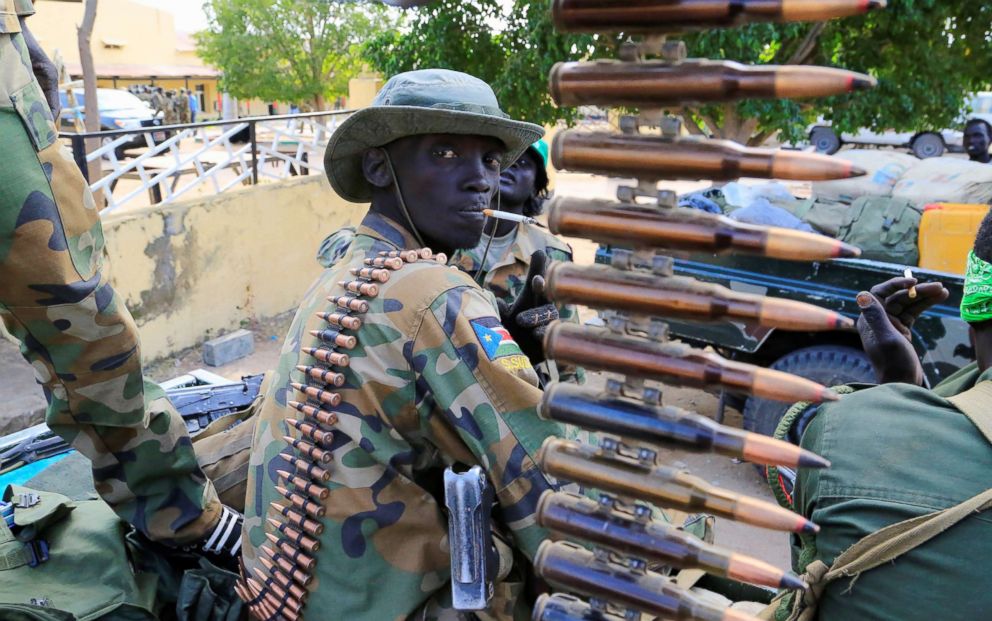
Showing posts with label Sudan. Show all posts

Friday, August 09, 2019

Has the UAE jumped the Saudi ship in Yemen?

Two days ago, Dubai-based academic Dr Abdul Khaliq Abdullah said that the war in Yemen is over for the UAE. Of course, we can’t say that his tweet was posted by an official individual, but it does indeed represent a new trend in the Emirates, which has taken a sharp turn on Yemen and relations with Iran. It is worth noting that this new position has appeared suddenly, and there is nothing to suggest any coordination between Riyadh and Abu Dhabi recently.
The UAE entered a coalition with Saudi Arabia with the intention of defeating Iran and its proxies in Yemen. It is also an original partner in the blockade of Qatar, based on the fact that the government in Doha has ties with Tehran.
In this sense, Saudi Arabia and the UAE have been in step, which some saw as making a difference in international and regional politics. However, the UAE’s measures over the past two weeks reflect a change in its reading of its role and abilities, as well as the threats to its policies.
Abu Dhabi has realised that the war in Yemen will not be settled militarily. Four years into the coalition’s involvement, there is no indication of a victory any time soon. On the contrary, the UAE has become an occupying force opposed by the Yemenis, who accuse it of seeking to divide Yemen into two distinct entities.
The ballistic missile and drone attacks by the Houthis have posed a new threat which Abu Dhabi did not take into consideration when it agreed to join the Saud-led coalition. There is also no doubt that the UAE has started to read US intentions more precisely, as President Donald Trump is not intending to engage in a war with Iran, especially while he is preparing a re-election campaign. Moreover, the warnings by Iranian-backed Hezbollah leader Hassan Nasrallah to the UAE have set alarm bells ringing; his talk of the high price that the “glass cities” will pay has prompted Emirati leaders to accelerate their withdrawal from Yemen and rapprochement with Iran. The withdrawal was not phased, and until recently the Emirates had behaved like any other colonial force in southern Yemen.
Houthis patrol Sanaa, Yemen on 5 December 2017 [Mohammed Hamoud/Anadolu Agency]
We do not know the exact degree of coordination between Abu Dhabi and Riyadh, but we do know that Saudi Arabia tried to dissuade the Emirates from withdrawing from Yemen, but to no avail, apparently. The UAE has started to reconsider its positions and it seems that it does not want to be cannon fodder in an upcoming war. Distancing itself from Saudi Arabia and its policies in the region has become its means of survival in advance of the storm clouds gathering.
Such independent moves are expected to anger the Saudis. Ultimately, though, the Emirates’ decision to withdraw and reach an understanding with Iran is realistic and rational. There are signs that Dubai in particular does not agree with the official UAE policy. The wealthy emirate acted as the trade outlet for the Iranians, but this has declined as a result of the sanctions imposed on Tehran and the UAE’s alignment with Saudi Arabia in its approach to Iran. The attacks on oil tankers in Fujairah port was another cause for concern about the future of the UAE’s political, economic and security stability.
The leaders of the Emirates may have noticed that the US has pulled back in its threats to Iran. They may also have reasoned that playing such games with the Iranians will not happen without the UAE paying a heavy price.
In short, the UAE has realised that the Saudi boat is no longer safe and that it will, almost inevitably, sink; this has pushed Abu Dhabi to jump ship and seek safety. It would not come as a surprise if Riyadh eventually follows suit and also pulls out of Yemen, prompting a similar change in policy with regard to Iran.

Wednesday, July 31, 2019

A Brief History of the CIA’s Dirty War in South Sudan

With the CIA’s Dirty War in South Sudan winding down its time to take a brief but comprehensive look at the origins and history of this most secret of Pax Americana crimes in Africa.
It is in the national interests of the USA to deprive China of access to African energy resources, with the Sudanese oil fields being the only Chinese owned and operated in Africa. It was no coincidence that one of the first targets of the “rebellion” in South Sudan was the Chinese oil fields. It has been US vs China in South Sudan from the start.
To begin this history we must go back to the origins of the South Sudan peace process that developed in 2004. This new breakthrough came about following the East Sudan uprising and subsequent intervention in Sudan by the Eritrean military in support of the Beja and Rashida peoples movement in 2003. Eritrean commandos cut the Port Sudan-Khartoum highway, the lifeline for 25 million residents of Sudans capital. For two weeks the Sudanese army counterattacked and ended up utterly defeated by the Eritrean special forces.
Facing critical food and fuel shortages the Sudanese officer core that was then the base of support for the recently deposed Omar Al Bashir capitulated and as part of the peace deal agreed to begin good faith negotiations with the various Sudanese resistance groups, both east, south and even, supposedly, in the west.
This resulted in John Garang, head of the Sudanese Peoples Liberation Movement and the President of Sudan Omar Al Bashir sitting down together to sign a comprehensive peace deal in Asmara, Eritrea late in 2004.
In December of 2004 we flew into Asmara, Eritrea and checked into the old Imperial Hotel, the Emboisoira, and found ourselves sharing breakfast with senior leaders of the SPLM. We had a satellite dish back in the US with EritreanTV so we had seen our breakfast mates on the news covering the recently signed peace deal in Asmara. They were all in high spirits, still excited about the prospect for peace in Sudan.
Later, after returning home to the USA in 2015 we heard of a new peace deal, this time being signed in Navaisha in Kenya. And this time the deal was brokered by the USA. The only real difference between the 2004 Asmara agreement and the 2005 Kenya deal was the inclusion of a clause calling for a referendum on independence for South Sudan.
The USA forced Bashir and Garang to accept this independence referendum after forcing a new peace “negotiation” and eventual, deal, in Kenya, away from Eritrean mediation efforts. Carrot and the stick, inducements and threats by the worlds superpower forced Garang and Bashir to accept the dismemberment of Sudan and created the conditions for one of the most brutal civil wars in African history. This was the doings of the USA from the get go.
After signing the peace deal John Garang, as head of the Sudanese Peoples Liberation Movement (SPLM), held his first public rally in Khartoum and drew a million people or more, three times the largest crowd Bashir had ever had. There he made a fateful speech.
John Garang made it clear that he was strongly AGAINST independence for South Sudan, instead calling on his fellow Sudanese in the North to help elect him president to build a new Sudan based on equal rights and justice for all Sudanese.
Garang stated his intent to be politically independent from the western powers instead looking to China, already in the oil business in Sudan, to develop Sudans economy. Sudan, as a whole, is the largest and potentially richest country in Africa and for the USA to lose Sudan to China wasn’t acceptable to Pax Americana.
John Garang was dead two weeks later in a mysterious helicopter crash and with him died a unified Sudan.
With in a few years a referendum was held for “independence” for South Sudan and voila it was a done deal. The irony is that John Garang, who was vehemently against independence for South Sudan, is now proclaimed “The Father” of the South Sudanese independent state.
In 2009 my old friend Alexander Cockburn contacted me asking for a story about what was going on vis a vis Sudan/South Sudan. I had been living next door in Eritrea for the past few years and I responded with “Storm Clouds Over South Sudan” which Alex and Jeffrey St. Claire published on their website “Counterpunch” where I predicted the upcoming holocaust in the worlds newest “independent” country.
I only wish my words had not come true.
I was repeatedly forced to continue exposing the CIA’s dirty war in South Sudan over the next few years with titles like “US vs China in South Sudan”, “The CIA’s DIrty War in South Sudan” amongst others in an attempt to shine the light of day on this most dirty, and secret, CIA covert war.
I am not exagerating when I call the civil war in South Sudan the most secret major covert military operation by the CIA in the Agency’s history. The proof of this is the fact that not a single writer other than myself has made this charge. This might be explained by the lengths prominent western journalists have attempted to point the blame away from the Agency and instead at the South Sudanese peoples themselves.
Its been horrific first hand stories by award winning progressive journalists like Nick Turse that painted this dirty war as black on black, African tribal violence at its worst.
When I pointed out to Nick Turse that the rebels were being paid $300 a month salaries, Mr. Turse denied the accuracy of my claim. In an exchange on Twitter he said that the rebels were making maybe $300 a year if that, so no need to explain the $6 million a month it would take to pay 20,000 rebel combatants salaries?
The problem with Mr. Turse assertion is that former South Sudanese rebel fighters have confirmed being paid $300 a month when they were under arms. In South Sudan young men join the army because it’s the only way to get enough money to feed your family, not out of patriotic zeal. When the money periodically dried up, usually stolen by the rebel generals, the soldiers start to leave, as my sources had experienced.
Do the math, 20,000 rebels paid $300 a month times 6 years plus food, fuel and ammo and you come out with over $500 million and counting? Honestly now, who has a history of coming up with that amount of cash, entirely secret for that long but the CIA? Must we be reminded of the CIA’s dirty wars in Angola and Mozambique in support of South African Apartheid back in the 1970’s and 80’s?
Show me the money, right? How come no one in the international media has ever asked this question? The rebels have no visible means of support, where could they be getting their funds from?
This story remains the best kept secret “dirty war” the CIA has ever operated. Until the Chinese brought in a couple thousand armed “peacekeepers” to protect their oil fields this CIA operation was successful, shutting down, temporarily Chinese oil production in South Sudan. But more importantly, it pretty much shut down Chinese expansion in South Sudan. That is what this dirty war was all about, preventing China from gaining a major foothold in Africa’s oil fields.
Show me the money? Show me the ONLY party that benefits from this war? Thats right, the ONLY party to benefit from this brutal, foreign funded African holocaust has been Pax Americana, the U.S. of A, by shutting down Chinese oil production and expansion in South Sudan.
Today peace has broken out in South Sudan, shaky as it may be. The CIA had been using the former regime in power in Ethiopia, the TPLF, to funnel their filthy lucre to the rebel armies in South Sudan but with the “Peaceful Revolution” breaking out in Ethiopia this avenue to the rebels was cut off. The rebel leadership had no choice but to cut a deal with South Sudan President Salva Kiir for cash so they could pay their troops salaries. No money, no honey, you get what you pay for and without hard CIA cash to pay their troops it became “Give peace a chance”. Of course corruption remains rife and stolen salaries for various ethnically based military departments have continued to cause revolts and instability.
Yet so far the peace deal signed, sealed and delivered in Asmara in 2018 has been holding. The CIA are now almost completely out of the picture in South Sudan though one should never underestimate the Agency’s capacity for evil. Its in the US national interest to deny China access to African oil so it will always continue to be US vs China in South Sudan, as part of Pax Americana’s designs for Africa as a whole.
Thomas C. Mountain is an historian and educator living and reporting from Eritrea since 2006. See thomascmountain on Facebook or best contact him at thomascmountain at g mail dot com

Monday, July 01, 2019

Hundreds of thousands of protesters flood Khartoum demanding end of army rule in Sudan: 7 protesters killed

Hundreds of thousands of protesters flooded Khartoum Sunday demanding end of army rule in Sudan while security forces killed at least seven protesters. There are reports of 181 injuries also. The army rule is supported by Islamist groups favoring Sharia law.
Sunday’s mass demonstrations – “Millions March” – were the first since security forces killed more than 100 people during the bloody dispersal of a protest camp outside the military headquarters on June 3. The military headquarters was the focal point of the people’s  months-long struggle for democracy.
Protest rallies were held in other cities of Sudan also.
Biggest demonstration
Media reports said:
Sunday’s demonstration was a massive show of strength by the pro-democracy movement.
People joined the biggest demonstration since the junta took power, despite an internet blackout and the security forces blocking bridges to prevent people from joining the Million March.
Protesters waved the Sudanese flag and chanted “civilian, civilian” and “blood for blood” in Khartoum during the Millions March as security forces looked on.
Opposition groups posted videos of what they said were rallies in other cities.
There was no immediate comment from the ruling Transitional Military Council (TMC) which had warned a day earlier that the coalition would bear the responsibility for any loss of life or damage resulting from the rallies.
Sunday’s demonstrations were also the largest since a deadly security service raid on a protest camp on June 3, which is being called as the “June 3rd massacre.” Military leaders have denied ordering the June 3 raid and said a crackdown on criminals nearby had spilled over to the sit-in. The ruling military council has said some officers had been detained for presumed responsibility.
Military rulers replaced long-time President Omar al-Bashir on April 11 after months of demonstrations against his rule. Opposition groups kept up their streets protests as they pressed the military to hand over government affairs to civilians. The June 30 protest coincides with the 30th anniversary of the 1989 coup by al-Bashir.
Talks broke down and protests paused after security services raided a sit-in protest outside the defense ministry on June 3. Mediators led by the African Union and Ethiopian Prime Minister Abiy Ahmed have since been trying to broker a return to direct talks.
There has been a run of smaller demonstrations in recent days, and the Forces for Freedom and Change (FFC), the opposition coalition, called for a million people to turn out Sunday.
Members of the Sudanese Professionals’ Association (SPA), one of the main opposition groups, said security services raided its headquarters Saturday night as it was about to give a news conference.
The Central Committee of Sudan Doctors said four people were killed in Khartoum’s twin city of Omdurman while one protester died after being hit by a bullet in the chest in the town of Atbara.
“There are several seriously wounded by the bullets of the military council militias in hospitals of the capital and the provinces,” it added.
An AFP report said:
Security forces fired tear gas to disperse demonstrators near the presidential palace and three other districts in Khartoum.
Tear gas was also fired in Omdurman and the eastern town of Gadaref.
“We are here for the martyrs of the [June 3] sit-in. We want a civilian state that guarantees our freedom. We want to get rid of military dictatorship,” one 23-year-old protester named only as Zeinab told AFP.
The junta has said it is prepared to resume talks with the opposition.
On Saturday, paramilitary forces broke up a news conference called by the SPA.
The military said it would hold the opposition responsible for any violence or loss of life in the protests.
Gen Dagalo, also known as Hemeti, warned of “vandals” and a “concealed agenda” that might take advantage of the demonstrations.
Gen Dagalo was formerly an ally of Bashir but switched sides to force him out of power.
He commands one of Sudan’s most dreaded paramilitary forces and has been accused of both human rights abuses in the conflict in Darfur and of using the paramilitaries to crack down on protesters on 3 June.
Keep up the revolution
CNN report said:
“Just fall, just fall,” Hadia chanted, her voice cutting through the din as a convoy of paramilitaries rolled past a mass of flag-waving protesters in downtown Khartoum.
She was one of the protesters who hit the streets on Sunday, responding to calls by protest leaders to keep up their “revolution” and pressure the ruling generals to hand power to civilians.
Despite clouds of tear gas and a large deployment of the feared paramilitary Rapid Support Forces (RSF), cheering crowds thronged the avenues of the capital.
Wrapped in large Sudanese flags, protesters whistled, cheered and chanted the slogans of the uprising.
“Civilian! Civilian!” they shouted, accompanied by a pulsing cacophony of car horns.
“Free revolutionaries, we will finish the job!”
At times, the processions trailed through intersections where riot police and RSF troops were deployed, accompanied by pick-ups mounted with heavy machine guns.
“We want a civilian government … we want a safe country and prosperity,” hollered Hadia Abdel Rahman, her one year-old daughter balanced on her hip.
“We celebrated Eid (main Islamic festival) with the sound of bullets and the blood of martyrs,” said Hadia.
“Our children are being killed in the streets,” added the 29-year-old.
Khaled Abdel Karim carried on his shoulders his four-year-old nephew, who was carrying a large Sudanese flag.
“The country has been suffering for 30 years … We are here to let the younger generations know” what happened, Abdel Karim said.
“We must anchor in them the love of the nation.”
The revolution will not die
Marchers on Sunday also passed the homes of some people killed since protests broke in December after the government tripled the price of bread.
The mother of Mahjoub al-Taj and dozens of demonstrators stood in a small dusty courtyard named in honor of her son.
“We are all Mahjoub,” they chanted in unison.
They paused only to quietly recite a short prayer in memory of the student, killed in December during clashes near his university.
“You are all my children,” said his mother, a Sudanese flag tied around her shoulders.
She shifted slowly between sobs and protest chants, tears running down her cheeks.
Nada Adel, a pink veil loosely framing her face and pierced nose, said the protests would continue until the generals handed over power.
“We’re fed up with the military. For decades, this country has been ruled by the military. It didn’t work and it will not work,” said the 28-year-old.
“Despite what they did at the sit-in, despite the people they killed … the revolution will not die in the hearts of the youth.”
Solidarity rallies
Protests have been planned in major cities around the world such as Washington, London, Dublin, Kuala Lumpur, etc., in solidarity with the Sudanese protesters.

Friday, June 21, 2019

Who is setting the Middle East on fire?

The Middle East is in so much disorder that chaos barely disappears in one place before it reappears in another. It is as if a hidden fiendish hand is controlling the destruction. Furthermore, it so happens that the flames only burn Arabs in the region and exhaust Arab resources.
Yemen, which was once a relatively happy country, is now suffering from the worst humanitarian disaster of this century so far, thanks to a futile war now in its fifth year. It is only Arabs involved, from the Arabian Peninsula and the Gulf, and it has affected western and central Saudi Arabia, as well as the UAE, places which have not witnessed war for decades.
Beloved Syria has become the scene of civil war for over eight years, during which time millions of people have been displaced, with hundreds of thousands killed and wounded while regional and international forces take advantage of their land. The blood being shed on Syrian soil is almost all Arab blood.
The people of Libya looked forward to freedom after ousting dictator Muammar Gaddafi in 2011, but as soon they looked like doing so, chaos erupted at the hands of one of Gaddafi’s former officers. Khalifa Haftar had been imprisoned in Chad before he announced his split from Gaddafi and became a refugee in the US, sponsored by the CIA and taking American citizenship. He is now behind the divisive and bloody fighting that is shedding Libyan blood; more Arab blood.
Now further chaos is erupting in Sudan as the people try to rise up against the regime of Omar Al-Bashir. After 30 years of oppression, tyranny and bloody repression, a group of generals raised the slogan of support for the popular revolutionary movement, arrested Bashir, formed a military council to take over the government, and then revealed their true face by ending a peaceful protest with violence at the hands of a compliant militia. More Arab blood shed by Arabs.
We should not lose sight of the tension in Algeria for the past four months. Weekly protests continue peacefully, albeit under the tight control of the army chief of staff. Let us hope things stay that way to allow the people to fulfil their aspirations.
Meanwhile, the chaos in Iraq continues. It’s nothing new, and the shedding of Arab blood is ongoing. In Palestine, the unrest and bloodletting has been going on for more than seventy years. The resistance against Israeli aggression has led to much Arab blood being spilt. Palestinian civilians are the main victims.
Does the Arab world have room for any more chaos? Who is behind it all, and why? Answers can be found in events in the heart of the region. The recent attacks on oil tankers in the Gulf of Oman sent a clear message that the oil supply routes from the Arabian Gulf can be cut very easily. While the fingers of blame pointed to Iran and its proxies, the government in Tehran denied any involvement. Analysts concluded that the attacks sought to escalate the conflict between the US and Iran, in favour of regional states, and Iran sought to ease the pressure of US economic sanctions. Interestingly, both the US and Iran helped to rescue tanker crews caught up in the dispute.
Elsewhere in the region, America may be accusing Iran of threatening international peace and security, but its own ally, Israel, has laid the foundations of an illegal Jewish settlement in the occupied Syrian Golan Heights named after a certain Donald Trump. The ceremony was attended by the US Ambassador in Israel, a confirmation that Washington accepts Israeli sovereignty over the occupied territory.
Israeli Prime Minister Benjamin Netanyahu seen at the dedication of an Israeli settlement to US President Donald Trump, in the Golan Heights on 16 June 2019 [USAmbIsrael / Twitter]
Next week sees the economic workshop being held in Bahrain to discuss the Palestinian issue through “investment for peace”, not land for peace. Washington has announced that the Arab parties which will participate are primarily Egypt, Jordan and Morocco. The programme is apparently a prelude to the political aspects of the “deal of the century”, the announcement of which has been delayed yet again, until November, following Israel’s second General Election this year, to be held in September.
In the midst of all of this, with contradictions galore between beating the drums of war and Arab states normalising relations with the Israeli enemy, Trump has spoken of his readiness for dialogue with Iran.
So who is causing all of this chaos in the Middle East, and what is the purpose? America will not strike Iran to please any regional party, nor will it stop blackmailing Arab oil states on the pretext of protecting them from the “Iranian threat”. More importantly, its “deal of the century” to liquidate the Palestinian cause is on its way. In the meantime, it is happy to let the Middle East remain in flames, as long as only the Arabs get burnt.

Thursday, June 20, 2019

Last Nation Standing – Iran

Although the Trump administration has given many reasons for its aggressive attitude toward the Islamic Republic of Iran, the more prominent reasons emerge from Iran failure to assure (1) it will never pursue nuclear weapons, (2) will not supply weapons to Hezbollah and Hamas, and, (3) will not threaten Israel.
Only Iranian pursuit of nuclear weapons can affect the security of the mighty United States (US), and that pursuit cannot occur until expiration of The Joint Comprehensive Plan of Action (JCPOA) allows additional enrichment, which, unless the JCPOA is terminated before it expires, is not until, about 2030. Seems the US can wait to see how events progress, talk with Iran as that date nears, and postpone action for at least a decade. With those considerations, why the US aggressive behavior toward Iran? Maybe, because Iran is “The Last Nation Standing.”
What does this mean? Well, there is a common thread in US actions of aggressive behavior toward certain nations that have not actually threatened the security of the United. The common thread is Israel, and after the decline of all of these nations that have not threatened the security of the United States, Iran is the Last Nation Standing.
Sudan
Not a nation to be recommended to any citizen — having been corrupt, intolerant, and ruled by  a despot — once wealthy with minerals and gushing oil, Sudan had possibility of becoming a strong and vibrant African nation, US policies of countering terrorism, assisting South Sudan rebels, and Interfering in the Darfur civil war contributed to preventing that outcome.
Link of a car bomb at the World Trade Center in New York to Osama bin Laden, who had residence in Sudan, prompted the US State Department to add Sudan to its list of state sponsors of terrorism. Afterwards, the United States accused Sudan of harboring members of several terrorist organizations, and, In October 1997, imposed economic, trade and financial sanctions. These sanctions occurred despite Sudan, starting in 1995, offering extradition or interviews of arrested al-Qaeda operatives, as well as allowing access to the extensive files of Sudanese intelligence. According to a CIA source, as reported in the Guardian, Sept 30, 2001, “This represents the worst single intelligence failure in this whole terrible business. It is the key to the whole thing right now. It is reasonable to say that had we had this data we may have had a better chance of preventing the attacks.”
A Congressional Research Service report at https://www.theatlantic.com/international/archive/2011/07/us-played-key-role-in-southern-sudans-long-journey-to-independence/241660/ exposed U.S. support of the southern Sudanese struggle. It listed actions going back to the Clinton era, including the provision of more than $20 million surplus U.S. military equipment to frontline states of Uganda, Eritrea, and Ethiopia, which the report says “helped reverse military gains made by the [Sudanese] government against the southern rebels”.
The US congress heightened the insurrection in Sudan’s Darfur province by passing an amendment, H.Con.Res.467 — 108th Congress (2003-2004), amended 07/22/2004, which “States that Congress declares that the atrocities unfolding in Darfur, Sudan, are genocide, and urges the Administration to refer to such atrocities as genocide.” The amendment gathered world opinion against the Sudanese government. Not clarified were that, although the public accepted the figure of 400,000 killings of people in Darfur, this genocide had no verification of the number of killings, no displayed mass graves, and no images of a great number of bodies.
Before he left the U.S. State department, former US Deputy Secretary of State Robert Zoellick stated, “It’s a tribal war. And frankly I don’t think foreign forces want to get in the middle of a tribal war of Sudanese.”(ABC News on-line, November 9, 2005)
A peace agreement, which ended the second Sudanese civil war in 2005 and restored southern autonomy, moved the United States, on September 9, 2009, to ease the sanctions on Sudan. On July 9, 2011, South Sudan became independent and reduced Sudan to a pipeline for South Sudan oil. After Sudan became a diminished state, barely able to survive, the United States lifted economic and trade sanctions. Independent South Sudan fared worse — involved in its own civil war, human rights violations, and social and economic turmoil.
Homeland Security News Wire, 24 October 2012“Israeli planes destroy Sudanese arms factory suspected of producing chemical weapons for Hamas.”
“According to James Mulla, the director of Voices of Sudan, a coalition of U.S.-based Sudanese-interest organizations, Israel’s support proved pivotal to the Anyana’s success during the first Sudanese civil war, which ended in 1972.
Over the years, there have been reports of the Israelis continuing to aid South Sudanese rebels during Sudan’s second civil war, which lasted from 1983 to 2005 and resulted in an estimated 1.5 million to 2.5 million deaths.”
Libya
Due to Libya Leader Moammar Gadhafi’s support for radical revolutions, the United States found reason to have strained relations with Libya. Sanctions soon followed. In March 1982, the U.S. Government prohibited imports of Libyan crude oil into the United States and expanded the controls on US origin goods intended for export to Libya. Licenses were required for all transactions, except food and medicine. In April 1985, all Export-Import Bank financing was prohibited.
On April 14, 1986, the United States launched air strikes against Libya in retaliation for “Libyan sponsorship of terrorism against American troops and citizens.” Five military targets and “terrorism centers” were hit, including Gadhafi’s headquarters.
After Libya halted its nuclear program, renounced terrorism, accepted responsibility for inappropriate actions by its officials, and paid appropriate compensation to the victims’ families for the bombing of a US commercial airplane over Lockerbie, Scotland, the United Nations (UN) lifted sanctions, the US terminated the applicability of the Iran and Libya Sanctions Act to Libya, and President Bush signed an Executive Order terminating the national emergency with respect to Libya, which ended economic sanctions.  All was going well until 2011.
Despite the lack of clarity of the 2011 rebellion against Gadhafi and specious reasons for NATO and US roles to defend the rebels, the U.S. government cut ties with the Gadhafi regime, sanctioned senior regime members, and, together with several European and Arab nations, managed to have the UN authorize military intervention in the conflict. The intervention demolished the Gadhafi regime, an outspoken antagonist of Israel, and enabled the rebels to obtain victory, another fallen nation and, still, in 2019, an embattled nation.
JEWISH TELEGRAPHIC AGENCY, February 22, 1973
“Israel Downs Libyan Passenger Plane; 70 Killed, 13 Survive; Bad Weather May Have Caused Plane to Stray.”
Egypt
Prime Minister of Egypt, Anwar Sadat, signing of a peace treaty with Israel stimulated the US to normalize relations with combative Egypt. The most populous and leading nation of the Arab world, principal defender of Arab rights, which had waged several wars with Israel, became a weakened observer to the hostilities affecting the Middle East.
Syria
The US never favored the Assad regimes, cut relations, and wished them to go away. Nevertheless, after the September 11, 2001 attacks on US soil, the Syrian Government tried limited cooperation with the US War on Terror.  Syrian intelligence alerted the US of an Al-Qaeda plan, which was to fly a hang glider loaded with explosives into the US Navy’s Fifth Fleet headquarters in Bahrain. Syria was also a destination for US captives outside of its borders in its rendition program. According to US officials, as reported by Nicholas Blanford, in a Special to The Christian Science Monitor, May 14, 2002, Syrian information was instrumental in catching militant Islamists around the world.
Syria’s opposition to the Iraq War deteriorated relations. Serious contention arose because of a US claim that the Syrian Government permitted foreign fighters to cross the Syrian border and enter Iraq. In May 2004, the Bush administration enacted the Syria Accountability and Lebanese Sovereignty Restoration Act, which imposed sanctions on Syria, banned the majority of exports to Syria except food and medicine, and prohibited the export of most goods containing more than 10 percent US manufactured component parts
Syria’s descent into near oblivion started with its civil wars, in which foreign fighters (ISIS and al-Nusra) entered Syria from NATO’s Turkey (no retribution to Turkey for allowing ISIS to enter Syria), and a multitude of insurgents fought with and against one another until Assad, with assistance from Russia, Iran and Hezbollah, overcame the insurgencies. WikiLeaks, in 2011, released diplomatic cables between the US embassy in Damascus and the State Department, which revealed that the US had given financial support to political opposition groups and their related projects through September 2010.
In December 2012, President Barack Obama announced the US would formally recognize the Syrian Opposition Coalition as the legitimate representative of the Syrian people.
With ISIS defeated and a limping Assad government barely managing to have the nearly destroyed nation survive, United States Ambassador to the United Nations. Nikki Haley. affirmed that “the priority of the United States policy concerning Bashar al-Assad is to no longer to force him out of power.” Bombed almost daily by Israeli missiles and planes, the hopelessly weak Syria cannot retaliate.
Haaretz, Sep 08, 2018
“Israel Secretly Armed and Funded 12 Syrian Rebel Groups, Report Says.”
Iraq
insufficient for US strategists that a decade of sanctions had only crippled Iraq, the US administration, citing strong intelligence reports that proved Saddam Hussein was developing weapons of mass destruction, invaded and destroyed Iraq. Anyone examining the reports could ascertain their falseness and show that Iraq was no more dangerous to the security of the United States than Venezuela. The already severely weakened Iraq, which always had the possibility of becoming a strong and vibrant nation, and was no threat to the US, suffered the mightiest of blows and fell with hardly a whimper.
NY Times, June 9, 1981
“Israeli jets destroy iraqi atomic reactor; attack condemned by u.s. and arab nations.”
Haaretz, Apr 03, 2003
“The war in Iraq was conceived by 25 neoconservative intellectuals, most of them Jewish (ED: Avid Israel supporters), who are pushing President Bush to change the course of history.”
Iran
No matter what Iran does, the US perceives Iran as an enemy and a threat to not only the Middle East, but to world order. All this hostility, despite the facts that (1) the Iranians showed willingness to create a new Afghanistan by pledging $560 million worth of assistance, almost equal to the amount that the United States pledged at the Tokyo donors’ conference in January 2002, (2) according to the U.S. envoy to Afghanistan, Richard Dobbins, Iran played a “decisive role in persuading the Northern Alliance delegation to compromise its demands of wanting 60 percent of the portfolios in an interim government,” (3) Iran arrested Al-Qaeda agents on its territory and, because Al-Qaeda linked the Shiite Muslims, represented by Iran and Hezbollah, with Crusaders, Zionists, and Jews as its most bitter enemies, had ample reason to combat  terrorist organizations, and (4) Iran has no reason for or capability of attacking the US or its western allies.
What do all these defeated nations, which have suffered from US aggressive tactics, have in common — they were no threat to the US and each was a severe antagonist of Israel — Sudan. Libya, Egypt, Syria and Iraq — each capable of achieving power, and now powerless. The US sacrificed its soldiers in battles, spent excessive sums of money, gained animosities from other nations for its aggressive efforts, and for one principal reason — to protect Israel.
Why does the US protect Israel?
Some believe the US protects Israel to have a western footprint in the Middle East, similar to that of using South Korea to have a footprint in Asia. Others speak of the foothold enabling oil control.
These arguments have contradictions. The US can acquire support from almost all Middle East nations by not supporting Israel, no longer is dependent on Middle East oil, and can actually lower oil prices and have more access to petroleum by encouraging Iran oil production.
Let’s talk real. The destructions visited upon the described nations have done little to advance US security and economy. Therefore, the reason for the actions and US support of Israel must be political — politicians are coopted by catering to the religious right community and other Israel defenders. US administrations are willing to sacrifice American lives and give exorbitant financial assistance to Israel in trade for electoral support from Israel’s backers. All this despite Israel making decisions counter to US interests, such as allowing a Chinese firm, in which the Chinese government has a major stake, to run the Israeli port of Haifa, which  hosts joint U.S.-Israeli naval drills and visits from American vessels.
Due to US aggressive tactics, the antagonists to Israel have fallen, and Iran is the last nation standing.
Dan Lieberman edits Alternative Insight, a commentary on foreign policy, economics, and politics. He is author of a nonfiction book, A Third Party Can Succeed in America, a Kindle, The Artistry of a Dog, and a novel, The Victory (under a pen name, David McWellan). 

Thursday, December 27, 2018

Bread revolution in Sudan

By Ramin Hossein Abadian
TEHRAN - The rise of bread price along with loss of a large part of Sudan’s resources and other issues over the years have triggered protests in the African country.
udan has been witnessing mass protests for some time. To understand the depth of Sudanese’s’ horrible condition it suffices to refer to an interview Reuters had conducted with a protestor who said he has been unable to buy a loaf of bread for four days.
The process of development in Sudan is accelerating to an extent that it has reached the capital. Subsequently, the internet was disrupted in the country and some social networks such as Facebook, Twitter and Whatsapp were filtered. Schools closed down. In two cities of Omdurman and Atbara, police attacked demonstrators who took to the streets for rising prices and reduction in liquidity and fired tear gas.
According to media reports, protesters in Khartoum, not far away from the Presidential Palace, chanted slogans calling for the withdrawal of Omar al-Bashir, President of Sudan, from power. Some sources have reported about 10 deaths and some 22. The hub for the protestors was the city of Atbara.
Atbara is the second most important city, after the city of Ad-Damir, in the province of Nahr al-Neel. The office of the British Colonial Railway Company was located in the city of Atbara, which is why it is called the city of iron and fire. The city of Atbara is a longtime base of the Communist Party of Sudan. For this reason, throughout history, the city has been the origins of labor protests against the ruling dictatorship.
Atbara is home to the office of the president of Nile Valley University (NVU) and several cement factories and light food industries.
The first demonstration in the city of Atbara was held by students and railway workers in protest of bread shortage and began on December 19. They closed the street leading to the radio and television building.
Another demonstration took place in Alshaya area, where protesters threw stones at the building of the ruling National Congress Party while several other demonstrations took place in other areas. The number of participants in the TV street rally reached 3,000.
The most important part of the demonstrations was in the cinema street where protestors chanted slogans of overthrowing the regime, and a group of artillery units who were passing by on a vehicle lifted their guns in solidarity with protestors.
One of the most important scenes in the protest rally was when the two-story building of the ruling party was set on fire. It's unclear who set fire to this building, and whether it was the angry protesters or other people? The dissidents believe that militants and security forces burn the building and destroy public and private property to undermine the image of protesters, as happened in the September 2013 uprising.
Bread was the main cause of the protest
Although Sudanese authorities were taken aback by the demonstrations, the current situation is a result of accumulated crisis over the years. Since 2011 and following the separation of southern Sudan, the country suffers a severe economic crisis, and one reason for that is the separation of oil fields with the independence of southern Sudan from the north.
In fact, these protests were predictable from a few days ago, especially since reports from inside Sudan have been indicative of the difficult situation, especially bread and fuel. The Sudanese economy is in its worst shape with inflation, and the country’s currency is taking a sluggish trend against the dollar. The loss of oil revenues with the independence of South Sudan in 2011 has played a huge role in the country’s downward economy.
Many investors refuse to work and invest in Sudan, which is still on the list of sponsors of Washington's terrorism, and its president is being prosecuted by international tribunals for mass murder in Darfur.
Sudan has entered a nightmare and the banks have lost liquidity because Sudanese citizens have withdrawn their money from the banks and exchanged it for dollars. Only a few currency exchange stores operate in Khartoum, and banks in other parts of the country only allow citizens to withdraw $10 a day.
The situation became critical to the extent that the government could not provide flour for the bread industry as well as fuel for public transport and vehicles. After that, prices skyrocketed and the black market emerged for the basic necessities.
The Sudanese government made a strategic mistake when they allocated the fuel and flour of other states to the capital. The price of bread in Sudan increased a lot. The crackdown on the demonstrators became more violent as time went by.
Has the military lost hope in the regime?
The thing that could have happened in the city of Atbara was the army's support of the demonstrators against the police and the security forces. Army forces stationed in some areas and prevented a violent crackdown on people, and in some areas, including Atbara support the protesters. Some reports show police adherents to protesters.
Some analysts see the move as a departure from the army and military institutions of this country with Omar al-Bashir, and the withdrawal of his support and others as an attempt to calm the angry protesters.
Where do the political parties stand in the bread revolution?
Political parties initially did not take a stand on the rallies, and perhaps because they keep away from the actions of some protesters in destruction of state and private property. But when the changes became intense and they were out of control of the ruling party, and the rules of prohibition were applied in al-Qaziraf and Atbara, the National Umma Party changed position and urged supporters to take part in the rallies.
The Egyptian ruler worried about the spread of Sudan's demonstrations and movements
Egyptian security officials and the Egyptian presidency have ordered the media to refrain from addressing the Sudanese demonstrations to prevent similar incidents. According to the report, Egyptian media have not yet responded to the incident after four days of Sudanese unrest that killed and injured dozens of protesters. Even the regional newspapers of al-Ahram, al-Akhbar and al-Mumouriya have not reported any news of Sudan's incidents. The Egyptian government is worried by its neighbors with Sudan that the scope of protests will spread to Egypt in bad livelihoods and economic problems in the near future.
Omar al-Bashir's reasons refusal to leave the presidential seat
If al-Bashir resigns from power, he must surrender to the International Criminal Court, as Umar al-Bashir is prosecuted by the International Criminal Court on charges of committing war crimes, crimes against humanity and mass murder in the Darfur region of western Sudan. In 2009 and 2010 the court issued his arrest warrant.
Another reason is that al-Bashir, despite the aggravation of existing crises, prepares himself for the elections in 2020 and does not spare any efforts to overcome the constitutional obstacles; while under article 57 of the constitution adopted in the year 2005 Sudan, no one more than 2 courses can become a presidential candidate.
The role of Sudanese military involvement in the Yemeni war in a crisis
Omar al-Bashir, in hopes of grabbing money for servicing the country's military economy, sent Yemen to the fighting fronts, but many political currents and popular campaigns in Sudan demand the country’s return to the Yemeni War.
The fraction of the forces of change in Sudan's parliament also called for the immediate withdrawal of Sudanese forces from the war with Yemen and called for Sudan's armed forces to oppose the constitution to the Yemeni war.
It seems that the current crisis is different from the preceding ones, and we have to follow the course of Sudan's developments and anticipate the end of bread revolution.

Friday, September 14, 2018

UK ‘failing’ to save thousands of children from modern slavery


UK ‘failing’ to save thousands of children from modern slavery

Britain is failing to protect thousands of children from being trafficked and enslaved, activists said on Tuesday, criticizing the government for lacking a clear strategy to stop girls from being sexually abused and gangs using young people as drug mules.

The government’s approach to tackling child trafficking is fragmented and young victims lack specialist care at a time when a record number of child slaves are being uncovered, said the Anti-Trafficking Monitoring Group (ATMG), a group of charities, Reuters reported.
In Britain, 2,118 children suspected to have been trafficked — mostly trapped in sexual exploitation, domestic servitude or forced labor — were referred to the government last year, up 66 percent on 2016 and the highest annual number on record.
About a third were British, many used as drug runners, while hundreds were trafficked from countries such as Vietnam, Sudan, Eritrea, Afghanistan and Iraq, according to government figures.
“Having no clear plan in place to prevent child trafficking in the UK ... should shame this government,” said Anti-Slavery International’s Chief Executive Jasmine O’Connor, adding that simply targeting the traffickers would not solve the problem.
“We need to create support networks that can make children and their families resilient to being coerced, are able to spot the worrying signs quickly, and can provide specialized support for children who have already been trafficked,” she added.
A Home Office spokesman told Reuters that the government already had a clear plan to prevent human trafficking, especially that of children.
“This has been a key component of our world-leading approach to tackling modern slavery since 2014, when the Modern Slavery Strategy was published,” he said.
Britain last week announced a two-million-pound ($2.6-million) scheme to help authorities protect vulnerable children from traffickers and gangs who rape them and force them to move drugs from cities to rural areas.
Yet the government mostly focuses on helping children who have been exploited, rather than prevention, while frontline professionals such as doctors, teachers and social workers lack the training to spot vulnerable children, according to the ATMG.
Unlike adult victims, trafficked children have no guarantee of specialist support once identified, and many go into the care of local authorities where they may end up in fresh danger, said Catherine Baker, policy officer at charity ECPAT UK.
“In the care of children’s services, they too often go missing or are re-trafficked. This marks a complete failure to prevent these most vulnerable of victims from further harm.”
Hailed as a global leader in the anti-slavery drive, Britain last month said it would review its landmark 2015 law amid criticism that it is not being used fully to jail traffickers, help victims, or drive companies to spot and stop forced labor.
Britain is home to at least 136,000 modern-day slaves, says the Australian human rights group Walk Free Foundation — a figure about 10 times higher than a 2013 government estimate.