Showing posts with label Islamic Revolution in Iran. Show all posts

Tuesday, March 19, 2019

MKO’s daydream & change of system in Iran running out of road

Anne and Massoud Khodabandeh
MKO’s Daydream & Change of System in Iran Running Out Of Road The US and the terrorist outfits it is backing in a vain bid to undermine the Islamic Republic on the presumption of changing the system of government in Iran, have run into a dead end.
A report appeared on the Lobelog site in this regard; jointly authored by the husband-and-wife team Anne and Massoud Khodabandeh, and titled: “MKO’s Daydream & Change of System in Iran Running Out Of Road”.
Massoud Khodabandeh is the director of the London-based Middle East Strategy Consultants and has worked with the authorities in post-Saddam Iraq, while Anne is an expert on anti-terrorist activities.
The so-called “regime change in Iran” bandwagon—driven by US warmongers, fueled by false prophesy, and hurtling pell-mell down the road contains various characters, some new and some old.
The bandwagon itself is an ideological construct created 40 years ago in response to the victory of the Islamic Revolution in Iran. It has taken on various incarnations over the years, but its central purpose has always been to destroy the Islamic Republic of Iran and replace it with a compliant pro-American regime.
The drivers of this bandwagon are paid large sums to pursue this agenda at any cost. Others are mere passengers, hoping for a role in case the vehicle reaches the destination. Among these passengers is the MKO terrorist outfit – known in Iran as “monafeqin” or hypocrites for their killing of at least 17,000 Iranian people and their treason in siding with Saddam of the repressive Ba’th minority regime during the 8-year war imposed the US on the Islamic Republic.
MKO, which used to be on the official list of terrorist groups in the US and Europe, has now been delisted and is being called “democratic opposition” – a label which hardly fits this hated cultish outfit.
The MKO has been a passenger for all 40 years of the journey, hanging on by paying the American drivers. These drivers are public persons such as National Security Advisor John Bolton and Trump lawyer Rudi Giuliani, along with a host of other supposedly “influential” persons who steer the bandwagon inexorably toward conflict.
But just as the bandwagon appears to be gathering speed and momentum—in a bid to scare the Trump administration’s opponents—the MKO appears to be running out of road. And that could signal a halt to the whole enterprise.
The first sign of this came in a piece by Eli Clifton, which discussed the provenance of a large payment ($165,000) received by John Bolton in relation to a tweet to “defend a non-governmental anti-Iran pressure group, called UANI or United Against Nuclear Iran.”
Clifton’s own tweet was met by a couple of feeble MKO slave troll posts on his thread spouting the usual “no appeasement” themes. This indicates that the MKO has been outbid by a new bandwagon passenger called UANI, since the MKO only managed $40,000 for one of Bolton’s speeches. Also, the MKO trolls are running out of steam, back in their closed camp in Albania.
Even while Bolton and the Trump administration, along with Zionist Premier Benjamin Netanyahu and Saudi Heir Apparent Mohamed bin Salman (MBS) are pushing for a war with Iran, they are beginning to realize that the MKO is not the stick needed to strike fear into Tehran. Indeed, a look at the recent behaviour of the MKO in Albania reveals a failing group beset by internal crisis.
After a series of critical investigative articles by reporters from Al-Jazeera, The Guardian, The Independent, Channel 4 News, NBC, and others, the recent report in Der Spiegel by Luisa Hommerich was apparently the last straw. The MKO issued a Farsi language statement (written and published in Europe) threatening to assassinate her—for just doing her job.
Hommerich reported that inside the camp in Albania that MKO militants were still practicing the deadly techniques for combat taught them by Saddam’s Republican Guard, such as slitting throats with a knife, breaking hands, gouging out eyes with fingers, and tearing the mouth open.
In 2017, the Trump administration reversed a 2013 plan by former Secretary of State Hillary Clinton to establish a De-Radicalisation Institute to disband and rehabilitate the MKO, allowing the dangerous cult to regroup behind closed doors in a de facto extra-territorial enclave and continue its violent practices.
In spite of this boost, the MKO, beset by exposures and defections, is trying to prevent the total collapse of the terrorist outfit. Around a thousand members have left the group since it relocated to Albania. The front line over which the MKO peers at the Islamic Republic is no longer Iraq but is now represented by a group of 40 former members protesting in Tirana.
The MKO claim that these are all “agents of the Islamic Republic” who want to kill the remaining cult members. So, instead of orchestrating change of the ruling system in Iran, the MKO can’t even deal with 40 destitute former members.
The MKO is engaged in a form of modern slavery by not paying thousands of activists for 30 years or more. Members who leave the group are left destitute because they have nothing but the clothes on their back even after decades of loyal service.
The MKO claims that members offer their services as “volunteers.” But the preamble to the UN Declaration of Human Rights states in its opening sentence that human rights are inalienable—that is, they cannot be disowned by anyone for any reason. MKO leader Maryam Rajavi is responsible for such decisions and treatment.
Not only are the defectors that Hommerich profiles impoverished because they have not had financial recompense for their years of devotion, they are also deliberately left stateless. The UN High Commissioner for Refugees brought the MKO to Albania from Iraq on supposedly “humanitarian grounds.” But on arrival they were not granted UN refugee status, nor have they been issued Albanian identity documents that would allow them to work or travel. Lack of residency rights also means that they cannot register for a bank account. They have no identity papers whatsoever, except the flimsy piece of paper used to fly them through international airspace from Baghdad to Tirana.
In her pursuit of fame and glory, Maryam Rajavi treats her members as, essentially, cannon fodder. In the idealized future she paints for the members, they will one day march on Tehran, as the vanguard of a spontaneous uprising of the Iranian people. So, why would they need money or identity papers?
In the meantime, it suits Rajavi to have her “followers” incarcerated in a closed camp unable to live independent lives, subject to the whims and demands of the struggle that she purports to lead. But that struggle has almost evaporated. Sure, the MKO is still performing propaganda tasks for various Saudis, Israelis, and Americans to advance the anti-Iran push. But even that is becoming more and more irrelevant as the MKO itself begins to fail.

Tuesday, February 05, 2019

Women, 40 years with the revolution

Paying close attention to the social movements and developments that have so far happened in the world shows that women have played a significant role in them. A prominent feature of the Islamic Revolution in Iran is that women had a broad participation in it. Women, as half of the Iranian population, were very effective in the revolution and they took part in all demonstrations.
The presence of brave women in the scenes of the revolution was so impressive that Imam Khomeini praised them saying, "Where in history have you seen such a thing? Today, the courageous women, hugging their babies, go to the field of machineguns and tanks. When have such manliness and sacrifice of women been recorded in history?"
The conscious women of Iran blended motherly love with the love of God and got ready to sacrifice whatever they had. That's why Imam Khomeini lauded them in several junctures. He believed that these were the women, "who were present on the first line, encouraged men to participate and struggle; the women who trained their children for martyrdom; the women who perpetuated the revolution by safeguarding the blood of martyrs." Elsewhere Imam Khomeini said, "We owe our movement to women."
In the heat of the Islamic Revolution, some women would attend political speeches and would inform other women of important developments and the date and location of demonstrations. Some others would grant refuge to those combatants who had escaped from the dungeons of Shah. Another group of women would look after the injured combatants who couldn't be transferred to hospital. One of the spectacular activities of women was their participation in demonstrations along their fathers, brothers, husbands, sons and relatives. Many women were martyred during struggles against the despotic regime. Baakhtar Biglari was a 30-year-old woman from the nomads of Lorestan province. As soon as she heard of Imam Khomeini's uprising against the tyrannical regime of Shah, she took her two young children and entered the scene of struggle. When the bullets of the oppressive regime were showering on them, she lost her 3-year-old son and husband. Then she continued confronting the mercenaries of the regime and was martyred later on. Her name has been recorded as the first martyred woman of the Islamic Revolution. Imam Khomeini glorified the status of women, saying, "Our dear ladies caused the men to become brave, too. We are in debt to the troubles of ladies."
After the victory of the Islamic Revolution, women continued their positive role in different domains. As they loved their evolution, they tried their best to help the growth and flourishing of the revolution. Imam Khomeini and Ayatollah Khamenei have always appreciated this enthusiasm and capacity. Thus, they encouraged maximum benefiting from their talents and capabilities. The effective participation of women in various domains transfers the message to the world that, unlike the regional reactionary regimes which curtail women's activities in the name of Islam, Islamic Iran has brought women to the scene and gives them the right to vote and other rights. Yet, the Islamic Republic doesn’t deceive women with the propaganda of the west to lose their dignity and turn them into a sexual commodity in the hand of libertine men and companies.
After the victory of the Islamic Revolution, one of the most prominent examples of women's participation was the 8-year imposed war. Iranian women stood like solid mountains in the face of hardships and martyrdom of their brothers, fathers, husbands and sons. Some of the mothers sacrificed 3-4 children in the war. No words can explain the patience of these women.
Another instance of women's activity in Islamic Iran is their broad presence in scientific circles. Imam Khomeini said, "A woman should interfere in the affairs of the Islamic country. Just as you have played basic role in movements and have contributed, now, too, you must contribute in the victory and don't forget to stage a movement and uprising whenever it requires."
Imam Khomeini's attention to the growth and dynamism of women in the Islamic system shaped their approach in various scenes. Currently, Iranian women are eager to acquire different sciences. More than 68% of the capacity of higher education in Iran belongs to girls and women's literacy rate has increased from 34% before the revolution to 80% in the present era. According to the UNESCO report in 2012, the Islamic Republic was among 6 countries possessing gender equality in education. Furthermore, as per the emphases of Ayatollah Khamenei in recent years on the emergence of scientific movement in the country, we witness the flourishing of bright and creative girls at global scientific Olympiads. The growth of women's presence at different scientific and technological domains such as patenting of inventions and innovations in Nanotechnology, nuclear energy, aerospace, basic sciences, and so on are part of women's advancements in the Islamic Republic of Iran. Women have the right to vote, to choose a job, and even obtain administrative and managerial posts.
Ayatollah Khamenei believes that having a big number of learned and educated women with bright thoughts is a divine bounty and one of the honors of the Islamic Republic. He says, "Today, the banner of identity and cultural independence is in the hand of Iranian women. Today, the Iranian ladies, with their hijab, are exporting their identity and cultural independence. It means that the world is hearing a new word. A woman can be active in social fields and have a deep social effect. Today, women of our country have such an effectiveness in different parts. Yet, hijab and modesty and separation between man and woman, distance between man and woman, not being exposed to men's abuse, not belittling and humiliating themselves to the level of an instrument for stranger and insatiable men's delight, are the features of today's Iranian woman and Muslim woman."
Thus, Iranian women have contributed a lot to the Islamic Revolution and the Islamic Republic and the Islamic Revolution and the Islamic Republic have, in turn, caused remarkable improvements in the cultural and intellectual structure of women.

Tuesday, December 11, 2018

Countdown to the End of the Zionist Regime

By: Kayhan Int’l 

The Intefadha, or Uprising, whose 31st anniversary the Palestinians and their supporters marked yesterday on December 9 with wide scale protests in their usurped homeland and in other countries, re-emphasized the fact that armed struggle to end the illegal existence of the Zionist regime is the only solution to their 70-year long plight.
The Intefadha, which has its roots in Islamic values and for the first time saw the vociferous chants of God’s Majesty (Allah-o-Akbar) reverberating throughout the usurped land of Palestine, changed the nature of the struggle that was hitherto led by so-called nationalist, secular, and socialist parties, lacking the necessary spirit to sincerely confront Israel and always looking for a chance of compromise with their mortal enemies, even if it meant betrayal of the Palestinian cause.
The Intefadha ended once and for all the theatrical struggle led by PLO leader Yasser Arafat, who was time and again deceived by Israel and its godfathers, and was a bolt from the blue for Israel and its accomplices-in-crimes, including certain Arab regimes, conspiring to push into oblivion the chronic question of occupation of Palestine.
Without the least doubt, the Intefadha was inspired by the Islamic Revolution in Iran, whose indomitable spirit the Palestinian Islamic movements, such as Hamas and Islamic Jihad, which were considered marginal groups, discovered rather late when they came into contact with Lebanon’s legendry anti-terrorism movement, the Hezbollah, as a result of the exile of several Palestinian Islamic activists to no man’s land near the Lebanese border by the Zionist regime – although the Father of the Islamic Revolution, Imam Khomeini (RA) had designated in 1979 the Last Friday of the Fasting Month of Ramadhan as World Qods Day to mobilize Muslims and conscientious people all over the globe for supporting the Palestinian cause.
It was indeed a monumental discovery for the Palestinian Muslims and they have never looked backed ever since, going from strength-to-strength by acquiring unthinkable defensive armaments, such as missiles and drones, and blunting on several occasions, albeit through high sacrifices in men and material, the full scale military assaults of the Israeli army.
Starting from the hurling of stones at the Zionists military in 1987, the Palestinians now possess incendiary projectiles, and Insha Allah (God Willing) will soon have more sophisticated means of defence, even in the West Bank, to defeat their mortal enemies and end the illegal existence of the Zionist entity.
It is worth recalling that the Second Intefadha started in Bayt al-Moqaddas on 28 September 2000, following the desecration of the sacred al-Aqsa Mosque by Ariel Sharon the Butcher of over 5,000 Palestinians in the Sabra and Shatilla refugee camps of southern Lebanon in 1982.
Though Sharon, exploited criminal sentiments amongst the Zionist to become Prime Minister the next year, but towareds the end of his terrorist tenure in January 2006 he was struck by Divine Wrath and after eight agonizing years in the state of coma, he plunged into the fires of hell on 11th January 2014.
This means the Palestinian struggle is a sacred one, which no power can stop. And with the stepping up of the campaign, the day will soon dawn when, as the Leader of the Islamic Revolution, Ayatollah Seyyed Ali Khamenei, has prophesied, there will be only one single country called Palestine stretching from the River Jordan in the east to the Mediterranean Sea in the west and from Sinai in the south to the borders of Lebanon in the north.
This is not a delusion as was evident recently by several non-Muslim activists in Europe and the Americas, such as Marc Lamont Hill of the US, who last month in his speech at the UN General Assembly in New York, said in explicit words that the only solution is one singe country called Palestine from the River to the Sea. 
To recall the prophetic words of the Late Imam Khomeini "the cancerous tumour called Israel should be weeded out from the region.”

Saturday, October 27, 2018

Riyadh likely to double anti-Iran policies after Khashoggi death: Prof. Zonis


Riyadh likely to double anti-Iran policies after Khashoggi death: Prof. Zonis
TEHRAN, Oct. 25 (MNA) – Marvin Zonis says President Trump is unlikely to maintain a strong response to the Saudi murder of Jamal Khashoggi and Saudi Arabia will likely double its anti_Iran policies to divert attention.
Brutal killing of Saudi journalist Jamal Khashoggi at the Saudi Consulate in Istanbul created a wave of reactions against Saudi young Crown Prince Mohammed bin Salman’s suppressive policies.
Despite early denials, worldwide reactions finally forced the Saudi rulers to acknowledge the death of Saudi journalist Jamal Khashoggi, the critic of Crown Prince Mohammed bin Salman policies.
Following the incident over the past two weeks there have been speculations about possible removal of Muhammad bin Salman from power.
To shed more light on the issue we reached out to Marvin Zonis, Professor of international political economy and leadership in the University of Chicago.
Here is the full text of his interview:
How serious and strong do you see President Trump’s reaction to savage death of Saudi Journalist Jamal Khashoggi. How should his reaction be to the issue in order to decrease criticizes and not let the issue affect the results of the upcoming congress election?
President Trump is unlikely to maintain a strong response to the Saudi murder of Jamal Khashoggi. His attachment to the Saudis appears to be very strong. That country, after all, was the first foreign state he visited after his inauguration — a break with American tradition. While he was there, the Saudis flattered him endlessly — flattery he adored. Also, his son-in-law, Jared Kushner, seems to have befriended MbS and urged Trump to maintain the relationship. Also, Trump sees an alliance with MbS as a pillar of anti-Iranian policy. That rates very high in the foreign policy of the Trump administration — Bolton, Giuliani are rabidly anti-Iranian. So, in typical Trump fashion, he has decided to divert attention away from the Saudi murder by focusing instead on the “caravan” of some 7000 migrants from Central America now crossing Mexico to enter the U.S. 
Will international pressures result in changes to power structure in Saudi Arabia?
It is unlikely that foreign pressure will force the royal family to diminish the power of Muhammad Bin Salman. His father has broken the long standing precedent of moving power to the children of King Abdul Aziz’s sons by making his own son the Crown Prince. Only the collective action of members from other branches of the royal family could result in a change of power. There is very little evidence of that occurring.
Will brutal death of Khashoggi cause changes to destructive Saudi regional policies led by Crown Prince Muhammad bin Salman particularly in Syria and Iraq which has been a source of threat against national security of countries like Turkey?
It is more likely that MbS will double down on his anti-Iran policies as a way of diverting attention from the murder.
Interview by Payman Yazdani

Wednesday, September 19, 2018

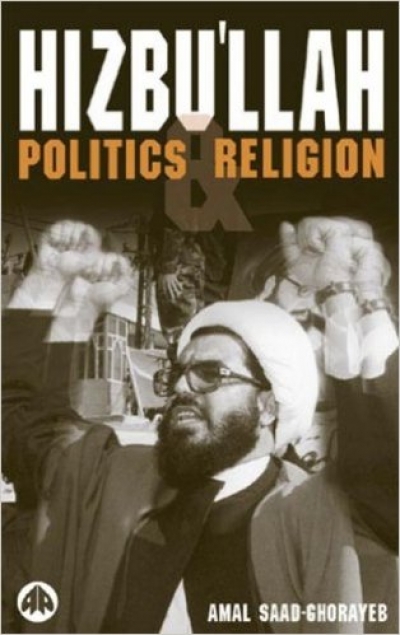
An unusually sympathetic and understanding analysis of Hizbullah’s political thought

By Laila Juma

Hizbullah: Politics and Religion by Amal Saad-Ghorayeb. Pub: Pluto Books, London, UK, 2002. Pp: 254. Pbk: £14.99.
The Lebanese Hizbullah is one of the best-known Islamic movements in the world. Since their emergence in the aftermath of the Israeli invasion of Lebanon in 1982, their successful resistance to the Israeli occupation of the south of the country, their mature leadership of the Shia community in Lebanon, and their principled Islamic stances on Palestine and other key issues facing the Ummah globally, have made them highly respected by Muslims all around the world. Almost inevitably therefore, they have been maligned and demonised by Western governments, and little reliable and objective information is available on them.
This book, by a Lebanese academic at the Lebanese American University in Beirut, substantially fills this gap, providing a far better account and understanding of Hizbullah’s political thought than is offered by most English-language material. The key to this success is that Saad-Ghorayeb approaches her subject by looking at the context in which Hizbullah operates, and the assumptions and logic on which their understanding and policies are based, instead of judging them on the basis of Western understandings and assumptions.
Saad-Ghorayeb correctly identifies the key to the origin of the Hizbullah not so much as a response to the Israeli invasion of Lebanon, but as the result of a process of the politicization of the Lebanese Shia, the country’s largest and poorest community, that had begun rather earlier, and which had already seen the establishment of the Amal movement by Imam Musa Sadr (who disappeared in 1978 while on a visit to Libya). This process had also been influenced by the success of the Islamic Revolution in Iran in 1979, which had a major impact in Lebanon, as elsewhere. In Lebanon, the influence was particularly direct because of the connections between Lebanese and Iranian ulama, forged in institutions such as Najaf.
Having said that, the Shias were undoubtedly the main Lebanese victims of the Israeli invasion. The Sabra and Shatila massacres and the bloody siege of Beirut have become the enduring images of the invasion, but scores of Lebanese villages were destroyed by Israeli forces as they drove savagely through the south of the country, and an estimated 250,000 people were displaced. It was in the context of the destruction and political impact of the Israeli invasion that Hizbullah emerged, as an alternative to Amal, as the main Shia political movement, combining a particular political approach with a determined stance of armed resistance to the Israeli occupation, a stance which forced Israel’s humiliating withdrawal from their self-declared ‘buffer zone’ in the south of the country in May 2000.
During this period, of course, the domestic political situation in Lebanon changed radically, through the breakdown of the post-invasion period, the civil war, and ultimately the formulation of a new constitution under the Ta’if Agreement of 1989, which substantially ‘normalised’ Lebanese politics. For all its emphasis on armed resistance to Israel’s continued occupation, Hizbullah also provided a principled opposition to the Ta’if accord for maintaining the sectarian basis of Lebanese politics, and in particular for perpetuating Maronite hegemony. At the same time, it also took the lead in representing Lebanon’s traditionally marginalised Shia interests within the new order, becoming what Saad-Ghorayeb characterises as "a ‘protest’ anti-system party" within the Ta’if order, and establishing itself as a major force in Lebanese politics since then.
Finally, the Hizbullah’s extensive programs of social welfare for those lowest on the economic and social ladders must also be mentioned. Like Hamas in Palestine, the Revolutionary Islamic movement in Iran, and other Islamic movements elsewhere, Hizbullah’s understanding of Islam encompasses not only political ideology and military jihad, but the provision of the needs of the weak and needy in society. This, combined with the humility, simplicity and selflessness displayed by their leaders, has also given them a particular place in Lebanese society, recognised not only by Shias but by other Muslims, and even non-Muslims, in the country.
Unlike most discussions of the Hizbullah, which see it primarily as a ‘terrorist’, ‘militant’ or ‘extremist’ anti-Israel movement, Saad-Ghorayeb succeeds in recognising all these facets of Hizbullah, and in developing an analysis of its work which explains and encompasses them all. Having discussed briefly the movement’s origins in her introduction, she takes as her starting point, in Chapter One, not its opposition to zionism but its position in Lebanon’s politics. The key question she addresses is how Hizbullah, a revolutionary Islamic movement inspired and modelled on that of Iran, can operate in an un-Islamic political order.
Her explanation is that, even within the post-Ta’if political order which Hizbullah refuses to legitimise, it is fulfilling its political objective of representing the "oppressed against the oppressors", highlighting that in ‘the oppressed’ Hizbullah includes all sectors of Lebanese society, not only Muslim or Shia. This understanding of the role of an Islamic movement, she considers, is what makes it possible for Hizbullah to operate within Lebanon’s political system, despite the fact that it is not an Islamic state as envisaged in Hizbullah’s political thought, pending the creation of an Islamic state when that becomes a realistic prospect. The result, she concludes, is a "juxtaposition of the ideological and the political" which has enabled the Hizbullah "to assume a politically constructive form and a politically mature content — the requisites for any party’s institutional longevity."
It is in the framework of this understanding that Saad-Ghorayeb then goes on to discuss Hizbullah’s political understanding at various levels in the core of the book. In Chapter Two, called "The Islamic State and Democracy", she discusses Hizbullah’s conception of the Islamic state, a central element of the movement’s thinking. She points out that, like the Islamic Revolution in Iran, Hizbullah aims to Islamise Lebanese society ‘from below’, and that Hizbullah leaders do not regard that as being inconsistent with a democratic state as they understand it. She points out that "although the implementation of an Islamic state is contingent upon its feasibility as a political scheme, it is still viewed as a religiously ordained necessity... In fact, the very notion of an Islamic movement that does not aspire to this goal is inconceivable."
In the next two chapters she discusses the Hizbullah’s understanding of Imam Khomeini’s concept of Vilayat-e Faqih, which is a cornerstone of their political understanding, and of its position as part of a global Muslim Ummah. Here she unfortunately shows some confusion in trying to reconcile Hizbullah’s commitment to the ‘pan-Islamic’ ideal of Vilayet-e Faqih (and its allegiance to Iran’s leader, Ayatullah Khamenei) with its ‘nationalist’ acceptance of Lebanese political realities. Nonetheless, her discussion of the influence that the leadership of the Islamic state has on Hizbullah positions is informative, particularly when read in conjunction with her own explanation of the Hizbullah’s ‘Islamic universalism’, as expressed in its own understanding of its title ‘Party of God’: "The Party of God is an expression for describing the multitude of believers generally. It is definitely not a closed group within this multitude who claims for itself the honour of affiliation to the Party of God, at the exclusion of other believers".
In the next chapter, Saad-Ghorayeb looks at "The Struggle with the West", explaining its deep-rooted and principled rejection of Western civilization, on both historical grounds and ideological ones. She explores various aspects of this anti-Western animus, from the rejection of its econnomic imperialism to its support for zionism and its cultural immorality and aggression. Although she covers most areas, she does not aim to explain Hizbullah’s position to Western readers, and so probably raises more questions by writing and publishing this book than she answers.
The last three chapters of the book look at Hizbullah’s understanding of zionism, Jews and Israel, beginning with the struggle against the Israeli occupation of Lebanon and then going on to discuss also the movement’s more abstract attitude. She particularly emphasises the fairness with which Hizbullah has treated the region’s Christian minority community, which some might have regarded as being tainted by the actions of Israel’s proxy South Lebanese Army. She also explains the movement’s fundamental anti-zionism, and distinguishes it from western-style anti-semitism.
All in all, this book is likely to prove eye-opening for uninformed readers, coming to think about Hizbullah and its role as a leading Islamic movement in the Muslim world for the first time. It certainly questions many established Western preconceptions, without always providing corrective explanations of Hizbullah’s true position. Nonetheless, it will certainly prove to be a very useful contribution to the literature on this subject and this region.


-Laila Juma

Tuesday, July 24, 2018

Trump’s Criminal Tweet Exposes His Suicide-Seeking Disturbed Mind


It should not come as a surprise if Donald Trump were to suffer brain hemorrhage.

The symptoms have been there for some time, and on Sunday midnight they became quite clear when in a sudden surge of blood to his head, the US president, or dotard as he is known, thundered a terroristic tweet at the Islamic Republic of Iran, which means he kicked the ball in his own goalpost thereby giving Tehran another plus point in the psychological war his administration has started.

Having failed to grasp the diplomatic finesse of President Hojjat al-Islam Hassan Rouhani’s remarks earlier on Sunday to a gathering of Iranian diplomats abroad, of the "dangers for the US in trying to play with the lion’s tail”, since "peace with Iran is the Mother of all peace, and war with Iran is the mother of all wars,” Trump made a mad rush to fall in the trap of his own making by tweeting:

"Never, ever threaten the United States again or you will suffer consequences the likes of which few throughout history have ever suffered before.”

Boastful words indeed from a maniac aspiring be a modern Pharaoh, little knowing that his wealth and his weapons are useless the moment Divine Wrath strikes him for threatening a country whose laws are based on the commandments of God Almighty.

Trump’s self-defeatist threat, along with the statement of Rouhani, ought to be preserved as a reminder for posterity of how a deranged president of what used to be the United States of America did irreparable damage to his brain cells, and not just hastened towards his own doom but speeded up the process of the downfall of his country.

Anyone with an iota of commonsense could perceive that Rouhani’s remarks contained a gem of an advice to Trump that meant to say: treat your traumatic mind and salvage your country’s prestige, while it is still not too late, by giving up the senseless animosity towards Iran and the delusion of American hegemony in our region.

Trump, however, facing intense bipartisan criticism after his humiliation in Helsinki a week earlier at the summit with his Russian counterpart Vladimir Putin, and under relentless pressure from the official inquiry into the 2016 election campaign collusion with Russia, was obviously looking for what he deemed an easy target on which to vent his pent-up frustration, and without the least premeditation exposed the self-destructive thoughts that constantly flash across his disturbed mind.

He blundered for the umpteenth time, and thus proved the sagacity of the latest statement of the Leader of the Islamic Revolution, Ayatollah Seyyed Ali Khamenei, of the futility of talks with the US, since the US cannot be trusted.

The Leader had told a gathering of foreign ministry staff and Iranian diplomats serving abroad on Saturday, July 21 in Tehran: "I have been reiterating this point for a long time that you cannot count on the words or even signatures of the Americans; therefore, negotiations with the US is useless.”
Of course, Trump is not more than a passing blip, and so is the team of thugs he has assembled in the White House, such as the gangster Mike Pompeo, the mustachioed bozo John Bolton and the hag Nikki Haley placed in the UN, but the civilized world, including Europe, ought to be on guard against the damage these crooks might do to world peace.

It is interesting to note that on 10th July in the Viewpoint Column of Kayhan International we had rightly said "The US State Department, which is presently looking more like headquarters of mafia dons”, under "Italian origin Secretary of State Mike Pompeo, whose appearance and mannerism resemble those of an underworld character rather than a diplomat.”

The harebrained Pompeo, whose Roman ancestors had never succeeded in conquering Iran’s Parthian and Sassanid Empires in the 700 years of warfare in the Levant, Mesopotamia and Anatolia, unwittingly borrowed the word "mafia” from us and made a laughing stock of himself by using it against the government of the Islamic Republic – to vociferous boos from the gathering he was addressing in California which demanded that he give up the delusion of changing the system of government of Iran and instead explain his administration’s cruelty in separating aggrieved immigrant parents from their crying children.

In conclusion, it could be said that we are at a historical juncture of history, where the illegal Zionist entity and its Arab reactionary friends, shivering at the prospects of a strong Syria, having defeated the terrorists, thanks to timely help from the Islamic Republic of Iran, will sooner than later, in alliance with tens of thousands of popular mobilization Muslim forces, start the campaign to liberate the entire Golan Heights and possible freedom for Bayt al-Moqaddas.

Thus, in a desperate bid to avert the inevitable, the Zionist-Wahhabi duo, in a vain bid to prolong their precarious existence, are egging the blockhead Trump to browbeat Iran into submission – a suicidal step which Insha Allah (God Willing) result in the total defeat of the unholy trinity.

Kayhan Int’l

Monday, July 09, 2018

Personality & Life of Imam Khomeini (R.A.)

By Hamid Algar


Prof. Hamid Algar
It is related that when teaching a class on ethical advancement at Qum in the 1930's, Imam Khomeini (R.A.) would always close his lectures with the following sentence from the Munajat-i Sha'ban, a litany unique in that all the Twelve [Ma’sumin] Imams recited it: O God, grant me total separation from other than You and attachment to You; brighten the vision of our hearts with the light of looking upon You, so that they may pierce the veils of light and attain the source of magnificence, and our spirits be suspended from the splendor of Your sanctity. The Imam always assigned great importance to the study and recitation of the supplicatory prayers of the Imams (A.S.) from the Ahlul-Bayt (A.S.), as a means of attaining Munajat-i Sha'ban spiritual insight as well as petitioning the Creator, but this appeal from the Munajat-i Sha'ban seems to have been particularly close to  his heart.


It appears in texts and pronouncements belonging to different phases of his life: in the commentary on a hadith of Imam Ja'far al-Sadiq (A.S.) concerning "the meeting with ALLAH" (liqa'ullah), contained in Sharh-i Chihil Hadith, a work completed in 1939; in one of his works concerning the inner dimensions of prayer, Mi'raj al-Salikin, also finished the same year; in Jihad-i Akbar ya Mubaraza ba Nafs, a lecture on ethical purification delivered in Najaf in about 1972; in the lectures on the exegesis of Surat al-Fatiha that were televised in December, 1979 and January, 1980; and in Rah-i 'Ishq, a letter written by the Imam to his daughter-in-law, [Khanum] Fatima Tabataba'i, in 1983. The aspiration "to pierce the veils of light and attain the source of magnificence" may therefore be regarded as a constant element in the devotional life of the Imam, and only by bearing it in mind can the totality of his struggles and achievements, including the political, be correctly understood. It was with a gaze fixed on "the source of magnificence", a mode of vision utterly different from that of the common political leader, that the Imam led a vast revolutionary movement to success.


 The integrality and comprehensiveness of the Imam's personality and vision of Islam are such that analytical distinctions among their various dimensions are in a sense artificial, reflecting an effort to understand the Imam rather than his actuality. It is nonetheless legitimate - or at least inevitable - to speak of the Gnostic ( ‘irfani) and political aspects of his life and activity and to accord a certain primacy to the former, in terms of not only chronology but also significance. The Imam is generally regarded, by both Westerners and Muslims, as nothing more than an unusually gifted revolutionary leader, yet all who knew him intimately, as well as many who met with him but briefly, can testify that he possessed a vision transcending the political at the very same time that it controlled and embraced it. It is precisely this inclusion of the political in the Gnostic that is perhaps the most distinctive feature of the Imam's persona. As for the chronological primacy of gnosis in the life of the Imam, this is amply demonstrated by the history of his early years in Qum.


His immediate purpose in going there in 1920 was no doubt to study with Shaykh 'Abd al-Karim Ha'iri, one of the principal authorities of the day in jurisprudence, and he distinguished himself in this essential area of Islamic learning long before his emergence as a marja'-i taqlid in the early 1960's. But in Qum he soon developed an interest in ‘irfan and associated disciplines that set him apart from many of his contemporaries and was, indeed, often viewed with suspicion and even hostility; many years later he had occasion to remark: "It is regrettable that some of the ‘ulama should entertain such suspicions and deprive themselves of the benefits to be gained from studying ‘irfan." His first guide in the pursuit of ‘irfan was Mirza'Ali Akbar Yazdi (d. 1926), a pupil of Husayn Sabzavari who had himself studied under Mulla Hadi Sabzavari (d. 1872), the author of Sharh-i Manzuma, one of the basic texts of ‘irfan; the Imam was thus affiliated to one of the principal lines of the teaching and transmission of Shi'ite gnosis. Another early guide was Mirza Aqa Javad Maliki Tabrizi (d. 1924), who had been teaching in Qum since 1911.


He held two classes on philosophy and ethics, a public one at the Madrasa-yi Fayziya and a private one in his own home that was attended by a number of gifted and favored students including the Imam. The Imam also studied with Sayyid Abu al-Hasan Rafi'i Qazvini (d. 1975), among whose few published writings is a commentary on the Du'a al-Sahar, the same profound supplication to which the Imam devoted his first work, Sharh Du'a al-Sahar; it is therefore possible that the Imam's attention was first drawn to this text by Qazvini. The Imam's chief teacher in gnosis was, however, Ayatullah Muhammad 'Ali Shahabadi (d.1950), to whom he respectfully referred in his own writings on ‘irfan as "our master in theosophy" (ustad-i ilahi-yi ma). He met Shahabadi soon after the latter's arrival in Qum (probably in the late 1920's), and the answer he gave the Imam to a question on ‘irfan convinced him that he was in the presence of a true master.


After initially refusing the Imam's request for permission to study with him, Shahabadi consented to teach him philosophy, but it was gnosis the Imam wished to pursue, and he persisted until Shahabadi agreed to instruct him in that discipline. Every Thursday and Friday, as well as on holidays, usually alone but sometimes in the company of one or two other students, the Imam listened to Shahabadi lecturing on the commentary by Da'ud Qaysari (d. 1350) on the Fusus al-Hikam of Ibn 'Arabi, the Miftah al-Ghayb of Sadr al-Din Qunavi (d. 1274), and the Manazil al-Sa'irin of Khwaja 'Abdullah Ansari (d. 1089). The Imam's interest in these texts, particularly the last, remained demonstrably with him throughout his life.


In so far as the Imam's fusion of Gnostic and political concerns can be traced to any source other than illumination and immersion in the Qur'an and the teachings of the Ma’sumin, it is to another aspect of Shahabadi's influence upon him that it may be attributed. Shahabadi was one of the relatively few ‘ulama in the time of Reza Shah to raise his voice against the misdeeds of the Pahlavi dynasty. He would regularly preach against the first Pahlavi during the commemoration of 'Ashura, and on one occasion manifested his extreme discontent by entering an eleven-month retreat at the shrine of Shah 'Abd al-'Azim. A similar commitment to the political sphere manifested itself in one of his books, Shadharat al-Ma'arif, a brief work which has been well described as "social as well as Gnostic in content."


Here Shahabadi analyzes the causes of decline and discontent in Muslim society, proposes the diffusion of authentic Islamic knowledge as a means of remedying the situation and creating unity, and concludes that although the establishment of perfect Islamic governance is a task reserved for the Sahib al-Zaman (AJ), the political dimension of Islam, implicit in all its juridical ordinances, cannot in any way be neglected, for "Islam is most certainly a political religion" (pp. 6-7). The Imam began his teaching career at the age of twenty-seven by providing instruction in hikmat, a discipline closely related to ‘irfan, and soon thereafter organized private sessions in ‘irfan itself. It was in these sessions that the Imam trained and inspired some of his closest associates, including above all Ayatollah Murtaza Mutahhari, whom the Imam described after his assassination in May 1979 as "the very quintessence of my being."


The texts taught to this elite were the section on the soul (nafs) in the Asfar al-Arba'a of Mulla Sadra and the Sharh-i Manzuma. Gnostic and devotional matters also formed the subject matter of the Imam's earliest writings. In 1928, he wrote a detailed commentary on the Du'a al-Sahar, the prayer recited before dawn during Ramadan by Imam Muhammad al-Baqir (A.S.). This work was followed in 1931 by Misbah al-Hidaya ila al-Khilafa wa al-Wilaya, a brief but dense exposition of the innermost reality of the Prophet (S.A.W) and the Imams (A.S) that draws not only on a meditation on the hadith of the Ma’sumin but also on the akbari concept of the Universal Man (al-insan al-kamil). In 1937, the Imam completed a series of glosses on Qaysari's commentary on the Fusus al-Hikam and on the Misbah al-Uns, Hamza b. Fanari's commentary on the Miftah al-Ghayb of Qunavi.


Two years later, the Imam completed his first work in Farsi, Sharh-i Chihil Hadith, a voluminous commentary on forty hadith of predominantly ethical and gnostic content. Also dating from 1939 is the Imam's Mir'aj al-Salikin wa Salat al-'Arifin (also known as Sirr al-Salat), a treatise in Farsi detailing the inner meaning of every part of the prayer, from the ablution that precedes it to the threefold takbir that concludes it. Somewhat more accessible than this dense and challenging work is another book on the same theme, Adab al-Salat, completed in 1942. Finally, mention may be made of Sharh-i Hadith-i Junud-i 'Aql o Jahl, a work completed in 1944 which, has been described as the fullest and most systematic exposition of the Imam's views on ethics and gnosis.


 Beyond this enumeration, it is neither possible nor desirable on the present occasion to attempt a fuller presentation of the Imam's contribution to the discipline of ‘irfan; it will be enough to refer the reader to Yahya Christian Bonaud's L'Imam Khomeyni, un gnostique méconnu du XXe siecle (Beirut, 1997), an excellent work of both synthesis and analysis. However, in connection with the trajectory of the Imam's life - the transition from early emphasis on ‘irfan to later engagement in the political realm - it is imperative to note that the Gnostic writings are not a digest or extension of received opinions and formulations, drawn up in youth only to be laid aside in maturity; rather they are the manifest fruit of a powerful, original, and lasting vision. As was remarked by Sayyid Ahmad Fihri, who attended some of the Imam's lectures in Qum during the 1930's, "it is apparent that he [the Imam] has experiential knowledge of all he wrote upon."


To put it somewhat differently, the Imam's works on ‘irfan were but the early, literary expression of a process of suluk, of continuous advancement towards the repeatedly invoked "source of magnificence." The Imam's leadership of the Islamic Revolution and his establishment of the Islamic Republic of Iran may be therefore be said to have constituted, from a certain point of view, a further stage in that process of spiritual wayfaring; the fruits of his inward strivings came ultimately to transcend his own person and to manifest themselves with profound effect in the political realm.


This characterization may be justified with reference to the first three of the four journeys that furnish both the subject and the title of Mulla Sadra's Asfar al-Arba'a, a work with which the Imam was intimately acquainted. The first is the journey from creation to the divine reality (min al-khalq ila al-haqq), a movement away from immersion in the multiplicity of creation to exclusive awareness of the sole reality that is coterminous with the divine essence. The second journey takes place within the divine reality by means of that reality itself (fi al-haqq bi al-haqq); it consists of the perception of the divine perfections (kamalat) and of a series of extinctions in the divine names followed by subsistence through them. The third journey is that which leads back from the divine reality to creation (min al-haqq ila al-haqq); however, it does not bring the wayfarer back to his point of departure, for it is a journey that is accomplished by means of the divine reality (bi al-haqq) and has as its result the perception of the mysteries of the divine acts (af'al) as they unfold in the phenomenal world.


 If the impertinence of speculating on the spiritual progress of the Imam be forgiven, it may be suggested that his period of primary emphasis on ‘irfan and associated matters corresponded to the first and second journeys described by Mulla Sadra, and that his involvement in the political sphere and his leadership of the Islamic Revolution were analogous to the third journey. What is certain that the unique insight the Imam displayed at critical junctures during the revolution and the early years of the Islamic Republic cannot be explained purely in terms of political sagacity; a clarity of vision was at work which enabled him to see beyond the immediate conjuncture, and it may be permissible to describe this capacity as a witnessing of the af'al as they became manifest in the political sphere. If this characterization is justifiable, it becomes plain that the Imam generally refrained from overt political activity until 1962 not only because of an unwillingness to dispute the quietist attitude of the senior ‘ulama of the day, but also because an essential process of inner preparation was underway. It was the Imam's own progress toward "the source of magnificence" that enabled him to lead a revolution that was like a collective suluk of the Iranian people.


 This having been said, it must be conceded that the scheme of the three successive journeys has an inevitably metaphorical character, in that the concreteness and definite accessibility of a terrestrial destination are lacking in the trackless realm of inward journeying. Moreover, the application of the scheme to a given life cannot be taken to imply an exact correspondence to chronologically distinct periods. It is no doubt for this reason that traces of political awareness and interest can be discerned in the life of the Imam even before his emergence on the national scene in 1962. He had some contact with scholars who contested various policies of Reza Shah, not only his master Shahabadi but also Hajj Aqa Nurullah Isfahani and Mulla Husayn Fisharaki who led a protest in Isfahan against compulsory military service in 1924; Ayatollah Angaji and Mirza Sadiq Aqa who led a similar movement in Tabriz in 1928; Aqazada Kafa'i who was brought to Tehran for trial after the Mashhad uprising of 1935; and Sayyid Hasan Mudarris, whom the Imam later described as "the leader of those who stood against oppression."


Moreover, the Imam often touched on political themes in the poetry he wrote at the time and which was privately circulated in Qum. Thus when in 1928 Reza Shah abolished the capitulations that had been granted to foreign powers and sought thereby to present himself as an authentic patriot, the Imam responded with a poem that included this line: "It's true he has now abolished every capitulation, but only to hide from you the abolition of the nation!" In any event, such was the climate of the day in Iran that even such an essential component of Shi'ite spirituality as rauzakhwani {the recitation of texts commemorating the martyrdom of Imam Hussain (A.S.)} automatically took on political connotations.


In an interview granted to the present writer in December 1979, the Imam recalled that the assemblies of rauzakhwani in which he participated in Qum during his youth rarely took place, and even then informers often infiltrated them, with the result that those participating were arrested. Still less to the liking of the Pahlavi regime than such traditional manifestations of piety were the public lectures on ethics given by the Imam in Qum in the early 1930's and, after a hiatus, from 1941 onward. Although based on the Manazil al-Sa'irin of Ansari, one of the texts the Imam had studied with Shahabadi, these lectures served as the vehicle for a comprehensive exposition of Islam as a whole, including its political dimensions. Sayyid Ahmad Fihri recalled: "I count the time I spent attending those lectures among the most precious hours of my life. In his lectures the Imam taught true Islamic ethics, which cannot be separated from revolution, in such a way that he left a deep impression on all who attended."


Another listener to those lectures, Ayatollah Murtaza Mutahhari, attributed to them "the formation of a good part of my intellectual and spiritual personality." Moreover, it was not only religious scholars who attended the lectures; people from other walks of life would come from places as far a field as Tehran and Isfahan, defying the wish of the Pahlavi regime to isolate the religious institution in Qum from the general population. The interconnectedness of the Gnostic and sapiential with the political and confrontational also came clearly to the fore in Kashf al-Asrar, which appearing in 1945 was the first published work of the Imam. The book is in the first place a crushing response to Asrar-i Hazarsala, a Wahhabi-inspired polemic against many of the key doctrines of Shi'ism.


This is accomplished largely through the marshalling of a wide range of scriptural and rational arguments, but the Imam also has recourse to the great authorities of hikmat and ‘irfan, men such as Ibn Sina, Suhrwardi, and Mulla Sadra. Further, the currency of works such as Asrar-i Hazarsala is denounced by the Imam as one consequence of the anti-religious policies of the Pahlavi regime, and it is in Kashf al-Asrar that the Imam expounds for the first time the doctrine of "the governance of the jurisprudent" (Vilayat-i Faqih) that was to become the constitutional foundation of the Islamic Republic.


In May 1944, at about the same time he must have been engaged in writing Kashf al-Asrar, the Imam issued what appears to have been his first political proclamation, calling for action to deliver the Muslims of Iran and the entire Islamic world from the tyranny of foreign powers and their domestic accomplices; the autograph copy of this proclamation is headed not only by the bismala but also by the injunction, "read it and put it into effect." The Imam begins, very significantly, by citing Qur'an, 34:46: "Say: I enjoin upon you one thing only -- that you rise up for God, in pairs and singly, and then reflect."


This is the same verse that opens the chapter on awakening (bab al-yaqza) at the very beginning of Ansari's Manazil al-Sa'irin, the handbook of spiritual wayfaring beloved of the Imam since his days of study with Shahabadi. "Rising up for God" counts, then, as the essential point of departure for suluk; it is defined by Ansari as "awakening from the slumber of neglect and rising from the pit of lassitude." The Imam similarly says of the verse in question that in it "God Almighty has set forth the progress of man from the dark realm of nature to the farthest point of true humanity," so that the injunction contained in it is "the sole path of reform in this world." But immediately after offering this Gnostic and ethical interpretation of the verse the Imam proceeds to analyze the lamentable state of the Muslim world, attributing it to the fact that all are engaged in "rising up for the sake of their appetitive souls" (qiyam barayi nafs); it is only through "rising up for God" that matters can be rectified. "Rising up for God" thus becomes both an act of personal redemption and a commitment to change and reform Muslim society, an insurrection equally against spiritual lassitude and neglect in oneself and against corruption, irreligion and tyranny in the world.


There is perhaps no clearer textual indication of the interconnectedness of the ethical and Gnostic with the political in the worldview of the Imam than in this understanding of "rising up for God." During the roughly eighteen years that elapsed between the issuing of this early proclamation and the beginning of the Imam's sustained public struggle against the Pahlavi regime in the autumn of 1962, he appears to have devoted himself primarily to teaching fiqh and usul and writing authoritative books on those disciplines. It has, however, already been pointed out that for the Imam ‘irfan was above all an existential matter, so that the diversion of his pedagogical and literary energies to fiqh and usul cannot be taken to mean that ‘irfan disappeared from the horizons of his inner life. There is evidence; moreover, that even his teaching of these exoteric sciences was colored by Gnostic concerns and that this was one factor in attracting an unusually large number of students to his classes. To quote Sayyid Ahmad Fihri once more, the Imam was able "to demonstrate the conformity of the shari'a to the logic of ‘irfan as well as the conformity of ‘irfan to the logic of the shari'a." In addition, the teaching methods of the hauza [theology school] have always involved the transmission to the student of more than formal learning; a complete ethos and worldview pass from one generation to the next.


That the Imam in particular was able to convey to his students essential spiritual virtues and qualities is apparent from the testimony of the late Muhammad Javad Bohonar that "the Imam would instill in us a sense of spiritual nobility, of responsibility and commitment, of spiritual and intellectual richness; his words would resound in our ears for many days after we left Qum to go preaching during Ramadan." The Imam addressed himself in detail to this task of the ethical and spiritual training of his students in the lectures on the "Major Jihad", the struggle against the self-indulgent tendencies of the self, which he delivered at Najaf in 1972. It is significant that these lectures were given after the better-known series on the governance of the jurisprudent, and appropriate that they were first published as a supplement to them. For the establishment of Islamic government was seen by the Imam as both dependent on and aiming at the spiritual purification of Muslim society and those called upon to lead it, the religious scholars; success in the "minor jihad," the struggle against external forces hostile to Islam, was indissolubly linked to exertion in the " Major Jihad." It is surely not accidental that the first tradition selected for commentary by the Imam in his Sharh-i Chihil Hadith was the hadith from which this pair of terms, major and minor jihad, is derived: "When a group of combatants whom the Prophet (S.A.W.) had sent forth returned, he addressed them saying, 'Welcome to a people who have completed the minor jihad; the major jihad remains for them to fulfill.' They asked: 'O Messenger of God, what is the major jihad?' He replied: “The jihad against the self.”


In his commentary on this hadith, the Imam expounds a concise but complete program of inner combat, its first stage being the reflection (tafakkur) that is ordained in Qur'an, 33:46, the verse cited by the Imam at the beginning of his first public proclamation. The numerous proclamations and directives, gathered together in the 22-volume collection entitled Sahifa-yi Nur, that the Imam issued first in the course of the struggle that led to the foundation of the Islamic Republic and then during the first ten years of its existence necessarily deal first and foremost with the problems and crises of the day. These documents also contain, however, numerous allusions to Gnostic and ethical concerns, demonstrating once again the inseparability of the spiritual and ethical in the worldview of the Imam; a thematic index of the Sahifa-yi Nur lists more than 700 passages of varying length dealing with the concerns of ‘irfan.


Here, only two examples will be discussed. On December 22, 1979, when addressing the people of Qum, the Imam described the success of the revolution as due to the fact that the people of Iran had oriented themselves to the divine presence and thereby taken on "a divine existence." Later, after the beginning of the Iraqi aggression in September 1980, the Imam repeatedly said of the martyrs that they had gone to "the contemplation of ALLAH" (liqa'ullah). This contemplation, a major theme of ‘irfan, had been the subject of a small treatise written by the Imam some time during the 1930's and published as a supplement to the lengthier work of his teacher, Aqa Javad Maliki Tabrizi, on the same subject. He treated the subject at greater length in his Sharh-i Chihil Hadith, where he clarifies that the meaning of liqa'ullah is not comprehensive rational knowledge of the divine essence but "a comprehensiveness of Gnostic witnessing attained by inner vision " (ihata dar ‘irfan-i shuhudi va qadam-i basirat).


He connects it, moreover, to the same supplication with which we opened this discussion, and it may therefore be concluded that for the Imam the martyr was one who by means of his death penetrated "the veils of light" to attain "the source of magnificence." Perhaps the clearest public evidence of the Imam's continuing attachment to ‘irfan and even his belief in the permissibility of conveying it to the broadest possible public came with his televised lectures on the exegesis of Surat al-Fatiha in December 1979 and January 1980. The lectures were suspended for a variety of reasons before the Imam had proceeded beyond the first two verses of the surah, but even in their incomplete form they are a remarkable exposition, clear, eloquent, and accessible, of key topics of ‘irfan, especially the modes of divine manifestation and the meanings of the divine names.


Worthy of note are also the tumultuous events through which Iran was passing at the time the lectures were delivered: the intensified confrontation with the United States that followed on the deposed Shah's entry to America and the occupation of the United States Embassy in Tehran by the Students Following the Line of the Imam; the struggle to institutionalize the new order; various counterrevolutionary plots; and upheaval in the armed forces. It was against this background of turmoil that the Imam chose, with the perfect tranquility that characterized his demeanor, to lecture to the Iranian nation on key topics of ‘irfan that might have been thought irrelevant to the urgent concerns of the day. To understand this choice, it may be appropriate to recall an episode in the life of Imam 'Ali ('alayhi 's-salam) to which the Imam himself refers in the lectures on Surat al-Fatiha. Once, when advancing to do battle with Mu'awiya, Imam 'Ali (A.S.) began discoursing on the inner meaning of Tawhid.


One of his companions asked him whether the time was suitable for the discussion of such matters. He responded, "this is the reason that we are fighting Mu'awiya, not for any worldly gain." The conclusion follows that it is precisely in the midst of the struggle for the establishment of an Islamic order that the deepest meanings of Tawhid may be fittingly evoked; the Gnostic and the political, ‘irfan and jihad, are seen once again to be indissolubly linked. The Imam's concern that Islamic gnosis should be properly known expressed itself even in the foreign policy of the Islamic Republic. In a letter to Mikhail Gorbachev, leader of the Soviet Union, dated January 4, 1988, the Imam not only foretold the collapse and utter discrediting of Communism, with a prescience that outstripped the expertise of conventional Kremlinologists, but also warned against the spiritual and ethical chaos into which post-Soviet Russia has now in fact fallen.


The essential problem confronting Russia, the Imam asserted, was not that of property, the administration of the economy, or personal freedom, but the absence of a valid faith in God. As a contribution to remedying the situation, the Imam proposed that Gorbachev dispatch Soviet scholars to Qum to study inter alia the works of Farabi, Ibn Sina, Suhrawardi, Mulla Sadra, and Ibn 'Arabi. Important and eloquent testimony to the Imam's essential nature as a Gnostic of high rank is also contained in more intimate documents, written towards the end of his life: the poems in which he anticipated the union with the Divine Beloved to which he had constantly aspired, and letters to his son, the late Hajj Sayyid Ahmad Khomeini, and his daughter-in-law, [Khanum] Fatima Tabataba'i. Both the poems and the letters are marked by a strongly emotive tone that distinguishes them from the writings on ‘irfan he had composed during the first phase of his life in Qum.


 As for the public testament that was released after the Imam's death on June 3, 1989, it consists primarily of counsels to various classes of the Iranian people and warnings of the problems they will face in preserving the Islamic Republic. It is therefore easy to dismiss as a mere preliminary the Imam's opening emphasis on the hadith-i thaqalayn, that foundational text for all of Shi'i thought, and to overlook the occurrence, in the exordium, of a reference to "the reserved name" (al-ism al-musta'thar) of God. The sense of this term, which ultimately goes back to a petitionary prayer of the Prophet (A.S.), may be summarized as the divine name (or compendium of names) that relate to the divine qualities that are not and never will be manifested, being "held in reserve" in God's hidden knowledge concerning himself.


As has been suggested by Ayatollah Muhammadi Gilani, the reference made by the Imam to "the reserved name" at the very beginning of his testament indicates a wish on his part to encourage the cultivation of ‘irfan after his passing as an indispensable part of his legacy. It is from the invocation of "the reserved name," together with all the names manifest or capable of manifestation, which the Imam descends, as it were, in the main body of his testament, to the plane of the divine acts that is simultaneously the plane of socio-political struggle. He thus underlined for the last time, subtly but unmistakably, the linkage between the Gnostic and the political that had been the hallmark of his life and one measure of his full and creative assimilation of the guidance of the Qur'an and the Ma’sumin.