Showing posts with label IFP Exclusive. Show all posts

Wednesday, October 02, 2019

Herbal Medicine vs. Chemical Drug; Which One’s Better?

By
 IFP Editorial Staff

The use of herbal products and its tremendous effects on human health has been proven. Today, these products which are produced based on modern pharmaceutical knowledge and traditional medicine have a very big effect.
On the other hand, many people favour the use of such products because of the rapid efficacy of drugs and chemical supplements. Now the question is which treatment is better? Treatment with chemicals or herbals?
Statistics show that today 80% of people in the world use drugs or herbal products directly or indirectly to improve their health. In 2015 alone, people spent $93 billion on herbal remedies, which shows a three-fold increase from 2010.
For a brief review of Iran’s achievements in various fields of science and technology, check the book “Science and Technology in Iran: A Brief Review – 2019”
Here are some features of the chemical and herbal products and the advantages and disadvantages of these two groups:
* Chemical Medicines & Side Effects
Chemical drugs have side effects and health hazards that can be even more dangerous than the disease itself. In the United States, it is reported that every year about 1.5 million people are hospitalised due to the side effects of chemical medications. However, because of their natural base, herbal remedies do not have many of the side effects of chemical products. For example, herbal antidepressant products, unlike chemical antidepressant products, do not have harmful effects such as daytime sleepiness.
* Getting Resistant to Chemical Medicines
One of the disadvantages of long-term or incorrect use of chemical drugs is that the body becomes resistant to some of these drugs. As a result, physicians prescribe new and more powerful medications to treat and relieve the disease, which in turn reduces the effectiveness of the medicines and damages the body.
* Effect of Herbal Remedies
Treatment of simple and chronic diseases: These products have good effects in treating diseases such as colds, headaches, gastrointestinal disorders and the like and can cure diseases of this kind very quickly. Also, chronic diseases such as infectious skin diseases, osteoarthritis, etc. can be treated with herbal remedies. One of the most important benefits of herbal medicines and supplements over chemicals is prevention of diseases and health disorders. However, it’s important to know that the herbal remedies usually need a long time to work. The herbal medicine called Melitropic which is used to prevent Alzheimer’s disease is a good example of this.

Saturday, August 10, 2019

US Mass Shootings Result of Sanctifying Violence: Zarif


By IFP

Iranian Foreign Minister Mohammad Javad Zarif says the recent mass shootings in the US which claimed over two dozen lives and wounded dozens of others, stem from a culture that sanctifies violence and killing of innocent people.
Zarif made the remarks in reaction to two mass shootings in the US states of Texas and Ohio, where 29 people were killed and at least 52 others sustained injuries within less than 24 hours.
“We were very saddened yesterday. It was a source of great regret for us that American people, innocent citizens, fell victim to the shooting culture, the culture of bullying, the culture of coercion, the culture of sanctifying violence, a culture that sanctifies violence and the killing of innocent people, the culture that talks of war as an option on the table,” he said.
“This culture is not a successful one. In today’s world, this discourse cannot last long,” he added in a press conference on Monday held on the occasion of National Journalists’ Day.
He strongly criticized the US’ warmongering policies, including its repeated threats to use the military options against the Islamic Republic amid heightened tensions in the region.
“Has the United States, which boasts of its warmongering so much, won a single war since the Vietnam War? Except for Grenada. Is it an honour for a world superpower to have won only one war over 70 years, and that war being against a tiny state like Grenada?” Zarif said.
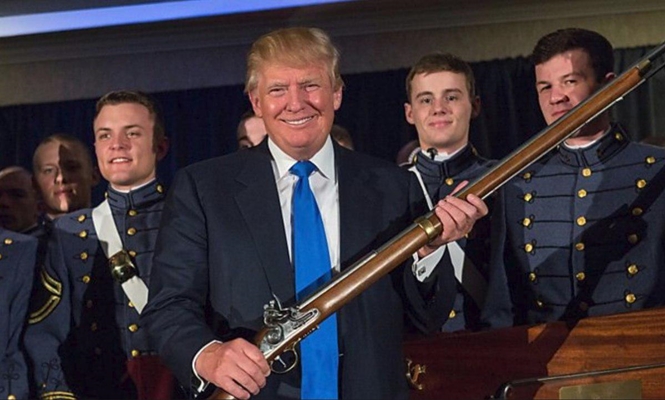
He made the comments in reference to a tweet by US President Donald Trump, in which he claimed the Iranians have never won a war.
“The US has not won any other war; it has lost the Vietnam war, the regional wars have resulted in nothing but destruction and damage,” Zarif noted.
“Wherever they set their foot, they achieve nothing but humiliation – from Afghanistan, where after 18 years they are holding talks with the Taliban before leaving the country with humiliation, to Iraq where their presence resulted in the creation of ISIS, to Syria where they left nothing but misery for themselves and the region, to the Persian Gulf where they have just committed crimes whenever they were present, the worst case of which was the killing of 290 innocent people in their attack on Iran Air’s Airbus.”
He said “this discourse is doomed to failure. We should admit the time of hegemony discourse is long over, so is the case for the discourses of superpowers and bullying.”

Thursday, June 27, 2019

Zarif Downplays Trump’s Claim that He Stopped Iran War

By
 IFP Editorial Staff

Iranian Foreign Minister Mohammad Javad Zarif has dismissed the latest claim by US President Donald Trump that he stopped an attack on Iran because 150 people would have died, saying the US has already killed several generations with its chemical weapons.
Zarif made the remarks in an address to a Conference in Tehran on Tuesday marking the anniversary of the 1987 chemical bombing of the Iranian city of Sardasht by former Iraqi dictator Saddam Hossein, who was backed and armed by the US and its allies.
His comments came in reaction to Trump’s Friday tweet that he had stopped a military strike on Iran on Thursday 10 minutes before the beginning of the attack, after he learned that 150 Iranians would get killed.
Zarif directly addressed Trump on Tuesday, asking him, “Were you really worried about the lives of 150 Iranians? How many people have you killed with chemical weapons? How many generations have you destroyed with such weapons?”
Iran’s top diplomat further called the survivors of Saddam’s chemical weapons “the living document” of Iranian people’s resistance against the enemies and said in addition to the defensive capabilities against the world powers, the victims serve as Iran’s preemptive capital and means in the face of enemies.
“Where is Saddam today? Where is Chemical Ali (Saddam’s intelligence chief and defence minister Ali Hassan al-Majid) today? Where are those who committed crime against our people. Today, we stand proudly due to your presence,” he said.
According to the Iranian foreign minister, Saddam began to use chemical weapons against Iran in the early days of its invasion of the country and this was regularly reported to the UN but the UN Security Council never found it urgent to hold a meeting on the crime.
“The then UN chief sent six delegations on various occasions to Iran based on our repeated calls and the delegations visited Iranian hospitals and talked to the victims. Their reports left no room for doubt about Saddam’s use of chemical weapons but despite this, no action or word of protest was made by the international community,” he said.
Zarif said those who claim chemical weapons are their red line remained silent towards Saddam’s crimes against the Iranian people.
“If you had stopped Saddam then, today the ISIS wouldn’t dare to use chemical weapons against the people of Iraq and Syria. And even today, we see that the western powers are trying to cover up the crimes by their affiliated groups,” he said.
Zarif said Iran was among the first countries which joined the Chemical Weapons Convention at the order of the Leader of the Islamic Revolution. “We were among the first countries which destroyed our chemical storage but the US has not yet destroyed its chemical storage and the Zionist regime has not even joined the convention.”
He called Iran a pioneer in fight against chemical weapons and said based on its religious belief, the Islamic Republic has never been after producing such weapons.

Wednesday, April 24, 2019

New Iranian Directors Make Unusual Films: American Critic

By
 IFP 

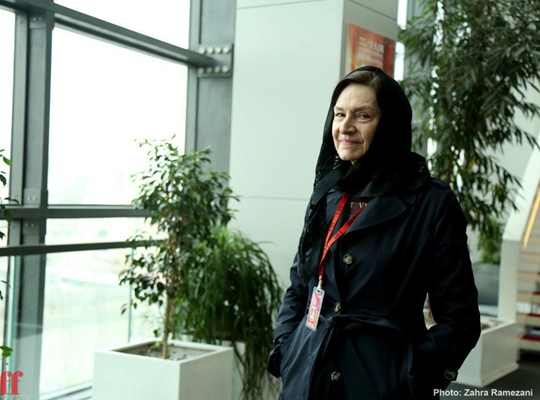
American film critic Deborah Young says the new generation of Iranian filmmakers are more adventurous than the previous ones, and make more unusual films.
Young, a senior film critic at Hollywood Reporter, has long been acquainted with the Iranian cinema and watches Iranian films at various international festivals.
This year, she is among the special guests at the 37th International Fajr Film Festival, which is underway in Tehran.
What follows is a brief interview with Young:
Q: You have always been a supporter of the Iranian cinema. You watch Iranian films at various festivals. What do you think of the Iranian films you watched last year?
A: I think it was a great year. Young filmmakers from the new generation have emerged that I have not been acquainted with before. Your cinema is in a state of transformation. I think great filmmakers like Abbas Kiarostami have opened the way for young people, young filmmakers and new topics. Filmmakers do not repeat the same themes in their films. New young directors make films that are unusual and unconventional, and their works are a bit complicated. But I think they have more modern and up-to-date feelings and expressions.
Q: After Abbas Kiarostami’s death, how do you evaluate the Iranian cinema in recent years? Do you think the Iranian cinema has entered a new phase?
A: The Iranian cinema in its current state is attractive. There is no clear gap between the present and the past few years. In general, film industry has strong roots in Iran. In the new generation of Iranian cinema there is something that I have not seen in other countries.
Q: Who is your favourite actor from the new generation?
A: Navid Mohammadzadeh.
Q: There are a lot of anti-Trump comments in Hollywood, and Trump has many opponents. What do you think?
A: I can say that 90% of Hollywood is anti-Trump. I do not know why. I mean, the cinema is clearly an art form, and it brings all the artistic forms of people with different points of view together. There are people who have an independent outlook and are not looking for money. So there is no connection between these people and Trump.

Fajr Festival Great Chance to Watch Oriental Films: Italian Director

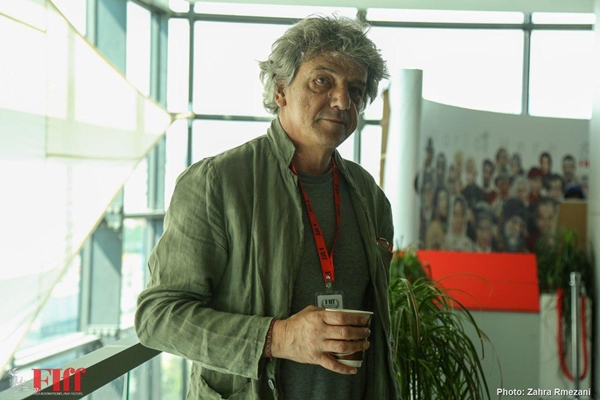
Italian director, screenwriter and actor Italo Spinelli believes that the focus of cinema is moving from the West to the East, and Iran’s Fajr International Film Festival is the best place to watch Oriental movies.
Spinelli believes that the festival is dedicated to Asian films and serves as a link between the cinema of Italy and the cinema of Asia.
Here is an interview conducted with the renowned Italian filmmaker:
Q: Have you participated in Fajr Festival before?
A: Yes. I have come here many times since 2000. I come to Iran for Fajr and Verite festivals. Fajr is a great and interesting festival that gives me the opportunity to watch and pick Iranian films.
Q: You must have seen a lot of Iranian films. What is your opinion about the Iranian cinema?
A: I think your cinema is one of the best ones in the world. It has a long history and high quality. There are good directors here.
I can make a huge list of my favourite Iranian directors, especially the contemporary ones. There are many great names such as Asghar Farhadi, Abbas Kiarostami and the young director Reza Dormishian. Iranian director’s films are very wonderful and they are very talented. It’s difficult to name them all.
The 37th Fajr International Film Festival was opened in the Iranian capital Tehran on Wednesday, April 17. A showcase for audiences for more than three decades, the Festival is hosting over 250 international guests from 58 countries.
163 features and shorts from 64 countries are screened at this year’s festival. 60 students from Iran and abroad also attend this year’s workshops called Talent Campus.
Presided over by award-winning writer and director Seyyed Reza Mirkarimi, the 37th Fajr International Film Festival runs until April 26.

Tuesday, January 22, 2019

Is Press TV Journo Caught in Crossfire as Trump Intensifies Iran Standoff?


By Alireza Hashemi

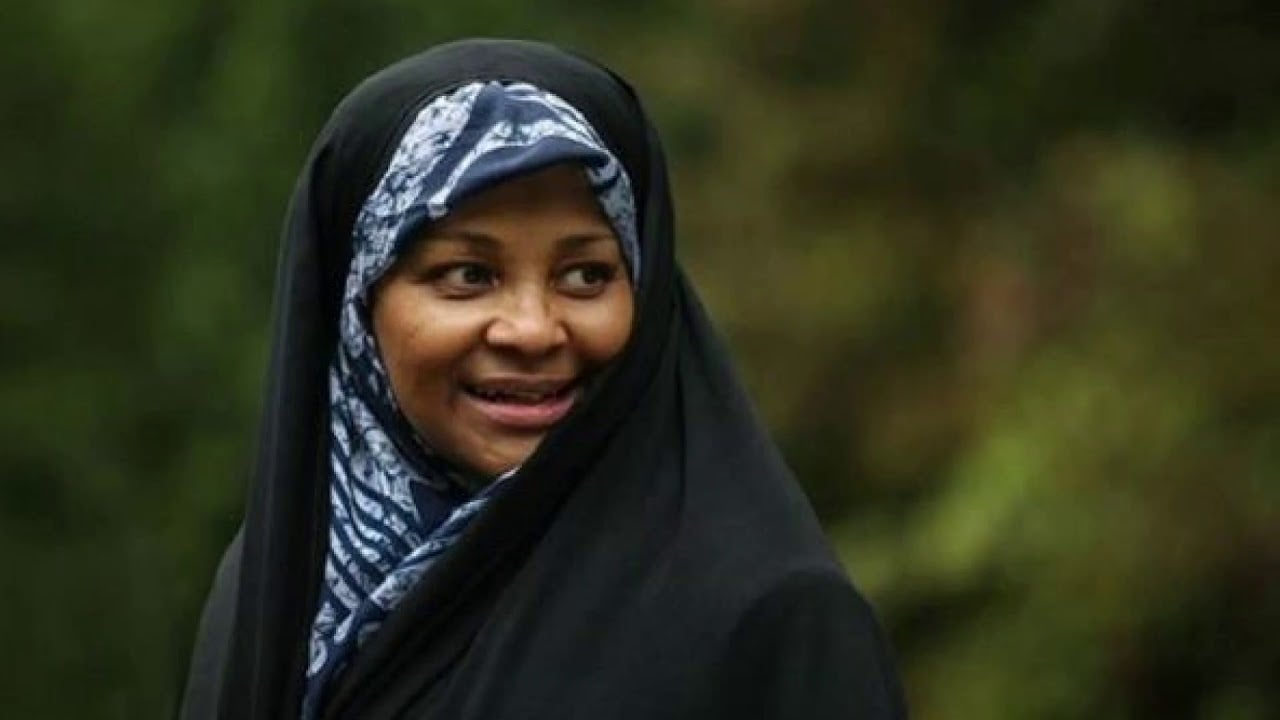
A little over a week into the arrest of the senior journalist working for Iran’s Press TV, the case has become a big controversy shrouded in mystery.
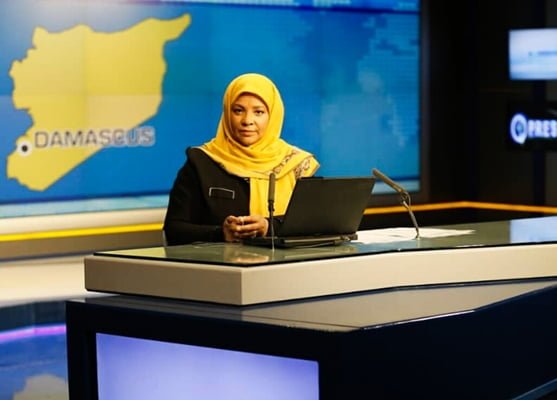
On January 16, Iranians were shocked to know that the US-born anchorwoman Marzieh Hashemi had been detained in the US three days earlier.
The 59-years-old widow was arrested by the FBI on January 13 at St Louis airport after visiting relatives in the New Orleans and just before boarding a plan to see her sick brother in Denver.
But it took days for the case to be publicised, as her family had been kept in dark and had no idea what had happened to their beloved one.
While the case grabbed headlines in international media, nothing was known about the reason for her confinement.
Her daughter, Sarah, who was eventually contacted by Marzieh on January 15, quoted her as saying that she was being treated disrespectfully by the US police.
They had handcuffed and shackled her, removed her hijab, and offered her only pork as a meal, which is banned under Islam.
Marzieh was suffering the same US discrimination against women, Muslims and African-Americans she had been trying to expose for decades.

Manufactured Pretext?
Further fueling suspicions and outrage, American officials did not confirm her detention until January 18.
On the day, a US federal judge formally announced the confinement in a statement, saying she is not accused of a crime, but her testimony is required over an unspecified case in Washington.
The statement said Hashemi was arrested on “a material arrest warrant” and will be released after the completion of her testimony to a jury investigating unspecified “violations of US criminal law.”
The statement did not elaborate further, refusing to mention what judge ordered the arrest and on what alleged evidence.
Material witness warrants are used to arrest potential witnesses or suspects after the 9/11 terrorist attacks, to ensure that people with knowledge of others’ crimes are available to testify, especially those with a perceived flight risk.
But Hashemi’s family said she had not been contacted by the FBI before she was detained and she would have been absolutely willing to cooperate with the agency.
Moreover, such warrants appear to be unconstitutional and illegal, according to law experts.
Ricardo Bascuas, a professor at the University of Miami School of Law, has said the US government uses such tactics when it needs a reason to arrest somebody but it doesn’t have one.
According to a Washington Post report, material witness warrants are rare, with the US courts’ records indicating only two such cases were filed last year.
Justice Department Behind Case
Following the storm of controversy over Hashemi’s detention, a US official hinted the Justice Department was behind the case.
The unnamed official told Reuters on Saturday that a US grand jury was investigating Press TV itself over charges that the station was a “propaganda outlet” and should have been registered with the Justice Department as an agent of a foreign government.
Perhaps, Hashemi, who had filmed a Black Lives Matter documentary in St Louis, was taken in for questioning in connection with the foreign registration case against Press TV.
If the channel Hashemi was working for is found to be violating the US law, Hashemi herself could face prosecution for filming a documentary in the US for the station.
On Sunday, Peyman Jebelli, CEO of IRIB World Service and the head of Press TV, responded by arguing that Press TV did not need to register in the US.
Jebelli said, “Our activities are conducted through social media and limited satellite broadcast. Why should we register Press TV with the US Department of Justice? Do all outlets with international broadcasting register in all countries?” he said.
In a similar case in late 2017, Russia’s RT was forced to register as a foreign agent in the US, after a registration case filed by the US Justice Department was about to put the channel’s US bureau at risk of blockage.
It’s unclear how Press TV would react to such a court case, as it holds no office in the US.
Even if the channel wants to register its name with the DoJ, it might not be able to do as Iran is subject to heavy US sanctions.

Big Dilemma
Anyway, assuming the US DoJ is behind the unusual case, why has it decided to act now?
Press TV was founded in 2007, and Hashemi has been working for the channel since its launch.
According to her family, Hashemi used to travel to her homeland once a year to visit her relatives, usually working on documentaries as well.
Undoubtedly, something has changed, and that change could be the Trump administration.
Hashemi’s arrest comes following two years of deteriorating relations between Iran and the US, in the wake of Washington’s stepped-up pressure campaign against Tehran.

Trump Gets Angry
The incident came right after the news came out that Iran has arrested another American citizen.
On January 9, Iran confirmed it is holding ex-US sailor Michael White at a prison.
White, who had traveled to Iran for what his relatives claim was visiting a “girlfriend” in Iran’s holy city of Mashhad, was arrested in July over espionage charges.
White is the fifth American known to be held by Iran on such charges, and the first to be arrested during Trump’s tenure.
The others are Iranian-American Siamak Namazi and his 82-year-old father Baquer, Iranian-American art dealer Karen Vafadari, and Chinese-American graduate student Xiyue Wang.
Trump could have seen the arrest of White unhealthy for his credit, seeking a tit-for-tat move or something.
To get a better grasp of Trump’s style of politics, one would only have to look at his decision to postpone House Speaker Nancy Pelosi’s upcoming trip to Brussels and Afghanistan in return for her move to postpone Trump’s 2019 State of the Union address to the Congress.
During his 2016 electoral campaigns and after taking power in the US, Trump had mocked his predecessor Barack Obama for being “too soft” on Iran.
Famously, he once threatened Iranian boats would be “shot out of the water” if they inappropriately approach US warships in the Persian Gulf during his presidency.
Since coming to power, Trump has bragged about his achievements on Iran, claiming his strong-arm tactics have pushed Iran not to threaten US interests in the Persian Gulf, among other interests.

Retaliatory Move?
A clear hint about Trump’s approach towards the case could be found in remarks by unidentified US officials in interviews with CBS News earlier this month.
The US-based outlet reported on January 9, four days before Hashemi’s arrest and on the same day Iran publicised the detention of White, that it has learned “Iran floated the idea of a prisoner exchange last year”.
The outlet reported US State Department officials “have not said whether the Trump administration is willing to negotiate”, noting that contact between the two countries was cut off after Trump withdrew from the 2015 nuclear deal in May.
Again, on January 16, CBS News points to the prisoner exchange issue in its article covering Hashemi’s arrest.
The outlet quoted US sources as saying that they believe Iran is holding the Americans to try to get concessions, pointing as an example to a prisoner exchange deal with Trump’s predecessor Barack Obama.
However, this time the agency claimed it was the Trump administration who had offered Iran to discuss prisoners last year, contradicting its own narrative.
“A senior administrative official told CBS News Iran turned that offer down, leaving the fate of the Americans unclear,” it said.

Childish Game
Hashemi, a familiar face on the Iranian television, could be a valuable hostage for Trump.
Marzieh is a person Trump has every reason to hate: An African-American Muslim woman who works as a journalist for Iran.
Interestingly, the way she was arrested is Trump-style: unpredictable, unmannerly, and illogical!
Has Hashemi been detained on spurious grounds to serve as a bargaining chip in talks with Iran, as Trump might believe?
If so, we ought not hope she will return home anytime soon.
However, the case would most likely turn out to be a PR victory for Iran, as the global public opinion is not a fan of Trump and his childish games.
It remains to be seen if Hashemi has fell in the crossfire of Iran-US tensions.
Perhaps more information will be revealed on Wednesday, when another hearing session on the case will be held.
Alireza Hashemi
Alireza Hashemi is an Iranian political journalist with several years of experince working for Iran's English and Persian-Language media who regularly contributes to IFPnews. He previosly served as a staff writer at Financial Tribune.

Monday, December 24, 2018

Joining Dots between Khashoggi’s Death, Yemen Peace Breakthrough

By
 Alireza Hashemi

Demonstrators dressed as Saudi Arabian Crown Prince Mohammed bin Salman and US President Donald Trump (C) protest outside the White House in Washington, DC, on October 19, 2018, demanding justice for the then-missing Saudi journalist Jamal Khashoggi. / Photo by AFP
IT’S NO EXAGGERATION TO SAY THE CEASEFIRE DEAL BROKERED IN THE SWEDISH CAPITAL STOCKHOLM LAST WEEK COULD NOT BE WORKED OUT IF A SAUDI JOURNALIST HAD NOT BEEN SLAIN IN THE SAUDI CONSULATE IN ISTANBUL EARLY OCTOBER.
Joining the dots between the death of Jamal Khashoggi and a ceasefire in Yemen once seemed a stretch, but no longer.
The murder of the Washington Post columnist, which is widely believed to have happened at the order of the ambitious Saudi Crown Prince Mohammed bin Salman, has visibly weakened the chief architect of the war in Yemen.
The 31-year-old prince, who launched the war in Yemen a few months after coming to power, had for four years insisted on continuing the invasion, which many believed was doomed in the first place.
But October 2 proved to be a tipping point, thanks to Recep Tayyip Erdogan who devised meticulous plans to use Khashoggi’s death to hit bin Salman, his biggest rival in the competition over leadership of the Sunni Muslim world.
Looking at the deal achieved four years into the Saudi-led war, one could be certain the Saudi prince would have never accepted such an outright defeat if he was not in such a weak position.
Perhaps the pressure from the US has been influential in the Saudis’ decision, considering the fact that the Saudi-backed operation in Yemen was impossible without relentless support for the Saudi war machine.
According to the UN-brokered deal clinched between the Ansarullah movement and representatives of the fugitive former president, an immediate ceasefire was implemented in Yemen’s Red Sea port of Hudaydah and its surrounding on Tuesday.
Under the deal achieved after week-long talks, the warring sides will also exchange over 15,000 prisoners.
Clashes have been reported near the city before and after the ceasefire, but the two sides seem unwilling to seek altering the status quo.
Residents in Hudaydah and the surrounding areas have reported fierce airstrikes in recent days, following fresh attempts by the Saudi-led coalition to advance into the city amid its aerial bombings.
AFP quoted people reporting artillery shelling and heavy machine-gun fire shook districts in the south and east of the strategic city late Monday in the final hour before the ceasefire took effect at midnight.

Poorest Arab Nation Defeats Wealthiest Arab Gov’t
The ceasefire, seen as the first significant breakthrough in Yemen’s peace process, could be counted a major win for the Yemeni people and a major setback for the Saudi government in many ways.
Saudi Arabia and the UAE launched their offensive against Hudaydah in June but they faced a strong resistance put up by Yemeni armed forces. The ceasefire means they have finally given up, with almost none of their objectives realized yet.
The two sides fought to a stalemate after weeks of ruinous street-to-street fight at the city’s outskirts, which is estimated to have left hundreds of Saudi-backed troops dead or injured.
A cessation of hostilities in Hudaydah would spare Yemen a significant spike in civilian casualties since Yemeni forces have shown battlefield resilience, frustrating much larger Saudi-backed forces who tried for months to retake the city to use it as a big bargaining chip in political talks.
Saudis who portrayed Ansarullah members as a bunch of villains orchestrating coups in Yemen were eventually forced to come to the negotiating table with the group and admit it represents a big portion of the Yemeni nation.
Moreover, the ceasefire will ease the economic blockade of Yemen, exacerbated during the war near Hudaydah.
The city is the entry point for about 70 percent of Yemen’s imports, mainly vital humanitarian aid for millions of Yemeni people.
The two sides of the Sweden talks have agreed to meet again in late January for talks to define the framework for peace negotiations.
United Nation Secretary General Antonio Guterres warned on Sunday that “much worse” could happen to the impoverished country in 2019 unless a comprehensive peace deal came about and the humanitarian crisis was tackled.
Will Khashoggi’s death be the beginning of the end for the devastating war which has claimed thousands of lives in Yemen and pushed the country close to the brink of outright famine? Time will tell.
Alireza Hashemi
Alireza Hashemi is an Iranian political journalist with several years of experince working for Iran's English and Persian-Language media who regularly contributes to IFPnews. He previosly served as a staff writer at Financial Tribune.

Saturday, October 06, 2018

The Old Road; A Thrilling Drama on Violence against Women

By
 Mahdi Arman

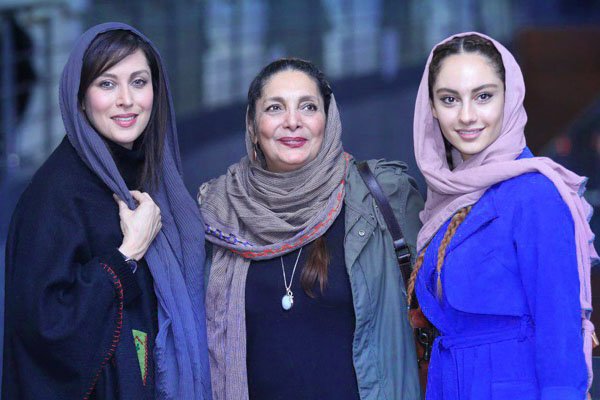
Iranian actresses Mahtab Keramani (left) and Tarlan Parvaneh (right) along with Manijeh Hekmat, the director of the film "The Old Road" (2018)
Manijeh Hekmat, a prominent Iranian filmmaker, in her latest work “The Old Road,” has addressed the social problem of violence against women, at a time when the issue has turned into a matter of discussion for thinkers around the world.
Hekmat, who has won numerous awards in Iran and other countries, has made her latest feature film about fighting violence against women, which is her main social concern.
“The Old Road” is Hekmat’s fourth feature film after being a decade away from filmmaking. In recent years, she has been working as a producer and distributor, but last year she participated in the Fajr Film Festival with “The Old Road” as the latest film as a director.
Iranian actress Mahtab Keramati, who has been a UNICEF National Ambassador in Iran since 2006, plays the main role of the film as a victim of violence. Karamati, who has a history of engagement in humanitarian activities, education of children, and awareness raising about AIDS, is the smart choice of Hekmat to play the role of a victim of violence against women in this film. The Old Road, featuring Keramati and Atila Pesyani, has been screened as of September 30 in Iranian cinemas.
In her previous works, Hekmat addressed the social problems of women in the community and family. For example, her “Women’s Prison” in 2000 won many awards.
Violence against women is one of the most important social problems and a clear instance of human rights violation. Many victims of such violence do not want to disclose it for a variety of reasons. Showing examples of such violence and making the society aware of them can be the first step to contain the social ill. Meanwhile, the media can play an effective role in informing the public.
Video Player
00:00
00:33

Mahdi Arman
Mahdi Arman is an Iranian journalist who works as the head of the Iran Front Page (IFP) news website's Business Department. He also has a special interest in the latest social and cultural developments in Iran and the world.