Showing posts with label Bashar al-Assad. Show all posts

Sunday, November 10, 2019

President Assad: European States Hate Erdogan but Want Him!


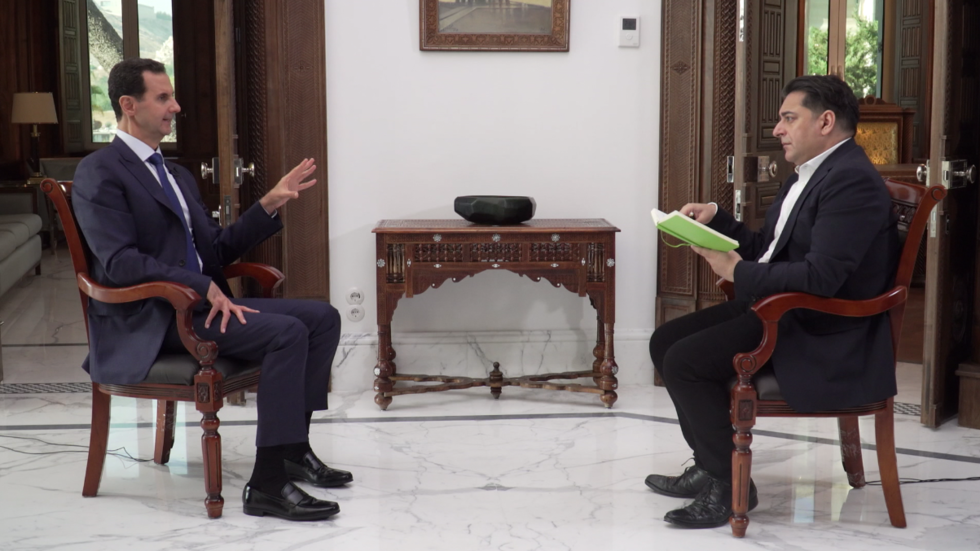
Assad RT interview

Syrian President Bashar Al-Assad in an interview with RT

 Syrian Presdient Bashar Al-Assad slammed as Hypocrisy the way European nations deal with Turkish President Recep Tayyip Erdogan.


In an interview with RT, Assad said it’s hypocrisy for European nations to fear that Ankara will send refugees to Europe, but continue to sponsor terrorism in Syria.
The Syrian leader argued that the primary concern for Europe should not be the Syrian refugees which Erdogan now threatens to release to Europe, but the “hundreds of thousands” of extremists Europe allied itself with.
“How can you fear those few millions, the majority of them are moderates and they have few terrorists, while you support those terrorists directly in tens of thousands at least and maybe hundreds of thousands in Syria and you don’t fear that they’re going to go back to your country?” Assad told Afshin Rattansi in an interview that will be fully broadcast this Monday.
While there might be some extremists among those who fled the war-torn country, the majority of the refugees do not pose any acute threat, as opposed to hardened jihadists who may turn on their patrons, the Syrian leader said.
“Let’s say that sending those Syrians and other refugees is dangerous, the most dangerous [for] Europe is to support the terrorists in Syria, this is the most dangerous part.”
The relationship between Europe and Turkey is love-hate, Assad said. He noted that although the EU “hates” the Turkish leader, European nations cannot but listen to what he has to say.
“Actually, the relation between Erdogan and the EU is two ways: they hate him but they want him.”
Source: RT

Saturday, November 02, 2019

A short rant after a personal visit to Syria

By Martin Love

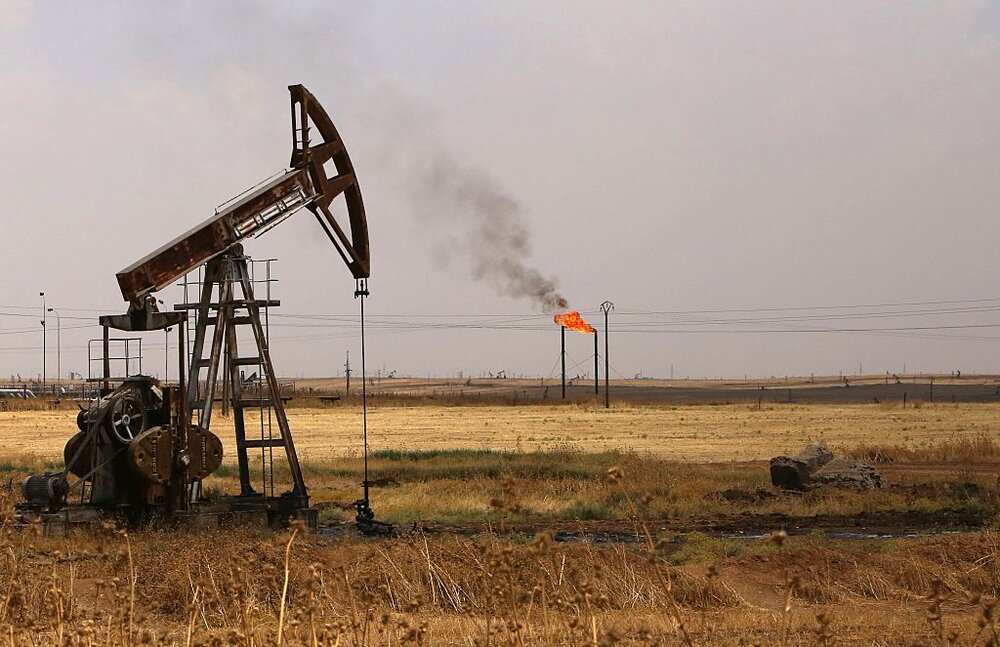
NORTH CAROLINA - So, is there some kind of looming military confrontation between Russia and the United States in eastern Syria around Syria’s oil fields, which the U.S. in a pirate role has more or less claimed as its own and seems to be all about looting the oil there?
Which never did belong to the U.S. but nevermind, the U.S. has been raping, stealing and killing around the world for decades in the name of “empire”, and more than ever since the dawn of this current bloody century. This confrontation may be ahead. What is galling most is that the outcry against the brazen U.S. theft ought to be universal.
The only good in any of this is that there ought to be absolutely no question any longer that what the U.S. has been about in recent decades has not been the seeding of ”democracy” or “human rights” or anything of that sort anywhere with its 800 plus military bases scattered across the globe and its pretensions of “exceptionalism”.
One thing you can say about Donald Trump: he seems to be more honest than the two Bush screwball warmongers, Clinton, and Obama. At least he is not trying to hide bald faced aggression, theft and rapine, mostly in the service to Zionists but also for the Military Industrial Complex, which so dominates the U.S. economy now that weeding it out, if it is ever accomplished, is going to cause economic pain never before experienced in the U.S., but that all to a good cause if it can ever occur. The smart people in the U.S. are hoping for an economic depression as soon as possible to throttle the rush towards more U.S. threats in the Middle East. Currently, this seems to be the only brake to the madness.
Trump has by one report applied more than 8000 “sanctions” against other countries and individuals since he trashed the JCPOA in 2018, affecting 39 countries representing a full third of humanity. Think about that. If Iran or any other country feels particularly set upon by the U.S., maybe it’s time for all countries subject to sanctions to accept them as just more obstacles to overcome, like say a particular spell of horrible weather that cannot be controlled. Until, anyway, the further erosion and ultimately the rejection of U.S. influence globally. This latter may seem an impossible occurrence, but consider: has any country long maintained itself as a powerful entity when it has become universally reviled as a criminal hegemon interested almost exclusively in self-service though intimidation and militancy?
If this writer seems particularly “anti” American at this juncture, it’s because from October 14 through the 27th I was in Syria. I was in Damascus, Homs, Hama, Tartous, Latakia and Aleppo and points between with a small delegation of Mideast savants who have long been disgusted by U.S. foreign policies in the Middle East. I saw, just for example, the destroyed and formerly lovely Armenian Quarter in Aleppo. I saw the 50 plus percent of Homs residential blocks that are destroyed. I saw the destruction at the finest old suq outside of Iran in Aleppo, a literal wonder of the world, and frankly, so much more that we wept at times not merely at the damage to Syria, but over the warmth and kindness of the Syrian people towards visiting Americans. And all this, while the U.S military was allegedly preparing to kill the leader of ISIS holed up somewhere, is still not fully liberated Idlib province. Does anyone believe the announced death of Baghdadi, and then that he was buried at sea like Usama ibn Laden? The U.S. government has been lying so much and for so long that anything it claims, under Trump, is met with profound skepticism. And Baghdadi, who may or may not be a Zionist plant, has now been killed multiple times! Obama managed to do it more than once.
Syria is amazing for all it has suffered and survived. So is the popular Assad government, which did nothing seriously wrong but maintain its independence for decades from U.S. and Zionist control…and prospered. Syria was, and has been, somewhat like Libya was before the U.S. and NATO bombed and murdered the most prosperous country in Africa. Syria was and remains independent and still offers its citizens benefits that far surpass what the U.S. offers its slaves. It was and may still remain a positive economic model for countries that refuse to succumb to the U.S. “Empire of Chaos”. It may also be a good political model: a secular country which allows its citizens to worship as they like – totally unlike most other Arab countries. In sum: Hats off in deep respect to Syria and its people.

Wednesday, October 16, 2019

Iran has foiled hostile plan in the region

By Abdollah Shahbazi
Thirteen years ago, the situation in the region was highly disappointing. There were predictions about fragmentation in the region by enormous developments, from which Iran would not survive. Iran was definitely supposed to be at the heart of the disturbance. The chaos started with the Syrian civil war in March 2011. 
Everyone knows that it was only Iran that resisted and prevented the fall of Bashar al-Assad. Therefore, Iran stopped Syria’s breakup. If Syria had collapsed, the same event would have happened to Iraq and then Iran. No one could stop the major collapse in the region. 
When Iranian resistance succeeded, after the foiling of a Western powers’ joint plot to attack Syria in September 2013, Russia joined the resistance movement as an active member in September 2015. Actually, it was Iran that maintained and led the resistance and then Russia backed it. Preserving Syria's territorial integrity and the Assad administration were not a job carried out by Russia and followed up by Iran. It was vice versa. 
In 2010 and 2011, Iran’s atmosphere was extremely bipolar due to events that followed the 2009 protests. For this reason, a great number of political figures inside the country strongly opposed Iran’s intervention in Syrian affairs. There were a controversial situation on Facebook. I was defending Iran’s regional role and also was observing disagreements regarding this matter. 
 At that time, it was hard to imagine this great victory and result. The achievement of the resistance is a development that I called the “end of Western powers’ hegemony and the emergence of a new Middle East”. This new Middle East will be totally different from the one we have witnessed over the last century. 
The end of Western powers’ hegemony does not mean that there will be no more financial-political conspiracies in the Middle East. But at least we will not see events like official military attacks on Afghanistan or Iraq by the U.S. and its allies in the near future. 
This is a great achievement for all countries in the region, which can herald a bright future for Iran, such as cultural, economic and political influence across a vast area extending to the Mediterranean coast.  
This is an area that can change the fate of Iran and have a profound impact. This matter is so serious since the area extended from Tehran to Latakia and Beirut. 
This regional achievement, if nothing bad happens and security is established, can resolve all economic problems, terminate pressures, and bring great prosperity. We should be grateful for this opportunity and seize it.
Beside Iran, there were also non-calculable factors that made the achievement happen, including domestic developments in the U.S., Britain, France, and Western Europe. Many issues were beyond our control and imagination. It can be said that our destiny led us to this point.

Friday, October 11, 2019

‘Coup’ attempt in Iraq is really an attack on Iran

Omar Ahmed
Iraqi demonstrators try to enter Green Zone as they gather for a demonstration against Iraqi government in Baghdad, Iraq on 1 October 2019 [Murtadha Sudani / Anadolu Agency]
Having failed to dislodge Syrian President Bashar Al-Assad after eight years of conflict and with the twin political processes of the UN and the Astana initiatives moving a step closer towards peace, the alliance against Iran appears to have turned its sights on Iran’s neighbour and other ally, Iraq by attempting to hijack yet another legitimate protest with the prospects of turning it into a coup d’état.
Leaked diplomatic cables from 2006 – five years before the Syrian uprising, reveal that the former US Ambassador to Syria, William Roebuck, suggested America seek to undermine the sovereignty of the Syrian state through destabilisation and exploiting vulnerabilities in the Assad government – including playing on “fears of Iranian influence”.
Now if we are to believe US Secretary of State Mike Pompeo’s assertion – without evidence – that Iran was behind attacks on Saudi’s largest oilfields, President Donald Trump certainly had no intention of escalating tensions militarily. Despite Pompeo’s sabre rattling that the attacks constituted a “declaration of war”, his Iranian counterpart Mohammed Javad Zarif was quick to assert that any US or Saudi strike on Iran will cause all-out war.
Thus, despite being more than militarily capable of carrying out direct strikes against Iran, the potential repercussions to the US and its allies in the wider region and to the global economy render such actions strategically misplaced. Ultimately, the US and its allies lack the political will to wage conventional war against the Islamic Republic.
Naturally the anti-Iran nexus must then opt for indirect, covert attacks against Tehran via its regional allies and interests. Which brings us to the current activities in Iraq.
It has been alleged that sources within Iraq’s Prime Minister’s Office have said
the recent demonstrations were already planned a couple of months ago. Baghdad was working to try and ease the situation in the country, particularly since the demands of the population are legitimate.
Speaking on the number of civilians killed along with some security forces and government buildings being set alight or destroyed, the sources are also said to have added: “This sort of behaviour has misdirected the real grievances of the population onto a disastrous course: creating chaos in the country. Who benefits from the disarray in Iraq?”
The founder and head of the Iranian-supported Asaib Ahl Al-Haq paramilitary group and political party, cleric Qais Al-Khazali, echoed similar sentiments by foretelling over two months ago that there were plans to stage a coup in November, with engineered protests erupting in October.
Over two months ago, Qays Khaz’ali said:

There’s plans to change Baghdad government in November, with protests erupting in October. Protests not spontaneous, but organised by factions in Iraq. Mark my words.
See Republic of Sumer's other Tweets
Al-Khazali has expressed claims of conspiracy previously, as with the Basra demonstrations in September last year whilst acknowledging that “the protests were originally legitimate and true”.
Adding weight to Al-Khazali’s comments, there have been reports that the Iraqi intelligence had been made aware of plans of a US-backed coup involving Iraqi military officers three months ago.
Al Akhbar newspaper says the govt of learned 3 months ago of a planned US-backed coup by military officers, to be followed by street action. Time to be skeptical about events in Iraq?
View image on Twitter
87 people are talking about this
This may also explain the Iraqi government’s controversial and abrupt decision to demote the popular Lieutenant General Abdul Wahab Al-Saadi from his position as commander of the Iraqi Counter-Terrorism Forces (ICTS) without giving a reason. Instrumental as he was in leading the victory over Daesh in Mosul, he was perceived to be too close to the US military and neutral towards Iran and could well be one of the “military officers” alluded to above.
Meanwhile, mainstream media and human rights organisations have been busy reporting on unknown snipers targeting civilian protestors which are being attributed to pro-Iranian paramilitaries, unfortunately these are hallmarks of external involvement in seeking to exacerbate and convert anti-government protests into a fully-fledged revolution. “The use of mercenaries, death squads and snipers by Western intelligence agencies is well documented. No rational government attempting to stay in power would resort to unknown snipers to intimidate its opponents,” political analyst Gearoid O Colmain writes.
Examples include Ukraine in 2014  – where snipers targeting demonstrators were revealed to be hired Georgian and Lithuanian marksmen – in Venezuela in 2002 and during the so-called Arab Spring.
Indeed it has even been suggested that the unknown snipers have targeted both protestors and security forces alike.
Iran too reportedly unveiled an assassination plot last month against Major General Qassem Soleimani, senior commander of the Islamic Revolutionary Guard Corps (IRGC), with the alleged joint  “Arab-Israeli” secret services training and preparing the suspects in an unnamed “neighbouring country” close to Iran.
However, it appears the leadership under Ayatollah Ali Khamenei are vigilantly following events in Iraq, the Supreme Leader spoke recently of “enemies” seeking to sow division between Tehran and Baghdad, adding that the Islamic Republic is taking pro-active measures in preventing another “Syria” from occurring.
On the social media front to this engineered uprising, Dr Marc Owen Jones, assistant professor in Middle Eastern Studies, has an interesting Twitter thread on hashtags in support of the Iraqi people and describing a “revolution” at hand. Jones has reason to believe it is an influence campaign with almost 20 per cent of accounts likely to be fake and a majority which do not have any location data and are sent by iPhones (the author is doubtful as to how popular these are in Iraq compared to other phones). Interestingly he identified one of the first accounts to post the hashtags featured a lot of Saudi and Iraqi flags, noting that one of the most telling indicators of “inorganic activity” are accounts created in a short time frame – based on his research, the “fake” accounts were created over three days (1-3 October). Although some Iraqis are finding loopholes in accessing the social media, it has been blocked nationwide during the protests – with the exception of the Kurdistan region. Again, the online information campaign is largely being conducted outside of Iraq.

It remains to be seen how successful the localised protests will be in transforming into the intended populist revolution resulting in favourable regime change by those opposed to Tehran’s hegemony. However, should it fail, it wont be the first time the anti-Iranian alliance has fallen short in its indirect war of attrition against Iran’s “Axis of Resistance”.

Saturday, April 27, 2019

Dictator: Media code for ‘Government we don’t like’

By Alan Macleod 

FAIR - Let’s start with a quiz: Quick! Name some dictators! I’m willing to bet most of you responded with just a few of the same names: Assad, Putin, Castro, Kim Jong-un, Gaddafi, Maduro. This is not because they are the only dictators in the world (far from it), or that all of them even necessarily qualify for the title, but precisely because these are the figures most constantly labeled as such by our media.
“Dictator” is a very powerful moniker to give someone. There is a hard-to-define but very important distinction between a government with authoritarian tendencies or a poor human rights record, on the one hand, and a full-blown dictatorship. The very name implies that dictatorial governments should, nay, must be resisted and overthrown, while the same action is not appropriate or justifiable for the former.
Democracy is a supposedly sacred ideal for Americans. Politicians and media tell us that the United States “stands for” democracy and opposes dictatorships everywhere, one reason why the US must continue to involve itself diplomatically and militarily around the world.
However, Freedom House’s “Freedom in the World” studies find that 49 countries—over a quarter of the world’s governments—are “not free”, a designation they use interchangeably with “dictatorships” on their website and their reports. Why then, do most politically savvy people not know the names of all these dictators? Why are they not household names, like Assad and co.? Is it because the United States provides military assistance (training, sales and aid) to three-quarters of them, as Rich Whitney’s study (Truthout, 9/23/17) suggests?
How Free is Freedom House?
Defining and quantifying what does and does not constitute a dictatorship is a notoriously tricky business, and Freedom House’s strong conservative political bias makes its list and judgments all the more questionable. For one, the “non-governmental” organization is actually overwhelmingly funded by Washington, who employed Freedom House in 2006 to perform “clandestine activities”—i.e., regime change operations—in Iran.
The man in charge of compiling the freedom list, used by Whitney and many others, admitted his methodology consisted of “hunches and intuition.” And as many scholars have indicated, Freedom House also has a long history of supporting US client state dictatorships and attacking enemy states such as Nicaragua; the ratings have a strong conservative and pro-US ideological bias. Nevertheless, its index is useful, as it is the most commonly cited source on the matter, and one can assume that it is not going out of its way to falsely label US allies as dictators.
When you look at the governments that Freedom House describes as dictatorships, those that are also Official Enemies are frequently described as such in corporate media—for example, Russia (Washington Post, 5/8/18), Cuba (USA Today, 2/26/19), Syria (New York Times, 3/2/19), Belarus (ABC, 3/5/19),  North Korea (USA Today, 3/22/19) and Venezuela (New York Times, 4/10/19). Yet “our dictators”—that is, the “not free” governments that Washington supports—are rarely if ever labeled as dictatorships by the establishment press. In fact, there is very little coverage at all of those countries that are “behaving themselves” as far as the US State Department is concerned.
Let’s look at the press coverage of four of Freedom House’s “dictators” who receive US military aid, all of whom have been in the news recently: Paul Biya of Cameroon, Abdel el-Sisi of Egypt, Abdelaziz Bouteflika of Algeria and Kazakhstan’ s Nursultan Nazarbayev.
Cameroon
The 86-year-old Paul Biya, the longest serving non-royal head of state in the world, has held office in Cameroon since Gerald Ford was president. He recently won a seventh term in office that Foreign Policy (10/22/18) described as a “farce.” Cameroon has been in the news of late, due to the government’s human rights abuses pushing the country to the brink of a civil war. Freedom House considers it to be one of the least free countries in the world.
However, when discussed at all, Biya was presented matter-of-factly by the media, without the need to add call him a “dictator.” The New York Times (10/6/18) presented him euphemistically as “one of the world’s longest-serving presidents.” From the coverage, readers would not know he is a dictator, even by Freedom House’s standards. In fact, going through fully 20 years of coverage in the Times, Biya was never once described as a “dictator,” “despot,” “tyrant” or any other similar designation.
When Biya was rebuked at all, the tone of the coverage was less condemnatory and more muted criticism. Voice of America (2/14/19) noted that Biya’s decision to remove presidential term limits (meaning he could rule for life) led some “critics” to call the move “authoritarian.”
Egypt
Gen. Abdel el-Sisi came to power in 2013 in  a military coup that overthrew the democratically elected government of President Mohamed Morsi. Sisi recently announced his plan to rule until 2034—effectively in perpetuity.
The New York Times’ article (2/14/19) on the subject noted that this would “further entrench his authoritarian rule,” and even noted he had jailed “tens of thousands” of opponents, muzzled the internet and taken over the courts. Nevertheless, it stopped well short of calling him a dictator. Indeed, it noted that he enjoyed strong support from around the world, and was seen as a “bulwark against Islamist militancy” in the region, endorsed by the US and France. Other media outlets followed this tendency. CNN (2/13/19) simply described him as “current President Abdel Fattah el-Sisi,” while NPR (2/14/19) likewise just referred to “Egyptian President Abdel-Fattah el-Sissi.”
While accurately noting Sisi’s “unprecedented crackdown on dissent,” which imprisoned “tens of thousands of people,” the BBC’s report (2/15/19) labeled him neutrally as “president,” and only characterized his steps to rule virtually indefinitely as something “opponents of the proposal describe” as “a further step towards authoritarianism.” Thus, its strongest criticism of Egypt is that it’s accused of moving toward “authoritarianism”—a long way from being a full-fledged “dictator.”
 Algeria
After he announced he intended to stand once again for president, massive protests broke out all around Algeria against 82-year-old Abdelaziz Bouteflika. The uprising has been serious enough that he has promised to stand down. Despite coming to power fraudulently and ruling with an iron fist for 20 years, media outlets (e.g., CNN, 3/11/19; Reuters, 4/2/19) have refrained from describing him as a dictator, with the BBC (3/6/19) simply referring to him as a “reclusive president.”
Indeed, reading the Guardian’s coverage  (4/1/19), one would have no idea he was not the epitome of a democrat. The New York Times(3/12/19) also praised Bouteflika for “bringing back stability” to the North African country, and “restoring the honor of the nation’s army.” As with Cameroon’s Biya, Bouteflika has never once been described as a “dictator” in the last 20 years of Times coverage.
 Kazakhstan
Another ruler propped up with US military aid is Nursultan Nazarbayev. The 85-year-old, in power since 1989, recentlyannounced he would step down. It was also revealed that Kazakhstan’s capital, Astana, would berenamed Nursultan in his honor (not a common occurrence in democracies—with Washington, named for the winner of an election that involved approximately 1 percent of the population, arguably not an exception).
Nazarbayev has a long history of cracking down on freedom of speech, the press and  religion, and uses torture against his political opponents. Despite this, he was presented positively in the media, with the New York Times (3/19/19) simply referring to him as the “longtime president of Kazakhstan.” The Associated Press (3/19/19) called him “the only leader that independent Kazakhstan has ever known,” praising him for “maintaining stability.” Reuters (3/19/19) claimed he was a “widely popular” leader, with none of the above using the “dictator” moniker.
The Washington Post editorial board (3/29/19) published a glowing appraisal of his tenure. It presented him as a visionary leader, an ex-steelworker “who led the former Soviet republic out of the empire’s chaotic implosion,” claiming he brought Kazakhstan into a peaceful, prosperous new era, while “building national identity” and stopping any ethnic conflict. While noting that he “ruled as a strongman” and “would have been wiser to view dissent and democracy with more tolerance,” the editorial implied his repression was justified, concluding “he won’t be soon forgotten” by his people.
 Double Standards
The double standard is highlighted by the constant media references to enemy states as dictatorships, whether the label is warranted or not. The Washington Post (1/4/19) describes leftist Bolivian President Evo Morales as “wishing to become a Venezuela-style dictator,” while the Guardian(12/3/18) carries warning of Bolivia becoming an “imminent ‘Venezuelan-Cuban-style’ dictatorship.”
The leftist Sandinista government of Nicaragua is constantly called a “dictatorship” as well. The New York Times (8/2/18) published an opinion piece from a Nicaraguan headlined “A Dictatorship Is Rising in My Country Again.” Many other outlets describe him as a “dictator” (Economist, 7/12/18; Time, 3/18/19) carrying out a “terrifying crackdown” (National Review, 3/15/19)—language that is never used for US-backed dictatorships.
And it takes only a cursory glance at the headlines to see how Nicolas Maduro, “the child butcher of Venezuela” (Washington Examiner, 2/21/19), is portrayed:
1    “The Dictator of Venezuela Earns His Title” (New York Times, 2/27/19)
2    “Venezuela’s Dictator Maduro Survived a Tough Week, but His Problems Are About to Get Worse” (Miami Herald, 2/25/19)
3   “Why Are Progressives More Focused on Disagreeing With Trump Than Countering a Dictator [Maduro]?” ( Washington Post, 3/2/19)
4  “Newt Gingrich: Venezuela’s Dictator Maduro Must Go—Even if the Military Has to Intervene” (Fox News, 3/14/19)
5    “Maduro Really Didn’t Like Being Asked if He’s a ‘Dictator’” (New York Post, 2/26/19)
6    “Gen. Jack Keane, Hans Humes on Venezuela’s Socialist Dictator Maduro’s Potential Exit” (Fox Business, 3/7/19)
Is it truly a coincidence that these three countries with elected leftist heads of state are constantly labeled “dictatorships”? Bolivia is not even on Freedom House’s “not free” list—unlike Cameroon, Egypt, Algeria and Kazakhstan. Venezuela and Nicaragua were recently added to it, despite the fact that both countries’ latest elections were endorsed internationally.
While there are some clear shortcomings to Venezuela and Nicaragua’s political systems, the US-dominated Organization of American States observed the 2017 Nicaraguan municipal elections and declared that “the popular will [was] expressed through the vote in the vast majority of Nicaragua’s municipalities.” (With 53 percent turnout, the governing Sandinista party won in 135 out of 152 communities, with the Independent Liberal Party taking 12 of the remainder.)
Meanwhile, Venezuela’s 2018 elections were endorsed by 150 international observers, including foreign ex-heads of state like Spain’s Jose Zapatero and Ecuador’s Rafael Correa, with three international election observation teams endorsing the result, despite the fact that US media wrote them off as a sham (FAIR.org, 5/23/18).
The same cannot be said for Kazakhstan, even by Freedom House, that notes that “none of the elections held in Kazakhstan since independence have been considered ‘free and fair’ by credible international observers.” Nursultan was declared to have won 98 percent of the vote in 2015.
Enemy states are covered far more and far more harshly in US corporate media than friendly ones. A search for Paul Biya in the NYTimes.com database elicits 97 results, compared to 1,135 for Maduro, 713 for Morales and 3,517 for Ortega, despite the fact that Biya has been in power as long as the other three combined. (Cameroon’s population is 24 million, three-fourths the size of Venezuela, more than twice as big as Bolivia and four times as populous as Nicaragua.)
In a recent article (FAIR.org, 3/23/19), I suggested that the term “moderate” or “centrist” has a tactical definition when used in the media. It does not refer to any political positions, but is used as a way of conveying legitimacy. Thus anyone the media approve of is, by definition, a moderate. FAIR (8/20/18) has also noted that a “regime,” in US media usage, is simply a government that is at odds with the US empire.
The “dictator” label is also a powerful cue, used by media to prime the reader to see a particular country or leader a certain way. Readers are invited to feel outraged at the misdeeds of Assad, Putin or other anti-US head of states, while authoritarian rulers that toe the US line are ignored or even praised. The choice of whether to use a word like “dictator” frames a country in a way conducive to elite US interests, conveying legitimacy or the lack thereof in a single label.