Showing posts with label takfiris. Show all posts

Sunday, December 01, 2019

ISIS in Mozambique: Is it Africa’s Turn Now?

Mustafa Mheta

Ever since the discovery of natural gas (that is converted into Liquefied Natural Gas — LNG — for export) in the Mozambican province of Cabo Delgado, the army has been battling insurgents claiming to be “Islamists.” Civilians have been the main targets of militant attacks. The leading insurgent faction is Ansar al-Sunnah, a native extremist group with tenuous international connections. There are reports that since mid-2018, the Islamic State of Iraq and the Levant (ISIL) has become actively involved in northern Mozambique and claimed its first attack against Mozambican security forces in June 2019.
Concerning the so-called “terrorism” in Africa, there is a certain pattern unfolding that raises many serious questions. First, why is this so-called Islamic terrorism in Africa concentrated in highly resourced areas? Second, is this just a coincidence? When one looks at the geographical locations of so-called “Islamic terrorism,” one notices that it is concentrated in mineral, oil, and gas rich areas.
From Mali, where there is abundance of gold, to Niger where uranium is mined, Burkina Faso, and the Central African Republic with rich deposits of diamonds, in one way or another, they are battling terrorism.
Ansar al-Sunnah, also known by its original name “Ahl al-Sunnah wa-al-Jama‘ah” (“adepts of the prophetic tradition”), was initially a religious movement in the northern districts of Cabo Delgado, which first appeared around 2015. It was formed by followers of the radical Kenyan cleric AboudRogo, who was killed in 2012. Thereafter, some members of his movement settled in Kibiti, Tanzania, before moving into Mozambique.
Ansar al-Sunnah claims that Islam as practised in Mozambique has been corrupted and no longer follows the teachings of the Prophet Muhammad (pbuh). Whatever the truth in such allegations, the group’s members carrying weapons entered traditional masjids in order to threaten worshippers to follow their radical beliefs. The group also espouses anti-Christian and anti-Western rhetoric and has tried to prevent people from attending hospitals or schools that it considers secular and anti-Islamic. Such behavior alienated most of the local population. Instead of converting them to Ahl al-Sunnah wa-al-Jama‘ah, the group’s members broke away from the main body and formed their own places of worship.
Over time, the group became increasingly violent. It called for “Shari‘ah” to be implemented in the country without clarifying what that means, no longer recognized the Mozambican government, and started to form secret training camps in Macomia District, Mocímboa da Praia District, and Montepuez District. Former policemen and ex-frontier guards who had been fired and held grudges against the government started to train Ansar al-Sunnah militants in these camps.
The group contacted other militant outfits in East Africa, and reportedly hired al-Shabab trainers from Somalia, Tanzania, and Kenya. Al-Shabab trainers acted as mercenaries. They aided Ansar al-Sunnah not out of any ideological affiliation or actual connection, but due to the money they received from the group. Some of the Ansar al-Sunnah militants have also gone abroad to receive direct training from other militant groups.
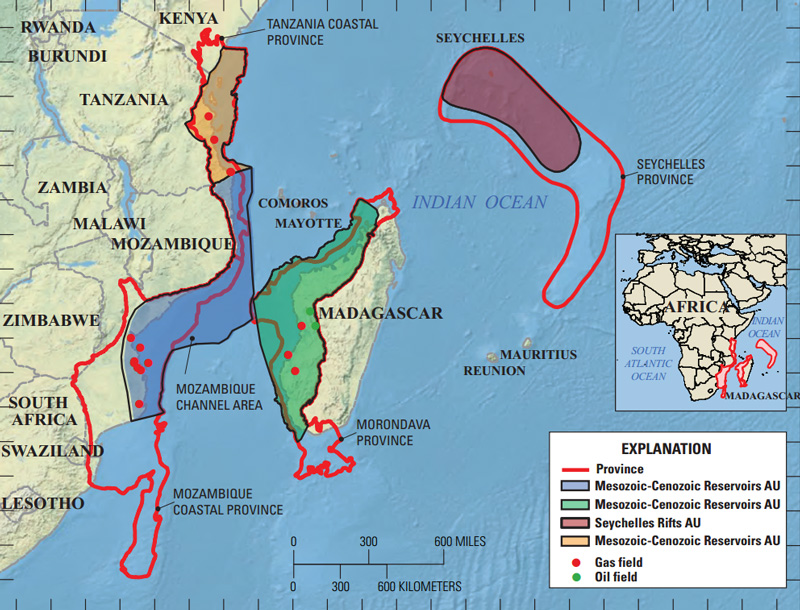
Areas in or off the coast of Mozambique and other East African countries where underground oil and gas reserves have been dis-covered; when developed, they are expected to start generating some $38+ billion in annual revenues by 2035. Not surprisingly Exxon-Mobil along with a host of other vulturistic oil conglomerates have already been licensed by the Mozambique government to start developing block allocations, which have been awarded without due process, no doubt for hefty kickbacks. Though the right of the people to protest business as usual by the elites and demand a fair development of their resources so that the wealth finances the growth of indigenous institutions for education, healthcare, and technology infrastructure is legitimate, the eruption of ISIS cells in the country and surrounding areas suggests that those demands will be sacrificed in favor of security guarantees for the extraction of the fossil fuel resources, which ultimately will be paid for by the value of such resources, the money finding its way into Western banks.
The militants are not unified; they are scattered into different cells without appearing to have any coordination for their activities. By August 2018, the Mozambican police had identified six men as leaders of the militants in Cabo Delgado: Abdul Faizal, Abdul Raim, Abdul Remane, Ibn Omar, “Salimo,” and Nuno Remane.
Like other militant groups, Ansar al-Sunnah also funds itself through illicit trade including selling heroin, contraband, and ivory. A genuine Islamic organization would never fund its activities through drug money or any other haram (forbidden) sources, such as drugs that are forbidden in Islam.
While religion does play a role, albeit limited, in the conflict, some analysts believe the most important factors in the insurgency are widespread social, economic, and political problems in Mozambique. Unemployment and especially youth unemployment are considered the main causes for locals to join the rebels. Increasing inequalities have led many young people to be easily attracted by such a radical movement. Ansar al-Sunnah promises that its form of Islam will act as an antidote to the existing “corrupt, elitist rule.” The question, however, is that these people have lived in poverty for centuries; why the sudden urge now to fight for riches? The timing of their emergence is highly suspicious.
The fact that the uprising began immediately after gas was discovered in Mozambique makes it very dubious. Also of interest is the sudden appearance of key international players like the Americans and the Russians, who have all pledged to protect the newly found gas. This “protection” will come at a price that the poor will have to pay. On September 25, Russian military hardware, namely two Mi-17 helicopters, was delivered via a Russian Air Force An-124 (registration RA-82038) transport plane that landed at Nacala. The Russian and Mozambican governments had signed an agreement on military and technical cooperation in late-January 2017.
In October 2019, the Mozambican military announced that it had detained 34 individuals traveling from Nampula to Cabo Delgado who are suspected of trying to join the ISIL-affiliated insurgent group. The same month, the rebels reportedly killed seven Russian mercenaries and defence contractors from the Wagner Group and 20 Mozambican soldiers in Cabo Delgado Province during two ambushes. The attacks were attributed to the “Islamic State’s” Central Africa Province. Then last month, a number of government troops and five fighters from the Russian mercenary Wagner Group were killed in an ambush. ISIL claimed responsibility for the attack.
There is lack of access to reliable information in the region due to journalists being intimidated by government and military personnel. On January 5, 2019, Mozambican authorities also unlawfully detained journalist Amade Abubacar who had reported on the insurgency. He was subsequently subjected to torture, and only released on bail after 107 days in detention. Why would the Mozambique government play hide and seek if it is an obvious and transparent terrorist war being fought in Cabo Delgado?
It has been reported that oil and gas reserves have been discovered off the Western Cape, South Africa near Mossell Bay. Should South Africans be worried in view of developments in neighboring Mozambique? Professor Hussein Solomon of the University of the Free State has claimed that ISIS has training cells in South Africa but he has provided no evidence. While vigilance is necessary, in the absence of clear proof, such pronouncements, even by academics, remain speculative.
Dr. Mustafa Mheta is Head Re-searcher/Head of Africa Desk with the Media Review Network, Johannesburg, South Africa.

Saturday, November 09, 2019

Corporate media myths about the takfiris’ fighting prowess

From our archives - how takfiris are marketed by the corporate media. Old, but very relevant. 

Crescent International

Are the takfiris really that great fighters or they are being projected for a sinister western agenda?
Toronto, Crescent-Online,
September 7, 2014
There is a deliberate and well thought-out plan to project the modern day Khawariji group, the takfiris as a “superb” fighting force and their so-called state (aka ISIS) as a threat to global peace.
Why when the standard practice in every war is to project one’s enemy as weak in order to gain psychological advantage and boost the morale of one’s own troops? While today, this is not the exact methodology adopted by warring parties, the end goal has remained the same: to portray oneself as strong and one’s enemy as weak.
Why are the takfiris in Syria and Iraq are being portrayed as quasi-Rambos? To understand this we must look at the events of 2003. A few weeks prior to the US invasion of Iraq, Western corporate media was full of stories about how deadly and skillful Saddam’s Republican Guards were.
The media presented the Guards as the most competent fighting force in the region. Many reports on Iraq prior to the invasion repeatedly emphasized them as fearsome but in reality, they disintegrated within hours of the invasion.
This made the US military look like an unstoppable fighting force. It was projected as a fighting machine that defeated the most “feared” and “elite” force of Saddam Hussein.
It is worth recalling that the US had in the early 1980s helped put together the Republican Guard against Islamic Iran, so Washington probably knew more about the force than Saddam himself.
The takfiris that receive vast sums of money from close US allies in the region are presented as “superb” fighters so that when their usefulness expires, they can be eliminated and this feat can be presented as a “great victory” for US forces. This process has already begun.
Our brief review of reports in the corporate media show that since the emergence of the takfiri State’s forces, they have been projected as ruthless and ruthlessly efficient fighters.
Almost every news report and statement of Western officials along with their soft-power institutions highlight how “effective” or “skilled” the takfiris are. Let us consider some basic facts to review what the truth really is.
One of the recent military achievements of the takfiris that was widely reported in the media was the capture of the Tabqa airbase in Syria. Most media reports kept repeating how this victory is another proof of their “superb” fighting skills.
There was no mention of the fact that the Tabqa airbase was under siege for over a year within territory almost completely under takfiri control. During the latest attack on the airbase the takfiris lost hundreds of men and only managed to capture the base because of their overwhelming numbers.
So are they really such great fighters? Was it really such a remarkable feat to capture an airbase that was surrounded for more than a year and storm it by thousands of fighters while those defending it were a few hundred?
Another recent battle worth looking at is the battle for the Aleppo central jail. Tens of thousands of Western backed terrorists and among them thousands of takfiris from various gangs operating in Syria held the central prison under siege for almost two and a half years.
A few hundred Syrian army soldiers (mostly conscripts) held out against them for over two years. The takfiris and their allies still failed to take the prison. In fact during the two-year battle the Syrian Army managed to eliminate key takfiri ringleaders.
Let us also not forget the battle for Qusayr, which according to dozens of video messages by the takfiris was supposed to be “the graveyard” of Hizbullah. In reality it turned out into a running track for thousands of takfiris that were routed by 1,700 Hizbullah mujahideen. The takfiris had to run all the way to Qalamun Mountains to seek refuge.
In Iraq the takfiris managed to capture territory because Baath loyalists and other armed gangs helped them, not to mention a deliberate Kurdish inaction in order to weaken Iraq as a unified state. The corporate media however, is making it seem as if the takfiris did it on their own.
It is also important to bear in mind that the takfiri groups operating in Syria and Iraq receive huge logistical support from NATO member country Turkey with Washington’s consent.
This is an open secret that all public sources of information have confirmed. With such backing who would not be able to score some successes? The takfiris travel through Turkey, get medical treatment, transport weapons and money with great ease.
Imagine if Turkey or Egypt were to provide the same logistical and materiel support to Palestinian resistance against the Zionist occupiers? Al-Quds would have been liberated a long time ago.
PS: For in-depth understanding of the US military strategy in the Middle East, read our evaluation titled – ‘Role of Special Forces in US imperial designs.’
END 

Saturday, January 19, 2019

Iran 40 years after victory of the Islamic Revolution (7)

Ayatollah Seyyed Ali Khamenei, in a speech at the holy shrine of Imam Reza (AS) in Mashhad in the beginning of the Iranian 1397 year, said, "In the year that passed the Islamic Republic succeeded to hoist the flag of dignity and might of the Iranian nation in the region and had an important share in breaking the back of the Takfiris and establishing security in the region."
The Leader of the Islamic Revolution, emphasizing on the presence of the Islamic Republic of Iran in some of the regional countries according to the demand of their governments and nations, made it clear, "We have neither bullied nor have we interfered in the domestic affairs of countries. They requested and we helped them and we did this help with logical motives and very rational calculations rather than sentiments."
One of the ideals of the Islamic Revolution has been the promotion of the culture of resistance in the face of the global system of dominance.
The Islamic Republic of Iran in its 40th year of life, has continued the path of defending the rights of oppressed nations as it has been expressly mentioned in the Constitution.
The foreign policy of the Islamic Republic is also based on principles such as unflinching support for the downtrodden and Muslims in the world.
The article 16 of principle 3 of the Constitution stresses the designing of foreign policy on the basis of Islamic criteria, brotherly commitment toward all Muslims and unflinching support for the downtrodden across the world.
Principle 154 also makes it clear that the Islamic Republic of Iran, while avoiding any intervention in the internal affairs of other nations, supports righteous struggle of the downtrodden against oppressors in any region of the world. Dr. Seyyed Jalal-uddin Madani explains this principle in his book, "As long as nations are not determined to realize their rights there will be no possibility of change in them and whenever a nation grows up and demands its violated rights it will cause change. The support of the Islamic Republic for such an uprising is not considered as intervention because the solidity and stability of the system depends on the demand of the people and when a nation asks for help it has used its rights rather than foreign help."
Ayatollah Khamenei says, "Wherever we interfere we say it clearly. We interfered in the affairs against Israel and the result was the victory of the 33-day war and the 22-day war. After this, also, wherever any nation or any group which confronts the Zionist regime we will be behind it and help it and have no fear of saying this."
In view of the Islamic Republic of Iran, every nation should enjoy equal rights in the international system and shouldn't be aggressed or bullied by any country.
The Islamic Republic of Iran is opposed to any aggression, invasion and occupation; and wherever it realizes that a nation is in need of support against aggression it will not hesitate to support it and condemn the aggressor and oppressor. The Founder of the Islamic Republic, Imam Khomeini, said, "We must support the downtrodden of the world because Islam supports the whole downtrodden in the world and Iran spends its power to support other Muslims."
These stances mean opposition against domineering policies and behaviors. The Islamic Revolution has been shaped on the basis of the culture of resistance, self-sacrifice, freedom-seeking, self-belief, bond between politics and religion, justice-seeking and struggle against Arrogance. Since its birth, the Islamic Revolution has fought the Global Arrogance (symbolized by the US) and the Zionist regime of Israel and the most illegitimate entity in the world.
The right to live is one of the birthrights of every human being. But, today the regimes which are supported by the United States of America are committing every crime with full impunity. The fabricated Zionist regime of Israel has committed every imaginable crime for the past 70 years but the US has always supported it shamelessly.
Saudi regime has been a partner-in-crime for the US and Israel at least for the past three decades. Saudis started their military assault on Yemen on March 25, 2015, but the there is no movement or cry of the US human rights on the issue.
Rania Khalek, American analyst tweeted on the barbaric attacks of Saudis on Yemeni people, "In Yemen, every hour a citizen loses his life due to cholera and the US-sponsored Saudi bombardment and siege is the cause of widespread outbreak of cholera."
Although these moves and battles have existed in the past eras, too, the occurrence of the Islamic Revolution caused fundamental development in the teachings of the culture of resistance. Without doubt, it can be said that today defence of values and justice-seeking ideal of the Islamic Republic have turned inspired deprived nations to resists against the hegemonic system in the world. The impacts of this can be seen in the awakening of oppressed nations. Oppressed nations now believe that they can confront despotic regimes. The culture of resistance has been shaped up in the form of Islamic uprisings in the Islamic world and the culture of fighting oppression among deprived nations. Universalization of the values of the Islamic Revolution has made the demand for ending the US hegemony and Israeli occupation of Palestine to a global demand.
Protests against domineering systems, especially the Great Satan (the US) and its continuous violation of international treaties and non-commitment vis-à-vis global issues such as the environment preservation, nuclear disarmament, racism and discrimination have been universalized. In view of this, the demand for basic changes in the structure of the global system and monopoly has been focused on the bodies like the United Nations Security Council and monetary funds and institutions in the first place. The Iranian nation's stiff resistance against the bullying of the US and its allies have created the belief among oppressed nations that it is possible to stand against domineering powers. 

Thursday, November 08, 2018

Takfiris Likened to Khawarij


Takfiris Likened to Khawarij

Prominent Lebanese Sunni cleric Sheikh Mahir Hamoud likened the Takfiris to Khawarij.

He said the Takfiris’ suicide bombers are naïve individuals brainwashed into believing the ideas of Khawarij, Al-Nashra website reported.

Khawarij refers to a group that rebelled against Imam Ali (AS).

Sheikh Hamoud regretted that some deviated youths are ready to kill themselves for some fictitious cause that the religion and wisdom reject.

 He criticized attempts to bring excuses to justify suicide attacks and acts of terrorism by extremists, stressing that the spread of Takfiri ideology that permits shedding the blood of innocent people is dangerous.

Takfiri groups distort the image of Islam through terrorist attacks in different countries like Iraq, Syria and Lebanon.

Tuesday, June 11, 2013

Implications of Qusayr's re-capture by the Syrian army

Implications of Qusayr's re-capture by the Syrian army Beirut, Crescent-online- June, 2013 Western media pundits are tearing their hair out over the rebels' defeat in Qusayr. It may prove a gram-changer in the 27-month long Syrian turmoil After the signal victory won by the Syrian army (SAA) over the rebels and merecenaries in the town of Qusayr, the global media is busy assessing the significance of the event. The Western media is busy spinning Qusayr as the insidious influence of Hizbullah over the free will of the Syrian people. In particular, the war-thirsty French media has been proliferating reports that the SAA has been dousing people with sarin gas—while ground reports suggest that NATO and rebel forces are far more likely to be the source of such chemical attacks. In strategic terms, the math is quite different. As reported by Pepe Escobar for Asia Times Online, “[t]his is a monster strategic defeat for the NATO-Gulf Cooperation Council-Israel axis. The supply lines from Lebanon to Homs of the Not Exactly Free Syrian Army (FSA) gangs and the odd jihadi are gone.” According to Sheikh Naim Qassem of Hizbullah, the fall of Qusayr is a blow to the US, Israel, Saudi Arabia, Qatar, and the Sunni extremist groups. “The victory in Qusayr is a sharp blow to the American-Israeli-Takfiri project and a glowing moment for the resistance project in Syria and there is no point to the cries of the international and regional political media in trying to change the historic and geographic realities,” he said on Hizbullah’s Al Manar station. According to American and Israeli military strategists Syria was meant to be a testing ground par excellence to the explosion of the Middle East. According to their specialists, they were planning to pit Hizbullah’s fighters against Sunni extremist groups, heat up the “Persian” versus “Arab” fault line, as a way to topple the government of Bashar al-Asad. All the while, they intended to overstretch Hizbullah in order to give Israel carte blanche over southern Lebanon once more. This defeat may signal the beginning of direct war, involving the US Marines stationed in Jordan in preparation for intervention. A diplomatic report this week from a European embassy seen by the Monitor noted that Hizbullah "has given the regime a much-needed injection of fresh forces to conduct offensive operations." According to the report, "It is unrealistic that it can give the regime the opportunity to capture significant areas back from the rebels, but it may make it impossible even in the medium term for the rebels to tip the military balance." With Turkey, the other principal backer of the rebels and mercenaries, engulfed in its own internal crisis, Turkish Prime Minister Recep Tayyip Erdogan has his hands full and may not be able to offer any significant help. In fact, the Syrian government has been quick to offer him a dose of his own rhetoric. The retort by Syrian Information Minister Omran al-Zoubi to Erdogan to “stop the violent repression” and “respect people’s wishes” has riled the Turkish pasha considerably. Meanwhile, the people of Qusayr who had fled the fighting have started returning to their homes, many of them badly damaged due to prolonged strife. On Sunday June 9 a rally was organized in the centre of town led by Homs governor, Ahmed Munir Muhammad who vowed that he would spare no effort to rebuild the town and restore essential services as soon as possible.