Showing posts with label Syed Zafar Mehdi. Show all posts

Monday, April 22, 2019

Setting the ground for the ‘savior’ of humanity

By Syed Zafar Mehdi
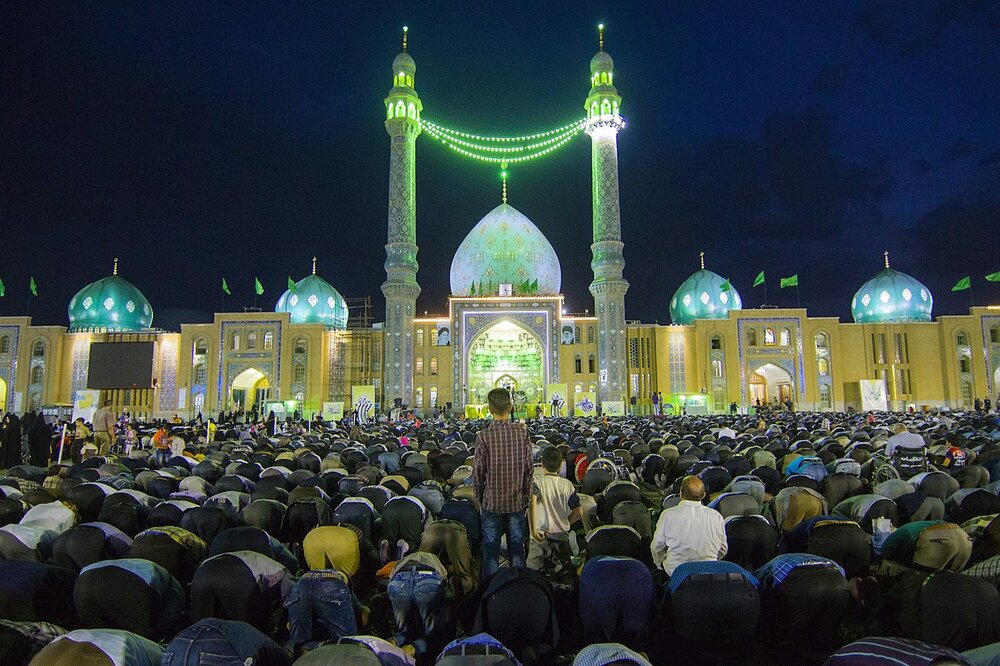
TEHRAN - The idea of a messiah or savior or redeemer is common to all religious schools of thought, including Islam, Hinduism, Buddhism, Judaism and Christianity. 
In the Islamic context, the concept of messianism, which is the belief in a messiah, revolves around an eschatological figure that is expected to rise and fill the earth will peace, justice and social order.
Holy Quran and Prophetic traditions have in unambiguous terms predicted the glorious triumph of the forces of right and the establishment of an Islamic society built on the foundations of justice, equality, and righteousness. The wait and anticipation for that bright tomorrow continues. 
Imam Sajjad (as) says: “The greatest success is to wait for the reappearance (of Imam)”. (Al Ihtejaj vol.2 Pg.154. Kamaaluddin vol.1 Pg.320)
What does this ‘wait’ entail? If we dig little deeper in the subject of Mahdism, we come to understand that ‘waiting’ is primarily the result of two main conditions: not satisfied with the status quo and expecting things to turn around for good. 
But, is merely being disgruntled with the status quo enough?  Absolutely not. A person needs to step out of his comfort zone and set the ground for visible and productive ‘change’ to take place. More precisely, a person has to participate in the process of change, rather than be slothful and wait.
In the words of British historian Eric Hobsbawm, the concept of messianism, which we call Mahdism, can be broadly divided into two main categories: passive and active. 
In the passive Mahdism, people immerse themselves in prayers and supplications and hope for the savior’s early reappearance. In the active or revolutionary Mahdism, people go out of their way to make strenuous efforts and become active participants in the process of change.
We are witnessing social, political and cultural turmoil across the world today. Morals and ethics have degraded ominously. Grinding poverty has resulted in poor quality of life. Illiteracy and educational backwardness has sent people back to dark ages. 
The forces of colonialism and imperialism have become menacingly stronger than ever. Human rights violations have become frighteningly widespread. Corruption and social anarchy has assumed alarming proportions. Weak and voiceless continue to be oppressed and subjugated. Moral and ethical degradation has been normalized to the extent that it doesn’t raise eyebrows anymore.
So, with moral bankruptcy, endemic corruption, grinding poverty, and scourge of illiteracy, ignorance, misrule and barbarism reaching the climax – what should a waiter wait for? What are the responsibilities of a person waiting for the change to happen?
Amidst the darkness of despair, there is an elixir of hope. The hope lies in the divine intervention. The hope is the divinely guided leader, the Mahdi (ajtf), who is expected to come out of the occultation and establish a system based on the divinely ordained laws. It will be an ultimate victory of truth, justice and righteousness. 
A narration attributed to the Holy Prophet (pbuh) makes it emphatically clear. “The world will not perish until a man among the Arabs appears whose name matches my name.”  (Sahih al-Tirmidhi, V9, P74)
There is a clear instruction in Holy Quran for believers waiting for the change to take place. “And say to those who do not believe that you act as much as you can. We are also trying. You all wait and surely we all are waiting.” (Surah Hud).
Shaheed Baqir al Sadr in his book ‘An Inquiry Concerning Al Mahdi states that the Mahdi (ajtf) is no longer an idea waiting to be materialized nor a prophecy that needs to be substantiated. 
“He is a living reality, a particular person, living among us in flesh and blood, who shares our hopes, suffering and sorrows and is waiting for the appropriate moment to stretch his hand to every oppressed and needy person and eliminate the tyrants,” he writes.
Allah (swt) says in Holy Quran: “O’ Muhammad (pbuh), you are but a warner, and for every community, there exists a guide.” (Surah Ra’d). There will always be a divinely gifted guide for people in every age and every time. For us, the people of this age, it is the Mahdi (ajtf).
Beside Holy Quran, there are numerous traditions of the Holy Prophet (pbuh) and his progeny that have predicted the reappearance of Imam Mahdi (ajtf).
Imam Ali (as) quotes the Holy Prophet (pbuh) saying that the Mahdi (ajtf) is from his progeny who would come out of the occultation and establish a system based on justice and equity at a time when it would be fraught with injustice and repression, and through him the treasures of prophets would become apparent. (Yanabiul Mawaddah, P448)
Imam Hussain (as) is quoted as saying that the Mahdi (ajtf) is his ninth descendant and during the period of his occultation, one group will have doubts in him while another group will remain steadfast in their beliefs and prepare the ground for him, and their reward would be like those holy warriors who stood alongside the Holy Prophet (pbuh). (Kifayatul Athar)
Imam Mohammad Baqir (as) said the last of the infallible successors of the Holy Prophet (pbuh) is the one under whose leadership Hazrat Isa (Jesus) would perform the prayer. (Al-Ihtijaj)
Imam Reza (as) said even if a single day remains for this world, Allah will prolong that day until the Mahdi (ajtf) reappears and fills the earth with justice and order. Quoting a tradition attributed to the Holy Prophet (pbuh), Imam Reza (as) said the rise of the savior is akin to the Day of Judgment that only Allah knows about. (Ghayatul Maram, P696). 
Referring to a Quranic verse, Imam Reza (as) said when the Mahdi (ajf) reappears; a call will be heard from the sky, inviting people towards the truth. “And listen on the day when the caller shall call from a near place. The day when they shall hear the cry in truth is the day of coming forth.” (Surah Qaf)
So what are the signs of the Mahdi’s (ajtf) reappearance? “There would be widespread injustice, oppression, fear, mischief, calamities, violence, despair and hopelessness,” says Imam Mohammad Baqir. (Qalaidud Durar)
Imam Jafar Sadiq says the signs include young insulting the elders, people spending their wealth in ways other than God, transgressors defended and praised, believers humiliated and degraded, people killed on the basis of mere allegations and doubts, telling truth becomes a difficult task, hearts of men become hard and eyes lose shame, earning through illegal means becomes acceptable. (Rauzatul Kafi, P 36-42)
Advent of Dajjal is also one of the signs of the Mahdi’s (ajtf) reappearance. The grotesque man would deceive the gullible people with wealth and power and make illegal activities legal, before he is knocked down by the messiah of the humanity. 
Looking at the state of affairs today, the discourse around the reappearance of the Mahdi (ajtf) and the responsibility of setting the ground for his reappearance has assumed enormous significance. 
With the world sinking into the abyss of darkness and people across the world grappling with myriad woes, most of it self-inflicted, the responsibility on our shoulders has increased manifolds. 
Imam’s occultation, however, does not mean he has abandoned us or that we must despair about our present state of affairs. He presents hope to the hopeless. 
Imam Ali (as) said: “Await for the reappearance (of the Mahdi) and do not despair of the divine mercy. Because the best deed in the eyes of Allah, the great and the mighty, is to wait for the reappearance (of Imam). It is the duty of those who are believers.” (Al Khisaal, vol2, Pg616)
What are our responsibilities as believers to prepare the ground for Imam’s reappearance? A tradition attributed to Imam Hasan Askari (as) exhorts people to remain vigilant and participate in the process of educational change. 
“Be aware, if somebody teaches ignorant, guides a misguided, instills the teachings of Ahlulbayt (as), then on the Day of Judgment he will be with us. We will give him a seat next to us,” he says. 
Hence, it is amply clear that during this period of Imam’s occultation, among the biggest responsibilities on our shoulders is to bring about educational reformation in our society.
Such educational reformers enjoy supreme position in the eyes of Allah (swt). Imam Ali Naqi (as) extols the virtues of these reformers. “Had there not been such scholars in the period of occultation who call people towards the Ahlulbayt (as), guide towards them, defend their religion with the proofs of Allah, protect weak Muslims from the devilish designs, deception of the tyrants and tentacles of the enemies of Islam, then surely all would have deviated from the religion of Allah.” (Mahajjatul-Baizaa, P32)
It’s important to enjoin others to pursue good deeds (amr bil maaruf) and advocate against sinful practices (nahi anil munkar). We must promote and propagate the divine message of Islam and develop scientific temper in our youth through education and reformation.
Spreading awareness about the sinister plots and conspiracies being hatched by the enemies of Islam is another important obligation. We must strive to expose the corrupt rulers and extend helping hand towards poor and needy in our society. 
We must constantly try to polish our morals and ethics to be able to join Imam’s army.  Above all, we must raise our voice – individually and collectively – against corruption, injustice, terrorism, crime, immorality and other such menaces.
What is important is the right strategy and approach to pave the ground for educational awakening and social reformation. Grooming children from early stages, making them understand the purpose of existence and their responsibilities, explaining how Islam is not just a religion but a complete way of life, stressing on the need to analyze with a free mind, the need to debate and discuss passionately, and the need to exchange ideas generously. 
The approach has to be thoughtful, progressive and result-oriented. It must ensure the gains of education are properly utilized to bring up children who are educated, informed, aware and enlightened. 
Given that we are impatiently waiting for someone who is a righteous and virtuous messiah, it’s important that we familiarize ourselves with the ideals of deliverance and act on them in letter and spirit. To prepare the ground for his reappearance, we have to develop a reformist spirit in ourselves and others so that the society undergoes change. 
To protect society from social infirmities, ethical degeneration, cultural disorder, misrule and anarchy, it’s important to educate ourselves and others around us. If we remain trapped in the vortex of ignorance; social anomalies, cultural dilemmas, and orthodox beliefs will continue to hinder our personal growth and that of the society.
As Allah (swt) says in Holy Quran, “You are the best nation brought forth for mankind. You enjoin what is right and forbid what is wrong and believe in Allah” (Surah Al-Imran). 
The seeds of the promised rule of the Mahdi (as) shall soon sprout and our agonizing wait shall end.

Sunday, March 17, 2019

Christchurch shooting is ‘white supremacist terrorism’

By Syed Zafar Mehdi

TEHRAN - Islamophobia is not a cock and bull story or a figment of some fiction writer’s imagination. It is a disturbing reality unfolding before our eyes, almost everywhere.
Attacks against Muslims have assumed alarming proportions in recent years, especially in the Western world, mostly carried out by far-right white supremacists filled with unexplainable hatred for Muslims. 
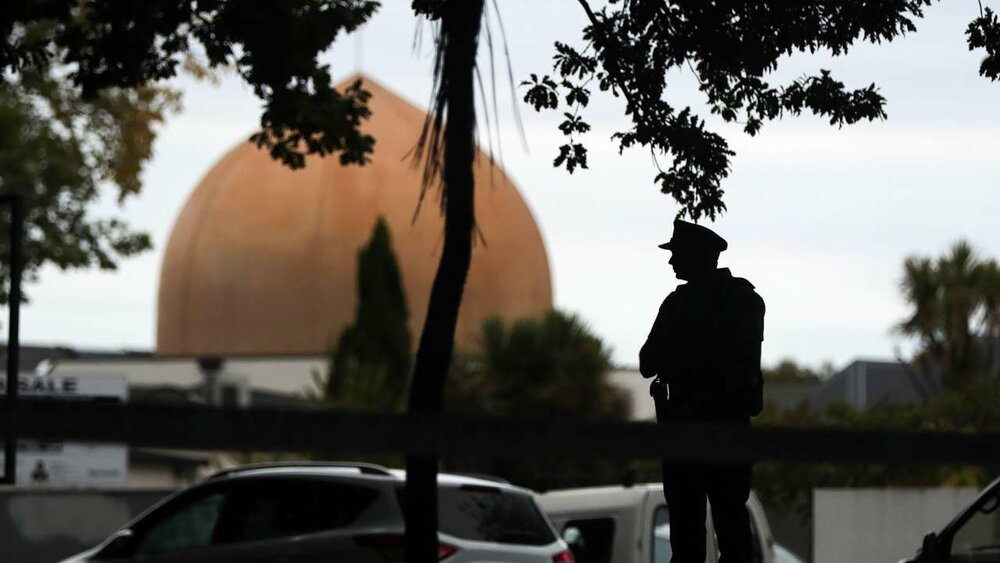
On Friday, the normally quiet and peaceful Christchurch city of New Zealand witnessed ghastly attacks at Al Noor and Linwood mosques during congregational Friday prayers. 
More than 40 people were killed after an attacker carrying automatic weapons barged inside the mosques and opened indiscriminate fire at the worshippers in what is being called an unprecedented mass shooting in the Pacific country’s history.
Police immediately took some suspects in their custody and New Zealand Prime Minister Jacinda Ardern termed it “one of New Zealand's darkest days.”
Australian Prime Minister Scott Morrison said one of the suspects was an Australian national, calling him an “extremist, right-wing, violent terrorist”.
The dastardly attack was livestreamed on Facebook by the attacker who identified himself as Brenton Tarrant. The video was later taken down, but not before it was shared widely in Whatsapp groups. 
The attacker also reportedly left behind racist literature at the scene, denouncing “invaders”. 
Muslims in New Zealand account for just one percent of the country’s population, according to a 2013 census. Most of them are immigrants and refugees.
While the police authorities in New Zealand stopped short of calling it an act of ‘terrorism’, the Islamic Council of Queensland spokesman Ali Kadri said “this has to be called terrorism”.
He said the incident has shaken a small minority of Muslims in the country but they will continue to go to mosques for prayers. He said if far-right extremism and radicalisation is not stopped then “these types of attacks will continue”.
Kadri said people are getting radicalized by the extreme right through an underground movement.
“They talk about Muslims being cockroaches, they talk about Muslims breeding like anything, taking over Australia and European land and the need to fight back – that’s where these people get radicalized,” he was quoted saying by Courier.
Dr. Rateb Junaid, who heads Muslims Australia – the Australian Federation of Islamic Councils –, said the massacre at Christchurch mosques is the “consequence of Islamaphobia and marginalisation of Muslims”.
A manifesto attributed to Tarrant was posted on 8Chan, an unregulated website known for hate speech and Islamophobia. It credited U.S. President Donald Trump and his ultra-conservative supporter Candace Owens as ‘inspirations’ for the mosque attacks. 
“Well, it’s time to stop shitposting and time to make a real life effort post. I will carry out an attack against the invaders, and even live stream the attack via Facebook link,” Tarrant wrote on 8Chan on Thursday, which carried links to his “writings” and his far-right extremist views. 
How the counter-terrorism and law-enforcement authorities in New Zealand missed the warning is incredibly astonishing. 
A day earlier, he had posted a picture of his automatic weapon on Twitter, with the words “Here’s your migration compact” written on the rifle. 
In one of his posts on Facebook, he singles out Candice Owens to be the “particular person” who radicalized him the “most”. 
“Each time she spoke I was stunned by her insights and her own views helped push me further and further into the belief of violence over meekness,” he wrote. 
Trump and Owens have played a key role in fueling hate crimes against Muslims in the Western world through flagrant hate speech, anti-immigration policy and travel ban on Muslims. 
Trump famously told Anderson Cooper in 2016 that “Islam hates us”. This imprudent declaration has over the past few years manifested itself in blatant Islamophobia in America and elsewhere.
Anyone standing up to this powerful lobby comes under fire. The latest example is that of U.S. Congress member Ilhan Omar, who has been attacked for speaking about the influence of the Zionist lobby in U.S. politics and policy.
The American-Somalian congresswoman has been ridiculed, denigrated and threatened in recent weeks with assassination simply because she has the audacity to call spade a spade. 
This vilification of Omar and many others like her is the direct result of the bogey of Islamophobia and anti-Muslim rhetoric that has been normalized in the Western societies. 
Studies show that over the past few years, hate crimes and attacks against Muslims in the U.S. have skyrocketed. According to Pew Research analysis, attacks on Muslims have “easily surpassed” post 9-11 levels, and one of the factors is the rise of Trump.
However, author and commentator Khaled Beydoun says Islamophobia has “deep roots” in American history, but now it has been given a “new face”, intensified by the rhetoric of characters like Trump.
In UK, which is considered the hub of Islamophobia in Europe, a record number of anti-Muslim attacks were reported last year, according to the monitoring group Tell Mama.
In its report, the group noted a surge in Islamophobic attacks, with 1,201 cases reported in 2017, the highest number since it began recording incidents.
According to Hope Not Hate, an anti-racism charity, Islamophobia has become the driving force behind the rise of far-right movements in the UK. It says “anti-Muslim prejudice” has replaced immigration as the “key driver” of far-right groups.
A report published by the charity said 35 percent people in UK thought Islam was “generally a threat to the British way of life”.
In Canada, hate crimes against Muslims have grown sharply in last few years, with 349 documented cases in 2017 — nearly one every day. Anti-Muslim hate crimes account for 17 per cent of all crimes in Canada, according to reports.
In Netherlands, just last week a mosque was attacked by members of the far-right German group Pegida, who defaced the building with racist banners, a mosque official was quoted as saying.
But, unfortunately, Islamophobic bigotry in the West does not get the kind of media coverage as attacks carried out by ‘Muslim’ groups do. When the perpetrator is a Muslim, it is termed an “act of terrorism”, but when it’s a white supremacist, it’s smartly downplayed as an “act of extremism”.
This ‘extremism’ is the classical euphemism for white supremacist terrorism and not only talked down but even defended by deranged politicians like Fraser Anning. 
This is the kind of Islamophobia peddled by the likes of Donald Trump and Candace Owens, who ‘inspired’ the Christchurch attacker, with their blatant hate speech targeting Muslim and immigrants.

Monday, September 17, 2018

U.S. is roadblock to peace between India, Pakistan

By Syed Zafar Mehdi


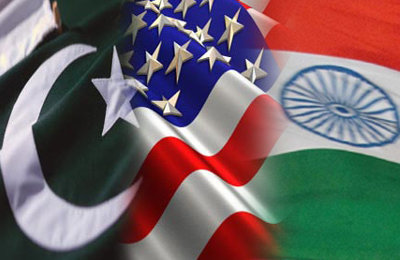
TEHRAN - The inaugural 2+2 ministerial dialogue between India and the U.S. held in New Delhi last week has again threatened to jeopardize recent efforts made by New Delhi and Islamabad to bury the hatchet and open a new chapter in their bilateral ties. The joint statement issued at the summit has drawn sharp reaction from Islamabad, making it amply clear that the Americans don’t want India and Pakistan to be friends and they don’t want peace and stability to prevail in this region.
In the joint statement, India and the U.S. called on Pakistan to ensure that the territory under its control is not used to launch terrorist attacks on other countries, adding that Pakistan should expeditiously bring to justice perpetrators of the Mumbai, Pathankot, Uri, and other cross-border terrorist attacks. Without going into the merits of this statement, the timing is suspect.
U.S., which recently cancelled $300 million military aid to Pakistan, has been chagrined with the growing proximity between Islamabad and Beijing and the new Pakistani government’s hand of friendship towards Iran. Americans are known to unceremoniously dump friends and allies, and the recent developments indicate that the Trump administration has embarked on a mission to dump Pakistan now. Not just that, it seeks to hijack any efforts to improve ties between Pakistan and India.
Reacting sharply to the Indo-U.S. joint statement, Pakistan’s foreign ministry said it takes “strong exception to the unwarranted references” against it in the statement, adding that Pakistan has conveyed its position to the U.S. on the issue. The spokesperson said the ministry is of the view that mentioning of a third country with “unsubstantiated accusations” in a formal document is “inconsistent with the established diplomatic norms”.
The statement has reopened old wounds that have prevented the two South Asian estranged neighbors from demolishing the giant wall of hatred and animosity between them. This regional disintegration, it must be noted, serves the regional policy of the U.S. well. We have seen in Afghanistan how the U.S. imposed a war and forced peoples and nations to fight against each other. The war has entered its 17th year now, and the U.S. war machinery is busy fanning the flames of war.
Since the new government assumed power in Pakistan, Islamabad and New Delhi have shown signs of a thaw, expressing desire to work with each other and resolve the contentious issues, including Kashmir. Pakistan’s new Prime Minister Imran Khan, in his victory speech, asserted that he would take two steps if India took one step. Indian Prime Minister Narendra Modi sent a letter to Khan, congratulating him on his election. These developments rekindled hopes of a breakthrough in India-Pakistan relations and brought cheer to peaceniks on both sides of the border.
Indian High Commissioner to Pakistan Ajay Bisaria last week said that Prime Minister Imran Khan's government has opened a political window and India is “filled with cautious hope”. Bisara had met the cricketer-turned-PM earlier this month and presented him a cricket bat signed by the members of present Indian cricket team. It was hailed as a sign of cricket diplomacy, which works when the political diplomacy fails.
Pakistan’s foreign ministry, reacting to Bisara’s statement, said it wants to “utilise the same window and see how we can move forward.” So, it’s apparent both sides have been making indefatigable efforts to break the status quo and make substantial progress on improving their relations.
On Thursday, Pakistan’s foreign ministry said it was ready for talks with India and was awaiting an official response from New Delhi on how to move forward on the issue. “We are ready for talks with India. We have also conveyed our position to the international community. It remains for India to respond,” spokesman Dr Mohammad Faisal said during the weekly media briefing, corroborating reports that Pakistan had approached India for peace talks.
“We are also saying since long that dialogue is the only way forward to settle all outstanding issues between Pakistan and India. We are officially waiting for a response from India on how they want to move forward. We have a consistent position on this,” he asserted, adding that there were few Track-II initiatives with India which were not official.
So, at a time when the two neighboring countries are trying to resurrect the peace process and open a new chapter of bilateral relations, it is important for the policy makers in both New Delhi and Islamabad to understand that there are forces that do not want them to shake hands. U.S. regional policy seeks to create wars and discords, not peace or agreements.  
Unlike his predecessor, Prime Minister Imran Khan seems to have realized the futility of Pakistan’s alliance with the U.S. At an event in Rawalpindi a few days ago to mark Pakistan’s Defence Day, he said the country “won’t fight the wars of others” anymore. “I was opposed to the war on terror, I didn’t want Pakistan to get involved in someone else’s war,” Khan said. “I pledge today that Pakistan won’t fight someone else’s war. We stand for our people and we will have a foreign policy that works for the betterment of Pakistanis.”
The BJP government in India, which signed important defense deals with the U.S. during 2+2 dialogue last week, would do well to remember the words of party patriarch Atal Bihari Vajpayee: you can change your friends, but you can’t change your neighbors. Good relations between India and Pakistan are in the best interests of peace and stability in the region, something the hawks in Washington don’t want to see.

Saturday, September 15, 2018

Why Muharram commemorations haven’t lost their significance

By: Syed Zafar Mehdi


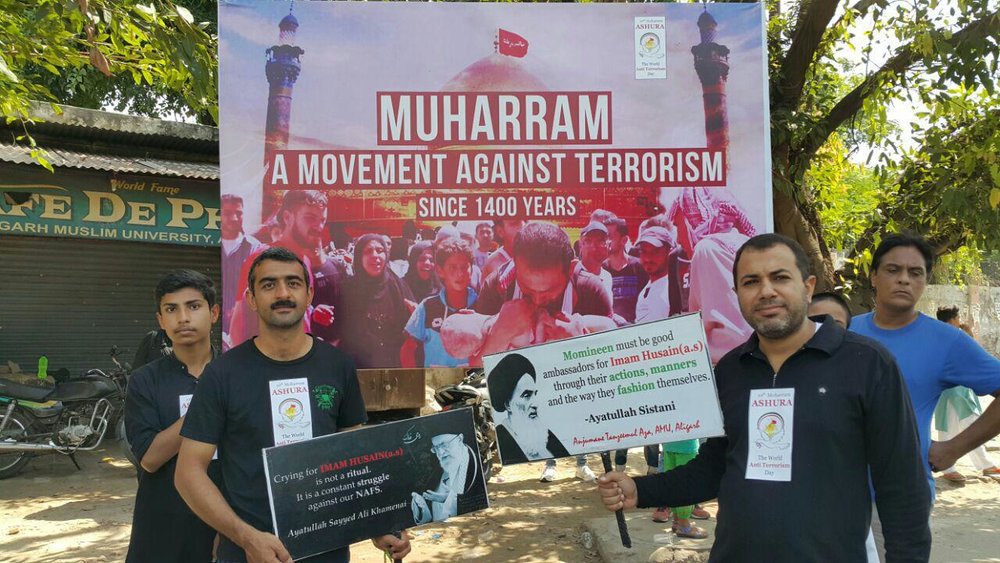
TEHRAN - Muharram, contrary to the popular perception, is not merely a poignant chapter in history, orbiting around a grief-centric ritual. It is a profoundly illuminating philosophy that defines the relationship between truth and falsehood, between righteousness and impiousness, between dignity and ignominy.
The leader of challengers Imam Husain’s (as) uprising on the desert plains of Karbala 1400 years ago was not a struggle for paltry political gains or one-upmanship. It was the beginning of a movement for Islamic awakening and social reformation. The movement about the eternal struggle of right versus might, just versus unjust, truth versus falsehood.
The movement, which has gripped the hearts and minds of people throughout history, continues even today – in Palestine, in Syria, in Afghanistan, in Yemen, in Nigeria, in Myanmar, in Iraq, in Kashmir. This movement will be relevant and significant as long as tyrants and aggressors exist.
Understanding the essence of Imam’s uprising is essential to understand the profound philosophy of Karbala and the significance of these annual commemorations.
Muharram and Karbala are in a way symbolic and their appeal cuts across the frontiers of time and space. Imam Khomeini (ra) often used this phrase in his speeches – ‘Kullu yaumin Ashura, kullu arzin Karbala’ (every day is Ashura and every place is Karbala).
Despots, crooks and scoundrels have existed in every age and every time. They have tried to disrupt social order, ban peaceful religious practices, create civil disturbance, and target innocents on flimsy grounds. They exist even today, in various forms and shapes and manifestations, across the world. Karbala teaches us the importance of defiance and resistance against these forces.
In Maqtal al-Hussain by Al-Khwarizmi Hanafi, it is mentioned that when Waleed ibn Uqbah, the governor of Medina, summoned Imam Hussain (as) to pay allegiance to Yazid, he categorically refused. “We are the household of the Holy Prophet, the core of His message, the place where angels descend to, and the place of mercy. Allah brought victory through us and will conclude by us, while Yazid is a corrupt man who consumes alcohol, kills the innocent, and openly disobeys God. A person like me cannot give the pledge of allegiance to a person like him,” Hussain (as) said.  
Despite all overt and covert pressure tactics; the beloved grandson of the Holy Prophet (pbuh) refused to yield, thus obliging the command of his Creator, who says in Surah Munafiqun that “the might belongs only to Allah and to His Apostle and to the believers”.
Hussain (as) did not seek confrontation or conflict. He was forced out of Madina and Mecca simply because he refused to recognize an alcoholic ruler as the ‘leader of the faithful’. He asked his noble companions like Burayr ibn Khudayr, Habib ibn Muzahir, Zuhair ibn Qain and Muslim ibn Awsaja to liberate people from their self-inflicted misery. He even addressed his opponents and reminded them of their religion and the position of their Prophet (pbuh). He then raised a call, an immortal call. “Is there anyone to come to our rescue? Is there any helper to help us?”
It is a universal call that resonates even today. In Ziyarat e Imam Hussain (as), we say: “wish we were with you (O Hussain) so we would have won the greatest victory”. Kufans played deaf to Hussain’s (as) call, but will we also snub him? Are our hearts beating for Hussain (as)? That’s a question we need to ask ourselves.
The epic battle of Karbala, contrary to what you hear from some over-zealous ecclesiastics, was not decided in the battlefield. It was decided in the hearts of those who draw inspiration from Karbala and single-mindedly resist the forces that terrorize, intimidate, humiliate and kill.
These forces have existed since the time of Prophet Adam, as noted by the celebrated Iranian scholar Dr. Ali Shariati. “Our history, starting from Habil and Ghabil, is the manifestation of the eternal conflict between the two poles of God and Satan, though in each period of time these two poles have disguised differently.” And the evil forces have always faced disgraceful defeat, as emphasized in the Holy Quran. “And Allah will by no means give the unbelievers a way against the believers.” (Surah Nisa)
In the month of Muharram, Muslims around the world collectively remember the martyrs of Karbala and reaffirm their pledge to carry forward the mission of Husain (as). Muharram commemorations were first held by Imam Husain’s sister Sayyeda Zainab (sa) and his son Imam Zainul Abideen (as). Zainab (SA) – who came to be known as Fasihah (skillfully fluent) and Balighah (intensely eloquent) – played a significant role in the aftermath of Karbala.
Dr. Ali Shariati pays her a beautiful tribute. “She accomplished her mission thoroughly, perfectly and fairly. She expressed with words the truth that Hussein expressed with blood… It was Zainab (sa) who stood against and confronted the ruling oppressive power and overcame all resistance.”
Even 1400 years on, these annual commemorations have not lost their significance or relevance, but have become more popular and powerful.
Massive processions are taken out across the world in this month to send out a clear and strong message that injustice vanishes and truth shines bright. The soul-stirring elegies and hymns recited in Muharram gatherings remind us of the cruelty of Yazid and patience of Husain (as). They speak of the unyielding stand taken by Husain (as) and give a sense of hope and purpose to those who believe in the righteousness of their cause.
These commemorations help us reorganize our life around the principles exemplified by Husain (as) and his followers in Karbala. That is precisely why these processions, which are completely peaceful in nature, come under attack in places like Afghanistan, Iraq and Pakistan. The attackers belong to the cult of Yazid and they see these annual commemorations as defiance to their cruelty and aggression.
Every revolution, Dr. Ali Shariati says, has two visages: blood and the message. Husain (as) and his companions undertook the mission of blood. The second and equally important mission is to carry the message of this blood to future generations. We, the campaigners of truth and justice, have been entrusted with the task that was first carried out by Zainab (sa) after the battle of Karbala.
The 20 million people who marched by foot from Najaf to Karbala on Arbaeen (the fortieth day after Ashura) last year, beating the heat and ISIS threats, bore testimony to the fact that the mission of Zainab (sa) is alive. This year, on Arbaeen, the number of pilgrims is likely to swell even further.
The exemplary sacrifices rendered by Husain (as) and his companions will never be forgotten. As long as there is injustice, oppression and corruption in the world, Karbala will remain relevant and the message of Hussain (as) will reverberate across the world.

Thursday, September 13, 2018

‘U.S. focus in South Asia gradually shifting from Pakistan to India’

By: Syed Zafar Mehdi


TEHRAN - After the recent turn of events, regional alliances have changed and a paradigm shift has been witnessed in the foreign policy priorities of countries in South Asia. The U.S. has lost an important ally and is now wooing another regional bulwark for a potential ‘marriage of inconvenience’.
According to a report in China’s state-run newspaper Global Times, which is often seen as a reflection of Beijing’s official stand, U.S. focus in South Asia is gradually shifting from Pakistan to India, with latter making no secret of its reluctance to continue to be subservient to the U.S. interests.
In an article titled ‘US tilts toward India in shifting South Asia policy’, the Chinese daily stated that Pakistan can no longer enjoy a special status (in U.S.) as it did during the war on terrorism, whereas India, sharing common anxieties with the U.S. against a rising China, assumes new importance for the US.
The report cited the Communications Compatibility and Security Agreement (COMCASA) signed between New Delhi and Washington last week during the inaugural Indo-US 2+2 dialogue, and suspension of anti-terrorism aid to Pakistan, to assert that the U.S. was desperately trying to woo New Delhi, after the break-up with Islamabad.
In recent months, the U.S. and Pakistan have slowly drifted away, after President Donald Trump’s hyperbolic tweet on the New Year, in which he accused Pakistan of ‘lies and deceit’. It was followed by the announcement that the Pentagon will cancel military aid to Islamabad.
Stung by these unsavory developments, Islamabad responded maturely, while continuing to forge stronger ties with China – its new all-weather ally.
According to experts, the growing proximity between Pakistan and China has not gone down well with Washington, especially with the progress on the China-Pakistan Economic Corridor (CPEC) project. China’s foreign minister during his three-day visit to Islamabad last week underscored the significance of CPEC and conveyed the desire of Chinese government to further enhance the strategic partnership between the two neighbors and allies.
These developments have raised eyebrows in Washington. U.S. has even threatened to block any move from Islamabad, which is facing an economic crisis, to get bailout from the International Monetary Fund (IMF), expressing apprehension that the money will end up in Beijing.
“It seems that the U.S.’ South Asia policy has witnessed significant developments in the past few weeks. On the one hand Washington announced it would suspend $300 million in military assistance to Pakistan and named Zalmay Khalilzad, a long-time critic of Pakistan, as a special envoy to Afghanistan,” the newspaper said. “On the other Washington signed with New Delhi a long-due major military communications agreement which allows them to closely coordinate on a compatible network just like the US and its closest allies do.”
What has complicated the matter further is the new-government in Islamabad headed by Imran Khan, who has traditionally been a fierce critic of U.S. South Asia policy. Since assuming power, he has made no effort to reach out to Washington, but has expressed his strong desire to improve ties with regional countries, including Iran. His government’s backing of the Iranian nuclear deal has also ruffled feathers in the power corridors of Washington, who see it as a direct snub.

Sunday, September 09, 2018

Why U.S. attempts to woo India would fail

By: Syed Zafar Mehdi
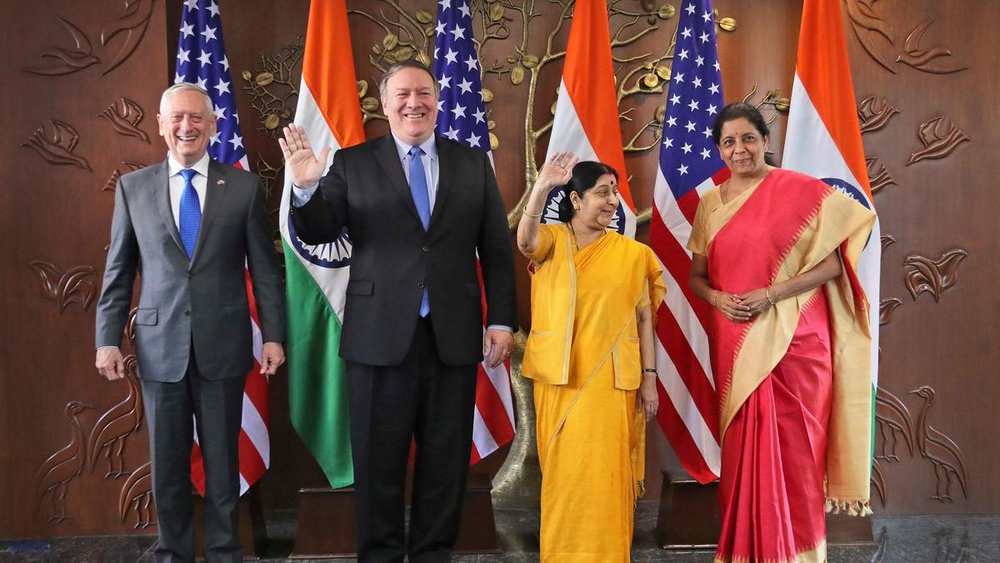
TEHRAN - After a lot of dilly-dallying, the inaugural India-U.S. ministerial 2+2 dialogue was held in New Delhi on Thursday. The high-profile U.S. delegation was led by Secretary of State Mike Pompeo and Defense Secretary James Mattis, who flew to New Delhi from Islamabad where they held deliberations with the newly-elected government led by Imran Khan on Wednesday.
The highlight of the meeting was signing of the Communications Compatibility and Security Agreement (COMCASA) that will enable India to access advanced technologies from the U.S. and enhance India's defense preparedness. While Pompeo termed the agreement a "milestone" in Indo-U.S. relationship, India’s defense minister Nirmala Sitharaman said it will bolster India's defense capability.
What they didn’t mention is how detrimental it could be for the regional peace and stability, but that is stating the obvious.
The two sides also pledged to expand their bilateral trade and economic partnership, which is interesting. In recent months, India and the U.S. have been engaged in tariff war, with Trump administration refusing any special treatment to New Delhi and Modi government retaliating with its own tariff on U.S. goods.
The new trade deal is a shrewd move by the U.S. to assure New Delhi that they can still do business with each other but on the terms and conditions dictated by the former.
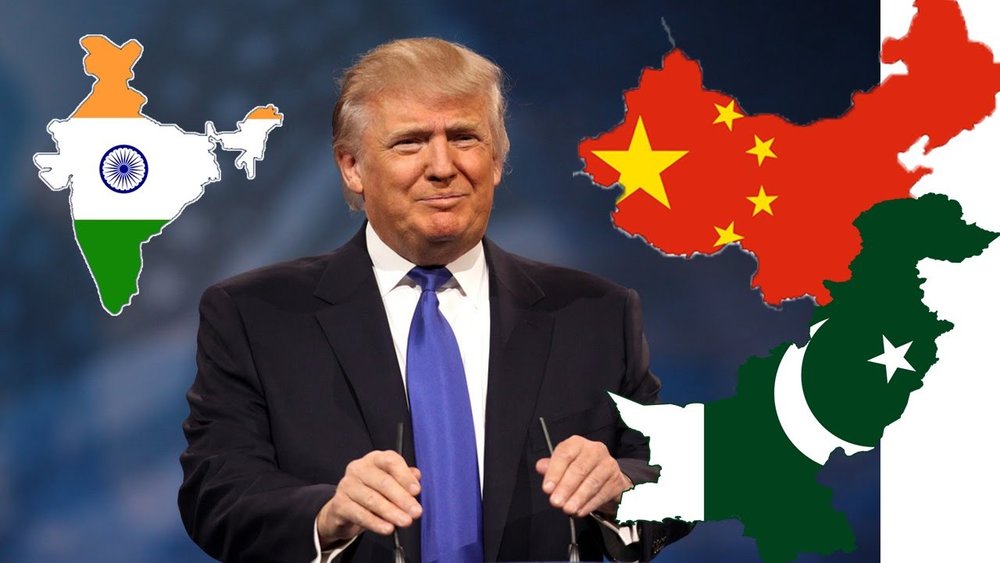
The task for the visiting delegation was cut out - to appease New Delhi with lucrative defense and trade deals so that it does not go the China way. China and India are two of the fastest growing economies and protagonists of new economic and international policy. The policy wonks in Washington understand the importance of keeping India in good humor at a time when the trade war with China is escalating and relations with European countries are fast deteriorating.
Trump administration has declared a trade war against China, threatening to impose $200 billion new tariffs, which experts believe can jeopardize the global economic growth. It has also been embroiled in an ugly tariff war with European countries. At this juncture, with the U.S. finding itself increasingly cornered, it has reached out to Narendra Modi led government in New Delhi.
The U.S. government has been pushing countries to stop oil imports from Iran after unilaterally withdrawing from the 2015 nuclear deal between Iran and six world powers. India has also felt the heat although Modi government has not taken any final decision yet. India is the second largest buyer of Iranian crude oil after China and the U.S. is seeking to influence its energy-import policy, urging it to switch imports from Iran to Saudi Arabia and other U.S. allies. But, can India afford to do that? Certainly not, believe experts.
Iran is extremely critical to India’s energy security and larger geopolitical interests. Moving away from Iran and embracing U.S. and its allies is contrary to wisdom and logic. Ahead of the 2+2 talks in New Delhi, a senior US State Department official was quoted saying that the U.S. was in "very detailed conversations" with India over completely stopping India's oil imports from Iran. The U.S. delegation reportedly raised the issue with the Indian side, however, there was no categorical response.
While the U.S. wants India to bring oil imports from Iran to zero, India is treading cautiously and seeking a waiver from the U.S. sanctions on Iran. Earlier this week, India gave permission to state-owned refiners to import oil from Iran with Iranian tankers and insurance, in a sign that India may not cut off Iranian oil imports. The response from the Indian side to Pompeo-Mattis was on the same lines, sources said.
So, as it appears, the U.S. delegation failed to clinch a deal that figured prominently on their agenda - to get New Delhi to completely halt Iranian oil import. The two sides did sign deals to bolster cooperation in trade and defense fields, but it could not convince New Delhi on halting oil imports from Iran.
Since the beginning of this fiscal year, the oil purchase from Iran has surged substantially, primarily due to heavy discounts, free shipping and extended credit period for oil sales offered by Iran. The popular opinion is India is overwhelmingly in favor of India’s continued oil trade with Iran, without succumbing to the U.S. pressure. Many experts have urged the Modi government to continue importing oil from Iran, which is not only a trade partner for India, but a time-tested ally. Hence, New Delhi is adopting a cautious approach.
Meanwhile, as an indication of deteriorating relations between the U.S. and Pakistan, two former allies, the joint statement issued after the 2+2 talks said the two sides also discussed terror emanating from Pakistan. India’s foreign minister Sushma Swaraj said the two sides “agreed that Pakistan needs to do a lot more to curb terror originating from it,” which will certainly not go down well with the civilian and military leadership in Pakistan.
Last week, just before Pompeo’s visit to Islamabad, the U.S. military announced the suspension of $300 million military aid to Pakistan for its perceived failure to take decisive action against militant sanctuaries in Pakistan. The two former allies have slowly drifted away since Trump’s hyperbolic New Year tweet in which he accused Pakistan of “lies and deceit”. The new government in Islamabad led by Imran Khan has further antagonized the Trump administration by reaching out to Iran and backing Tehran’s position on the 2015 nuclear deal.
With the U.S. losing friends quickly and getting entangled in an ugly trade war with China and European countries, Trump is now banking on India - an important regional player - to be its all-weather ally. But, India has its own interests and can ill-afford to antagonize its important trade partners like Tehran, Moscow and Bangkok.
The writing is on the wall: the trade and defense deals notwithstanding, India and U.S. cannot be all-weather allies and New Delhi cannot afford to abruptly halt oil trade with Tehran. As the petroleum minister of India asserted recently, ‘national interest’ is paramount. For India, it should be energy security.

Thursday, September 06, 2018

Life, death and legacy of U.S. ally turned foe Haqqani

By: Syed Zafar Mehdi


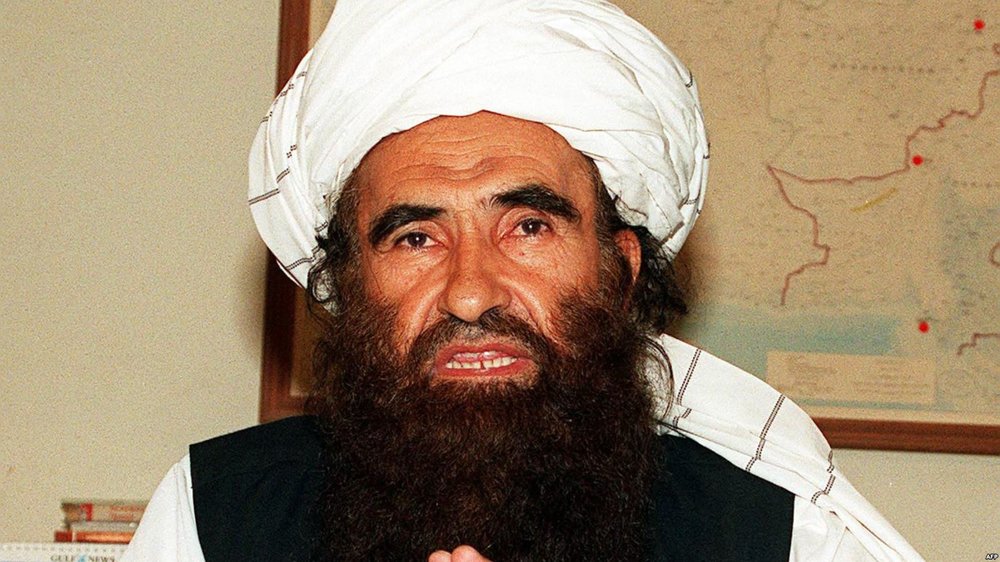
TEHRAN - The death of Jalaluddin Haqqani, the patriarch of the dreaded militant group Haqqani Network, has generated a palpable buzz and made international headlines. The announcement was made by the Taliban spokesman Zabihullah Mujahid on Tuesday, hailing him as a “religious scholar and exemplary warrior”, even though Afghan officials insist that he had been dead for at least four years.
What does Haqqani’s death mean to the Taliban insurgency and the war in Afghanistan? If he was already dead, then why did the group disclose the news now? The debate is getting intense in media and intelligentsia circles.
Haqqani, 71, who founded the Haqqani network in 1970s, relinquished operational leadership of the group some years ago to his son Sirajuddin Haqqani, who is now the deputy leader of the Afghan Taliban. Many seasoned observers believe his death, following a prolonged illness, will not have any major impact on the group’s operations since he mattered very little towards the end of his life.
Afghan Defense Ministry spokesman Mohammad Radmanish said the announcement of his death was not expected to mean any major change for the Haqqani Network, since his son has been spearheading the group’s operations since many years. “Operationally, his death will not have an impact on the group,” he stressed, adding that the senior Haqqani’s role in recent years was more ideological.
Rahmatullah Nabil, the former chief of Afghan intelligence agency, agrees with that assumption. He said his death will not have any effect on the “devious activities” of the group, adding that the ISI, Pakistan’s intelligence agency, has already “trained his successors to be more ruthless than him”, most notably  Siraj Haqqani, Ibrahim Haqqani, Khalil Haqqani, Hamza Haqqani, Yahya Haqqani and others, suggesting that the Haqqani Network was backed by Pakistan’s intelligence agency.
Nabil said the news about his death is directly linked to the U.S. Secretary of State Mike Pompeo’s visit to Pakistan, and thus the U.S. State Department and Pakistan were “playing as usual”.
The timing of the announcement of his death is interesting since many believe he had died years ago. Tawab Ghorzang, Director at Afghanistan’s National Security Council, said Haqqani died back in 2007 and the news is made public now as “part of (Taliban’s) psychological warfare tactics”.
His death may or may not be relevant, but in the broader scheme of things, his legacy is important: introducing suicide bombings in Afghanistan and providing a platform to Arab fighters in the Af-Pak region. The rise of groups like ISIS in Afghanistan can partly be attributed to the radical ideology he so aggressively propounded.
Haqqani, a former U.S. ally, was once hailed as a “freedom fighter” by U.S. President Ronald Reagan and praised by the late U.S. Congressman Charlie Wilson as “goodness personified”. He was among the ‘mujahideen’ Americans backed in 1980s to fight Soviet forces in Afghanistan.
Haqqani was also a close friend of former Al-Qaeda chief Osama bin Laden, who often stayed with him in his traditional bastion of southeast Afghanistan.
His association with Pakistan, from where his group operated since 2001, dates back to his young days as a religious seminary student. According to unclassified U.S. documents, during 1970s, the senior Haqqani returned to Afghanistan following the completion of his seminary education to organize a movement against then Afghan ruler Zahir Shah. But he was soon thrown out of the country. He went back to Pakistan and established a madrassa in North Waziristan.
In 1980s, he allied with the U.S. forces to fight the communist government in Kabul backed by Russia, and that shot him to prominence in militant circles. He was supplied with both money and arms by the U.S. during that period and became the darling of the U.S., Pakistan and Arab states including Saudi Arabia and Egypt. A former CIA chief was quoted by AP saying that he personally delivered suitcases full of money to Haqqani, whom he described as “one of the good ones.”
During the war against Soviets in Afghanistan, Haqqani and Bin Laden became close confidants, as both had signed up to fight for the CIA. The head of Al-Qaeda Ayman al-Zawahiri was also one of the fighters, now being sheltered and funded by the Haqqani Network in Pakistan’s tribal region.
During the 1980s Soviet war, Haqqani developed close connections with Pakistan’s formidable intelligence agency ISI. The connection, according to many strategic affairs experts, has grown stronger over the years. After the communist government in Kabul was overthrown by the U.S.-backed ‘mujahideen’, Haqqani served as justice minister in ‘mujahideen government’, albeit briefly.
Then a group emerged by the name of Taliban, comprising fighters who had fought for the U.S. against Soviet forces. The group took power in Afghanistan in 1996, and according to a declassified cable from the U.S. Embassy, Haqqani was welcomed into the group for his unmatched military prowess. When the Taliban regime was toppled in 2001 by the U.S.-led coalition, Haqqani shifted base to Pakistan’s tribal areas and reorganized his group for a new mission – war against old friends.
Since then, Haqqani Network, an integral part of the Afghan Taliban, has been doggedly fighting against the U.S. and NATO troops in Afghanistan. After the death of Taliban founder Mullah Omar, Haqqani, who was a key member of the Taliban’s Quetta Shura, had played an instrumental role in keeping the group’s flock together. He was considered an ideological godfather by many Taliban commanders.
In 2012, the U.S. government declared the group a terrorist organization, because the equation had changed and now the group was not serving America’s interests.
For some years now, he had been bed-ridden, and his son Sirajuddin Haqqani, who was appointed deputy head of the Afghan Taliban last year, has been actively running the day-to-day operations of the group. According to Afghan officials, Haqqani Network has been responsible for most of the complex terror attacks in Afghanistan, especially in major cities.
Considering that the senior Haqqani had stepped aside some years ago and was not anymore involved in Haqqani Network’s day-to-day operations, his death is less likely to have any impact on the group’s activities. With or without senior Haqqani, the murky war is likely to continue.

Wednesday, September 05, 2018

Pakistan continues to rebuff U.S., supports Iran’s stand on JCPOA

By Syed Zafar Mehdi
TEHRAN - Much to the chagrin of hawks in Washington and Riyadh, neighbors Iran and Pakistan have reaffirmed their commitment to bolster bilateral ties and open a new chapter in their relationship.
The ties between the two countries, although historic, have been marked by ambiguity in recent years, especially during the previous government led by Nawaz Sharif, who was seen heavily tilted towards Riyadh. With the new government in Islamabad now, led by the charismatic cricketer-turned-politician Imran Khan, Iran-Pakistan ties are expected to become stronger.
As a sign of growing proximity between the two countries, Iran’s foreign minister Javad Zarif became the first foreign official to visit Pakistan this week since the change of guard in Islamabad. Zarif, who has been to Pakistan eight times, held wide-ranging deliberations with the top political and military leadership of Pakistan, including prime minister, foreign minister, army chief and parliament speaker.
In a tweet, the social media-savvy foreign minister termed the meetings “fruitful”, in which the two sides laid emphasis on “expanding bilateral, regional, and global partnership”, adding that neighbors were Iran’s “priority”. Zarif’s visit to Pakistan came at a crucial time when the relations between Islamabad and Washington are undergoing a tectonic shift, and Pakistan is finally coming out of the ominous shadow of U.S. and Saudi Arabia.
Imran Khan led government has made a great start by outlining its foreign policies very clearly. On Friday, following the meeting between Zarif and his Pakistani counterpart Shah Mehmood Qureshi, Pakistan said it supported Iran’s “principled stance” regarding its nuclear deal with major world powers. “Pakistan stands with Iran in this hour of need,” Qureshi said, joining the growing league of countries that have backed Iran’s peaceful nuclear energy program and refused to buckle under the U.S. pressure to cut trade ties with Tehran.
An official statement issued by Khan’s office said the prime minister received the Iranian foreign minister for a meeting, who conveyed to him the greetings and best wishes of the people and leadership of Iran on assuming office.
Zarif stated that Iran wished continued progress and prosperity to the people of Pakistan and delivered a message of Iranian President Hassan Rouhani, inviting Khan for the upcoming Asian Cooperation Dialogue (ACD) summit in Iran in October 2018. Both Pakistan and Iran are members of ACD and Iran currently holds the chair of the organisation.
Khan thanked the Iranian supreme leader’s support for Kashmiris in their struggle for self-determination and the manner in which Pakistan’s Independence Day was celebrated in Iran this year, the statement said, adding that Pakistan and Iran were “connected by inseparable bonds of historic, religious and cultural affinities”.
Zarif also held formal talks with his counterpart Shah Mehmood Qureshi during which they discussed wide-ranging issues. Both the sides underlined the importance of deepening cooperation in areas of mutual interest. The statement issued by Pakistan’s foreign office said the two officials held detailed discussions on regional and global issues — including the situation in Afghanistan and America’s unilateral decision to withdraw from the JCPOA.
It was agreed that the next round of Bilateral Political Consultations and the Joint Economic Commission will be held at early date.
While supporting Iran’s principled stance on the Iran nuclear deal, Qureshi expressed hope that remaining parties to the agreement would uphold their commitments in letter and spirit. “This is important given IAEA’s repeated verification that Iran has strictly adhered to the terms of agreement,” the foreign minister said.
A few weeks ago, Pakistan’s foreign office spokesperson Dr Muhammad Faisal had stressed that Pakistan reserves the right to ‘pursue legitimate economic and commercial interests’ with Iran in the wake of re-imposition of sanctions on Tehran by U.S. “We are examining the implications of the U.S.’ re-imposed sanctions on Iran,” he said, “however, Pakistan, being a sovereign state, reserves the right to pursue legitimate economic and commercial interests while respecting the international legal regime.”
Meanwhile, on Sunday, in a fresh blow to Pakistan-U.S. relations, the U.S. military said it has made a final decision to annul $300 million aid to Pakistan that had been suspended over Islamabad’s perceived failure to take decisive action against militants. President Donald Trump had in his New Year tweet lambasted Pakistan and threatened to withhold military aid.
These developments are significant and must be seen in the context of changing regional dynamics – Pakistan getting closer to China, Iran and Pakistan embarking on a new journey, and the new government in Islamabad defying the coercive and manipulative tactics of Trump administration.
Imran Khan, who has on many occasions in the past criticized America’s policy for South Asia, had also opposed the idea of Pakistan sending troops to Yemen to fight Houthi rebels. Khan’s foreign policy, observer believe, is rooted in pragmatism and national interest. Better relations with Iran, they stress, are in Pakistan’s best national interest.
Following his historic victory in general election, Khan had vowed to improve ties with all regional countries, including Iran. Unlike his predecessor, he has shown an inclination to maintain a healthy balance in ties between regional rivals Saudi Arabia and Iran.
During the meeting between Khan and Iranian envoy to Pakistan recently, Khan also expressed his willingness to revive the Iran-Pakistan gap pipeline project or ‘peace pipeline’, which can play a key role in resolving the energy crisis facing Pakistan. It is a historic opportunity for the two countries to transform their relationship into energy partners.

Tuesday, August 21, 2018

Muslim unity key to defeating forces of Takfirism

By Syed Zafar Mehdi


TEHRAN - For Muslims, the staggering fall from grace can largely be attributed to fragmentation in their ranks, exacerbated by the scourge of sectarianism fanned by divisive forces. The condition of Muslims today, in both the realms of spiritual and temporal, is appallingly poor.


Having ruled the world for eight to nine centuries, bringing people out of barbarism into civilization, abolishing idolatry and advocating monotheism, Muslims have gradually and worryingly slipped into an abyss of despondency and darkness. While the Holy Quran promises that the “honor, power and glory belongs to God and to His apostle and to the believers” (Surah Munafiqun), it also cautions that the “Almighty does not change the condition of a people until they change it themselves” (Surah Ar-Ra’ad).
How can we possibly leap forward as a divided unit, with so many warring groups baying for each other’s blood? How can we progress without clutching hands and pulling in the same direction as emphasized in the Holy Quran in unequivocal and unambiguous terms: “And hold firmly to the rope of Allah all together and do not become divided” (Surah Aali Imran).
Even hardnosed European evangelists admit that the modern world was built on the scientific breakthroughs made by Muslim scholars at a time when the Europeans were struggling and stumbling. So what led to the decline and degeneration of Muslims?
In the words of Scott Gilmore, a social entrepreneur and writer, the easiest response is to say Muslims did this to themselves. “From the jungles of Sulawesi to the deserts of Libya, Muslims are killing Muslims at a rate that dwarfs the more highly publicized conflict with the West,” he says.
At a time when the contemptible project of sectarianism and takfirism is being promoted by unscrupulous elements to create fissures in the Muslim Ummah, it has become essential for every conscientious Muslim to uphold the banner of unity and be the vocal advocate of truth and justice.
The enemies of Islam succeed not because they have superior ideas or moral high ground but because we are fragmented and vulnerable. Unless Muslims close ranks, bury the hatchet and develop mutual-understanding, they will continue to be afflicted with misery and despair. Holy Quran reminds us: “Muhammad is Allah’s Apostle and those who are (truly) with him are firm and unyielding towards disbelievers, (yet) full of mercy towards one another (Surah Fatah).”
This beautiful element of ‘mercy towards one another’ is what actually defines the essence of Muslim unity and brotherhood.
Takfirism – the phenomenon of declaring ‘others’ as heretics – has gained traction across the world today, engulfing many Muslim societies. It is a grand project spearheaded by forces that fear Muslim unity, because if Muslims band together the enemy wouldn’t have the temerity to bombard Muslim countries and exploit their rich resources.
What makes matters worse is the fact that some of us are willfully playing into the hands of enemies. Zionists, aided by the Western imperialist powers, have occupied Palestine because some Arab countries don’t wish to antagonize their friends in Tel Aviv. For them, petty political interests overshadow the larger interests of Muslim Ummah.
Today, Muslims are being mercilessly killed in Syria, Yemen, Iraq and Afghanistan because our Arab-Muslim leadership is apparently sleeping with the enemy, aiding and abetting the genocide of Muslims. Some Arab countries bay for the blood of fellow Muslims today, like we see in Yemen, where school children are slaughtered in air strikes. All they want is to be in the good books of Zionists and Americans.
Also the selective outrage, selective condemnations, blatant double standards. When innocent civilians are killed in Brussels or Berlin, whole world erupts in anger and fury; but when there is a massacre in Kabul, Quetta or Baghdad, only few odd voices speak out.
Last week, there was carnage in Kabul. A suspected ISIS suicide bomber attacked a school in Shia-neighborhood of western Kabul, killing more than 50 young children, who were preparing for university entrance examination. There was no outrage, no candle light vigils, and no hashtags. This kind of violence has been normalized and routinized because the perpetrators belong to the same Takfiri ideology that serves the agenda of forces that want Muslims to be divided and annihilated.
The fact is they are united and we are divided. This divide-and-conquer strategy works well for our enemies.  The need of the hour is unity and rapprochement.
In mid-1980s, Imam Khomeini, the architect of the Islamic revolution, proposed an idea of ‘hafta e wahdat’ (week of unity and solidarity) in the month of Rabiul Awwal so that Muslims, cutting across sects, can come together to honor the memory of their Prophet (pbuh), who championed the cause of Islamic unity and tolerance all his life.


In 1990, a year after Imam Khomeini’s death, The World Forum for Proximity of Islamic Schools of Thought was set up by his successor Ayatollah Syed Ali Khamenei, which organizes the International Islamic Unity Conference in Tehran every year to mark the birth anniversary of the Holy Prophet (pbuh).
Looking back, many Islamic luminaries have made indefatigable efforts to bridge the chasm between Shias and Sunnis. Sheikh Mahmoud Shaltut, a legendary Islamic scholar who served as the grand Imam of Al-Azhar between 1958 and 1963, issued a famous fatwa (religious edict) in 1959 pertaining to the faith and beliefs of Shias, which continues to be a symbol of hope for those who advocate unity and proximity between the two schools of thought.
Ayatollah Syed Hussain Borojerdi, who was one of the leading Shia religious authorities, also worked untiringly to foster unity among Muslims and established close contact with Dar ul-Taqrib Center in Egypt. Other Islamic scholars who deserve a mention include Muslim Brotherhood founder Sheikh Hassan al-Banna, Egyptian scholar Sheikh Muhammad al-Ghazali, Iranian scholar Allameh Seyed Mohammad Hossein Tabatabaei, Iraqi cleric Ayatollah Syed Muhammad Baqir al-Sadr, Pakistani scholar Dr. Allama Mohammad Iqbal, and Afghan ideologue Syed Jamaluddin Asadabadi.
The efforts of Hassan al-Banna deserve a mention. Abd al-Mutaal al-Jabri, a student of Hassan al-Banna, in his book Limatha Yuqitla Hasan (Why Hasan al-Banna was Assassinated), writes about the historic meeting between Hassan al-Banna and Ayatollah Kashani in Mecca in 1948, shortly before the former was assassinated. “If the life of this man (al-Banna) had been longer, it would have been possible to gain many benefits for this land, especially in the agreement between him and Ayatullah Kashani to uproot the discord between Sunnis and Shi’ites. They met each other in Hijaz in 1948. It appears that they conferred with each other and reached a basic understanding but Hasan al-Banna was quickly assassinated,” he writes.
That is what has happened throughout history. Those who have championed the cause of Islamic unity and brotherhood have paid the heavy price, but the idea has lived on.
In contemporary times, Ayatollah Khamenei and Ayatollah Sistani have played an instrumental role in forging Muslim unity and countering the vicious and sinister campaign to divide Muslims.


There is clearly more that unites us than what divides us. In his book Al-Muslimun Man Hum (The Muslims – Who are they?), author Samih Atif Zayn says the most important basis of differences lies in understanding the Holy Book, and both Sunnis and Shias have never disagreed on Holy Quran.
“We must eradicate the sectarian spirit, full of hatred, and bar the road of those who spread rumors and quarrels in religion, until Muslims return to how they were before: one society, cooperative and friendly, rather than divided, separated and hating each other,” he writes, stressing the importance of brotherhood as mentioned in the Holy Quran: “Verily, this brotherhood of yours is a single brotherhood, and I am your Lord and Cherisher” (Surah Al-Anbiya).
So, it is binding on all the believers of Islam to collectively strive towards a common goal, lest they go astray. “Indeed, those who have divided their religion and become sects – you, (O Muhammad), are not (associated) with them in anything. Their affair is only (left) to Allah; He will inform them about what they used to do” (Surah Al-Anam).
The warning is clear for those who stoke the flames of sectarianism or aid the efforts to divide Muslims.