Showing posts with label Foreign Minister Javad Zarif. Show all posts

Friday, October 11, 2019

‘Coup’ attempt in Iraq is really an attack on Iran

Omar Ahmed
Iraqi demonstrators try to enter Green Zone as they gather for a demonstration against Iraqi government in Baghdad, Iraq on 1 October 2019 [Murtadha Sudani / Anadolu Agency]
Having failed to dislodge Syrian President Bashar Al-Assad after eight years of conflict and with the twin political processes of the UN and the Astana initiatives moving a step closer towards peace, the alliance against Iran appears to have turned its sights on Iran’s neighbour and other ally, Iraq by attempting to hijack yet another legitimate protest with the prospects of turning it into a coup d’état.
Leaked diplomatic cables from 2006 – five years before the Syrian uprising, reveal that the former US Ambassador to Syria, William Roebuck, suggested America seek to undermine the sovereignty of the Syrian state through destabilisation and exploiting vulnerabilities in the Assad government – including playing on “fears of Iranian influence”.
Now if we are to believe US Secretary of State Mike Pompeo’s assertion – without evidence – that Iran was behind attacks on Saudi’s largest oilfields, President Donald Trump certainly had no intention of escalating tensions militarily. Despite Pompeo’s sabre rattling that the attacks constituted a “declaration of war”, his Iranian counterpart Mohammed Javad Zarif was quick to assert that any US or Saudi strike on Iran will cause all-out war.
Thus, despite being more than militarily capable of carrying out direct strikes against Iran, the potential repercussions to the US and its allies in the wider region and to the global economy render such actions strategically misplaced. Ultimately, the US and its allies lack the political will to wage conventional war against the Islamic Republic.
Naturally the anti-Iran nexus must then opt for indirect, covert attacks against Tehran via its regional allies and interests. Which brings us to the current activities in Iraq.
It has been alleged that sources within Iraq’s Prime Minister’s Office have said
the recent demonstrations were already planned a couple of months ago. Baghdad was working to try and ease the situation in the country, particularly since the demands of the population are legitimate.
Speaking on the number of civilians killed along with some security forces and government buildings being set alight or destroyed, the sources are also said to have added: “This sort of behaviour has misdirected the real grievances of the population onto a disastrous course: creating chaos in the country. Who benefits from the disarray in Iraq?”
The founder and head of the Iranian-supported Asaib Ahl Al-Haq paramilitary group and political party, cleric Qais Al-Khazali, echoed similar sentiments by foretelling over two months ago that there were plans to stage a coup in November, with engineered protests erupting in October.
Over two months ago, Qays Khaz’ali said:

There’s plans to change Baghdad government in November, with protests erupting in October. Protests not spontaneous, but organised by factions in Iraq. Mark my words.
See Republic of Sumer's other Tweets
Al-Khazali has expressed claims of conspiracy previously, as with the Basra demonstrations in September last year whilst acknowledging that “the protests were originally legitimate and true”.
Adding weight to Al-Khazali’s comments, there have been reports that the Iraqi intelligence had been made aware of plans of a US-backed coup involving Iraqi military officers three months ago.
Al Akhbar newspaper says the govt of learned 3 months ago of a planned US-backed coup by military officers, to be followed by street action. Time to be skeptical about events in Iraq?
View image on Twitter
87 people are talking about this
This may also explain the Iraqi government’s controversial and abrupt decision to demote the popular Lieutenant General Abdul Wahab Al-Saadi from his position as commander of the Iraqi Counter-Terrorism Forces (ICTS) without giving a reason. Instrumental as he was in leading the victory over Daesh in Mosul, he was perceived to be too close to the US military and neutral towards Iran and could well be one of the “military officers” alluded to above.
Meanwhile, mainstream media and human rights organisations have been busy reporting on unknown snipers targeting civilian protestors which are being attributed to pro-Iranian paramilitaries, unfortunately these are hallmarks of external involvement in seeking to exacerbate and convert anti-government protests into a fully-fledged revolution. “The use of mercenaries, death squads and snipers by Western intelligence agencies is well documented. No rational government attempting to stay in power would resort to unknown snipers to intimidate its opponents,” political analyst Gearoid O Colmain writes.
Examples include Ukraine in 2014  – where snipers targeting demonstrators were revealed to be hired Georgian and Lithuanian marksmen – in Venezuela in 2002 and during the so-called Arab Spring.
Indeed it has even been suggested that the unknown snipers have targeted both protestors and security forces alike.
Iran too reportedly unveiled an assassination plot last month against Major General Qassem Soleimani, senior commander of the Islamic Revolutionary Guard Corps (IRGC), with the alleged joint  “Arab-Israeli” secret services training and preparing the suspects in an unnamed “neighbouring country” close to Iran.
However, it appears the leadership under Ayatollah Ali Khamenei are vigilantly following events in Iraq, the Supreme Leader spoke recently of “enemies” seeking to sow division between Tehran and Baghdad, adding that the Islamic Republic is taking pro-active measures in preventing another “Syria” from occurring.
On the social media front to this engineered uprising, Dr Marc Owen Jones, assistant professor in Middle Eastern Studies, has an interesting Twitter thread on hashtags in support of the Iraqi people and describing a “revolution” at hand. Jones has reason to believe it is an influence campaign with almost 20 per cent of accounts likely to be fake and a majority which do not have any location data and are sent by iPhones (the author is doubtful as to how popular these are in Iraq compared to other phones). Interestingly he identified one of the first accounts to post the hashtags featured a lot of Saudi and Iraqi flags, noting that one of the most telling indicators of “inorganic activity” are accounts created in a short time frame – based on his research, the “fake” accounts were created over three days (1-3 October). Although some Iraqis are finding loopholes in accessing the social media, it has been blocked nationwide during the protests – with the exception of the Kurdistan region. Again, the online information campaign is largely being conducted outside of Iraq.

It remains to be seen how successful the localised protests will be in transforming into the intended populist revolution resulting in favourable regime change by those opposed to Tehran’s hegemony. However, should it fail, it wont be the first time the anti-Iranian alliance has fallen short in its indirect war of attrition against Iran’s “Axis of Resistance”.

Friday, August 30, 2019

Israeli Strikes Seek To Bait Iran And Scuttle U.S.-Iran Diplomacy

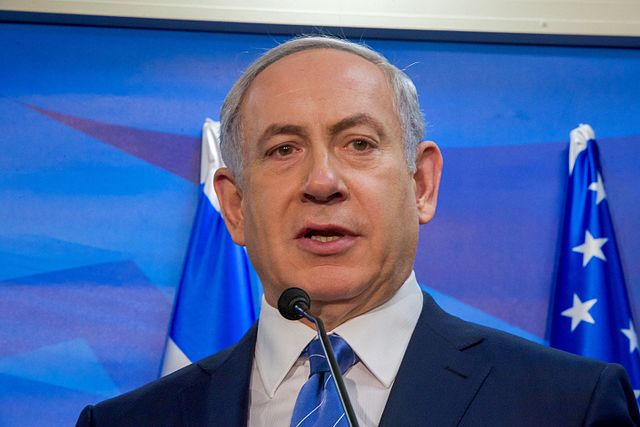
Israeli Prime Minister Benjamin Netanyahu
by Sina Toossi
The Israeli government of Prime Minister Benjamin Netanyahu has in recent days launched a series of military strikes across the Middle East. The scope of the attacks itself represents a new escalation for Israel, bombing not just regional allies of Iran in Syria but also targets in Lebanon and deep inside Iraq. Notably, the attacks are simultaneous with new diplomatic momentum between the U.S. and Iran and talk of a potential meeting between Iranian President Hassan Rouhani and President Trump.
Israel rarely publicly accepts responsibility for its international military and intelligence operations. However, Netanyahu has been remarkably open about taking credit for the recent spate of strikes. “We will act—and currently are acting—against them [Iran], wherever it is necessary,” he recently declared. When asked if Iraq is also a target for attacks, Netanyahu responded: “I am not limiting myself.” Israel has also been widely blamed for the strikes in Lebanon but has not openly claimed them.
This acknowledgement of the strikes threatens dangerous escalation across the region. In the face of provocative admissions from Netanyahu and other Israeli officials, Iranian leaders and their regional allies will be hard-pressed to ignore the strikes and not respond. Importantly, it is a myth that groups like the Popular Mobilization Forces (PMF) in Iraq, Hezbollah in Lebanon, and the Houthis in Yemen are Iranian puppets. To the contrary, these groups all have their own constituencies and are entrenched in local politics. Their power reflects demographic realities and they have domestic goals. Consequently, for reasons not having anything to do with Iran, they will also face internal pressure to retaliate.
The Israeli strikes come on the heels of a significant diplomatic initiative by French President Emmanuel Macron to facilitate renewed U.S.-Iran negotiations. After meeting President Trump and Iranian Foreign Minister Javad Zarif during the G7 Summit in Biarritz, Macron declared “a roadmap has sort of been set…” He added that “in the next few weeks, based on our discussions, a meeting may take place between the two leaders,” which he surmised “is going to lead to bringing an end to escalation and reaching a suitable solution to this [standoff].”
The timing of the Israeli strikes suggests they are at least partly aimed at scuttling the potential for such a meeting. A primary goal of Netanyahu’s government has been the prevention of any agreement between the U.S. and Iran. This goal is apparent by the nature of Israel’s lobbying in Washington and its behavior with respect to U.S.-Iran relations. Netanyahu was one of the few world leaders who opposed the Obama administration’s negotiations with Iran and the July 2015 nuclear deal between Iran and global powers (the Joint Comprehensive Plan of Action, or JCPOA). To sabotage that diplomatic process, Netanyahu went as far as violating traditional diplomatic protocol by circumventing President Obama to address a joint session of Congress and criticize the negotiations in March 2015.
At times, Israeli officials have clearly stated their objective of preventing any U.S.-Iran diplomacy. In 2015, Netanyahu’s then-Defense Minister Moshe Ya’alon stated to this end, “every deal that will be signed between the West and this messianic and apocalyptic regime will strike a severe blow to Israeli and Western interests.” While the Netanyahu government failed to achieve its aims with the Obama administration, it has thus far had resounding success with respect to the Trump administration fulfilling its desires.
It is increasingly accepted that it is a core U.S. national security interest to extricate itself from quagmires in the Middle East and take a more hands-off approach to stabilize the region. To varying degrees, both President Obama and Trump have recognized this. Rather than the military-driven policies that for years have achieved little, the U.S. needs agile diplomacy with all regional parties that play a major role and whose participation is necessary to resolve regional disputes. Israel does not share this objective and views an outsized U.S. presence in the region and permanent U.S.-Iran standoff as in its interests.
A new conflagration involving Israel and Iran and its regional allies would tank prospects for U.S.-Iran negotiations and entangle the U.S. in the region for years to come. Some figures in the Trump administration recognize this, with U.S. officials recently telling the New York Times that “Israel is responsible for the strikes” in Iraq and was “pushing the limits.” Indeed, America’s client states cannot be allowed to determine U.S. policy towards the region, and President Trump must be resolute in pursuing diplomacy with Iran despite objections from Netanyahu or other regional states.
Sina Toossi is a Senior Research Analyst at the National Iranian American Council (NIAC). 

Saturday, August 10, 2019

Trump’s Iran ‘diplomacy’ is a cynical farce

Vijay Prashad
The US president claims he is open to negotiations with the Islamic Republic but in practice he pursues a policy of economic terrorism and along with his flexing of military muscles, closes all doors to any diplomatic resolution of the 40-year long conflict.
Stay with us for an article that appeared on the ‘Globetrotter’ site in this regard, titled: “Trump’s Iran ‘diplomacy’ is a cynical farce”.
The writer is Vijay Prashad, an Indian historian and journalist, who is chief editor of LeftWord Books and the director of Tricontinental: Institute for Social Research. He has written several 20 books, including “The Darker Nations: A People’s History of the Third World”.
Word of US President Donald Trump’s decision to sanction Iranian Foreign Minister Javad Zarif did not seem to rattle the government in Tehran. Zarif’s own reaction, that the US is “isolating itself,” suggested that Iran would not be intimidated.
Various Iranian officials said the United States was afraid of Zarif’s eloquence. President Hassan Rouhani said the “White House is frightened by his diplomatic capabilities.” Majid Takht Ravanchi, Iran’s permanent representative to the United Nations, told the media that the US has sanctioned Zarif in order to “suppress his logic and his eloquent and persuasive language.” Former foreign minister Ali Akbar Velayati said the US does not have the ability to counter Zarif’s arguments.
There is merit to this view. The buzz in Washington suggests that both Trump and his Secretary of State Mike Pompeo were unhappy with Zarif’s interactions with the US media. Zarif, who studied in the United States, is comfortable with television cameras and has proven more than capable of making a rational case against the US unilateral withdrawal from the 2015 Iran nuclear deal (the Joint Comprehensive Plan of Action, or JCPOA).
Zarif is indeed urbane and eloquent, but those are not his only strengths. He has the additional advantage of having the facts on his side. United Nations agencies all say that Iran has confirmed that it will abide by the terms of the JCPOA, and that there is no reason for unilateral sanctions imposed by the US. This is a view accepted by the European Union. Trump’s main problem is that the United States does not have a legitimate case to make against Iran.
No one, neither the Europeans nor Russia and China nor indeed many of the Persian Gulf Arab states, wants an escalation of what is a nascent war against Iran. They know that if the US mounts an enormous assault on Iran, the war will widen from Lebanon to Afghanistan. No rational person would support this.
President Rouhani made it clear to the United States that he could not understand who, other than his Foreign Minister, could be expected to speak for his country on international matters. Part of Iran’s goal here is to maintain its sovereignty and dignity, and to select a new foreign minister would mean that Iran had buckled under US pressure. This is not going to happen. The Iranians are not going to replace Zarif.
But the Zarif issue is actually a red herring. Even before the sanctions on him personally, the United States showed no appetite for diplomacy. Iran spent several years negotiating with the five permanent members of the UN Security Council, as well as with Germany and the European Union, to produce the JCPOA, which was then ratified by the United Nations in 2015. After the US withdrew from the deal, Iran continued to indicate its desire for a diplomatic solution while Washington refused to come to the table.
The problem facing any negotiations is that the US position is untenable. The US wants to prevent Iran from exercising its right under the nuclear Non-Proliferation Treaty (of 1968) to enrich uranium even to low levels (4.5 %, which is far from the 90% enrichment needed for a nuclear weapon). It is this impossible position by Washington that stands in the way of a diplomatic solution. Until Washington accepts Iran’s right under international law to enrich uranium for energy-generating purposes, there will be no permanent deal.
By the way, the Leader of the Islamic Revolution, Ayatollah Seyyed Ali Khamenei, has long issued a fatwa (religious edict) saying Islam prohibits manufacture of any weapons of mass destruction.
The Europeans indicated quickly that they were unhappy with the sanctions on Zarif. Carlos Martin Ruíz de Gordejuela, a spokesman for the European Union’s foreign policy chief Federica Mogherini, said that they regretted the decision. The Europeans say that they will continue to work with Zarif to maintain open diplomatic channels.
Europe’s tolerance toward Trump’s shenanigans is being stretched, albeit to nowhere near its limits. The European Union, despite noises about its practical need for Iranian oil, has been unwilling to mobilize any political opinion on behalf of either the ailing JCPOA or against the wide unilateral US sanctions now on Iran.
Zarif has been working hard to build various coalitions around the world to prevent the United States from controlling the narrative. At the recently concluded Non-Aligned Movement (NAM) ministerial meeting in Caracas, Zarif held center stage.
NAM, whose 120 member countries make it the largest political bloc inside the United Nations, has long opposed American unilateralism. In Caracas, they welcomed Zarif’s declaration that unilateral sanctions by the US against Iran and Venezuela are a form of “economic terrorism.”
A subset of NAM members formed a group of 25 countries that have come together to oppose directly US unilateral sanctions, not only against Iran but also against Cuba, Venezuela, Russia, and elsewhere. This group has moved slowly to consolidate itself.
Zarif has also traveled to and made contact with countries along the Persian Gulf, on a mission to forge a non-aggression pact. Iraq and Oman have indicated that they would join such a pact, and Kuwait may also join. Furthermore, sources say that Qatar and the United Arab Emirates are contemplating entry into the pact. All of these countries will have a lot to lose if a war breaks out against Iran, but the surprise here is the UAE, which is a close ally of Saudi Arabia. Recently, the coast guards from Iran and the UAE held a joint meeting – the first in six years.
Zarif and the Iranians have been forging a formidable set of alliances designed to put a moat around the possibility of war against Iran. If close US allies such as Qatar and the UAE – both of whom host US military bases – have indicated a readiness to sign non-aggression agreements with Iran, then Washington faces a problem. The sanctions against Zarif are not merely due to his eloquence on US television. He is being sanctioned to send a message to those US allies who have become part of these new platforms.
The United States has walked itself into a corner. By sanctioning Iran, it suggests that it is not interested in diplomacy.

Friday, August 09, 2019

Asia Times: Sanctioning Zarif will not rattle Iran’s government

Asia Times: Sanctioning Zarif will not rattle Iran’s government

Beijing, Aug 8, IRNA – US President Donald Trump’s decision to sanction Iran’s Foreign Minister Mohammad-Javad Zarif did not seem to rattle the government in Tehran, Hong-Kong-based news website Asia Times reported.
The US Department of the Treasury last week imposed sanctions against Iranian Foreign Minister for working for the Supreme Leader Ayatollah Seyyed Ali Khamenei. The moves came on the heels of the movement restrictions against the Iranian foreign minister when it was in New York for a UN meeting.
Addressing the issue, Asia Times reported that “The buzz in Washington suggests that both Trump and his Secretary of State Mike Pompeo were unhappy with Zarif’s interactions with the US media."
The media added that Zarif, who studied in the United States, is comfortable with television cameras and has proven more than capable of making a rational case against the US unilateral withdrawal from the 2015 Iran nuclear deal.
Referring that Zarif is indeed urbane and eloquent, but those are not his only strengths, the news website added: “He has the additional advantage of having the facts on his side. United Nations agencies all say that Iran has confirmed that it will abide by the terms of the JCPOA, and that there is no reason for unilateral sanctions imposed by the US. This is a view accepted by the European Union.”
Asia Times added that Trump’s main problem is that the United States does not have a legitimate case to make against Iran. If the US mounts an enormous assault on Iran, the war will widen from Lebanon to Afghanistan. No rational person would support this.
“The Zarif issue is actually a red herring. Even before the sanctions on him personally, the United States showed no appetite for diplomacy. Iran spent several years negotiating with the five permanent members of the UN Security Council, as well as with Germany and the European Union, to produce the JCPOA, which was then ratified by the United Nations in 2015.”, the media said.
The Hong-Kong-based news website added that after the US withdrew from the deal, Iran continued to indicate its desire for a diplomatic solution while Washington refused to come to the table.
The Europeans say that they will continue to work with Zarif to maintain open diplomatic channels, according to the Asia Times.
Some observers believe that the sanctions imposed on Zarif is not only symbolic but also indicate how Washington is afraid of Iran’s diplomacy influence.
Zarif, who has been Iran’s foreign minister since 2013, was the chief negotiator in the multinational nuclear deal known as the Joint Comprehensive Plan of Action.
In a recent interview with the New York Times, Zarif said "Everyone who knows me knows that I, or my family, do not own any property outside Iran. I personally do not even have a bank account outside Iran. Iran is my entire life and my sole commitment. So I have no personal problem with possible sanctions."
He added: "The only impact--and possibly the sole objective--of a possible designation would be to limit my ability to communicate. And I doubt that would serve anyone. Certainly, it would limit the possibility of informed decision making in Washington."

Saturday, August 03, 2019

Iran has lawful right to nuclear energy program


In accordance with the international treaty JCPOA (Joint Comprehensive Plan of Action), and as testified by inspectors of the Vienna-based International Atomic Energy Agency (IAEA), Iran’s uranium enrichment project is for peaceful purposes.
Stay with us for an article on the ‘Globetrotter’ site, titled “Iran has lawful right to nuclear energy program”, by Vijay Prashad, an Indian historian and journalist, who is the chief editor of LeftWord Books and the director of Tricontinental Institute for Social Research. He has written more than 20 books, including “The Darker Nations: A People’s History of the Third World”.
During the recent Non-Aligned Movement (NAM) ministerial meeting in Caracas, the capital of Venezuela, Iranian Foreign Minister Javad Zarif charged the United States with “economic terrorism.”
He was referring to the unilateral US sanctions that have clobbered Iran, which, like most countries, is reliant on the financial system that remains dominated by the US.
The United States has had a sanctions regime in place against Iran for decades, almost since the victory of Islamic Revolution in 1979. The US, France and Germany later reneged on their nuclear-energy contracts with Iran and kept billions of dollars of Iranian money. Matters sharpened in 1996, when the US administration of Bill Clinton signed the Iran-Libya Sanctions Act. Since then, the US pressure on Iran has increased, then decreased, and increased again – but it has never been withdrawn.
The United States, since 1979 but more firmly since 1996, has alleged – without any shred of evidence – Iran is trying to produce a nuclear weapon.
Iran has rejected this accusation – especially in view of the fatwa or religious edict of the Leader of the Islamic Revolution, Ayatollah Seyyed Ali Khamenei, that Islam prohibits manufacture of all weapons of mass destruction.
Iran points out that it is merely acting within what is permitted by the nuclear Non-Proliferation Treaty, which Iran signed in 1968. The NPT allows its members to develop a nuclear energy program, which includes the enrichment of uranium into fuel for nuclear reactors. Iran began its nuclear power program in 1957. The United States of America – alongside France and Germany – provided nuclear plants and fuel for the development of nuclear energy in Iran.
Article IV of the NPT clearly states that all signatories have the right to “participate in … the fullest possible exchange of equipment, materials and scientific and technological information for the peaceful uses of nuclear energy.” This includes the enrichment of uranium, at a threshold much below nuclear-weapons grade.
After victory of the Islamic Revolution, the West ended support for Iran’s nuclear energy program. Iran only restarted the program in the 1980s, but this time with limited access to technology and fuel.
It was from this period – when Iran restarted its nuclear energy program – that the United States has made the claim that Iran is not obliged to enrich uranium.
The US says that Iran’s requirement to enrich uranium – at any level – is the pathway to nuclear weaponization – an allegation that Tehran firmly rejects.
Iran says the NPT allows it to enrich uranium. Here is the real gap between the two countries. This alternative perception of what Iran is legally allowed to do is at the root of the problem.
When Iran signed the 2015 Joint Comprehensive Plan of Action (JCPOA), it agreed to freeze uranium enrichment at a low level. This was a major concession, which permitted the deal to be signed.
When President Donald Trump withdrew the US from the JCPOA, Iran argued that it was no longer obliged to freeze its uranium enrichment at 3.67%. Behrouz Kamalvandi, the spokesman for Iran’s Atomic Energy Organization, announced this July that Iran had exceeded this cap, reaching 4.5%.
In response, the US government rushed to push for new, harsh sanctions on Iran’s nuclear supply network, which includes sanctions on companies in Belgium, China and Iran. US Secretary of State Mike Pompeo accused the Iranians of being “weapons of mass destruction proliferators” – despite the regular reports of the IAEA that there is no diversion.
Though Iran has exceeded the cap placed by the JCPOA – after a two months ultimatum, a year following the US breach – it has only reached 4.5%, which is far below the 90% enrichment level needed to produce a nuclear weapon.
In 2010, Iran had offered to freeze its enrichment level at 5%, just above where it has now reached. That offer was rejected. In 2011, the Russians proposed a “step-by-step” plan, which once more proposed the 5% enrichment level as well as a comprehensive plan for transparency (including the full array of International Atomic Energy Agency surveillance) and a limitation on centrifuge research and production. This was also rejected by the United States and its European partners.
The head of Iran’s Supreme National Security Council, Ali Shamkhani, argues that the US and Iran have different views on the NPT. That treaty allows countries to enrich uranium as long as it is at a level merely for nuclear energy and not for nuclear weapons. Iran insisted that the JCPOA affirmed Iran’s right to enrich uranium.
That was “Tehran’s condition for entering the negotiations,” Shamkhani said earlier this month.
The JCPOA has the imprimatur of international law with UN Security Council resolution 2231 of 2015. That resolution says that the initial restrictions on Iran “will be followed by a gradual evolution, at a reasonable pace, of Iran’s peaceful nuclear program, including its enrichment activities, to a commercial program for exclusively peaceful purposes, consistent with international non-proliferation norms.” The full array of restrictions were to end in 2023.
Iran is a signatory of all the major treaties against weapons of mass destruction: the NPT (1968), the Biological Weapons Convention (1996), and the Chemical Weapons Convention (1997). Based on these conventions and treaties, Iran claims the right to a peaceful nuclear program. The United States denies Iran the right to develop a peaceful nuclear energy program. That is the basic problem.
The US has weaponized the NPT and the International Atomic Energy Agency to fulfill its political goals.
India, unlike Iran, is not a signatory of the NPT. India not only has a nuclear energy program, but it has a declared nuclear weapons program (having tested such weapons in 1974 and 1998). The United States has circumvented the NPT to arrange for the delivery of enriched uranium to India.
Israel has a nuclear weapons program. The United States fully backs Israel and has never called for IAEA inspections inside Israel. This shows that the US objection to Iran is not based on international law, but merely on its political objectives.
At the Caracas meeting, the mood in the Non-Aligned Movement was against the US view. The NAM has regularly affirmed Iran’s right to a peaceful nuclear energy program. Zarif pointed to the “new wave of extreme one-sided adventurism” of the United States, which, he said, is “threatening peace and stability all around the world.” Iran’s “peaceful nuclear program,” Zarif said, is being disallowed by the United States, which has breached the JCPOA and violated the UN Security Council resolution.
There is no exit here. The United States, however isolated, refuses to accept that Iran has the right – under international law – to a nuclear energy program (which includes enrichment).
As long as the US holds this view, and as long as the other countries sit back and allow the US to throw its weight around, there will be no solution to the standoff around Iran.