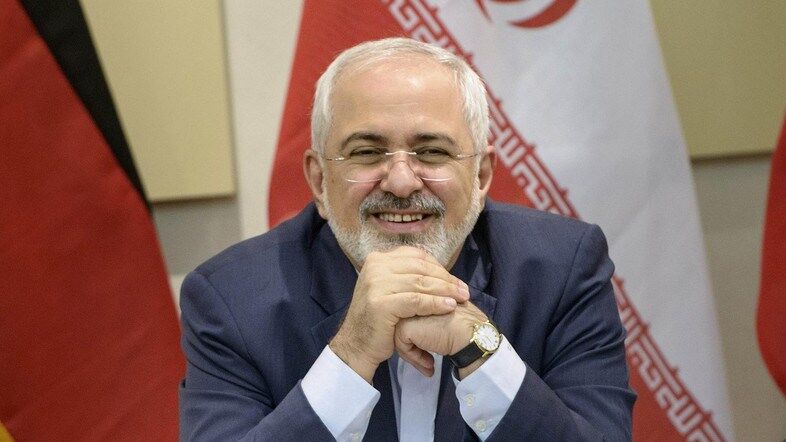
In the statement, addressing the younger generation, the Leader explicated the glorious achievements of the Islamic Republic over the past forty years, highlighted the realistic hope for the future and the role of the youth in making great strides towards the aspirations, and outlined the necessary elements for such a great move in 7 chapters.
What follows is the text of the statement, released by Khamenei.ir:
In the Name of God, the Most Beneficent, the Most Merciful
All praise is due to Allah, the Lord of the worlds, and peace and greetings be upon our Master and Prophet, Ab-al-Qassem Al-Mustafa Muhammad, upon his pure and immaculate household, upon his chosen companions and upon those who follow them in charity until the Day of Judgment
Among all the nations suffering from oppression, few make an effort to launch a revolution; and among those nations that have risen and launched a revolution, few have been witnessed to have pursued it to the end, or moved beyond merely changing the government and safeguarded their revolutionary values. However, the auspicious Revolution of the Iranian nation—which is the greatest and most popular revolution of the contemporary era—is the sole revolution that has persisted forty years of pride, saved from betrayal to its values, and it has preserved its dignity and original slogans against all the temptations which seemed irresistible; hence, entering the second phase of self-development, society-processing and civilization-building. Heartfelt salutations to this nation, the generation who initiated and continued [the movement] and the generation that currently steps into the magnificent and global phenomenon of the second forty years!
The day when the world was divided into the material West and East, and no one presumed a major religious movement would emerge, the Islamic revolution of Iran stepped into the scene gloriously and mightily; it broke the frameworks; it flaunted to the world the outdatedness of the clichés; it put the religion and the material world together, and declared the coming of a new era. It was much expected that the leaders of deviation and oppression would react—but in vain. Whatever the right and left modernity did— from pretending to ignore this emerging and unprecedented voice to extensive efforts for suffocating it— just brought them closer to their indispensable demise. Today, after forty annual celebrations of the victory of the Revolution and forty Fajr ten-days, one of the two centers of animosity has already perished, and the second one is struggling with predicaments that signal its death in the near future. Whereas, the Islamic Revolution is advancing while preserving and adhering to its mottos.
It is possible to assume an expiry date for anything, yet, the global mottos of this religious revolution are exceptional; they will never expire because they match human nature in all eras. Freedom, ethics, spirituality, justice, independence, dignity, rationality, brotherhood, are not limited to a single generation or society so that they would rise in a period and decline in the next. It is impossible to imagine a people who despise these values. The reported cases of reluctance to these values were due to the officials who had shrunken from these religious values; and not due to their adherence to them and endeavors for achieving them.
The Islamic revolution—like a living and unwavering phenomenon—is always flexible and ready to correct its mistakes, but it is not revisionary or passive. It is positively sensitive to criticisms; it regards them as a divine blessing as well as a warning to those who do not act upon their words; yet it, by no means, takes distance from its values, which are blended with the religious faith of the people, thanks be to God. Since the establishment of the system, the Islamic revolution has never suffered from, and will never suffer from stagnation and recession, and it does not see any conflict and contradiction between revolutionary dynamism and political and social order; rather, it eternally defends the theory of the revolutionary system.
The Islamic Republic is not reactionary and it does not lack perception and understanding in face of new phenomena and situations; however, it strongly adheres to its principles and it is highly sensitive to its frontiers in relation to its rivals and enemies. It never imprecisely regards its principle lines and considers it important as why and how it would persist. Undoubtedly, the gap between the musts and the realities has always tormented the idealist consciences; however, this gap is fillable, and in the past forty years it has been filled in many cases, and certainly in the future, with the presence of a young, faithful, wise and motivated generation, it will be filled more vigorously.
The Islamic Revolution of the Iranian nation has been mighty, but merciful; forgiving and even oppressed. It has not committed any of extremist and deviated acts that have marked many other uprisings and movements with stigma. In no conflicts—not even against the United States or Saddam Hussein—did it ever shoot the first bullet and, in all cases, it defended itself after the enemy's attack; of course, it blow the defensive strike vigorously. Since its inception, this Revolution has never been merciless nor has it ever shed blood; it has neither been passive nor hesitant. Standing assertively and courageously against bullies and thugs, it has defended the oppressed. This revolutionary bravery and gallantry, this honesty, assertiveness, and sovereignty; this global and regional realm of action in support of the oppressed of the world represent a source of pride for Iran and the Iranians, and may it persist eternally!
Now, at the beginning of a new chapter in the life of the Islamic Republic, I would like to address my dear young people: the generation who steps up to start another part of the Great Jihad [selfless endeavor] for building a great Islamic Iran. The first section of my address concerns the past.
Dear ones! You cannot learn but from your own experience or listening to the experiences of others. Many of what we have seen and experimented, your generation has not experienced and seen yet. We have seen and you will see. The decades ahead are your decades, and it is you who should protect your revolution while you are qualified and full of motivation, and move it closer to its great ideal: that is, the emergence of a new Islamic civilization and the preparation for the rising of the great sun of wilayat (may our souls be sacrificed for him) [Imam Mahdi (a.s.)]. To take steady steps in the future, we need to develop a good knowledge of the past and learn from the experiences. If this strategy is neglected, lies will replace the truth, and the future will be menaced by unknown threats. The adversaries of the revolution are strongly motivated in their efforts to spread distortions and lies about the past and even the present, exploiting money and all the necessary tools for it. The bandits of thought, creed and awareness are ample; the truth cannot be heard from the enemy and its troops.
The Islamic Revolution and the establishment that rose from it started from scratch. Firstly, everything was against us: the corrupt regime of Taghut [Pahlavi tyranny]—which, in addition to its dependence and corruption, tyranny and being coup-based—was the first royal regime in Iran that was brought to power by the foreigners rather than by the force of sword; the government of the United States and some other Western governments; or the extremely chaotic situation inside Iran; and the shameful backwardness in science and technology, politics, spirituality, and any other virtue.
Secondly, there was no precedent experience before us and the path ahead of us had not been treaded. Obviously, Marxist uprisings and the like could not represent a role model for a revolution that emerged from the heart of Islamic faith and knowledge. Islamic revolutionaries began without an example and experience, and the combination of a republic and Islam and the means for the formation and progress of it were not achieved except through the divine guidance as well as the luminous heart and the great thought of Imam Khomeini. And this marked the first brilliance of the Revolution.
Then, the revolution of the Iranian nation transformed the bipolar world of that day into a three polar world, and then, with the fall and disappearance of the Soviet Union and its allies and the emergence of new poles of power, the new dichotomy of “Islam and the Arrogant Front” became a prominent phenomenon of the contemporary world and the focal point that is attracting the world’s attention. On the one hand, the aspirated look of the oppressed nations, freedom-seeking movements and some independence-seeking states of the world fixated on it; and on the other hand, it was screened by resentful and malicious eyes of the world’s bullying regimes and blackmailer thugs. Such, the world adopted a different orientation, and the seismic power of the Revolution shook the untroubled pharaohs. Hostilities began with all intensity; if it was not due to the magnificent power of the faith and the motivation of this nation and the heavenly and endorsed leadership of our imminent Imam, it was impossible to resist the hostility, conspiracy, and vice [directed at us].
In spite of all these onerous problems, the Islamic Republic took greater and stronger steps day after day. The past 40 years exhibited great jihads, brilliant achievements and amazing advances for the Islamic Iran. The magnitude of the progress made by the Iranian nation in the last forty years is well-recognized when compared to similar spans following other major revolutions such as the French Revolution, the October Revolution of the Soviet Union and the Indian Revolution. The jihadi management strategies inspired by Islamic faith and the belief in the principle of "we can do it"—that Imam Khomeini (r.a.) had taught us all—assisted Iran in its achievement of dignity and progress on various arenas.
The revolution put an end to a long historical decadence, and the country, which was severely humiliated and utterly retrograded during the Pahlavi and Qajar dynasties, started to progress rapidly. In its first step, the revolution turned the disgraceful regime of the tyrannical monarchy into a popular and democratic state, and employed the element of national determination—which is the essence of comprehensive and genuine progress—to the heart of the country's governance; then, it turned the youth into the main forerunners of the developments and the key players in the management of the country. It conveyed the "we can do it" spirit and belief to everyone; thanks to the enemies’ sanctions, it taught everyone to rely on domestic capacities, and this unfolded a source of great blessings:
Firstly, it guaranteed the stability and security of the country; the territorial integrity and the protection of the borders—which were targeted by the enemy's serious threats—and gave rise to the miracle of victory in the eight-year war, leading to the defeat of the Ba'athist regime, and its American, European and Eastern supporters.
Secondly, it acted as the country's engine in developing the field of science and technology, and in creating the vital, economic and constructional infrastructures which continue to grow more prevalent day by day: several thousands of knowledge enterprises; several thousands of infrastructure and necessary projects for the country in the areas of civil engineering and transportation, industry, power, mining, health care, agriculture and water; millions of university graduates or students; thousands of colleges and universities throughout the country; dozens of big projects, such as the nuclear fuel cycle, stem cells, nanotechnology, biotechnology, etc., all ranking among the top of the world; developing sixty times more non-oil exports and nearly ten times more industrial units. The quality of the industrial sector advanced tens of times more than before; the industry that only relied on assembling and montage was transformed into domestic technology; in various engineering disciplines including the defense industries visible prominence was observed; achievements were made in the critical fields of medicine and the position of authority in it; and dozens of other examples of progress are the outcomes of that morale as well as the social involvement and the collective feeling that the Revolution granted to the country. Before the revolution, Iran had zero production of science and technology; it had no capability in industry except for assembling and no ability in science except for translation [of other works].
Thirdly, the Revolution has elevated to a culmination the popular participation in political matters such as elections, confronting internal seditions, turnout in national arenas and scenes involving the fight against the Arrogant Front. Regarding social matters, it boosted, for instance, humanitarian aids and engaging in charity activities that had begun before the Revolution. After the revolution, people eagerly partake in service-providing to those affected by natural disasters and social shortcomings.
Fourthly, it astonishingly enhanced the political acumen of the people and their view of international issues. The Revolution expanded beyond the limited number of isolation-seeking elites—often known as the enlightened—the political analysis and understanding of international issues on the matters such as crimes by the West and particularly the United States; the Palestinian cause and the historical oppression of the Palestinian nation; the issue of bullying powers’ warmongering attitudes, vices, intrusions in other nations’ affairs and the like. This type of intellectualism became widespread and available to the masses throughout the country and in all areas of life, and similar matters have become understandable and clear even for teenagers and children.
Fifthly: It distributed the country's public facilities in a manner closer to justice. If I —this very humble person—am not satisfied with the functioning of justice in the country, it is due to the fact that this lofty value should shine like a unique gem on the Islamic Republic, but it has not yet. However, my dissatisfaction should not be taken to mean that no work has been done for the establishment of justice. The reality is that the achievements made in combating injustice over the past four decades are not comparable to any other era in the past. During the regime of Taghut [tyrannical dynasties], most of the services and revenues of the country were available only to a small group of the residents of the capital city or their counterparts in other parts of the country. The people in most cities, especially in remote areas and villages, were at the end of the list and often deprived of basic infrastructure and services.
The Islamic Republic has been one of the world's most successful governments in relocating its services and wealth from the center to all parts of the country, and from the affluent areas of the cities to the poor neighborhoods. The great statistics on building roads and housing construction; the establishment of industrial centers; the reformation of agricultural matters; distribution of electricity, water as well as building medical centers, universities, dams, and power plants and the like even to the most remote areas of the country, truly makes us proud. Certainly, all these efforts were neither reflected in the inefficient propagations of the officials of the Islamic Republic nor did the foreign and domestic malevolent enemies confess it. Yet, it is there and remains as good deeds of jihadi, sincere managers before God and for the sake of the people. Nevertheless, the notion of justice as expected by the Islamic Republic—that seeks to follow the role model of the government founded by Imam Ali (a.s.)—is far superior to that, and I look forward to seeing you, the young people, realizing it.
Sixthly: It significantly enhanced the level of spirituality and ethics in the public sphere of society. This auspicious phenomenon was particularly promoted due to Imam Khomeini’s manners during the period of the fights leading to, as well as after, the victory of the Revolution. That spiritual man and the mystic pure of material enticements headed a country the foundation of whose people’s beliefs were deeply rooted. Although the propaganda promoting corruption and immorality during the Pahlavi era had stricken hard blows to the nation and had dragged the Western moral corruption into the lives of middle-class people—particularly the youth—, the religious and ethical approach of the Islamic Republic attracted the bright and apt hearts, especially those of the young individuals, and the ambiance changed in the interest of religion and morality.
Strives by the young individuals in the face of hardships, including the Sacred Defense [against US-backed Saddam invasion of Iran], were accompanied by prayers and spirit of brotherhood and sacrifice, and reminiscent of the events that unfolded during the early history of Islam, exhibiting them live and vivid before everyone’s eyes. Fathers, mothers, and wives bid farewells to their loved ones who set off for various fronts of jihad, motivated by a sense of religious duty; then, once they encountered their blood-soaked or wounded bodies, they accepted the calamity while they were grateful to God. Mosques and religious spaces became unprecedentedly busy. Several thousands of young individuals, university students and professors, women and men were in the waiting list for performing I’tikaf. Several thousands of young volunteers were eager to join Jihadi [volunteering] camps, construction jihad, and the construction mobilization forces. Prayers and Hajj pilgrimage, fasting and pilgrim walks and various religious ceremonies along with obligatory and non-obligatory donations flourished everywhere, especially among young people. To this day, this has become better in quality and larger in quantity. This has all happened at a time when the increasing moral decline of the West and its followers as well as their massive propaganda to drive men and women into corruption, has isolated morality and spirituality in the major parts of the world: this represents another miracle of the Revolution and the active and forward-looking Islamic system.
Seventhly: The magnificent and glorious epitome of rising up against the bullies, thugs and arrogant powers of the world—led by the criminal and warmongering U.S.A.—grew more prominent day after day. During all these forty years, Iran and the Iranians—particularly the youth of this land—have been known as never surrendering and always safeguarding the Revolution, its divine magnificence and its pride against arrogant, haughty states. The hegemonic powers of the world—that have lived on trespassing the independence of other countries and plundering their vital interests in order to fulfill their evil intentions—have confessed to their weakness in the face of the Islamic and Revolutionary Iran. In the lively ambiance of the Revolution, the Iranian nation managed to first expel the puppets of the United States, the agents who betrayed the nation, and since then, the Iranian nation has vigorously prevented any domination over the country by bullying powers.
Dear young individuals! These are only a limited number of the major headlines in the forty-year history of the Islamic Revolution: the splendid, enduring and brilliant revolution that you, by God’s Grace, should take the second big step towards advancing it.
The fruit of the efforts made during the past forty years is before our eyes: an independent country and nation; free; powerful; dignified; faithful; advanced in science; full of valuable experiences; confident and hopeful; with essential impact on the region and a strong logic on global issues; with records in the growth rate of scientific advances, and in earning high ranks in important sciences and technology such as nuclear science, stem cells, nanoscience, aerospace and so forth; leading in expanding social services; excelling in promoting jihadi [volunteering] motivations among young people; leading in having an efficient young population and many other honor-winning features which are all the products of the Revolution and the result of taking the revolutionary and jihadi direction. You should know that if ignorance of the Revolution’s mottos and negligence of the Revolutionary movement had not occurred in some periods during the forty-year history of the Revolution—which unfortunately existed and were extremely detrimental—the Revolution’s accomplishments would have gone far beyond what we witness today and the country would have been far ahead on the path towards the great ideals and many of the current problems would not have existed today.
Today, just like the first days after the Revolution, sovereign Iran faces challenges from the imperialists, arrogant powers; yet, there is a meaningful difference. If the challenges posed by the United States those days involved ending the intrusion by foreign agents or closing down the embassy of the Zionist regime in Tehran, or exposing the spy den [the former US embassy in Tehran], today, the challenges concern Iran’s strong presence near the borders of the Zionist regime, putting an end to the United States’ unlawful infiltration in the West Asia, the Islamic Republic’s support for the Palestinian people’s resistance at the heart of the Occupied Territories as well as defending the high flying flag of Hezbollah and the resistance throughout this region. If then the West’s concern was to prevent Iran from buying basic weaponry, today, their concern is to prevent the transfer of advanced Iranian weapons to the Resistance forces. If on those days, the United States presumed that the Islamic government and the Iranian nation could be vanquished with the help of a few Iranian sellouts and a small number of aircrafts and helicopters, today they feel they need a coalition of tens of hostile or daunted states to counter Iran on the political and security fronts; and yet, they fail. Thanks to the revolution, Iran today stands out at an elevated position, one that the Iranian nation deserves to enjoy in front of the world; and Iran has already passed the challenging twists on the path of resolving its fundamental issues.
However, the trail traveled so far is merely a portion of the glorious path towards the exalted ideals of the Islamic Republic. The continuation of this path—which is most probably not as demanding as the past—must be traveled with the willpower, vigilance, swiftness, and innovation of you, the young ones. Young managers, young executives, young thinkers, young activists in every field—ranging from politics, economy, culture, international relations, to religion, ethics, morality, and justice—should shoulder the responsibilities by making use of the experiences and the lessons learned in the past, applying the revolutionary view and the spirit of jihadi actions in order to build our dear Iran as a comprehensive model of an advanced Islamic government.
An important point that needs to be considered by those who build the future is that we are living in a country which is distinctive in terms of natural and human resources. Yet, many of these resources have been left untapped or only slightly exploited due to negligence by the officials. Great endeavors, as well as revolutionary and youthful motivations, will be able to activate them, marking a real leap forward in the country’s material and moral progress.
The most important aspiring potential in the country is the potential and proficient human resource that enjoys a deep, noble foundation of faith and religion. The young population under 40—an important part of which is the result of a birth boom in the 80’s—represents a valuable prospect for the country. Enjoying a population of 36 million people aged between 15 and 40; nearly 14 million people with higher education degrees; ranking the second in the world by the number of science and engineering graduates; numerous young individuals brought up with a revolutionary spirit and ready to work for the sake of God and for the love of their country; and large numbers of intellectual and investigating young individuals who are in the job of creating scientific, cultural, industrial and other types of products, add up to the enormous wealth of the country that cannot be compared to any material reserves.
In addition to the aforementioned assets, there is a long list of material opportunities for the country that can be activated and exploited by efficient, motivated and intelligent managers in order to significantly increase domestic production and make the country self-sufficient, wealthy and truly self-reliant, hence overcoming the current problems. Iran makes up 1% of the world population, however, it possesses 7% of the global natural resources: massive underground resources; special geographical position between the East and the West the North and the South; a major national market; vast regional market including 15 neighbors that constitute a population of 600 million; long coastal borders; fertile lands with a great variety of agricultural products; and vast and versatile economy are only some of the countries’ potentials. Many potentials have been left untapped. It is said that Iran has the first place in the world in terms of unexploited natural and human resources. Without a doubt, you the faithful and active young ones can amend this great shortcoming. The second decade of the outlook must be dedicated to making use of the previous accomplishments and unexploited potentials, and the country’s growth must be enhanced in different sectors including production and national economy.
Now, I would like to offer you my dear sons and daughters, some pieces of advice regarding a few essential topics. These topics include science and research; spirituality and morals; economy; justice and the fight against corruption; independence and liberty; national dignity, international relations, borderlines with the enemy, and lifestyle.
However, prior to any anything, my first advice concerns hopefulness and observing an optimistic outlook of the future. Without this fundamental key to any deadlock, not even one step can be taken forward. What I am referring to is authentic hope based on evident realities. I have always avoided false and deceiving hopefulness, but I have also warned myself and others against unfounded pessimism and false fear. During these past 40 years, and today as ever, the enemy’s propaganda and communication policy, as well as its most active programs, have revolved around making people and even our officials and statesmen lose their hope in the future. False news, biased analysis, reversing facts, concealing the hopeful aspects, amplifying small problems and berating or denying great advantages, have been constantly on the agenda of thousands of audio-visual and internet-based media by the enemies of the Iranian. And of course, their followers inside the country can be seen using the freedoms to work in the service of the enemy. You, the young individuals, must be the forerunners of breaking the siege of such propaganda. Grow the plant of hope for the future in yourself and those around you. Drive fear and disappointment away from yourself and others. This is your first and most fundamental Jihad to make. Signs of hope—some of which were mentioned—are before your eyes. The growth of the admirers of the Revolution has been far greater than that of outgoing fans, and loyal and helping hands and hearts are far more numerous than the corrupts, the traitors, and the greedy. The world has high regard and respect for the Iranian youth, Iranian’s perseverance and ingenuity in many fields. Value yourself, and with the strength given by God, ascend towards the future and create epics.
As for the advice:
1-Science and research: science, is the most obvious instrument of dignity and power for a country. The other face of knowledge is ability. The west brought about 200 years of wealth, influence, and power for itself thanks to their advances in science, and despite their weak moral and ideological foundations, they could dominate societies left behind from the train of science, politics, and economy by imposing western lifestyle on them. We are not calling for the abuse of science like what the West did; however, we insist on the country’s need to flow the fountains of science among ourselves. Thank God, our nation’s talent in acquiring science and research is higher than the world’s average. The scientific uprising in the country that started almost two decades ago has been going on with a speed surprising for global observers, i.e. 11 times faster than the average pace of the world’s scientific growth.
Our achievements in science and technology—that have put us in the 16th place among more than 200 countries in the world, have surprised world observers and in some sensitive and new fields has promoted us to the first ranks—happened while the country was under financial and scientific sanctions. In spite of having to swim against the tide made by the enemy, we have made great records, and this is a great blessing, for which one needs to thank God day and night.
However, the point I am making is that this traveled path, despite its importance, has just been the beginning and nothing more than. We are still far behind the summits of the world’s science. We need to reach the summits. We need to go beyond the current frontiers of science in the most important fields. We are still far behind from this stage. We started from scratch. The shameful scientific retrogression during the Pahlavi, and the Qajar—when the world had just started its scientific race—dealt us a heavy blow, keeping us miles behind this fast-moving train.
We have started the movement now and are going forward at full speed. But this fast-forward movements needs to preserve momentum for years to come, so that it can compensate for the regression. I have always warmly and firmly advised and warned and called upon the universities, the academics, the research centers and the researchers about this. However, now, I am asking all of you, the young individuals, to follow on this track with more sense of responsibility, considering it a Jihad. The foundation stone of a scientific revolution in the country has been laid, and this revolution has offered martyrs, including the martyred nuclear scientists, too. Rise up to defeat the malicious, spiteful enemy who strongly fears your scientific Jihad.
2. Spirituality and morals: Spirituality means emphasizing on spiritual values, such as sincerity, sacrifice, reliance on God, and faith in yourself and the society. Morals entail observing virtues such as benevolence, forgiveness, assisting the needy, truthfulness, courage, humbleness, self-confidence, and other good characteristics. Spirituality and morals guide every movement, individuals and social activities and represent the main need of the society. Their existence makes life a paradise even in spite of material shortages, whereas their lack, even while materially rich, creates a hell.
The growth of spiritual perception and moral conscience in society brings about more blessings. This indeed requires Jihad and effort, and this Jihad and effort will not succeed much without the help of governments. Spirituality and morals, certainly will not be acquired through decrees and orders; hence, governments cannot create it using coercive force. However, primarily, they themselves need to observe moral and spiritual behavior. Secondly, they need to prepare the ground for the spread of those virtues in society and assist and provide a realm of influence to the social organizations in this regard. They need to fight in a rational manner against centers of anti-spirituality and anti-morality and prevent the evil ones from pulling others down with them by force or deception.
Advanced and pervasive means of communication have provided centers of anti-spirituality and anti-morality with a very dangerous facility, and now we are witnessing the enemies’ ever-increasing assault on the pure hearts of the youth, teenagers, and even children by employing these means. Liable government entities have great responsibilities in this regard that have to be taken up wisely and thoroughly responsibly. Of course, this does not mean that non-governmental individuals and organizations have no responsibility. God willing, in the era ahead, overwhelming short and medium-term plans need to be devised and implemented about this matter.
3. Economy: Economy is a key defining point. A strong economy is the strong point and the important factor in blocking domination and infiltration; while a weak economy is the Achilles heel that prepares the ground for infiltration, domination, and intrusion by the enemies. Poverty and affluence affect the materialistic and spiritual aspects of human beings. Economy, of course, is not an ideal of the Islamic society. Rather, it is a means without which one would not be able to fulfill the ideals. Insistence on reinforcing the country’s independent economy that is based on mass and quality production, justice-based distribution, reasonable and waste-free consumption, and wise managerial relations—which I have repeatedly insisted upon time and again in recent years—are due to the incredible impact economy can have on the society’s current and future life.
The Islamic Revolution showed us the way out of the weak, dependent and corrupt economy of the Pahlavi era. However, feeble performances have posed internal and external challenges to the country’s economy. The external challenges include the enemy’s sanctions and temptations that would be rendered less effective or even ineffective if the internal challenges are resolved. The internal challenges consist of structural defects and managerial weaknesses.
The main defects include economic reliance on oil; government interference in sectors of the economy that do not fit into the sphere of government’s responsibilities; relying on imports rather than domestic strength and potentials; very limited exploitation of the country’s human resources potentials; defective and unbalanced budgeting; and finally lack of consistency in executive economic policies, disrespecting priorities and excessive and even wasteful expenses in parts of state organizations. The result is problems in people’s livelihoods including the high rate of unemployment among the youth, low income of lower classes, etc.
The solution to these problems lies in the strong, responsible and lively implementation of the policies delineated by the Economy of Resistance that need to be outlined, followed up and acted upon by administrations. The country’s economic intra-production, becoming productive and knowledge-based, making the economy popular, avoiding authoritarian government oversight, and extroversion using aforementioned potentials are among important examples of these solutions. A young, wise, faithful and knowledgeable committee of economy experts inside the government can undoubtedly accomplish these aims. The times ahead must be employed for action by the committee.
The beloved young individuals across the nation should know that all solutions lie within the country. Assuming that ‘economic problems are merely the result of sanctions and sanctions are because of resistance against imperialism and not submitting to the enemy, so the solution is to kneel before the enemy and kiss the wolf’s paw’ is an unforgivable mistake. This completely false analysis—although sometimes emitted from the mouths and pens of some ignorant individuals inside the country—has its roots in foreign think tanks and conspirers who intend to induce them in policy makers, decision makers, and the general public inside the country.
4) Justice and fight against corruption: These two virtues necessitate each other. Economic, moral, and political corruption are like tumors in the body of countries and governments; if found in the body of a system of governance, they would constitute a devastating quake and a heavy blow to their legitimacy. And for an establishment like the Islamic Republic—that requires beyond the common legitimacy and social acceptance—this is far more serious and fundamental than for any other systems. The temptations of wealth, power and rank weakened some, even in the most resembling of all governments to Imam Ali’s governance; i.e. Amir Al-Mu’minin’s own government. Thus, the hazard posed by the emergence of such a threat in the Islamic Republic—whose officials once competed each other in Revolutionary piety, and maintaining a simple lifestyle—has never been and still is not far from probable. This makes the constant presence of an efficient organization, with sharp eyes and decisive actions within the three branches of powers (executive, legislature, judiciary) necessary, in order to truly fight corruption, especially in governmental bodies.
Of course, the proportion of corrupt individuals among the officials of the Islamic Republic is much smaller than that of many other countries, and particularly to that of the Pahlavi regime—which was totally corrupt and encouraged corruption—and thanks be to God, the agents of this system have mostly stayed clean from it; however, even the slightest corruption is unacceptable. Everyone must know that economic transparency is the precondition for the legitimacy for all officials of the Islamic Republic. Everybody must beware of the evil of greed, and avoid illegitimate earnings, and supplicate to God to help them in this regard.
Supervising and governmental organizations must prevent corruption from being conceived and fight its spread with sincerity and sensitivity. This fight needs faithful men ready for Jihad, who are dignified and have pure [financial] records and bright hearts. This fight is an effective part of an all-around effort that the Islamic Republic must put in to establish justice.