Thursday, August 27, 2026

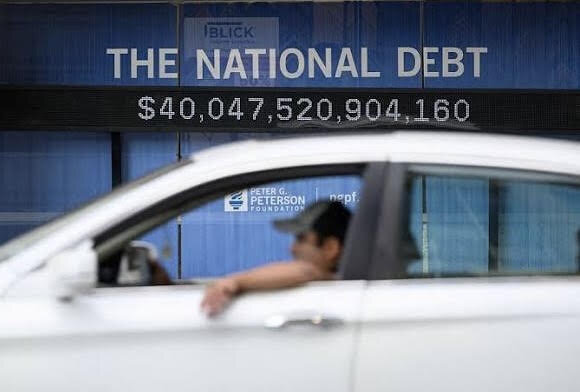
With $40 trillion in debt, does Washington have any credibility to police Iran’s economy?

TEHRAN- The United States has just crossed a grotesque milestone: its national debt has ballooned to a record-shattering $40 trillion. This is not merely a number; it is a confession of systemic rot.

In 1941, the debt hit $1 trillion. By 2017, it was $20 trillion. Today, in just nine years, it has doubled again—and is expected to swell by another $2.1 trillion in this fiscal year alone. This is not fiscal policy; it is fiscal intoxication.

Yet, incredibly, this same indebted giant dares to wag its finger at the Iranian economy. Washington presumes to lecture Tehran on prudence while its own Treasury burns. The hypocrisy is staggering. The United States cannot balance its own checkbook—its mandatory spending on Social Security and Medicare consumes two-thirds of its budget, and its annual interest payments on the debt now exceed $1.2 trillion, eclipsing even the Pentagon’s defense budget. Servicing this debt is the second-largest item in the federal budget. By mid-2027, Congress’s arbitrary debt ceiling of $41.1 trillion will be breached, setting the stage for another embarrassing political circus over default.

And what is Washington’s response? To hide behind the dollar’s global reserve status—a privilege it abuses to borrow cheaply. But that privilege is fading. The dollar’s share of global reserves has dropped from 70% in 2001 to 57% today. Central banks are dumping Treasuries for gold, yuan, and other alternatives. The US is actively engineering its own decline.

So, let us ask the obvious question: How dare a country that cannot control its own deficit, that is squeezing its own infrastructure and innovation budgets to pay interest, and that risks exporting inflation and higher rates to the entire world—how dare it impose sanctions and pressure on Iran? The American model is not a beacon; it is a beacon of bankruptcy. Its "structural fiscal adjustment" requires tax hikes to the OECD average and a bipartisan consensus it cannot achieve. Until Washington cleans its own house, its economic lectures are not just arrogant—they are a global joke. A debtor in a glass house should not throw stones, especially when that glass is cracking under $40 trillion of weight.

US’s Iran policy has reached ‘pure parody’: Foreign Ministry

Foreign Ministry spokesman Esmaeil Baghaei criticizes the various means through which the United States has been trying to enforce its newly announced restrictive measures against Iran.

“Washington’s Iran policy has reached pure parody,” the official wrote on X on Wednesday, two days after the US announced the measures.

“It (the US) turns to Bahrain - a country with virtually no meaningful economic exchange with Iran - to prove that its ‘coalition’ is working,” Baghaei said.

“It then ‘stops’ Iranian sports and academic exchanges that had already been effectively dead for years,” he added.

“It is sanctioning the already sanctioned and calling the empty space a coalition.”

The comments came after US Treasury Secretary Scott Bessent announced a new wave of sanctions against Iran under what Washington has called “Operation Economic Outcast.”

Bessent said the campaign was aimed at Iran’s financial networks worldwide and warned that countries and entities maintaining trade ties with Tehran could face secondary penalties.

According to the announcement, the United States has identified entities dealing with Iran and will give them deadlines to cut ties or risk exclusion from the US dollar system.

Criticism inside and outside the US

The new measures have, however, drawn criticism both inside and outside the United States.

China, Iran’s largest trading partner, has rejected the use of sanctions and pressure against the Islamic Republic. Beijing’s Embassy in Washington said that “sanctions and pressure do not help resolve the problem” and called instead for political and diplomatic solutions.

US Senator Chris Murphy has criticized the announcement, describing Bessent’s so-called “Economic D-Day” rhetoric as “desperate window dressing” to mask US military failures. The senator also argued that existing sanctions had already exhausted Washington’s available options and said the new measures would not change Tehran’s position.

Iran has vowed to target the countries trying to help the United States enforce the new measures.

ICC chief urges Japan to counter US pressure on the court

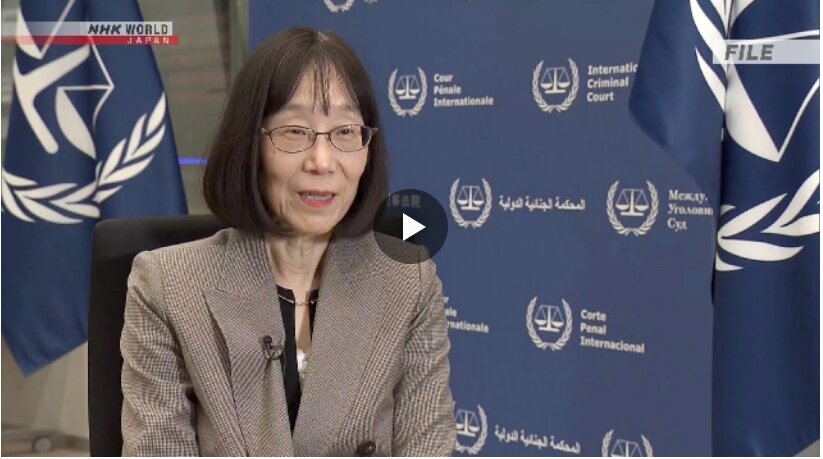
Japan should try to counter the United States’ efforts to pressure members of the International Criminal Court (ICC) to quit the body, its president said, noting that Tokyo’s support is pivotal to ensuring the court’s survival.

Speaking via video link to reporters in Tokyo, ICC President Tomoko Akane called on Japan, the ICC’s biggest financial backer, to help it in its hour of need, Al Jazeera reported.

“Japan has long made the rule of law a cornerstone of its diplomacy. Consequently, both I and the international community hold high expectations for Japan,” said Akane, a Japanese national.

“Furthermore, I would like Japan to focus on supporting neighboring countries that are ICC members, ensuring that they do not succumb to the new US campaign and decide to withdraw from the ICC,” she added.

US President Donald Trump’s administration intensified its campaign against the Hague-based court last week by sanctioning Akane and a senior trial lawyer.

Washington has said it will also step up efforts to persuade other countries to quit the institution, a call that at least five countries have already heeded.

Japanese Prime Minister Sanae Takaichi initially described the latest move as “very unfortunate”, but has faced criticism from the opposition, human rights groups and some lawmakers from her own party for not defending the court more forcibly.

The ICC was established in 2002 by the international community to prosecute war crimes, genocide and crimes against humanity.

The United States is not a member. However, the court’s decision to seek an arrest warrant for Israeli Prime Minister Benjamin Netanyahu, a close US ally, alongside a past probe into US troops in Afghanistan, has drawn the ire of Washington.

Akane said Japan, which joined the ICC in 2007, should leverage its close ties with the US to dissuade Washington from taking further escalatory measures.

“Countries, people and media are saying this is a litmus test for their expectations of Japan… Japan’s strong support for the ICC here will greatly contribute to its future survival,” she said.

How valid are U.S. commitments under Trump?

 By Ali Minabi

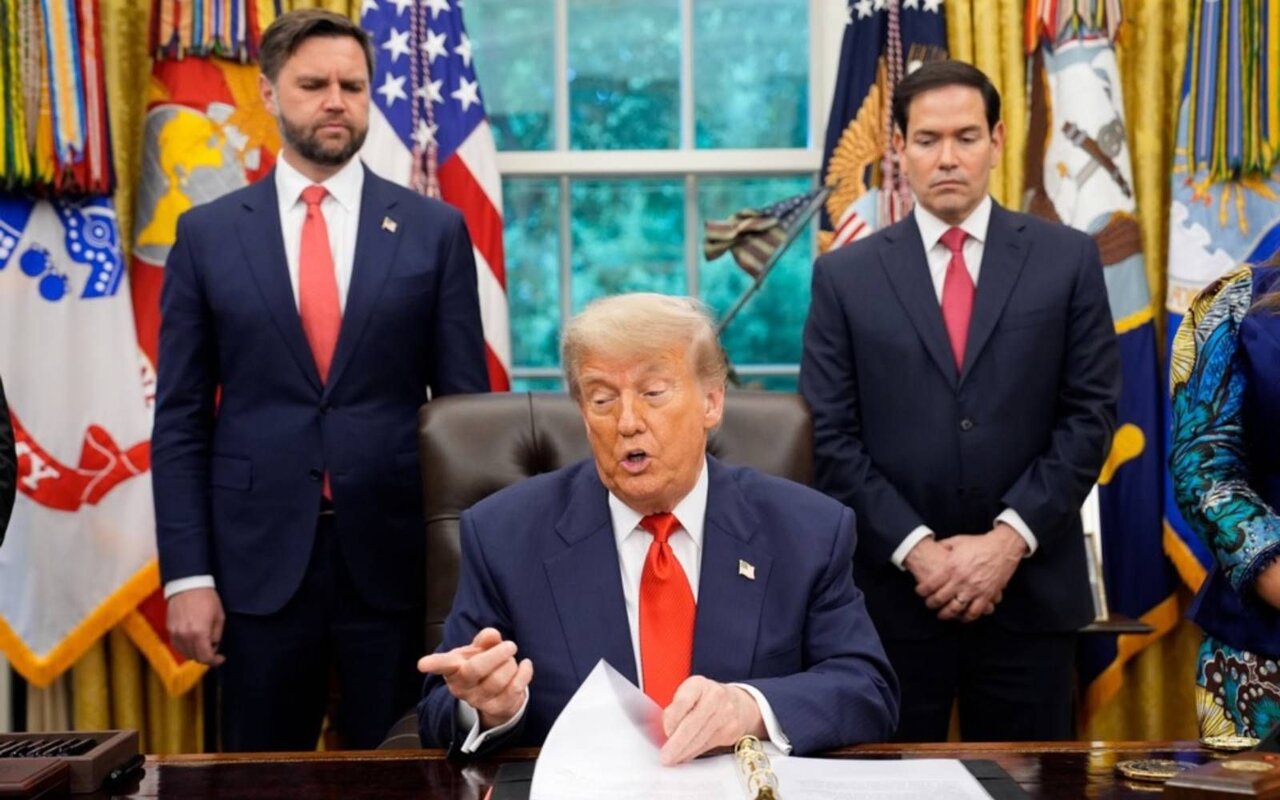
TEHRAN - Under Trump, America’s agreements increasingly appear conditional, reversible, and vulnerable to sudden policy shifts, raising fundamental questions about the credibility of U.S. commitments.

Chas Freeman, former U.S. ambassador to Saudi Arabia and former assistant secretary of defense, said: “We’ve convinced the entire world that we don’t know what we’re doing, and we can’t be trusted, and we don’t keep our word, and we don’t even stay consistent from one day to the next. So how can you deal with us? That’s the question everybody has out there.”

American duplicity and betrayal intensified following the conclusion of the U.S.-Iran memorandum of understanding, signed on June 17, 2026, by Trump at the Palace of Versailles.

Pakistan, with the assistance of several regional countries, mediated the agreement. It was described as an initial accord intended to pave the way toward a broader, final agreement. The memorandum contained 14 provisions setting out the terms for an immediate ceasefire and mechanisms for negotiating a lasting peace.

Trump quickly reneged on his commitment to the memorandum. John Mearsheimer, professor of political science at the University of Chicago, said in July 2026 that, from Iran’s perspective, the United States had failed to honor its commitments under the agreement.

“When we look at what is happening from the Iranian perspective… the Iranians [rightly] believe that the United States has failed to honor its commitments under the agreement,” he pointed out.

The Strait of Hormuz and oil-export waivers

Iran had several reasonable grounds for accusing Trump of failing to comply with the agreement. Provision 5 addressed what had replaced enriched uranium as a central focus of the illegal war: Iran’s position on shipping through the economically vital Strait of Hormuz.

The provision was understood to mean that Iran would lift its blockade while continuing to oversee and direct maritime traffic. When Iran took control of shipping through the Strait of Hormuz in March 2026, it replaced the pre-war shipping route, which ran through the middle of the strait, with another route directing vessels along its own coastline.

After the memorandum was signed, however, the Trump administration began directing ships onto a different route through Omani territorial waters. Following the ceasefire, there were three routes: one along the Omani coast, the central route used before the war, and one along the Iranian coast.

“We violated [the memorandum] by creating a southern corridor,” said retired U.S. Army Colonel Daniel Davis, host of the Deep Dive podcast, which focuses on geopolitical issues.

“There is nothing in the memorandum we signed that authorizes the creation of a southern corridor, or allows the United States to enter it and unilaterally determine how it should operate. It simply is not there in the memorandum.” 

Davis, who returned from Afghanistan and exposed in 2012 how civilian and military officials had misled the public about the course of the war there, said the U.S. move in the Hormuz Strait was a deliberate provocation.

According to American writer Brian McGlinchey, author of the Stark Realities blog, whether intentional or not, it was indeed a provocation by the United States.

After issuing radio warnings to vessels attempting to use the southern route, Iran fired disabling projectiles at them. Trump then resumed his bombing campaign against Iran, prompting Tehran to retaliate against U.S. forces and the countries hosting them. The Iranian armed forces subsequently began a prolonged cycle of retaliatory strikes.

Then there is Provision 10 of the memorandum, under which the Trump administration promised to issue sanctions waivers allowing Iranian oil and petroleum products to be exported without restrictions. Trump revoked the waivers on July 7, citing Iranian attacks on vessels that had failed to comply with its control over the Strait of Hormuz, a control that the United States had implicitly accepted under Provision 5.

Legitimizing Israeli occupation of Lebanon

Given its enormous importance to Iran, Provision 1 of the memorandum called for “the immediate and permanent cessation of hostilities on all fronts, including Lebanon.” The provision did not specifically focus on Iran and the United States, but rather on their allies: Hezbollah, aligned with Iran, and Israel, America's staunchest ally in the world.

Nevertheless, the Zionist regime continued its aggression and the wholesale destruction of civilian infrastructure in southern Lebanon, on a scale comparable to what the regime's occupation forces had done in Gaza.

Some might argue that the United States was not in a position to impose the memorandum’s provisions on Israel. Even if that were true, Trump should not have signed a memorandum implicitly committing him to do so.

The Trump administration went a step further, taking measures to legitimize the Israeli regime's occupation of Lebanon.

 “The memorandum stipulated that the Israelis had to leave Lebanon. We made no effort to achieve that. On the contrary, Marco Rubio mediated an agreement between the Lebanese government and Israel to jointly attack Hezbollah. What is that, then? At the very least, it was an unwise course of action,” Freeman pointed out.

More importantly, Trump’s conduct strengthens the credibility of the Iranian government and armed forces, who have long argued that Washington cannot be trusted and that negotiations should be backed up by military readiness.

The Saudi-U.S. nuclear deal

Trump’s repudiation of agreements has not been limited to adversaries of the United States who have been hit by his sudden reversals of terms he himself had accepted. Take Saudi Arabia for example.

On July 22, U.S. Energy Secretary Chris Wright and his Saudi counterpart, Prince Abdulaziz bin Salman, signed an agreement allowing the kingdom to build nuclear reactors and enrich uranium using American technology.

Both governments issued official statements, and the agreement was hailed as a victory for Saudi Crown Prince Mohammed bin Salman.

The very next morning, Trump stunned, indeed, blindsided, the Saudis and his own officials with a social-media post adding a major condition retroactively: there would be no nuclear agreement unless Saudi Arabia joined the “Abraham Accords,” which entail recognizing the occupying regime's legitimacy and establishing formal diplomatic relations.

Trump’s demand that Saudi Arabia move closer to Israel comes at a time when Muslims in the kingdom and throughout the Islamic world are outraged by the regime's destruction of Gaza and southern Lebanon, making such a demand politically risky for the Saudi royal family.

Contrary to the agreement signed by his own energy secretary, Trump also suddenly announced that there would be no enrichment of nuclear material inside Saudi Arabia.

“Trump makes a deal, signs it, announces it, boasts about it, and within 24 hours radically changes its terms,” observed Trita Parsi, executive vice president of the Quincy Institute, on the Deep Dive podcast.  “If this is what he will do to Saudi Arabia, a country with which the United States has extremely close relations… and with which the Trump family also has very close business ties, what will he do to Iran? How long is any U.S. commitment to Iran under Trump actually valid under any agreement?”

More recently, Ambassador Freeman told Colonel Davis: “We have convinced the entire world that we do not know what we are doing, that we cannot be trusted, that we do not keep our promises, and that we do not even maintain a consistent position from one day to the next. So how can anyone deal with us? That is the question everyone is asking.”

Alastair Crooke, a former British intelligence officer and diplomat, believes that American diplomacy may never return to what it was.

Summarizing the impact of Trump’s multi-front assault on confidence in the United States, Crooke said on Norwegian academic Glenn Diesen’s podcast: "I think the U.S. capacity to negotiate in the traditional diplomatic sense is over. I mean, we are in a new era!"

President Pezeshkian: US economic pressure will remain futile

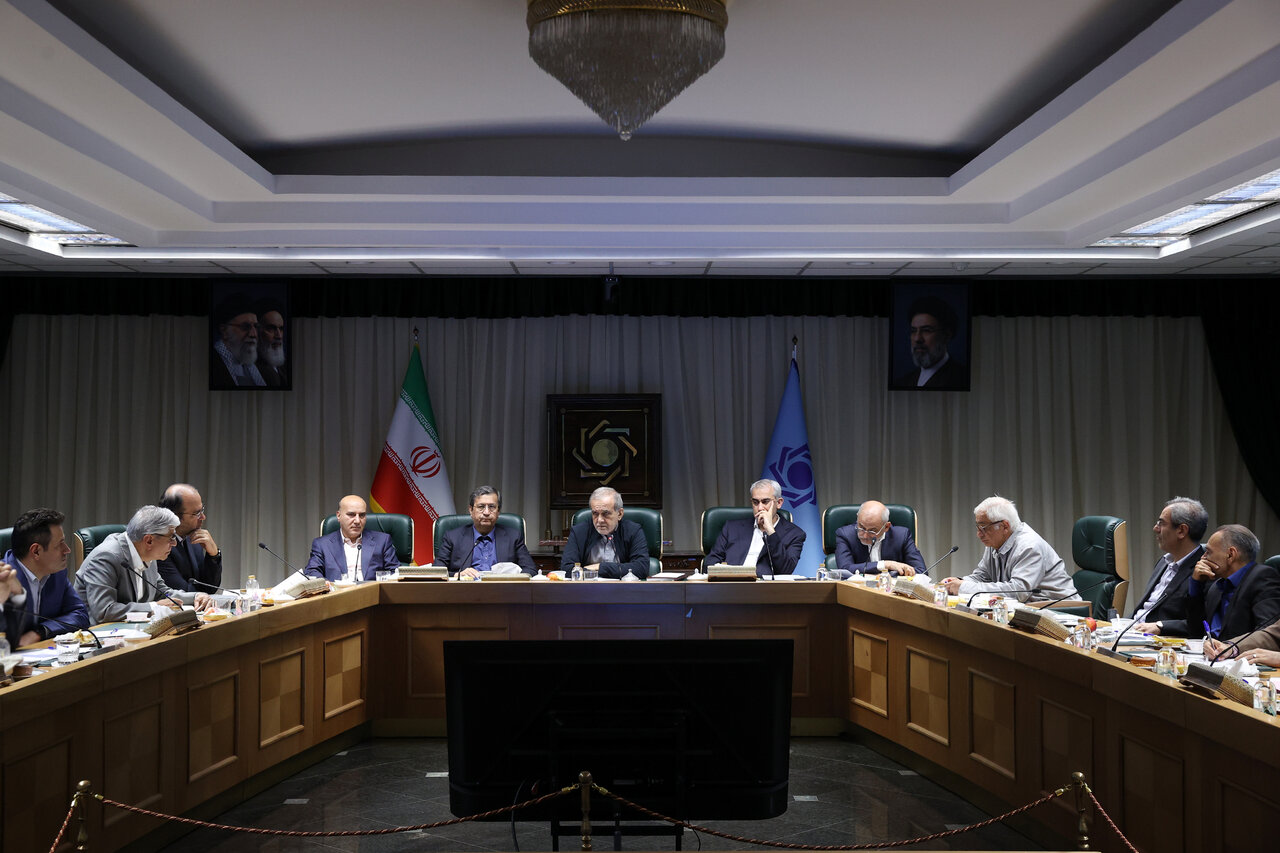
TEHRAN — President Masoud Pezeshkian has declared that the United States will fail to achieve its goals through economic pressure, emphasizing that Iran will remain steadfast in its resistance.

“Just as America was unable to accomplish anything during the war—despite the bravery of our armed forces and the steadfast support of our people—it will not be able to accomplish anything through economic pressure at this stage either,” Pezeshkian stated during a high-level meeting at the Central Bank of Iran. The session reviewed key monetary, foreign-exchange, and financial indicators alongside Economy Minister Ali Madanizadeh, Central Bank Governor Abdolnaser Hemmati, and leading academic economists.

Pezeshkian reassured the public that Iran’s economic authorities have already preemptively designed measures to neutralize external shocks. He reaffirmed Tehran's dual strategy: seeking diplomatic engagement while maintaining a strong defense against economic coercion.

“Our approach is to build understanding and resolve issues through interaction and negotiation,” Pezeshkian said. “However, we have stood firm against economic pressure so far, and we will continue to stand firm.”

The president expressed gratitude to both public and private sectors for engaging in an “economic jihad” to stabilize markets and secure essential goods. During the meeting, experts presented proposals covering budget policy, trade barrier mitigation, exchange-rate management, liquidity control, and operational plans for managing the economy during wartime and post-war conditions.

Pezeshkian underscored the need for complete synergy between the Central Bank, the cabinet, and broader economic institutions to curb inflationary expectations. He reiterated his administration’s commitment to leveraging academic expertise to guide national policymaking.

Pezeshkian’s remarks come in direct response to Washington's rollout of "Operation Economic Outcast," a sweeping economic campaign aimed at severing Iran's ties to the global financial system. The US Treasury Department recently announced sanctions blacklisting over 60 entities, individuals, and maritime vessels across Iran’s aviation, shipping, digital asset, and mining sectors, describing the initiative as an effort toward the direct economic asphyxiation of Tehran. In response, Madanizadeh announced that Iran has transitioned from a purely defensive posture to an offensive economic strategy, which focuses on expanding alternative trade routes, using local currency clearing mechanisms, enhancing customs efficiency, and deploying targeted subsidies to protect domestic purchasing power.

Oman understanding does not mean Hormuz reopening: Iran

By Fardin Molaei

TEHRAN- Iran has sought to temper expectations over a new understanding with Oman on navigation through the Strait of Hormuz, saying the arrangement does not amount to an immediate reopening of the strategic waterway.

Kazem Gharibabadi, Iran’s deputy foreign minister for legal and international affairs, said Tuesday that the country remained in a state of war and that the Strait of Hormuz had become a national-security issue following the recent conflict.

“The Strait of Hormuz will not reopen from tomorrow,” Gharibabadi said, stressing that the understanding reached with Oman should not be interpreted as a full reopening of the waterway.

His remarks came a day after Omani Foreign Minister Sayyid Badr bin Hamad Al-Busaidi visited Tehran and held talks with Iranian Foreign Minister Abbas Araghchi on the future of maritime traffic through the strait.

Oman has played a longstanding role as a mediator in indirect dialogue between Iran and the United States and maintains diplomatic channels with both sides. It is also one of the two countries bordering the Strait of Hormuz, alongside Iran, giving Muscat a direct interest in the security and future management of the waterway.

The latest Iran-Oman talks produced a joint statement outlining a phased framework for restoring safe navigation while respecting the sovereignty and sovereign rights of the two countries. The proposal calls for a temporary joint maritime corridor and a joint project to clear mines from the strait.

Technical negotiations will continue on a permanent maritime corridor, future arrangements for managing the waterway, information-sharing, traffic management and maritime and security services. Tehran and Muscat also called for consultations with other Persian Gulf littoral states and stressed the need to respect international law and the sovereign rights of coastal countries.

Iran’s geographic advantage

The negotiations are taking place against the backdrop of the Strait of Hormuz’s extraordinary importance to the global economy. The U.S. Energy Information Administration has estimated that flows through the strait accounted for more than one-quarter of global seaborne oil trade in 2024 and the first quarter of 2025.

The United Nations Conference on Trade and Development has described Hormuz as one of the world’s most critical maritime chokepoints, carrying roughly a quarter of global seaborne oil trade.

The strategic significance extends beyond oil. The waterway also carries a substantial share of global liquefied natural gas shipments, making disruptions potentially consequential for energy prices, inflation and industrial activity far beyond the Persian Gulf.

A recent analysis by The Washington Post highlighted the geographical advantage enjoyed by Iran. The newspaper reported that Iran’s rugged coastline, elevated terrain and islands near the shipping lanes provide positions from which Tehran can monitor maritime traffic. Basil Germond, a professor of international security at Lancaster University, said Hormuz’s geography “amplifies Iran’s anti-access and area-denial leverage at low cost.”

Frank Galgano, an associate professor of geography and the environment at Villanova University, similarly pointed to the vulnerability of large commercial vessels navigating the narrow lanes of the strait. He said that because of the proximity of Iranian positions to shipping routes, vessels have very little time to respond to potential threats.

The Washington Post has also described Iran’s position along the northern coastline of the Persian Gulf as a structural advantage that cannot easily be neutralized. Even limited missile, drone or naval pressure can increase the perceived risk for shipping companies and disrupt traffic without requiring Iran to maintain a formal blockade.

That geographic advantage is particularly important because the navigable portion of Hormuz is constrained by shallow waters and narrow traffic lanes. The strait’s geography effectively funnels commercial vessels into a limited number of routes, increasing the consequences of any disruption.

Temporary Corridor, not full reopening

Against this backdrop, Gharibabadi said the proposed navigation arrangement with Oman was temporary. He said Iran and Oman would have between 30 and 60 days to negotiate a permanent route that could eventually replace the previous maritime traffic system.

Under the proposed interim arrangement, vessels entering the Persian Gulf would use Iranian territorial waters, while the exit route would pass through Omani waters. Gharibabadi said shipping movements under the arrangement would involve Iranian waters and compared the proposed system to a two-way highway approximately seven nautical miles wide.

He also said the strait remained closed from a military perspective. Under the understanding, military vessels would not be permitted to transit, while commercial shipping would be allowed to use the proposed corridor.

The issue has become politically sensitive inside Iran, where some groups opposed to negotiations have criticized engagement with foreign governments and warned against what they regard as concessions to external powers.

Supporters of the talks have presented them differently, arguing that negotiations can be conducted from a position of strength and used to protect Iran’s national interests.

Parliament Speaker Mohammad Bagher Qalibaf, who is also leading Iran’s negotiating team in talks with the United States, recently rejected the characterization of negotiations as weakness. He argued that rational action from a revolutionary position, strong negotiations and efforts to secure the rights of the Iranian people should not be misrepresented as compromise or passivity.

Military and security authorities involved

Gharibabadi said the negotiations with Oman are being conducted by a joint working group involving the Foreign Ministry, Iran’s Ports and Maritime Organization, the Islamic Revolutionary Guard Corps Navy and the General Staff of the Armed Forces.

He said the military authorities have the primary responsibility for determining navigation routes and that the maps under discussion were prepared by Iran’s armed forces.

The disclosure underscores the security dimension of the negotiations. Tehran is treating the future of Hormuz not simply as a maritime or commercial issue but as part of its broader national-security strategy.

Gharibabadi also rejected claims that the strait had already been cleared of mines. He said Iran was the only party with knowledge of the location of mines and questioned why commercial shipping had not resumed if claims about completed mine clearance were accurate.

He said any future negotiations with Washington would take place under circumstances fundamentally different from previous rounds, reflecting what Tehran regards as 'the strategic changes brought about by the war.'

For now, the proposed corridor represents an interim mechanism rather than a return to normal shipping. The outcome of the Iran-Oman technical talks will determine whether the temporary arrangement can evolve into a permanent navigation system — and whether the two countries can establish a framework capable of balancing commercial traffic, maritime security and Iran’s demand for control over its sovereign waters.

The broader stakes extend well beyond Iran and Oman. With roughly a quarter of global seaborne oil trade historically passing through Hormuz, the future of the waterway remains closely tied to global energy prices, inflation, shipping costs and economic stability.

Israel launches organized pogroms against defenseless Palestinian towns

 By staff writer

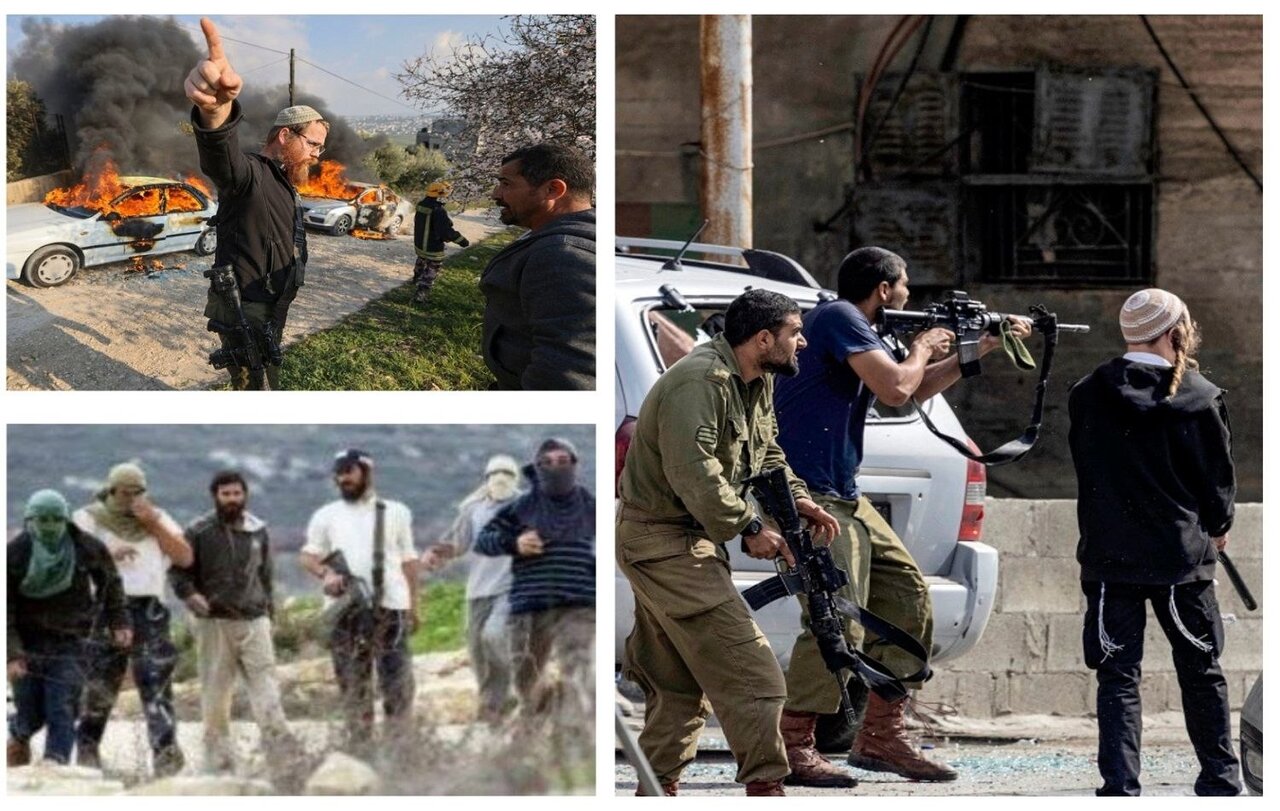
TEHRAN — The occupied West Bank is systematically being suffocated. Israeli forces and armed settler militias have fused into a single apparatus of terror, waging a relentless campaign of raids, land theft, and violence across Palestinian neighborhoods.

Backed by Washington, Tel Aviv is accelerating a coordinated project of ethnic cleansing.

Erasing institutions

The assault on Palestinian existence extends directly into international humanitarian facilities.

The Israeli military raided the Qalandiya Training Center in the Kafr Aqab neighborhood of East al-Quds (Jerusalem) on August 25.

This UNRWA facility provided educational services and vocational training to some 16,000 Palestinian refugees.

The troops forcibly expelled the staff, ordered them never to return, and initiated a complete takeover.

Far-right National Security Minister Itamar Ben-Gvir arrived to celebrate the seizure. Broadcasting his triumph from inside the facility, he declared that the United Nations agency "has no place in Jerusalem."

The Israeli regime immediately announced plans to confiscate the site and replace it with a settlement complex.

The brazen takeover amounts to a direct assault on one of the few remaining institutional lifelines for vulnerable Palestinian refugees, while openly trampling the international legal protections and diplomatic immunities that are supposed to shield UN premises from precisely this kind of unlawful intrusion.

Organized pogroms

Outside al-Quds, the violence takes a more visceral form.

Settler attacks across the West Bank have surged by 63 percent in the first seven months of this year compared to the same period in 2025.

The Palestinian Colonization and Wall Resistance Commission documented over 4,100 incidents of settler aggression.

These are regime-sanctioned pogroms. United Nations Special Rapporteur Francesca Albanese has explicitly used the term to describe the organized violence against defenseless civilians.

The cruelty is calculated. In the village of Qusra, settlers and soldiers laid a brutal two-week siege on three families, cutting off their water and trapping them inside a single home while the military commandeered another property.

In Za'atara, armed settlers beat residents in their homes, leaving three Palestinians requiring hospitalization before stealing their livestock.

In Burin, attackers cut electricity poles feeding a Palestinian family home. In Duma, Israeli troops bulldozed agricultural land and demolished tin shelters.

The objective is clear: make everyday life so unbearable that Palestinians are eventually driven to leave.

Official vandalism and medical terror

The lawlessness is driven from the highest levels of the Israeli government.

In a vivid display of regime-sponsored hatred, extremist Knesset member Zvi Sukkot recently entered the village of Madama armed with a sledgehammer.

Flanked and protected by Israeli soldiers, the lawmaker physically smashed a monument commemorating Palestinian martyrs.

His staff joined in the vandalism. The military later claimed the demolition was unauthorized, yet the footage clearly shows that troops stood by and watched a politician destroy Palestinian property for an abhorrent propaganda video.

This sadism also permeates the Israeli prison system. Palestinian medical professionals are being aggressively targeted.

Dr. Dima Amin, a 55-year-old gynecologist abducted from Ramallah, suffered a massive heart attack in custody.

Interrogators refused to loosen the tight restraints that caused her condition to deteriorate.

Even after she was rushed to a hospital for emergency cardiac catheterization, Israeli authorities immediately threw her back into a harsh interrogation center without adequate medical follow-up.

Human rights organizations report that thousands of Palestinians face deliberate starvation, torture, and lethal medical neglect in these dungeons.

A shrinking horizon under American cover

Israel is weaponizing every aspect of Palestinian life.

Crippling fuel shortages engineered by the occupation regime have been paralyzing basic civic functions.

Meanwhile, authorities are aggressively pushing the E1 settlement expansion plan, a project designed to geographically sever the West Bank in two and isolate East al-Quds (Jerusalem) entirely.

None of this happens in a vacuum. The United States provides the diplomatic shield and military hardware required to sustain this violence.

From time to time, Washington may issue hollow warnings about settler aggression. However, it has been consistently funding the very military that arms those settlers.

Israel is actively attempting to crush the spirit of Palestinian resistance and erase Palestinian identity. Yet despite the sieges, the demolished homes, and the stolen land, the Palestinian people remain rooted to their soil.