Showing posts with label Saudi King Salman. Show all posts

Sunday, December 15, 2019

Why terrorist act by Saudi Air Force officer faced media boycott!

By Mohammad Ghaderi

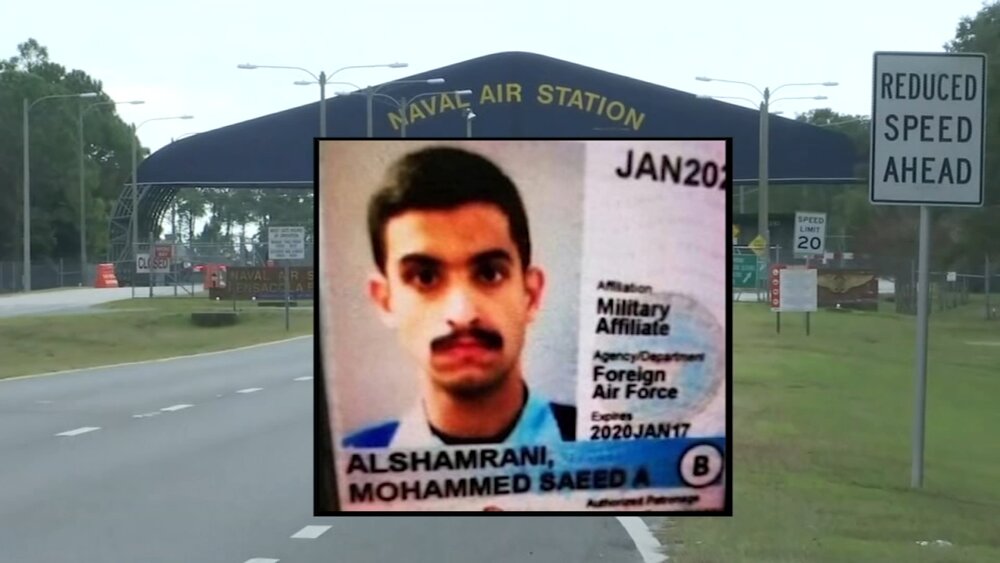
On December 5, a Saudi Air Force lieutenant, named Mohammed Saeed Alshamrani, opened fire at a U.S. naval base in Pensacola, Florida
The gunman, who began training in the U.S. in August 2017, killed three people and wounded eight. Alshamrani was shot by a deputy sheriff.
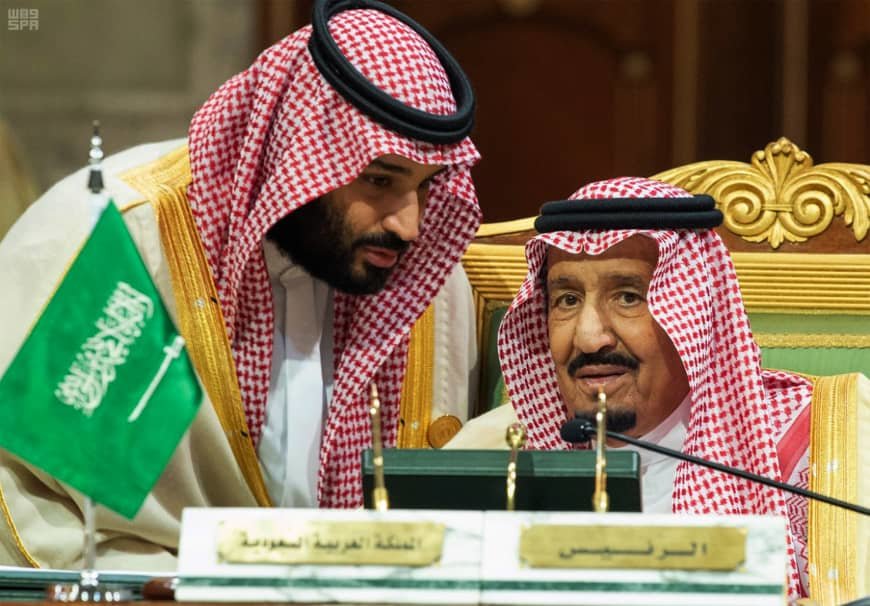
Shortly after the shooting, Saudi Arabia's King Salman contacted Trump to express regret for what had happened and sympathize with families of the victims. The Saudi king insisted that the assailant did not represent the Saudi people. 
Regarding the reaction by Saudi and U.S. officials, as well as the way media outlets are dealing with the issue, some points need to be mentioned about the incident:
a. Restricted and controlled media coverage
The Saudi and U.S. media outlets have covered the incident in a restricted and controlled manner. Interestingly, Qatari media such as Al Jazeera were not also very active in this regard. These approaches can be mainly based on two main reasons:
First, the shooting by the Saudi Air Force officer can revive and intensify U.S. cynicism and hatred of Saudi Arabia by recalling the 9/11 attacks.  Therefore, U.S. media outlets’ lack of enough attention to the issue is due to Washington’s insistence to advance the maximum pressure project against Iran. Obviously, undermining Saudi Arabia’s status could disrupt the project. 
Second, it seems that the Qatari media are indifferent to the incident, as Doha and Riyadh are gradually changing their approaches toward each other, and Qatar is seeking to avoid tension with Saudi Arabia. 
b. The way that the Saudi and U.S. officials reacted 
The shooting by the Saudi Air Force officer shows that there are some radical persons among Saudi security forces, who could pose various risks. Accordingly, neither the U.S. nor Saudi Arabia have spoken about the motive behind the shooting.
However, based on numerous indications, it can be concluded that the officer was highly inspired by Wahhabism and was affiliated with terrorist groups, such as ISIS and al-Qaeda. 
On the other hand, in a stereotypical way, the assailant may be charged with mental disorders. According to the New York Times, Alshamrani posted on his Twitter account, “I’m not against you for just being American, I don’t hate you because your freedoms, I hate you because every day you supporting, funding and committing crimes not only against Muslims but also humanity.”
Following the incident, some U.S. officials, including Senators Tim Scott and Matt Gaetz, condemned the shooting and called for a revision of foreign military training standards.
Tim Scott stated that the officer was either influenced by radical Islamic ideology or suffered from a mental disorder, so there is no reason that we provide military training for those who want to harm the U.S. 
On the other hand, some evidence suggests that the close relationship between the Riyadh officials (especially Crown Prince Mohammad bin Salman) and the White House has led to dissatisfaction of some extremist Wahhabis, as they are opposed to the general approach of the Salafi movement.
In this regard, two important events over the past few months can be noted, which were not reflected in media properly. First, a report, which was recently released on the military’s coup attempt against Mohammad bin Salman. Second, reporting news about the killing of King Salman’s personal bodyguard. It was later revealed that the bodyguard intended to assassinate the king so he was killed in a made-up clash. 
As a result, there are some reasons why the incident went somehow unnoticed by the media and the two countries’ officials. 
A. If the shooting is linked to the 9/11 incident, many Americans will be persuaded to vote against Trump in the 2020 election by reinforcing ties with Riyadh. 
B. The continuous effort by the al-Saud family to repair their inhuman image (especially after the killing of Jamal Khashoggi) in public opinion would fail. 
C. Saudi Arabia, as the main helper in the U.S. maximum pressure campaign against Iran, would be involved in a new issue. In this case, Riyadh could not fulfill its main task, which is undermining the stability and peace in the independent regional countries, including Lebanon and Iraq. 
D. The domestic disputes in the house of Saud would be unveiled, and the crown prince’s power would be undermined.  
E. The White House would be forced to take an action against Saudi Arabia because of the pressure by the U.S. public opinion and Democratic politicians in particular. 

Saturday, April 13, 2019

Is there a rift between King Salman and MBS?


It is no secret that Saudi crown prince Muhammad bin Salman is the real power wielder in the Kingdom. While his father Salman still rules as king, this is mere formality. The son controls most levers of power. Belgian Muslim, chief editor of Yemen Resistance Watch, Brecht Jonkers, has dealt with the issue in a feature titled, "Is There a Rift between King Salman and MbS?"
The influence of MbS cannot be overstated. From taking over the regime’s foreign policy, including the disastrous war against Yemen, to overhauling the economy with his Vision 2030 plan and cracking down on all forms of dissent, the crown prince is by far the most powerful man in Arabia.
The young prince and his sycophants project him as a “reformer” who wants to “open up” Arabia to foreign influences. In reality, this has meant completely discarding whatever shred of Islamic identity the monarchy still had, in favour of US-style casino capitalism and liberalism.
From plans to building a “Saudi Las Vegas” in the country that has the holy cities of Mecca and Medina, to utterly bizarre social media posts detailing MbS’ nightly Hollywood parties that involve heavy liquor, and brazenly walking on top of Ka'ba, thus disrespecting the holiest of Islamic sanctuaries in the world, it should be clear by now that all pretense of Islamic legitimacy of the Saudi political system is long gone.
One urgent question remains: how is it possible that a prince, even a crown prince, can so utterly run a kingdom into ruin without anyone stopping him?
True, Ale Saud are notoriously corrupt and incompetent. The scholars, even the Wahhabi pseudo-scholars, have had their wings clipped. People like Salman al- ‘Awdah and ‘Awad al-Qarni have been jailed on flimsy pretexts, and instead, the monarchy has put handpicked puppets in charge of religious institutions. Both Grand Mufti ‘Abd al- ‘Aziz Al al-Sheikh and Secretary-General of the Muslim World League Muhammad al-'Isa have openly declared their love for Zionism and are fierce defenders of the anti-Islamic absolute monarchy holding sway over the Hijaz.
This leaves only one man who can reign MbS in: King Salman. In August 2018, it became clear that the king had blocked the planned privatization of Saudi Aramco. This idea, officially promoted as a “public listing” by the crown prince’s Vision 2030 plan, was the cornerstone of MbS’ planned economic policy. Getting rid of the most important state-owned property and throwing it on the stock market for his business contacts to “invest in,” MbS would open the door to a full neoliberal economic system.
In the same summer of 2018, the monarchy also officially stated that Riyadh will continue to recognize East al-Quds as the capital of Palestine: the total opposite of Donald Trump’s plan, which was widely reported to have been accepted by Muhammad bin Salman. The fact that the ailing king reportedly stepped in personally has fed many a rumour that he is trying to reign in his son, possibly even rethinking his appointment of MbS as heir to the throne.
The British daily, the Guardian, went even further, and on March 5 reported on rumours of a rift between father and son. Citing sudden changes in the king’s personal bodyguard during a visit to Egypt, the Guardian hinted at the possibility that the king’s entourage got rid of guards who reported directly to MbS. Added to this was the fact that MbS was reportedly not present to welcome his father home upon his arrival at Riyadh airport, that the British daily interpreted as a possible snub by the monarch. The exact sources and reliability of this report remain unclear, however.
While precise information on the king and his entourage is extremely hard to come by, there is one major source that is widely considered as one of the most trustworthy ones relating to the goings-on among Ale Saud: a whistleblower known only as “Mujtahidd.”
Mujtahidd is the Twitter handle of an anonymous activist who has created great furore as a reliable source of information. While it is unknown who he or she is, or how he has access to such private inside information on the secretive dealings of Ale Saud, Mujtahidd has time and again proven reliable. It was Mujtahidd who originally predicted that the then relatively unknown Muhammad bin Salman would become crown prince. This Saudi whistleblower with apparent access to Saudi Arabia’s most hidden secrets, has vehemently denied that there is any significant conflict between the king and his son, mostly due to the fact that the king is incapable of any independent decision-making.
According to revelations by Mujtahidd in February, King Salman is barely mobile anymore, and is transported inside the palace by a golf cart. The inside source insists that Salman bin Abd al-'Aziz has been diagnosed with Alzheimer’s disease, and that his condition is rapidly deteriorating.
Mujtahidd provides a plethora of alleged events in the royal palace. The king reportedly spends much of his days watching dance and song performances, organized by MbS himself to keep his father distracted from politics. Aside from this, the whistleblower reports that the king plays copious amounts of balut, a popular card game, usually with the same few game partners that have all been handpicked by MbS.
All access to the king in his private residence in the royal palace is off limits unless expressly permitted by the crown prince, even for senior members of Ale Saud. Mujtahidd furthermore reports that Salman is administered large doses of pain-killers and sleep medication. Whenever the king has a moment of clarity and starts to ask questions pertaining to the country’s management, the medicine doses are allegedly in-creased in order to pacify him.
In response to the Guardian article, Mujtahidd released a new statement in March. In it, he stated that King Salman is “mentally dead” and has no knowledge of anything going on in the Kingdom as of late. According to the whistleblower, Salman doesn’t know that Princess Rima bint Bandar bin Sultan has been appointed ambassador to the United States, a major decision made by MbS during his father’s visit to Egypt.
“King Salman cannot contribute to decision-making since he is mentally dead and cannot remember anything,” Mujtahidd stated bluntly. According to the anonymous activist, the rumours that a rift is growing between Salman and his son are actually fed by none other than MbS himself. The crown prince wants to make it seem like his father is still in charge, in order to dispel reports that he has already all but taken over power in Riyadh and has shoved his father aside.
In the words of Mujtahidd, “The report by the Guardian on disagreements between King Salman and MbS is nothing but a trick by the crown prince to show that the king is mentally sound, in a bid to defend himself from his local rivals.”
While a brewing conflict between father and son may be an attractive theory to many, there seems to be little factual basis to give much credence to these rumours at this point. Muhammad bin Salman is likely to be determining the Saudi course of action for the foreseeable future.

Wednesday, January 02, 2019

Mohammed bin Salman's awful year

By Bruce Riedel
Saudi Arabian Crown Prince Mohammed bin Salman has had a tumultuous 2018. He has gone from being hailed a revolutionary who would bring a Saudi Arab Spring to being censured unanimously by the U.S. Senate for the premeditated murder of Jamal Khashoggi. The 33-year-old crown prince is now increasingly regarded as a dangerous and reckless despot implicated in war crimes and mass starvation. The Congress and media are likely to be more hostile in 2019. It has been a stunning fall from grace.
The crown prince began the year with highly touted visits to the United Kingdom and the United States. Empowered by an expensive lobbying campaign and public relations machine, the visits attracted enormous attention. In England he was received by Queen Elizabeth II and the prime minister. The UK provides about one-third of the Royal Saudi Air Force’s inventory of aircraft and there was talk of a big new arms deal.
The tour of the United States was almost three weeks long in March and April. At the White House the president welcomed the prince with big photos of America’s latest arms deals and urged him to buy more American weapons. His trip took him to Cambridge, Wall Street, Seattle, Hollywood, Silicon Valley and Houston. Oprah Winfrey, Michael Bloomberg, Bill Clinton and a host of other celebrities had their picture taken with the prince. In Texas he met with the two Bush presidents. Extravagant deals were promised to invest in Saudi Vision 2030, the prince’s plan to reduce Saudi dependence on oil and reform the economy and society. Only a handful of critics urged caution in embracing the impulsive prince.
The crown prince’s survival is solely in the hands of his father. The king has dismissed two crown princes in his four-year reign but seems determined to stand by his son. So the kingdom may be burdened with a pariah for years to come. This will be the year it all went bad for the crown prince and the kingdom.The crown prince’s appeal was in part his much-needed program of socio-economic change highlighted by giving women driver's licenses. But a big piece was the promise that he was going to be softer on Israel than the traditional Saudi posture. In particular the Saudi prince was said to favor Jared Kushner’s much-discussed “deal of the century” to resolve the Israeli-Palestinian conflict. The evidence for this was always slim.
In any case, King Salman bin Abdul-Aziz Al Saud quickly made clear that he was not on board for any alterations of the Saudi positions regarding Palestinian rights, the two-state solution and especially the status of East Jerusalem. In virtually every public appearance in 2018, the king has been clear that the Saudi priority is Palestinian statehood with its capital in Jerusalem. The recent Saudi announcement of a consortium of Red Sea states to promote security in the vital shipping lanes notably did not include Israel. The covert contacts between Israel and Saudi Arabia have, not surprisingly, cooled since Khashoggi’s assassination, according to the media.
Yemen got little attention during the crown prince’s parade from coast to coast, but behind the scenes opposition to the Saudi coalition’s war was building in the Senate. Led by Sen. Chris Murphy, D-Conn., the opposition sought an end to America’s support for the Saudi war effort. The United Nations says 16 million Yemenis are now at risk of malnutrition. It is the worst humanitarian catastrophe in the world. It’s also Mohammed's signature policy initiative.
If the war is not headed for a comprehensive cease-fire by early January, the Hill is likely to take further action to sanction the crown prince and end American involvement in his war. The president will try to defend his favorite Saudi, but Trump's own mounting legal difficulties will make him a weak defender.
The crown prince’s reputation is toxic. There is no simple way to restore it. More likely is further malfeasance as he gropes with his troubles. Canada, another victim of his temper tantrums in 2018, is considering canceling a $15 billion weapons sale to the Saudi Arabian National Guard. If Ottawa does so, it will be the largest arms deal ever canceled with the kingdom.
The resolutions on the Hill and the debate in Ottawa are primarily about symbols. But the symbolism is powerful. The crown prince’s survival is solely in the hands of his father. The king has dismissed two crown princes in his four-year reign but seems determined to stand by his son. So the kingdom may be burdened with a pariah for years to come. This will be the year it all went bad for the crown prince and the kingdom.
The consequences will be long-standing. The American security blanket has been the kingdom’s crucial alliance for 75 years. It has saved it from Nasserism, the Soviets, Saddam Hussein. The Saudis need Washington much more than Washington needs Saudi Arabia and its oil.
The funeral of former President George H.W. Bush offered another poignant symbol. The ranking Arab leader in attendance was King Abdullah II of Jordan. His father, King Hussein, was vilified by the Saudis in 1990 and 1991 for his stance on Iraq’s invasion of Kuwait. But it was Abdullah at 41’s funeral, not the crown prince.
(Source: Al Monitor)

Tuesday, December 11, 2018

Shifting Middle Eastern sands spotlight diverging US-Saudi interests

by Dr James M Dorsey
A series of Gulf and Middle East-related developments suggest that resolving some of the Middle East’s most debilitating and devastating crises while ensuring that efforts to pressure Iran do not perpetuate the mayhem may be easier said than done. They also suggest that the same is true for keeping US and Saudi interests aligned.
Optimists garner hope from the fact that the US Senate may censor Saudi crown prince Mohammed bin Salman for the October 2 killing of journalist Jamal Khashoggi in Istanbul; the positive start of Yemeni peace talks in Sweden with an agreement to exchange prisoners, Saudi Arabia’s invitation to Qatar to attend an October 9 Gulf Cooperation Council (GCC) summit in Riyadh, and a decision by the Organization of Oil Exporting Countries (OPEC) to cut production.
That optimism, however, may not be borne out by facts on the ground and analysis of developments that are likely to produce at best motion rather than movement. In fact, more fundamentally, what many of the developments suggest is an unacknowledged progressive shift in the region’s alliances stemming in part from the fact that the bandwidth of shared US-Saudi interests is narrowing.
There is no indication that, even if Qatari emir Sheikh Tamim bin Hamad Al Thani decides to accept an invitation by Saudi king Salman to attend the GCC summit rather than send a lower level delegation or not attend at all, either the kingdom or the United Arab Emirates, the main drivers behind the 17-month old economic and diplomatic boycott of the Gulf state, are open to a face-saving solution despite US pressure to end to the rift.
Signalling that the invitation and an earlier comment by Prince Mohammed that “despite the differences we have, (Qatar) has a great economy and will be doing a lot in the next five years” do not indicate a potential policy shift, UAE Minister of State for Foreign Affairs Anwar Gargash insisted that the GCC remained strong despite the rift. “The political crisis will end when the cause behind it ends and that is Qatar’s support of extremism and its interference in the stability of the region.,” Mr. Gargash said, reiterating long-standing Saudi-UAE allegations.
Similarly, United Nations-sponsored peace talks in Sweden convened with the help of the United States may at best result in alleviating the suffering of millions as a result of the almost four-year old Saudi-UAE military intervention in Yemen but are unlikely to ensure that a stable resolution of the conflict is achievable without a lowering of tension between Saudi Arabia and Iran. Even humanitarian relief remains in question with the parties in Sweden unable to agree on a reopening of Sana’a airport to facilitate the flow of aid.
More realistically, with the Trump administration, backed by Saudi Arabia and Israel, determined to cripple Iran economically in a bid to force it to alter its regional policies, if not change the regime in Tehran, chances are the Yemeni conflict will be perpetuated rather than resolved.
To Yemen’s detriment, Iran is emerging as one of the foremost remaining shared US-Saudi interests as the two countries struggle to manage their relationship in the wake of Mr. Khashoggi’s killing. That struggle is evident with the kingdom’s Washington backers divided between erstwhile backers-turned-vehement critics like Republican senator Graham Lindsey and hardline supporters such as national security advisor John Bolton. The jury is out on who will emerge on top in the Washington debate.
The risks of the Saud-Iranian rivalry spinning out of control possibly with the support of hardliners like Mr. Bolton were evident in this week’s suicide bombing in the Iranian port of Chabahar, an Indian-backed project granted a waiver from US sanctions against the Islamic republic to counter influence of China that support the nearby Pakistani port of Gwadar.
Iranian officials, including Foreign Minister Mohammad Javad Zarif and Revolutionary Guards spokesman Brigadier General Ramadan Sharif suggested without providing evidence that Saudi Arabia was complicit in the attack that targeted the city’s police headquarters, killing two people and wounding 40 others.
Iran’s semi-official Tasnim news agency, believed to be close to the Guards, said the attack was the work of Ansar al-Furqan, an Iranian Sunni jihadi group that Iran claims enjoys Saudi backing.
Iran’s allegation of Saudi complicity is partly grounded in the fact that a Saudi thinktank linked to Prince Mohammed last year advocated fuelling an insurgency in the Iranian province of Sistan and Baluchistan that incudes Chabahar in a bid to thwart the port development while Mr. Bolton before becoming US President Donald J. Trump’s advisor called for US support of ethnic minorities in Iran.
In a bid to create building blocks for the fuelling of ethnic insurgencies in Iran, Pakistani militants have said that Saudi Arabia had in recent years poured money into militant anti-Iranian, anti-Shiite madrassas or religious seminaries in the Pakistani province of Balochistan that borders on Sistan and Baluchistan.
The divergence of US-Saudi interests, agreement on Iran notwithstanding, was on display in this week’s defeat of a US effort to get the UN General Assembly to condemn Hamas, the Islamist group that controls the Gaza Strip. Saudi Arabia, despite the kingdom’s denunciation of Hamas as a terrorist organization and its demand that Qatar halt support of it, voted against the resolution.
The vote suggested that Mr. Trump may be hoping in vain for Saudi backing of his as yet undisclosed plan to resolve the Israeli-Palestinian dispute that is believed to be slanted towards Israel’s position.
Saudi ambassador to the UN Abdallah Al-Mouallimi said the defeated UN resolution would “undermine the two-state solution which we aspire to” and divert attention from Israel’s occupation, settlement activities and “blockade” of territories occupied during the 1967 Middle East war.
Saudi Arabia’s changing status and the divergence of longer-term US-Saudi interests was also evident in this week’s OPEC meeting in Vienna.
To get an OPEC deal on production levels, the kingdom, once the oil market’s dominant swing producer, needed an agreement with non-OPEC member Russia on production levels as well as Russian assistance in managing Iranian resistance, suggesting
The agreement, moreover, had to balance Mr. Trump’s frequently tweeted demand for lower prices, and the kingdom’s need for higher ones to fund its budgetary requirements and Prince Mohammed’s ambitious economic reforms and demonstrate that the Khashoggi affair had not made it more vulnerable to US pressure.
With some of Mr. Trump’s ambassadorial political appointees expressing support for populist, nationalist and authoritarian leaders and political groups, the fact that some of the president’s closest Congressional allies back the anti-Saudi resolution illustrates that there are red lines that a significant number of the president’s supporters are not willing to cross.
All told, recent developments in the Middle East put a spotlight on the changing nature of a key US relationship in the Middle East that could have far-reaching consequences over the middle and long-term. It is a change that is part of a larger, global shift in US priorities and alliances that is likely to outlive Mr. Trump’s term(s) in office.
Dr. James M. Dorsey is a senior fellow at the S. Rajaratnam School of International Studies, co-director of the University of Würzburg’s Institute for Fan Culture, and co-host of the New Books in Middle Eastern Studies podcast. James is the author of The Turbulent World of Middle East Soccer blog, a book with the same title and a co-authored volume, Comparative Political Transitions between Southeast Asia and the Middle East and North Africa as well as Shifting Sands, Essays on Sports and Politics in the Middle East and North Africa and just published China and the Middle East: Venturing into the Maelstrom

Wednesday, October 17, 2018

U.S. and other Western states might remove bin Salman from Crown Prince: Hunter

By Javad Heirannia

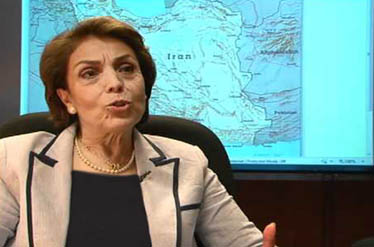
TEHRAN - Shireen Tahmaasb Hunter, a professor of political science at Georgetown University, tells the Tehran Times that that the Khashoggi issue is very important and highly embarrassing to America that has so closely embraced Bin Salman. 
“If America does not do something serious about Khashoggi, its credibility on human rights issues would further suffer,” Hunter tells the Tehran Times.
She adds that before the Khashoggi affair some Western observers had grown critical of Bin Salman. Some of his policies, including his quarrel with Qatar, has created dilemmas for Western states. Therefore, it is conceivable that America and other Western states might ask King Salman to reduce his powers or even remove him from the position of Crown Prince.
Following is the text the interview:
Q: Due to the relations between the West and the United States in particular with Saudi Arabia, the subject of Jamal khashoggi has become widespread. Usually, in the case of human rights violations, Western countries condoned Saudi Arabia because of Saudi arms purchases and guarantying oil sales by Saudies. But in this case it is different. What are the reasons?
A: The case of Jamal Khashoggi is special because he was reportedly murdered at the Saudi Consulate in Istanbul on the order of the Crown prince himself. This act is different form limiting the journalist’s freedom of speech or even imprisoning them. This is much more serious and thus more embarrassing to Riyadh's Western allies. Moreover, Khashoggi was very prominent and was a columnist for the Washington Post. Therefore, the media in America sees it as a direct insult to them. Also, because in the past the Washington Post was very complimentary towards Bin Salman, they feel more pressure to show their impartiality and thus have been demanding a serious response to Khashoggi's murder. 
Q: Some believe that as Saudi Arabia did not lower the price of oil at request of Trump, the United States is putting pressure on Saudi Arabia through khashoggi subject. What is your opinion?
A: I don't believe that Saudi Arabia's unwillingness or inability to lower oil prices has had an impact on reaction to Khashoggi murder. The Khashoggi issue is very important and highly embarrassing to America that has so closely embraced Bin Salman. If America does not do something serious about Khashoggi, its credibility on human rights issues would further suffer.
Q: Some Western countries, including the United States, have threatened Saudi Arabia with sanctions. In contrast, Saudi Arabia has spoken of an appropriate response in the event of a sanction. How far do you think the opposition with Saudi Arabia will go?
A: In theory, Saudi Arabia can retaliate against America and other Western states by curtailing its oil production or cancelling its arms purchases. In reality, however, Riyadh's ability is limited as the Kingdom relies on the West for its security. I think it is more likely that some explanation would be found that would clear Bin Salman of the charge of direct involvement in the affair. I believe these Saudi statements are bravado.
Q: What effects will have the subject of Jamal khashoggi, on the future power of Mohammad bin Salman?
A: Even before the Khashoggi affair some Western observers had grown critical of Bin Salman. Some of his policies, including his quarrel with Qatar, has created dilemmas for Western states. Therefore, it is conceivable that America and other Western states might ask King Salman to reduce his powers or even remove him from the position of Crown Prince. At any rate, the Khashoggi affair is certain to complicate succession issues in Saudi Arabia.

Friday, October 12, 2018

‘Pay up or Else…’ Trump Tells the Saudis

Crescent International


Donald Trump is rude and crude. If he is not molesting women that he says he can get away with because he is rich and powerful, he is threatening regimes to pay up.
His favorite whipping boy is the Bani Saud clan, or more precisely, the Salmans that currently occupy almost all the levers of power in the medieval kingdom.
Not satisfied with the $110 billion arms contract that was agreed during his visit to the kingdom in May 2017, Trump wants more. In fact, that contract was expanded to $350 billion. The moron-in-chief in the White House said the US will sell “beautiful weapons” to Saudi Arabia.
His latest extortion demand came during a campaign rally in West Virginia on September 29 when Trump said he had “complained” that Washington was not getting what it should from Saudi Arabia.
During a phone conversation with Saudi King Salman, Trump said he had told the aged monarch that Riyadh had “trillions of dollars” and could pay its military bills.
Last March, when crown prince Muhammad bin Salman visited the US, Trump had said the Saudis have billions of dollars and they will give them to us. “We know that and they know that,” said Trump as Bin Salman smiled sheepishly.
Now Trump has upped the ante. He says the Saudis have “trillions of dollars”. Whether they do or not, he seems determined to milk them.
“I love Saudi Arabia. They are great, King Salman, I spoke with him this morning,” said Trump at the West Virginia rally on Saturday.
“I said, king, you have got trillions of dollars. Without us, who knows what’s going to happen... With us they are totally safe. But we don’t get what we should be getting,” Trump revealed at yesterday’s rally.
So Trump was telling the Saudis the US has a share in the kingdom’s trillions of dollars of wealth. Nice way to put it. This is a play on Dick Cheney’s infamous claim that Iraq has “our oil under their soil”, before the US launched an illegal war on that hapless country in March 2003.
Trump does not even bother to couch his extortionist demands in polite language. The rationale he advanced for his demand for more money is that the US is subsiding the Saudi military.
“We are subsidizing their military. I said let me ask you a question. Why are we subsidizing the military — it’s one thing if a country is in deep trouble and in danger,” he noted. “I said ‘Saudi Arabia, you are rich, you have got to pay for your military. You have got to pay for your military, sorry’.”
How is the US subsiding the Saudi military Trump did not explain. He feels he does not have to explain anything as far as the Saudis are concerned. They must do as they are told.
During the visit of French President Emmanuel Macron to Washington earlier this year, Trump had blurted out that if the US stopped propping up the Saudi regime, it would collapse in one week.
When the man has so much contempt for the Saudis, it shows what a pathetic bunch the Saudis are.
But slaves cannot expect to be treated any differently.