Showing posts with label Mohammad Marandi. Show all posts

Monday, September 16, 2019

‘With or without Bolton’ that is not the question

By Haniyeh Sadat Jafariyeh
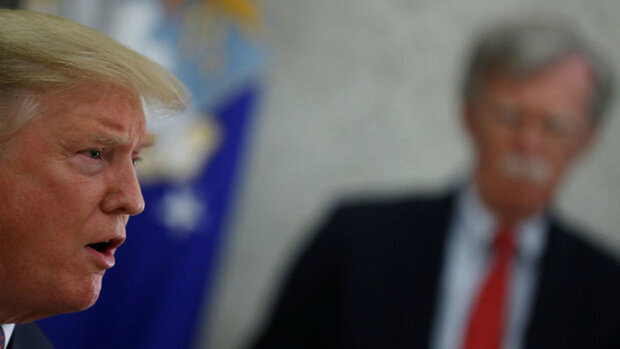
TEHRAN – The US National Security Adviser, John Bolton, was forced out from the White House last Tuesday due to, as believed, his different stances from those of Trump on issues such as the US foreign policies towards specific countries including Iran.
Bolton himself said in a tweet that he had offered to resign Monday night while a few hours later Trump announced that he fired Bolton after a string of disagreements over how the US should handle North Korea, Afghanistan and Iran.
His downfall has been translated in many different ways, so far, regarding its influence on US internal issues and America’s worldwide ties.
Some believe, he had been elected by Trump to make his Presidential campaign promises and approaching the second round of elections, Trump, who is dipping to 39 percent approval in a new CNN/SSRS poll (only 36 percent of those asked said he deserved reelection), is turning his face towards new managerial strategies to feel more confident about his second tenure in office.
Bolton is not the first cabinet member leaving under Trump. He, for sure, was a big voice in Trump’s ear but his opposing voice made the US President angry.
When it comes to foreign policy issues, absence of Bolton, a man of hawkish impulses and a fan of military intervention, in the White House, as some expect, could be Trump’s green light for a holding talks with old adversaries to release global tensions besides taking a less tough stance towards them.  
About Iran, Bolton, is said to have different opinions from Trump and Pompeo. ‘He believed in ‘Regime Change’ and military attack to the Islamic country and the US without him would be a more flexible one towards Iran,’ some expected naively.
Iranian officials have announced that there is no room for talks between Tehran and Washington with or without Bolton. Calling ouster of Bolton US’ ‘internal issue’, they rejected any idea of a meeting between Trump and Rouhani underscoring that as long as the US’s unjust sanctions and economic terrorism are being imposed on Iranian people, there is no possibility of talks and negotiations. 'The procedural changes in the US ruling body are not going to affect Iran’s perception of the US anti-Iran actions and policies,' Iranian officials reiterate.
Any optimism about Washington on possible changes in its policy toward Iran after Bolton was killed off when the US Treasury Secretary Steven Mnuchin said on Thursday that the US is still pursuing its campaign of "maximum pressure" against Iran, even after Trump parted ways with his hard-line national security adviser because the White House believes in it as a practical tool against the Islamic Republic.
Sanctions against Iran have been effective and could help pressure Iran and its leaders to negotiate with Trump, Mnuchin added.
Another proof for the US’ continuing tough stance towards Iran was provided when Trump admitted on Thursday that Bolton was not of very difference from him. “Frankly, he wanted to do things not necessarily tougher than me,” later adding that Bolton “wasn't in line with what we were doing, and actually, in some cases, he thought it was too tough what we were doing.”
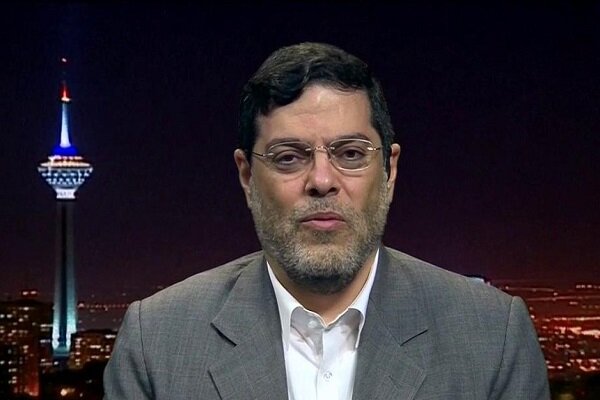
In an interview with Mehr news agency, Mohammad Marandi, a professor at University of Tehran, shed light on the issue.
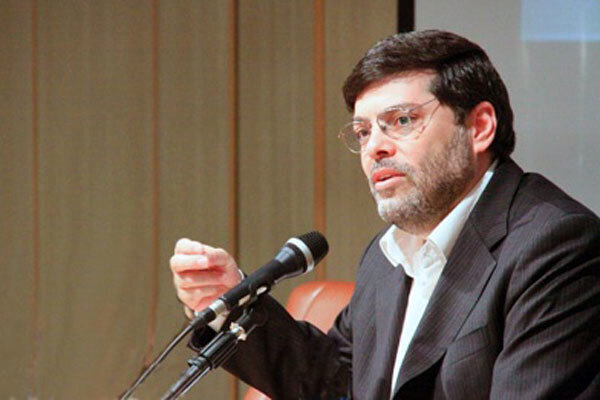
How can Trump's decision about Bolton be translated? regarding US foreign policies in general and about Iran in particular.
Obviously, Trump does not like rivals that is why that is so far, Pompeo, who is extremely obedient has had a better fate than that of Bolton. But I do not think that is going to have any impact on the policy of the US towards Iran. The only way for a major change to take place for the US is to recognize its obligations and abide by them within the framework of the JCPOA.
Is it a green light for holding talks with Iran?
Definitely, not! The mere way for the US is to end its maximum pressure campaign, its economic terrorism, and warfare against Iranian women and children and to compensate for the damages done. Only after the sanctions are fully lifted and the nuclear deal is fully implemented for a period of time can be contemplated such a situation.
The US is continuing its maximum pressure, while Trump is open for negotiations. What is your idea about that?
Well, that is exactly the problem. The US wants to be able to violate its commitments and then get something in return and that would be the most foolish thing for Iran to accept. The US should not be benefitting from hurting people and that would be both appeasement and it would only make things worse because it will encourage the regime in Washington to use the same tactics every time, they do not get what they want at the negotiating table with Iran. And the very fact that we have seen these constant changes in the language of the White House and its different voices and all this confusion in Washington especially the White House is itself a reason why we should not engage with such a regime that is not reliable, is inconsistent, and would use suffering to gain leverage.
What will be Iran's stance towards US? Is resistance the only option for the Islamic Republic? The US may take the upper hand persuading Europeans that it has taken a step forward for releasing tensions with Iran but it is Iran who escapes the negotiation table.
No, it is not Iran who has left the negotiation table. It is the US who has left the table. The US was at the negotiation table and was a part of P5+1, even under Trump his First Secretary State was negotiating with Iranians so they tore the agreement and left the table, tries to impose their will on other people so that they would not deal with Iran, such as the Europeans. The US is responsible for this situation. Simply removing one person from power like Bolton does not mean anything. It is not a concession. It is nothing. Iran does not even want concessions. Iran wants the US to abide by its commitments and obligations and until it does not so, the US will remain an unreliable regime for Iran. So, nothing has changed. The only thing that has changed is that the world sees more clearly how the US maximum pressure campaign has failed but Iranian resistance will continue until the US backs down and begins to behave reasonably and lawfully and as a normal country.
Can we say Iran has had a role in Trump's decision?
It is possible to say that Afghanistan, Iran, Venezuela, Yemen and also regarding some other issues, North Korea besides China and Russia had to do with Bolton’s downfall but at the end of the day I think Trump wants to be seen as the person in charge and Bolton does not make that easy for Trump.
Also, Bolton is not a person who is obedient to Trump and that has more to do than anything else, he concluded.
In practice, nothing has changed between Iran and the US after Bolton. The US persists in its maximum pressure policy against the Islamic Republic while Iran insists on practicality of 'resistance'. JCPOA, hammered to open gateways of cooperation between Iran and P5+1 after years of hard negotiations, may start to crumble in case its sides withdrew from fulfilling their commitments to it.

Saturday, July 20, 2019

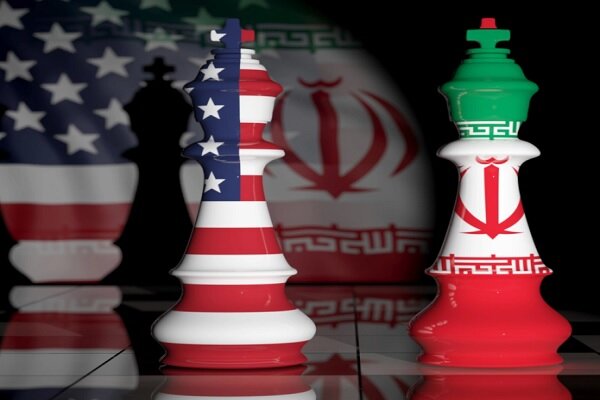
Trump enacting repetitive scenario against Iran

By Haniyeh Sadat Jafariyeh

Trump enacting repetitive scenario against Iran

TEHRAN, Jul. 20 (MNA) – The behavioral method that the US President is applying against Iran resembles those his country had previously employed for other countries; most recent of which were Iraq and Libya.
The American method includes leading propaganda and psychological war against an intended country, putting maximum pressure on it via imposing economic sanctions to make the country agitate internally, making threats to wage war on it, sowing internal disagreements among the country’s nation to shatter its unity, urging disarmament of the country and finally attacking it or forcing its leaders to sit at negotiation table by making promises with no guarantees to be fulfilled.
The US could topple down Saddam Hussein in 2003, after practicing a psychological warfare and attacked the country under the name of removing a regime that developed and used weapons of mass destruction, harbored and supported terrorists, committed outrageous human rights abuses, and defied the just demands of the United Nations and the world.
The story repeated itself when the US kept on applying pressure on Libyan leader Colonel Gaddafi to step him down from power. The US believed Gaddafi had funded terror operations against America. The US government cut ties with the regime, and enacted sanctions against senior regime members. The US, along with several European and Arab nations, then began to call for the UN to authorize military intervention in the conflict. When the Libyan civil war broke out in 2011, the US took part in a military intervention in the conflict, aiding anti-Gaddafi rebels with air strikes against the Libyan Army. The US plan bore fruit eventually.
Now, a similar scenario is constructed against Iran.
But will the scenario work as it did previously?
More than a year ago, the US President pulled out from Iran’s nuclear deal, known as the JCPOA, calling it the worst deal America has ever made. He started an economic war against Iran hoping to oblige Iranian officials start a new round of talks with the US to hammer a new deal. The US president imposed the toughest financial embargo ever in the history to have Iran’s economy suffocate. Not having what he expected from his JCPOA withdrawal and draconian sanctions, Trump started claiming that Iran has violated JCPOA covertly enriching uranium. In his latest move, he also sanctioned top Iranian officials including Iranian FM and the Leader of the Islamic Revolution. Trump also introduced Iran as the biggest threat to the security of the Middle East and the Persian Gulf. He sought to make his allies accompany him with the idea and also sent troops to the region. 
Trump has announced repeatedly that he does not seek war with Iran but thanks to his deeds and the repeated American scenario, and the recent created tensions in the Persian Gulf, the risk of what some call ‘an accidental war’ is high.
As Dr. Mohammad Marandi, Political analyst and the Head of American Studies Department at the University of Tehran, told Mehr news agency in an interview, “the sanctions imposed on Iran are unprecedented. They are more severe than what the US had imposed on Iraq or Libya. Of course, ultimately the US attacked both Iraq and Libya and destroyed the two countries. But in the case of Iran, the country is much stronger therefore attacking it would be very painful for the US. It is not a war that they can really win.”
Dr. Mohammad Marandi
“Iran is a larger country with a larger population with powerful armed forces plus powerful regional allies including Iraq, Syria and Lebanon, Yemen and Afghanistan. Turkey is moving closer to Iran as well as Qatar and Oman,” he noted.
“On the other hand, Iranian economy is much larger than that of Iraq and Libya. It is much diverse. It has a large agricultural, industrial, and mining sector. The country has 15 neighbors and that is very difficult for the US to block Iran’s trade with them. They are waging economic warfare against Iran or economic terrorism as some say but Iran has many advantages. In addition, rivals to the US, China and Russia, are moving closer to Iran since the US imposed sanctions on Russians and due to its economic war with the Chinese,” he added.
Regarding Iran’s reaction to US measures, it should be said that the country has been patient, reasonable but defiant to its definite rights.
After almost a year of patience since US pulling out from the nuclear deal and European’s inactiveness, Iran started reduction of it's JCPOA commitments surpassing 3.6 percent uranium enrichment and having its stockpile surpassing 300 kilograms. The job was done to remind the world that Iran is not the only signatory to the deal and to urge other parties to comply with their JCPOA obligations. “If we see a reciprocal commitment on the other side, then JCPOA is a document that is worthy of resuscitating and we will do our best to keep it afloat,” Iranian FM Mohamamd Javad Zarif said. It is worth noting that JCPOA signatories have asserted that they do not see Iran's reductions in commitments as major non-compliance.
Regarding Iran's economic status in the past year and despite the great shock it suffered from, the country's economy seems to be reviving. Some even are talking about reduction in inflation rate and growth in domestic production. Under the toughest sanctions ever, Iran has been learning how to economically survive, some confirm.
“Although last year was difficult to Iran but the country has been able to manage it and as things are stabilized now, the economy will start to bounce back slowly. This does not mean that the situation is not difficult for Iranians. It definitely is. But is obviously much better than what the Americans were hoping,” Dr. Marandi said.
Europe’s stance towards Iran-US standoff, European dilemma
The role of the Europeans, their stance towards Iran-US relations and their own position towards Iran and the JCPOA, is a matter of attention.
Europeans have repeatedly expressed concern about the tensions between Iran and the US. They have expressed worry about Iran’s scaling down of its JCPOA obligations. The E3 established a financial vehicle to ease Iran-EU trade, known as INSTEX. But what Iran has gained from its European relations after US withdrawal from the nuclear deal, has always been criticized by Iranian officials.
Due to their economic dependence or political subordination to the US, Europeans are facing a dilemma in their Iranian relations. As Zarif said, “if Europe wants to pursue its own interests, it has to follow a different path. I don’t think they have gathered the necessary political will in order to pay the price for that independence [from the US]. It’s not going to be free of charge.”
Standing in the same track with Zarif, Dr. Marandi said “Europe is obviously subordinate to the US. It does want to have some space in independence. But it so far, has not shown the will. The Europeans are in complete violation of the JCPOA although they have not left it. They claim that there is little that they can do and Iranians do not accept that argument.”
“Iranians say that the EU has collected a larger economy of than of the US besides a larger population, which is enormous in average. On the other hand, the Russians and Chinese are resisting the US bullying over Iran. So, it is not really an acceptable argument by the Europeans to justify doing nothing. Europeans could work along with the Chinese and the Russians. The US cannot impose sanctions on all these countries and powers,” Dr. Marandi said.
“Thus, Iranians believe part of the problem with Europe is that they are weak with no backbone, do not want to get into Trump’s bad book and do not want to pay a price for implementing the nuclear deal with Iran. They, sort of, want to have their cake and eat it, too,” he believed.
Future of the JCPOA
With the US out of the JCPOA and Iran stepping back from its commitments, the third part, i.e. the Europe, seems to have the power to determine the final destination for the nuclear deal. The part, whose strength to preserve the deal is under question.
According to Dr. Marandi, “future of the JCPOA, mainly depends on Europe more than anything else. They have a lot of commitments that they must carry out according to the deal and at the moment, they are violating all of them.”
“Iran has been abiding by the nuclear deal for over a year on its own even though the Europeans were violating it and the Americans had left it. Iranians have done more than enough. They have shown an extraordinary great deal of good will and patience. If the Europeans do not begin to implement the nuclear deal, Iranians will gradually decrease their commitments and will ultimately leave it. Iran-EU relationship depends largely on Europe abiding by its commitments. If it fulfills its commitments the relationship will improve and if it does not, it will be the opposite,” the expert said.
“The same is true for Iran-US relations. The US has walked away from the nuclear deal and the negotiating table. The only remaining way for the US is to abide the JCPOA and stop hindering its implementation.  If they do so, they can come back to the negotiating table,” he added.
INSTEX an empty vessel
INSTEX, the European mechanism to enable Iran to keep doing business under US sanctions, has become operational nominally and not in practice. To the present moment, INSTEX has been the most done by Europeans for Iran. Even in case of its full implementation, as some express, it cannot satisfy all of Iran's needs since economic needs of the country go far beyond what INSTEX can offer.
Iran calls the vehicle ‘insufficient’, pinning no hope to it. Iranian officials have repeatedly called for Europeans to purchase our oil or open credit lines for Iran.
“INSTEX is an empty vessel. It really is not important unless the Europeans carry out their JCPOA commitments. Europeans need Iranian oil especially regarding that some of their refineries are designed for Iranian oil. But Americans are bullying them to refrain from purchasing Iran’s oil. If Europeans don not purchase Iranian oil, Iranian businesses cannot be active in Europe and European countries cannot work in Iran out of the fear of the US. Then what is INSTEX for if there is no money in it? It is just an empty vessel. If other EU countries joined the financial instrument, it could be a good thing but only in case the Europeans carry out their JCPOA commitments. They have to start sanding up to the US to protect their companies, businesses and their own citizens, purchase Iranian oil and normalize trade with Iran and then INSTEX could work. Otherwise, at the moment INSTEX does not mean much to Iran,” Dr. Marandi told Mehr news agency.
In contrast to what Dr. Marandi believes about having other EU countries or non-European ones join the INSTEX, some in Iran warn that the country may repeat the bitter SWIFT experience with INSTEX. They believe that the financial mechanism can act as an instrument for Europeans to dominate Iran’s trade transactions. In fact, Iran has its own financial channels to trade with non-European countries, which rely on mutual cooperation and commercial ties. Some of such transactions are even based on currencies other than euro or dollar. Letting its non-European financial transitions take place in INSTEX, Iran may jeopardize part of its economic independence.
Redemption road
As a matter of fact, no one can deny European’s high reliance on the US and the interwoven financial relations the EU companies have with the Americans. EU is mingled with the US in financial aspects.
Regarding the present circumstances, if Europe wishes to have a word at the international arena and the authority to act independently from the US, rescuing the JCPOA seems an effective thing to do. Helping European companies to skirt the US sanctions and have transactions through INSTEX with Iran is the way to go for European officials. They are better also to convince Trump back to the JCPOA.

Thursday, March 21, 2019

Iran analyst says owes nothing to West for regional crimes

Tehran, March 19, IRNA - Iranian Academic and Political Analyst Mohammad Marandi revealed the West’s crimes in the region saying the regional countries should not be apologetic to the West for their crimes.

He made the remarks in an exclusive interview with the Islamic Republic News Agency (IRNA) at the sideline of a conference titled “Terrorism a Common Worry, Study of the Dimensions of the Attacks on Muslims in New Zealand” here.

“One of the major problems is that we are too apologetic we do not owe anything to Western regime they are the problem they are the one who created this catastrophe across the world they are the ones who helped extremism whether it is Zionists extremism, Wahhabi extremism they helped these extremists to create destruction across this region,” he said.

He was referring to a terrorist attack in the city of Christchurch in New Zealand on Friday during which at least 49 people have been killed so far, and 50 seriously injured. The attack happened after gunmen opened fire at two mosques in Christchurch when hundreds of Muslims had gathered to say their prayers. 

Marandi added “they are the ones who should apologize for their actions they are one who are systematically destroying country after country.”

“If they stop killing, if they did not destroy Syria, Iraq, Yemen, Libya, and Palestine, Afghanistan and if they did not impose sanctions on Iran we would not have these people moving,” he said, advising West to stop dilapidation of regional states if they are concerned about immigration and migration and refugees.

“If they had not plundered Africa, we would not have seen all these people moving toward Europe or Western countries,” he reiterated.

Underling the efforts made by the West to prevent their own people to be informed of the truth, Marandi said “Julian Assange id trapped in small room in central London he is not allowed to speak to the media they are trying to harass him he cannot leave his room in the Ecuadorian embassy”.

He noted “Chelsea Manning who gives Assange and WikiLeaks information about American war crimes in Iraq was arrested and tortured under Obama so the United States is itself preventing the world from spreading.” 

Furthermore, for much of the conference he underlined the recent crime in New Zealand, saying, “the terrorist attack in New Zealand for many of us is not I think surprising it is expected and I thinks this is not going to be the last attack that we will be seeing in the coming months and years.”

“It is a repetition of what has been going on for a very long time we witness it on a daily basis in other parts of the world but it is no longer really reported in the media, American drone strikes takes place on a regular basis thousands of families every year mourn their losses,” Iranian analyst added.

“The drone pilots are the terrorists the, Western government who gives the orders are the terrorist, Marandi said adding “but we don’t seem to consider it as terrorist attacks.”

Referring to the destruction of Yemen and the subjugation of the Yemeni people, the starvation that the United States and the Saudis and Western countries imposed on Yemen or on Gaza for years, he said “that is an act of terror that killed infinitely more people than those who were killed in New Zealand or in Paris.”

He also pointed to US crimes in Afghanistan saying “in other words they sacrificed the country for their interests they help create Al-Qaeda, Taliban and their allies.”

“Yet they are not considered as terrorist,” Marandi reiterated. 

“American exceptionalism, this orientalist world view that many Europeans and the American have allow them to view their policy, actions as legitimate and therefore when they murder, they destroy somehow that is acceptable,” he said.

“No one is in jail in the US for giving Saddam Hussein chemical weapons, no one in Europe is in jail and many of them are in European parliament right now and many of them are in the government now,” Marandi added referring to former Iraqi regime chemical crimes in Halabja.

On March 16, Saddam conducted chemical attack, martyring more than 5,000 citizens and injuring more than 10,000 others in Halabja.

Tens of thousands Halabja citizens were forced to flee to camps on borders with Iran to get immune of the deadly attacks and more than 70 families lost their children in the movements.

He noted “none of them have been handed over to Iran or to Iraq for the crimes that they have committed through the chemical weapons that they provided Saddam Hussein with.”

Marandi went on to say “they have created Saddam Hussein and then they destroyed Saddam Hussein and in the process they destroyed Iraq just as they destroyed Afghanistan, Yemen, Syria in the name of freedom they funded Al-Qaeda, ISIS, Al-Nusra Front.”

“All these extremist groups were supported by the West, Western intelligence agencies allowed their own citizens to be influenced by these extremist in their own countries and they facilitated their movement to Syria. Western countries allowed ISIS to do oil trade with Turkey,” he added.

We know from an interview from Obama that the US allowed the ISIS to advance in Baghdad to put pressure on the Iraqi government.

“We know from the defense intelligence agency document of 2012 that the United Sates allowed and supported the regimes in the region to support the extremists to create a Salafi state between Iraq and Syria which later became ISIS.”

“Yet now the Americans claim that they destroyed the ISIS, they have helped create ISIS,” he reiterated.

In the meantime, he referred to West’s crimes in Libya and Palestine saying “they destroyed Libya the wealthiest country in Africa through an illegal war and now slave trade is taking place openly in the country.”

“The Israeli regime occupies Lebanon it is for security reasons and when Hezbollah and the Resistance fight and push them back they are terrorist organizations,” he added.

He noted “an apartheid regime in Palestine is called democracy whereas an indigenous people of Palestine who are subjugated, terrorized, murdered and are victims of racism on a daily basis are somehow the perpetrators of violence and terrorism.”

“This is partially because of the sheer power of the Western culture through Hollywood, media, think tanks, literature and through whole network of cultural capability that they have,” he reiterated.

Inrerview by: Ali Izadi

Friday, November 02, 2018

Mohammed bin Salman and West's ongoing moral bankruptcy

By: Mohammad Marandi


Tehran, Oct 27, IRNA - As the Western-assisted war in Yemen was taking its toll on the starving civilian population, some might recall a New York Times columnist writing a particularly absurd love letter to the war's architect, Mohammed bin Salman (MBS).

Think tanks and corporate media outlets in Washington and beyond had already been churning out pro-MBS propaganda well before this particular puff piece, and later - especially during the three week US tour by this 'great reformer' - many more were to come. But Thomas Friedman was, as ever, in a league of his own, hailing an 'Arab Spring' 'led from the top down' by MBS. 'Only a fool would not root for it', the columnist declared. 

The ethically superior West

Saudi Arabia has a long history of Western-acclaimed reformist monarchs, such as late King Abdullah, King Salman’s predecessor, who actively enforced the ban on female driving and even reformed conceptions of fatherhood by starving four of his young daughters held under house arrest for well over a decade.

The solid tradition of continuity and reform under successive Saudi monarchs is also manifested in the unrelenting support for the many takfiri groups across the globe. Saudi Arabia is the second largest source of foreign fighters for the Islamic State group (IS) — roughly 2,500 have joined.

Western governments do not assist these reformist tyrants despite their despotism, but because of it. In their infinite wisdom, they recognise that their interests, as well as those of Israel, would not be well served through any other means of governance.

Support for ruthless entities, like Saudi Arabia and the United Arab Emirates, has far-reaching benefits but appearances can still be kept up, with regime critics hosted in the West and human rights organisations issuing regular, ineffectual reports full of Eurocentric hypocrisy. 

Trump’s unwise gamble on MBS in targeting Iran and Palestinians will eventually lead to further US moral and geopolitical bankruptcy in the region

Meanwhile, there is little focus on the permanent feature of Western-sponsored crimes against humanity, war crimes, or genocide, but rather the emphasis is typically placed upon the responsibility of what is assumed to be an ethically superior 'West' to show greater moral leadership in preserving and promoting its 'values'.

Everyone wins, as supposedly well-intentioned wars - as well as crippling and crushing sanctions - are justified, with the usual amounts of bloodshed, destruction, and repression. Jobs are created and massive profits are generated for shareholders.

'The necessary evil'

This is the proud legacy that the likes of venerated warmonger John McCain have left for the rest of humanity. As Madeleine Albright once put it, upon being told that more than half a million Iraqi children had died because of US-instigated sanctions on Iraq: 'We think the price was worth it.'

For those Western-based and-or funded 'critics' who carry out terrorist attacks in places like Iran or Turkey under alternative names, or those who are groomed in 'cultural centers' to carry out suicide missions for 'freedom” and 'liberation' in countries such as Libya, Syria or Afghanistan, an altogether different and somewhat murkier category of 'necessary evil' is assigned. 

Well-paid think tankers, pundits, and Western-based spokespeople declare them to be freedom fighters that receive nominal support - 'humanitarian' of course - from Western 'sources'. 

When it eventually becomes apparent that 'nominal' can actually mean 'very substantial' and that their operations are often very brutal, the narrative is updated and we are told that supporting these people is a 'necessary evil'. 

After all, they are fighting an even greater evil (usually code for Iran).

Feigned outrage

Having known Jamal Khashoggi for almost a decade, what was most astonishing was not his gruesome murder but learning, almost a year ago, that the Saudis had banned him from speaking and writing after criticising Donald Trump, who was then the president-elect.

Partly as a result of his eloquence, Khashoggi was an effective defender of the ruling regime and, unlike his Saudi and UAE colleagues, he was well-mannered and continuously struggling to deliver quasi-logical justifications for what many critics viewed as barbaric behaviour.

Ironically, thanks to Khashoggi's position as a prominent journalist and his extensive and long-lasting links with key princes in the House of Saud, his murder - unlike those of countless Yemeni, Iraqi and Syrian victims of the Saudi regime and its Western enablers - was not ignored.

For years, he was very well funded and had developed extensive connections with highly influential elite figures and institutions in the United States. Hence, he was now one of them and news of his death, unlike the starving children of Yemen, would not go unnoticed.

Even the American senator Lindsey Graham raged that he was the biggest defender of the Saudis, but was now personally offended, felt used and abused, and warned that MBS could never be a world leader and must go.

Many other leaders, senators, news programmes and media outlets also exploded with feigned outrage. Apparently, they had suddenly discovered the genocide in Yemen, the Saudi army of online trolls, intrusive surveillance, religious extremism, and systematic brutality.

Curiously, the focus of much of this sudden moral outrage seems directed at Trump as much as MBS, as if the US's central role in the ongoing war crimes in Yemen and other regional catastrophes had magically manifested only following the election of the reality TV star. 

Dark times

Trump’s foolish attempt to cover-up this particular savagery is appalling, but the anti-Trump media and governmental establishment's years of indifference toward - and support for - far greater atrocities than the admittedly horrible murder of an innocent man, should see them found guilty alongside Mohammed bin Salman and the current American president. 

As in George Orwell's Animal Farm, in which the pigs become indistinguishable from the humans, distinguishing between the Saudi regime and its Western enablers is virtually impossible.

Jamal Khashoggi's murder exposed the West's hypocrisy 

It remains unwise to predict the future. We do not posess King Salman's glowing orb. Nonetheless, whether or not MBS survives this episode, it is unlikely that either he or his reign will last very long, and as things stand the Saudi regime and its Emirati sidekick are heading into dark times.

Just as Trump's casinos went bankrupt, his unwise gamble on MBS in targeting Iran and the Palestinians will eventually lead to further US moral and geopolitical bankruptcy in the region. This fiasco not only enhances Iran and Turkey, but strengthens all those who have suffered from Saudi fanaticism and American subjugation.

*Mohammad Marandi is a professor of English literature and orientalism at the University of Tehran.