The Israeli army was well able to hide its soldiers along the Lebanese-Israeli border. Hezbollah defeated the Israeli army without firing a shot by forcing the army to disappear and leave puppets behind in its military vehicles. That is to prevent any opportunity for Hezbollah to avenge the killing of its members in Syria, for sending booby-trapped drones to the southern suburb of Beirut and for attacking a Palestinian military officer in the Bekaa. Along the border with Lebanon, from the coastal city of Naqoura to the occupied town of the Shebaa Farms, for about 60 kilometres, Hezbollah is searching for Israeli military targets without finding any apparent soldier. That means Hezbollah would be obliged to target a non-visible object inland. Hezbollah’s bank of objectives is rich and selecting an Israeli target will not be very difficult. It is not forced to reveal the exact time of revenge, happy to keep Israel on its toes, spreading fear and continuous anxiety over the entire country.
Hezbollah is not in a hurry to close the account and may not really need to jump the gun. Striking a far-flung target would reveal Hezbollah’s capabilities: better to keep its special arsenal unrevealed for a more serious, wider military confrontation. Hezbollah is therefore in favour of using laser missiles, snipers or camouflaged booby-traps, or precision missiles and suicide drones that can inflict heavy casualties on Israeli soldiers as they gather together (if and when possible!).
For the first time since 2006 (the third war on Lebanon), a whole week has gone by without any Israeli ground violations. The number of these violations was up to five per week and about 167 per month (air, land and sea), rebuffing the UN Resolution 1701. Israel continues to violate Lebanese airspace every day, dozens of times a day.
Hezbollah succeeded in its psychological warfare, according to the Israeli press. Naturally, the Israelis are closely monitoring any movement on the border, any open source information or any intelligence material that could help thwart an attack. However, the theory that “Israel is an invincible army” has been ended : it was irrevocably subdued by a television threat from Hezbollah’s Secretary-General Hassan Nasrallah.
The Israeli army is on high alert, it cancelled leave for a large number of combat units, and asked settlers not to approach any fields near the border. The commander of Israel’s northern front, General Amir Baram, paradoxically rejected the settlers’ request to open shelters so as not to make them even more nervous while waiting for the deadly response from Hezbollah.
For the first time it seems that Israeli soldiers along the border would even be pleased if three or four of their comrades were killed because it would mean that death had not knocked at their own door. Israeli soldiers would breathe a sigh of relief and return to their daily work with greater peace of mind once Hezbollah’s attack were concluded.
From Israeli military and political statements, it seems that the winds of war are far from blowing that strongly: that neither side favours a wider confrontation. But it is too early to speculate because will be up to Prime Minister Benjamin Netanyahu to decide whether to really drag Israel into war or not.
Israel will not be able to hide for long behind the barricades and the IDF will not be able to remain in its hideouts for long. Time is getting short: closer and closer every day to the hit that Hezbollah promised. Then the pressure will be lifted but not on Netanyahu who knows that the psychological war has damaged him despite his public boasting about achievements in Syria and Iraq. But he certainly cannot boast of striking Lebanon or Hezbollah, precisely because he has already lost his first battle. Israel awakened the Shiite genie in the 1982 war when it invaded Lebanon and brought Sayyed Nasrallah to Hezbollah leadership in 1992 by assassinating Sayyed Abbas al-Moussawi, the former Hezbollah leader. Israel apparently has once more failed to learn from history and from its previous mistakes.
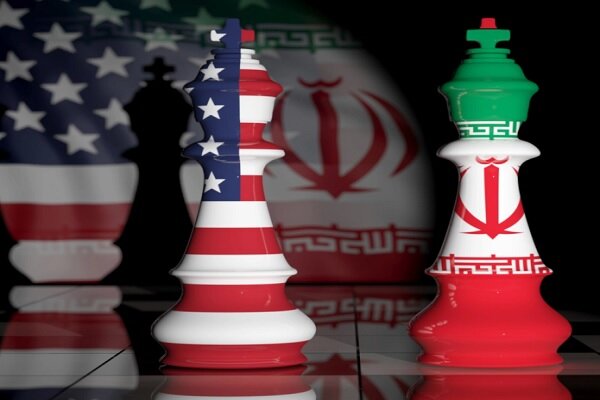
TEHRAN, Jul. 20 (MNA) – The behavioral method that the US President is applying against Iran resembles those his country had previously employed for other countries; most recent of which were Iraq and Libya.
The American method includes leading propaganda and psychological war against an intended country, putting maximum pressure on it via imposing economic sanctions to make the country agitate internally, making threats to wage war on it, sowing internal disagreements among the country’s nation to shatter its unity, urging disarmament of the country and finally attacking it or forcing its leaders to sit at negotiation table by making promises with no guarantees to be fulfilled.
The US could topple down Saddam Hussein in 2003, after practicing a psychological warfare and attacked the country under the name of removing a regime that developed and used weapons of mass destruction, harbored and supported terrorists, committed outrageous human rights abuses, and defied the just demands of the United Nations and the world.
The story repeated itself when the US kept on applying pressure on Libyan leader Colonel Gaddafi to step him down from power. The US believed Gaddafi had funded terror operations against America. The US government cut ties with the regime, and enacted sanctions against senior regime members. The US, along with several European and Arab nations, then began to call for the UN to authorize military intervention in the conflict. When the Libyan civil war broke out in 2011, the US took part in a military intervention in the conflict, aiding anti-Gaddafi rebels with air strikes against the Libyan Army. The US plan bore fruit eventually.
Now, a similar scenario is constructed against Iran.
But will the scenario work as it did previously?
More than a year ago, the US President pulled out from Iran’s nuclear deal, known as the JCPOA, calling it the worst deal America has ever made. He started an economic war against Iran hoping to oblige Iranian officials start a new round of talks with the US to hammer a new deal. The US president imposed the toughest financial embargo ever in the history to have Iran’s economy suffocate. Not having what he expected from his JCPOA withdrawal and draconian sanctions, Trump started claiming that Iran has violated JCPOA covertly enriching uranium. In his latest move, he also sanctioned top Iranian officials including Iranian FM and the Leader of the Islamic Revolution. Trump also introduced Iran as the biggest threat to the security of the Middle East and the Persian Gulf. He sought to make his allies accompany him with the idea and also sent troops to the region.
Trump has announced repeatedly that he does not seek war with Iran but thanks to his deeds and the repeated American scenario, and the recent created tensions in the Persian Gulf, the risk of what some call ‘an accidental war’ is high.
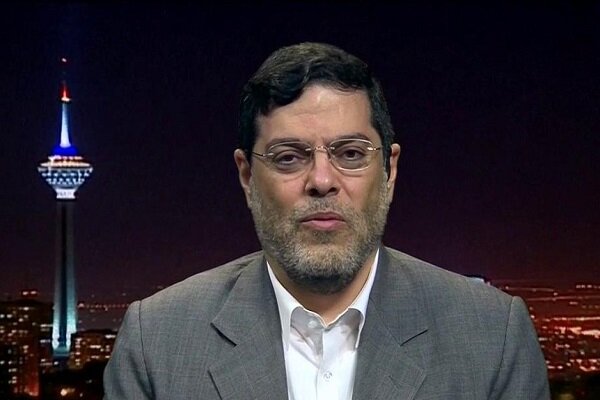
As Dr. Mohammad Marandi, Political analyst and the Head of American Studies Department at the University of Tehran, told Mehr news agency in an interview, “the sanctions imposed on Iran are unprecedented. They are more severe than what the US had imposed on Iraq or Libya. Of course, ultimately the US attacked both Iraq and Libya and destroyed the two countries. But in the case of Iran, the country is much stronger therefore attacking it would be very painful for the US. It is not a war that they can really win.”
Dr. Mohammad Marandi
“Iran is a larger country with a larger population with powerful armed forces plus powerful regional allies including Iraq, Syria and Lebanon, Yemen and Afghanistan. Turkey is moving closer to Iran as well as Qatar and Oman,” he noted.
“On the other hand, Iranian economy is much larger than that of Iraq and Libya. It is much diverse. It has a large agricultural, industrial, and mining sector. The country has 15 neighbors and that is very difficult for the US to block Iran’s trade with them. They are waging economic warfare against Iran or economic terrorism as some say but Iran has many advantages. In addition, rivals to the US, China and Russia, are moving closer to Iran since the US imposed sanctions on Russians and due to its economic war with the Chinese,” he added.
Regarding Iran’s reaction to US measures, it should be said that the country has been patient, reasonable but defiant to its definite rights.
After almost a year of patience since US pulling out from the nuclear deal and European’s inactiveness, Iran started reduction of it's JCPOA commitments surpassing 3.6 percent uranium enrichment and having its stockpile surpassing 300 kilograms. The job was done to remind the world that Iran is not the only signatory to the deal and to urge other parties to comply with their JCPOA obligations. “If we see a reciprocal commitment on the other side, then JCPOA is a document that is worthy of resuscitating and we will do our best to keep it afloat,” Iranian FM Mohamamd Javad Zarif said. It is worth noting that JCPOA signatories have asserted that they do not see Iran's reductions in commitments as major non-compliance.
Regarding Iran's economic status in the past year and despite the great shock it suffered from, the country's economy seems to be reviving. Some even are talking about reduction in inflation rate and growth in domestic production. Under the toughest sanctions ever, Iran has been learning how to economically survive, some confirm.
“Although last year was difficult to Iran but the country has been able to manage it and as things are stabilized now, the economy will start to bounce back slowly. This does not mean that the situation is not difficult for Iranians. It definitely is. But is obviously much better than what the Americans were hoping,” Dr. Marandi said.
Europe’s stance towards Iran-US standoff, European dilemma
The role of the Europeans, their stance towards Iran-US relations and their own position towards Iran and the JCPOA, is a matter of attention.
Europeans have repeatedly expressed concern about the tensions between Iran and the US. They have expressed worry about Iran’s scaling down of its JCPOA obligations. The E3 established a financial vehicle to ease Iran-EU trade, known as INSTEX. But what Iran has gained from its European relations after US withdrawal from the nuclear deal, has always been criticized by Iranian officials.
Due to their economic dependence or political subordination to the US, Europeans are facing a dilemma in their Iranian relations. As Zarif said, “if Europe wants to pursue its own interests, it has to follow a different path. I don’t think they have gathered the necessary political will in order to pay the price for that independence [from the US]. It’s not going to be free of charge.”
Standing in the same track with Zarif, Dr. Marandi said “Europe is obviously subordinate to the US. It does want to have some space in independence. But it so far, has not shown the will. The Europeans are in complete violation of the JCPOA although they have not left it. They claim that there is little that they can do and Iranians do not accept that argument.”
“Iranians say that the EU has collected a larger economy of than of the US besides a larger population, which is enormous in average. On the other hand, the Russians and Chinese are resisting the US bullying over Iran. So, it is not really an acceptable argument by the Europeans to justify doing nothing. Europeans could work along with the Chinese and the Russians. The US cannot impose sanctions on all these countries and powers,” Dr. Marandi said.
“Thus, Iranians believe part of the problem with Europe is that they are weak with no backbone, do not want to get into Trump’s bad book and do not want to pay a price for implementing the nuclear deal with Iran. They, sort of, want to have their cake and eat it, too,” he believed.
Future of the JCPOA
With the US out of the JCPOA and Iran stepping back from its commitments, the third part, i.e. the Europe, seems to have the power to determine the final destination for the nuclear deal. The part, whose strength to preserve the deal is under question.
According to Dr. Marandi, “future of the JCPOA, mainly depends on Europe more than anything else. They have a lot of commitments that they must carry out according to the deal and at the moment, they are violating all of them.”
“Iran has been abiding by the nuclear deal for over a year on its own even though the Europeans were violating it and the Americans had left it. Iranians have done more than enough. They have shown an extraordinary great deal of good will and patience. If the Europeans do not begin to implement the nuclear deal, Iranians will gradually decrease their commitments and will ultimately leave it. Iran-EU relationship depends largely on Europe abiding by its commitments. If it fulfills its commitments the relationship will improve and if it does not, it will be the opposite,” the expert said.
“The same is true for Iran-US relations. The US has walked away from the nuclear deal and the negotiating table. The only remaining way for the US is to abide the JCPOA and stop hindering its implementation. If they do so, they can come back to the negotiating table,” he added.
INSTEX an empty vessel
INSTEX, the European mechanism to enable Iran to keep doing business under US sanctions, has become operational nominally and not in practice. To the present moment, INSTEX has been the most done by Europeans for Iran. Even in case of its full implementation, as some express, it cannot satisfy all of Iran's needs since economic needs of the country go far beyond what INSTEX can offer.
Iran calls the vehicle ‘insufficient’, pinning no hope to it. Iranian officials have repeatedly called for Europeans to purchase our oil or open credit lines for Iran.
“INSTEX is an empty vessel. It really is not important unless the Europeans carry out their JCPOA commitments. Europeans need Iranian oil especially regarding that some of their refineries are designed for Iranian oil. But Americans are bullying them to refrain from purchasing Iran’s oil. If Europeans don not purchase Iranian oil, Iranian businesses cannot be active in Europe and European countries cannot work in Iran out of the fear of the US. Then what is INSTEX for if there is no money in it? It is just an empty vessel. If other EU countries joined the financial instrument, it could be a good thing but only in case the Europeans carry out their JCPOA commitments. They have to start sanding up to the US to protect their companies, businesses and their own citizens, purchase Iranian oil and normalize trade with Iran and then INSTEX could work. Otherwise, at the moment INSTEX does not mean much to Iran,” Dr. Marandi told Mehr news agency.
In contrast to what Dr. Marandi believes about having other EU countries or non-European ones join the INSTEX, some in Iran warn that the country may repeat the bitter SWIFT experience with INSTEX. They believe that the financial mechanism can act as an instrument for Europeans to dominate Iran’s trade transactions. In fact, Iran has its own financial channels to trade with non-European countries, which rely on mutual cooperation and commercial ties. Some of such transactions are even based on currencies other than euro or dollar. Letting its non-European financial transitions take place in INSTEX, Iran may jeopardize part of its economic independence.
Redemption road
As a matter of fact, no one can deny European’s high reliance on the US and the interwoven financial relations the EU companies have with the Americans. EU is mingled with the US in financial aspects.
Regarding the present circumstances, if Europe wishes to have a word at the international arena and the authority to act independently from the US, rescuing the JCPOA seems an effective thing to do. Helping European companies to skirt the US sanctions and have transactions through INSTEX with Iran is the way to go for European officials. They are better also to convince Trump back to the JCPOA.