Showing posts with label Huthis. Show all posts

Sunday, December 15, 2019

It’s time for the international community to stop ‘recognising’ Hadi’s ‘government’

Omar Ahmed
Abd Rabbuh Mansur Hadi, President of Yemen [z_sattam/Twitter]
In spite of having no substantial physical political presence in Yemen, and no formal armed forces on the ground, the media is insistent on running with the same, tired expression of “the internationally recognised legitimate government” of the fugitive president, Abd Rabbuh Mansur Hadi, who has apparently been running the country from the Saudi capital, Riyadh, since he fled Yemen in 2015.
It has now been over a month since the signing of the Riyadh Agreement, which was hailed as ushering in peace in the south, not only among the warring factions of Hadi’s forces, which largely consists of Islamist, Islah militia and Sudanese mercenaries against the Security Belt forces, who are aligned with southern separatists, the Southern Transitional Council (STC), but it was also hoped to simmer down the tension between the patrons of these two parties, Saudi Arabia and the United Arab Emirates (UAE) respectively, both partners in the anti-Houthi coalition in the north, but backing opposing sides in the south.

No longer ‘Iranian proxies’

It was also a month ago that I argued that this agreement will fall flat in its objectives, namely due to the fact that Hadi doesn’t have any concrete authority in Yemen, and the real political legitimacy lies with the National Salvation Government (NSG), which has been ruling the capital Sanaa since 2014. Its power-base was formed from of an alliance between the Ansar Allah movement, the Yemeni military and remnants of the General People’s Congress political party – however the same news outlets who are trying to convince us of the “internationally recognised” government, are the same ones peddling the misleading narrative, that the NSG are merely “Houthi rebels” or “Iranian proxies”, following Tehran’s orders.
Houthis patrol around after the clashes between Houthis and Former Yemeni President Ali Abdullah Saleh’s supporters took place in Sanaa, Yemen on 5 December 2017 [Mohammed Hamoud/Anadolu Agency]
Essentially, this agreement stalled the inevitability that the Saudis, and the wider international community, will have to accept the reality that the NSG (“Houthis”) are the legitimate government in Yemen. I am using the past-tense here because the agreement is void and no longer exists – it was signed on 5 November and included a 30-day deadline in forming a new cabinet of 24 members, equally split from the north and south. I concluded with the revelation that the Saudis had acknowledged that they had opened channels of communication with the Houthis.
In fact, a few days following the signing of the accord, the UAE minister of state for Foreign Affairs, Anwar Gargash, conceded that the Houthis will have a role in post-war Yemen. In more recent developments, Saudi foreign minister, Adel Al-Jubeir, has suggestively indicated that the Houthis are in fact, a legitimate entity, stating “all Yemenis, including the Houthis have a role in the future of Yemen.”
It would now appear that the Trump administration has also done an ‘about-face’ on its policy on Yemen, having once framed the conflict as being an Iranian proxy war, they are now trying to downplay Iran’s involvement. Brian Hook, the US special representative for Iran, went from declaring in September that Iran was “controlling and deploying” the Houthis as a “terror front”, to now stating that “Iran clearly does not speak for the Houthis.” I mentioned back in September how this Iranian connection has been exaggerated and misrepresented by the media. One needs only to refer to a 2015 article which stated that Iran, for example, had in fact warned the Zaydi movement against taking over Sanaa. Indeed, the Houthis, as with Lebanon’s Hezbollah, are actually acting independently, albeit with assistance from Tehran. 

Who speaks for the south?

The Riyadh Agreement was always problematic from the outset, because although on paper it was plausible, the reality on the ground, in particular in the interim capital city of Aden, was another thing entirely. There are constant reports of violent clashes between Hadi’s mercenaries and the southern separatist forces. Additionally, there has been a steady increase in assassinations across the city, with the STC hinting liability with Hadi’s associates. Hampering conciliatory efforts, the STC are also refusing to vacate the presidential palace in the city. There are also reports that the former president of the Democratic People’s Republic of Yemen, Ali Nasser Mohammed, has warned the STC against plans to seize his home in Aden province, captured by the separatists last July.
It is important to recognise that the STC does not speak for all southerners, nor for the Southern Movement. There is the Southern National Salvation Council (SSC) based in Mahrah, who not only oppose both Saudi and Emirati interference in Yemen, but had opposed the Riyadh Agreement from its inception, noting that “the agreement gives legitimacy to regional militias affiliated abroad,” with reference to the STC.
The director of Human Rights for Yemen, Kim Sharif, explained to MEMO that the SSC is composed of the “original secessionists” and that the STC are widely regarded as a “traitor entity” by most southerners, as they are a party formed by the UAE who are using and exploiting the memory of the South Yemen state.

Illegitimacy of Hadi vs legitimacy of the NSG

Sharif agrees that the Hadi government lacks legitimacy, because following the election where he stood as the sole candidate, he was appointed as president for a transitional period of two years as part of the Gulf Initiative back in February 2012, reluctantly accepted by many, to avoid further bloodshed. Under the initiative, elections were to be held within the transitional period.
However, this failed to materialise and according to Sharif, under Hadi assassinations and terrorist attacks began to increase “funded by the Saudis,” and with a reliance on the Islah Party militia, who have close ties with General Mohsen Al-Ahmar, the vice president whose links to Al-Qaeda are well-documented. Hadi formerly resigned from the presidency in 2015, but has held onto the position ever since, giving him “zero legitimacy”. “There’s no such thing as an ‘internationally recognised government’ under international law. This is sheer abuse of the terms of the Vienna Convention on diplomatic relations and is a totally unacceptable trespass on the sovereignty of the state of Yemen,” Sharif continued.
Meanwhile, with regards to the legitimacy of the National Salvation Government based in Sanaa, Sharif described the 2014 takeover within the context of the failure by Hadi to carry out elections as per his mandate. Additionally, under International Customary Law, whomever takes control of the capital of any country is considered the “de facto” government. In order for this to be ratified, the government has to become “de jure”. Sharif argues that such a government must first follow an “internal legislation process”, which the Sanaa government has done by preserving national institutions, creating the Supreme Council, which includes all political parties including southern secessionists and operates within the existing constitution.
Furthermore, it is the Yemeni armed forces who are subservient to the NSG, in addition to the “Popular Committee” (Houthi fighters), who are the ones defending the nation against foreign aggression enacted by the Saudi-led coalition. These points and the fact that the NSG entered into the “Tribal Honour Agreement 2015” with all tribes, given that tribal rule still plays a vital role in Yemeni politics, ensures that the NSG based in Sanaa are the legitimate government in Yemen.
Although a southerner, Sharif herself is supportive of the NSG and AnsarAllah, as they have a common goal in liberating Yemen from the foreign aggression and occupation. The ultimate aim being “uniting all factions in the south with a view of freeing Yemen from all foreign occupation.”  She is confident that this movement will succeed “in partnership with our brothers and sisters in the north.”

International recognition

The National Salvation Government is not only arguably the legitimate government of Yemen. The Yemeni armed forces and its alliance with AnsarAllah has proven that they are indeed the most powerful entity in the country, with an ever-developing arsenal, they have recently announced an improved air defence system, capable of “neutralising” coalition aircraft up to a projected 90 per cent in the year ahead, which is significant as according to Yemeni military expert, Brigadier General Aziz Rashid, the coalition depends on aircraft for 85 per cent of its operations. They have shot down several drones in the past two weeks, in addition to an Apache helicopter belonging to the Saudis. Just today, at the time of writing, the Yemeni armed forces downed a Saudi spy plane over the Jizan region.
As the Riyadh Agreement gradually fades into obscurity, and the Saudis and its allies begin to sue for peace and pay for the damage that they caused, in the realisation that it is the Houthi government which is the legitimate power and authority in the country, it is high time that the international community start recognising this too, at the expense of the puppet government based in Riyadh headed by Hadi, who effectively has been held in captivity there and does not speak for the Yemeni people nor has control of the armed forces. Peace, stability and an end to the man-made humanitarian crisis is achievable with the help of this international community, who have been delusional for far too long.

Friday, September 20, 2019

For children’s sake, let there be peace in Yemen?


Neither Saudi Arabia nor the United States will start a war on Iran following last Saturday’s attack on two Saudi oil installations in Abqaiq and Khurais. The strikes, seen as the most devastating of a series of recent attacks, sent shockwaves across the world oil markets, as they knocked out more than fifty percent of the world’s top exporter’s crude output or five percent of the global oil supply. 
If the US and the Saudis could afford to start a war with Iran, they could have done it long ago.  If past tense situations were any indication of a behavioural pattern, there is enough reason to believe that this time, too, the developments, however grave they are, will not lead to a war against Iran.
Take for instance the tense situation in June this year. Despite strong predictions that the US would not allow Iran to go unpunished for downing a US spy drone, President Donald Trump chickened out at the last minute and abruptly called off preparations for an attack.  Then there were incidents involving oil tankers in recent months. Two tankers came under attack in the Gulf while one was seized by the Iranians weeks after a British warship seized an Iranian tanker.  Yet these highly inflammable incidents did not lead to a war with Iran.
The fear of the consequences or worries about their impact on the US interests in the region and the likelihood of world oil prices skyrocketing, bringing in its wake a global economic downturn at a time when US President Donald Trump is facing reelection, probably de-escalated the US war drive. 
It should also be recalled that during the US’ standoff with Iran over the Islamic republic’s nuclear power programme, Saudi Arabia and Israel kept prodding the US to launch an attack on Iran. But the US did not attack Iran. President George W Bush and even President Barack Obama would only say that all options were on the table.
In 2001, Iran, together with Iraq and North Korea, was one of the three countries of President Bush’s Axis of Evil.  Iraq was attacked and invaded, but not Iran. 
This is because, in US assessments, Iran is not like Iraq.  Iran has the ability to hit the US and its regional allies where it hurts, although it is only an average military power when compared to the US or even Saudi Arabia which spends US$ 65 billion a year on defence and has signed up to buy US$ 150 billion worth of arms from the US.  Iran has, throughout the decades of US and international sanctions, developed strategic weapons capable of dealing a devastating blow to the enemy. Besides, it has built up a powerful network of regional allies. In Iraq, Iran acts as a patron to Shiite paramilitary groups that joined the government’s war against the Islamic State terror group in 2018.  Numbering around 150,000 militias, these groups are a virtual arm of Iran’s Revolutionary Guard Corps. 
In Syria, Iran has established a considerable military presence. In Lebanon, it has its proxy army – the Shiite militant group Hizbollah. In Yemen, it is the Houthis who are seen as Iran’s ally. Besides, in several Gulf states, Iran commands the support of the Shiite populations. In Saudi Arabia itself, the Shiites make up 10-15 percent of the population and they see the Sunni monarch as a persecutor and Iran as their likely liberator.
If war breaks out, Iran can mobilise these support bases to its advantage. Through diplomatic channels, Iran, while denying it carried out the attacks on the Saudi oil sites, has conveyed to the US that any military action against it will be met with an immediate response.
The US knows well the capabilities of Iran.  Some 30,000 US troops are stationed in the Gulf region, 5,000 in Iraq and another 14,000 in Afghanistan. They all sit within the striking distance of Iran’s military. 
This is why, even after Saudi Arabia displayed remnants of drones and missiles to back its claim that the attack was “unquestionably sponsored” by Iran, Trump said he was looking for options short of war.
On Wednesday, Trump tweeted he had ordered the US Treasury to “substantially increase sanctions” on Iran.
Secretary of State Mike Pompeo, meanwhile, rushed to Saudi Arabia where he described the attacks as “an act of war” on the kingdom. 
Meanwhile, some analysts believe that Iran is being blamed because the US defence shield the Saudis have bought and installed had failed to detect and destroy the Houthi drones and missiles. So the arms suppliers to save their skin now say the missile came from the eastern direction indicating Iran or Iranian backed groups in Iraq -- and not from Yemen in the south.
However, Yemen’s Houthi rebels have claimed responsibility for the attack, which if taken positively sends a powerful peace message that it is time to start talks on ending the war. 
The international community needs to step in to make peace, instead of being a spectator in a bloody war that kills daily scores of children in Yemen, if not by Saudi bombs, but by starvation or diseases such as cholera.  According to a 2018 Save the Children report, an estimated 85,000 children under the age of five had starved to death in the first three years of Yemen’s civil war. 

For children’s sake, let there be peace in Yemen?

But the world community’s indifference is appalling, even after the United Nations has described the situation in Yemen as the worst humanitarian crisis since the Second World War. 
Instead of compelling the parties to the conflict to come to the negotiating table and defuse the worsening crisis, the US, Britain and France sold Saudi Arabia and the United Arab Emirates weapons which were responsible for the deaths of thousands of Yemeni children. A recent UN report warned that these western powers might be complicit in war crimes. 
On Tuesday, Iran’s President Hassan Rouhani told the media in Ankara where he met Turkish President Recep Tayyib Erdogan and Russian leader Vladimir Putin: “The people of Yemen are forced to respond to all the violations and the flood of weapons from the US and Europe toward Saudi Arabia and the UAE.”
The Houthis are willing to talk peace.  They did not start the war. The war, which is into its fourth year, was made in Saudi Arabia, the Saudis did not want to see on their southern border an Iran-friendly Houthi-dominated state.  The war is another human rights violation baggage Saudi Arabia’s crown prince, Muhammad bin Salman, carries in his person, in addition to the murder of dissident journalist Jamal Khashoggi. 
Saudi Arabia, it is learnt, has requested the Trump administration to facilitate talks with the Houthis.  The Yemen war does not have a popular backing in Saudi Arabia or in the Arab world. Peace offers an opportunity for the Saudi crown prince to re-enter the world stage. For the starving and ailing children’s sake, let there be peace in Yemen. 

Friday, September 13, 2019

A Crumbling Saudi-Emirati Alliance In Yemen May Change U.S. Gulf Policy

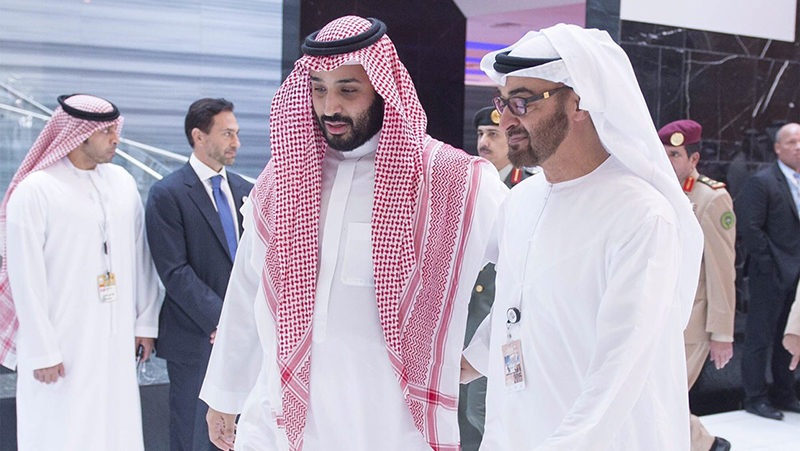
Saudi Crown Prince Mohammad bin Salman (left) and Abu Dhabi Crown Prince Mohammed bin Zayed
As recently as last June, the de facto alliance between Saudi Arabia, the United Arab Emirates, and Egypt appeared to be in the driver’s seat of US policy on the Middle East, influencing Trump Administration thinking on issues such as the boycott of Qatar, political turmoil in Sudan, and civil war in Libya. Despite mounting congressional and public opposition to the devastating Saudi and Emirati military campaign in Yemen, now in its fifth year, the administration vetoed attempts to suspend arms sales to Saudi Arabia and the UAE and continued to support them politically in their fight against Yemen’s Iran-backed Houthi rebels. Prominent foreign policy analysts in Washington argued that the surest way to bring the bloody conflict to an end was for the United States to double down on its support for the Saudi intervention.
But since then, small cracks in the Saudi-Emirati alliance have become larger fractures that have called into question the bonds of solidarity between Saudi Arabia and the United Arab Emirates, two of the Arabian Peninsula’s political and military heavyweights. Most prominently, the UAE’s backing of a southern separatist movement against the government of Yemeni President Abdrabbuh Mansour Hadi––whose authority the Emiratis had been trying to restore in partnership with the Saudis since his overthrow by the Houthis in 2015––has dealt a serious blow to the Saudi-led campaign. The current mess has increased the confusion in Washington’s Gulf strategy, complicating its Iran policy. In addition to forcing changes in the Trump Administration’s approach to Yemen, it may also affect the standing of both Saudi Arabia and the UAE in the American capital.
Khashoggi and Yemen Taking a Toll on Gulf Unity
Linkages between Saudi Arabia and the UAE have been under some stress for several reasons at least since October of 2018, when the US-based Saudi journalist Jamal Khashoggi was murdered in the Saudi consulate in Istanbul, Turkey. While publicly backing Saudi Crown Prince Mohammed bin Salman (MbS), who is widely thought to have ordered the murder, UAE leaders appear to have developed second thoughts concerning the wisdom of their close association with his leadership and policies. Once content to ride Saudi coattails to influence in Washington, leveraging the close relationship between MbS and Abu Dhabi Crown Prince and UAE de facto ruler Mohammed bin Zayed (MbZ), UAE leaders began to worry that their own reputation could be dragged through the mud as Saudi stock fell in Washington. Consequently, they have quietly begun to distance themselves from MbS and his regime.
The Yemen war, however, proved to be a more significant stressor of the relationship. Despite Abu Dhabi’s movement in apparent lockstep with Riyadh militarily and diplomatically, after the Saudi-led intervention began in 2015 on behalf of the internationally recognized Hadi government, it has become apparent over the last 18 months or so that, in reality, Saudi and Emirati interests in Yemen were never identical.
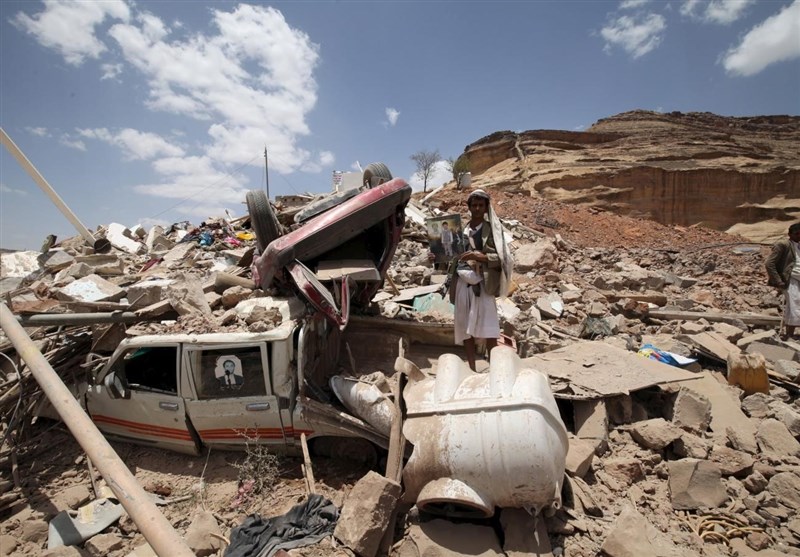
Saudi Arabia has always viewed the conflict through the prism of its struggle with Iran for regional supremacy, seeing Tehran’s backing for the Houthi rebels as a major security threat and as part of a strategy to establish a zone of influence and hostile intent along its southern border. As a result, the Saudis prosecuted the war as another front in the perceived existential struggle between the two countries, applying scorched-earth tactics in Yemen that took a heavy toll on the civilian population and infrastructure, producing a massive humanitarian crisis and possibly implicating the United States and other arms suppliers in war crimes, according to a UN experts report issued September 3.
The Emiratis, however, saw things rather differently. Inclined by economic realities and geopolitical proximity to take a more practical line toward Tehran, the UAE proved less interested in imposing a defeat on Iran and its Houthi allies than in achieving certain limited gains. Specifically, Abu Dhabi wanted to prevent the southern port of Aden from falling under the sway of Houthi forces and thereby imperiling shipping lanes through Bab al-Mandab, upon which Emirati interests depended heavily.
The disconnect simmered largely out of sight until the second week of August, when forces loyal to the UAE-backed Southern Transitional Council (STC), a political movement that advocates southern independence from the central government in Sanaa, moved to seize the port city of Aden, the capital-in-exile of the Hadi government. The move set off a fresh round of political and military chaos that posed a sharp new threat to the viability of the Yemeni state, prompting the Hadi government to call for the UAE’s expulsion from the coalition.
The seizure of Aden was all the more painful for the Saudi leadership in light of the fact that the UAE had ordered an abrupt drawdown of its forces from Yemen in July in favor of a more “diplomatic” approach. This perhaps reflected the growing sense in Abu Dhabi that the aim of restoring the Hadi government was not only increasingly unrealistic but also unimportant, if the UAE’s maritime interests could be secured through the agency of the STC. Word of the drawdown caused consternation in Riyadh  and dealt a heavy blow to the coalition’s ability to prosecute the campaign against the Houthis.
Events took a much more serious turn on August 29 when the Hadi government blamed the UAE for bombing its forces in Aden and Zinjibar, a coastal city 34 miles to the northeast, and called on Saudi Arabia to “stop this illegal and unjustified military escalation.” (The UAE admitted the attacks but claimedit was targeting “terrorists,” not government troops.) Together, these developments highlighted the sense of a serious—and perhaps irreparable—split between the two allies on the ground.
US Changing Course on Yemen, with Iran on Its Mind
These events prompted Washington to take a fresh look at its policies and its friends in the Gulf, and some changes with regard to both seem to be in store.
In response to developments in Aden, the State Department issued a statement noting that it was “deeply concerned” by the violence and calling for “dialogue” to resolve differences among the warring parties. But little else in the nature of high-level US diplomacy to patch up Saudi-UAE differences has been in evidence. In fact, reports recently emerged that the Trump Administration, which has up to now fully backed the Saudis and their Yemen campaign, has decided to open direct talks with the Houthis in Oman and is urging Riyadh to come to the table as well.
The reason for this startling shift is most likely the administration’s concern about how the deteriorating situation in Yemen might affect its policy toward Iran—a far more important consideration for the White House than anything taking place in Yemen itself.
Washington’s strategy of “maximum pressure” on Tehran, coupled with the recent deployment of additional military assets to the Gulf and high-stakes rhetorical volleys levied at Iran’s leaders, have raised the possibility of a military clash, which could be unpredictable in scope and consequences. Recent sub-rosa Israeli military strikes against Iran-allied forces in Lebanon, Syria, and Iraq have increased the risk that US forces in the region could be the target of retaliatory attacks. Under these circumstances, the administration appears concerned that the worsening military situation and the collapse of Saudi-UAE unity on the ground in Yemen presents the prospect of an increasingly unwinnable war that, at the very least, would prove to be a damaging distraction in the event of a confrontation among the United States, the Gulf states, and Iran. Indeed, the increasing pace and scopeof Houthi drone and missile attacks against Saudi oil and other economic infrastructure, despite having caused little serious damage so far, highlight the kingdom’s vulnerabilities in the event of increased tensions. This factor has probably influenced the administration’s change of course and may have helped persuade the White House to try to convince, or compel, the Saudis to join the talks with the Houthis.
The administration’s new tack on Yemen may prove to be well timed. With the apparent collapse of the Saudi-UAE alliance in Yemen, the White House will find it harder than ever to fend off pressure from congressional opponents of American military support for the Saudi campaign in Yemen, and new legislative efforts to curb American support for the war are already underway. Congressional focus on Saudi Arabia is intensifying; Senate Foreign Relations Committee Chairman James E. Risch (R-Idaho) has introduced the Saudi Arabia Diplomatic Review Act of 2019, which would mandate a comprehensive review of US policy toward Saudi Arabia as well as its actions in Yemen and record on human rights. Risch told The Washington Post that he believes President Donald Trump might be amenable to the legislation.
Wider Concerns: MESA, Counterterrorism
The fallout from Yemen could affect broader US regional strategy as well.  For one thing, plans for a new Middle East Strategic Alliance (MESA) to counter regional threats (mainly Iran) are likely to be jeopardized further. Announced in May 2017, construction of the new security architecture depends to a great extent on the preservation of political-military unity among the Gulf Arab states, who would contribute basing and funding and bring their most modern weapons systems to the effort. Current Saudi-Emirati tensions—combined with Egypt’s pullout from the proposed alliance in April, the ongoing Saudi-led boycott of Qatar, and preexisting Gulf reluctance to increased military integration—make such unity more tenuous than ever. While grand plans for standing up regional military alliances and/or enhanced multinational security cooperation have come and gone over the years, MESA was to have been the cornerstone of the administration’s regional security policy.
The disputes among allies in the Yemen war may threaten other important US interests as well, particularly the fight to eliminate al-Qaeda elements in Yemen. The United States became militarily involved in the country during the Bush administration’s Global War on Terror; under Obama and then Trump, the long-term battle against al-Qaeda in Yemen became an important factor in determining US support for Saudi Arabia and the UAE. Despite some significant tactical successes against the terrorist group, diversions of US arms to al-Qaeda elements by Riyadh and Abu Dhabi undermined American goals; the rupture between the allies now seems likely to degrade the anti-terrorism campaign further, providing new political and geographical space for AQ and other terrorist groups to operate.
Finally, Trump Administration strategy in the Middle East has been predicated to an unusual degree on the president’s personal relationships with key autocrats of the Gulf and Egypt––in addition to Israel—to deliver a unified front on Iran, counterterrorism, combatting political extremism, and providing support for presidential son-in-law Jared Kushner’s long-delayed Palestinian-Israeli peace plan. With the rift among Gulf powers widening, the president may find it significantly harder to deliver success on any of these fronts as next year’s presidential election looms.
Alienation of Affection
Where could this lead next? It is possible, though not immediately likely, that the recent developments in Yemen will effect a shift in the administration’s Gulf policy, or at least the way President Trump regards his current princely allies. If the president came to view the latest Yemen fiasco as a sign that Saudi Crown Prince Mohammed bin Salman can no longer deliver or even keep his own coalition partners in line, thus negatively impacting his own top priorities in the Gulf, the president might decide that it is time to reevaluate his relationship with MbS. The close relationship with the Emiratis could be up for readjustment as well; having caused some heartburn in Washington by apparently backing away from the administration’s hard-line Iran policy, and complicating matters with its behavior in Yemen, the UAE—and its standing—and the Abu Dhabi crown prince might take a hit with President Trump.
Alternatively, if the president were to reverse course suddenly and engineer a diplomatic opening with Tehran, something both he and the Iranians appear to be open to, but the Saudis and Emiratis are, emphatically, not—that could also strain relations with Riyadh and Abu Dhabi.
Either outcome is possible, given the volatility of the situation in the Gulf (of which the Yemen debacle is the most recent illustration) and the mercurial nature of President Trump. And if either of those things happens—though there is no sign just now that they will—foreign relations in the Gulf could be in for a drastic shakeup indeed.
Charles Dunne is a Non-resident Fellow at Arab Center Washington DC. To learn more about him and read his previous publications click here. Republished, with permission, from the Arab Center.

Saturday, October 27, 2018

Yemen’s Death Toll Five Times Higher than Previously Though

TEHRAN (Tasnim) - A study by a non-partisan group has demonstrated that 56,000 people have been killed in Yemen since early 2016 and more than 2,000 people are being killed due to Saudi-backed war and manmade famine, which puts the number five times more than previously thought.


Yemen’s Death Toll Five Times Higher than Previously Though
One reason Saudi Arabia and its allies are able to avoid a public outcry over their intervention in the war in Yemen, is that the number of people killed in the fighting has been vastly understated. The figure is regularly reported as 10,000 dead in three-and-a-half years, a mysteriously low figure given the ferocity of the conflict.
Now a count by a non-partisan group has produced a study demonstrating 56,000 people have been killed in Yemen since early 2016. The number is increasing by more than 2,000 per month as fighting intensifies around the Red Sea port of Hudaydah. It does not include those dying of malnutrition, or diseases such as cholera, Independent reported.
“We estimate the number killed to be 56,000 civilians and combatants between January 2016 and October 2018,” says Andrea Carboni, who researches Yemen for the Armed Conflict Location and Event Data Project (ACLED), an independent group formerly associated with the University of Sussex that studies conflicts and is focusing attention on the real casualty level. He told me he expects a total of between 70,000 and 80,000 victims, when he completes research into the casualties, hitherto uncounted, who died between the start of the Saudi-led intervention in the Yemen civil war, in March 2015, and the end of that year.
The oft-cited figure of 10,000 dead comes from a UN official speaking only of civilians in early 2017, and has remained static since. This out of date statistic, drawn from Yemen’s patchy and war-damaged health system, has enabled Saudi Arabia and the UAE – who lead a coalition of states strongly backed by the US, UK and France – to ignore or downplay the loss of life.
Casualties are rising by the day as Saudi and UAE-directed forces try to cut off Hudaydah – the last port controlled by the Houthis – from the capital, Sanaa. Oxfam said this week, a civilian is being killed every three hours in the fighting, and between 1 August and 15 October, 575 civilians were killed in the port city, including 136 children and 63 women. An airstrike on Wednesday killed 16 civilians in a vegetable market in Hudaydah, and other strikes this month have hit two buses at a Houthi-held checkpoint, killing 15 civilians, including four children.
Little information about casualties in Yemen reaches the outside world because Saudi and the UAE make access difficult for foreign journalists and other impartial witnesses. By contrast to the war in Syria, the American, British and French governments have no interest in highlighting the devastation caused in Yemen – they give diplomatic cover to the Saudi intervention. But their deliberate blindness to the death of so many Yemenis is starting to attract more negative attention, as a byproduct of the flood of international criticism of Saudi Arabia in the wake of the premeditated murder of Jamal Khashoggi – now admitted by Saudi officials – in Istanbul on 2 October.
The absence of credible figures for the death toll in Yemen has made it easier for foreign powers to shrug off accusations they are complicit in a human disaster. That is despite frantic appeals from senior UN officials to the organization’s Security Council to avert a manmade famine which now threatens 14 million Yemenis – half the population.
The crisis has worsened because of the siege of Hudaydah – with the city a lifeline for aid and commercial imports – since mid June, a situation that has forced 570,000 people to flee their homes. UN humanitarian affairs chief Mark Lowcock warned on 23 October “the immune systems of millions of people on survival support for years on end are now literally collapsing, making them – especially the elderly – more likely to succumb to malnutrition, cholera and other diseases”.
Just how many people die because they are weakened by hunger is difficult to know accurately, because most of the deaths happen at home and are unrecorded. This is particularly true of Yemen, where half the meagre health facilities no longer function, and people are often too poor to use those that do.
Loss of life from fighting should be easier to record and publicize, and the fact this has not happened in Yemen is a sign of the lack of interest by the international community in the conflict. Carboni says ACLED has been able to tally the number of civilians and combatants killed in ground fighting and bombing by drawing on the Yemeni press and, to a lesser extent, international media. ACLED has used these sources, after carefully assessing their credibility, to calculate the number of fatalities. Where figures differ, the group uses lower estimates and favors the claims of those who suffered casualties, over those who say they inflicted them.
It is difficult to distinguish between civilian targets that are deliberately attacked, and non-combatants who died because they were caught in the crossfire, or were close to a military unit or facility when hit.
A study by Professor Martha Mundy – Strategies of the Coalition in the Yemen War: Aerial Bombardment and Food War – concludes the Saudi-led bombing campaign deliberately targeted food production and storage facilities. Some 220 fishing boats have been destroyed on Yemen’s Red Sea coast and the fish catch is down by half.
ACLED began counting casualties after the war was under way, which is why it is only now researching loss of life in 2015, with its findings due to be published in January or February.
Carboni adds, the trend is for the number of people being killed to rise. The monthly total before December 2017 was fewer than 2,000 casualties, but since then it has always been more than 2,000. Almost all those who died are Yemenis, though the figures also include 1,000 Sudanese troops killed fighting on behalf of the Saudi coalition.
The Khashoggi affair has led to greater international focus on the calamitous war in Yemen, and the role of Saudi Arabia and Crown Prince Mohammed bin Salman in the conflict. But there is no sign of the US, Britain or France curtailing military assistance to the kingdom and the UAE, despite the likelihood the coalition will fail to win a decisive victory.

The true “butcher’s bill” in the Yemen war has taken too long to emerge, but it may help to increase pressure on outside powers to stop the killing.

Wednesday, July 25, 2018

No Liberal Rallies Yet for the Children of Yemen


Hundreds of thousands of people showed up across the United States at more than 600 gatherings three weeks ago. They came out to protest Donald Trump‘s “zero tolerance” immigration policy in highly choreographed, Democratic Party-affiliated “Families Belong Together” rallies and marches. Liberal celebrities marched and spoke. Local, state, and federal Democratic Party politicians and office-holders gave passionate speeches denouncing Trump’s separation of Central American migrant children from their parents at the southern U.S. border.
Marchers carried signs expressing their concern for children and families. Here are some of the messages written on the posters displayed at these gatherings:
“We care”
“I Raise my Voice Not so I can Shout but So that Those Without a Voice Can be Heard”
“Do All Lives Still Matter?”
“What Would Mr. Rogers Say?”
“Compassion”
(The issue that sparked this remarkable outpouring has already been pushed off the front pages and the cable news headlines by the resurgent RussiaGate story, brought to new intensity by Trump’s “spectacular debacle” alongside Vladimir Putin in Helsinki, Finland. It is a victim of the all-powerful “now we see you, now we don’t” U.S. news cycle – this even as nearly two-thirds of the migrant children criminally separated have yet to be reunited with their parents and as evidence emerges that the Trump administration intended for the family separations to be permanent.)
“Emaciated Babies”: 50,000 Yemeni Children May Have Died in 2017
We have yet to learn of any large and widespread U.S. demonstrations on behalf of the children and families of Yemen, where the U.S. is deeply complicit in the creation of a situation that “looks,” in the words of the United Nations’ humanitarian chief, “like the Apocalypse.” UNICEF reported last year that a child dies from preventable causes on the average of once every 10 minutes in Yemen.
As the Associated Press (AP) reported last May, roughly 3 million Yemeni women and children are “acutely malnourished; another 400,000 children are fighting for their lives.” Further:
“Nearly a third of Yemen’s population — 8.4 million of its 29 million people — rely completely on food aid or else they would starve. That number grew by a quarter over the past year…Aid agencies warn that parts of Yemen could soon start to see widespread death from famine. More and more people are reliant on aid that is already failing to reach people. …It is unknown how many have died, since authorities are not able to track cases. Save the Children late last year estimated that 50,000 children may have died in 2017 of extreme hunger or disease (emphasis added), given that up to 30 percent of children with untreated cases of severe acute malnutrition die.”
The AP told the heartbreaking story of Umm Mizrah and her children, tragic drops in the bucket of what could become one of the biggest humanitarian catastrophes of the last half-century:
“The young mother stepped onto the scale for the doctor. Even with all her black robes on, she weighed only 84 pounds …The doctor’s office is covered with dozens of pictures of emaciated babies who have come through Al-Sadaqa Hospital in Aden …Mothers like Umm Mizrah…skip meals, sleep to escape the gnawing in their stomachs. They hide bony faces and emaciated bodies in voluminous black abaya robes and veils…The doctor asked the mother to get back on the scale holding her son, Mizrah. At 17 months, he was 5.8 kilograms (12.8 pounds) — around half the normal weight for his age. He showed all the signs of ‘severe acute malnutrition,’ the most dire stage of hunger. His legs and feet were swollen, he wasn’t getting enough protein. When the doctor pressed a finger into the skin of his feet, the indentation lingered.”
Things have gotten worse in the last two and half months. According to Lisa Grande, head of the UN humanitarian effort in Yemen, “8.5 million people that we describe as being pre-famine… when they wake up in the morning, they have no idea if they will eat that day…by the end of this year, another 10 million Yemenis will be in that situation.”
Two and a half weeks ago, special PBS correspondent Jane Ferguson related the plight of Maimona Shaghadar, who “suffers the agony of starvation in silence. No longer able to walk or talk, at 11 years old, little Maimona’s emaciated body weighs just 24 pounds…Every day,” a nurse told Ferguson in a remote Yemen hospital, medical personnel “see these sorts of cases.”
Cholera, a prominent 19th-century disease, has become epidemic there, thanks to the collapse of water sanitation. Cholera has already killed thousands of Yemeni civilians, children especially, and a million Yemenis are currently infected. Yemen is now home to what Ferguson calls “the worst cholera outbreak in modern history. Now every time the rains comes, people fall ill.”
“American Made”

The cause? In “mainstream” U.S. media, the Yemeni children and families suffering this near “apocalypse” are victims of a three-year-old war between Yemen’s Iran-backed Shiite Houthi rebels who hold the country’s north, and a Saudi Arabian-led coalition, armed and backed by the United States. But there is little evidence of significant Iranian involvement in Yemen. The desperately poor nation’s “civil war” is a remarkably one-sided affair in which the world’s only Superpower (the United States) has been providing critical support for what amounts to the crucifixion of millions of innocent children and families. Combined with a vicious economic blockade, the US-Saudi coalition’s relentless bombing campaign has collapsed Yemen’s economy, leaving two-thirds of the population to depend outside on food aid for survival. The air onslaughts have devastated much of Yemen’s basic infrastructure so that more than half the population lacks access to safe drinking water – the key cause of the cholera epidemic. In a recent trip deep into Yemen’s countryside, Ferguson found a Doctors Without Borders cholera treatment center that had been crushed into rubble by a U.S.-Saudi airstrike the day before – an obvious war crime. “It was just about to open its doors to patients,” Ferguson reports.
Ferguson spoke to Dr. Ali Al Motaa, a Yemeni college professor who did his doctorate in the US. “The missiles that kill us,” Motaa said, “American-made. The planes that kill us, American-made. The tanks, Abrams, American-made. You are saying to me, where is America? America is the whole thing.”
By Ferguson’s account, from deep inside rebel-controlled territory:
“The aerial bombing campaign has not managed to dislodge the rebels, but has hit weddings, hospitals and homes. The U.S. military supports the Saudi coalition with logistics and intelligence. The United States it also sells the Saudis and coalition partners many of the bombs they drop on Yemen. In the mountains outside the capital, we gained exclusive access to the site where the Houthis store unexploded American-made bombs, like this 2000-pound Mark 84 bomb made in Garland, Texas. It landed in the middle of the street in the capital, we are told.”
That was before he U.S.-Saudi forces, with the Trump administration’s approval, decided to launch an offensive against the Red Sea port city of Hodeidah, through which almost all the food and medicine coming into Houthi-held Yemen passes. As Al Jazeera reported three days ago, the UN is warning that “the humanitarian crisis in Yemen is worsening as tens of thousands of families are displaced by the Saudi-UAE coalition offensive to retake the strategic port city….the relentless air raids and lack of aid are making an already dire humanitarian crisis even worse for the civilians who live in the region….tens of thousands of families have been displaced from Hodeidah as a result of the fierce fighting.
The U.S. is involved in direct as well as indirect assault on Yemen. Yemen was home to the first known U.S. drone attack outside Afghanistan in 2002. Hundreds of U.S. drone and other airstrikes have targeted Yemen since 2009.
Trump drew his first military blood in Yemen. U.S. Navy special forces carried out a raid—planned by the Obama administration and handed off to the incoming Trump team—that killed 25 civilians, including 10 children in the mountainous Yakla region of Yemen’s Al Bayda province. One of the children killed was an 8-year-old girl, Nawar al-Awlaki, daughter of the Islamist preacher Anwar al-Awlaki, who was killed on Barack Obama’s orders in a September 2011 U.S. drone strike in Yemen. Nawar’s older brother, 16-year-old Abdulrahman, was killed in a second Obama-commanded drone strike soon afterward.
Trump’s continuation of the U.S. slaughter of al-Awlaki’s children was consistent with his campaign claim that he would kill the relatives of terrorist suspects—a war crime. “The other thing with the terrorists is you have to take out their families; when you get these terrorists, you have to take out their families,” Trump pronounced on Fox News in December 2015.
A PBS NewsHour report earlier this month describes the Yemen tragedy as a “man-made” catastrophe. A more historically specific characterization would be “Empire-made” or “Washington-made.” As Bill Van Auken accurately reported on the World Socialist Web Site five weeks ago:
“This total war against an entire population…would be impossible without the uninterrupted support—military and political—of US imperialism since its outset…The US, together with its main NATO allies the UK and France, has supplied the planes, warships, bombs, missiles and shells used to devastate Yemen and slaughter its people. In his eight years in office, President Barack Obama presided over some $115 billion in arms sales to the monarchical dictatorship in Riyadh. The Trump administration, which has sought to forge an anti-Iran axis with Saudi Arabia, the other reactionary Gulf oil sheikhdoms and Israel, has touted arms deals with Riyadh that potentially would amount to $110 billion.”
“The Pentagon has given direct and indispensable aid to the Saudi-led onslaught, providing midair refueling for the planes that bomb Yemeni civilians, staffing a joint command center in Riyadh with US intelligence and logistics officers and reinforcing the Saudi-UAE blockade of the country with American warships. Recently, US Green Berets have been deployed with Saudi ground forces to assist in their anti-Yemen operations. Under the banner of the ‘war on terror,’ the Pentagon is waging its own air war in Yemen, conducting at least 130 air and drone strikes in 2017, quadruple the number in 2016…The Trump administration gave the go-ahead for the current siege of Hodeidah Pentagon officials have reported that US officers are helping to select targets in the port city.”
Historical Continuities
The Trump administration’s funding and equipping of the savage war on Yemen shares three key characteristics with the “zero tolerance” immigration policy that Trump was recently forced to (partially and haltingly) rescind. First, it unconscionably uses innocent children and families as hostages and pawns in the advance of White House policy goals.
Second, it is richly consistent with U.S. policy stretching far back in history (see this on the long U.S. record of family separation and thison the long U.S. history of directly and indirectly attacking and killing children and other civilians in foreign nations).
Third, it is consistent with Barack Obama’s record. The Obama administration backed the Saudi-led Arab assault on Yemen. It also (as few marching against Trump’s border policy seem to know or care) responded to Central American migration and asylum-seeking with a policy of aggressive deterrence and detention – a policy that included the caging of children.
Why No Mass Marches for Yemeni Children?
Clearly the murder of tens of thousands of (Yemeni) children is a bigger crime than the undoubted transgression of traumatically if (hopefully temporarily) separating 2300 Central American children form their migrant parents. Why don’t hundreds of thousands of U.S.-Americans march on behalf of Yemeni children and families killed, maimed, starved, sickened, and otherwise placed at grave risk by Washington and its Arab allies?
Differences of geographical proximity and familiarity are part of the explanation. Equally if not more significant: the dominant U.S media’s systematic under-reporting of U.S, imperial aggression in the Middle East; that media’s portrayal of is the Yemen war as a regional Sunni-Shia and Saudi-Iranian conflict in which the U.S. is only peripherally involved; the Yemeni victims’ status as Muslim Others who are linked in the dominant U.S. media and politics culture with the officially U.S,- and Israel-demonized state of Iran (a nation that all too unmentionably looks like a model of democracy, social justice, and women’s rights in comparison to its regional arch-enemy and Washington’s “good friend” the absolutist and arch-reactionary state of Saudi Arabia). For these and other reasons, the Democratic Party establishment sees no political advantage in confronting Trump on U.S. Yemen policy, a policy in which both reigning U.S. political parties are deeply complicit.