Showing posts with label Hudaydah. Show all posts

Saturday, December 01, 2018

Yemen: Suffer the Little Children

Editor


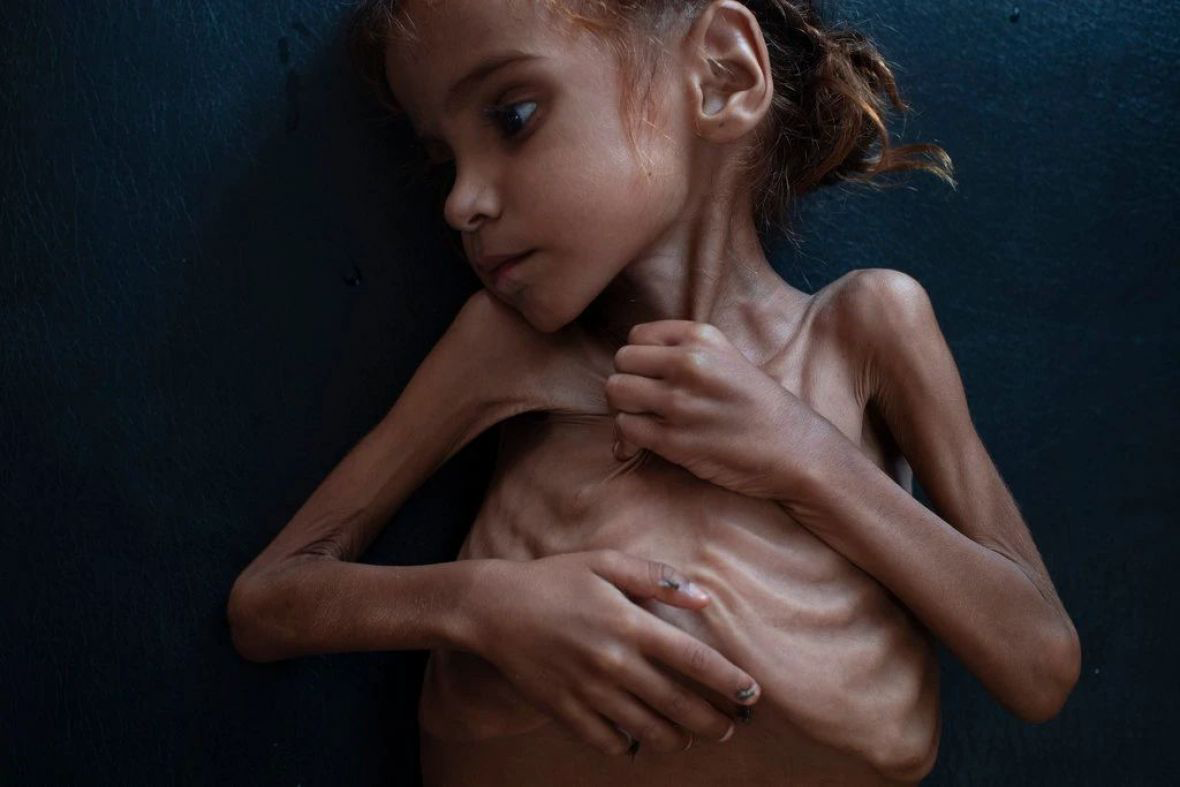
Amal Hussain, the 7-year-old Yemeni girl, died of hunger on November 1. Her frail frame could no longer withstand even the meagre demands of survival. Amal’s grieving mother said her “heart was broken.” She was now worried about her other children; they too might succumb to hunger. The reason is that little or no food is being allowed into war-torn Yemen as it is pounded by a Saudi-led coalition of warmongers from the air and blockaded at sea.
Amal symbolized the plight of Yemeni children, indeed of all Yemenis. The photograph of her emaciated body lying in a hospital bed in northern Yemen was published in the New York Times a few days before she died, drawing attention to the man-made tragedy that has gripped Yemen since March 2015. She died in a ragged refugee camp crammed with other starving children, a few miles from the hospital.
Lest people’s lives are reduced to mere statistics, let us recall what is happening in Yemen and who is responsible for this horrific tragedy that has raged, hitherto unnoticed by much of the world, for nearly four years. It was Jamal Khashoggi’s brutal murder in the Saudi consulate in Istanbul that finally drew attention to the Saudis’ barbaric practices. Even a cursory glance at the Yemenis’ plight, especially its children, was enough to arouse the world’s conscience. A picture, as they say, is worth a thousand words. Dire warnings by aid agencies and UN bodies did not cause much of a stir. A single photograph of the emaciated body of starving Amal, printed in the New York Times finally brought Yemen’s horror to their attention.
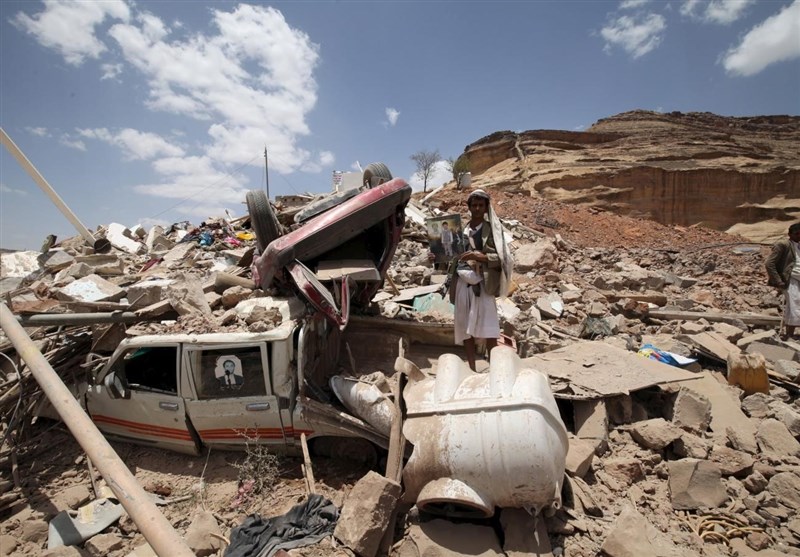
The Armed Conflict Location and Event Data Project (ACLED), a nonprofit conflict-research organization’s latest report, says the Saudi-led war has so far claimed the lives of some 56,000 Yemenis, the vast majority children, the most vulnerable segment of the population. The Saudi regime and its allies have mercilessly pounded Yemen destroying factories, hospitals, schools, people’s homes, and markets. School buses have also been targeted as happened in August in Sa‘ada killing 40 children and injuring many others.
For several months, Saudi, UAE, and US/UK forces have attempted to take over Hudaydah, the Red Sea port city and the only outlet for Ansarallah and Houthi fighters to bring in desperately needed medicines and food. While the aggressors have been unsuccessful, grain silos in the port have become inaccessible for relief agencies.
This prompted 35 Yemeni and international non-governmental organizations (NGOs) on November 7 to call for an immediate cessation of hostilities in Yemen. They warned that the Saudi-led war had put 14 million people on the brink of famine.
“With 14 million men, women, and children on the brink of famine — half of the country’s population — there has never been a more urgent time to act,” the NGOs said in a statement. They urged the world to “secure an immediate cessation of hostilities” and “suspend the supply of arms at risk of being used in Yemen,” a clear reference to the Western regimes’ supply of weapons to Bani Saud.
“We call on governments to redouble their efforts to guarantee unimpeded access to essential items… including through the lifeline port of Hudaydah…” the NGOs said in their statement.
Cholera has afflicted more than a million children, the worst epidemic in human history, according to the UN. This is the direct result of the Saudi-led siege of Yemen preventing essential medicines from reaching the people, as well as clean drinking water.
While there are many tragedies afflicting the Muslim world, the one in Yemen is completely preventable because it is man-made and caused by those who call themselves Muslims. What did the people of Yemen do to be subjected to such aggression? They had dared to take their political destiny in their own hands. The Saudis deemed this unacceptable. The medieval kingdom’s semi-literate and upstart young defence minister Muhammad bin Salman thought Yemen would be an easy target and would be brought to its knees in a matter of weeks if not sooner. Nearly four years later, the Saudis are nowhere near achieving any of their objectives — political, military, or strategic. Their only “achievement” has been the murder of tens of thousands of innocent people and the destruction of Yemen’s infrastructure.
This terrible war must end immediately. Desperately needed food and medicines must be rushed in to save the starving population including children. There should be no more Amals dying of hunger. Finally, Saudi rulers and their enablers in such capitals as Washington, Tel Aviv, London, and Paris must be charged with genocide and war crimes.

Monday, November 12, 2018

US and the end of Yemen War, Washington’s attempt to save Riyadh’s ruling family

By: Ramin Hossein Abadian

US and the end of Yemen War, Washington’s attempt to save Riyadh’s ruling family
TEHRAN, Nov. 12 (MNA) – Recently, US Secretary of State Mike Pompeo issued his strongest statement yet on the war in Yemen, calling for a cessation of hostilities in Yemen under UN-led negotiations.
James Mattis, US Secretary of Defense in a meeting in Washington also urged all sides involved in the Yemen War to take steps towards peace talks within the next 30 days.
After almost four years of Saudi Arabia led invasion of Yemen, that claimed 30,000 lives of Yemenis, wounded hundreds of thousands, displaced millions, and gave rise to famine and disease, the US has suddenly become concerned and called for peace talks in November in a third country.
Exposure of Khashoggi’s murder and intentional pressure on Saudi Arabia  
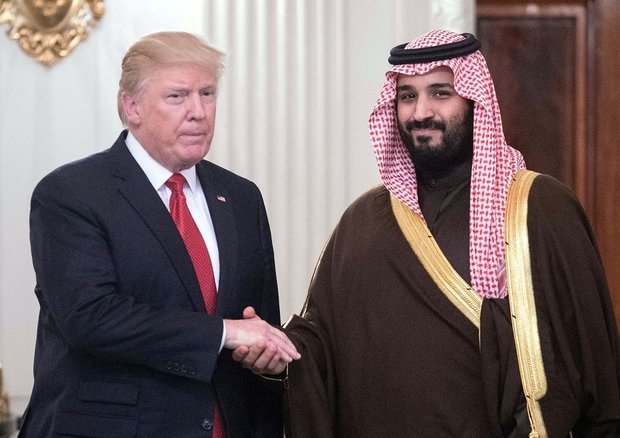
The tragic fate of Jamal Khashoggi, a veteran Saudi journalist critical of Al-Saud, broke out a massive wave of international pressure against the Saudi regime, which severely disrupted the image of the crown prince of Saudi Arabia during the past month. Muhammad bin Salman (MBS) and his supporters in the US foreign policy have been in a tough condition ever since.
There is no doubt that, after the murder of Khashoggi in the Saudi consulate Istanbul, and the clear role of MBS in the order of his murder, the cost of support for the Saudi regime and his young prince had gone up for the most beloved American authorities, and the head of them Donald Trump and his son-in-law. The continuous efforts of the Saudi-Zionist lobby in the past year or so to create a modernist, reformist, and moderate figure from MBS have been largely lost with the murder of Khashoggi.
Today, Al-Saud has become a hated regime by public more than ever before. Despite the unwillingness of great powers to call for punishment of the Saudi leaders, the support for the crimes committed by the Saudi-led coalition against Yemen has is getting harder by day.  
It is quite clear to everyone that MBS initiated the ongoing Yemeni on war. Now that all the eyes are on the brutality of the Saudi regime, it is not easy to send weapons to Riyadh, and give them intelligence and logistic support, as well as comprehensive media and political backing, a plan that is to prevent the deterioration of the situation for Riyadh’s rulers.
Coalition failure on the battle field
Since day one of the Yemeni war, plans and predictions of Saudi Arabia and the United Arab Emirates have failed. After spending tens of billions of dollars of ammunition and killing casualties and losing their own forces and mercenaries, until now, Saudi-led coalition has only been able to gain access to Aden and other small parts of Yemen and failed to reach important Yemeni cities such as Sana'a, Sa’dah, and especially the strategic port of Hudaydah.
A few months of the coalition’s heavy battle to take control of Hudaydah port turned into a long-haul fruitless fight. The port, which accounts for 70% of Yemen’s imports, is very strategic, and the coalition's operation to siege the city and cut off its connection with the rest of the Yemeni soil has gone nowhere.
Obviously, the continuation of this war, apart from the overwhelming costs for Riyadh and its regional allies, is not possible, and while there is no progress on the ground for the Saudis, Americans have the option to end the war to free their Saudi friends and relieve them from the financial  burden and global pressure of the Yemen crisis.
Take away 
It seems that Saudi Arabia has not been able to reach the goals that Washington has drawn for it in the Yemeni war. The Saudis mistakenly believe that the Yemeni crisis has a military solution, while such an idea will not only solve the problem, but adds to it each day and, of course, to the suffering of the oppressed people of Yemen.
The White House decision to put an end to the war, if true, is not about human rights issues in Yemen, but to save al-Saud from the marsh that has been created with the resistance of the Yemenis. Americans now think of peace and reconciliation in Yemen, now that they have failed to bring the Yemeni people to their knees.
Now that Ansarullah still has the upper hand in the Yemen war, they must prepare themselves with the same stance to end the war and resolve the rights of the Yemeni people.

Saturday, October 27, 2018

Yemen’s Death Toll Five Times Higher than Previously Though

TEHRAN (Tasnim) - A study by a non-partisan group has demonstrated that 56,000 people have been killed in Yemen since early 2016 and more than 2,000 people are being killed due to Saudi-backed war and manmade famine, which puts the number five times more than previously thought.


Yemen’s Death Toll Five Times Higher than Previously Though
One reason Saudi Arabia and its allies are able to avoid a public outcry over their intervention in the war in Yemen, is that the number of people killed in the fighting has been vastly understated. The figure is regularly reported as 10,000 dead in three-and-a-half years, a mysteriously low figure given the ferocity of the conflict.
Now a count by a non-partisan group has produced a study demonstrating 56,000 people have been killed in Yemen since early 2016. The number is increasing by more than 2,000 per month as fighting intensifies around the Red Sea port of Hudaydah. It does not include those dying of malnutrition, or diseases such as cholera, Independent reported.
“We estimate the number killed to be 56,000 civilians and combatants between January 2016 and October 2018,” says Andrea Carboni, who researches Yemen for the Armed Conflict Location and Event Data Project (ACLED), an independent group formerly associated with the University of Sussex that studies conflicts and is focusing attention on the real casualty level. He told me he expects a total of between 70,000 and 80,000 victims, when he completes research into the casualties, hitherto uncounted, who died between the start of the Saudi-led intervention in the Yemen civil war, in March 2015, and the end of that year.
The oft-cited figure of 10,000 dead comes from a UN official speaking only of civilians in early 2017, and has remained static since. This out of date statistic, drawn from Yemen’s patchy and war-damaged health system, has enabled Saudi Arabia and the UAE – who lead a coalition of states strongly backed by the US, UK and France – to ignore or downplay the loss of life.
Casualties are rising by the day as Saudi and UAE-directed forces try to cut off Hudaydah – the last port controlled by the Houthis – from the capital, Sanaa. Oxfam said this week, a civilian is being killed every three hours in the fighting, and between 1 August and 15 October, 575 civilians were killed in the port city, including 136 children and 63 women. An airstrike on Wednesday killed 16 civilians in a vegetable market in Hudaydah, and other strikes this month have hit two buses at a Houthi-held checkpoint, killing 15 civilians, including four children.
Little information about casualties in Yemen reaches the outside world because Saudi and the UAE make access difficult for foreign journalists and other impartial witnesses. By contrast to the war in Syria, the American, British and French governments have no interest in highlighting the devastation caused in Yemen – they give diplomatic cover to the Saudi intervention. But their deliberate blindness to the death of so many Yemenis is starting to attract more negative attention, as a byproduct of the flood of international criticism of Saudi Arabia in the wake of the premeditated murder of Jamal Khashoggi – now admitted by Saudi officials – in Istanbul on 2 October.
The absence of credible figures for the death toll in Yemen has made it easier for foreign powers to shrug off accusations they are complicit in a human disaster. That is despite frantic appeals from senior UN officials to the organization’s Security Council to avert a manmade famine which now threatens 14 million Yemenis – half the population.
The crisis has worsened because of the siege of Hudaydah – with the city a lifeline for aid and commercial imports – since mid June, a situation that has forced 570,000 people to flee their homes. UN humanitarian affairs chief Mark Lowcock warned on 23 October “the immune systems of millions of people on survival support for years on end are now literally collapsing, making them – especially the elderly – more likely to succumb to malnutrition, cholera and other diseases”.
Just how many people die because they are weakened by hunger is difficult to know accurately, because most of the deaths happen at home and are unrecorded. This is particularly true of Yemen, where half the meagre health facilities no longer function, and people are often too poor to use those that do.
Loss of life from fighting should be easier to record and publicize, and the fact this has not happened in Yemen is a sign of the lack of interest by the international community in the conflict. Carboni says ACLED has been able to tally the number of civilians and combatants killed in ground fighting and bombing by drawing on the Yemeni press and, to a lesser extent, international media. ACLED has used these sources, after carefully assessing their credibility, to calculate the number of fatalities. Where figures differ, the group uses lower estimates and favors the claims of those who suffered casualties, over those who say they inflicted them.
It is difficult to distinguish between civilian targets that are deliberately attacked, and non-combatants who died because they were caught in the crossfire, or were close to a military unit or facility when hit.
A study by Professor Martha Mundy – Strategies of the Coalition in the Yemen War: Aerial Bombardment and Food War – concludes the Saudi-led bombing campaign deliberately targeted food production and storage facilities. Some 220 fishing boats have been destroyed on Yemen’s Red Sea coast and the fish catch is down by half.
ACLED began counting casualties after the war was under way, which is why it is only now researching loss of life in 2015, with its findings due to be published in January or February.
Carboni adds, the trend is for the number of people being killed to rise. The monthly total before December 2017 was fewer than 2,000 casualties, but since then it has always been more than 2,000. Almost all those who died are Yemenis, though the figures also include 1,000 Sudanese troops killed fighting on behalf of the Saudi coalition.
The Khashoggi affair has led to greater international focus on the calamitous war in Yemen, and the role of Saudi Arabia and Crown Prince Mohammed bin Salman in the conflict. But there is no sign of the US, Britain or France curtailing military assistance to the kingdom and the UAE, despite the likelihood the coalition will fail to win a decisive victory.

The true “butcher’s bill” in the Yemen war has taken too long to emerge, but it may help to increase pressure on outside powers to stop the killing.

Friday, September 21, 2018

Yemeni nation’s struggle for liberty main reason behind Saudi-led aggression: Houthi


The leader of Yemen’s Ansarullah movement has described the ongoing struggle of his fellow countrymen and women for liberty and dignity as the main reason behind the Riyadh regime’s devastating military aggression against their homeland, which has claimed the lives of thousands of people and left the country’s infrastructure in ruins.
“The Yemeni nation will never surrender, no matter how far the Saudi-led coalition would press its campaign of criminality and brutality. The problem of the Riyadh-based alliance with the Yemenis is rooted in the latter’s fight to live a free and dignified life,” Abdul-Malik al-Houthi addressed his supporters via a televised speech broadcast live from the Yemeni capital Sana’a on Thursday evening.
He added that the main responsibility of the Yemeni nation is to fight relentlessly against the enemies at every front.
Houthi then called on all freedom-loving people in Yemen to mobilize support for the battle in the country’s strategic western province of Hudaydah and along the border with Saudi Arabia. 
Elsewhere in his remarks, the Ansarullah leader expressed support for the Palestinians' resistance against the Israeli regime.
He also voiced solidarity with the Bahraini people, who have been facing the Aal-e Khalifah regime’s crackdown and repressive measures ever since a popular uprising swept the tiny Persian Gulf island State in mid-February 2011.
Some 15,000 Yemenis have been martyred and thousands more injured since the onset of the Saudi-led aggression.