Showing posts with label Muslim Brotherhood. Show all posts

Thursday, October 10, 2019

Egyptian Protests: A US-Fuelled “Arab Spring” Reboot

6611

When the West’s leading media organizations attempt to convince audiences they know nothing about where Mohammed Aly – a Spanish-based Egyptian protest leader – came from, the first thing one can be sure of is they are being lied to.

Protests have begun to spread again in Egypt after nearly a decade of frustration in Washington over its inability to coerce Cairo into serving its regional and global designs.

Protesters have allegedly been stirred up by economic turmoil still plaguing Egypt, however familiar US-backed organizations used in the past to destabilize Egypt are turning up at the center of protest venues including the Muslim Brotherhood which has served a pivotal role in other regional US projects including filling the ranks of militant forces fighting the government in Syria.

The Western media’s feigned ignorance over self-proclaimed protest leader Mohammed Aly is meant to obfuscate his political ties and those of the organizations and enterprises he is associated with.

Under the government of President Abdel Fattah el-Sisi of Egypt, so little dissent is allowed — and what little there is comes at such a high price — that when just a few hundred people across the country called for Mr. el-Sisi’s ouster in a burst of scattered protests on Friday night, it came as a shock. 

The apparent trigger for the demonstrations was almost as unexpected: Mohamed Ali, a 45-year-old construction contractor and part-time actor who says he got rich building projects for the Egyptian military and then left for Spain to live in self-imposed exile, where he began posting videos on social media accusing Mr. el-Sisi of corruption and hypocrisy.
The New York Times also claims:
“It is sort of odd,” said Amy Hawthorne, the deputy director for research at the Project on Middle East Democracy. “Who is this person, who is he connected to, what led him to come out with these allegations now? Obviously he’s very well connected, but who exactly are his connections?”
No mention is made by the New York Times regarding the Project on Middle Eastern Democracy (POMED) –  a Washington DC-based front funded by the US National Endowment for Democracy (NED) which served as a propaganda nexus during the 2011 US-fuelled “Arab Spring” and is again promoting rhetoric to support ongoing protests in Egypt today.

POMED fails to disclose its funding and associations on its own website, but NED in a 2017 “Grantee Spotlight” titled, “BRAINSTORMING FOR DEMOCRACY IN THE MENA REGION,” reveals:
NED’s main partner in strengthening local policy centers is the Project on Middle East Democracy (POMED), a Washington-based think tank founded in 2006. 
That the deputy director of POMED – funded by NED – is unaware of who Mohammed Aly is and the US government-funded networks he is associated with is difficult to believe.

Who is Mohammed Aly? 

Aly claims to be an Egyptian contractor turned whistleblower after witnessing government corruption – but reports indicate he was only part of a family-owned contracting firm led by his father who has denounced him and his “activism.”
The BBC in its article, “Mohamed Ali: The self-exiled Egyptian sparking protests at home,” would report:
His father, Ali Abdul Khalek, was a national weightlifting champion before he launched his family contracting businesses for himself and his sons, including Mohamed. 

In an interview with pro-government TV presenter Ahmed Moussa, Abdul Khalek appeared to disown his son and sought to discredit his allegations, saying his family owed their fortunes to the armed forces.
Of Aly himsef – the BBC would note:
He is also known for having briefly pursued a career as an actor – with credits including the little-known, but somewhat acclaimed film The Other Land – before liquidating his assets and moving to Spain.
Not mentioned is that “The Other Land” was jointly-produced and filmed in Spain. Involved in marketing the film was MAD Solutions – a firm linked to USAID, US-European government-funded nongovernmental organizations, Western media such as Forbes, as well as Arab production companies across the MENA region.

Among MAD’s partners includes the Ana Hunna Network – a German-based front posing as women’s rights advocates. The network is in turn made up of various US-European funded fronts including USAID-funded International Development Support and Consulting (IDSC).
MAD is also partnered with the Arab language satellite TV channel Alhurra which is based in the US and is funded directly by the US government (Arabic) via the US Agency for Global Media (USAGM), formerly the Broadcasting Board of Governors (BBG).

USAGM/BBG is also responsible for the US State Department’s global-spanning propaganda network including Voice of America, Radio Free Europe/Radio Liberty, and Radio Free Asia.

While documented evidence of Mohammed Aly working directly for the US government or its allies in the Middle East is still forthcoming – it surely is no coincidence that he has become a “sudden” and “unexpected leader” of protests aimed at coercing Egypt back on a pro-Western footing, promoted by the Western media all while his obvious ties to agents of US influence are being covered up by those very agents themselves.

Aly’s role in a politically-charged film produced and promoted by pro-Western fronts – and a film jointly produced and filmed in Spain – is also no coincidence. The ties and networks that led him through that process are now hosting him as he begins his next performance as an influential protest leader.

While it is clear he is but the public face of a much more sinister effort by the militant and extremist Muslim Brotherhood to fill Egypt’s streets with growing chaos – the Western media has gone through great efforts to deny this.

DW – for example – in its article, “Muslim Brotherhood or el-Sissi rivals: Who is behind Egypt’s protests?,” would attempt to claim:
Once a major player in the 2011 revolution, the MB has since been labeled a “terror organization” by el-Sissi’s government, but observers say the allegations are a deflection as the organization is a spent force. 

“There’s very little or no indication that the Brotherhood within Egypt has any sort of capability to organize on such a scale,” David Butter, an associate fellow at Chatham House, told DW. 

“Social media activists from outside Egypt who applauded the action might be trying to take some credit, but nothing suggests the Brothers have any involvement at all,” Butter said.
The Muslim Brotherhood is a massive region-wide organization complete with political parties, armed wings, and of course immense state-sponsorship including from the United States, Western Europe, and the West’s partners particularly in the Persian Gulf and Turkey.
If the Muslim Brotherhood lacks “any sort of capability to organize on such a scale” inside of Egypt, who has more capability to do so?

The DW article suggests there may be a rift within Egypt’s ruling elite – but no evidence, names or even a theory is put forth as to who among Egypt’s elite might be involved or why.
Conversely, the substantial evidence indicating US interference and the Muslim Brotherhood’s role – together with the fact the US and its allies have not only repeatedly destabilized other nations around the globe through similar tactics – but have destabilized Egypt itself in 2011 through similar tactics – points the finger squarely at Washington and its allies.
An “Arab Spring” Reboot 

US-funded protests overthrew the Egyptian government led by Hosni Mubarak in 2011.
US-Turkish-Saudi nominee – Mohamed Morsi – rose to power and immediately set out to transform the large North African nation into an obedient servant of Western interests.
This included severing ties between Egypt and the Syrian government of President Bashar al-Assad while arming, funding, and recruiting militants being funneled onto the battlefield within Syria itself.

A 2013 Voice of America article titled, “Morsi Cuts Egypt’s Syria Ties, Backs No-fly Zone,” would report:
Egyptian President Mohamed Morsi said he had cut all diplomatic ties with Damascus on Saturday and backed a no-fly zone over Syria, pitching the most populous Arab state more firmly against President Bashar al-Assad. 

Addressing a rally called by Sunni Muslim clerics in Cairo, the Sunni Islamist head of state also warned Assad’s ally, the Iranian-backed Lebanese Shi’ite militia Hezbollah, to pull back from fighting in Syria.
Later in 2013, Egypt’s powerful military regrouped, managing to oust Morsi from office.
The subsequent government headed by General Abdel Fattah el-Sisi incarcerated Morsi, restored ties with Syria, and began steering Egypt back toward a more neutral foreign policy.

Commentators have cited Egypt’s role in the US-led war in Yemen as evidence that el-Sisi’s government also serves US interests – but it should be noted that Egypt’s commitments were symbolic, short-lived, and a result of paying back Persian Gulf monarchies who financially bailed out Egypt’s flagging economy in the wake of 2011’s instability.

For a nation like Egypt whose foreign policy, economic ties, and relations have straddled East and West for decades, “choosing sides” is not a simple matter.

Egypt’s fragile economic, social, and political balance has been repeatedly targeted by Western interests both directly and through militant proxies armed and backed by Persian Gulf states following attempts by Cairo to rebuild ties with Russia or to build closer ties with China.

The presence of the so-called “Islamic State” – the same militant force serving as proxies in Washington’s war on Syria – in Egypt’s Sinai region serves as a constant source of pressure attempting to coerce Cairo to pivot Westward.

Recent protests are also aimed at adding to this pressure.

As to why Egypt is facing such pressure now – we need only look at Washington’s recent escalation with Iran. Egypt under Morsi sought to weaken Syria as part of Washington’s wider conflict with Iran. Efforts to coerce Egypt into joining the US-led war in Yemen was also aimed at eliminating Iranian allies and further isolating Iran itself.

Key to any US foreign policy victory over Iran will be the creation of a regional, united front against Tehran – with nations – willingly or not – enlisted to play a role however small in isolating and undermining Iranian stability internally, regionally, and globally.

Should protests pick up sufficient momentum in Egypt – the prospect of Washington introducing demands in exchange for momentary relief from street violence will undoubtedly follow.

In the days and weeks ahead – Egypt’s ability or inability to contain the protests and resist US efforts to drag Cairo into another round of regional violence and instability – will in turn help indicate the wider prospects of peace or war in the region as Washington struggles to reassert itself at any cost.

Tony Cartalucci, Bangkok-based geopolitical researcher and writer, especially for the online magazineNew Eastern Outlook”.

Friday, September 27, 2019

Protests against the Sisi regime from unexpected quarters

Crescent International
How did the videos posted by contractor Mohamed Ali recently achieve what the Egyptian opposition TV channels based in Turkey — “the legitimacy channels” — failed to achieve in six years?
How was he able, armed with nothing more than a mobile phone camera, to mobilize the Egyptian public into overcoming their fear through which Abdel Fattah Al-Sisi and his regime have imprisoned them since 2013?
These are the tough questions posed by Dr Amira Abo el-Fetouh, a regular contributor to the Middle East Monitor.
In her response to the hard-hitting questions Dr. El-Fetouh provides several good reasons, one of which is the fact that “Ali is not affiliated with any political party… what’s more, he worked for the corrupt regime and learnt some of its secrets, giving him credibility. Ali was an eyewitness who lived in the shadow of this corruption and profited from it, then rebelled against.”
Mass demonstrations by the people of Egypt against the despotic Sisi regime caught many by surprise.
Many decent human beings worldwide hope that it will be a spark that will bring down the NATO-backed murderous regime.
Will the Sisi regime crumble, is a question many people are asking. At this stage it is difficult to give a definitive answer, however, al-Sisi’s regime is facing an unprecedented crisis.
One of the biggest setbacks for the Sisi regime is that the protests began eliminating the fear factor in the Egyptian society and removed the untouchability aura from al-Sisi himself.
According to the Middle East Monitor, the UAE-based Khaleej online reported that there were military officers trying to jump on the protests’ bandwagon and declared support for the former chief of staff of the Egyptian Armed Forces Lieutenant General Sami Anan, who is currently under arrest.
Meddling of the most corrupt Egyptian institution in the political process carries no good news for the Egyptian people, but if it creates infighting within Egypt’s most despotic institution. The people of Egypt could attempt to use this to their advantage.
It must be remembered that one of the reasons the Egyptian revolt failed to eliminate the NATO backed system in 2011 was because the masses lacked a God-conscious leadership capable of rising above petty politics.
Currently, all potential leaders of the people are either in prison or in exile.
This factor makes it very difficult for ordinary citizens to organize themselves and create immunity to al-Sisi’s political machinations that can easily confuse and distract the leaderless masses.
If the situation in Egypt escalates, it is unlikely to turn into an organized ouster of the current regime. Rather, it is likely to be a series of revolts and clashes that will loosen the regimes’ grip to rule Egypt.
Within this process, as the regime begins to lose control, established socio-political forces could potentially mobilize the masses and this time push the army out of the country’s political life and into the barracks where it rightly belongs.

Wednesday, June 26, 2019

Mohamed Morsi and Aung San Suu Kyi – Two democrats treated differently by the West


By 5Pillars

Left to right: Aung San Suu Kyi and Mohamed Morsi
Mohammed Morsi and Aung San Suu Kyi both believed in democracy, yet the West treated them very differently when they were oppressed, writes Jahangir Mohammed.
The death of deposed Egyptian president Mohamed Morsi in court after six years of imprisonment and torture, has demonstrated the West’s double standards over democracy.  The West’s championing of democracy as a higher political value does not extend to the Muslim majority world – it is simply a stick to beat Muslims with.
The UK Government has included lack of support for democracy, the rule of law, individual liberty and mutual tolerance within its definition of “extremism” (mainly used against Muslims with dissenting views), and a fundamental British value. Yet its own behaviour (like others in the West) in other parts of the world, shows a total disregard for the very values it expects Muslim communities to embrace, and subsequently judges them by.
In six years, the West has made little to no effort to support the first fairly elected president of Egypt or its democracy. Nor has it tried to oppose the intolerance and abuse of the rule of law and human rights in Egypt. Rather, the US other Western nations embraced military dictatorship as a partner in the region.
The case of Mohamed Morsi
Mohammed Morsi and his democratically elected Freedom and Justice Party were ousted in a military coup led by General Abdel Fatah el-Sisi in July 2013. There was no moral outcry in the West. In fact, no sooner had Sisi come to power, some Western countries visited him to secure arms and trade deals.
When Morsi was charged with treason and other trumped up charges, he did not become an international symbol of a “freedom-loving democrat” trying to move his country away from military dictatorship. Nor did Western human rights groups widely champion him as a political prisoner worthy of their highest accolades and mass campaigns. Even the socialists and the left were unusually silent.

Abdel Fatah al-Sisi

When Sisi imprisoned thousands of Muslim Brotherhood supporters and members, and sentenced many to death, there was still no outcry and no political prisoner campaigns.
Western rights groups, politicians and the media appeared to care very little about the masses of pollical prisoners, torture, lack of due process and rule of law.
Yet, when even one European is imprisoned in a country like Iran, they are deserving of the whole machinery of politics and human rights being unleashed.
You would think that the West’s army of feminists would care for the plight of the thousands of women arrested or affected by mass detention in Egypt. Here too they have been largely silent. We have of course seen this before, when 50,000 Muslim women were raped or in camps in Bosnia at the hands of the Serbs, I don’t recall a single Western feminist group taking up the issue.
In the six years that followed the detention of President Morsi, there was little concern about any of these human right abuses and torture. Instead, the West was more concerned about whether the Muslim Brotherhood and former President Morsi cared about or held the same social and political values as the West (both the political Left and Right). The message appeared to be unless you are a Muslim that is like us, you are not worthy of our support.
When sadly he died, there were no tributes from Western leaders or expressions of grief or even anger. Morsi was dead and his belief in democracy mattered not one jot. It was his belief in democracy and faith in the democratic West, that contributed towards his tragic death.
The case of Aung San Suu Kyi
Compare the treatment of Mohammed Morsi to another former political prisoner fighting for democracy. Aung San Suu Kyi rose to prominence in the uprisings in Myanmar against military rule in 1988.  She then became the President of the National League for Democracy (NLD).  In the 1990 elections, the NLD won 81% of the seats in Parliament. The military refused to hand over power and she remained in house detention for 15 of the following 21 years until 2010.
Suu Kyi became the world’s most prominent political prisoner thanks to international Western support. In 1990, she was awarded the Sakharov Prize for Freedom of Thought, in 1991 the Nobel Peace Prize, and in 2012 she received the United States Congressional Gold Medal. She became an iconic figurehead for democracy and human rights organisations, and was championed by politicians and movements on both the left and the right of the western political spectrum.

Rohingya refugees in a camp in Cox Bazaar, Bangladesh.

Her “bravery and struggle for non-violent commitment to democracy” were saluted across the Western world. She was seen in the West as “one of us” with little concern to consider her own Buddhist values and political views. Only since her party came to power in 2015 have her Buddhist and political views been criticised, especially in light of her attitude towards the minority Rohingya Muslim community (whose persecution she has denied).
Western imperialism and supremacy
The West’s approach and policies towards Muslims, and the Muslim majority world (irrespective of Left or Right) is still rooted in its pre-colonial relationship and interaction with Islam. This was, and largely still is, infected by ignorance, stereotypes, anti-Islamic propaganda with an attitude of Rudyard Kipling’s supremacist civilising mission.
Muslim social, moral and political beliefs and values have to be just like the West’s to be deemed worthy of their support. Hinduism and Buddhism on the other hand have tended to be viewed in the West in a romantic way as some exotic religion Westerners can study and gain some spiritual benefits from. Islam and Muslims have always been seen as a rival to Western religious, and now secular values, and its global power.
At the time of colonialism, European countries entered Muslim lands saying they were there for trade which would make us prosperous too. Sadly, most Muslim leaders at the time believed this. After the 9/11 attacks, the West told us they were invading our countries to install democracy in the Muslim world. Many believed them. On both occasions, the only thing Muslims got was death, destruction and impoverishment. It is time for Muslims to learn that if we are going to bring an end to tyranny and oppression in the Muslim world, we are going to have to do it all by ourselves within our own traditions and struggle’s.
In a real sense, the Egyptian people’s revolution died at the hands of democracy and the belief that the West would support those Muslims who embraced it.
References to the “West” and “Western” are at the political level, and not directed at ordinary people in the West.

Tuesday, April 09, 2019

Syria's future need to Islamic system

By Damir Nazarov
WEST SIBERIA/ TYUMEN - Let me present my personal view of the reorganization of secular Syria to the Islamic course of development and consolidation of state ideology based on Islamic values.
The points of the implementation of the Syria plan:
1 - A gradual departure from the ideas of nationalism, secularism and liberalism towards religious ideas with the help of the social and political activity of Islamic bodies. This also includes the cultural enlightenment among the people, dissemination of the ideas of the revival of the Ummah and the unification of Muslims.
2 - Creating a strong state with a renewed ideology in place of the old Ba’ath Syria, which could not only carry out a revolution of its mentality within the framework of national sovereignty, but also easily influence the geopolitical processes of the Middle East. That would thereby completely change the current balance of the Ummah’s political arrangement. For example, the military and political support of the Palestinian cause and the threat to the Zionists and pro-American regimes both among the neighbors of Syria, and in the Islamic world in general.
3 - Thus, due to the reason mentioned in the second point, this section can be called “export of revolution”. New Islamic Syria will be able to provide a great impetus to resume the process of "Islamic awakening", in a similar way to 2011, but already with a strong revolutionary ideology that will be the main tool for liberating Muslims from the pro-Western dominance and will help form unity of the Ummah.
In regard to Syrian society, it is necessary to provide for such nuances as the tribal factor, a large Kurdish community, a Sunni majority. Due to this fact, in order to implement the process of uniting Muslims of Syria, first of all, it is necessary to carry out face-to-face work with each of these groups and communicate to them about the need to create a new Islamic-based ideology. The history of Ummah and prominent personalities of the Islamic world shows us who can serve as an example for us and whose ideas we should take as a basis for the revival of Islamic thinking. Moreover, in order to cultivate the ideas of legendary thinkers of the past, a time and historical context must be taken into account. That is, due to the lack of knowledge and the presence of well-known stereotypes in many Sunni communities of Syria and Iraq, one should not tell them about such a person as Ayatollah Muhammad Baqir al-Sadr, deceased, and the same applies to the Kurds.
The West and its figure-heads are watching the time for accusations of “Shiitization” and so on, therefore, when communicating with any Sunni group, at first it is necessary to refer to the works of Sunni scholars, thinkers, philosophers, etc., the purpose of which was to unite the Ummah, get rid of sectarian rhetoric and confront the plans of the West.
In this context, the Syrian people have the exemplary figure of Izeddin al-Qassam, Said Nursi ....
As a member of the Sufi Tariqah, Muhammad al-Qassam possessed all the personal qualities of a successful Islamic leader. His personality combined political thinking, high-quality religious education and revolutionary spirit. He could serve as an appropriate ideological guide for the new Syria (and other Muslim countries, eventually) with an Islamic accent. For example, in Palestine, the figure of al-Qassam was successfully adopted in the ideology of the Hamas movement. 
Said Nursi is a brilliant Turkish scholar of Kurdish origin who wrote a lot of works on the subject of the uniting Muslims and preserving the united Ummah. His universal approach to theology and the Islamic view of the necessary political decisions in the name of the union of Muslims are relevant to this day for all Muslims. It is the Kurdish roots that can play a crucial role in the work on the "Islamization" of Kurds in Syria (and, eventually, in Turkey and Iraq). The time has come for the Kurds to reject socialist and nationalist ideologies, and to replace them with a real Islamic worldview.
Practical measures to create a new ideology with a focus on Islamic values for Syria can be found when we refer to the recent past and adopt the experience of Erbakan and his parties (Turkey) and the Islamic Salvation Front (Algeria). Both Islamic organizations became successful in their countries through democratic procedures, but were overthrown by pro-Western juntas. To avoid a repetition of these events in Syria, it is necessary to be prepared for a possible military rebellion of officers loyal to the ideas of Ba'athism. The so-called “Islamization from above” process initiated by Erbakan and the Islamic Salvation Front can only be carried out with strong support of external alliance partner (in the case of Syria, Iran and Iraq) and a stable internal electorate throughout the country with its own militias ready to help the Islamic party when necessary. 
Secular generals succeeded in accomplishing a successful military coup due in large part to support from the West and the lack of widespread support for the Islamic World (with the exception of the Islamic Republic of Iran, but its assistance was strictly limited due to strong regional isolation from the early 80s to the 2000s). 
That is, the newly appeared Islamic Party of Syria will have to perform the work of "Islamization from above," and its tasks will include the struggle for power according to the "democracy" rules. Of course, this is a gallery play, to some extent, but we know that there is no honest democratic struggle, it is only in the minds of Western propagandists of liberalism. The Islamic Party should be in close coordination with the people's militia, with its branches throughout Syria, Islamic humanitarian and human rights foundations and cultural organizations that call people for a change of society, for a departure from Ba'athism towards Islamic identity.
The "Party - Militia - Popular support" formula, with a dynamic and effective Islamic ideology, will represent new Islamic revolutionary Syria.
“Renewed” Syria will become one of the main pillars in terms of the fight against Zionism and a powerful support for the Palestinians; they will be able to open a new struggle front with the active support of the Syrians. If earlier, during the reign of the Baath party, such support was of more political importance, then in the case of Islamic Syria, the character of support for the Palestinian opposition would have a purely eschatological sense (in a similar way to Iran). In the event of Ba’ath’s aggression and another type of secularism of Syria, it is necessary to protect the “cultural Islamic revolution” by armed response and to prevent the return of the previous Ba’athist attitudes to the structures of Syrian society.
We would add that the Islamic format of  “new Syria” may have a different appearance depending on the situation. That is, it can imitate "democracy" (an open parliament, with the possibility of expressing multiple opinions, with abundance of various democratic and Islamic parties), in order to avoid extra West sanctions. But in the same way, the “new Syria” may have a format of a revolutionary ideology that allows exporting similar Islamic-revolutionary ideas to neighboring Muslim countries. Thus, Turkey, Jordan and even Iraqi Kurdistan will get a huge impulsion which will not pass unheeded. These countries are figure-heads of the States and Zionists, therefore, sooner or later, the political top-leaders of these entities will have to be eliminated. Most importantly, for "new Islamic Syria" this course of events will look like both self-defense and assistance to oppressed peoples. Are not the Palestinian camps in Jordan oppressed? Are not the Turks occupied by NATO and oppressed by dictator Erdogan and other US servants? Are the Syrian and Iraqi Kurds not in captivity of the dictatorship of Barzani or the Kurdistan Workers' Party? Therefore, assistance to Muslims in these areas should be an important issue for the top leaders of the “new Islamic Syria”. By self-defense I mean the protection of the Syrian lands and the local population from occupation. Unfortunately, in the course of the unfolded Syrian war, in addition to Zionism, Turks and Kurds joined the invaders of Syria, and both of them carry out forced assimilation of the occupied lands. As has already been mentioned above by example of Iraq, Yemen and the Gaza Strip, it is Islamic slogans that can induce the Syrians to protect and reclaim their lands, and if God Almighty wills, even more, to transfer the combat zone to the territories of the invaders. In order to do this, it is necessary to create a powerful framework of the Sunni people's militia (since Syria is predominantly a Sunni country), so that the revolutionary ideas of the Islamic militia would find their support in Turkey and in the Kurdish region.
Syria's change is inevitable. If in the first two waves of riot against the Ba’ath regime the Muslim Brotherhood and pseudo-Salafi slogans were used (in the 80s of the 20th century - the revolt was organized by Muslim Brotherhood, and in 2011, the “moderate opposition” and jihadists had a pseudo-Salafi ideological base), then now is the time for real revolutionary political change. It is the ideology of the Islamic Revolution (not necessarily the violent overthrow of the dictatorship, the revolution “from above” or changing society through enlightenment is quite conceiveble) should islamize the image of Syria. As an example, let us recall Iraq and the Gaza Strip. In Iraq, the Ba'ath was overthrown and the Islamic factor instantly strengthened and consolidated its grip over power. In the Gaza Strip, Hamas and Islamic Jihad replaced Fatah. The same is observed in Yemen, when the Ba'athists finally lost popular support in the north of the country and the Ansar Allah Islamic movement entered the arena, in the south, the secular parties and organizations have a rather limited electorate. Thus, the Islamization of the region is a natural process that will expand by the time, with acquiring more and more developed and progressive features based on the independence and rapprochement between the Muslim world.

Monday, November 19, 2018

Egypt eliminates Muslim Brotherhood leaders' names from streets

Menna A. Farouk


The Egyptian government has started a campaign to remove the street
name signs that carry the names of leaders and prominent members of
the Muslim Brotherhood, the Islamist group that was designated as a
terrorist organization following the ousting of President Mohammed
Morsi in 2013.

On Oct. 21, Minya Gov. Qassem Hussein changed the name of a street in
the governorate from Hassan al-Banna, the founder of the Muslim
Brotherhood, to Umar Ibn al-Khattab, one of the companions of the
Prophet Muhammad.


Hussein signaled that every name of a street and square across the
governorate would be subject to review. “Streets that carry the names
of Muslim Brotherhood members will be changed and named after fallen
soldiers as well as historical and public figures who have had a
positive impact on society,” he said.


Lawyer Ayman Mahfouz filed a complaint Oct. 23 with Public Prosecutor
Nabil Sadek, saying that there are tens — if not hundreds — of streets
named after leaders and members of the Muslim Brotherhood in Cairo and
other governorates.


Mahfouz said that Google Maps shows that tens of streets in Cairo,
Qalubiya, Alexandria, Gharbiya, Daqahliya, Menoufia, Beni Sueif and
Minya are named after Hassan al-Banaa and former leading member Sayyid
Qutb. He noted that there are many more small streets, squares and
alleys in Egypt named after Brotherhood figures, but they do not show
up on Google Maps.


The Muslim Brotherhood, which was established in March 1928 in
Ismailia governorate, gained momentum and popularity among the public
after launching charitable and social services projects in
communities. With the rise in the popularity of the group, many
streets, especially in underprivileged areas, were named after its
founder.


“[The fact that the streets are named after Brotherhood members]
undermines the state’s policy of fighting this banned group,” Mahfouz
said. He added that maintaining the names makes these figures appear
as heroes in the eyes of the public.


Street names started being renamed in the various governorates about
two years ago. In August 2015, Cairo governorate renamed Rabia
al-Adawyia Square, where the Brotherhood held a popular sit-in in
2013, after former Public Prosecutor Hisham Barakat, who was killed in
an attack targeting his convoy in 2015.


Many have praised the decision to rename the streets, saying that it
should have been taken sooner.


Gamal Abdel Gawad, a professor of political science at the American
University in Cairo, told Al-Monitor that the streets named after
Brotherhood members reflects the group's influence in society and the
impact it has on citizens.


“Giving streets the names of those people also reflects that they are
being revered by some in society, and that the state did not have an
ideological disagreement with the Muslim Brotherhood in the past,” he
said.


Gawad noted that Egypt has entered into a political and ideological
conflict with the Muslim Brotherhood, especially following the ousting
of Morsi in 2013.


Parliamentarian Mohamed Abu Hamed said that the decision to rename the
streets makes sense because the Muslim Brotherhood is a terrorist
group. “It was irrational that names of Brotherhood members and
leaders appeared on the streets of Egypt. How can these terrorists'
names appear on street signs?” he told Al-Monitor.


Abu Hamed noted that the removal of the names of Brotherhood members
comes as part of a wider crackdown on terrorism and extremism. “We
should not honor those people, but rather we should honor the soldiers
who were killed in terrorist attacks,” he added.


Ordinary citizens have welcomed the move to rename some of the streets
in Cairo and other parts of the country. However, they said that it
would be difficult for many to start using the new names, as the old
names have been used for decades.


“In the short run this will not be effective, but in the long run
people will start to use the new names that the state has given to the
streets,” Ahmed Essam, a trader who lives near Hisham Barakat Square,
told Al-Monitor.


Essam said that although Rabia al-Adawiya Square was renamed in 2015
people are still using the name. “But future generations will
definitely use the new names, especially because the Muslim
Brotherhood has been stigmatized in society for its hostile and
terrorist acts,” he added.


Soheir Ismail, a housewife and resident of the square, said that
supporters of the Muslim Brotherhood will keep using the names of
their leaders while opponents will do the opposite. “It shows how
divided society has become with the creation of a name-focused
conflict,” she told Al-Monitor.

Monday, November 05, 2018

The Khashoggi crisis: Putting Humpty Dumpty back together

The killing of journalist Jamal Khashoggi and potential Western sanctions against Saudi Arabia has sparked renewed debate about the value of the longstanding alliance between the United States and the kingdom.
The debate is not limited to the US or the kingdom, both of which are assessing the reliability of the other even if that is a debate that is waged in Saudi Arabia behind close doors. It is also being discussed In Europe where like in the United States commercial and strategic interests are pitted against values.
And it is on the minds of Israeli leaders who increasingly have concluded that they need to temper expectations that Saudi Arabia would be able to lead a Sunni Muslim alliance in the Middle East capable of confronting Iran and countries like Turkey and Qatar viewed as Islamists akin to the Muslim Brotherhood. Israel increasingly looks at its relationships with Gulf states in transactional rather than strategic terms.
No one is contemplating a full rupture in relations, yet leaders on all sides of the divide realize that the Khashoggi crisis is a watershed that at the very least has fundamentally changed perceptions. Tempered expectations did not stop Israeli prime minister Binyamin Netanyahu from travelling to Oman last month, the first such visit in more than two decades, or his culture and sports minister, Mir Regev, from going to Abu Dhabi.
The crisis has consequences even for powers like Russia and China that are unconcerned about rights and other Western concepts of universal values but worry about the threat posed by ultra-conservative Sunni Muslim Islam to their soft underbellies in the Caucasus and Xinjiang.
It calls into question Saudi Arabia and Crown Prince Mohammed bin Salman’s ability to make good on the pledge to steer the kingdom towards an undefined form of ‘moderate Islam’ by cowing the kingdom’s religious establishment into submission and shaving off of the sharp ends of Wahhabism with actions such as lifting the ban on women’s driving.
Much like the United States has in the past two decades had to cope with the fallout of Saudi Arabia’s embrace of an ultra-conservative interpretation of the faith, Russia and China, with their own history of militant attacks, will increasingly confront similar risks.
That is particularly true for China that has framed its crackdown on Turkic Muslims in its north-western province of Xinjiang in what amounts to an almost unprecedented assault Islam as a fight against extremism and political violence.
At the core of the Western debate about Saudi Arabia’s viability as a reliable ally are several myths, including the belief that Saudi leaders over the decades were reformers who needed to tread slowly and cautiously in changing norms in a deeply conservative society as well as the notion that Saudi Arabia propagated an austere, ultra-conservative interpretation of Islam that threatened US interests.
A critic of Prince Mohammed, Georgetown University historian Abdullah Al-Arian last year combed through 70 years of New York Times reporting that repeatedly depicted Saudi leaders as reformersrather than conservative leaders who over the decades made unavoidable accommodations with modernity to fulfil their part of a social contract and ensure their own survival as leaders.
For sure, Saudi Arabia and the United States certainly never did and do not see eye to eye when it comes to values, particularly with regard to human rights and basic freedoms.
Yet, Saudi global funding of Sunni Muslim ultra-conservatism often served US purposes as an anti-dote to communism during the Cold War, no more so than in Afghanistan in the 1980s when ultra-conservative militants forced the departure of Soviet troops and set the stage for the demise of communism or when the kingdom helped the Reagan administration circumvent a Congressional embargo on the sale of arms to the Contras in Nicaragua.
That convergence of Saudi and US interests was severely dented by the 9/11 attacks with 15 of the 19 perpetrators hailing from the kingdom even if both sides realized that they were interdependent. The jury is out on whether the Khashoggi crisis constitutes a significant setback to Saudi Arabia’s US-backed regional ambitions, and if so to what degree.
The discovery by Saudi rulers that they share conservative family values as well as political interests when it comes to President Donald J. Trump and Israel with evangelists and fundamentalist Christians, a significant voting block in the United States and part of Mr. Trump’s support base, is emerging as one route to counter perceptions of the kingdom’s moral standing having been undermined.
Saudi Arabia, to fudge the growing perception of a lack of shared values with the United States reflected in Saudi actions, particularly since the rise in 2015 of the Salmans, King Salman and his son, Prince Mohammed, has poured tens of millions of dollars into public diplomacy and lobbying in the United States.
As part of the effort, the Salmans have sought to project the kingdom as a beacon of religious harmony despite its discrimination of Shiites and long-standing history of prejudice against Jews and Christians.
To that end, they have redirected vehicles the kingdom once used to promote its austere, intolerant interpretation of the faith such as the World Muslim League, to advocate inter-faith harmony.
Working through the kingdom’s various lobbying groups in Washington and contracted US public relations and lobbying firms, the league last month, as the Khashoggi crisis erupted, organized a conference in New York attended by Christian, Jewish and Muslim leaders to discuss a cultural rapprochement between the United States and the Islamic world and countering extremism.
The league’s general secretary, Muhammad bin Abdul Karim Al-Issa, a former Saudi justice minister, who in the past in line with ultra-conservative precepts denounced witchcraft defined as including, among other things astrology, the use of plants for medicine, palm-reading, and animal calling, has emerged as the kingdom’s prime spokesman on religious tolerance.
Mr. Al-Issa has advocated tolerance and moderation, promoted dialogue, denounced violence against Israel and recognized the Holocaust, major steps for a country that once tailored its visa requirements to bar Jews from entry.
Mr. Al-Issa was last week present in a meeting between Prince Mohammed and US evangelical leaders close to Mr. Trump, including Reverend Johnnie Moore, Israel-based evangelical political strategist-turned-novelist Joel Rosenberg, former congresswoman Michele Bachmann; and prominent religious broadcasters.
The visit, despite evangelical denials had as much to do with US politics as it was about shared values. Reverend Pat Robertson, a key figure in evangelical circles, made that clear on his influential Christian Broadcasting Network.
Closely following Mr. Trump’s statements on the Khashoggi killing, Mr. Patterson went from warning days after the journalist’s disappearance that “you don’t blow up an international alliance over one person” to denouncing Prince Mohammed.
The message was that politics rather than shared values is likely to determine whether the Khashoggi killing constitutes a watershed or merely a blip in history.
Dr. James M. Dorsey is a senior fellow at the S. Rajaratnam School of International Studies, co-director of the University of Würzburg’s Institute for Fan Culture, and co-host of the New Books in Middle Eastern Studies podcast. James is the author of The Turbulent World of Middle East Soccer blog, a book with the same title and a co-authored volume, Comparative Political Transitions between Southeast Asia and the Middle East and North Africa as well as Shifting Sands, Essays on Sports and Politics in the Middle East and North Africa and just published China and the Middle East: Venturing into the Maelstrom

Monday, October 15, 2018

Khashoggi’s Brutal Murder: How Safe are South African Critics of Saudi Arabia?

Iqbal Jassat


What certainty do South African critics of Saudi Arabia have that they will not face the same tragic fate that befell Jamal Khashoggi?
These concerns may have been dismissed as laughable and perhaps even paranoid a fortnight ago. But the horrific murder and dismemberment of Khashoggi by hitmen assigned to commit the ghastly crime within the confines of a consulate, has underlined the danger faced by critics and opponents of the Najdi oligarchy.
The Saudi regime may not enjoy the psychological pressure that Israel usually applies. To slander opponents of its occupation and apartheid policies, the settler colonial entity resorts to branding them as "antisemites". This defamatory tool is regularly applied by Israel to intimidate and silence external critics.
In the case of Saudi Arabia, its unelected leaders have traditionally whipped up sectarian divisions a la George Bush: "You either with us or against us". In a religious context, this divisive strategy has served Saudi geopolitical interests well for "with us" equates to "Sunni Islam" while "against us" means being in bed with "Shia Islam".
Thus in a broad context, Saudi dependency on keeping America's discredited "war on terror" alive, explains a great deal about the royal family's use of it as a defensive shield and offensive wars.
Derailing the Arab Spring, funding and arming Egypt's military coup, laying siege on Qatar, bombing Yemen, allying with Israel against Palestinians, seeking military aggression against Iran, outlawing legitimate civil society formations and resistance movements such as the Muslim Brotherhood, Hamas and Hizbullah as "terrorists", and stoking intra-Muslim strife are some of the despicable tactics that define Saudi Arabia.
Critics, whether in South Africa or elsewhere are probably aware of Saudi intelligence ties to Israel's notorious Mossad. They'd also be mindful of the long reach of Saudi Mokhabarat (intelligence agents) as the willful murder of Khashoggi demonstrates.
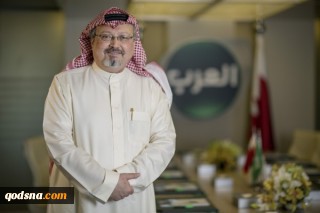
Reports about Khashoggi's disappearance and brutal murder while he visited the Saudi consulate in Istanbul, Turkey, have not only devastated his family, friends and fellow journalist colleagues, but also activists campaigning for drastic socio-political changes in the Arabian peninsula.
A one-time adviser to the Saudi kingdom with close ties to the establishment, including prominent members of the "royal" family, Khashoggi's increasingly critical views of the de facto ruler Mohammed bin Salman, (MbS) turned him into an enemy.
The threat he posed in his role as an active dissident derived from the fact that having interacted closely with Saudi and Arab intelligence services for more than 30 years, he was privy to many secrets. In addition, his position as a columnist for Washington Post and access to influential platforms in America and Europe, amplified his power to undermine MbS and his fake "reforms".
Khashoggi's self-imposed exile in Washington was evidently a choice he made to avoid being a victim of the harsh crackdown on independent voices. Despite his profile as a renowned political analyst-cum-journalist, with close to two million Twitter followers, it did not render him immune from state sponsored harm, as we now know.
It is known too from credible reports, that the folly, arrogance and brutality associated with MbS seems limitless. It may be his reasoning that if close allies and patrons such as Netanyahu and Trump can get away with murder, surely their protection would be sufficient for him to continue liquidating opponents under the guise of eliminating "terrorists"?
Bin Salman has been lauded in the West as a "great reformer" and harbinger of "friendship" with the colonial entity that has occupied Palestine for more than seven decades. Unfortunately for him and the rapacious family of "royals" he symbolises, the Khashoggi affair has exposed Saudi Arabia as a ruthless dictatorship that uses brutal methods to dispose of enemies.
Though international outrage against the killing has been as loud as media coverage, the South African government has yet to make its stance known.
Justifiably, critics will question whether the controversial yet lucrative arms trade and the pledge of billions of dollars made to President Ramaphosa, will hold us hostage to a rogue regime's contempt for human rights and the right to life itself.