Showing posts with label Binsalman. Show all posts

Friday, January 11, 2019

Saudi Arabia fears critics like Minhaj, but they’ll get louder

Saudi Arabia, a spurious state without any historical roots, without any national identity, and without geographical factors, which was created in 1932 by Britain for its agent, Abdul-Aziz Aal-e Saud, the desert brigand of Najd, continues its precarious existence only because of American support for its highly repressive policies, and is jittery to any form of criticism that might bring about its downfall.
Now we have a report on the recent Saudi decision to ban an episode of American Muslim TV presenter Hassan Minhaj Netflix show, following months of Saudi attacks on the first Muslim US congresswomen – Ilhan Omar (Democrat from Minnesota) and Rashida Tlaib (Democrat from Michigan), the first Muslim women elected to the Congress.
The report compiled by Akbar Shahid Ahmed for Huffpost is titled: “Saudi Arabia fears critics like Minhaj, but they’ll get louder”.
After the worst year for Saudi Arabia’s image since the 9/11/2001 incident in New York involved several of its citizens, the regime in Riyadh began 2019 with a fresh controversy by asking Netflix to block Saudi users from viewing an episode of “Patriot Act with Hasan Minhaj.”
On January 1, The Financial Times confirmed that Netflix had complied ― setting off international condemnation and a wave of renewed attention to a sketch  Minhaj released months ago.
But beyond the absurdity and outrage is a reminder of a powerful trend that matters not just for the Saudis’ ongoing struggle to sustain their place in the world but for 1.6 billion people associated with Islam, the religion that emerged over a millennium and a half years ago in Arabia.
The supposedly offending episode featured Minhaj saying this of Saudi Arabia’s de facto ruler, Heir Apparent Mohamed bin Salman (MBS), and his connection with last year’s murder of Jamal Khashoggi: “It blows my mind that it took the killing of a Washington Post journalist for everyone to go, ‘Oh, I guess he’s not a reformer.’ Meanwhile, every Muslim person you know was like, ‘Yeah, he’s the heir apparent of Saudi Arabia.’”
As Muslims like Minhaj in the US and those elsewhere in the Muslim-majority world win bigger audiences, such observations will become a larger part of the global conversation. People will become more aware of critiques and nuances shared among Muslims for years but rarely included in the Western-driven coverage of issues like the Saudi regime’s behavior.
For Riyadh, that’s dreadful news. It becomes a lot harder to say the Saudi should get a free pass for denying adult women the right to travel without a man’s permission and giving its citizens almost no say over how the country is run if the regime can’t hide behind claims that that’s simply Islamic culture or the way Muslims want to live.
It’s inconvenient, particularly after the Saudis invested such immense amounts of time and money in trying to win influence by appealing to Muslims’ sense of solidarity, to have different kinds of voices and examples from within the community showing different ways to live and thrive. And it’s especially worrying that many of these newly visible Muslims seek to own their identities ― not to cede them, out of frustration or fear, to traditional stewards like Saudi clerics, or to simply assimilate for the so-called mainstream consumption.
Faced with this threat of the foreign security alliances critical to their power, Saudi leaders are so far only making things worse.
To understand why the situation escalated this way, consider that the state of Saudi Arabia is less than 100 years old. To become the kind of world player, the Saudis have invoked their connection to Islam. To deceive world Muslims the Saudi King uses in every official document the title “Custodian of the Two Holy Mosques” ― a reference to the holy cities of Mecca and Medina in Hijaz, the Land of Divine Revelation, which the Saudi Wahhabis had violently seized in 1925, albeit with much bloodshed, even in the precincts of the holy Ka’ba.
The regime’s most important friends, notably the US, justify the relationship by referencing its authority in the Muslim-majority world. Around the region, the idea of natural Saudi leadership of the “Ummah” ― the global Islamic community ― carries weight among thousands of politicians and generals, oligarchs and day laborers. It doesn’t hurt that the Saudis’ oil wealth helps them buy support, but money is something many ambitious nations, from America to neighbors like the United Arab Emirates or Turkey, can offer. A connection to the divine isn’t.
The alleged link in the international imagination between Saudi Arabia and Islam has been propagated to be so strong that even Islam’s critics take note ― and advantage. When Donald Trump lies about Saudi treatment of gay men in an attack on Hillary Clinton or when Islamophobe activist Pamela Geller publicizes Saudi excesses (inevitably inaccurately) to suggest that the way the Saudi operates is how Muslims want the world to run, they know they’re using one hardline regime to fear-monger about all of contemporary Islam and they know the tactic works.
But Saudi Arabia’s mantle is under threat. With more Muslims sharing particular experiences of their faith, their goals and their identities, the Saudi’s generalizations and claims to broad authority are becoming weaker. The internet’s made that easier in even the most hidebound Islamic societies. And in the West, years of activism have successfully pushed institutions to better represent younger Muslim communities, like immigrants or second and third-generation Americans.
That’s something Netflix considered in offering a major platform to Minhaj ― “a person who relishes and catalogs the cultural specificity of his life,”  as a recent vivid profile of him put it ― in the first place.
A California-born child of Indian Muslims, Minhaj melded general American concerns about Saudi Arabia ― what it means for it be a close US partner, what it’s doing to civilians in Yemen and independent voices at home ― with a particular discomfort for his own community.
“As Muslims, we have to pray toward Mecca,” he said in the Netflix episode. “Imagine, we have to access God through Saudi Arabia, a country which I feel does not represent our values.”
It’s a sentence many Muslims wary of the Saudi state-sponsored misinterpretation of Islam ― and its propagation in other Muslim-majority societies, from Southeast Asia to North Africa ― would nod their heads to, even if official politics, clerical circles and Muslims’ desire to visit the holy sites in Arabia (something Minhaj has done) sustain a public posture of respect.
Sensing what’s coming and how it could challenge their regime’s critical coziness with Western patrons, top Saudis are already trying to maintain their comfortable status quo. That’s the driver behind efforts like Saudi media’s smearing in recent months of Representatives Ilhan Omar (Democrat from Minnesota of Somali origin) and Rashida Tlaib (Democrat from Michigan of Palestinian origin), the first Muslim women elected to the US Congress.
Journalist Ola Salem wrote: “These regimes have always benefited from the false choice they present to policymakers in the West — in Muslim countries, they say, extremists are the only alternative to dictators. That argument is eloquently undermined by American politicians who share those regimes’ religion, but not their cynicism about democracy.”
She noted: Such figures have independent knowledge and thoughts on the Muslim-majority world. They’re less likely to buy whatever the Saudi lobby in Washington is selling, such as panic about Iran.
While the episode ban remains in place, Minhaj’s quick viral response to Saudi Arabia shows that the Muslims who’ve fought stereotypes, racism and skepticism on top of all the other challenges to entering public life increasingly are unlikely to be cowed by Riyadh.
Abdul El Sayed, a young Democrat of Egyptian origin who most recently sought the party’s gubernatorial nomination in Michigan, said of Saudi Arabia: “I can’t speak for all American Muslims but what I can tell you is... it is a stain on the perception of Islam and Muslims.”
One of a growing group of Muslim Americans who are making waves in politics, he said a tougher US stance toward the Saudis would serve a range of progressive ideals: rejecting the regime’s human rights violations and regressive interpretation of Islam, and challenging a key player in the global oil market.
Saudi leaders now have to figure out how to handle and respond to these louder and louder voices.
The Saudis might seek advice from an increasingly close friend in a parallel situation, that is, Zionist Prime Minister Benjamin Netanyahu, who despite Israel’s alleged status in Jewish theology and history has aligned himself with right-wing leaders in Europe and the US whose political bases include known anti-Semites. Netanyahu’s approach helps these right-wing movements fight claims of prejudice ― much as the Saudi reluctance to criticize Trump’s Muslim-focused travel ban did for the US administration.
Meanwhile, the fighting within the larger Jewish community over Israel’s direction only becomes more heated.
Whatever the Saudis choose, they can’t ignore the growing conversation.
El Sayed said: “I think it is incumbent on all Americans to stand up and say enough is enough, we are not going to be part of empowering a despot who murdered his own citizen.
He concluded: “I can think of nothing more American than that.”

Thursday, November 29, 2018

To Build a Fire in the Heart of Our Country

By George Capaccio


But for most of us, the movement was a life-giving force. To join a hundred thousand others in marches and rallies, to know that even if you felt helpless against the power of government you were not alone in your feelings—that people all over the country, of all ages, black and white, working people and middle-class people, were with you—was to be moved beyond words. … to see Mohammed Ali defy the authorities even at the cost of his championship title, to hear Martin Luther King speak out against the war, to see little children marching with their parents, carrying signs—“Save the children of Vietnam”—was to feel the best of human beings were fighting your cause. … millions of people protested the war not because their own lives were at stake, but because they truly cared about other people’s lives, the lives of Vietnamese, of fellow Americans.
– from You Can’t Be Neutral On A Moving Trainby historian and activist Howard Zinn.

November 27, 2018 "Information Clearing House" -  When I was young and the war in Vietnam was raging, I rejected much of what I associated with a government and a society that could undertake the destruction of an entire people and still carry on as if there were nothing in the least bit abnormal about that state of affairs. In time, I saw that the way forward, at least for me, was to join those who understood just how evil the war was and how imperative it was for people to lift their voices, take to the streets, and risk their personal well being to protest the war.

Reading Zinn’s account of the Vietnam antiwar movement (in his book You Can’t Be Neutral On A Moving Train) and how it grew from isolated pockets of opposition into a massive, nation-wide wave of resistance, I felt re-united with feelings that have languished inside me for the past decade and a half. In the winter of 2003, as the US prepared to invade Iraq, I was on the streets with hundreds of thousands of others who truly cared about preventing the needless deaths of both Iraqis and fellow Americans. For a time, I believed we would prevail over the Pentagon, the defense contractors, and the Department of Defense—each of which had its own reasons for wanting to prosecute yet another act of criminal aggression against a relatively defenseless country. This time around, however, it was conceivable that our passionate commitment to peace and its expression through movement building, rallies, and demonstrations might actually stay the hand of our “Commander-in-Chief” and his war-mongering, neo-conservative ideologues: Dick Cheney, Condoleezza Rice, Donald Rumsfeld, Paul Wolfowitz, et al.

That winter afternoon stands out in my memory as the last time I felt the degree of exhilaration Howard Zinn so beautifully evokes in his description of the camaraderie he experienced during the high watermark of the Vietnam antiwar movement. A month later, on March 20, 2003, the war we hoped to prevent officially began with the much ballyhooed “shock and awe” bombing of Iraq. As someone with deep, personal connections to people in Iraq and a long-term involvement with the anti-sanctions movement, I felt profoundly demoralized by our failure to stop Bush II from attacking yet another Muslim nation under the pretext of “defending the world from grave danger.” But fellow activists reminded me that our surrender was not an option. However much defeated many of us felt, we had to keep up the struggle to bring some measure of sanity to a world in which the glorification of military power and the choice of violence over diplomacy nine times out of ten trumps international law and humanitarian considerations.On a frigid, fingertip-freezing day in February 2003, close to a million of us hit the streets of New York to make our voices heard. Together with comparable numbers of our brethren in other countries, we declared our united opposition to a war against Iraq—a war that many in the peace movement judged would be both illegal and immoral, and unconscionably destructive.


This year, on the eve of Thanksgiving, I turned to historian and activist Howard Zinn, author of A People’s History of the United States, for a way to hold and live with the terrible knowledge that once again my country is putting the projection of power and the pursuit of hegemonic objectives (controlling global energy resources; maintaining ties with US-friendly regional allies, etc.) ahead of simple humanity. Instead of the Vietnamese, the latest target of the US government’s malevolent, calculated indifference to massive human suffering are the people of Yemen. Progressive writers and activists have spoken out forcefully against the genocidal nature of Saudi Arabia’s war on Yemen, and demanded a total suspension of arms sales to the Saudi regime and the cessation of all other forms of assistance, including mid-air refueling of Saudi war planes, targeting information, and diplomatic cover.

In this essay, I have no wish to repeat what has been said elsewhere about the conflict between the Kingdom of Saudi Arabia and the Houthi rebels of Yemen. Informed readers are aware of the Kingdom’s bogus claim that the rebels are significantly supported by Iran, its greatest foe. Therefore, the war is, in effect, a battle with the Islamic Republic of Iran for dominance of the Middle East and the ultimate victory of extremist Sunni Islam over the Shia theocracy of Iran. By this line of specious reasoning, the US alliance with Riyadh is a necessary bulwark against Iran’s growing regional influence and its purported role in fomenting terror and further destabilizing the Middle East.

I leave the delineation of such matters in far more competent hands. What matters most to me are the humanitarian consequences of this three-year-conflict, which shows no sign of stopping any time soon despite the recent US decision to stop re-fueling Saudi war planes and the growing, world-wide alarm that the Saudis are condemning an entire people to death from famine, sickness, and unrelenting airstrikes on civilian targets, like markets, hospitals, schools, and mosques. Consider the following figures from authorNicholas Davies, citing data from the Armed Conflict Location and Event Data Project (ACLED), a nongovernmental organization (NGO):


ACLED now estimates the true number of people killed in Yemen is probably between 70,000 and 80,000.ACLED’s estimates do not include the thousands of Yemenis who have died from the war’s indirect consequences, such as starvation and preventable diseases like diphtheria and cholera. UNICEF reported in December 2016 that a child was dying every 10 minutes in Yemen, and the humanitarian crisis has only worsened since then.  At that rate the total of all deaths caused directly and indirectly by the war must by now be more than one hundred thousand.


An estimated one hundred thousand people killed directly or indirectly in a war that never should have begun in the first place. A war that has the blessings of Donald Trump in the form of billions of dollars of arms sales; a “bromance” with Mohammed bin Salman (MbS), the Crown Prince of Saudi Arabia; and a brazen refutation of the CIA’s conclusion that the Crown Prince “personally ordered” the killing of Saudi journalist and self-imposed exile Jamal Khashoggi. Quoting Secretary of Defense Mike Pompeo, Trump told the world on Thanksgiving morning, “It’s a mean and nasty place out there.”

And thanks to people like Mike Pompeo, National Security Advisor John Bolton, Donald Trump, and his bosom buddy the Little Prince of the world’s leading autocracy and exporter of terrorist doctrine, it’s getting a whole lot meaner and nastier. According to a recent report issued by the charity Save the Children, about 85,000 children under the age of 5 have starved to death as a consequence of the civil war in Yemen. How can anyone possibly grasp the significance of that number and the scale of human suffering implicit in the deaths of so many little children. One only has to look at photos of severely malnourished Yemeni children to realize the inhumanity of this war and that of the people who either prosecute or condone the violence. Working in Yemen since 1963, Save the Children states unequivocally that “13 million people face starvation—many of them children.” Furthermore, “Over 22 million people—three out of every four—urgently need lifesaving assistance, including over 11 million children.” The following statistics are from the above-mentioned report:
  • Only 55% of girls 15 and older are literate
  • 29% of children are out of school, with up to 75% of schools destroyed
  • 55 out of 1000 children die before their 5th birthday
  • 23% of children are engaged in child labor
  • 54% of people live in poverty
  • 1,600 children have been killed since the start of the conflict
The US, first under Obama and now under Trump, does much more than condone the bombing of civilian, government, and military targets in Yemen. Not only do we provide the killers with bombs and guided missiles; we unashamedly support the economic war being conducted against the people of Yemen by Saudi Arabia and its coalition partners. Martha Mundy, Professor Emeritus of Anthropology at the London School of Economics, has done extensive fieldwork in Yemen and other Arab countries. In her recent report for the World Peace Foundation, Mundy notes the responsibility of the US, the UK, and France—the three major arms dealers—in the commission of war crimes in Yemen as a result of the bombing. But their support for the economic war being waged is generally ignored, she says, and it is this form of violence that is “the major cause of starvation” in Yemen.

According to Professor Mundy, the war has evolved in stages, from attacks on mainly military and government facilities to “civilian and economic targets, including water and transport infrastructure, food production and distribution, roads and transport, schools, cultural monuments, clinics and hospitals, and houses, fields and flocks.” In August 2016, the Coalition launched a third stage: 

economic war with intermittent blockades of al-Hodeidah, Yemen’s major port on the Red Sea; the closure of the airport in Sana’a to all commercial flights; and the transfer of the central bank of Yemen to the city of Aden. (Southern Yemen, where Aden is situated, is controlled by forces of the United Arab Emirates (UAE), which is aligned with Saudi Arabia in its war on the Houthi rebels, based in San’a’ in the north.) On the basis of her research, Mundy concludes that the economic war is the leading cause of the tragedy that has befallen the people of Yemen:

Today Yemen is commonly described as the greatest humanitarian crisis in the world with 80% of the population requiring food assistance and with outbreaks of cholera that have affected more than a million people. The causes of that include not just the effects of the bombing campaign on the quality and quantity of food and water available … but above all the impact of the deepening economic war from late 2016.

The good news is that this crisis is finally getting the attention it deserves. During the week of December 1, the US Senate is expected to vote on S. J. Resolution 54, the bipartisan War Powers Resolution on ending US support for the slaughter of innocents in Yemen. Voters are encouraged to contact their senators and urge them to support the bill, sponsored by Senators Bernie Sanders (I-VT), Mike Lee (R-UT) and Chris Murphy (D-CT).

In my home state of Massachusetts, a coalition of peace groups—including Mass Peace Action, Veterans for Peace, the American Friends Service Committee, and Friends Meeting at Cambridge (Quaker)—is undertaking a variety of actions to draw attention to the crisis and to get more people involved in working to end it. The centerpiece of our peace advocacy is an ongoing campaign to hold Raytheon accountable for its sale of deadly weapons to the Saudi-led coalition. To that end, we’ve held well-attended demonstrations in front of the company’s Cambridge office and encouraged attendees to play an active role in the campaign. Some of the tactics we advocate include organizing educational events, writing opinion pieces for local papers, and using social media to inform people about the crisis in Yemen.


The movement against that war is growing. My hope is that it will soon reach a critical mass, and that once again, as they did during the Vietnam War and in the build up to the Iraq war,  people from all walks of life, of every ethnicity and color under the sun will come together on the streets of their towns and cities, and with one indivisible voice, cry out in the wilderness, “Save the children of Yemen!”

Because the lives of those children matter every bit as much as the lives of our own children. Because our government, along with US-based arms manufacturers, is just as responsible for the bloodshed in Yemen as the Saudis and their allies. Because as members of a purportedly democratic society we are obliged to hold our leaders accountable and demand that they do everything in their power to protect and preserve the lives of the people of Yemen.

A CNN reporter once interviewed Denis Halliday about the sanctions regime imposed on Iraq by the UN but enforced by the US and the UK. A few years earlier, in 1998, Halliday resigned his post as the UN humanitarian coordinator of the Oil-for-Food program in Iraq to protest the sanctions and the devastation they caused. In response to the interviewer’s question about Saddam Hussein’s brutality and the need to keep the sanctions in place, Halliday said, “Nothing justifies the killing of children in Iraq. Nothing.”

What was true then is no less true today: “Nothing justifies the killing of children in Yemen. Nothing.”


George Capaccio is a writer, performer, and activist living in Arlington, MA. During the years of US- and UK-enforced sanctions against Iraq, he traveled there numerous times, bringing in banned items, befriending families in Baghdad, and deepening his understanding of how the sanctions were impacting civilians.

Tuesday, November 27, 2018

Trump Goes Easy on Saudi Arabia but Crown Prince Should Be Worried

Trump Goes Easy on Saudi Arabia but Crown Prince Should Be Worried
MELKULANGARA BHADRAKUMAR

In the entire chronicle of the United States’ diplomatic history, President Trump’s statement of November 20 on Standing with Saudi Arabia will remain as a unique document for its extraordinary frankness. It is one thing for outsiders to estimate the US foreign policies to be utterly self-centred, money-minded, unprincipled and bordering on the cynical. But it is an entirely different matter that the POTUS confirms it.

The stunning message coming out of Trump’s statement on Tuesday is that all that talk of American “exceptionalism” is plain baloney. Trump wants to move on. What Jamal Khashoggi?
Having said that, Trump’s statement is more or less on expected lines. In a single sentence, it can be paraphrased as follows: “The Arab sheikhs are gooses that lay the golden egg and we won’t kill them”.
But then, there are subplots, too. Most important, Trump scrupulously avoids defending the Saudi Crown Prince Mohammad bin Salman. On the contrary, he does not rule out the possibility that the intelligence agencies who “continue to assess all information” pertaining to the murder of Jamal Khashoggi may even establish at some future date that “the Crown Prince had knowledge of this tragic event – maybe he did and maybe he didn’t!”
Trump is either unsure himself or knows more than he’s willing to admit publicly. Significantly, Trump makes a distinction between King Salman and the Crown Prince. Trump then adds, “In any case, our relationship is with the Kingdom of Saudi Arabia. They have been a great ally in our very important fight against Iran. The United States intends to remain a steadfast partner of Saudi Arabia to ensure the interests of our country, Israel and all other partners in the region.”
Trump also lists out Saudi Arabia’s importance to the US: its willingness to bankroll America’s fight against “Radical Islamic Terrorism”, its agreement to “spend and invest” US$450 billion in the American economy (including $110 billion on purchase of military equipment) and by being “very responsive to my requests to keeping oil prices at reasonable levels… ”
In effect, this has been a smart way of putting across to the Saudi leadership Trump’s expectations in the period ahead – without saying so in as many words. Quite obviously, this is a “win-win” for Trump.
On the one hand, he takes the moral high ground by condemning Khashoggi’s “terrible” murder and by ostentatiously distancing himself from the official Saudi stance on Khashoggi’s murder. That creates space for him to maneuver and fine tune his attitudes as time passes in what is essentially an evolving situation, keeping in mind the possibility that there could be more disclosures – above all, from Turkey.
At any rate, Trump point blank refuses to punish Saudi Arabia over the Khashoggi affair or put US-Saudi relations in jeopardy. He justifies it by insisting that he is only safeguarding national interests and is championing “America First”. To be sure, Trump has the domestic constituency in mind and his political instincts tell him that the US Congress will not push the envelope and push him to act against Saudi Arabia.
Without doubt, Trump expects the Saudi regime to show reciprocity for such “generosity” by fulfilling his demands – generously funding the US’ military operations in the Greater Middle East, lavishly investing in America First, generating massive business for American arms vendors, and keeping oil production at high level to prevent prices from rising (which is important for the US economy.)
However, the terrible beauty of all this is that Trump is not contemplating the need of Saudis making any policy corrections. Even as regards the war in Yemen, he makes no demands.
But then, Trump also didn’t say a word to support the present Saudi leadership in the Khashoggi affair. Notably, his statement is at best ambivalent about the Crown Prince – “all options are on the table”, as the Americans would say.
Conceivably, Trump anticipates that the continuance of Mohammad bin Salman as the Crown Prince may become a sticking point – and that the jury is still out. Indeed, there is a lot of food for thought in Trump’s statement for the Saudi Crown Prince.
The big question is how Trump’s statement will be seen in the international opinion. For good or bad, it is going to be held as a benchmark by the US’ allies. Plainly put, Trump is signaling that he favors pushing the Khashoggi affair under the rug. Such brazen pragmatism is unlikely to pose a moral dilemma or shock the Western sensibility insofar as doublespeak and hypocrisy is not uncommon in western polices. Libya and Iraq are two glaring examples.
Having said that, US’ moral authority has suffered grievously. It has been severely damaged. And this would have negative repercussions for the US’ standing globally and in particular for Trump’s campaign against Iran. His fulminations against Iran in the statement carry no credibility.

Tuesday, November 13, 2018

Israeli delegation in Riyadh as Netanyahu asks US to back MBS

A handout picture provided by the Saudi Royal Palace on
October 24, 2018, shows Saudi Crown Prince Mohammed bin
Salman speaking during a joint session of the Future Investment
Initiative conference in the capital Riyadh
.
Saudi Crown Prince Mohammed bin Salman has met with a delegation of pro-Israeli advocates in Riyadh amid reports that Israeli Prime Minister Benjamin Netanyahu has asked the US to keep supporting the young prince against international criticism.
In a new sign of growing ties between Riyadh and Tel Aviv, bin Salman hosted a group of Evangelical Christians in Riyadh on Thursday, Israeli media reported.
Leading the group was Joel C. Rosenberg, a dual US-Israeli author and activist who runs the Jashua Fund pro-Israeli charity. Mike Evans, founder of the Friends of Zion Museum in Jerusalem al-Quds, was also among the participants of the meeting.
The two sides discussed a wide range of topics including Israel, Palestine and Saudi Arabia’s relations with the US.
“We were pleased by the invitation extended to us more than two months ago by the kingdom of Saudi Arabia," the delegation said in a statement. "Without question, this is a season of tremendous change in the Middle East, and therefore we have been grateful for the opportunity to meet in-person with key Arab leaders to understand their goals and to ask direct questions.”
The delegation held separate meetings with Saudi Foreign Minister Adel al-Jubeir as well as the kingdom’s ministers of education and Islamic affairs.
Interestingly, they also met the heads of Saudi Arabia’s so-called Global Center for Combating Extremist Ideology (Etidal) and the Muslim World League.
The meetings came shortly after The Washington Post revealed in a report earlier in the day that Netanyahu has asked US President Donald Trump to continue supporting MBS despite accusations that he ordered a hit job on anti-Riyadh journalist Jamal Khashoggi last month.
The Israeli PM had asked top US officials recently not to abandon their support for bin Salman over the killing of Khashoggi at the Saudi consulate in Turkey’s Istanbul, according to multiple reports.
According to The Washington Post, Netanyahu has specifically told the White House that the crown prince is a key strategic partner and a linchpin of the US-Israeli front against Iran's regional influence.
Saudi Arabia does not officially recognize Israel and has no formal ties with the regime. However, the two sides have been widely reported to have cooperated secretly for years.
The warming of Riyadh-Tel Aviv relations has gathered pace since June 2017, when bin Salman became the crown prince and the kingdom’s de facto leader.

Sunday, October 28, 2018

Saudi Slaying Sinks American ME Policy

Murder in the Consulate; panic in Riyadh; balls-up in Washington


article_image

Mike Pompeo and King Salman searching for a "Mutually agreeable explanation that won’t implicate the Crown Prince"

Kumar David

Right at the start I told friends in my e-mail group that nothing would come of it; the murder would be swept under the carpet, Saudis would admit to the barest knowledge of Jamal Khoshaggi’s (JK) fate, America would launder Crown Prince Mohammed bin Salman’s (MBS) dirty linen and after a little fluster it would be business as usual. It is turning out to be just that notwithstanding much chest beating in the liberal media. Who cared about assassination of El Salvadorian Archbishop Oscar Ramiro by the country’s military regime except a few leftists until Pope Francis canonised him a fortnight ago? A dozen journalists are murdered each year all over the world and soon forgotten. Sirisena and Wickremesinghe have swept Lasantha’s murder under the carpet much to the relief of Gota, MR and Fony.

But there have been assassinations that changed history; Julius Caesar, Thomas à Becket, Archduke Franz Ferdinand and later Gandhi, Martin Luther King and Benigno Aquino. In comparison JK is a tiny potato and in the long-run the fallout from the murder will be zilch. Or, who knows? The Middle East is volatile and Donald Trump is bizarre, hence interesting times (as the Chinese say) may unfold. The purpose of this column is not to keep you up to date with the news; there are better ways to do that. Where I can be useful is in political assessment. Here are likely medium-term (one to two year) scenarios in order of indicative likelihood.

1. There will be a major reset in Middle East politics, such as transformation of the Saudi royal dictatorship, democratisation of the Gulf region or a decline in America’s power to call the shots in the region. (Likelihood 0.1%).

2. An improvement in the Middle East such as accelerated reforms in Saudi Arabia and in the Gulf, reassertion of the legitimacy of the Iran nuclear deal, ending the Saudi-American genocidal Yemen war, better US (Congressional not Trump) policy on Palestine. (Likelihood 0.9% since US-Israeli-Saudi-Middle East relationships are set in stone).

3. Removal of Crown Prince MSB from a position of power, perhaps temporarily, and implicit regime alterations and amendments in Saudi state policy. (Small, say 9% chance).

4. Nothing at all will happen (90% likely). I dare you! Show me in six months what has changed.

Erdogan has been brought on board by Washington and Riyadh. The Turkish economy is in a bad way and speculation is that Erdogan drove a hard bargain, maybe relaxation of sanctions and debt amelioration. In his much anticipated 23 October speech he revealed even less than was already known in the public domain. He did say the murder was premeditated but forgot to add that the sun rises in the East. Clearly he has cut a deal for restraint in a recipe cooked in Washington with ingredients shipped from Riyadh. He soiled himself by implicitly going along with a hoax to save MBS and letting the Saudis pick on a few fall guys such as Saad Al-Qahtari, MBS’ right-hand man and enforcer. He avoided confirming or denying the existence of audio and video tapes of the murder and dismemberment of the body.

Done! That is the important part of my piece. Let me now titillate your baser instincts with gruesome details. Turkish police have found damning evidence that JK was murdered inside the Saudi Consulate in Istanbul. The body was dismembered while KJ was still alive, packed in suitcases and taken ‘home’ in two Saudi jets which had arrived earlier in the day with 15 killers holding diplomatic passports. Investigators found toxic materials in the Consulate; operatives had chemically scrubbed the walls and painted over crucial evidence. For 17 days the Saudis lied brazenly and for 13 refused Turkey permission to search the Consulate and the Consul’s home. Trump barefacedly colluded and changed his story every two or three days. He now says: "It was a plot gone awry".

On audio recordings of the murder "You can hear his voice and other voices speaking Arabic; you can hear how he was tortured and murdered" many leading media outlets say. Strategically fed leaks from the Turkish prosecutor and police blew apart the lies and forced the Saudis to confess 20 days after the event. It was leaks and the international media pressure that gave Erdogan the leverage to cut a deal with Washington and Riyadh presumably on good terms for Turkey.

The comic part of the show stars Donald Trump. Following a telephone conversation with King Salman he first floated the fiction that the murder was the work of "rogue killers". He must have recently read comic book renditions of the Arabian Nights tale Ali Baba and the Forty Thieves! Leaks from the Turkish police and prosecutor built irresistible pressure; the Saudis finally capitulated and confessed to killing KJ in the Consulate, but they plead it was not cleared by MBS. "Tell us another one, just like the other one, tell us another one do!" Trump now "awaits Saudis plans" while MBS has been put in charge of restructuring the intelligence services; a fox in charge of the chicken coop, or appointing Buddharakkita to reform Somarama’s pirivena.

KJ’s murder ignited a global uproar and Trump was compelled to dispatch Secretary of State Mike Pompeo to Riyadh to cook up "A mutually agreeable explanation that won’t implicate the Crown Prince". In Riyadh, Pompeo smiled and dined with Salman and MBS. Of Saudi-US friendship MBS exclaimed to the media: "We are strong old allies. We face our challenges together – past, present and future"; Pompeo responded "Absolutely"; no surprise there. The story being cooked up is that Saudis admit culpability but it was an unauthorised rendition attempt that went wrong. However, the media dug up photos of four of the operative seen regularly in MBS’ company. The one who oversaw the mission has been identified as Maher Abdulaziz Mutrebas, MBS’ personal bodyguard.

MBS’ bodyguard and personal hatchet man Abdulaziz Mutrebas entering the Consulate(www.scmp.com/news/world/middle-east/article/2169171/man-linked-saudi-prince-was-consulate-when-jamal-khashoggi)
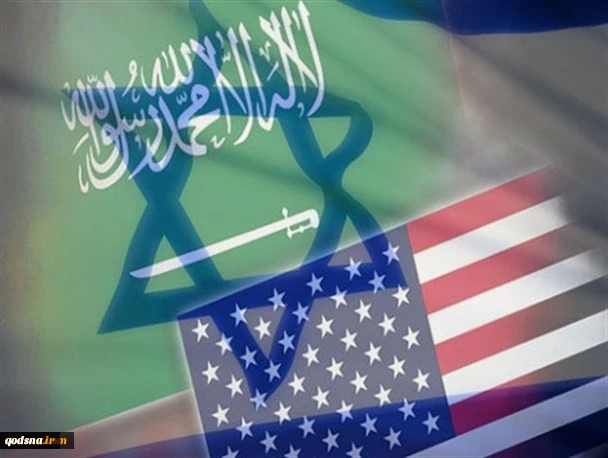
There are three reasons, all simultaneously true, why Trump is bending over to shield the killers. One is that he is a mule and knows no better than to plough the same discredited furrow. The second is that he benefitted to the tune of tens if not hundreds of millions of dollars from real estate deals with the Saudis and owes them a favour; and more important he fears exposure (as with Putin). On the campaign trail he boasted of millions he had earned from Saudi deals. He is the only US President since Nixon who has not disclosed his tax returns.

A third reason is the importance of the Middle East to the US. Trump has antagonised America’s best diplomats that he is now high and dry for good advice. Washington is in an incredible mess and Trump is out of his depth. If you sympathise with US foreign policy you may grant that US-Saudi relations are of the highest priority and should not be endangered. But that is a state-to-state matter, not a Trump family (DJ and son-in-law Jared Kushner) to MBS cosying-up matter. Trump who puts narcissism at the centre of every involvement cannot separate policy from personal profit and has muddled the two again.

JK though a recent critic of the Saudi regime was never a dissident. He was a business operator and previously a hanger-on of the regime. He had been an adviser to MSB and praised his reforms. He never called for regime change, only for gradual reform. He did criticise some aspects of policy such as the brutal war in Yemen. Hence it is not clear why it was essential to murder, dismember and take him back ‘home’; it must be the sheer arrogance of the Saudi royals.

The murder prompted outrage and businesses which were lining up to cash in on Saudi billions to be spent by MBS on ambitious investment programmes have been caught with their pants down. ‘Davos in the Desert’ a $900 billion investment bonanza has just started but the IMF’s Christine Lagarde and the World Bank have pulled out in embarrassment. The biggest names in global business, the crème de la crème, the 1% of the 1%, were to be there. Now they are bolting like sheep fleeing the slaughterhouse. The rush is headed by CEOs or Presidents of Black-Stone, Black-Rock, Virgin’s Richard Branson, Standard Chartered, JP Morgan, HSBC, Credit Suisse, Ford, Uber and the like. Of course, the carrion eaters will all be back after the dust settles and repression returns to the familiar old-fashioned style much loved by big business.

Trump doggedly stayed the course insisting that Treasury Secretary Steven Munchin attend until Congress forced him into a boycott. The governments of France, UK, Germany and Netherlands are also keeping away. Trump has spoken loudly of the $110 billion armaments sale to the Saudi that he negotiated during his much-feted trip. Leaving aside the morality of flooding the region with more military hardware, the Saudi regime cannot cancel the purchase since it needs killing gear for its own survival. Nor can it switch the order to Russia or China without jeopardising performance of existing hardware which is deeply plugged into American technology.

Trump dispatched CIA Director Gina Haspel to Ankara to meet Erdogan on the morning before the latter’s sell-out speech and Treasury Secretary Munchin to Riyadh, probably to finalise the payoff. If anyone thought ethics of any degree prevails at the apex of international politics, Crown Prince Mohammad bin Salman bin Abdulaziz Al Saud, Donald John Trump and Recep Tayyip Erdogan just gave them an ice cold shower.

Tuesday, September 25, 2018

Binsalman, Backbone of US Plots to destabilize Iran


By: Abdel Bari Atwan
When US President Donald Trump accuses Iran of being behind most if not all terrorist attacks in the world; Saudi Crown Prince Muhammad Bin-Salman openly vows to take his battle with Iran into Iranian territory; and Israel threatens to continue attacking Iranian military targets to prevent the country from establishing missile bases in Syria; then Saturday’s bloody attack on a military parade in Ahvaz in which 29 people were killed comes as no surprise.   Indeed, such an incident could have been expected earlier, and more such attacks, even bloodier, can be expected in future. The region stands on the threshold of an unprecedented terrorist war waged by intelligence agencies that will be destructive to all parties concerned.

Trump is imposing a suffocating economic blockade on Iran which is set to peak in November when its most important component, the ban on oil exports, becomes operative. Its principal objective is to wear down and destabilize the Iranian regime with the aim of ultimately overthrowing it by military force. Experience has taught us that American wars in our region do not come out of the blue, but are the culmination of strategies that entail years of preparation.

Trump well knows that economic sanctions alone cannot topple regimes. Otherwise the North Korean and Cuban regimes would have fallen years ago, not to mention the Iraqi regime led by Saddam Hussein and the Hamas government in the Gaza Strip. Blockades that are not followed by military intervention tend to backfire. That is why planning began to create an ‘Arab Nato’ consisting of the six Gulf states plus Egypt, Jordan and Morocco in anticipation of such an intervention should it go ahead. Israel’s successive air and missile strikes inside Syria are one of its components.

Iran is a powerful state with a strategic project that it seeks to bolster with a national and regional military capacity. At its heart is a missile capability that can have a decisive effect on the ground and strip Western air superiority of its most potent weapon: the ability to terrorise and thereby impose early surrender on the other side.  Iran has gone from exporting the revolution to exporting missile capability and bolstering allied paramilitary groups, which have come to be seen as an ‘existential threat by most of its adversaries, particularly Israel and Saudi Arabia.

The Saudi heir apparent Muhammad Bin-Salman is Trump’s closest Arab ally and the mainstay of his strategy for undermining Iran’s security and stability from within. He would not have made the statements he did a year ago pledging to take the battle to the Iranian interior were he not aware of the US and Israel’s plan for changing the regime and its various stages. That was the first time in the history of the Saudi-Iranian rivalry that a Saudi official dared speak openly of intentions to foment rebellion among religious and ethnic minorities in Iran. Previously, Saudi rulers never publicly acknowledged or boasted about meddling in other countries’ affairs or waging war on them. What we have seen in Yemen we are set to witness in Iran.

Iran’s Revolutionary Guard – which was targeted and humiliated in the Ahvaz attack at a time when it and its direct and indirect allies have been achieving victories in Iraq, Syria and Yemen – was accordingly quick to accuse a Saudi-backed Arab separatist group of being behind the incident. It vowed to retaliate, a threat reiterated by Supreme Leader Ali Khamenei, President Hassan Rohani and other officials.

It was not by chance that Dr. Abdelkhaleq Abdallah, described as one of the closest aides of Abu Dhabi’s Crown Prince Muhammad Bin-Zayed, wrote a tweet justifying the attack on the military parade in Ahvaz and insisting it was not an incident of terrorism. This was not a slip of the tongue. It was said at the express direction of his country’s leaders and their Saudi counterparts. Otherwise, the tweet would have been immediately erased as a way of disowning it, and the writer would have been thrown in jail. But that did not happen.

To elaborate, military matters are not a subject that Arab, and especially Gulf, tweeters can discuss freely. Every word is carefully considered and dictated with the aim of sending a specific message to one party or other. Dr. Abdallah is an political scientist, not a military spokesman for him declare that “taking the battle to the Iranian interior is a declared option and it will increase in the coming period” as though it were merely his personal assessment.

That being the case, we can be sure that we are now facing a war waged by intelligence agencies targeting Iran from within. It is based on recruiting some of the country’s Arab, Sunni, Azeri and Baluch minorities (the latter live mostly in southeastern Iran by the Pakistani and Afghan borders and are represented by the hardline Sunni Jundallah organization) as was done in Afghanistan during the Soviet era, resulting in the collapse of the communist regime of Muhammad Najibullah.

It is perhaps premature to say that this plan stands much chance of succeeding. The regime of the Islamic Revolution in Iran bears no comparison to the former communist government in Afghanistan, even if the US spearheaded the campaigns against both, with Saudi Arabia playing a key part in providing financial, military and sectarian/ideological backing. The differences between the two cases are very big, and the times, too, have changed.

Iran has more experience of ‘spook wars’ than Saudi Arabia and some of its Gulf allies (Kuwait, Qatar and Oman denounced the bloody attack on the military parade and describe it as terrorism). This experience has been enhanced ‘operationally’ through the direct involvement of Iranian intelligence offshoots in wars in three arenas – Syria, Iraq and Yemen – and especially against the Islamic State (IS) organisation, as well as indirectly in South Lebanon and the Gaza Strip. Saudi intelligence expertise has only been tested in practice in two countries, Syria and Yemen, and the achievements in both cases have been modest, given the results so far.

Iran has faced foreign meddling, internal revolts and externally-backed separatist movements for the past thirty years. But its regime has never once been threatened with collapse. It has become stronger and more resilient, scoring one military achievement after another.

Trump wants to involve Saudi Arabia, along with its Gulf allies and some of the Arab Sunnis, in a proxy ‘terrorist’ war in Iran. As well as draining it financially this could jeopardise its own domestic security, at a time when it needs stability due to the bumpy transition it is going through under King Salman. While there are tools the kingdom can employ at the US’ behest to destabilise Iran, there are also other tools and means that Iran can employ. One need only take a glance at what has been achieved by Iran’s revolutionary, political and military arms in Iraq and Syria, and further away in Yemen, which has been able to withstand what is perhaps the longest assault ever waged on the country.

The problem in our estimation does not lie in whether the attack on the military parade in Ahvaz is described as terrorist or not. It lies in the consequences that could ensue. We have begun entering a period of involvement in a secret war of terrorist attacks and counter-attacks, at a time when other countries are resorting to dialogue to resolve their differences – witness the leaders of North and South Korea negotiating an end to a 70-year war that almost turned nuclear.

The US is playing with fire with the clandestine and economic wars whose fuse it has lit in the region at Israel’s instigation. The irony is that it is the fingers of Saudi Arabia and maybe some other countries that are most likely to be burned, and perhaps, who knows, even incinerated.

Friday, January 05, 2018

Contrasting Leadership Styles In The Saudi-Iran Conflict

3333-14

by Seyed Hossein Mousavian
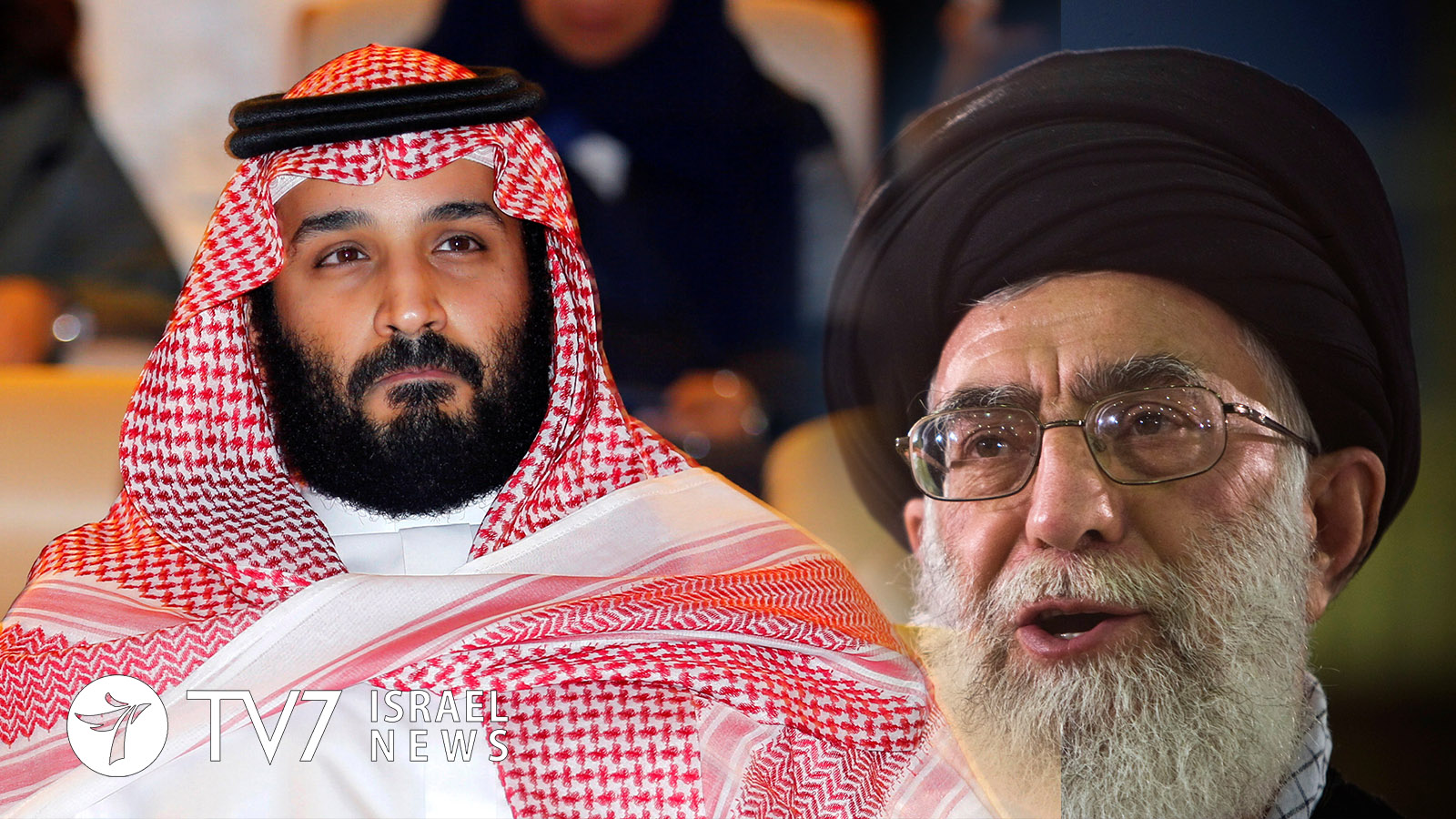
Saudi Crown Prince Mohammad bin Salman (MBS) is steadily consolidating power in Riyadh and positioning himself to become the most powerful ruler in Saudi history. His rise has been accompanied with a ratcheting up of hostilities against Iran and even war rhetoric. As Saudi-Iran tensions increase, the lived experiences and leadership styles of the 78-year-old Iranian Supreme Leader Ayatollah Ali Khamenei and 32-year-old MBS will decide the future of peace and stability in the region.
Before Iran’s 1979 Islamic revolution, Ayatollah Khamenei was a political activist who opposed the dictatorship of the Shah and endured 15 years of prison, torture, and exile. He rose through the revolutionary ranks after the revolution and in 1981, was elected president. During the Iran-Iraq war (1980-1988)—which saw the United States and other global powers as well as regional Arab states support the aggressor Saddam Hussein—Ayatollah Khamenei played a key role in overseeing and leading the war effort. MBS, on the other hand, was just born in 1985 and has no comparable experience.
During the 1980s, Iran also faced a wave of terrorism, with the MEK group alone responsible for over 17,000 deaths. Ayatollah Khamenei is himself a victim of terrorism, with one his arms left paralyzed after a bomb attack in 1981. The silver lining of Iran’s history of falling victim to terrorism is that its leaders have become counterterrorism veterans—another reason for Iran’s success in combatting terrorist groups throughout the region. MBS, meanwhile, does not have a counterterrorism track record and was preparing to take the reins of power at a time when, according to a 2014 email by former Secretary of State Hillary Clinton, his country was “providing clandestine financial and logistic support to ISIL.”
Divergent Foreign Policies
Ayatollah Khamenei has for 28 years presided over a state that has been subject to every form of economic, political, and security pressure by outside powers—chiefly the United States—aimed at spurring regime change. However, not only has Iran’s security and stability endured during this period, but the country has emerged as an influential regional power. Policies of sanctions, pressure, and threats of war against Tehran have in fact resulted in Iran consolidating its position as the only regional state not beholden to foreign powers for its security.
Moreover, Ayatollah Khamenei’s national security strategy has been premised on the belief that resisting U.S. hegemonic aspirations in the Middle East is not only the source of Iran’s strength, but allows it to maintain its independence.
On the contrary, the Saudi royal family views the United States as its security guarantor and has relied on U.S. military, political, and economic patronage for decades. In May, MBS signaled his aim to continue this dependency by signing the largest arms deal in U.S. history for $350 billion—and thereby winning full support for his regional and domestic agenda from the White House.
Within the region, Tehran has formed a strategic partnership with Russia. At the behest of the Syrian and Iraqi governments, Tehran has played a key role in those countries to secure their territorial integrity and defeat terrorist organizations in the vein of the Islamic State (ISIS or IS). Saudi Arabia, despite being given carte blanche by the Trump White House, has waded into a quagmire in Yemen, creating the world’s greatest humanitarian catastrophe with its ferocious bombing campaign. It has failed in its attempt to orchestrate regime change in Qatar and Syria, witnessed its effort to undermine the Lebanese government backfire in full view of the international community, and maintains an ever-more precarious hold over Bahrain. Such actions have earned MBS a reputation as hotheaded and impulsive, with The New York Times noting how many in Saudi Arabia view him as “brash, power-hungry and inexperienced.” Other analysts have stated how under MBS, “Saudi Arabia has become an irrational actor in the Middle East.”
Another vital aspect of Iran’s national and regional security strategy has been its experience in successfully mobilizing popular forces to complement its professional armed forces. Ayatollah Khomeini initiated this policy after Saddam Hussein’s invasion of Iran in 1980, which led to the creation of popular militia units that would eventually become the Islamic Revolutionary Guards Corps and Basij. Ayatollah Sistani, Iraq’s most senior religious leader, emulated this model of mobilizing popular forces in 2014  after IS overran large parts of the country. The ensuing “Popular Mobilization Forces” played a decisive role in the fight against IS. A similar model has also been implemented in Syria with the National Defense Forces and other groups.
Iran has also made opposition to Israel a core aspect of its foreign policy and has paid a high cost for its support of the Palestinians. On the other side, MBS is rapidly fostering ties with Israel in an attempt to confront Iranian regional influence. Saudi Arabia’s green light to President Donald Trump to recognize Jerusalem as the capital of Israel will contribute dramatically to the erosion of the king’s popularity and legitimacy while making it easier for Iran to influence the Muslim world to stand together to resist the U.S., Israel, and Saudi Arabia in defense of the Palestinians and the holy sites.
Ayatollah Khamenei is well entrenched in his position, coming into it by way of a majority vote from Iran’s Assembly of Experts—a popularly elected body. He maintains legitimacy as a political figure and, as a Shia marja, is a religious guide to millions around the world. As recent purges indicate, MBS is sidelining his rivals to ward off potential obstacles to the crown once his father passes away or abdicates.
On matters of the economy, Ayatollah Khamenei and MBS also differ fundamentally. Although both Iran and Saudi Arabia suffer from corruption, chronic unemployment, and an oil-price plunge, Iran has in the face of these challenges taken steps to reform its inefficient subsidy system and diversify its economy. The World Bank has noted how oil accounts for roughly 30 percent of government revenues in Iran, as opposed to nearly 90 percent in Saudi Arabia. Furthermore, the IMF has said that Saudi Arabia will again this year run a deficit, further draining its foreign reserves. Given that traditionally Saudi Arabia’s influence in the Arab world has been based on its financial power, this declining financial prowess will undermine Saudi political leadership in the Arab world.
The recent protests in various Iranian cities that have claimed a number of lives and injuries are rooted in economic grievances. At the same time, the Trump White House has coordinated belligerent actions against Iran with Israel and Saudi Arabia to more aggressive ends than in the past. MBS, whose consolidation of power in the kingdom Trump has emphatically supported, has explicitly declared that he would take “the battle” inside Iran. After the failures of the coup d’états in Turkey, Qatar, and most recently reportedly in Jordan—as well as the effective hostage taking of the Lebanese prime minister by Saudi Arabia—the Washington-Riyadh-Abu Dhabi-Tel Aviv axis is now seeking to exploit peaceful protests in Iran and stoke instability and chaos inside the country.
Divergent Leadership Styles
Iran’s leader was raised in a poor household and has maintained a modest lifestyle since assuming official positions after the revolution. In contrast, MBS has from birth lived in ornate palaces and never tasted personal hardship or poverty. Last year, The New York Times even reported that he owned a $500 million yacht.
With over 50 years of political, military, and security experience, the Iranian leader is well versed in geopolitics and strategic decision-making and presides over a relatively efficient state with a rich civilization heritage. This is chiefly why, within the region, Iran has been able to make maximum gains with minimum costs, while Saudi Arabia has paid maximum costs and made minimum gains.
Nevertheless, Mohammad bin Salman is a young and ambitious leader who has an unprecedented reform plan to transform Saudi Arabia into a more open society and curb the power of its fundamentalist Wahhabi religious establishment. This is precisely what Saudi Arabia needs. If he manages to succeed, the country will become a major force for stability and development in the region and the Arab world. On the other hand, the entire Middle East will witness a new wave of havoc if Saudi Arabia succumbs to chaos.
After the eruption of the Arab uprisings in 2011, a major change in the region’s geopolitical landscape is inevitable. A zero-sum Iran-Saudi relationship will not only be detrimental to regional stability, it will diminish—not enhance—prospects for Saudi reform. Cooperation between these two major regional heavyweights remains the key element to shape a new peaceful Middle Eastern order and enable MBS to manage Saudi Arabia’s domestic challenges.
Ambassador Seyed Hossein Mousavian is Middle East Security and Nuclear Policy Specialist at Princeton University and a former Iranian diplomat. His latest book, Iran and the United States: An Insider’s view on the Failed Past and the Road to Peace, was released in May 2014.