Showing posts with label Iran and Saudi Arabia. Show all posts

Friday, May 17, 2019

Top Ten Differences Between the Iraq War and Trump’s Proposed Iran War

There is no way to compare the devastating consequences of the U.S. invasion of Iraq in 2003, but a war of choice with Iran would represent something on an even larger scale

White House National Security Advisor John Bolton (L) and Vice President Mike Pence listen to President Donald Trump announce his decision to withdraw the United States from the 2015 Iran nuclear deal in the Diplomatic Room at the White House May 8, 2018 in Washington, DC. After two and a half years of negotiations, Iran agreed in 2015 to end its nuclear program in exchange for Western countries, including the United States, lifting decades of economic sanctions. Since then international inspectors have not found any violations of the terms by Iran. (Photo: Chip Somodevilla/Getty Images)
1. Iraq is 168,754 mi² and Iran is 636,400 mi²; that is, Iran is geographically 3.77 times bigger than Iraq, almost 4 times as big.
2. Iraq’s population when invaded was 26 million. Iran’s population today is 81 million.
3. General Eric Shinseki testified before Congress prior to Bush’s invasion that based on the US military’s experience in the Balkans, 800,000 troops would be needed to provide security to Iraq. Secretary of Defense Donald Rumsfeld insisted on 100,000 troops, wrongly believing he could pull them out in 6 months. Bush’s viceroy in Iraq, Paul Bremer, later admitted that “we never had enough troops” in Iraq.
4. Since Iran is 3 times as populous as Iraq, by Shinseki’s correct calculation, the US would need 2.4 million troops to occupy Iran.
5. The US total military personnel count is about 2,141,900, of whom 1, 281,900 are active duty and the rest reservists.
6. Iraq’s army was a conventional military force with four powerful tank divisions, which the US Air Force turned to black carbon dust. The US only ran into trouble when Iraqis opposed to the invasion turned to guerrilla tactics, which the US never was able to deal with effectively.
7. Iran can already mobilize at least 1.5 million paramilitary “Basij” forces for guerrilla warfare. This is in addition to over 500,000 active duty military personnel.
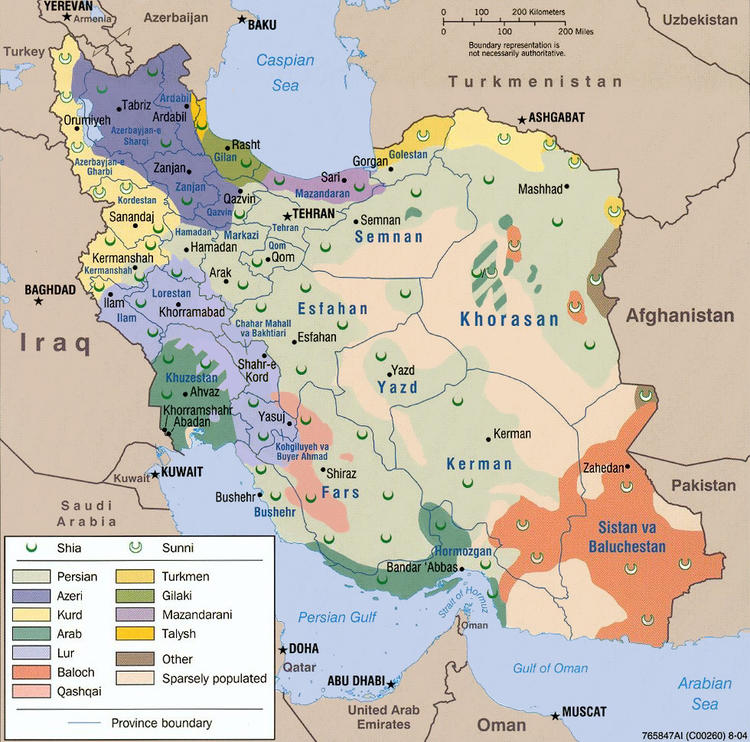
8. Iraq was largely ruled by a small Sunni minority of perhaps 17% of the population. Iran is ruled by the Shiite majority that makes up 90% of the population. That Iraq had a minority government allowed the Bush administration to make friends in the majority Shiite community by putting them in power. This step alienated and angered the Sunnis, but they were a minority and so could not do much about it. In Iran, the Shiite majority would mount a massive struggle against the US invaders.
9. Bush found international allies for his war on Iraq, including Britain and Spain. No one in Western Europe would join Trump in a war with Iran, making the US isolated and causing it to look like a unilateralist bully.
10. Whereas Iraq’s neighbors—Turkey, Iran and Saudi Arabia in particular—had been mauled by Saddam and so did not strongly oppose Bush’s invasion, Shiite Iraqis, many Syrians, the Hazaras of Afghanistan, and the some 40 million Shiites of Pakistan would support Iran.

Wednesday, February 13, 2019

Four decades of Iranian revolution

By Asif Durrani
ISLAMABAD - Iran is celebrating the 40th anniversary of the Islamic revolution amidst the worst kind of American sanctions. It is a nation under stress economically; considered an interventionist state by its GCC neighbours and their allies; and is in a state of undeclared war with Israel. Being the champion of Shia Islam, the country is deeply involved in Iraq and Syria where Daesh/ISIS have played havoc forcing millions of Iraqis and Syrians to flee their countries.
What is it that keeps the revolution going in Iran despite myriad challenges that the theocratic order faces from day one? The Iranian officials would proffer the strength of the revolution which gave voice to the common man and toppled the monarchical rule of the erstwhile king Reza Shah Pahlavi. The post-revolution history of Iran is quite elaborate about the sacrifices rendered by the people under the leadership of Imam Khomeini. Conspiracies of the Americans to topple the Islamic system and the former dictator Saddam Hussein’s imposed war are the major planks of Iran’s contemporary history.
The Iranian system of governance has evolved in the past four decades. From a pure theocratic order, it has adopted the modern system of governance. Interestingly, conservative and moderate presidents have alternated in the corridors of power to accommodate the ideological divide within the theocratic system, mostly gauged in terms of social freedoms.
President Ahmadinejad represented the conservative ranks, who was accused of curbing social freedoms; irking the West due to his frank and terse remarks over its duplicity on Palestine and, doubting Israel’s exaggerated narrative over holocaust. The incumbent President Hassan Rouhani is considered a moderate who has further relaxed social freedoms, especially dress code for women. He is also credited with signing of the Joint Comprehensive Programme of Action (JCPOA) to limit Iran’s nuclear programme to peaceful purposes. While the agreement brought Iran to global mainstream, President Trump’s decision to withdraw from the nuclear deal on the pretext that the agreement ignored Iran’s missile programme and its interference in the Middle East. US decision has been a clear setback to the international disarmament regime. The nuclear deal has also put President Rouhani under pressure from the conservative camp which blames Rouhani of holding a soft corner towards the West.
Iran’s internal political scene has also evolved over the four decades in which the ruling elite have made substantive progress in providing relief to the masses. Even opponents of the theocracy in the country admit that post-revolution Iran has achieved universal literacy (97 percent); developed the education system on modern lines with emphasis on development of technology. Despite American sanctions since the inception of the Islamic revolution, Iran has focused on encouraging indigenous research; in terms of scientific research and publications, Iran is ranked second after Turkey in the Middle East and North Africa (MENA) region. Poverty in the country has fallen from 13.1 percent to 8.1 percent between 2009 and 2015 although 26 million Iranians still suffer from absolute poverty.
In the health sector, according to the WHO report, Iran tops the list in primary health while it has made tremendous strides in secondary and tertiary health throughout the country. Infrastructure development in the country is exemplary and can be compared to anywhere in the developed world. Most importantly, hygienic standards in the country are par excellence which immensely contribute to raising the health standards.
Pakistan-Iran relations during the past four decades have evolved into a mature and stable partnership. Both countries have always stood by each other despite differences in perceptions in the past on certain regional issues. Pakistanis do not forget that Iran was the first country in the neighbourhood which recognized Pakistan soon after independence. During Shah’s regime, Iran was forthcoming in helping Pakistan in its wars with India in 1965 and 1971. Supreme Leader Ayatollah Ali Khamenei has steadfastly supported right to self-determination of the Kashmiri people.
Similarly, Pakistan stood by Iran in the post-revolution period despite pressures from the Americans and some Arab countries. Whether it was Iran-Iraq war or vote in the IAEA against Iran’s nuclear programme, Pakistan supported Iran. India backed out during the IAEA vote in 2008 ostensibly to gain access to American nuclear technology.  The scorecard of the Iranian revolution’s achievements is still incomplete. In the 21st century when the speed of information transfer is just seconds away, putting carbs on media has not worked in Iran; Twitter or WhatsApp may be officially banned but are widely used throughout the country. The Iranian leadership although mindful of the peoples’ pressure has to grapple with the ensuing challenges.
However, it goes to the credit of the Iranian revolution that it could survive the Arab spring due to existence of a parliament with regular elections. Lively debates amongst the conservatives and moderates over the domestic and foreign policies of the country channelize the collective wisdom into decision-making process at the top level. As compared to the rest of the Middle East, Iran has a vibrant political system which can sustain external pressures; socio-economic freedoms continue to evolve to keep pace with the modern trends in politics and economy. Today’s Iran is much different than two decades ago when slightest dissent would tantamount to conspiracy against the system with grave consequences for the dissenters.
Another important feature of Iran’s political system is the establishment of the Islamic Revolutionary Guard Corps (IRGC) which serves as a parallel force to the country’s armed forces. IRGC has all the three wings-army, air force, and navy-to ensure that no harm comes to the system and also keep a check on the regular armed forces to contemplate staging a coup in the country. Second, IRGC is also involved in the ongoing war against Daesh/ISIS in Iraq and Syria. Its Qods Force commander General Soleimani has attained the legendary status in the country for his daring feats in Iraq and Syria. Third, IRGC’s subsidiary flank, Basij (voluntary force), with a strength of over two million, are available all the time to defend the revolutionary system.
The ongoing tensions in the region, especially Iran’s tussle with Saudi Arabia over Yemen, may have serious implications. It has already generated an arms race compelling the Saudis to spend $300 billion on American weapons. Additionally, Iran’s commitments in Iraq and Syria are costing approximately 9-10 billion dollars per annum which are proving to be onerous on its resources and may become a source of discontent within the country, especially when American sanctions have substantially squeezed Iran’s trade. Meanwhile, the cost of living in the country due to rising inflation and unemployment, estimated at 27 percent, are further compounding the economic problems of the country.
Some American and Western analysts believe that economic crunch may serve as a catalyst to bring a change in the country. American National Security Advisor John Bolton has even claimed a regime change in Iran in 2019. However, ground realities in Iran do not support such claims, at least not in the foreseeable future. There may be some discontent in the country but the general mood is not in favour of another revolution. Concurrently, the Iranian leadership needs to rethink its policy in the region. Being the largest country in the MENA region with second largest economy after Saudi Arabia, Iran has to show leadership by raising the comfort level of its Arab neighbours.
(Source: Daily Times)

Sunday, December 02, 2018

Iran holds no resentment towards Saudis: analyst

Iran holds no resentment towards Saudis: analystTEHRAN, Dec. 01 (MNA) – A political analyst has rejected the idea that Iran is an enemy of all Saudis and by extension all Sunnis.


“This long held belief that Iran is an enemy of all Saudis and by extension, all Sunnis is a lie,” Catherine Shakdam, researcher at al-Bayan Centre for Planning and Studies, tells the Tehran Times.
Shakdam says Iran as a country holds no anger and no resentment towards the Saudi people.
She also lauds Iran’s call for unity among Islamic nations, saying thanks to Iran’s efforts “bridges are being built and old prejudices are melting away.”
The following is the full transcript of the interview:
The 32nd edition of the International Islamic Unity Conference was held in Tehran on November 24-26 with the aim of laying the ground for unity and solidarity in the Islamic world. How do you evaluate the measures taken and speeches made during the conference with respect to its objective?
I’d like to begin by saying that Iran is the only country over the decades to have worked so tirelessly towards the promotion of Islamic unity, and beyond that the need for all communities to respect each other, as beyond all differences we all remain equal in our humanity.
I believe readers will benefit from knowing that amid the rise of sectarianism and Wahhabi-led religious radicalism across countless continents and region, Iran has held true to its calls for unity and solidarity for the sake of peace and justice.
It serves the purpose of the ongoing geo-political debate to clearly affirm Iran’s Islamic Republic as a nation dedicated to unity, cooperation, and peaceful collaboration in strengthening respectful bilateral relations. I believe Imam Khomeini set the tone for such a dialogue. Today it is his vision which continues under the leadership of Ayatollah Ali Khamenei.
As far as the conference goes I would say that Palestine remained, of course, a rallying call for action. It is difficult to imagine it could be any different when Palestine sits a constant reminder of how innocent can so easily be crushed under tyrants’ feet.
Many if not the majority of the tensions experienced throughout the Islamic world, and in particular of course, the Greater Middle East are tied up to the Palestinian dossier. It is impossible to divorce the many conflicts that have sprung across the region and throughout the decades without pinning back to the time of Al Nakhba, when Zionism declared war on Palestine and invaded its land.
What remains clear from the conference is that Iran’s call for the formulation of a united narrative for the benefit of all people is finally taking hold. Bridges are being built and old prejudices are melting away.
Of course such endeavor requires time and much patience, but I believe the path was set and minds ambition to such goals of unity. To refuse unity is to empower tyrants and encourage foreign meddling; to embrace unity however is to assert one’s sovereignty and right to political self-determination, freedom of religion, and freedom of speech.
What issues are the most important ones that the Muslim world faces today? And how can they be overcome?
As I mentioned earlier Palestine sits at the core of most matters. That being said I think Yemen has become such an embodiment of the principles and values of Resistance one cannot help but look towards Yemen and see what devastation disunity leads to. As so many great personalities have noted before me, Yemen is a modern-day Karbala – a brilliant example of a people rising in defense of their rights against the fury of authoritarianism. 
How can we not look upon Yemen and draw lessons from such a stand? Yemen is fighting for its very future with the fury and certainty of one’s righteous stand. I would like to think we have lessons to learn from Yemen – both in terms of sacrifice and determination to hold true to individuals’ right to choose. 
Yemen is many beliefs and many different communities, and yet all stand together under the Resistance’s flag. Many would argue that Yemen’s ability to resist was made possible through such unity.
I believe Ayatollah Khamenei has often encouraged all to rise above their differences so that they could be made stronger in their support of others. I believe such conferences to act powerful reminders to such calls.
Addressing the participants of the conference, Leader of the Islamic Revolution Ayatollah Ali Khamenei said certain countries in the region obey the US instead of Islam and the Quran. How does this issue threaten the unity among Islamic nations?
Well to identify as an Islamic country infers that one matrix is that of the Quran and Islamic principles. To identify as an Islamic country and yet exist in contradiction to Islam and the Quran is to exist in a state of cognitive dissonance that can only lead to tragedy. 
To accept Islam is to recognize that no other authority can take precedence. And today many countries have betrayed such covenant. I believe Ayatollah Khamenei’s remark to be both a warning and an invitation to mend attitudes so that harmony could be restored.
If we were to return to our common denominator: Islam, many disagreements could be overcome and old upsets disappeared.
War needs not to be a legacy we pass on to our children if only we could recognize our past mistakes for what they are: a betrayal against our collective interests for the sake of egocentrism and greed.
President Hassan Rouhani said during his speech that “we are ready to make every effort to protect the interests of Saudi people against terrorism and superpowers, in the same way that we helped the people of Iraq, Syria andAfghanistan.” How would such a message resonate with Saudi people? And what could be derived from Rouhani’s message, especially with regard to Iran’s policies toward other countries in the region?
Allow me to start with the second part of your question. I think it’s clear that Iran as a country holds no anger and no resentment towards Saudis. If anything Saudis are victims of the regime. For decades they have been robbed of their rights, their cultural identities, their ability to choose, think, believe and question. For decades they have lived under the thumb of a family whose very name was imprinted on the people it claims to rule over.
Saudis are but commodities to be disposed of and owned by Al Saud royals. 
Why would Iran hold any animosity towards such people when it itself knows all too well how bitter the bite of oppression is?
This long held belief that Iran is an enemy of all Saudis and by extension all Sunnis is a lie Riyadh has been only too keen to perpetuate and spread to justify its own existence.
All Iran has ever ambitioned is to empower Saudis against their despots, while all Al Sauds have done has been to destroy, murder, imprison and persecute. I believe the difference is stark.
Now, as far as helping Saudis against the threat of terrorism I believe President Rouhani wanted to warn against the insidious perversity of Wahhabism as it preaches bloodshed and persecution as the base of its doctrine.
Wahhabism literally gave birth to radical movements across the MENA region, plunging communities in the fires of war. If not for Iran’s intervention many communities would still suffer under such fires, and so it stands to reason for Iran to extend a friendly hand to those living under Wahhabism’s abominable rule.
President Rouhani is speaking peace and assistance to all Saudis. As for the regime, well I believe the recent murder of Jamal Khashoggi speaks volume of the nature of Al Saud’s system of governance.
Interview by: Mohammad Homaeefar

Friday, November 23, 2018

West’s double standard against Iran and Saudi Arabia


Saudi journalist Jamal Khashoggi was brutally murdered and dismembered in Saudi consulate in Istanbul which once again proved the US's double policy in the Middle East.
In an unprecedented or at least unexpected event, Jamal Khashoggi was killed in the Saudi Consulate in Istanbul, where he had gone to get the paperwork done for his upcoming marriage.
It took Saudi Arabia two weeks to acknowledge the disappearance of Khashoggi. He entered the consulate on 2nd October 2018, never to emerge. He had been close to the Saudi royal family, but last year, he exiled himself to the US after a crackdown on dissent in the country.
Western double-standards in dealing with Middle-Eastern states, specifically with Saudi Arabia versus Iran came to the surface after the Saudi journalist was murdered in the Saudi consulate in October 2nd, 2018. Saudi Arabia admitted to his death, but funnily enough, claimed it happened in a fight that broke out between Khashoggi, who had fallen out of favor with the Saudi government, and people who met him in the consulate.
According to Amnesty International at least 151 people have been put to death in Saudi Arabia so far this year in an unprecedented wave of executions marking a grim new milestone in the Saudi Arabian authorities use of the death penalty.
And yet the US and even some EU counties choose to be silent because their economies are tightly intertwined with the Saudi petrodollars. Saudi Arabia has bought billions of dollars of arms from the US to kill Yemeni children and women; however, all this does not bother the UN which claims to be a defender of human rights.

Sunday, November 18, 2018

Pakistan PM’s Saudi affair likely to backfire

By Syed Zafar Mehdi
TEHRAN - Pakistan’s relations with Saudi Arabia flourished during the previous government headed by Nawaz Sharif, primarily due to his personal business interests in the Kingdom and friendly association with members of the Saudi royal family. Despite the criticism at home, Sharif never missed an opportunity to eulogize the Saudi rulers and support their wrongs.
During Sharif’s tenure as Prime Minister, while Pakistan’s ‘love affair’ with Riyadh blossomed, relations with Tehran plummeted. When the ambitious gas pipeline project was shelved by the Sharif government in 2015 under the Saudi pressure, some experts couldn’t resist the temptation of reading obituary of Iran-Pakistan friendship. It seemed game over.
But the political transition in Islamabad this year rekindled hopes of a new foreign policy taking shape in Islamabad under the populist premier Imran Khan.  
In his victory speech, Khan made it categorically clear that he would like to strengthen ties with allies in the Middle East, including Iran and Saudi Arabia. During his first meeting with the Iranian envoy to Islamabad, Khan reiterated his desire to bolster ties with Tehran and revive important projects that had been put on the backburner by the previous political dispensation, including the gas pipeline.  
Experts termed it a “significant shift” in Pakistan’s foreign policy as his predecessor was seen overtly inclined towards stronger Pakistan-Saudi relations than Pakistan-Iran relations. Writing in The New Arab, Dr. Fazzur Rahman Siddiqui, a fellow at Indian Council of World Affairs, said with the exit of Nawaz Sharif, Saudi Arabia had lost a reliable ally who never concealed his affection for the Gulf states in general, and Saudi Arabia in particular “for both personal and strategic reasons.”
It was widely believed that Khan’s approach will be different from Sharif and he will not yield to covert pressures from Washington or Riyadh. At least that is what appeared.
When Khan embarked on his first foreign trip to Saudi Arabia, keeping alive the tradition set by his predecessors, he sought to underscore that Riyadh will remain a priority for Pakistan’s foreign policy. Pertinently, it was President Hasan Rouhani of Iran, not King Salman of Saudi Arabia, who first extended an invitation to him.
But the faith in his leadership or his vision for ‘Naya Pakistan’ (new Pakistan) was not yet dented. The massive army of his followers on Twitter ensured that the public opinion, or at least the opinion of netizens, was firmly in favor of his leadership and policies.
As the country’s fiscal deficit inflated to 6.6 percent of gross domestic product (GDP) in 2017-2018 financial year, Khan panicked. He boarded the plane to Riyadh again, this time to seek funds. To woo the Saudi rulers, Khan said Riyadh had “always stood with Pakistan in difficult times and the Pakistani government and its people highly acknowledge it.”
Speculation had been put to rest. Khan was walking on the footsteps of his predecessor.
Following his second visit to Riyadh, Saudi regime announced $6 billion in financial support to Islamabad. It corresponded with the international outrage over the cold-blooded murder of Saudi journalist Jamal Khashoggi. Even as many world leaders boycotted a Saudi investment conference, the so-called ‘Davos in the desert’, over Khashoggi's death, Khan attended the event.
On asked why he attended the conference when many other world leaders had turned down the invitation, Khan said Pakistan was “desperate” for Saudi loans to shore up the flailing economy.
“Unless we get loans from friendly countries or the IMF, we actually won't have in another two or three months enough foreign exchange to service our debts or to pay for our imports. So we're desperate at the moment,” he was quoted saying by the Middle East Eye.
Khan conceded that his immediate foreign policy priority was maintaining good relations with Saudi Arabia despite unprecedented outrage over Khashoggi’s murder by Saudi officials or the outcry over Saudi’s horrendous war crimes in Yemen.
Pakistan, which had previously maintained a neutral stance on Yemen war, might now be forced to support the Saudi onslaught there, some observers fear. If Khan can ignore a reprehensible crime like the killing of Khashoggi because of Saudi petrodollars, it can be expected that he will support the Saudi war crimes in Yemen also, although he has so far resisted doing that.
While Khan has adopted a strong and unwavering stance against the U.S., he seems to have succumbed to the temptation of being subservient to the Saudi kingdom, for funds. That is where he risks losing the goodwill he has earned back in Pakistan and in the international community.
At a time when the world is saying ‘no’ to Saudi Arabia, Khan is part of a tiny minority that is going against the tide. This approach will only isolate Pakistan and it has isolated Riyadh and Washington.
Being subservient to Saudi interests also means that Khan will be forced to toe his predecessor’s line on Iran. If that happens, Islamabad will again be forced to shelve the gas pipeline project, which is being described as critical to Pakistan’s energy requirements.
Khan is walking a tightrope. Wisdom lies in taking informed decisions in the best interests of Pakistan keeping in view long-terms goals. In the cricketing terminology, the cricketer-turned-prime minister could do well by playing the forward defensive shot rather than the mistimed stroke in the air.

Thursday, August 16, 2018

Under Imran Khan govt., Pakistan likely to shift focus from Riyadh to Tehran


TEHRAN - As Pakistan’s prime minister-in-waiting Imran Khan prepares to take oath of office next week, there is lot of speculation about his foreign policy, especially Islamabad’s relations with Tehran and Riyadh.
In his victory speech, Khan had made it categorically clear that he would like to strengthen ties with allies in the Middle East, including Iran and Saudi Arabia. During his meeting with the Iranian envoy to Islamabad last week, Khan reiterated his desire to bolster ties with Tehran and even offered to mediate between Iran and Saudi Arabia.
While some observers believe Khan, like his predecessors, would have limited say in foreign policy matters, considering the overwhelming influence of military leadership in Pakistan, it is believed that the relations between Iran and Pakistan will improve under Khan, since Pakistan army has also recently warmed up to Iranian military leadership.
A few days ago, Pakistan’s foreign office spokesperson Dr Muhammad Faisal said Pakistan reserves the right to ‘pursue legitimate economic and commercial interests’ with Iran in the wake of re-imposition of sanctions on Tehran by U.S. President Donald Trump, who warned that the countries doing business with the Islamic states might also face the heat.
“We are examining the implications of the U.S.’ re-imposed sanctions on Iran,” he said, “however, Pakistan, being a sovereign state, reserves the right to pursue legitimate economic and commercial interests while respecting the international legal regime,” Faisal added, dropping hints that the new government in Islamabad would not buckle under the U.S. government pressure.
Relations between the two neighboring countries have shown signs of improvement recently and observers are optimistic that bilateral ties would deepen further under Khan’s government in Islamabad.
Iranian President Hassan Rouhani was one of the world leaders who telephoned Khan and congratulated him over his party’s election victory and invited him to visit Tehran.
It marks a significant shift in Pakistan’s regional policy as his predecessor was seen overtly inclined towards stronger Pakistan-Saudi relations than Pakistan-Iran relations. Writing in The New Arab, Dr. Fazzur Rahman Siddiqui, a fellow at Indian Council of World Affairs, said with the exit of Nawaz Sharif, Saudi Arabia has lost a reliable ally who never concealed his affection for the Gulf states in general, and Saudi Arabia in particular “for both personal and strategic reasons.”
“His close affiliation with the Gulf states no doubt prevented forging of warmer Pakistani ties with Iran. But this might be about to change, as it was in part Imran Khan's political mobilisation and pressure that deterred the erstwhile government from sending Pakistani forces to join the Saudi-led coalition's continuing and catastrophic war in Yemen, after the National Assembly voted against it,” Siddiqui wrote.
It is pertinent to note that Khan, unlike his predecessor, has no family business stake in Saudi or any particular personal affiliation with the Middle East politics. Moreover, as Siddiqui wrote, he owes nothing to Saudi Arabia, unlike Sharif who was granted asylum during his years of exile.
Khan has made it clear that he would seek closer ties with Iran and would revive Iran-Pakistan pipeline project that was neglected under the previous government. The project is expected to meet Pakistan’s growing energy needs and open a new chapter in their bilateral energy ties.

Friday, January 05, 2018

Contrasting Leadership Styles In The Saudi-Iran Conflict

3333-14

by Seyed Hossein Mousavian
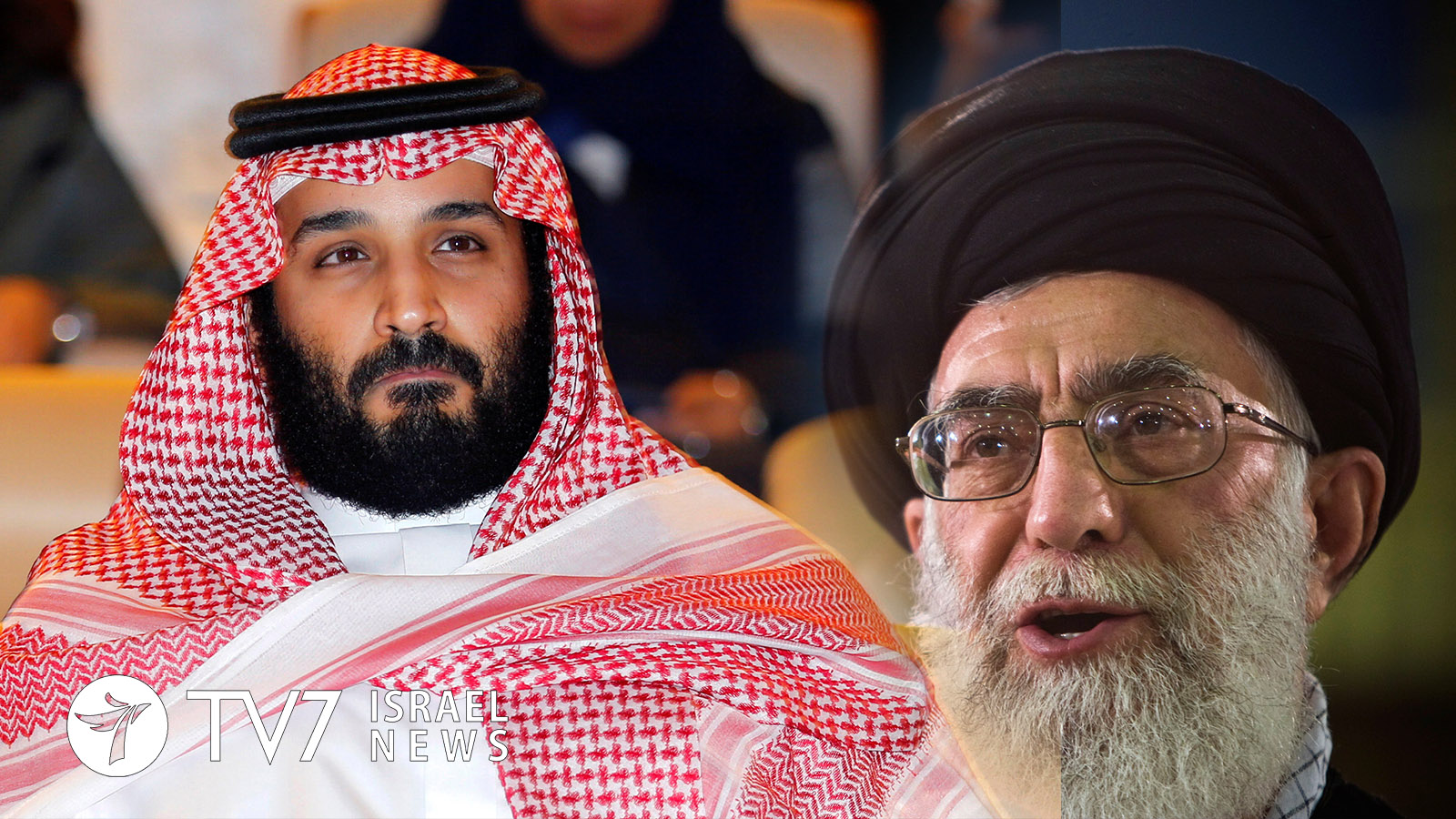
Saudi Crown Prince Mohammad bin Salman (MBS) is steadily consolidating power in Riyadh and positioning himself to become the most powerful ruler in Saudi history. His rise has been accompanied with a ratcheting up of hostilities against Iran and even war rhetoric. As Saudi-Iran tensions increase, the lived experiences and leadership styles of the 78-year-old Iranian Supreme Leader Ayatollah Ali Khamenei and 32-year-old MBS will decide the future of peace and stability in the region.
Before Iran’s 1979 Islamic revolution, Ayatollah Khamenei was a political activist who opposed the dictatorship of the Shah and endured 15 years of prison, torture, and exile. He rose through the revolutionary ranks after the revolution and in 1981, was elected president. During the Iran-Iraq war (1980-1988)—which saw the United States and other global powers as well as regional Arab states support the aggressor Saddam Hussein—Ayatollah Khamenei played a key role in overseeing and leading the war effort. MBS, on the other hand, was just born in 1985 and has no comparable experience.
During the 1980s, Iran also faced a wave of terrorism, with the MEK group alone responsible for over 17,000 deaths. Ayatollah Khamenei is himself a victim of terrorism, with one his arms left paralyzed after a bomb attack in 1981. The silver lining of Iran’s history of falling victim to terrorism is that its leaders have become counterterrorism veterans—another reason for Iran’s success in combatting terrorist groups throughout the region. MBS, meanwhile, does not have a counterterrorism track record and was preparing to take the reins of power at a time when, according to a 2014 email by former Secretary of State Hillary Clinton, his country was “providing clandestine financial and logistic support to ISIL.”
Divergent Foreign Policies
Ayatollah Khamenei has for 28 years presided over a state that has been subject to every form of economic, political, and security pressure by outside powers—chiefly the United States—aimed at spurring regime change. However, not only has Iran’s security and stability endured during this period, but the country has emerged as an influential regional power. Policies of sanctions, pressure, and threats of war against Tehran have in fact resulted in Iran consolidating its position as the only regional state not beholden to foreign powers for its security.
Moreover, Ayatollah Khamenei’s national security strategy has been premised on the belief that resisting U.S. hegemonic aspirations in the Middle East is not only the source of Iran’s strength, but allows it to maintain its independence.
On the contrary, the Saudi royal family views the United States as its security guarantor and has relied on U.S. military, political, and economic patronage for decades. In May, MBS signaled his aim to continue this dependency by signing the largest arms deal in U.S. history for $350 billion—and thereby winning full support for his regional and domestic agenda from the White House.
Within the region, Tehran has formed a strategic partnership with Russia. At the behest of the Syrian and Iraqi governments, Tehran has played a key role in those countries to secure their territorial integrity and defeat terrorist organizations in the vein of the Islamic State (ISIS or IS). Saudi Arabia, despite being given carte blanche by the Trump White House, has waded into a quagmire in Yemen, creating the world’s greatest humanitarian catastrophe with its ferocious bombing campaign. It has failed in its attempt to orchestrate regime change in Qatar and Syria, witnessed its effort to undermine the Lebanese government backfire in full view of the international community, and maintains an ever-more precarious hold over Bahrain. Such actions have earned MBS a reputation as hotheaded and impulsive, with The New York Times noting how many in Saudi Arabia view him as “brash, power-hungry and inexperienced.” Other analysts have stated how under MBS, “Saudi Arabia has become an irrational actor in the Middle East.”
Another vital aspect of Iran’s national and regional security strategy has been its experience in successfully mobilizing popular forces to complement its professional armed forces. Ayatollah Khomeini initiated this policy after Saddam Hussein’s invasion of Iran in 1980, which led to the creation of popular militia units that would eventually become the Islamic Revolutionary Guards Corps and Basij. Ayatollah Sistani, Iraq’s most senior religious leader, emulated this model of mobilizing popular forces in 2014  after IS overran large parts of the country. The ensuing “Popular Mobilization Forces” played a decisive role in the fight against IS. A similar model has also been implemented in Syria with the National Defense Forces and other groups.
Iran has also made opposition to Israel a core aspect of its foreign policy and has paid a high cost for its support of the Palestinians. On the other side, MBS is rapidly fostering ties with Israel in an attempt to confront Iranian regional influence. Saudi Arabia’s green light to President Donald Trump to recognize Jerusalem as the capital of Israel will contribute dramatically to the erosion of the king’s popularity and legitimacy while making it easier for Iran to influence the Muslim world to stand together to resist the U.S., Israel, and Saudi Arabia in defense of the Palestinians and the holy sites.
Ayatollah Khamenei is well entrenched in his position, coming into it by way of a majority vote from Iran’s Assembly of Experts—a popularly elected body. He maintains legitimacy as a political figure and, as a Shia marja, is a religious guide to millions around the world. As recent purges indicate, MBS is sidelining his rivals to ward off potential obstacles to the crown once his father passes away or abdicates.
On matters of the economy, Ayatollah Khamenei and MBS also differ fundamentally. Although both Iran and Saudi Arabia suffer from corruption, chronic unemployment, and an oil-price plunge, Iran has in the face of these challenges taken steps to reform its inefficient subsidy system and diversify its economy. The World Bank has noted how oil accounts for roughly 30 percent of government revenues in Iran, as opposed to nearly 90 percent in Saudi Arabia. Furthermore, the IMF has said that Saudi Arabia will again this year run a deficit, further draining its foreign reserves. Given that traditionally Saudi Arabia’s influence in the Arab world has been based on its financial power, this declining financial prowess will undermine Saudi political leadership in the Arab world.
The recent protests in various Iranian cities that have claimed a number of lives and injuries are rooted in economic grievances. At the same time, the Trump White House has coordinated belligerent actions against Iran with Israel and Saudi Arabia to more aggressive ends than in the past. MBS, whose consolidation of power in the kingdom Trump has emphatically supported, has explicitly declared that he would take “the battle” inside Iran. After the failures of the coup d’états in Turkey, Qatar, and most recently reportedly in Jordan—as well as the effective hostage taking of the Lebanese prime minister by Saudi Arabia—the Washington-Riyadh-Abu Dhabi-Tel Aviv axis is now seeking to exploit peaceful protests in Iran and stoke instability and chaos inside the country.
Divergent Leadership Styles
Iran’s leader was raised in a poor household and has maintained a modest lifestyle since assuming official positions after the revolution. In contrast, MBS has from birth lived in ornate palaces and never tasted personal hardship or poverty. Last year, The New York Times even reported that he owned a $500 million yacht.
With over 50 years of political, military, and security experience, the Iranian leader is well versed in geopolitics and strategic decision-making and presides over a relatively efficient state with a rich civilization heritage. This is chiefly why, within the region, Iran has been able to make maximum gains with minimum costs, while Saudi Arabia has paid maximum costs and made minimum gains.
Nevertheless, Mohammad bin Salman is a young and ambitious leader who has an unprecedented reform plan to transform Saudi Arabia into a more open society and curb the power of its fundamentalist Wahhabi religious establishment. This is precisely what Saudi Arabia needs. If he manages to succeed, the country will become a major force for stability and development in the region and the Arab world. On the other hand, the entire Middle East will witness a new wave of havoc if Saudi Arabia succumbs to chaos.
After the eruption of the Arab uprisings in 2011, a major change in the region’s geopolitical landscape is inevitable. A zero-sum Iran-Saudi relationship will not only be detrimental to regional stability, it will diminish—not enhance—prospects for Saudi reform. Cooperation between these two major regional heavyweights remains the key element to shape a new peaceful Middle Eastern order and enable MBS to manage Saudi Arabia’s domestic challenges.
Ambassador Seyed Hossein Mousavian is Middle East Security and Nuclear Policy Specialist at Princeton University and a former Iranian diplomat. His latest book, Iran and the United States: An Insider’s view on the Failed Past and the Road to Peace, was released in May 2014.