Showing posts with label Arab NATO. Show all posts

Sunday, April 28, 2019

Hossein Askari: Arab NATO Would Be A Total Joke without Egypt


Hossein Askari: Arab NATO Would Be A Total Joke without Egypt
TEHRAN (FNA)- Professor Hossein Askari, a former advisor to Saudi finance minister, said Egypt would want a big annual check from Saudi Arabia and the UAE to join the Arab NATO, and further slammed the Saudi crown prince for robbing Arabs of dignity and tarnishing Islam.
“He needs money and without Egypt Arab NATO would be a total joke because all you would have is [P]GCC minus Qatar and with the addition of Jordan,” Hossein Askari, an expert on Saudi Arabia who also teaches international business at the George Washington University, told FNA.

Following is the text of the interview:

Q: How do you assess attempts made to establish the so-called “Arab NATO”?

A: Normally, I would applaud all defensive arrangements. But I don’t believe that this is the real goal of the proposed Arab NATO. It is not for the defense of these Arab countries. The driving force behind this effort has been MBS and Saudi Arabia. They want to have a force to engage Iran, and Iran and Iraq. 

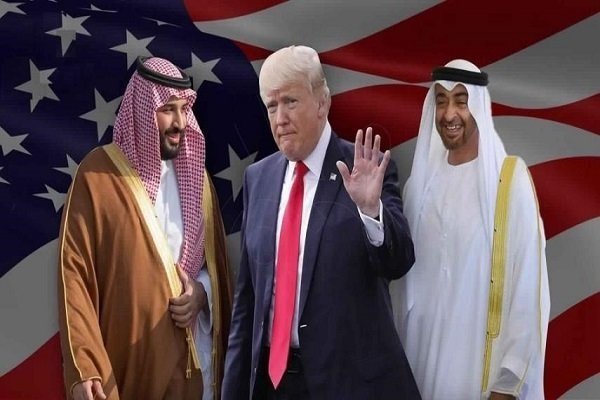
MBS has a big ally in the Crown prince of the UAE. They are working together and pulling in Kushner and the United States. I repeat something that I have said many times, the Al-Sauds are obsessed about Iran. They believe that Iran wants to overthrow them and so they want a big force to confront Iran. With such a coalition, they hope to show the US that they are ready. This would make it more likely for the US to declare war on Iran. It would also draw Israel.

Q: What are the goals of such a coalition?

A: As I have said, I think that the goal is to be ready for an opportune time to attack Iran and try to break Iran up as the country we see today. Their allies in such a move would be the US and Israel.

Q: According to some news reports, Egypt has withdrawn from efforts to form an "Arab NATO". What could be the reason behind this withdrawal?

A: I am sure that Egypt would want a big annual check from Saudi Arabia and the UAE. Sisi may be just bargaining. He needs money and without Egypt, an Arab NATO would be a total joke because all you would have is [P]GCC minus Qatar and with the addition of Jordan. They cannot even muster a complete [P]GCC force, so they would add Jordan in place of Qatar.

Q: The principle of collective defense is at the very heart of the NATO’s founding treaty. It remains a unique and enduring principle that binds its members together, committing them to protect each other and setting a spirit of solidarity within the Alliance. Could an “Arab NATO” arrive at such an objective? Does the US agree to article 5 of the NATO statute?

A: As you correctly note Article 5 is at the heart of NATO. It has been invoked only after 9/11. The Europeans clearly responded in support of the US. Would the US respond to such a call if a European member was under attack? I believe that the US would normally live up to this obligation. But I say normally because I think we live in abnormal times, namely the Trump presidency. I don’t believe that Trump would respond to helping Europe but I believe other recent presidents would have. Trump looked the other way and said nothing as the Russians killed a resident of England on English soil. He only came in support of the UK when members of his own party criticized him. Let’s face facts NATO is under threat and is in trouble. Trump does not understand that the US military in Europe, European defense expenditures and the willingness of Europeans to support US foreign engagements are critical for US security and defense. Trump’s focus is what do they spend on defense and what do we spend. They don’t spend enough. So let’s scrap NATO.

Q: What is the role of the US in shaping this coalition and will it remain after Trump’s presidency?

A: I think the US, especially under Trump, is encouraging an Arab NATO. The reasons are many. The U.S. would sell more arms. There would be a ready Arab force in case the US wanted to intervene in the Persian Gulf. The US could withdraw some of its forces from the Middle East. They would see such a force as a helpful balance against Iran and Iraq. All the Arabs under one command would make it easier for Kushner and Trump to bring them closer to Israel and destroy all hope of a Palestinian state. This I believe is at the heart of Kushner so-called peace plan that he wants to unveil, a plan which he has shared with Netanyahu and MBS but with no Palestinian input. It is a joke that he could have a plan where only one side, namely Israel, is consulted. MBS has robbed Arabs of any dignity that they might have had. He has tarnished Islam’s message to the world as he engages in horrendous acts, robs his country, tortures Saudis and all the while claims to be the custodian of Islam’s holiest places. He will do anything to get Trump’s and Netanyahu’s support to stay in power and to threaten Iran. He has no dignity.

Sunday, January 13, 2019

The U.S. wants to “incite” Iranians and this must be rejected

By Martin Love

NORTH CAROLINA - After a while a rational person begins to think Arabs, or at least Arab “leaders”, bar a handful of reasonably sane souls that includes Syria’s Assad and some others probably in Iraq and Lebanon, maybe in Kuwait and Qatar and even Yemen (it’s difficult to say, much less name names) are just flat stupid – especially when compared with most Iranians whatever their posture is towards the rule of Shia Muslim authorities in the Islamic Republic.
Outstanding among the stupid (and corrupt) has to be Mahmoud Abbas as self- appointed spokesperson and leader of Palestinians. He has done NOTHING for his people west of the Jordan, it appears, for decades. Arafat at least tried. The Israelis make life ever more difficult for Holy Land natives, ethnic cleansing continues unabated, colonial Zionist “settlements” continue to sprout like weeds on stolen land, etcetera, in an area now where Arabs outnumber Jews if one includes Gazans. But this is an old story.
The U.S. has lately been trying to cobble together what’s been termed an “Arab NATO” to confront and weaken Iran. This idea is somewhat analogous to NATO itself where a host of various countries within NATO at U.S. urgings portray a larger country by land mass, Russia, as some kind of aggressive demon aiming to expand and attack Europe when in fact Russia has no such aims but its own defense.
 Any “Arab NATO” collection of countries would confront a much larger country by geographic size, Iran, similarly and for the same false reasons, one must suppose. And Iran clearly has no aggressive aims but it does intend to defend itself. What to make of the Arab NATO concept?
Well, one thing seems indisputable. That there is nothing benign about U.S. intentions, and it’s all about dividing the Muslim world (as usual) on the back of a selfish imperialistic desire to augment U.S. presence and control in the Middle East. John Bolton, who has influenced Trump to delay any pull out of U.S. troops from Syria, talks about creating “a more vibrant and secure” Middle East (with the downfall of the Islamic Republic).
 It’s a wonder that ANY Arabs believe this nonsense, and maybe some are beginning not to. For example, Jordan has lately called for the end of the Israeli occupation of the Golan, and some Iraqis are demanding the end that the U.S. military presence in Iraq. Also, pompous U.S. Secretary of State Mike Pompeo has had the gall to claim that the U.S. only wants a “better life” for the Iranian people with some sort of new governance, and at the same time has made life hard for most all Iranians with economic sanctions and other threats. Does that make sense? Of course not.
This is not a claim that ought to be in any way “bought” by Iranians generally – that the U.S has ANY intentions but to create discord, division and chaos in the Middle East for the alleged benefit of any country EXCEPT itself and Israel, which has so fully captured many in Washington that some “leaders” are willing to throw away the most cherished amendment to the Constitution – free speech -- by making criticism of Israel a crime. In fact, if the U.S. wants any coherent Iran at all, it wants a government in Iran that, like the Shah’s, was simply a repressive one eager to do the bidding of the U.S. and open up Iran to the exploitation of U.S. corporations.
However, it’s also fair to say that what the U.S. is dangling before the Iranian people is some kind of appeal to further upset by the downsizing if not the eradication of Iran’s current rule of (Islamic) law. To be clear, there are social and political controls in Iran that have limited “free speech” and what may be termed full “democracy”.
 But this is no more evident, and perhaps far less so in Iran, than in the harsh kinds of social and political controls so apparent in Saudi Arabia and even in Sisi’s Egypt, to name just two countries. And it’s interesting to note that Assad’s Syria, an Iranian ally, is in fact far more if not entirely “secular” in orientation than most all other Arab countries today. It’s a huge positive that some Arab countries are now beginning to reestablish diplomatic relations with Assad and Syria.
This apparent “dangling” by the U.S. of some sort of “freedom” of social license from Islamic rules for Iranians, really constitutes little more than incitements directed towards Iranians generally to create division and discord inside the Islamic Republic for – ultimately -- the benefit of the U.S. and Israeli imperialism and its further consolidation.
 Even if there is merit in the idea of more “democracy” for Iranians, it’s far more important to realize that the Trump Administration does not in fact give a hoot about real “democracy” in the Middle East. If it did, let’s be quite clear, it would NOT be supporting or allied with the Saudis, the Zionists or even Sisi in Egypt about whom it can easily be said are not sincerely “democracy” minded.
The real tragedy of the Middle East is that the predominate Muslim populations, tolerant of other faiths and minorities, and whether Sunni or Shia, have failed to recognize the power and benefits inherent in hanging together as a first priority and advocating for each other to create more unity and peace regionally.
 Perhaps this may begin to dawn on the Arab and Muslim masses, because one thing is certain: over the last 100 years since the end of the Ottomans the “West” and particularly the U.S., the British, the Zionists and the French, too, have made life miserable for too many in the Middle East.  

Wednesday, November 07, 2018

Arab NATO against Iran, an unfulfilled dream

By Fatemeh Salehi


TEHRAN - The largest military drill- land, naval, air and special forces kicked off in Egypt on Sunday with participation of the U.S., Saudi Arabia, the United Arab Emirates, Bahrain, Kuwait, and Jordan, and the observers Morocco and Lebanon.
The drill is held at the Mohamed Naguib Military Base in Egypt’s north-western governorate of Marsa Matrouh until November 16.

The exercise, dubbed Arab Shield 1, claims to come in the framework of strengthening joint military cooperation between Egypt and Arab countries, to build the combat capabilities of the armed forces, and achieve common objectives.
This is a military campaign that has long been the subject of talks and statements from the rise of the Arab NATO. Interestingly, Qatar and Oman did not participate in this exercise, and the location of the drill, shows that Egypt, with the largest Arab army is likely to be the headquarters of the Arab NATO.
The objective of this NATO surely is not to confront the Zionist regime, since the Arab states are moving towards normalization of their relations with Tel Aviv, which has intensified recently. In fact, the U.S. government seeks to end the step-by-step implementation of the century deal and unveil it in the latest plan to form a new security and military order in the region. Hence, the ultimate goal of this military-security organization is to confront opposition of the new order, and at the head of them lay Iran, and the Palestinian and Lebanese resistance forces.
The military exercise comes only a month after the meeting of U.S. Secretary of State Mike Pompeo with the foreign ministers of Arab states in New York. Earlier, Persian Gulf military commanders held a meeting in Kuwait at the invitation of U.S. military commanders in the region.
U.S. President Donald Trump's government is pursuing to launch a so-called Arabic version of the NATO coalition to confront Iran by putting subtle pressure on the Persian Gulf Arab States along with Egypt and Jordan. Of course, this coalition will be formed partly under the name of the Middle East Strategic Alliance (MESA), but it is also known as the Arab NATO. Bahrain's foreign minister said on Saturday at the IISS Manama Dialogue, the annual Middle East's security summit, that the coalition would be formed by the start of the New Year, a claim that many analysts are skeptical of.
The Arab NATO is a transformed plan that was first initiated at the Istanbul Cooperation Initiative (ICI), an initiative launched during NATO's 2004 Istanbul summit. The plan was to expand NATO to the Persian Gulf region. Proposed by Ahmed al-Sabah and approved by NATO Secretary General, the NATO office was launched in Kuwait in 2011.
The plan, however, has seen a few changes since:
Removal of Turkey and Qatar, Arab NATO will continue to work independently of the NATO, Expansion of the Arab NATO from the Persian Gulf to the Red Sea, particularly to Egypt, has the U.S. support, counters Iran’s influence in the Middle East region, and coordination of operational intelligence with Israel.
The ICC is an offer to engage in practical security cooperation activities with states throughout the Greater Middle East. The initiative offers practical cooperation with interested nations in the Greater Middle East in such areas as: The ICC counter-WMD; counterterrorism; training and education; participation in NATO exercises; promoting military interoperability; disaster preparedness and civil emergency planning; tailored advice on defense reform and civil-military relations; cooperation on border security to help prevent illicit trafficking of drugs, weapons, and people.
In fact, NATO seeks to confront new threats, including Islamic fundamentalism, terrorism, and so on, to ensure the security of regional partners, prevent the non-proliferation regime gaining access to nuclear weapons, ensure the sources of energy and its transit lines, and provide a model of regional order with regional countries except Iran and Iraq.

The plan to form a new regional coalition was supposed to reach a very large circle, and the Arab NATO was going to confront the so-called hostile regional forces, but following the crisis between Qatar and Arab states in the Persian Gulf region in June 2017, it seems the coalition cannot stand united against Iran.

Many analysts believe that formation of the coalition will be postponed to 2019, particularly now that the Saudis are grappling with Jamal Khashoggi’s murder case in their consulate in Istanbul.  

Perhaps The U.S. is waiting to observe the impact of its political and economic sanctions on Iran prior to joining the regional coalition against Iran so are the Arab states in the region.
In addition, the Arab countries need more time to form this coalition, as they are struggling with many challenges in the political and military arena of the region, including Qatar’s crisis, the Yemeni War, Jamal Khashoggi's case, and Arab differences in regional issues, especially over Palestine.
Saudi Arabia and Egypt have different interpretation of terrorism. While Saudi Arabia cooperates with the Muslim Brotherhood in Yemen and Syria, Egypt considers the Sunni Islamist organization a terrorist group. Saudi Arabia and Qatar also hold different views over the organization.
Iran's influence in Arab countries, including Syria, Iraq and Lebanon, creates further obstacles to the formation of the coalition. According to reports, Trump is scheduled to hold a meeting in Washington, where he will announce the launch of the regional coalition.
The U.S. has placed a number of conditions on the Arab countries, including the need to fulfill Saudi military objectives in Yemen and the withdrawal of the strategic harbor of al-Hudaydah and reconciliation with Qatar.
Amidst all these, Trump is seeking an opportunity to announce the so called the “deal of the century” to resolve the issue of Palestine, and for that Arab countries need to have an integrated stance.
The other side of the deal is Iran. The Islamic Republic of Iran is, too, promoting its position in the region by strengthening its strategic alliance.
Thus, Washington will face defeat in the formation of a united Arab front against Iran, as Arab states are still struggling with many regional and domestic challenges and Iran will remain a strong actor in the region.

Tuesday, September 04, 2018

Reviving the Concept of an ‘Arab NATO’: Washington Convenes a Gulf Arab States Summit

BY ALEX GORKA


According to Defense News, the US administration is pushing ahead with plans for a new security alliance, tentatively dubbed the “Middle East Strategic Alliance," or MESA, which is to include Egypt, Jordan, Saudi Arabia, the United Arab Emirates (UAE), Kuwait, Qatar, Oman, and Bahrain. An official announcement is expected to come during the Oct. 12-13 US-Gulf summit in Washington. Obviously this is a serious attempt to create a new security architecture in the region.
The issue was raised during US President Trump’s visit to Saudi Arabia last year. At that time, Saudi officials broached the idea of a security pact and the US president strongly supported it. Riyadh and Abu Dhabi aspire to take on the leading roles. The Arab NATO-style alliance will be focused on the establishment of regional missile defense, personnel training, and the acquisition of weapons that will upgrade the Arab states’ militaries. The Arab nations poised to join the alliance have no indigenous defense industries, which will mean increased profits for US arms manufacturers.
A collective defense clause is likely to be included in the list of the Arab NATO members’ common commitments. The need to protect the Persian (Arab) Gulf shipping routes is another rallying point for those nations. The formation of this new bloc is taking place as US sanctions are being abruptly reinstated on Iran, with the August embargoes to be followed by an even more damaging round in November. Support for the idea of creating a pact is bolstered by the fact that the Arab League has evidently failed to engage in peacekeeping, stabilization, or humanitarian operations in the Middle East and North Africa (MENA region).
The United States has a strong military presence in the Persian Gulf. Iran and Yemen are the only countries of the region that don’t host US military facilities. The US military uses large air installations in Qatar and has expanded its operations in the United Arab Emirates (UAE) and Oman. Bahrain is home to the US Navy’s Fifth Fleet. The US has encouraged the Gulf Cooperation Council (GCC) member states to purchase the Patriot Advanced Capability-3 (PAC-3) and the Terminal High Altitude Area Defense (THAAD) missile-defense systems. The Patriot Advanced Capability-3 is already being used by Qatar, Saudi Arabia, the UAE, Kuwait, and Bahrain. The UAE and Qatar are also protected by THAAD systems. US leadership is indispensable for making those systems interoperable.
It is worth noting that the THAAD in Qatar is supported by AN/FPS-132. Its range of 5,000 km. (3,100 mi.) far exceeds the requirement to counter a missile threat coming from Iran. Normally the AN/TPY-2 radar with a range of 1,500 km. (932 mi.) to 3,000 km. (1,864 mi.) is used to support the THAAD. The maximum instrumented range is 2,000 km. (1242 mi.). This radar is deployed to support THAAD operations in South Korea. The 5,000 km. range is excessive for countering a missile approaching from Iran. But the range of the AN/FPS-132 allows it to monitor large parts of Russia. It makes the Qatar-based AN/FPS-132 radar an element of the emerging US global missile-defense system that was created to counter Russia’s strategic nuclear forces.
Evidently Iran, in addition to Hezbollah, is being used as a bogeyman to justify the need for a new alliance. As President Trump put it, “Anyone doing business with Iran will NOT be doing business with the United States.” Now it appears that anyone prepared to oppose Iran is welcome to become a US ally.
But is the alleged menace coming from Iran enough to unite the nations mentioned above? Only Saudi Arabia, the UAE, and Bahrain view Iran as an enemy they might go to war against. Oman, Qatar, and Kuwait maintain normal relations with that country. Jordan and Egypt have never said they viewed Tehran as an existential threat. The UAE, Saudi Arabia (the largest buyer of US weapons), and Bahrain are united against Qatar, a country that is home to a large US military base. Saudi Arabia even planned to invade Qatar in 2017. Diplomacy has so far failed to bridge those differences. Saudi Arabia and the UAE are also divided by their divergent views on the situation and their respective roles in Yemen. It is thus a tall order to bring all these nations together.
In truth, it’s hard to understand why the US needs the Middle East so much. No country from that region poses a threat to US territory. America has recently become the world’s largest energy producer. If the Gulf is blocked by Iran that won’t be so damaging to the United States. But the formation of this alliance will promote the interests of the US defense industry. Once it is in place, it’ll have a mandate to intervene and conduct operations that violate the sovereignty of other states in the region — such as Syria, for example. The US has reportedly installed air-defense and electronic radar systems in Kobani, the Aleppo governorate in northern Syria, and on the territory of the al-Shaddadi base in the Hasakah province as one more step on the path toward establishing a no-fly zone in northern Syria stretching from Manbij to Deir ez-Zor. If that happens, the US will stay in Syria for a long time, and it will need an alliance to support its actions militarily and diplomatically.

Thursday, August 09, 2018

US Proposal for ‘Arab NATO’ Force A ‘Contemptible Joke’: Irish Analyst

TEHRAN (Tasnim) – A senior Irish political commentator described an initiative by the US administration to develop an alliance with the Persian Gulf and Arab allies as a “contemptible joke”.


“It is also provisionally given the grand-sounding title of Middle East Strategic Alliance (MESA). I think that should be changed to Middle East Strategic Stooges, which would then give the rather appropriate acronym “MESS”…seriously, though, this proposed US-led Arab force is a contemptible joke. Most of its proposed members are deeply destabilizing, despotic regimes in the Middle East,” Cunningham told Tasnim on Wednesday.

Finian Cunningham (born 1963) has written extensively on international affairs, with articles published in several languages. Originally from Belfast, Ireland, he is a Master’s graduate in Agricultural Chemistry and worked as a scientific editor for the Royal Society of Chemistry, Cambridge, England, before pursuing a career in newspaper journalism. For over 20 years he worked as an editor and writer in major news media organizations, including The Mirror, Irish Times and Independent. Now a freelance journalist based in East Africa, his columns appear on RT,Sputnik,  and Strategic Culture Foundation.
Following is the full text of the interview:
Tasnim: According to media reports, the Trump administration is quietly pushing ahead with a bid to create a new security and political alliance with six Persian Gulf Arab states, Egypt and Jordan, to contain Iran’s growing influence in the region. What do you think about the so-called "Arab NATO" force?
Cunningham: This renewed plan for a US-led Arab coalition military force was reported by Reuters on July 27. It has been called an “Arab NATO”. It is also provisionally given the grand-sounding title of Middle East Strategic Alliance (MESA). I think that should be changed to Middle East Strategic Stooges, which would then give the rather appropriate acronym “MESS”.
Seriously, though, this proposed US-led Arab force is a contemptible joke. Most of its proposed members are deeply destabilizing, despotic regimes in the Middle East. To say this coalition’s mission will be for “countering terrorism and extremism” is absurd and an insult to intelligence. It’s like calling up arsonists to perform as a fire brigade. Hence, the more accurate initials for this motley crew of rogues should be “MESS”.
Saudi Arabia and its Persian Gulf Arab crony regimes are the biggest sponsors of Wahhabi terrorism, both financially and ideologically. This terrorism has served American imperialist interests well for the purpose of inciting regime change in the region, as well as for fomenting general chaos and sectarian conflict between Muslims and other religions. This mayhem is a deliberate objective to suit American interests, as well as those of Israel and the Arab dictatorships.
The idea for such a force is not new. It goes back decades. One can trace, for example, the present Saudi-dominated (Persian) Gulf Cooperation Council (GCC) and its so-called military “defense shield” to its rationalizing inception back in the early 1980s. That was a reaction and a deliberate attempt by the American Arab client regimes to counter Iran’s Islamic Revolution in 1979. This latest drive for an Arab NATO is a continuation of the American imperialist obsession with Iran.
US imperialist interests in the oil-rich Middle East totally depend on its instrument of surrogate regimes, principally Israel and the equally despotic Arab dictatorships led by Saudi Arabia.
This proposed newer version of US imperialist military proxies, or surrogates, is being openly declared as a “bulwark” against Iran, as well as pretending to have the other missions of “countering terrorism and extremism”.
Countering Iran is a real purpose, but the rhetoric about “countering terrorism and extremism” is a barefaced absurdity. It’s an oxymoron.
Note, however, that this will be a colossal boon for US military profits. As Reuters reported: “The White House wants to see deeper cooperation between the countries on missile defense, military training, counter-terrorism and other issues such as strengthening regional economic and diplomatic ties.”
An attempt to organize such a coalition could indeed be a practical way for the Trump administration to increase its hostile pressure on Iran. But even regardless of that possible outcome, Washington stands to gain hundreds of billions of dollars in the proposed installation of more missile systems in the region.
In short, this proposed “MESS” is a military instrument to enforce American aggression against nations that don’t kowtow to its objectives; it is also, crucially, more of the same money-spinning racket for the US military-industrial complex. But in doing so, such a force, will unleash more violence, death and destruction across the long-blighted and suffering region. Just look at the horror that Yemen and Syria have been put through. That horror is by the same people who are now absurdly proposing to set up a “security” force.
Tasnim: Saudi officials raised the idea of a security pact ahead of a Trump visit last year to Saudi Arabia where he announced a massive arms deal, but the alliance proposal did not get off the ground at the time. How much do you think an Arab NATO could be a game-changer in the region?
Cunningham: If this Arab coalition becomes organized and operational, it will be giving itself a legalistic mandate to be more interventionist and destructive in the region. A license to violate sovereignty and international law, in much the same way that the US-led NATO alliance in Europe has done with regard to conducting illegal wars in Afghanistan, Iraq and Libya. Objectively speaking, this would-be Arab coalition is nothing but a gang thug who will enforce American aggression. In that way, it may be a game-changer for all the wrong reasons, not in any complimentary sense of the phrase. It’s a potential “game-changer” in terms of propagating more sectarian conflict, despotism, terrorism, bloodshed, violence, war… and mega profits for American militarism.
Tasnim: Similar initiatives by previous US administrations to develop a more formal alliance with the Persian Gulf and Arab allies have failed in the past. Do you think this would fail as well?
Cunningham: Yes. Going by decades of past initiatives, this will be another flop. Because the real purpose for its being is entirely false and nefarious. There is no coherent, unifying, good and genuine purpose. It is all about fomenting aggression and conflict. The proposed individual members are too compromised and corrupt to have any professional function. But the danger is that such rhetoric about “confronting Iran” is recklessly inflammatory for a region that is already racked with US-led aggression and war crimes.
Readers may find the following articleof interest by Doug Bandow at The American Conservative (TAC). Notably, Bandow is a former aide to President Ronald Reagan (1981-89). One insightful quote from the article is the following: “Creating MESA [or as I prefer to say MESS] would double down on Washington’s manifestly failed Mideast strategy… Virtually every Middle East problem today that elicits cries for more American involvement resulted from misguided US interference a year ago, a decade, or more.”
In my view, that is a fair – albeit understated – summary of the historical and contemporary reality of American foreign policy in the Middle East. Yet now we are somehow expected to take Washington and its client regimes seriously when they talk about setting up a new military “security” force. It’s like calling up the arsonists.

Tuesday, July 31, 2018

American or Arab NATO?

By Farzad Farhadi


TEHRAN - The Trump administration is quietly pushing ahead with a bid to create a new security and political alliance with six Persian Gulf Arab states, Egypt and Jordan, in part to counter Iran’s expansion in the region, according to U.S. and Arab officials.


The White House wants to see deeper cooperation between the countries on missile defense, military training, counter-terrorism and other issues such as strengthening regional economic and diplomatic ties.
The plan to forge what officials in the White House and Middle East have called an “Arab NATO”. The administration’s hope is that the effort, tentatively known as the Middle East Strategic Alliance (MESA), might be discussed at a summit provisionally scheduled for Washington on Oct. 12-13. Saudi officials raised the idea of a security pact ahead of a Trump visit last year to Saudi Arabia where he announced a massive arms deal, but the alliance proposal did not get off the ground, a U.S. source said.
“MESA will serve as a bulwark against Iranian aggression, terrorism, extremism, and will bring stability to the Middle East,” a spokesperson for the White House’s National Security Council said.
Similar initiatives by previous U.S. administrations to develop a more formal alliance with Persian Gulf and Arab allies have failed in the past. It is unclear how the alliance could immediately counter Tehran but the Trump administration and its allies have joint interests in the conflicts in Yemen and Syria as well as defending Persian Gulf shipping lanes through which much of the world’s oil supplies are shipped.
Arab NATO and its impact
Saudi Arabia and the UAE are the key player in the formation of the so-called “Arab NATO”. Potentially a big obstacle to the planned alliance is a 13-month-old rift pitting Saudi Arabia and the UAE against Qatar, home to the largest U.S. airbase in the region. The U.S. administration is concerned the quarrel could be an obstacle to the initiative, he and an Arab official both said Riyadh and Abu Dhabi had assured Washington the rift would not pose a problem to the alliance.
 The sultanate of Oman is also an obstacle in this direction. This country has good relations with Tehran, a relationship that does not match the coalition with the United States and against Iran. Although the Sultanate has a good relationship with the United States, it is unclear what will the courageous Oman still have to deal with this coalition?
The role of Tel Aviv in Arab NATO
In fact, the Trump administration began to complete what had been launched a year ago in Riyadh and announced the establishment of the Middle East Strategic Alliance.
Undoubtedly, the Zionist regime alongside the United States and what moderate Arabs will play an effective role in the coalition. In the other words, this alliance called the Arab NATO to favor the Zionist regime.
 
Why did not the treaty establish a joint Arab defense against the Zionist regime?
All these years, why did not you hear about a joint Arab defense treaty against Tel Aviv?
The Israeli’s attack on al-Aqsa mosque is increasing in large numbers and Jewish settlements have expanded. Why does not this provoke any reaction? The new generation of Arabs is faced with a lot of dangerous dilemma illustrated in fake phrases such as counteracting terrorism and preventing the spread of Iranian influence. But it cannot conceal the fact that occupation, settlement, blockade and racism constitute a major threat to Palestine, the interests of Jordan and Arab security.
America, the West and Zionists exploit sectarian and tribal issues to spark conflict in the region. The U.S. uses the Arab NATO in the first place to serve the Zionist regime and then pursue its interests and with its Western allies.
The U.S. seeks to keep the Arab states under the auspices of Washington, and in turn, they always need the U.S. and its military support.
By creating an unrealistic enemy of Iran, the United States is seeking to boost its military and arms industries.
What caused the Arab NATO to be addressed is Yemen and Syria's crises. When in the Yemeni war, the Saudi coalition could not get any achievement, and when in Syria, the United States saw itself against strong rivals, the whispers of the creation of the Arab NATO got stronger.
The U.S.'s goal of the Arab NATO formation is in the first step in stabilizing the U.S. presence in the region and the protection of U.S. economic and investment interests and the creation of job opportunities within the United States through the sale of weapons to the region. The United States seeks to maintain balance and domination of the region's economy.
Abdel Bari Atwan, the famous analyst of the Arab world, wrote: “At the same time of Trump's war of words with Rouhani, Trump is looking to form a new security-military coalition with the Persian Gulf countries alongside Egypt and Jordan.”
He added: “The Saudi propaganda against Yemeni Ansarallah about the attack on oil tankers is likely to help establish a new pact with U.S. oversight. But there are a lot of questions here, including will Egypt and Jordan join the new coalition and participate in the upcoming Washington Summit in October? What is the Israeli relationship with this new treaty, and whether it is a member, and how is the nature of this membership, secret or public? What is the problem with the Doha crisis with the four Arab countries that are blocking this coalition?
Will Qatar cut ties with Iran upon the demands of the U.S.-Saudi-Emirati? Is it worth $ 1.5 billion to develop the U.S. military base in Qatar, Al Udeid, targeting it as one of the main centers of the new Arab-American treaty and outlining its main role in any future anti-Iran war?”
Atwan highlighted: “It may be too early to give an answer to all these questions given the unclear details of the American plan. But it is unlikely to know that America's anti-Iran threats are intended to terrorize Arab nations, and in particular the Persian Gulf, to justify signing the new treaty and to fully honor membership fees.”
He continued: “This new tribal treaty is a new tool for taking over hundreds of billions of dollars from the Persian Gulf States on the pretext of strengthening the defense capability but in reality to prepare for the war against Iran. These countries can not oppose Trump’s request and may be left out of the future summit of Washington, or face heavy debts owing to the large military spending that the United States seeks to pay.”
In any case, it is undeniable that Arab NATO is more than the Arab desire.
The United States confronts Arabs by Arabs, and through the imaginary subjects. The U.S. will challenge states that do not move on the path of the Zionist regime and the United States. Washington aims to sell weapons and maintain tension between Saudi Arabia and its allies with Iran. And by scaring Saudi Arabia and other Persian Gulf states from dangerous illusion about Iran, U.S. has already signed wealthy weapons deals.
The goal of Arab NATO formation is to serve Israel, marginalize Palestine, sell more weapons, make more money, and show more hostility towards the Islamic Republic of Iran.
Experts and observers believe that good prospect for Arab NATO could not be imagined. The goal of the Arab Nation is to destabilize the Middle East and to spur the regional issues by Americans.