Showing posts with label Arab NATO against Iran. Show all posts

Saturday, November 03, 2018

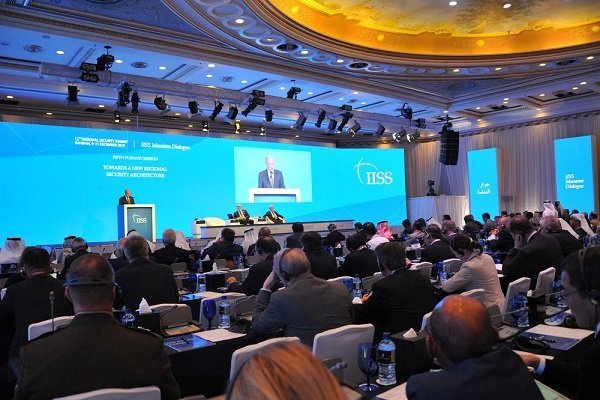
Manama’s dangerous assembly; Trump’s plot against Iran with the Arab NATO

By Farzad Farhadi
TEHRAN - A security summit about formation of the Arab NATO, the Middle East Strategic Alliance (Mesa), ended on Sunday in Bahrain’s capital. Earlier last month, there was a summit on the Arab NATO in Kuwait, an initiative pushed by U.S. President Donald Trump to confront Iran in terms of political, economy and military affairs. However, the Manama summit took place in a much more serious way than was held in Kuwait as Secretary of Defense James Mattis personally led the summit.  
During the three-day summit, Mattis discussed it all with the foreign ministers of the Persian Gulf Arab states with gloomy future.
In other words, Mattis told FMs what was expected of them by their lord, Trump, before attending an upcoming summit in Washington. The summit is scheduled to take place with the participation of the [Persian] Gulf Cooperation Council (PGCC) plus Egypt and Jordan. 
What the U.S. Secretary of Defense dictated to the PGCC states at the Manama Summit Dialogue included financial support for pre-mediated plans for the region and ultimately a renewal of allegiance to the White House that is hungry for the money and plunders the rich Arab states.
Meanwhile, Bahraini Foreign Minister Khalid bin Ahmed Al-Khalifa claimed that Arab NATO plays an important role in the security and stability of the Persian Gulf region, a comment that was described “ridiculous”.
The regional situation, successive meetings and type of attendees all prove preparation of a terrible plan for the region that even the leading participants do not dare to express. And it becomes more dangerous when these meetings are set up by U.S. and Trump’s orders.
These meetings are a series of plots against the region that began seven decades ago with the occupation of Palestine and continued with the war in Lebanon and Gaza. The Zionist actions continued with the backing of anti-protest of the Great March of Return rallies by the Arab regimes.
Arabs tend not to learn the lessons of previous experiences, as they have witnessed the failure of the Great plan of Middle East, the breakdown of Iraq, Syria, and Yemen, and are now witnessing conspiracies against the Palestinian cause.
It seems that reactionary regimes, which face popular protests against normalization of relations, are actually seeking to inflict the latest blow to the Palestinian cause. Will the Arab NATO find a better fate than Camp David?
Abdel Bari Atwan, the famous analyst of the Arab world, wrote: “It is no coincidence that U.S. Secretary of Defense James Mattis was the star of the Manama Summit Dialogue, which was held several days ago with the presence of a large number of foreign ministers of the [Persian] Gulf Cooperation Council, with the exception of Qatar.”
Because the first and foremost goal of this meeting is to provide the political and intellectual context of what the Middle East Strategic Alliance (MESA) called Arab NATO, is doing in practice in early New Year's Summit in Washington, where the leaders of the six [P]GCC countries along with Egypt and Jordan is being chaired by Donald Trump, President of the United States.
“The Manama Summit completed the military summit of Kuwait held last month when the heads of the Persian Gulf states and Egypt and Jordan were attending it along with the U.S. Central Command commander Army General Joseph Vote.”
Referring to the hostile and repeated anti-Iran position of Adel Al-Jubeir, Atwan stated: “Saudi Foreign Minister Adel al-Jubeir, who has appeared after a month of not being in the public eye, spoke of Iran's defeat. At the Manama summit, two main approaches were unveiled which could be for the new coalition in the region.
First, the existence of secret communications in the Persian Gulf states led by the U.S. to find a solution to the Qatari crisis, which seems to have had great progress. Al-Jubeir insisted Qatar would be a participant in a new strategic coalition to confront Iran, and referred to the security agreements recently reached at Riyadh Summit in Qatari. Al-Jubeir pointed to Saudi Crown Prince Mohammad bin Salman’s speech at the Davos Summit where MbS praised the Qatari economy as a strong economy in the Middle East region.
Second, Israel will be the main partner in the Arab NATO, and its rapid normalization ties with the Arab states, including the visit of Israeli sports delegations to Doha and Abu Dhabi, and Netanyahu's visit to Muscat. It is not unlikely that Israel will participate in the Washington summit, where the new coalition begins to work in early January. In particular, Yousef bin Allawi, the foreign minister of Oman, spoke about Israel at Manama summit as a country to interact with and treat just like any other country.
We do not agree with Bahrain's Foreign Minister Khalid bin Ahmed Al-Khalifa when he said that this alliance will play a role in strengthening the security and stability of the region and will help its countries to confront the challenges. We believe that the Arab NATO will generally ignore the issue of Palestine and will be interrupted by its political, moral and religious affiliation. This alliance is a declaration of the tribal warfare in the region and the implementation of the Israeli plan for the destruction of Iran, similar to what happened in Iraq, Syria, Libya and Yemen.
Sunni Arab NATO will play the same role that the Persian Gulf states and some other Arab countries played in the wars against Iraq, Syria, Libya and Yemen. That means, providing Arab-Islamic coverage for the future American-Israeli war against Iran in the region. But in the impending new war on Iran, the issue is completely different, and the alternative is to do away with the Palestinian cause, basically through the deal of the century.”
Netanyahu went to Muscat a few days ago. It would not surprise me to see him in Abu Dhabi, Manama, Doha or Riyadh tomorrow. We are witnessing the birth of a new regional system as the replacement of the current fragile system of Arab-dominated states, the backbone of which is Israel, transforming the enemy into a strong ally and a friend who supports his new allies. In the next four months, we will see a stop to the issue of Palestine in the Persian Gulf region at the level of governments, not nations.” 

Tuesday, September 04, 2018

Reviving the Concept of an ‘Arab NATO’: Washington Convenes a Gulf Arab States Summit

BY ALEX GORKA


According to Defense News, the US administration is pushing ahead with plans for a new security alliance, tentatively dubbed the “Middle East Strategic Alliance," or MESA, which is to include Egypt, Jordan, Saudi Arabia, the United Arab Emirates (UAE), Kuwait, Qatar, Oman, and Bahrain. An official announcement is expected to come during the Oct. 12-13 US-Gulf summit in Washington. Obviously this is a serious attempt to create a new security architecture in the region.
The issue was raised during US President Trump’s visit to Saudi Arabia last year. At that time, Saudi officials broached the idea of a security pact and the US president strongly supported it. Riyadh and Abu Dhabi aspire to take on the leading roles. The Arab NATO-style alliance will be focused on the establishment of regional missile defense, personnel training, and the acquisition of weapons that will upgrade the Arab states’ militaries. The Arab nations poised to join the alliance have no indigenous defense industries, which will mean increased profits for US arms manufacturers.
A collective defense clause is likely to be included in the list of the Arab NATO members’ common commitments. The need to protect the Persian (Arab) Gulf shipping routes is another rallying point for those nations. The formation of this new bloc is taking place as US sanctions are being abruptly reinstated on Iran, with the August embargoes to be followed by an even more damaging round in November. Support for the idea of creating a pact is bolstered by the fact that the Arab League has evidently failed to engage in peacekeeping, stabilization, or humanitarian operations in the Middle East and North Africa (MENA region).
The United States has a strong military presence in the Persian Gulf. Iran and Yemen are the only countries of the region that don’t host US military facilities. The US military uses large air installations in Qatar and has expanded its operations in the United Arab Emirates (UAE) and Oman. Bahrain is home to the US Navy’s Fifth Fleet. The US has encouraged the Gulf Cooperation Council (GCC) member states to purchase the Patriot Advanced Capability-3 (PAC-3) and the Terminal High Altitude Area Defense (THAAD) missile-defense systems. The Patriot Advanced Capability-3 is already being used by Qatar, Saudi Arabia, the UAE, Kuwait, and Bahrain. The UAE and Qatar are also protected by THAAD systems. US leadership is indispensable for making those systems interoperable.
It is worth noting that the THAAD in Qatar is supported by AN/FPS-132. Its range of 5,000 km. (3,100 mi.) far exceeds the requirement to counter a missile threat coming from Iran. Normally the AN/TPY-2 radar with a range of 1,500 km. (932 mi.) to 3,000 km. (1,864 mi.) is used to support the THAAD. The maximum instrumented range is 2,000 km. (1242 mi.). This radar is deployed to support THAAD operations in South Korea. The 5,000 km. range is excessive for countering a missile approaching from Iran. But the range of the AN/FPS-132 allows it to monitor large parts of Russia. It makes the Qatar-based AN/FPS-132 radar an element of the emerging US global missile-defense system that was created to counter Russia’s strategic nuclear forces.
Evidently Iran, in addition to Hezbollah, is being used as a bogeyman to justify the need for a new alliance. As President Trump put it, “Anyone doing business with Iran will NOT be doing business with the United States.” Now it appears that anyone prepared to oppose Iran is welcome to become a US ally.
But is the alleged menace coming from Iran enough to unite the nations mentioned above? Only Saudi Arabia, the UAE, and Bahrain view Iran as an enemy they might go to war against. Oman, Qatar, and Kuwait maintain normal relations with that country. Jordan and Egypt have never said they viewed Tehran as an existential threat. The UAE, Saudi Arabia (the largest buyer of US weapons), and Bahrain are united against Qatar, a country that is home to a large US military base. Saudi Arabia even planned to invade Qatar in 2017. Diplomacy has so far failed to bridge those differences. Saudi Arabia and the UAE are also divided by their divergent views on the situation and their respective roles in Yemen. It is thus a tall order to bring all these nations together.
In truth, it’s hard to understand why the US needs the Middle East so much. No country from that region poses a threat to US territory. America has recently become the world’s largest energy producer. If the Gulf is blocked by Iran that won’t be so damaging to the United States. But the formation of this alliance will promote the interests of the US defense industry. Once it is in place, it’ll have a mandate to intervene and conduct operations that violate the sovereignty of other states in the region — such as Syria, for example. The US has reportedly installed air-defense and electronic radar systems in Kobani, the Aleppo governorate in northern Syria, and on the territory of the al-Shaddadi base in the Hasakah province as one more step on the path toward establishing a no-fly zone in northern Syria stretching from Manbij to Deir ez-Zor. If that happens, the US will stay in Syria for a long time, and it will need an alliance to support its actions militarily and diplomatically.

Sunday, August 05, 2018

Arab NATO is not viable military alliance: Jahanpour

By Javad Heirannia


TEHRAN - Professor Farhang Jahanpour, part-time tutor on Middle Eastern affairs in the Department of Continuing Education, University of Oxford, and a member of Kellogg College says that I do not believe that Arab NATO is “a viable military alliance.”
Former Senior Research Scholar at Harvard adds that “Many earlier U.S. attempts to develop a formal alliance with Arab monarchies have failed and, at the moment, there is even less unity among various PGCC members than ever before.”

Following is the full text of the interview:

Q: There is some talk about the formation of an alliance, dubbed Arab NATO, against Iran. How credible are those reports?
A: The White House has indicated that President Trump will convene a summit meeting with the leaders of the six Persian Gulf littoral states, plus Egypt and Jordan, in Washington in mid-October to counter what it calls Iran’s expansion in the region.
It is sad that instead of trying to formulate some form of regional security agreement between all the Middle Eastern countries, putting an end to decades of conflict in the region, the intense anti-Iranian feelings of some members of the Trump Administration, egged on by the right-wing Israeli Prime Minister Benjamin Netanyahu, are pushing some Arab client regimes towards more confrontation, and creating greater instability in this volatile region.
This goes against President Trump’s promises during his election campaign, when he criticized former administrations for waging unwinnable wars in the Middle East at the cost of trillions of dollars without achieving anything. In fact, during the campaign he strongly criticised Saudi Arabia for supporting the extremists and the terrorists and promised to adopt a harsher stance towards her.
It is also strange that President Trump who is not strongly in favor of multi-lateral alliances and at one point called for the break-up of NATO, now wishes to form an Arab NATO with the participation of mainly Sunni Arab dictatorships who hardly get on well together. Whatever the aim of such a military alliance is, it spells disaster for them and for the region and will drag the region towards greater upheaval and instability.
Q: Will this coalition be considered as a real coalition and a viable military alliance?
A: I do not believe that this is a viable military alliance. Many earlier U.S. attempts to develop a formal alliance with Arab monarchies have failed and, at the moment, there is even less unity among various PGCC members than ever before.
In June 2017, at the behest of the young and ambitious Saudi Crown Prince Mohammed bin Salman, Saudi Arabia, the United Arab Emirates, Bahrain, and Egypt severed diplomatic relations with Qatar. Just last May, the three Persian Gulf regimes blocked websites belonging to Qatar, including Al-Jazeera. As a result, Qatar is practically out of the PGCC and is getting closer to Iran and Turkey. According to many reports, Saudi Arabia was about to invade Qatar last year, and was only prevented from doing so by the former Secretary of State Rex Tillerson.
Kuwait has been pursuing a less confrontational policy in the past, and is unlikely to want to join a SAUDI-led military alliance against Iran. Oman has always followed an independent policy and has played a very useful role as a mediator between different countries, including between Iran and the Obama administration that led to the nuclear agreement, and is unlikely to want to join that military alliance.
As regards countries outside the Persian Gulf region, Mohammad Bin Salman was putting pressure on Jordan to give the custodianship of Jerusalem to Saudi Arabia so that he could trade it with Israel in the “deal of the century” initiated by Jared Kushner, a request that was strongly rejected.
Egypt has refused to send forces to support Saudi and the UAE war against Yemen, and is unlikely to join the military pact. It has only joined the Saudi Alliance against Qatar due to its hostility towards the Muslim Brotherhood and in order to receive financial assistance from the two Persian Gulf states because of her current difficult economic conditions. Egypt also seems to be tilting towards President Bashar al-Assad in his war against Saudi-supported Sunni extremists.
Therefore, the only anti-Iranian bloc would consist of Saudi Arabia, UAE and Bahrain, which are the only countries out of the 22 Arab League members who are very hostile towards Iran. Bahrain is already under Saudi occupation and has no option but to go along with what the Saudis demand, but there have been serious differences between the UAE and Saudi rulers in their war against Yemen, and in any case not all UAE leaders are as hostile to Iran as Abu Dhabi’s crown prince. The total population of Saudi Arabia, UAE and Bahrain is just about 22 million, compared to Iran’s 80 million. Therefore, the so-called Arab NATO should not be taken very seriously even if it is formed.
Q: How should Iran react to this real or imaginary military alliance?
A: Iran should not just remain a passive observer of what is going on. These are some ways by which Iran can respond to this folly.
First, President Trump has expressed a willingness to meet with Iranian leaders without any preconditions. He should be invited to Tehran and should be taken to see some of the devastation that was caused by Saddam Hussein’s invasion of Iran, including the use of chemical weapons, which America supported to the end. President Trump should meet some of the victims of the chemical attacks to see the price that they continue to pay some 30 years after the end of the war when the world closed its eyes to Saddam’s criminal use of these prohibited weapons.
During that eight-year war, close to a million Iranians were killed and wounded and the country sustained hundreds of billions worth of damage. He will see that the majority of Iranians are not in favor of another war, and this is why they extended a hand of friendship to the West and negotiated a nuclear deal with all the permanent members of the Security Council plus Germany, and are abiding by the terms of the deal.
Then, he should be taken to Iraq to see the result of America’s 2003 invasion, which killed hundreds of thousands of innocent Iraqis and shattered the country. He should be taken to Mosul to see with his own eyes the consequences of the activities of Sunni extremists, which according to his own assertion were supported by some Persian Gulf states. He should also go to Raqqa and Aleppo and see the devastation caused by ISIS before they were driven out by U.S. and Russian aerial operations and Iranian and Syrian forces on the ground.
Then he should be taken to Yemen to see the Saudi and UAE war against that poor country, which has killed more than 10,000 people, left around two-thirds of the population of 27 million relying on aid, and 8.4 million wondering where their next meal will come from and on the brink of starvation.
This week marks the 28th anniversary of Saddam’s invasion of Kuwait (launched on 2 August 1990). That event should provide a lesson both to the United States and to local rulers. After having devastated Iran, while receiving at least $60b of assistance from Persian Gulf states, including about $30b from Kuwait, to finance the war he turned against his former allies and invaded Kuwait. His invasion of Kuwait cost tens of thousands of casualties, and cost about $676b to the region.
Arming ambitious bullies with the aim of dominating their neighbors will have similar consequences and will backfire on smaller countries that support this ill-fated alliance. I am sure that if President Trump sees all this for himself he would give up the idea of forming a military pact with a number of dictatorial and militant rulers.
The next thing that Iran should do is to take some positive steps towards peace. Iran, Turkey and Egypt are the three largest and most powerful countries in the region with a long history of culture and civilization, representing the Persians, the Turks and the Arabs. They should act like the adults in the room and should get together to form an alliance to sort out the mess in the Middle East.
The election of Imran Khan in Pakistan has also opened new avenues of cooperation in the region. Iran should take the first step to bring India, Pakistan and Afghanistan together and help them to put an end to their hostilities, and to form an alliance with other states in the Middle East and Central Asia that can rival the EU.
The time for forming military alliances against other countries has long past and it will only result in failure and misery. The nations in the region should take the initiative and move towards unity or at least coexistence, instead of hostility and military confrontation. This will be in the best interests of all regional states.