Showing posts with label Tel Aviv and Arab NATO. Show all posts

Saturday, November 03, 2018

Manama’s dangerous assembly; Trump’s plot against Iran with the Arab NATO

By Farzad Farhadi
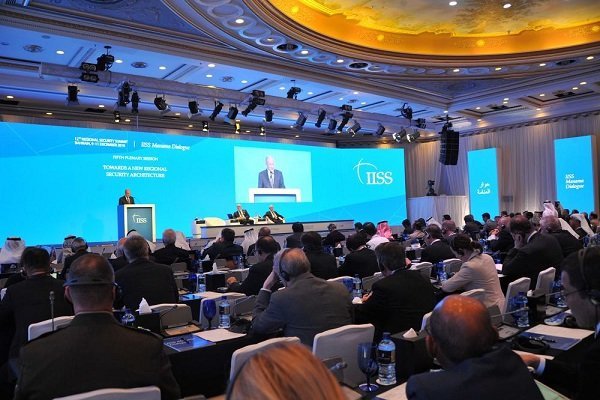
TEHRAN - A security summit about formation of the Arab NATO, the Middle East Strategic Alliance (Mesa), ended on Sunday in Bahrain’s capital. Earlier last month, there was a summit on the Arab NATO in Kuwait, an initiative pushed by U.S. President Donald Trump to confront Iran in terms of political, economy and military affairs. However, the Manama summit took place in a much more serious way than was held in Kuwait as Secretary of Defense James Mattis personally led the summit.  
During the three-day summit, Mattis discussed it all with the foreign ministers of the Persian Gulf Arab states with gloomy future.
In other words, Mattis told FMs what was expected of them by their lord, Trump, before attending an upcoming summit in Washington. The summit is scheduled to take place with the participation of the [Persian] Gulf Cooperation Council (PGCC) plus Egypt and Jordan. 
What the U.S. Secretary of Defense dictated to the PGCC states at the Manama Summit Dialogue included financial support for pre-mediated plans for the region and ultimately a renewal of allegiance to the White House that is hungry for the money and plunders the rich Arab states.
Meanwhile, Bahraini Foreign Minister Khalid bin Ahmed Al-Khalifa claimed that Arab NATO plays an important role in the security and stability of the Persian Gulf region, a comment that was described “ridiculous”.
The regional situation, successive meetings and type of attendees all prove preparation of a terrible plan for the region that even the leading participants do not dare to express. And it becomes more dangerous when these meetings are set up by U.S. and Trump’s orders.
These meetings are a series of plots against the region that began seven decades ago with the occupation of Palestine and continued with the war in Lebanon and Gaza. The Zionist actions continued with the backing of anti-protest of the Great March of Return rallies by the Arab regimes.
Arabs tend not to learn the lessons of previous experiences, as they have witnessed the failure of the Great plan of Middle East, the breakdown of Iraq, Syria, and Yemen, and are now witnessing conspiracies against the Palestinian cause.
It seems that reactionary regimes, which face popular protests against normalization of relations, are actually seeking to inflict the latest blow to the Palestinian cause. Will the Arab NATO find a better fate than Camp David?
Abdel Bari Atwan, the famous analyst of the Arab world, wrote: “It is no coincidence that U.S. Secretary of Defense James Mattis was the star of the Manama Summit Dialogue, which was held several days ago with the presence of a large number of foreign ministers of the [Persian] Gulf Cooperation Council, with the exception of Qatar.”
Because the first and foremost goal of this meeting is to provide the political and intellectual context of what the Middle East Strategic Alliance (MESA) called Arab NATO, is doing in practice in early New Year's Summit in Washington, where the leaders of the six [P]GCC countries along with Egypt and Jordan is being chaired by Donald Trump, President of the United States.
“The Manama Summit completed the military summit of Kuwait held last month when the heads of the Persian Gulf states and Egypt and Jordan were attending it along with the U.S. Central Command commander Army General Joseph Vote.”
Referring to the hostile and repeated anti-Iran position of Adel Al-Jubeir, Atwan stated: “Saudi Foreign Minister Adel al-Jubeir, who has appeared after a month of not being in the public eye, spoke of Iran's defeat. At the Manama summit, two main approaches were unveiled which could be for the new coalition in the region.
First, the existence of secret communications in the Persian Gulf states led by the U.S. to find a solution to the Qatari crisis, which seems to have had great progress. Al-Jubeir insisted Qatar would be a participant in a new strategic coalition to confront Iran, and referred to the security agreements recently reached at Riyadh Summit in Qatari. Al-Jubeir pointed to Saudi Crown Prince Mohammad bin Salman’s speech at the Davos Summit where MbS praised the Qatari economy as a strong economy in the Middle East region.
Second, Israel will be the main partner in the Arab NATO, and its rapid normalization ties with the Arab states, including the visit of Israeli sports delegations to Doha and Abu Dhabi, and Netanyahu's visit to Muscat. It is not unlikely that Israel will participate in the Washington summit, where the new coalition begins to work in early January. In particular, Yousef bin Allawi, the foreign minister of Oman, spoke about Israel at Manama summit as a country to interact with and treat just like any other country.
We do not agree with Bahrain's Foreign Minister Khalid bin Ahmed Al-Khalifa when he said that this alliance will play a role in strengthening the security and stability of the region and will help its countries to confront the challenges. We believe that the Arab NATO will generally ignore the issue of Palestine and will be interrupted by its political, moral and religious affiliation. This alliance is a declaration of the tribal warfare in the region and the implementation of the Israeli plan for the destruction of Iran, similar to what happened in Iraq, Syria, Libya and Yemen.
Sunni Arab NATO will play the same role that the Persian Gulf states and some other Arab countries played in the wars against Iraq, Syria, Libya and Yemen. That means, providing Arab-Islamic coverage for the future American-Israeli war against Iran in the region. But in the impending new war on Iran, the issue is completely different, and the alternative is to do away with the Palestinian cause, basically through the deal of the century.”
Netanyahu went to Muscat a few days ago. It would not surprise me to see him in Abu Dhabi, Manama, Doha or Riyadh tomorrow. We are witnessing the birth of a new regional system as the replacement of the current fragile system of Arab-dominated states, the backbone of which is Israel, transforming the enemy into a strong ally and a friend who supports his new allies. In the next four months, we will see a stop to the issue of Palestine in the Persian Gulf region at the level of governments, not nations.” 

Saturday, August 25, 2018

Arab NATO, a paper tiger or real one

By: Mohammad Ghaderi & Javad Heirannia


TEHRAN, Aug. 25 (MNA) – The US and Arab media have recently reported the attempts of US President Donald Trump to form a new security-political coalition with some of the Persian Gulf Arab states (Saudi Arabia, the United Arab Emirates and Bahrain), Egypt and Jordan to counter Iran.

Accordingly, the White House wants to strengthen cooperation with these countries in the field of missile defense, military training, counter-terrorism and other issues such as supporting regional economic and diplomatic relations.

According to Washington and Middle Eastern officials, the scheme is a copycat of NATO dubbed “Arab NATO”. The Trump administration hopes the coalition, named the Middle East Strategic Alliance for the time being, will be unveiled at a summit in Washington on October 12-13, 2018.

The security treaty or plan was introduced by Saudi authorities prior to Trump’s trip to Saudi Arabia a year ago. The plan will be revealed three weeks prior to the launch of the US oil sanctions on Iran. In fact, these actions are part of a series of coordinated measures to maximize political, economic and military pressures against Iran, aimed at forcing Iran's leaders to hold talks with Trump.

Similar discussions and attempts were made previously to establish a military alliance between the United States and the Persian Gulf Arab states, but all to no avail. There is a great chance that the attempt will fail this time as well.

Each of the participating countries in the coalition has its own complexities in terms of political considerations, manpower, logistics capabilities, and leadership which have raised doubts and concerns about the coalition idea.

Saudi Arabia has been seeking to strengthen its regional power since 2015 through the creation of a number of unofficial multilateral unions and alliances that include Arabs, Muslims and other nations under the Saudi leadership.

The very first one, Arab Coalition in Yemen, was launched in March 2015. Subsequently, in December 2015, the Islamic Military Alliance to Fight Terrorism (IMAFT) was formed. The most recent is the Anti-Qatar Coalition, established in June 2017 to force Saudi Arabia’s longtime rival in the Gulf Cooperation Council (GCC) to fall in line with its strategic worldview.

The three Saudi-led alliances are fragile and the participants do not expect their membership and engagement with these alliances to lead to an enduring institutional relationship. Although not limited in scope, their operational tasks are issue-specific.

One of the reasons for Saudi’s failure lies in their failures to transform the PGCC into an effective regional security organization under Riyadh’s direction and control. Since the PGCC birth in the early 1980s, Riyadh has put forward several proposals that would turn it into a collective security coalition. All the proposals have been rejected by various potential partners such as Kuwait, Oman, Qatar, and even its current ally, the United Arab Emirates. Fears have existed that Saudi Arabia wants to hijack legitimate security concerns to promote its own interests and extend its influence throughout the region.

The formation of security regimes and security convergence requires a high level of coherence and understanding between the constituent members of those regimes regarding security threats and ways to counter them.

The Arab states of the Persian Gulf in the last months of Barack Obama's presidency and at a Camp David meeting also tried to sign a collective defense pact with Washington, but their plan fell through. In fact, the members of the council were trying to have the highest level of security cooperation with Washington, a “joint defense pact”. They were trying to boost their security cooperation with Washington from the level of “partnership” to the level of “coalition.”

The entry of countries into a common defense pact is the last step in a security convergence. That is, countries may have defined a level of security and military relations between themselves, but the entry into a common defense treaty means that they will act for a member of a treaty and all members of the treaty have a common definition of “threat” and a common view over the type of threat they may face. At the same time, the United States has not at least been willing to provide such security guarantees to countries such as Saudi Arabia, the UAE, Bahrain, Jordan and Egypt.

What should be Iran’s strategy?

If the coalition is formed, it would be considered an unofficial coalition and not embodied in a specific institution or organization. However, what Iran needs to consider is that these unofficial coalitions may lead to official alliances like NATO. In such a case, the situation becomes more dangerous for Iran. At present, the coalition against Iran by the Saudis is unofficial and tactical, rather than strategic. Notwithstanding, greater convergence is possible between coalition states.

So far, coalitions have isolated Tehran in the region. Iran should try to keep the level of hostility with countries like Jordan and Egypt to a minimum to keep these states from entering a security regime with the US, Saudi Arabia and the UAE. Also, Iran should try to create a meaningful coalition with Turkey, Afghanistan and Qatar as well as Iraq.

With no history of direct military confrontation with each other, Iran and Saudi Arabia as two traditional regional rivals are currently involved in vicarious wars that only add fuel to the fire. Yemen, Syria, Lebanon and Qatar, are examples of such flashpoints.

The first issue around the Saudi efforts to balance Iran’s power is Tehran’s penetrating, strategic role in the region, which has included countries like Iraq, Syria, Bahrain, Yemen and Lebanon. The enhancement of Iran’s power in the region creates conditions for these countries and their foreign policies to move towards Iran’s goals.

The second issue is the increase in Iran's regional strength and Tehran's military containment power, which further emphasizes the ability of rocket deterrence, which has the potential for effective counteraction to threats and eliminates many regional constraints.

Ultimately, the third issue is Iran's nuclear capabilities and advancements. By bringing on the nuclear deal and ensuring the international community of it, the countries of the region, especially Saudi Arabia and its allies, have been in a position of passivity.

In the current situation, which defines the countries’ regions of security, the supremacy of relative power over absolute power, there must be a mechanism for negotiating the security of the Persian Gulf.

The United States is considered an interventionist player in the Persian Gulf security complex, which has prevented the development of regional cooperation, and even its policies have led to an intensification of rivalries and hostilities. According to Graham E. Fuller, in the book “The Center of the Universe: The Geopolitics of Iran”, the presence of foreign forces in the Persian Gulf region has not brought about any natural order in this region.

Some Persian Gulf experts, including Kenneth M. Pollack, believe that Arab states in the Persian Gulf have taken significant steps over the last decade to develop some of their capabilities, including strengthening their military forces and bilateral ties with the United States and other Western armed forces. But nothing has been solved or resolved yet with respect to the region. The coalition with the Arab League not only won’t help the Persian Gulf security order but will add to the “security riddle” in the region. What will be the upshot of this coalition is primarily the sale of more weapons by the United States to these countries, which is not helpful to peace or security.

This artcle was first published in American Herald Tribune.

Tuesday, July 31, 2018

American or Arab NATO?

By Farzad Farhadi


TEHRAN - The Trump administration is quietly pushing ahead with a bid to create a new security and political alliance with six Persian Gulf Arab states, Egypt and Jordan, in part to counter Iran’s expansion in the region, according to U.S. and Arab officials.


The White House wants to see deeper cooperation between the countries on missile defense, military training, counter-terrorism and other issues such as strengthening regional economic and diplomatic ties.
The plan to forge what officials in the White House and Middle East have called an “Arab NATO”. The administration’s hope is that the effort, tentatively known as the Middle East Strategic Alliance (MESA), might be discussed at a summit provisionally scheduled for Washington on Oct. 12-13. Saudi officials raised the idea of a security pact ahead of a Trump visit last year to Saudi Arabia where he announced a massive arms deal, but the alliance proposal did not get off the ground, a U.S. source said.
“MESA will serve as a bulwark against Iranian aggression, terrorism, extremism, and will bring stability to the Middle East,” a spokesperson for the White House’s National Security Council said.
Similar initiatives by previous U.S. administrations to develop a more formal alliance with Persian Gulf and Arab allies have failed in the past. It is unclear how the alliance could immediately counter Tehran but the Trump administration and its allies have joint interests in the conflicts in Yemen and Syria as well as defending Persian Gulf shipping lanes through which much of the world’s oil supplies are shipped.
Arab NATO and its impact
Saudi Arabia and the UAE are the key player in the formation of the so-called “Arab NATO”. Potentially a big obstacle to the planned alliance is a 13-month-old rift pitting Saudi Arabia and the UAE against Qatar, home to the largest U.S. airbase in the region. The U.S. administration is concerned the quarrel could be an obstacle to the initiative, he and an Arab official both said Riyadh and Abu Dhabi had assured Washington the rift would not pose a problem to the alliance.
 The sultanate of Oman is also an obstacle in this direction. This country has good relations with Tehran, a relationship that does not match the coalition with the United States and against Iran. Although the Sultanate has a good relationship with the United States, it is unclear what will the courageous Oman still have to deal with this coalition?
The role of Tel Aviv in Arab NATO
In fact, the Trump administration began to complete what had been launched a year ago in Riyadh and announced the establishment of the Middle East Strategic Alliance.
Undoubtedly, the Zionist regime alongside the United States and what moderate Arabs will play an effective role in the coalition. In the other words, this alliance called the Arab NATO to favor the Zionist regime.
 
Why did not the treaty establish a joint Arab defense against the Zionist regime?
All these years, why did not you hear about a joint Arab defense treaty against Tel Aviv?
The Israeli’s attack on al-Aqsa mosque is increasing in large numbers and Jewish settlements have expanded. Why does not this provoke any reaction? The new generation of Arabs is faced with a lot of dangerous dilemma illustrated in fake phrases such as counteracting terrorism and preventing the spread of Iranian influence. But it cannot conceal the fact that occupation, settlement, blockade and racism constitute a major threat to Palestine, the interests of Jordan and Arab security.
America, the West and Zionists exploit sectarian and tribal issues to spark conflict in the region. The U.S. uses the Arab NATO in the first place to serve the Zionist regime and then pursue its interests and with its Western allies.
The U.S. seeks to keep the Arab states under the auspices of Washington, and in turn, they always need the U.S. and its military support.
By creating an unrealistic enemy of Iran, the United States is seeking to boost its military and arms industries.
What caused the Arab NATO to be addressed is Yemen and Syria's crises. When in the Yemeni war, the Saudi coalition could not get any achievement, and when in Syria, the United States saw itself against strong rivals, the whispers of the creation of the Arab NATO got stronger.
The U.S.'s goal of the Arab NATO formation is in the first step in stabilizing the U.S. presence in the region and the protection of U.S. economic and investment interests and the creation of job opportunities within the United States through the sale of weapons to the region. The United States seeks to maintain balance and domination of the region's economy.
Abdel Bari Atwan, the famous analyst of the Arab world, wrote: “At the same time of Trump's war of words with Rouhani, Trump is looking to form a new security-military coalition with the Persian Gulf countries alongside Egypt and Jordan.”
He added: “The Saudi propaganda against Yemeni Ansarallah about the attack on oil tankers is likely to help establish a new pact with U.S. oversight. But there are a lot of questions here, including will Egypt and Jordan join the new coalition and participate in the upcoming Washington Summit in October? What is the Israeli relationship with this new treaty, and whether it is a member, and how is the nature of this membership, secret or public? What is the problem with the Doha crisis with the four Arab countries that are blocking this coalition?
Will Qatar cut ties with Iran upon the demands of the U.S.-Saudi-Emirati? Is it worth $ 1.5 billion to develop the U.S. military base in Qatar, Al Udeid, targeting it as one of the main centers of the new Arab-American treaty and outlining its main role in any future anti-Iran war?”
Atwan highlighted: “It may be too early to give an answer to all these questions given the unclear details of the American plan. But it is unlikely to know that America's anti-Iran threats are intended to terrorize Arab nations, and in particular the Persian Gulf, to justify signing the new treaty and to fully honor membership fees.”
He continued: “This new tribal treaty is a new tool for taking over hundreds of billions of dollars from the Persian Gulf States on the pretext of strengthening the defense capability but in reality to prepare for the war against Iran. These countries can not oppose Trump’s request and may be left out of the future summit of Washington, or face heavy debts owing to the large military spending that the United States seeks to pay.”
In any case, it is undeniable that Arab NATO is more than the Arab desire.
The United States confronts Arabs by Arabs, and through the imaginary subjects. The U.S. will challenge states that do not move on the path of the Zionist regime and the United States. Washington aims to sell weapons and maintain tension between Saudi Arabia and its allies with Iran. And by scaring Saudi Arabia and other Persian Gulf states from dangerous illusion about Iran, U.S. has already signed wealthy weapons deals.
The goal of Arab NATO formation is to serve Israel, marginalize Palestine, sell more weapons, make more money, and show more hostility towards the Islamic Republic of Iran.
Experts and observers believe that good prospect for Arab NATO could not be imagined. The goal of the Arab Nation is to destabilize the Middle East and to spur the regional issues by Americans.