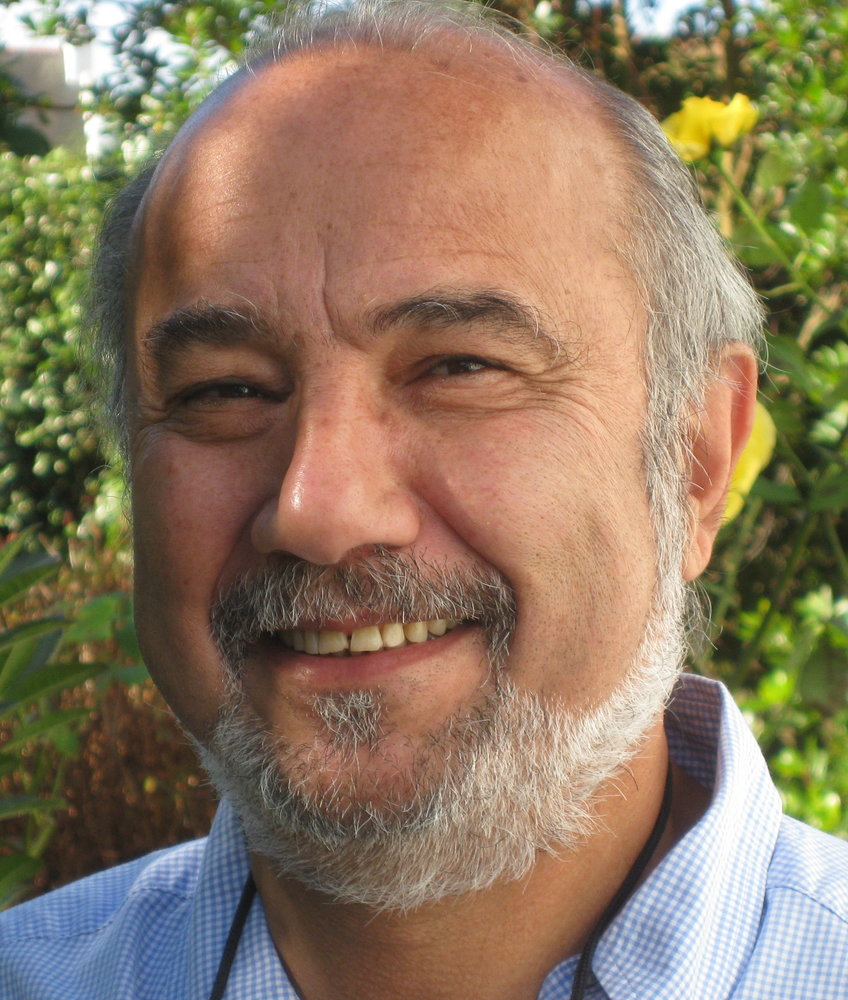
Showing posts with label Professor Hossein Askari. Show all posts

Sunday, April 28, 2019

Hossein Askari: Arab NATO Would Be A Total Joke without Egypt


Hossein Askari: Arab NATO Would Be A Total Joke without Egypt
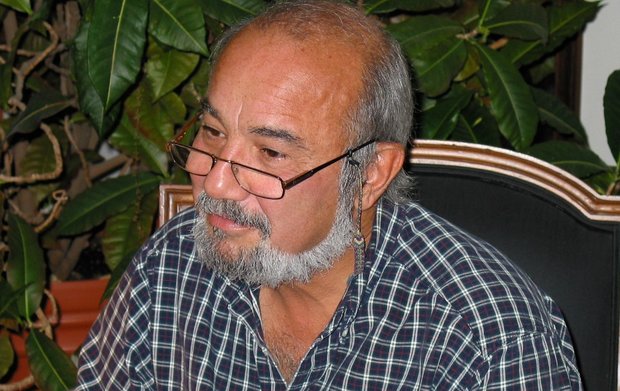
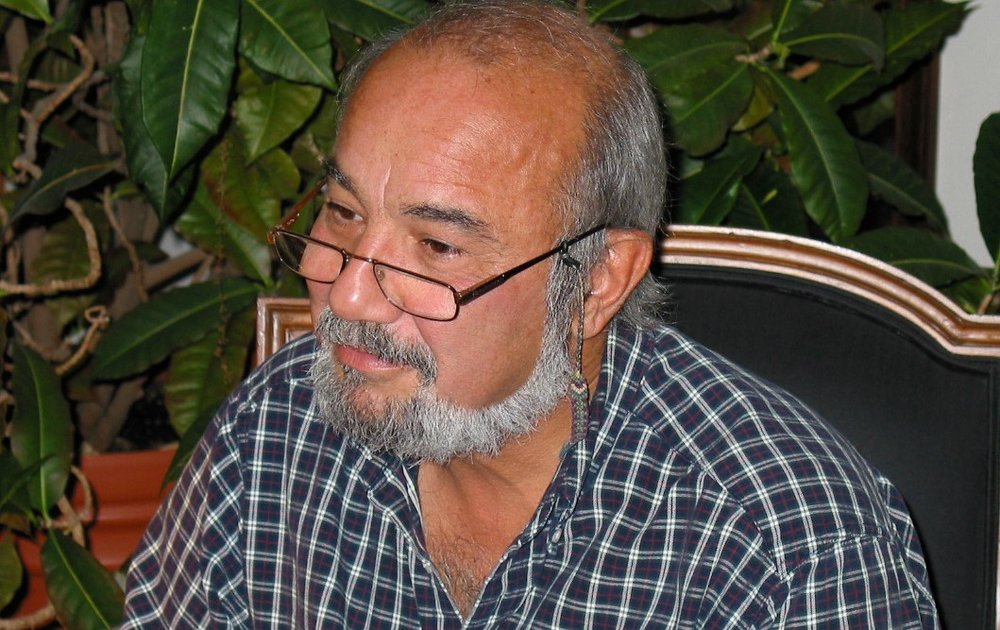
TEHRAN (FNA)- Professor Hossein Askari, a former advisor to Saudi finance minister, said Egypt would want a big annual check from Saudi Arabia and the UAE to join the Arab NATO, and further slammed the Saudi crown prince for robbing Arabs of dignity and tarnishing Islam.
“He needs money and without Egypt Arab NATO would be a total joke because all you would have is [P]GCC minus Qatar and with the addition of Jordan,” Hossein Askari, an expert on Saudi Arabia who also teaches international business at the George Washington University, told FNA.

Following is the text of the interview:

Q: How do you assess attempts made to establish the so-called “Arab NATO”?

A: Normally, I would applaud all defensive arrangements. But I don’t believe that this is the real goal of the proposed Arab NATO. It is not for the defense of these Arab countries. The driving force behind this effort has been MBS and Saudi Arabia. They want to have a force to engage Iran, and Iran and Iraq. 

MBS has a big ally in the Crown prince of the UAE. They are working together and pulling in Kushner and the United States. I repeat something that I have said many times, the Al-Sauds are obsessed about Iran. They believe that Iran wants to overthrow them and so they want a big force to confront Iran. With such a coalition, they hope to show the US that they are ready. This would make it more likely for the US to declare war on Iran. It would also draw Israel.

Q: What are the goals of such a coalition?

A: As I have said, I think that the goal is to be ready for an opportune time to attack Iran and try to break Iran up as the country we see today. Their allies in such a move would be the US and Israel.

Q: According to some news reports, Egypt has withdrawn from efforts to form an "Arab NATO". What could be the reason behind this withdrawal?

A: I am sure that Egypt would want a big annual check from Saudi Arabia and the UAE. Sisi may be just bargaining. He needs money and without Egypt, an Arab NATO would be a total joke because all you would have is [P]GCC minus Qatar and with the addition of Jordan. They cannot even muster a complete [P]GCC force, so they would add Jordan in place of Qatar.

Q: The principle of collective defense is at the very heart of the NATO’s founding treaty. It remains a unique and enduring principle that binds its members together, committing them to protect each other and setting a spirit of solidarity within the Alliance. Could an “Arab NATO” arrive at such an objective? Does the US agree to article 5 of the NATO statute?

A: As you correctly note Article 5 is at the heart of NATO. It has been invoked only after 9/11. The Europeans clearly responded in support of the US. Would the US respond to such a call if a European member was under attack? I believe that the US would normally live up to this obligation. But I say normally because I think we live in abnormal times, namely the Trump presidency. I don’t believe that Trump would respond to helping Europe but I believe other recent presidents would have. Trump looked the other way and said nothing as the Russians killed a resident of England on English soil. He only came in support of the UK when members of his own party criticized him. Let’s face facts NATO is under threat and is in trouble. Trump does not understand that the US military in Europe, European defense expenditures and the willingness of Europeans to support US foreign engagements are critical for US security and defense. Trump’s focus is what do they spend on defense and what do we spend. They don’t spend enough. So let’s scrap NATO.

Q: What is the role of the US in shaping this coalition and will it remain after Trump’s presidency?

A: I think the US, especially under Trump, is encouraging an Arab NATO. The reasons are many. The U.S. would sell more arms. There would be a ready Arab force in case the US wanted to intervene in the Persian Gulf. The US could withdraw some of its forces from the Middle East. They would see such a force as a helpful balance against Iran and Iraq. All the Arabs under one command would make it easier for Kushner and Trump to bring them closer to Israel and destroy all hope of a Palestinian state. This I believe is at the heart of Kushner so-called peace plan that he wants to unveil, a plan which he has shared with Netanyahu and MBS but with no Palestinian input. It is a joke that he could have a plan where only one side, namely Israel, is consulted. MBS has robbed Arabs of any dignity that they might have had. He has tarnished Islam’s message to the world as he engages in horrendous acts, robs his country, tortures Saudis and all the while claims to be the custodian of Islam’s holiest places. He will do anything to get Trump’s and Netanyahu’s support to stay in power and to threaten Iran. He has no dignity.

Tuesday, December 18, 2018

‘Reforming Muslim countries and Islamicity indices’


‘Reforming Muslim countries and Islamicity indices’


TEHRAN, Dec. 18 (MNA) – Professor Hossein Askari, an expert on Saudi Arabia who also teaches international business at the George Washington University, believes that Islamicity Indices are based on Quranic teachings. 
“The Holy Quran and its interpretation by the Prophet Mohammad tell us what Muslim societies should strive to do,” said Hossein Askari, who served as special advisor to Saudi finance minister.
He adds that "unfortunately, for centuries, Muslims have abrogated their responsibility to go directly to this source and debate and discuss its application in their times.”
Following is the full text of his interview with Mehr News correspondent:
Before I ask you about the progress you have made in this program of reform and institution-building in Muslim countries since we last spoke about a year ago, can we begin by reminding our readers what this project is all about. What are Islamicity Indices?
Islamicity Indices are based on Quranic teachings. The Holy Quran and its interpretation by the Prophet Mohammad tell us what Muslim societies should strive to do. Unfortunately, for centuries, Muslims have abrogated their responsibility to go directly to this source and debate and discuss its application in their times. Instead, they have allowed rulers to spoon feed them an interpretation of Islam that is far from that envisaged in the Quran and what we see in Muslim countries bears little resemblance to Quranic teachings. The religion has been limited by some to the so-called Five Pillars and to memorization of the Holy Book with little understanding of its deeper message for thriving communities. Most Muslims have not spent the time to understand the deeper meaning of their faith and its application in their time.
In the first place these indices, divided into four broad areas of teachings—on the economy and financial system, legal system and governance, human and political rights, and international relations and then combined into an overall index—provide us with an easy way to convey the central message of Islam for Muslim communities and are also helpful for showing the meaning of Islam to non-Muslims. These indices convey the rules that are at the foundation of this religion. In turn, rules represent institutions and institutions are the foundation of a society’s potential for development. These institutions include the rule of law and an independent judiciary, a constitution, strong property rights and the sanctity of contracts and so on. Societies that have effective institutions thrive and prosper and societies that have ineffective institutions languish and decay. These indices represent the institutions recommended in Islam and provide a benchmark to assess the performance of societies and a compass pointing to the changes (institutions) they should make. A country that scores high on these indices is a country where the people and their government have knowingly or unknowingly adopted and practice the institutions that Islam recommends. A word of caution, we have excluded four important but very personal dictates of the religion—declaration of faith, daily prayers, fasting during Ramadan and pilgrimage to Mecca. We are interested in how a rule-abiding Muslim community should look like. If we included these four elements, then we would bias our results toward countries that profess Islam but do not necessarily follow its important teachings, and in that event could not compare the performance of Muslim and non-Muslim countries.
Most important, I must emphasize a point. As benchmark and compass, these indices enable governments and citizens to collaboratively agree to a set of reforms using these indices as indicators. They can of course use a variant of these indices that better suits their country’s needs and a timetable for getting there. These indices then serve as an indicator of their successes and failures. Thus government and people can work peacefully towards a common goal, a compact that they have agreed to. 
In sum, our mission in this program is to: Encourage collaboration between government and people in Muslim countries to build more effective institutions in order to build thriving communities based on Islamic teachings.
What do these indices tell us?
Well, the results are on the one hand surprising and yet on the other hand to be expected. The countries that perform best are the countries of Northern Europe along with New Zealand, Australia and Canada, countries that are generally seen as thriving and successful. Muslim countries perform badly. The best performing Muslim country since 2000 has been Malaysia, followed by Qatar, the UAE and Kuwait. Even Malaysia’s performance is not that great. Malaysia has ranked only in the 30’s in a sample of 154 counties. And the median rank of Muslim countries has been around 120! 
The inescapable fact is that although Islamic institutions support thriving societies, most Muslim countries have actually failed to adopt the institutions and practices recommended in Islam, because if they had they would have thriving communities, as would be generally admitted of the countries that perform high on these indices. If Muslim countries want to enhance their performance, they must begin by adopting the effective institutions recommended in their religion. Let me just add that our results were broadly voiced over a century ago by Mohammad Abduh when he said ‘I went to the West and saw Islam but no Muslims; I got back to the East and saw Muslims but no Islam.’ Following our work, some have estimated indices based on Maqsid Shariah and what they have found are essentially the same results as have we. Muslims must face facts. While they may pray, fast and memorize the Quran, their actions and their societies do not reflect what Islam recommends. 
Q: How do you plan to use these indices for reform and institution building?
A: Our approach is to develop a partner in every Muslim country and in many non-Muslim countries, encourage the collaboration and cooperation of millions of like-minded Muslims with their governments and across the world to become a virtual community and use these indices as a benchmark and compass to peacefully reverse the centuries of political, social and economic missteps and underperformance. This Muslim countries can do by working toward establishing effective institutions—the globally recognized foundation for sustained development and growth. When governments and the people decide to adopt these indices, or a modified version that they can agree on, then the people and the government have agreed to a plan of peaceful reform. This is something that Malaysia had done. We hope to disseminate our results widely to reach Muslims in every corner of the earth. We will estimate indices yearly. We will publish an annual report on pertinent developments. We plan to publish country reports annually highlighting areas of success and failure and with recommendations for important reforms. Eventually, we hope to hold conferences, with online streaming, focusing on results and areas of reform and institution building. By going global, we hope to build a community that is familiar with the institutions that Islam demands and has cross-border reach to support peaceful reforms in all Muslim communities. Muslims will have support for peaceful reforms no matter where they are!
Over the last year, what have you done in forming an organizational structure to implement this initiative?
We have made much progress. First, we have incorporated the Islamicity Foundation to manage this program. Second, we are in the process of putting together an Advisory Board to guide us. The Advisory Board will guide the foundation toward achieving its mission. We hope eventually to establish a Board of 12 to 15 eminent women and men, with diverse professional and regional backgrounds, to afford the Islamicity Project a broad perspective on the process of institution building and reform across the Muslim World. We have been honored by our three initial members: Dr. Ali Allawi (former Minister of Finance and Minister of Defense of Iraq, Professor at University of Oxford, Princeton and the National University of Singapore and author of a number of highly acclaimed books), Dr. Abbas Mirakhor (Dean of the Executive Board of the IMF, First Holder of INCEIF Chair in Islamic Finance in Malaysia and the author of a number of highly acclaimed books on Islamic economics and finance) and Dr. Jomo Kwame Sundaram (Secretary General for Economic Development in the Department of Economic and Social Affairs of the United Nations, Assistant Director General for Economic and Social Development, Food and Agriculture Organization, professor at Harvard and a number of other universities and author of numerous highly acclaimed books and articles). Third, we have progressed in establishing country partners in 15 countries that have over 50 percent of all Muslims who live in Muslim countries: Afghanistan, Bangladesh, Bosnia and Herzegovina, Côte d’Ivoire, Indonesia, Iran, Malaysia, Nigeria, Oman, Pakistan, Senegal, Singapore, Tunisia and Turkey. Country partners are critical for the success of our mission. These individuals and institutions represent a connected global community who understand the message of Islam and who will work collaboratively toward establishing effective institutions. In time, we plan to have partners in all Muslim majority countries and in numerous non-Muslim majority countries who want to support the process of institution building and reform. Fourth, we have produced four short videos, which can be found on our website: (www.IslamicityFoundation.Org) to explain this program. We plan to produce more videos and podcasts in the coming months. Fifth, we have produced new indices for 2017 and we plan to publish the indices for 2018 in the spring of 2019. Sixth, we have had the book that underlies this effort translated into French and made available free on our website as we own the foreign language publication rights. We are hoping to have a Farsi translation on our website in early 2019. We hope that this book will be translated into other languages in the future. Seventh, we have produced our first annual report and we are working on country reports. And eighth and most important, we are beginning to reach a wide global audience.
Will this project be managed by The Islamicity Foundation or will it be merged into a larger existing entity?
We are hoping to find a welcoming home for the Islamicity Foundation and this program of reform and renewal. Our hope is to merge this into a world-class university anywhere in the world. The critical requirement is not location but rather an institution that is supportive and believes in this effort as do my collaborators and I. In a university setting, we can generate excitement in students who can become our ambassadors, develop exchange programs, hold conferences, facilitate fund raising efforts and I could teach seminars on these indices and related topics of development, economics and finance in Islam. I was exploring one such collaboration but it was not meant to be; and the same can be said for the university where I have taught for over 35 years. I have had interest from a university that I consider to be an ideal home for the Foundation and this Program but it has not developed into anything concrete yet. I will keep looking and I am open to any suggestions.
What are your next steps?
A: I would like begin by finding a university to house the Foundation and the Program. Second, I would like to round out our Advisory Board. In this regard, I would like to have a few slots reserved for the alumni of the university where the Foundation will be housed. Third, I hope that we will expand our country partnerships to reach about 40 partnerships by the end of 2019. Fourth, I hope that we can attract sufficient funding to allow us a small administrative staff. Finally, it would be nice to have a more dynamic website in order to attract a wider audience.
Is there anything you would like to add?
I fear that the world is marching down a track that has a catastrophic end in sight. Western support for oppressive rule, armed conflicts and drone attacks in the name of stability will achieve the opposite—creating misery in failed societies, more enemies for oppressive regimes and also the West who support oppressive rulers. With more wars to come. 
Generally speaking, most Muslim countries are not thriving. If we are honest with ourselves, in most of these countries we see widespread injustice and corruption, little respect for human and civil rights, oppression, little freedom to express individual views, no freedom of the press and stagnant economies that do not produce acceptable opportunities for all citizens to develop and grow. At the same time, Islam is totally misunderstood in much of the non-Muslim World and seen as a militant, hostile and undemocratic religion that must be confronted, but Western leaders support tyrannical-strongman rulers in the Muslim world to maintain stability and crush fanatics. Some perverse academics even suggest that the best hope for Muslims is to abandon Islam and adopt Christianity! These ignorant academics attribute failure in the Muslim World to their own straw man, their manufactured and presumed defects in Islam. But our results show the opposite. Countries that we consider successful—in Northern Europe and the like—perform the best in Islamicity Indices. 
We are advocating a different path to restore hope, cooperation and peace—the basis for a program of reform and renewal that is firmly anchored in the teachings of the Qur’an, the only realistic framework for Muslim countries. Reform is most likely to succeed in an Islamic framework, and where governments and the people agree on the best path forward and the institutions needed to support it. While this effort places the responsibility to bring about change in the first instance  squarely on the shoulders of Muslims, the Western world can lend a helping hand by being less selfish and ending its support for oppressive rule in Muslim countries in the name of stability and selling arms to Muslims to use against Muslims.  The US and other Western countries should stop supporting oppressive rulers who assassinate their own people and give Islam and Muslims a bad name. The West must begin to look beyond its nose and adopt a longer-term approach, encouraging meaningful reform based on a realistic timetable. It should practice what it preaches, human rights and not dictators. 
To demonstrate my own commitment to this endeavor, I have resigned my endowed Professorship at my university effective January 1, 2019, and the work that I have done for the foundation has been and will continue to be on a pro bono basis.
Interview by: Javad Heirannia

Tuesday, December 11, 2018

PGCC with excesses of MBS doomed to trash heap of history: Askari

By Javad Heirannia
TEHRAN – Professor Hossein Askari, an expert on Saudi Arabia who also teaches international business at the George Washington University, believes that the PGCC has always been a Saudi ‘thing’ with a number of countries simply hanging on.
“But now it is rapidly becoming more a Saudi-Emirati ‘thing’. Qatar and Oman are on the outs and I believe that Kuwait may begin to distance itself little by little,” Hossein Askari, who served as special advisor to Saudi finance minister, tells the Tehran Times.
He adds that “But with the excesses of MBS, it is doomed to the trash heap of history.”
Following is the text of the interview:
Q: The Persian Gulf Cooperation Council's (PGCC) annual summit was held in Riyadh while the Qatari Emir and the Sultan of Oman refrained from joining. What are the reasons behind their refusal? 
A: In the case of Qatar, the reason is straightforward. The Emir could not attend simply because the Saudi embargo is akin to a declaration of war. Saudi Arabia has to begin discussions to lift the embargo before Qatar can attend a PGCC meeting. The Sultan of Oman has always been somewhat apart from Saudi Arabia. It has tried to be a mediator. The Sultan has disagreed with the embargo on Qatar and behind the scenes with the policies of MBS. This was a meeting the Sultan could not attend.
Q: Qatar left OPEC and according to some reports, it might break-up with PGCC. Do you think that Qatar will leave the PGCC? 
A: No. Qatar will not do anything. It will simply wait and see what MBS does. There is a lot of pressure on MBS from the U.S. and Europe. The Emir can simply wait and see MBS cave under international pressure and pressure from Turkey and lift the embargo. If the Emir withdraws, he would give MBS an excuse and a free pass.
Q: The PGCC failed to find a purely internal collective solution to the Qatar crisis. With regard to this failure, how do you see the future of PGCC? 
A: The PGCC has always been a Saudi ‘thing’ with a number of countries simply hanging on. It was nothing more. But now it is rapidly becoming more a Saudi-Emirati ‘thing’. Qatar and Oman are on the outs and I believe that Kuwait may begin to distance itself little by little. But with the excesses of MBS, it is doomed to the trash heap of history. MBS will try to keep it going to save face but it is in a downward spiral.
Q: In case of Qatar's exit from PGCC, is there any possibility of a new alliance between Qatar and Turkey? 
A: If Qatar leaves the PGCC, and if as I have stated earlier, then yes, Qatar will develop a much stronger alliance with Turkey. And if Iran reduces its international rhetoric and after Trump’s exit develops better relations with the U.S., Qatar could have a loose alliance with Iran.

Wednesday, November 14, 2018

Bin Salman will step down: Hossein Askari

By Javad Heirannia
TEHRAN – Professor Hossein Askari, an expert on Saudi Arabia who also teaches international business at the George Washington University, believes that with no doubt Mohammad bin Salman, ordered Khashoggi kidnapping, murder and disposal of the body. “I don’t believe that MBS can survive,” Hossein Askari, who served as special advisor to Saudi finance minister, tells the Tehran Times.
Following is the text of the interview:
Q: What new facts are there in the Khashoggi tragedy?
A: Erdogan has released some of the tapes surrounding what happened to Khashoggi in the Saudi consulate to the U.S., UK and Saudi Arabia among others. These tapes purportedly confirm the murder and dismemberment of Khashoggi. I say some of the tapes because we don’t know what he has and what he has released.
Q: Is there any evidence in the tapes or anywhere else connecting Mohammad bin Salman (MBS) to Khashoggi’s murder?
A: This is a red herring. Let me tell you why and with no doubt in my mind, Mohammad bin Salman, or MBS, ordered this kidnapping, murder and disposal of the body. Such actions are not carried out unless ordered from the top. MBS is today the effective top man. This is the way Saudi Arabia works. There is no doubt about this. The U.S. knows it. The UK knows it. The hypocrisies of all these leaders is unbelievable. Let me repeat, MBS the de facto ruler of Saudi Arabia ordered this horrific act and its every detail. 
Q: What are the inconsistencies in Saudi Arabia’s story of what happened to Khashoggi?
A: Where is the body? If the Saudis gave the body to a ‘collaborator’, where is the collaborator? Why did the Saudis send in a ‘cleaning’ crew? And above all, the Saudis have spewed out lie after lie. Even Trump, who is not exactly regarded as a man of truth, has said that the Saudis have engaged in a very bad cover up.
Q: What does Erdogan say he wants from Saudi Arabia?
A: There are a number of things that Erdogan has demanded. He wants the 15 or 18 people involved in this murder extradited to Turkey to stand trial. He wants the name of the so-called collaborator in Turkey that Saudi Arabia keeps alluding to. He wants Khashoggi’s body to further confirm what happened. But nothing. And given all these lies, how can anyone be expected to believe in the investigation that MBS is supposedly conducting?
Q: Will the Saudis comply with Erdogan’s demands?  
A: No. MBS cannot risk even letting one of the 15 or 18 and the Saudi Consul in Turkey who was a witness to it all leave Saudi Arabia for the foreseeable future. Why? Because they could tell all. This is one of the reasons supporting the assertion that MBS ordered every detail. If he had not, he would let them speak and tell all. He has to now keep all of the perpetrators in Saudi Arabia. There is no collaborator in Turkey so he cannot produce him or her. And as for Khashoggi’s body, I believe that it was cut up and dissolved in acid. Why else would they send it such a cleaning crew?
Q: What is Erdogan’s game? What does he really want?
A: Erdogan is playing a chess game. First he wants the U.S. to lift any and all sanctions on Turkey. He wants to extract a number of concessions from Trump for Turkey, including the military aircraft that he wants. And also he wants the U.S. to pressure a change in Saudi policies. That is to lift the embargo on Qatar, a Turkey ally. And to pressure Saudi Arabia to rescind most of its demands on Qatar. He wants to pressure Saudi Arabia directly and indirectly through the U.S. to be more accommodating towards the Muslim Brotherhood and reform in the Middle East and North Africa. Erdogan wants Saudi Arabia to change its regional policies and to give financial support to Turkey. 
Erdogan wants to become the leader of the Muslim World. He wants to expose Saudi duplicity, injustice, corruption and ultimately its illegitimacy as the self-declared leader of the Muslim World. In this quest to become the leader of the Muslim World, Erdogan has to be careful. He cannot be accommodating towards the U.S. and to Saudi Arabia and in the process alienate Muslims around the world. So he cannot compromise too much and forget his stated quest for justice and transparency.
Q: How will this affair end? Will MBS stay in power? Will the Qatar embargo end? Will Turkey get Saudi financing? Will U.S. support for Saudi Arabia be curtailed?
A: I don’t believe that MBS can survive. How can the Al-Sauds pretend to be upholders of the Islamic faith? The custodian of the two holy mosques? Their only claim to legitimacy is religion. Yes, they have freely taken from the country’s treasury to finance their lavish lifestyles but now under MBS they are being stripped naked of even more serious crimes—murder of a journalist, genocide in Yemen, the kidnapping of the Prime Minister of Lebanon, wholesale torture of political opponents, lies to the world and on and on. How can MBS be respected by any foreign leader and especially in the Muslim World? They must all be bought but Saudi Arabia does not have enough money! It is too embarrassing for Saudi Arabia and for all Muslims. The best that the rulers of Arabia can do is to at least replace MBS for 2 or 3 years until this whole affair has receded in the minds of all. And then bring him back.
Yes, the Qatar embargo will end within the next few months. This is a minimum concession that Saudi Arabia has to make. 
Yes, the U.S. will have to walk back its over the top support for MBS and the Al-Sauds. But who knows what Kushner will do behind the scenes?”
Q: What does this tragedy say about the future of Saudi Arabia and the Muslim World?
A: Reform. Saudi Arabia will be nudged into more meaningful reforms than allowing women to drive. Muslims worldwide will be demanding representative governance, transparency, better policies and social and economic progress from their rulers. Khashoggi’s death may turn out to be the spark for much-needed reform in the Muslim World, and especially in Saudi Arabia.

Wednesday, October 24, 2018

Could good come out of the Khashoggi tragedy?

By Javad Heirannia
TEHRAN – Professor Hossein Askari, an expert on Saudi Arabia who also teaches international business at the George Washington University, believes that “More and more people are witnessing the horror show inside Saudi Arabia and especially in Yemen.”
 “I must stress that the media has been complicit in this cover up. The Yemen tragedy should be at the top of the news every day. At least now it is getting mentioned because of the Khashoggi tragedy,” Hossein Askari, who served as special advisor to Saudi finance minister, tells the Tehran Times
He adds that “Jamal Khashoggi’s death may not have been in vain after all. His legacy may bring a change in media reporting and a bit more morality in Western foreign policy toward the voiceless.”
Following is the text of the interview:
Q: First, let me ask you what the world must do to force King Salman and the Al-Sauds to address Khashoggi’s murder?
A: To begin with, the condemnation of a unified world, the West, NATO, the East and Muslims would be much more effective than one voice at a time. I am sorry to say that the weak link here may be the Trump White House and governments of many Muslim countries who take Saudi money and oppress their own people. But there is a lot Western countries can do. Freeze all arms sales to Saudi Arabia. To make the freezing of arms sales more painful to the rulers of Saudi Arabia, this should be accompanied by sanctions on investment in Saudi Arabia. And if Riyadh spews out more lies, then the sanctions should be made multilateral at the United Nations. Then let a sanction-happy USA veto this and suffer the ire of the world.
Q: What should Saudi Arabia do to satisfy world opinion?
A: In the end, all those responsible for this heinous crime, directly and indirectly, must be brought to justice. We must have a transparent investigation of all those responsible and of the individual or individuals who gave the orders. To be credible this investigation should be handled by a third party such as the United Nations. This must be followed up by appropriate punishment of the perpetrators as if they were ordinary citizens. No special justice for any of those responsible. If it is proven that any Al-Saud, including MBS, had a hand in this, they should be sanctioned by the West and all civilized nations and their assets frozen. Simultaneously if some in the West, such as Jared Kushner, were complicit in this murder they should be exposed and sanctioned as well.
Q: What has MBS’ handling of this tragedy exposed about Saudi policies and practices?
A: It seems that people around the world are unaware of conditions in Saudi Arabia, all is not well in the ‘magic’ kingdom! Some facts are getting more exposure globally. MBS is not the reformer that some would have us believe. He wants women to have the right to drive and he will allow movie theatres. These are cosmetic reforms. Now people are seeing the extent of his autocratic rule—arrests of people who simply lobbied for the right to drive, for those who expressed mild criticism of autocratic rule, arrests and incarceration without judicial process, torture and even death. Even more shocking has been the very limited coverage of the ongoing genocide in Yemen, a genocide perpetrated by MBS and sadly supported by U.S. intelligence and other military assistance with arms coming from a host of Western nations led by the U.S., the U.K., France and Germany. Some in the United States are just becoming aware that ‘something is going on’ in Yemen. The world must stop this horror show of a thirty-three year-old MBS flexing his muscles, supported by the slightly older Kushner at the White House, before two million innocent people starve to death.
Q: Am I correct in thinking that Khashoggi’s tragic murder may not be completely in vain as some things around the Middle East may change for the better?    
A: Yes. Let’s hope for something good to come out of this tragedy. The world must not stand by idly. More and more people are witnessing the horror show inside Saudi Arabia and especially in Yemen. And I must stress that the media has been complicit in this cover up. The Yemen tragedy should be at the top of the news every day. At least now it is getting mentioned because of the Khashoggi tragedy. Jamal Khashoggi’s death may not have been in vain after all. His legacy may bring a change in media reporting and a bit more morality in Western foreign policy toward the voiceless.

Sunday, October 14, 2018

Khashoggi murdered, dismembered, taken out of Turkey: Askari

Khashoggi murdered, dismembered, taken out of Turkey: Askari

TEHRAN, Oct. 14 (MNA) – Professor Hossein Askari, an expert on Saudi Arabia who also teaches international business at the George Washington University, believes that Jamal Khashoggi was murdered, dismembered and taken out of Turkey.
“Mohammad bin Salman has promised Kushner his financial support for the Trump-Kushner business empire now and especially in the future. In return MBS wants US support for his domestic policies and for all his foreign adventures and conflicts—Yemen War, operations in Syria, preoccupation and hatred for Iran, blockade of Qatar, hatred for the Muslim Brotherhood and now assassination in a foreign country,” Hossein Askari, who served as special advisor to Saudi finance minister, tells the Tehran Times.
Following is the text of the interview:
Do you now believe that Jamal Khashoggi was murdered, dismembered and taken out of Turkey?
Yes, absolutely.
Why do you think Mohammad bin Salman took such an outrageous approach to counter a critique?
MBS is a young man with little experience. He is on a high. He thinks he can do anything he wants. Sky is the limit. Overnight, he has risen from nowhere to rule Saudi Arabia. And he appears to have the unquestioned backing of the United States. The Trump administration, with Jared Kushner as the point man, has embraced MBS. As I have said for over a year, I believe that MBS has promised Kushner his financial support for the Trump-Kushner business empire now and especially in the future. In return MBS wants US support for his domestic policies and for all his foreign adventures and conflicts—Yemen War, operations in Syria, preoccupation and hatred for Iran, blockade of Qatar, hatred for the Muslim Brotherhood and now assassination in a foreign country. I think he ordered this assassination because he thought Trump would talk but do nothing. After all, Trump hates reporters! And Kushner is behind him. In the end, he did so because he could. I think all of this was cooking in his head.” 
Why hasn’t the Trump Administration acknowledged this and taken some appropriate action?
Business interests. Trump and Kushner are first and foremost concerned about the health of their own business empires. Saudi Arabia could be their guardian angel. America’s standing in the world is their major concern.
What could Trump do?
I will give you a long list but let me say up front that I don’t think Trump will do much of anything. He could terminate US support for his war in Yemen, Oppose the blockade on Qatar. Pull all US military advisors out of Saudi Arabia and put sharing of military intelligence on hold. Freeze all military sales to Saudi Arabia. Recall the US ambassador from Saudi Arabia and expel a number of Saudi diplomats from the US. Impose economic sanctions. Make it clear to MBS that the US will not support him if he starts a conflict with Iran. There are lots that he could do but he won’t unless MBS is overthrown internally. The overthrow of MBS is now much more likely. There was already resentment towards what he had done to senior members of the family, taking them hostage and demanding money but now there may be real danger for the survival of Saudi family rule. So things could turn from bad to worse for MBS.
What will this signal to the rest of the world? Can any country now send assassins around the world to kill?  
Let me first say that if the US knew about the planned murder of Khassoghi and as we have seen did nothing, then the US is complicit to a murder.  The whole affair is shocking. To think that Saudi Arabia or any government could do this is absolutely unthinkable. You are judged by the friends you keep. If the US is unwilling to take any meaningful action against MBS and Saudi Arabia, signaling that as a close friend and ally Saudi Arabia can do no wrong, then US pretensions to democratic values and the rule of law will be damaged for years to come. The UK and Europe took swift action against Russia’s assassination attempts on their soil and they received belated support from the US. What will the US say to the world if it does nothing? Our favorite dictators can do anything and we will look the other way. Just think the message that this sends to the rest of the world and what this will do for democratic values around the world? Moreover, any terrorist organization can now do the same with impunity. If America’s allies can send killers around the world to assassinate those that oppose them, why shouldn’t they? The US will also become more vulnerable. We will open an arena of conflict that we will regret.
Interview by Javad Heirannia

Friday, October 12, 2018

Saudi Arabia likely murdered “Jamal Khashoggi”: Askari

By Javad Heirannia
TEHRAN – Professor Hossein Askari, an expert on Saudi Arabia who also teaches international business at the George Washington University, believes that Saudi Arabia likely murdered “Jamal Ahmad Khashoggi”.
 “If this is what happened, then it had to be ordered and sanctioned by MBS. No one in Saudi Arabia beside him would dare to authorize such an assassination,” Hossein Askari, who served as special advisor to Saudi finance minister, tells the Tehran Times
Following is the text of the interview:
Q: Jamal Ahmad Khashoggi, Saudi journalist that fled Saudi Arabia on 18 September 2017 killed in Turkey. Turkish sources say they believe that Khashoggi was killed inside the Saudi consulate in Istanbul on 2 October, by a 15-member "murder" team from Saudi Arabia. What do you think?
A: Sure, it is possible. But I have no idea if this is what happened. Why do you need 15 people to kill one man in a consulate? 
Q: Before this event we have saw the behavior of Mohammad Bin Salman with his critics and this lead some convinced that MBS is behind the killing of Jamal Ahmad Khashoggi. What is your opinion?
A: If this is what happened, then it had to be ordered and sanctioned by MBS. No one in Saudi Arabia beside him would dare to authorize such an assassination.
Q: What will be the reaction of U.S. and Turkey to this event?
A: Again, if this is what happened the U.S. will do nothing. The Trump Administration is all in with MBS. Turkey may make a little noise behind the scenes to get some financial support from Saudi Arabia but it will do nothing either.
Professor Hossein Askari

Wednesday, September 26, 2018

Qatar cannot bow to Saudi Arabia: Askari

By Javad Heirannia


TEHRAN – Professor Hossein Askari, an expert on Saudi Arabia who also teaches international business at the George Washington University, believes that “There is a history of animosity between Qatar and Saudi Arabia and it will not disappear at Camp David.” Hossein Askari, who teaches at George Washington University, tells the Tehran Times that “Qatar cannot bow to Saudi Arabia.”
Following is the text of the interview:
Q: Camp David meeting is scheduled this autumn in the United States to resolve the crisis in Qatar. Can this American initiative lead to solving this crisis?
A: Absolutely not! Let me explain. Qatar cannot bow to Saudi Arabia. It has no choice but to stand firm. If it flinches, it will lose its sovereignty and become a vassal of province. In fact, Saudi Arabia might have at one point given serious thought to invading Qatar as access to Qatari gas would solve Saudi Arabia’s financial woes. Qatar is in a strong position. Qatar has managed to deal with the Saudi-led embargo. Qatar has Turkish backing with a Turkish base in Doha. Qatar has Iranian support. It can hold out and it must to stay an independent country. Moreover, President Trump will, soon or later, be out of office and the tables will turn. U.S. blind support for Saudi Arabia will evaporate. As for Saudi Arabia and Mohammad bin Salman, they know that they overplayed their hand. But they cannot back down and lose face among the [P]GCC and the rest of the Arab and Muslim worlds. The United States has also made a terrible mistake in giving Saudi Arabia its blind support. I cannot see a face saving solution for Saudi Arabia while backing down and lifting the embargo.
Q: Some believe  the reason that United States is at the head of the initiative to solve the crisis in Qatar is Showing Washington's dissatisfaction with Riyadh to solve regional problems. What do you think?
A: No, I don’t believe so. I think Jared Kushner made childish promises to Mohammad bin Salman in the belief that he and his family will be rewarded handsomely after he steps down as Senior Advisor to The President. While contracts may still come his way, I believe that the U.S. military is getting fed up with having to support Saudi war crimes in Yemen. Saudi crimes will haunt the United States for years to come—the killing of innocent civilians including so many children and the enemies that this generates. Whether the U.S. likes it or not, it will be seen as in part responsible. So the Camp David meeting is in part to make this point clear to the Saudis in the sidelines and to tell them it is time to mend fences where it can. A good place to start is Qatar. But again, I think that the meeting will achieve little of substance. 
Q: According to Saudi Arabia and its allies, Qatar may be ready to concede some points. If so, what areas may there be a compromise?
A: As I said earlier. Qatar cannot flinch. The only concessions I can see are downgrading relations with Iran and reducing coverage of Saudi Arabia on the Al-Jazeera network.
Q: Given U.S. relations with Saudi Arabia and Qatar, how can Washington resolve the crisis and keep the two sides happy?
A: It cannot! Even if they announce great results, don’t believe it. There is a history of animosity between Qatar and Saudi Arabia and it will not disappear at Camp David.