Showing posts with label Ali Shamkhani. Show all posts

Thursday, November 21, 2019

Islamic states must pressure Riyadh to end Yemen war: Shamkhani

TEHRAN – Ali Shamkhani, secretary of Iran’s Supreme National Security Council (SNSC), has said the all-out Saudi war against the innocent Yemeni people is an example of expanding insecurity in the region and blatant violation of human rights.
He made the remarks on Tuesday during a meeting with Pakistan’s Chief of the Army Staff General Qamar Javed Bajwa in Tehran, IRNA reported.
“Islamic countries must immediately put an end to this heinous genocide by exerting great pressure on the Al Saud regime,” Shamkhani suggested.
Saudi Arabia and a number of its Arab allies launched a devastating campaign against Yemen in March 2015, with the goal of bringing the government of former president Abd Rabbuh Mansur Hadi back to power and crushing the Ansarullah movement.
In the relentless campaign, Saudi-led airstrikes have hit schools, hospitals and wedding parties and killed thousands of Yemeni civilians.
The war has also taken a heavy toll on the country’s infrastructure, destroying hospitals, schools, and factories. The UN says over 24 million Yemenis are in dire need of humanitarian aid, including 10 million suffering from extreme levels of hunger.
The United States and the United Kingdom are the main supporters of Saudi Arabia in the war, providing the kingdom with billions of dollars in arms sales, training, logistical support and targeting assistance for airstrikes.
In his remarks, Shamkhani also said Iran’s strategic approach is to boost its relations with neighboring countries, especially Pakistan.
Pointing to the determination of the two countries’ leaders to expand bilateral relations in all fields, he called for expansion of defense, security and economic ties between Tehran and Islamabad with the aim of establishing sustainable security in the region. 
He emphasized the need to increase security along common borders.
Shamkhani also said that the United States sows discord among Islamic countries in order to protect the Zionist regime and expand its dominance over the region.
During the meeting, General Bajwa, for his part, called for expansion of bilateral relations in all fields, saying the Pakistani army is determined to take harsh measures to deal with insecurity at common borders.
He also warned against plots orchestrated by trans-regional countries to foment unrest and sectarianism in Islamic countries and highlighted the need to counter such approaches by Islamic countries.
General Bajwa met on Monday with Major General Mohammad Hossein Baqeri, Iran’s Armed Forces Chief of Staff, to discuss defense and security partnerships, regional developments, as well as strengthening cooperation to maintain durable security at the regional level.
Establishing security at the common borders, countering terrorism and preventing the terrorists from illegally crossing the borders of the two countries were among other issues the two sides discussed.
Convergence on the Islamic world’s issues and the creation of economically active frontiers were also discussed in their meeting.
General Bajwa also met with Iran’s Army Commander Major General Abdolrahim Mousavi to expand military cooperation between Iran and Pakistan and coordinate efforts in ensuring the security of common border.
Lauding Pakistan as a great country with an ancient civilization, General Mousavi said Iran and Pakistan are two neighbors with religious commonalities whose relations and cooperation in various fields date back to a long time ago.”
He also expressed hope for expansion of military interaction between the two countries, such as exchange of cadets and holding joint training programs.
For his part, the visiting Pakistani general welcomed the idea of mutual cooperation with Iran, saying Islamabad is prepared to expand its ties with Tehran in various fields.

Monday, October 14, 2019

Mideast States Believe Region Safer Place without US: Iran

By
 IFP Editorial Staff

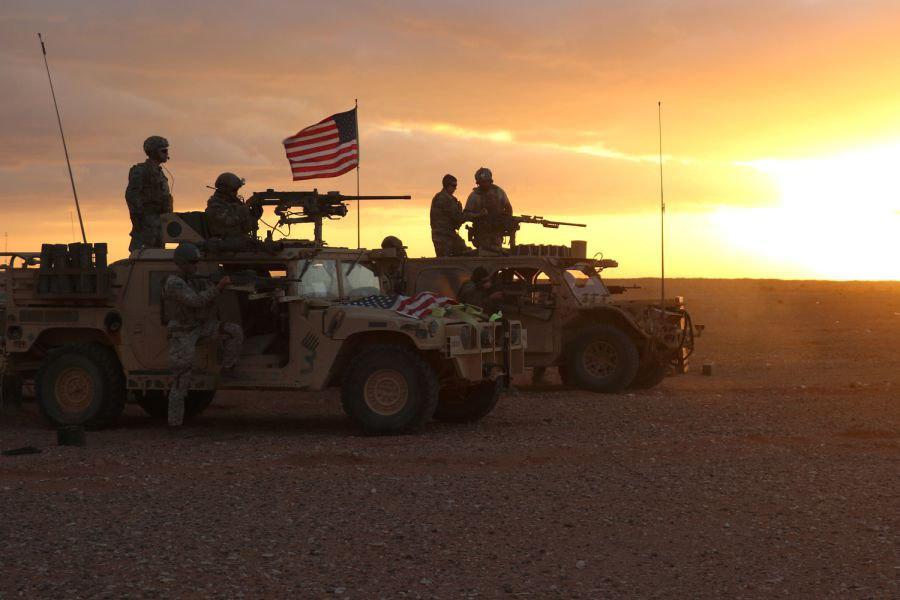
Members of the US' 5th Special Forces Group (A) conduct 50. Cal Weapons training during counter ISIS operations at Al-Tanf Garrison in southern Syria, November 22, 2017. / Photo by US Defence Department
The Secretary of Iran’s Supreme National Security Council (SNSC) says many Western Asian countries believe the Middle East without the United States is a safer place.
Ali Shamkhani wrote in a piece that the US administration’s bitter but instructive confession has led many West Asian nations, even the group that has hosted US troops in the region for years, to acknowledge that “the Middle East is a safer place without America.”
The senior security official said three clear statements by US officials over the past two months reveal facts that the US administration previously lacked the courage to accept and express.
“After Yemen’s Ansarullah drone attack on Aramco facilities in Saudi Arabia, and in response to pressure from the Saudi kingdom to deal with the perpetrators, the US statesmen explicitly emphasised their opposition to meet Saudi Arabia’s demand, announcing that Saudi Arabia was attacked, not the United States,” stated the SNSC secretary.
Shamkhani also maintained that in the wake of the ongoing political and military defeats in the region, the $8-billion US military presence [plan] in the region was unveiled, and it was announced that the US presence in the Middle East has borne no fruits and was a pointless act.
“Recently, after Turkey’s attack on northern Syria the US turned its back to its Kurdish allies, and the American officials confessed to waging a bloody war in Iraq by falsely claiming that there existed WMD in the Arab country. They admitted that entering the Middle East was the worst decision ever made in the US history.”
Shamkhani went on to add that the US administration seems to have come to the conclusion, through objective experience, that the equation of power and the political geometry of the world has changed, especially at its heart, the Middle East. Besides, the United States can no longer claim an absolute supremacy over the affairs of the international system, in spite of all its massive propaganda.
“Washington has come to realise that there are only two ways forward, either to bear the expense of having a hollow face of a global superpower or to embrace the present reality of the world with a realistic approach to free itself from the burden of the enormous costs of this show,” said Shamkhani.
“In other words, the US administration has realised that today it does not have the means to be a superpower for any reason, and it is impossible to go back to the topmost era. As its inability to execute strategic projects such as “Middle East Disintegration”, “Deal of the Century “, “Regime Change in Iran”, “Turning Saudi Arabia into the Region’s Gendarme”, “Yemen war”, “The Afghan Peace”, “The Syrian Crisis” etc., has been proven to everyone.”

Sunday, August 04, 2019

Iran’s robust, effective diplomacy cannot be sanctioned: Shamkhani

TEHRAN – Ali Shamkhani, the secretary of Iran’s Supreme National Security Council, has said that Iran’s “robust and effective” diplomacy cannot be put under sanctions.
Following U.S. sanctions on Foreign Minister Mohammad Javad Zarif, Shamkhani, a former marine chief, wrote a commentary in which he said U.S. President Donald Trump’s so-called maximum pressure approach toward Iran has failed.
“By quitting the JCPOA [Iran nuclear deal] and adopting a maximum pressure approach against Iran, Trump tried to belittle his domestic rivals as well as the international community, with the hope to show that he is a different man and can gain the biggest benefit with smallest setback through his new-fangled ways,” Shamkhani wrote.
That is where the maximum pressure policy was pursued with measures aimed at weakening the pillars of the Islamic Republic, meaning the Leadership, the people, the Islamic Revolution Guards Corps, and the diplomatic system, he noted, adding that sanctions were also employed as the least-costly measure to batter Iran.
According to Shamkhani, Iran’s “cold, revengeful response,” along with the constant improvement of national economy, effective beef-up of mobility at regional and international levels, as well as unwavering stances adopted by Leader of the Islamic Revolution Ayatollah Ali Khamenei, started to wear down on Trump’s hopes and put him face to face with a huge amount of criticism from the international community, his allies, and rivals at home.
“Imposing sanctions on the foreign minister after he turned down Trump’s offer of a meeting showed that the train to ‘maximum pressure’ has come to a halt at the ‘Disappointment Station’, leaving those on board with the sole option to change the rail and move towards upholding their commitments and recognizing the Islamic Republic of Iran’s legal rights.”
“The Islamic Republic of Iran’s robust and effective diplomacy cannot be put under sanctions and neither Trump nor any of his allies can muffle the vibrant voice of Iran,” Shamkhani concluded.
The New Yorker on Friday reported that Just weeks before the Trump administration placed sanctions on Zarif last Thursday, Iran’s outspoken top diplomat was invited to meet with the president in the Oval Office.
According to the report, citing “American and Iranian sources and a well-informed diplomat,” the diplomatic overture was made by Senator Rand Paul, the Kentucky Republican, during a meeting with Zarif in New York on July 15th.
Zarif, however, turned down the invitation, just like President Rouhani had done last year during his visit to New York to attend the UN General Assembly, not recognizing Trump’s overtures as they came despite insulting language and economic sanctions which disregarded the 2015 Iran nuclear deal.

Thursday, July 25, 2019

Enemy Losing Hope in Iran Capitulation

-Official

TEHRAN -- Iran’s top security official on Wednesday rejected the notion of any possible negotiation with the U.S., saying any talks with someone who always reneges on his promises would be absurd and a sign of frustration.
Secretary of the Supreme National Security Council Ali Shamkhani hailed valuable achievements of Iran’s resistance as he highlighted the ineffectiveness of U.S. sanctions and its calls for "unconditional” talks with the Islamic Republic.
"Today, the enemy is well aware of its inability and failure to enforce its pressure-negotiation policy and the fact that there is no other way than to fully fulfill its obligations and to ensure the rights of the Iranian nation,” he said.
"Today, with the resistance of the Iranian people, our enemies have come to the conclusion that one cannot force the Iranian nation to accept humiliation,” Shamkhani added. 
The remarks came against the backdrop of increased tensions between Iran and the U.S, following Washington’s withdrawal from the 2015 nuclear deal and its decision to impose most restrictive sanctions on the Islamic Republic. 
On Tuesday, the Trump administration warned the civil aviation industry against dealing with Iranian airlines, saying any company found to have business with them would put itself in the crosshairs of sanctions.
A formal advisory from the U.S. Treasury Department’s pro-Israeli Office of Foreign Assets Control (OFAC) claimed that Iran’s commercial airliners were a key component of support for the Islamic Revolution Guards Corps (IRGC).  
The advisory said entities providing services for designated Iranian airlines, including financing, reservations and ticketing as well as procurement of aircraft parts, would be at risk of enforcement actions or economic sanctions.
"The international civil aviation industry, including service providers like general sales agents, brokers, and title companies, need to be on high alert to ensure they are not complicit in Iran’s malign activities,” the treasury’s Sigal Mandelker said.
The advisory singled out Iran’s Mahan Air, blacklisted by the U.S. in 2011, alleging that the airline has a role in providing financial, material and technological support to the IRGC’s Qods Force.
Since 2018, the United States has imposed economic sanctions on 11 entities and individuals for dealing with Mahan Air. The United States also designated Qeshm Fars Air, a commercial cargo airline controlled by Mahan Air, in early 2019.
Sanctions are the key tool the United States uses against Iran as part of its "maximum pressure” policy and Mandelker is the one with her hand on the lever.
The United States has been going after Iran’s cash flow and frozen assets for decades ever since the 1979 Islamic Revolution and Mandelker has become the stewardess of the campaign.
U.S. leaders have said Washington’s tough sanctions against the Islamic Republic are aimed at giving the Iranian people a chance to have better lives.
Secretary of State Mike Pompeo said in January that Iranian officials must listen to Washington "if they want their people to eat".
On Monday, Trump tweeted, "Their Economy is dead, and will get much worse. Iran is a total mess!”
 

Thursday, June 27, 2019

Why Iran Leader Replied to Obama’s Letter, but Not to Trump’s


By IFP Editorial Staff

Different reactions of Ayatollah Seyyed Ali Khamenei to calls for talks by two US presidents reveal the great importance that the Islamic Republic attaches to mutual respect and independence, writes Secretary of the Supreme National Security Council of Iran.
In an op-ed, Ali Shamkhani has referred to the stances of the Leader of Iran’s Islamic Revolution towards US President Donald Trump and his predecessor Barack Obama’s calls for talks and said the different reactions show that that the Islamic Republic behaves within a clear set of principles.
“During his last month’s meeting with a group of Iranian officials, the Leader talked about a letter sent by former US President Obama for talks which was replied mutually. But during his meeting with Japanese Prime Minister Shinzo Abe, he explicitly said that Trump doesn’t merit any exchange of messages,” he said.
Shamkhani noted doubtlessly there is no difference in the deceptive and irreconcilable nature, goals and behaviours of the US administrations towards Iran from Obama to Trump. “So, what is the reason behind the Leader’s decision to adopt two different approaches towards the two US president’s calls for talks?”
He answered that by violating all international norms and law, Trump is seeking to establish himself as an international racketeer with unpredictable behaviours. He thinks he can infringe on the Iranian nation’s rights through such methods.
According to Shamkhani, through this behaviour, Trump has created huge challenges in the international arenas and in some cases particularly in dealing with some low-level wealthy states of the region has managed, to some extent, to achieve its material goals and meet its arrogant wishes.
“My own interpretation is that the two different approaches adopted by the Leader towards the two US presidents is deeply rooted in 1) Iran’s emphasis on the principle of mutual respect and the policy of humiliating the bullies, and 2) its insistence on the principle of independence and continuation of active resistance as a major and never-changing strategy,” he noted.

Monday, June 24, 2019

Necessity of “effective reaction” against US hybrid war

TEHRAN, Jun. 22 (MNA) – The recent trip of Ali Shamkhani, secretary of Iran's Supreme National Security Council to Russia was of crucial importance, especially because he talked about “hybrid threats” posed by United States to Iran and other world countries.
Over this trip, Shamkhani made a speech in the international security conference held in the Russian city of Ufa on Tuesday. This was a joint meeting with top officials from Russia, China, India, Pakistan and Afghanistan. Shamkhani also had one-on-one meetings with high-ranking officials from these countries to discuss security issues.
There are a number of subjects that should be highlighted here:
One of the most important topics discussed over Ufa meeting was the threats of US “hybrid warfare” for Iran and other countries who play an important role in the international arena. 
Discussing this topic means that the Asian countries whether in central, eastern or western parts, have now found a better understanding of the meaning of US “hybrid warfare.” 
Hybrid warfare is a complex and calculated political warfare that blends conventional military strategies with other influencing methods.
Hybrid warfare is not necessarily a “military warfare”; on the contrary, it is based on analyzing both the potential and the actual strengths and weaknesses of all the players in the field.
According to Munich Security Conference 2015, hybrid warfare may include using diplomacy, economic power, mass communication for propaganda, cyber-attacks, and even supporting local riots and guerilla warfare. 
So, when we talk about US hybrid war against other international powers, we need to forget about the classic definition of war and adopt a new outlook.
Trump administration has proven the world that it will not respect the international agreements and decisions. Trump unilaterally left US nuclear deal with Iran, abandoned Paris Agreement and is now challenging other international agreements such as North American Free Trade Agreement (NAFTA). These actions are all red flags for the whole world about the immediate danger of US to the world.
Therefore, as a first step, the world independent countries need to form a joint understanding about “Washington’s threat to the humanity” and “the parameters of US hybrid warfare.” meetings such as Ufa conference will be a major step toward achieving this goal.
Now, in 2019, Washington is trying to rearrange his battle plan against other countries based on a complex set of new parameters. This new dangerous scheme, designed by US, will not be thwarted, unless new offensive and defensive strategies against US hybrid war are designed.
Washington has majorly devised this complex scheme based on the “predictable behavior” of its contestants; but with drafting a new “guideline for counteracting US hybrid war”, this scheme can be thwarted.
The meeting between Afghanistan’s six neighboring countries in Russia has been one of the events that sabotaged parts of US plans in successful operation of its hybrid war against the countries who are key decision-makers in West Asia and Indian subcontinent.
“Purposeful distribution of tasks” between Afghanistan’s neighboring countries in solving its issues (provided that each of the countries meets their responsibilities) will disrupt a major part of Washington and NATO’s plans. In such an environment, there will be enough room left for others to help, so that the crisis in Afghanistan will finally end and the country achieve real, permanent security.
The recent conference in Ufa is an example of “effective reaction” of active countries such as Iran, Russia, China and India against US hybrid war. These kind of reactions must continue and be defined as long-term permanent plan because Washington’s hybrid warfare against world countries will not stop under any circumstances, even if Trump goes out of office.

Thursday, January 03, 2019

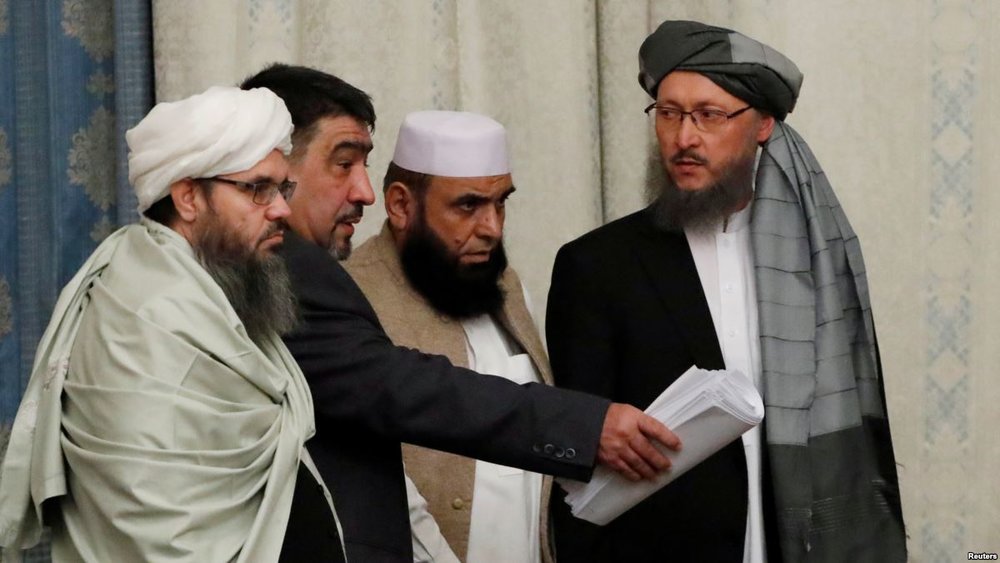
In a first, Iran, Taliban discuss ‘post-occupation scenario’ in Afghanistan

By Syed Zafar Mehdi


TEHRAN - Putting speculation to rest, it was finally confirmed this week that the government of Iran held talks with a Taliban delegation on “post-occupation situation” in Afghanistan.
The announcement assumes significance for several reasons. The security situation in the war-ravaged country has alarmingly deteriorated in recent years, and the foreign powers led by U.S. have finally admitted defeat after 17 years.
Today, as the war imposed by the U.S. stretches into its 18th year, Taliban controls or contests around half of the country and launches complex attacks on a daily basis.
Despite unconditional peace offers from the government in Kabul led by President Ashraf Ghani, the insurgent group has refused to talk to them. However, it has been open for talks with important regional powers.
Taliban has maintained that the first condition for ending the war in Afghanistan is the withdrawal of U.S.-led coalition forces from the country. Although Donald Trump announced the partial withdrawal of U.S. forces recently, around 7,000 U.S. troops are still stationed there.
In recent months, after Trump appointed former diplomat Zalmay Khalilzad as a ‘peace envoy’, hectic negotiations have been reported between the Taliban and the U.S. in Qatar and UAE. However, the ‘talks’ have failed to produce a breakthrough.
Moscow also hosted a historic summit on Afghanistan last month which saw participation of representatives of many countries, besides a high-profile Taliban delegation. Countries like India, which had maintained ambiguous stand on ‘peace talks’ with the Taliban, also joined the table.
China has also shown active involvement in the war-ravaged country recently. Senior officials of China, Pakistan and Afghanistan have held two trilateral talks on Afghan peace process in recent months.
Pakistan, which is an important regional player and enjoys leverage over the insurgent group, has pledged its support to the peace process. Pakistan’s foreign minister Shah Mehmood Qureshi has made many trips to Kabul recently, and participated in talks hosted by Moscow and Doha.
Iran, an important regional player, has always been the supporter of Afghan peace process. Although there had been reports of talks between Tehran and Taliban in the past but it was not confirmed.
Last week’s discussions between Iran’s deputy foreign minister Abbas Araqchi and the group were reportedly coordinated with the government of Afghanistan and aimed at finding a solution to the 17-year protracted war.
Foreign Ministry spokesman Bahram Qassemi confirmed that the meeting took place. “Since the Taliban control more than 50 percent of Afghanistan, and given the insecurity, instability and other issues that the country is dealing with, they were interested in talks with Iran,” he told reporters on Monday.
Qassemi said Iran shares long border with Afghanistan and has always sought a constructive role to maintain peace in the region.
The meeting came days after it was confirmed that Ali Shamkhani, secretary of Iran’s Supreme National Security Council (NSC), had traveled to Afghanistan for initial round of talks.
“The Islamic Republic has always been one of the primary pillars of stability in the region and cooperation between the two countries will certainly help in fixing Afghanistan's security issues of today,” Shamkhani was quoted saying, adding that the Afghan government was kept in loop.
Taliban also confirmed that the meeting took place and discussions pertained to “the post-occupation situation, restoration of peace and security in Afghanistan and the region”.
“The delegation visited Tehran to share Taliban’s views on ‘post-occupation’ scenario and establishment of peace and security in Afghanistan and the region with Iranian officials,” Zabihullah Mujahid, spokesman for Taliban, said in a statement.
The talks between Taliban and Iran, according to observers, must be seen in the context of growing insurgency in the region that puts the security of all regional countries, including Iran, at greater risk.
“Negotiations between Iran and a Taliban delegation are significant given that Iran is an important regional power and the neighbor of Afghanistan,” said Ali Shamsi, Islamabad-based strategic affairs analyst. “Iran has high stakes in peaceful Afghanistan especially with the emergence of ISIS and its affiliates in the war-torn country that can easily infiltrate into Iran through porous borders.”
“The talks between Tehran and Iran are a step in right direction,” says Dawood Hotak, a Kabul-based analyst. “Many world powers have been talking to the group without any results, and I believe Iran can be a catalyst of peace in the war-torn country.”
The reports about Taliban-Iran talks have raised eyebrows in Washington. Iran’s active role in Afghanistan means U.S. will be under more pressure to pull out from the country, believe experts.
Meanwhile, deputy foreign minister Abbas Araghchi is expected to travel to Afghanistan in next two weeks to hold deliberations with the Afghan government on the way forward.