Showing posts with label bangladesh. Show all posts

Tuesday, January 01, 2019

YEAR IN REVIEW – SOUTH ASIA:

By Syed Zafar Mehdi
TEHRAN - The year gone by was shaped by many significant events in South Asia. There was drama, there was intrigue, there was betrayal, there was brutality, and there was a healing touch too.
From Imran Khan’s phenomenal rise to Nawaz Sharif’s staggering fall in Pakistan, from Narendra Modi’s dwindling fortunes to the frightening campaign of right-wing forces in India, from America’s failures in Afghanistan to China’s growing influence in the region, from Taliban’s hide-and-seek games to Afghan government’s handshakes, from the persecution of Rohingya refugees to the plight of oppressed Kashmiris.
Here is a lowdown on some of the important events that made news this year:

1.Khan’s victory and Sharif’s growing troubles
The year 2018 will be remembered for the historic political transition in Pakistan, when cricketer-turned-politician Imran Khan’s Pakistan Tehreek Insaaf (PTI) had the last laugh in the bitterly-contested, violence-marred general election.
PTI romped home with 114 seats, while its closest rival Pakistan Muslim League (PML-N) clinched 63 seats and Pakistan People’s Party (PPP) trailed behind with 43 seats. Although PTI couldn’t touch the magic figure of 137 seats, it managed to cobble together a coalition.
The results were not shocking as many poll strategists had tipped Imran Khan to be the next premier of Pakistan, but the election was marred by allegations of rigging and manipulation against the powerful military establishment of Pakistan, which allegedly backed Khan’s PTI over other parties.
A few weeks before the polls, Pakistan’s former Prime Minister and PML-N chief Nawaz Sharif was sentenced to ten-year jail term in an anti-graft case and banned from contesting elections. He termed the election result as “tainted and dubious”.
Although the Islamabad High Court later suspended the 10-year jail term against Sharif, last week an accountability court again sentenced him to seven years in prison on corruption charges, compounding his legal troubles.
Meanwhile, the new premier, well aware of the anti-American sentiment that permeates Pakistani society and polity, has refused to be a pawn in American’s sinister game in the region. At the same time, he has extended an olive branch to estranged neighbors India and Afghanistan, although the overtures haven’t been received well in New Delhi.
Under the new government, Pakistan’s relationship with China has also strengthened further as both sides make progress on the ambitious China-Pakistan Economic Corridor (CPEC) project. China has also come to the rescue of Pakistan’s flailing economy by pledging a good package.
2.Modi’s fall from grace and rise of Hindutva forces
In India, while government’s economic mismanagement and increasing attacks on religious minorities dominated the popular discourse this year, state elections earlier this month was the top story of 2018.
The ruling Bharatiya Janata Party (BJP) suffered a major setback after losing three key states – Rajasthan, Chhattisgarh and Madhya Pradesh – to Indian National Congress (INC), the main opposition party, in state elections.
The results, which came barely four months before the general elections in India, set the ball rolling for Congress, which has been in the opposition in India since 2014.
All three states were won last time by the BJP, which also won 60 out of 65 parliament seats in these states in 2014 general elections. Congress victory has clearly given it an upper hand going into 2019.
Ecstatic over the results, Congress president Rahul Gandhi said Prime Minister Narendra Modi had “failed to provide a vision for the country going forward”, and under the BJP government, “mismanagement of economy” had taken place.
This year also saw the rise of right-wing Hindu forces in India, led by chief minister of northern Indian state of Uttar Pradesh Yogi Adityanath, who stoked communal passions with inflammatory speeches, and went on a spree to change names of places in his state. He belongs to Modi’s party BJP.
This year, India enhanced its defense partnership with Russia and continued oil trade with Iran, despite the U.S. sanctions. Although New Delhi kept everyone guessing initially regarding its stance on U.S. diktat to stop oil imports from Iran, it eventually rebuffed Trump and embraced Iran.
Chabahar port project also got headway this year. India Ports Global Limited finally took over operations at the Shaheed Beheshti Port in Chabahar last week.

3.China-U.S. trade war and Beijing’s growing clout
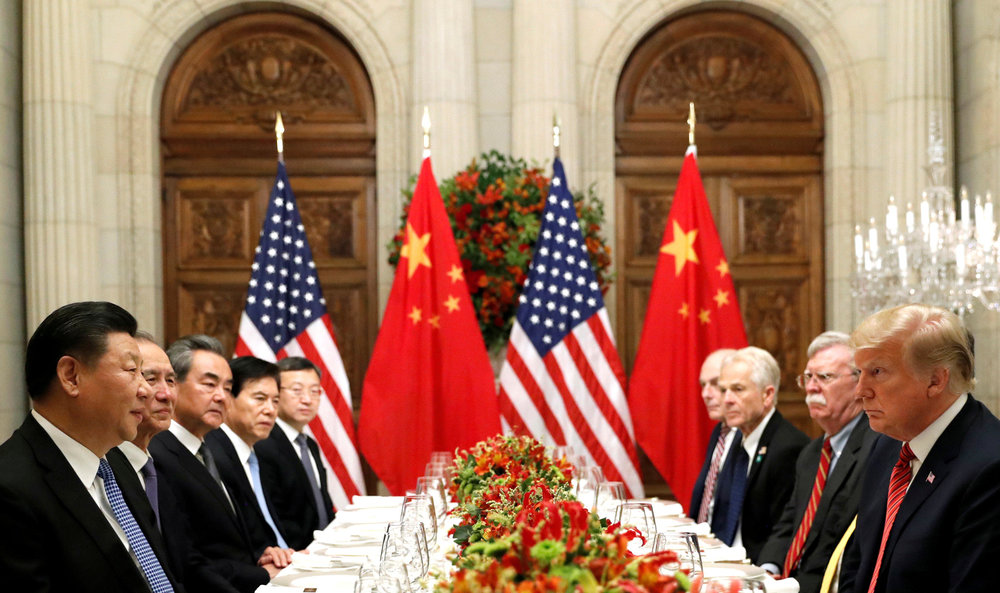
While Donald Trump, in his characteristic recalcitrant manner, announced no-holds-barred trade and tariff war against friends and foes this year, what made headlines was his trade war with China.
Trump threatened to impose heavy tariffs on Chinese imports to force Beijing into renegotiating its trade balance with the U.S.
Beijing, a heavyweight in its own right, vowed to retaliate with duties on nearly everything it imports from the U.S. and tariffs on goods U.S. companies imports from China.
As the trade war between them intensified, experts blasted Trump’s trade policies, which they said pose the greatest threat to global economic growth.
“I would say the policies that are embraced by the U.S. administration around trade represent the biggest risk today to the global economy,” BlackRock's Philipp Hildebrand was quoted saying by CNBC.
Hu Xijin, chief editor of Chinese daily Beijing Times, said China is an economic and a nuclear power and it isn’t an easy task to provoke it from any direction.
“China is not Mexico and will not agree with a laundry list of demands from the U.S. in this trade war,” he wrote on Twitter, saying China will “hit back to the end” if U.S. persists with its trade war.
Meanwhile, China stepped up its engagement in South Asia this year, especially in Afghanistan-Pakistan region, where U.S. has been slowly losing the ground.
The partnership between China and Pakistan has grown stronger this year, courtesy China’s investment in Pakistan through CPEC, and Beijing has been seeking an active role in Afghanistan too.
Last week, Pakistan, China and Afghanistan held second round of trilateral dialogue in Kabul in an attempt to facilitate the peace process and help end the protracted U.S.-imposed war in Afghanistan.

4.Afghan peace process and America’s war games
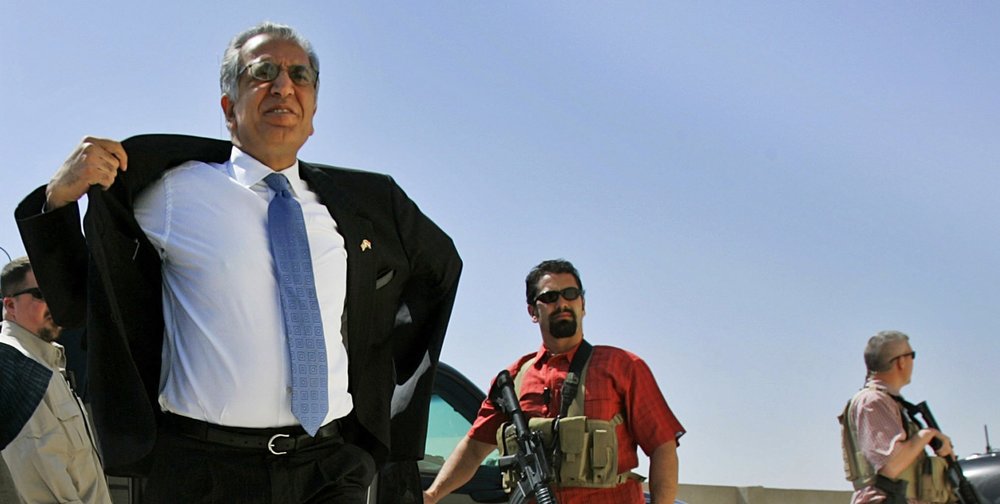
This year, Afghan peace process witnessed many ups and downs as the Taliban played hide-and-seek with the Afghan government and foreign powers jumped into the fray.
On Eid al Fitr this year, the two warring sides observed a historic, unprecedented three-day ceasefire, which saw the Taliban fighters and members of Afghan security forces embracing each other in a spirit of camaraderie never seen before.
The ceasefire lasted three days after which the Taliban fighters went back to the frontlines to fight the same dirty war, turning down government’s offer to extend the truce.
Afghan president Ashraf Ghani, who has offered many concessions to the group to join the Afghan-led and Afghan-owned peace process, said the three-day truce was an indication that majority of rebels were votaries of peace.
“It is now Taliban’s turn to give a positive response,” he said. “I am ready to extend the ceasefire anytime when the Taliban are ready.”
On Eid al Azha, Ghani-led government again extended an olive branch to the Taliban, declaring a conditional ceasefire. This time, the offer was not accepted. The group refused to hold parleys with the government in Kabul, calling it ‘illegitimate’.
Amidst this hide-and-seek game between the two warring parties, foreign powers, mainly the U.S. Russia and China took advantage of the situation and started engaging directly with the Taliban.
U.S. reportedly held many rounds of ‘peace negotiations’ with the Taliban in recent months, including the one in UAE this month. Experts believe it is insulting to the Afghan government, which feels sidelined.
Also, as the security situation continues to deteriorate, many pundits have questioned the motive of U.S. government to hold talks with the ‘murderers’, saying violence and dialogue cannot go together.

5.Repatriation of Rohingya and their untold misery
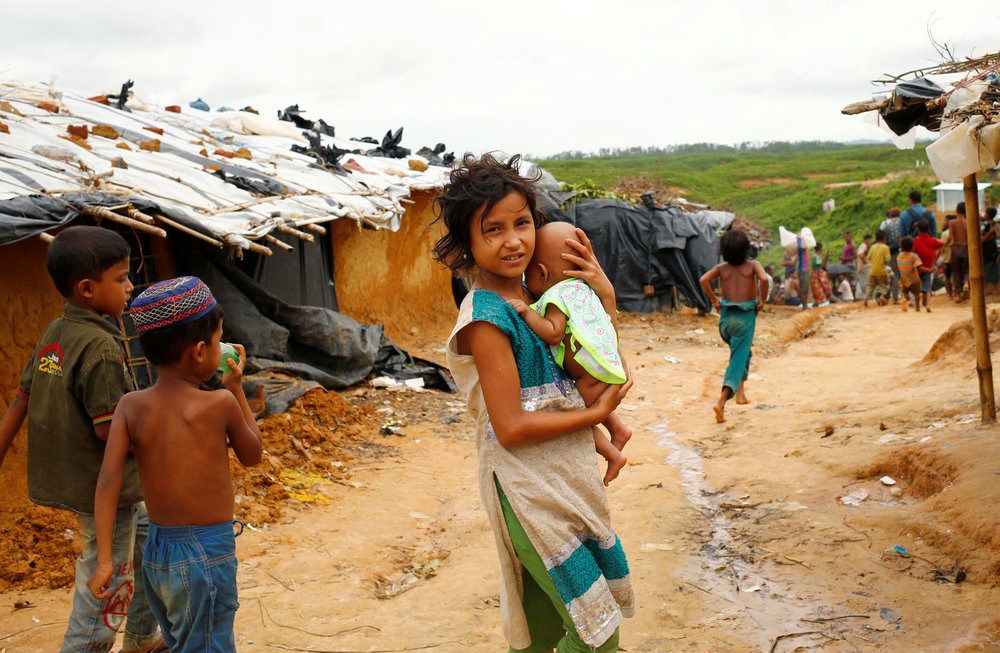
This year, the misery of persecuted Rohingya Muslims continued – both in the refugee camps of Bangladesh and in their native Rakhine province of Myanmar.
And, despite the repatriation deal between the governments of Myanmar and Bangladesh, homecoming did not happen as the conditions were not considered conducive for their voluntary repatriation.
As per conservative estimates, there are around 905,000 Rohingya refugees in Bangladesh's Cox's Bazar presently, although some human rights bodies have put the figure higher. The exodus of persecuted Rohingya Muslims from Rakhine started in October 2016, following the crackdown by Burmese army. Almost 200,000 fled to neighboring Bangladesh. In August 2017, more than 720,000 of them escaped to Bangladesh following persecution, murder, arson and rape.
United Nations Secretary General Antonio Guterres, who visited Bangladesh in July this year, admitted nothing could have prepared him for the “scale of the crisis and extent of suffering” he witnessed there.
Myanmar and Bangladesh had signed a bilateral repatriation agreement late last year, according to which the process of voluntary repatriation was to begin in 60 days. But the plan was shelved.
In June, Myanmar inked an agreement with UN to expedite the process of Rohingya repatriation, but the memorandum of understanding (MoU) was kept under wraps. Rohingya community leaders, after seeing the leaked MoU, rejected the agreement, saying it did not address their concerns.
International aid groups and bodies fighting for refugees have also opposed the idea of repatriating Rohingya refugees in current circumstances.
“The conditions are not in place for safe, voluntary, and dignified return of Rohingya refugees,” Matthew Smith, co-founder of Fortify Rights, told Tehran Times in an interview.

6.Crisis of governance and human rights in Kashmir
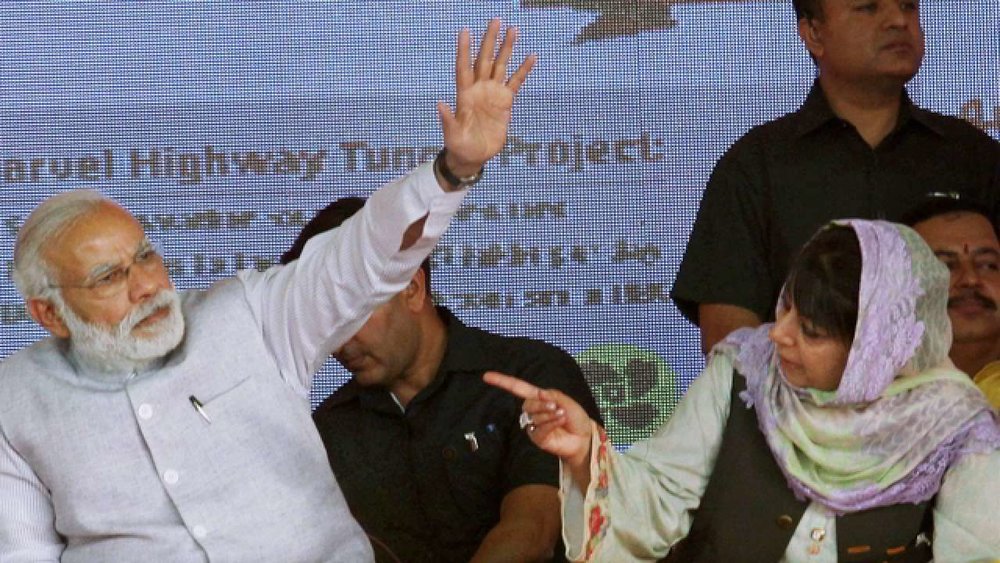
This year saw many unsavory political events unfold in Indian-controlled-Kashmir as the government collapsed and the security situation turned grimmer.
The coalition government between India’s ruling Bhartiya Janta Party (BJP) and Kashmir’s Peoples Democratic Party (PDP), two parties with contrasting ideologies, fell apart in June.
The decision of BJP to pull out of an alliance with PDP, according to a report by Concerned Citizens Group led by former union minister Yashwant Sinha, was part of a “grand strategy” for 2019 parliament elections.
The report said the feeling in Kashmir is that the BJP-led government in New Delhi will now take more “belligerent” position on laws that give Kashmir a special status in Indian union.
BJP-PDP fallout paved ground for direct rule of federal government in New Delhi, through governor, who dissolved the assembly after reports about ‘horse trading’ by some local parties in Kashmir.
In recent years, and especially this year, New Delhi has adopted more muscular approach with rising incidents of violence. Indian security forces have allegedly opened fire at civilians at many places.
Government forces, observers say, are not able to manage the situation when protests at encounter sites, a growing phenomenon in the disputed region, break out.
Earlier this month, seven civilians were killed in southern Kashmir, which sparked widespread protests across the state. Politicians, cutting across the political divide, denounced what they called a “massacre”.
Meanwhile, this year, United Nations released its first ever report detailing the human rights violations in Kashmir, across the Line of Control (LoC), highlighting a situation of chronic impunity for violations committed by security forces.
The exhaustive report urged all the parties to end the cycles of violence and ensure accountability for the past and present abuses. Indian government rejected the report, terming it “fallacious”.

Monday, December 24, 2018

Bangladesh Elections Would Make or Mar Country’s Democratic Future

By: Kayhan Int’l


It seems the trend of the current events in Bangladesh, the world’s 8th most populous country, which is all set to hold the first all-party general elections on December 30 after a decade, will make or mar the future course of the country of over 162 million, over 90 percent of whom are Muslims.
The opposition is already crying foul over what they call the high-handed measures against them of 71-year old Prime Minister Sheikh Hasina Wajid, who won the last elections in 2014 because of total boycott by all other parties that allowed her Awami League to regain power.
Bangladesh emerged as a new country in December 1971 when what until then was East Pakistan broke away from the federation because of suppression of the rights of the ethnic Bengalis by the Pathan-Punjabi dominated administration in Islamabad in the west – more than 2,200 km away across the breadth of India,
The latest reports from Dhaka say the website of the Bangladesh Nationalist Party (BNP), which is the main opposition, has been shut down by the government, which claims security reasons and alleges spread of fake news.
The BNP, part of the opposition National Unity Front alliance, contesting the polls after boycotting the 2014 election, is this time without its popular leader, Begum Khalida Zia – the widow of the assassinated President Zia ur-Rahman – who was three-time prime minister, and is now serving a 10-year prison term on graft charges. She alleges that she is a victim of a political vendetta.
Anyway, for the first time since 1991, she will not be on the ballot, and in her absence, 82-year Kamal Hossain, an eminent jurist and one of the members of the 1972 constitution draft committee, has cobbled together an opposition alliance known as Jatiya Oikya Front (JOF), which includes the BNP.
Kamal Hossain, an Oxford-educated international jurist and a former foreign minister, whom Hasina grew up calling "kaka” (uncle), says he wants to stop what he describes as the making of a ‘one-person state’.
Human Rights Watch has accused the ruling party and its supporters of creating an "atmosphere of fear” for opposition activists.
Hasina’s government has been accused by civil society and rights groups of drifting towards authoritarianism, silencing dissent and the press by using an onerous digital-security law.
A spokesperson for the UN Secretary-General Antonio Guterres, asked by a journalist if he was aware of the issues in Bangladesh where "a fair and credible election is beyond imagination”, said the World Body was "following the situation closely”.
He added: "It is very important as a matter of principle that anywhere there are elections, that they be conducted freely and fairly and that the space be given for people to express themselves,” he said.
Opposition figures, however, have doubts over holding of free and fair elections, in view of the attacks upon candidates, along with their arrest and disqualification.
To sum up, in the words of Professor Ali Riaz, a political science expert: "The forthcoming election is bound to be historic, offering stark choices to Bangladeshi voters. The big question is whether the incumbent will allow a free and fair election — one that may deliver it a defeat. But the consequence of the election will be more than simply the election of a new Bangladeshi government. It will determine the course of democracy in the county, or lack thereof.”

Thursday, August 24, 2017

The politics of Hajj quotas: 'What would Allah say to this?'

Critics argue that the Saudi authorities need to make their Hajj quota system more transparent to ensure it is fairer

The Clock Tower and Grand Mosque in Mecca in September 2016 (AFP)

Areeb Ullah's picture
I put myself down for a visa to work at the Hajj as a cleaner just so I can get into the country. It was the only way
- Ismail Mahmud, pilgrim
Ismail Mahmud left his home in Minya, Egypt, and headed for a neighbourhood cafe to write his will. He was diagnosed with a life-threatening illness two years ago and knew his time in this world was short. He had one final wish: to complete the Hajj in Saudi Arabia, but obtaining a visa to do so has come at a high price.

"My sons were not happy when I sold these fields, but we had no choice," said Mahmud, a 59-year-old primary school teacher. "The economic conditions in Egypt have become very difficult and they refused to give me a visa, even with a note from my doctor. It was the only way to pay for my dream to do the Hajj."
Mahmud refused to wait and see whether his name would be picked out of a government-run lottery, entitling him to attend. Instead, he went one step further.
"Everyone said getting picked by the government was impossible unless you paid high officials, but I just couldn't afford it," he said. "So I put myself down for a visa to work at the Hajj as a cleaner just so I can get into the country. It was the only way."

The problem with Hajj quotas

Like thousands of Egyptians, Mahmud has waited years to go to the Hajj. His situation is not uncommon, with millions of Muslims worldwide turning to private travel agents or other means via the black market. 
The Hajj is one of the five pillars of Islam and one which all Muslims are obligated to complete at least once, meaning that visas are hotly contested.
Those who undertake the five-day pilgrimage are absolved of all their past sins, meaning many look to attend during their old age.
How do Saudi authorities decide who can attend Hajj each year? (AFP)

Saudi Arabia sets the quotas, based on the population of Muslims in each country, which in turn - through governments or private travel companies - allocate places for their citizens.
The long wait times, which can be up to 10 years or longer in some countries, lengthened after Riyadh cut the overall quota of visas by 20 percent in 2009 to accommodate expansion work in the grand mosques in Mecca and Medina. It has now reversed the decision, so an additional million pilgrims can now attend the pilgrimage, which this year begins on 30 August.
The rise in numbers comes after the Gulf kingdom suffered a decline in oil prices as well as the lowest number of pilgrims in a decade in 2016. It will boost the economies in Mecca and Medina.
The lottery of obtaining a visa
The governments in most Muslim-majority countries allocate the largest chunk of their places via a random lottery and give the rest to private travel agents. In the UK and elsewhere, tickets are sold via private travel agents on a first-come, first served basis, depending on eligibility.
The biggest problems come in countries such as Indonesia, which is usually awarded the largest number of visas - it  has a Muslim population of 260 million.

Indonesia is given the highest quota of Hajj visas by the Saudis (AFP)


Like many countries with inflated waiting times, it celebrated the addition of an extra 10,000 places on top of the 220,000 already allocated by praising the Saudi authorities. 
Indonesia uses a lottery system to allocate the majority of its places: each applicant pays $2,000 to be considered - the average monthly wage is around $1,200 - and is then put on a waiting list. Even so, locals still face a wait of up to 39 years, meaning some pilgrims die before they win a place.
Other countries take tough measures to be fair and reduce waiting times. Jordan only has 7,000 places to fill this year. Its rules include automatically accepting prospective pilgrims who were born in 1945 or before and demanding that potential pilgrims swear on the Quran that they have never previously attended the Hajj.
The year-of-birth rule is adjusted annually to give elderly applicants a better chance of winning a place, meaning that next year those born on or before 1946 will be eligible to attend. Exceptions are granted to male guardians, such as a son or husband, who are accompanying a female pilgrim.

Bouthaina Naser, 40, a housewife from the north of Jordan, has tried numerous times to obtain a visa, without success. She began thinking about the Hajj after being diagnosed with cancer five years ago and every year since has applied for a visa. 
Frustrated at the Jordanian restrictions, she was forced to turn to the black market to achieve her "dream of doing the Hajj".
"I tried three times to buy Hajj visas from the black market and through people who knew someone selling them from the Saudi embassy," she told MEE. "The Jordanians should allow people to attend if they have the financial ability to go and assess it on a case-by-case basis."

Claims of corruption

Critics accuse the Saudi authorities of politicising the Hajj and helping create a global black economy in visas, with the allocation process in some countries being described as rife with corruption and unfair to poorer pilgrims.
Pakistan, which receives the third-highest quota, was recently rocked by a corruption scandal after prospective pilgrims accused officials of giving a portion to private companies in exchange for bribes.
A Bangladeshi family at dawn at the plain of Arafat, outside Mecca, in 2000 (AFP)


In Bangladesh, the high court has demanded an investigation into how the government managed this year's allocation after some travel agents delayed submitting visa applications in the hope of receiving cheaper rates on accommodation in Mecca and Medina. It has left some Bangladeshis who won on the lottery still uncertain as to whether they will be attending.
Madawi al-Rasheed, a Saudi academic based at the London School of Economics, told Middle East Eye that the al-Saud clan had created a "black economy around the world which is centred on the Hajj".
"The lack of transparency in Saudi Arabia, especially with the quota system, has helped create a black market and trade in visas," she said.
"There is a black market in visas where Saudi embassy employees from around the world sell visas illegally and give them to their friends. They have a certain interest in getting certain people in and excluding others or putting them on a waiting list for the rest of their lives."

Hajj: An arena for political fighting

Riyadh justifies the quota it sets as a means to ensure the safety of all pilgrims. The Hajj has been hit by numerous incidents over the years, which have resulted in the deaths of pilgrims, usually through overcrowding.
The most recent incident, a stampede in 2015, left at least 2,000 people dead, although the final death toll has been disputed.
Some observers have characterised the quota system as a means for Riyadh to influence Muslims around the world. Rasheed said that the Saudis have historically used the Hajj "as a political tool" after it took control of the two holy sites in the early 1920s.
The stampede at Mina in 2015 left more than 2,000 pilgrims dead (AFP)


"Access to the Hajj and performing the ritual is dependent on the will of the Saudi regime," she said. "The main reason is so it is able to control Muslim countries because the Hajj is one of the pillars of Islam, and every Muslim is under the obligation to do it if they can.
"If a Muslim is anti-Saudi or voices criticism of Saudi then they are banned from coming. We saw this happen with Rachid Ghannouchi, the leader of Ennahda [a political party] in Tunisia, when he tried to do the Umrah [attend Mecca outside Hajj] from London, the Iranians last year, and the Qataris this year."
Iranian pilgrims were told by their government not to attend the Hajj in 2016, the first time it has done so, after pre-existing tensions worsened between Tehran and Riyadh. Diplomatic relations hit an all-time low after more than 450 Iranian pilgrims were killed during the 2015 disaster.
Mehdi Beyad, a PhD candidate at SOAS in London who focuses on the geopolitics of the Middle East, told MEE that Tehran had politicised this incident and had historically used the Hajj as a "marker for broader political conflicts".
Just as you cannot divorce Saudi politics from its approach towards Hajj, the same goes for Iran
- Mehdi Beyad, academic
"Just as you cannot divorce Saudi politics from its approach towards Hajj, the same goes for Iran, for instance with the 1987 incident where Shia pilgrims were killed in clashes with Saudi security forces," said Beyad.
At least 400 people were killed by Saudi riot police after Iranian pilgrims chanted "Death to America! Death to the Soviet Union! Death to Israel!" next to the Grand Mosque in Mecca. 
Beyad said: "This incident is seen as a rallying cry for Iranians and Shias more widely, and the competing narratives over it illustrate the broader way in which Hajj has become an arena where states battle for legitimacy and try to connect their identities to it.
"Beyond stated security concerns, by appearing to take a stand over Hajj different states can project themselves as protectors of their professed communities, call into question the capabilities and legitimacy of others, and use Hajj as a marker for broader political conflicts."
For Mahmud, the politics behind the award of a visa has left him frustrated and resentful.
"Each year the Hajj keeps getting more expensive, and I don't know how long I will have," he said. "These restrictions are making hard-working people like me and others lie to complete my God-given right to visit the Masjid al-Haram and the Prophet's mosque.
"What would Allah say to this?"