Showing posts with label Rohingya. Show all posts

Tuesday, September 10, 2019

War Mongers: ‘Leaders of the World’


Israeli Prime Minister Benjamin Netanyahu (L) and Indian Prime Minister Narendra Modi. (Photo: via Twitter)
By Iqbal Jassat


Why is it that war criminals in their capacity as heads of states who despite being consistently in breach of global conventions governing human rights, are treated like royalty? 
What sets them apart from common criminals by having red carpets rolled out and celebrated with pomp and glamour? 
Do they belong to a special class of untouchables? A distinct class who enjoy status, privileges and worst of all, immunity. 
To list them is not difficult, for not only are they prominent as they parade on global arenas like proud peacocks, but they are also feted as celebrities too by no less than members of mainstream media.
Sounds difficult to comprehend and quite inexplicable that supposedly informed media personalities would find it difficult to haul such criminals over the coals.
Tough and robust interviews to interrogate, shame and humiliate thugs who masquerade as leaders seem not to matter anymore. Instead, embarrassingly, journalists find it cool to jostle with each other to obtain – wait for it, not a scoop but a selfie!
From Delhi to Tel Aviv; from Riyaad to Dubai; from Rangoon to Beijing; from Cairo to Washington, the misfits who claim to be leaders of their respective nation-states are no more than usurpers causing untold harm to millions under their brutal reign. 
Whether its Narendra Modi or Benjamin Netanyahu, the endless list of crimes committed by them including gross human rights violations ought to have them face prosecution at the Hague. Instead, they are revered as respected leaders without any accountability.
Kashmir and Palestine – despite the weight of international law being on their side, share a bitter experience of having their rights ignored by the United Nations. Their occupiers, India and Israel are brutally repressive and utterly unmindful to the point of being dismissive about repercussions from international bodies such as the United Nations. 
India is among Israel’s biggest importer of arms and Modi’s security forces have been receiving training for “anti-terror” operations which Netanyahu’s regime conducts against Palestinians. 
Widespread suppression of freedoms and fundamental human rights are conducted within a post-9/11 framework which is defined as defeating the “scourge of Islamic terrorism”. It is this manufactured terror frame which is sold to the world to justify the aggressive nationalisms of Zionism and Hindutva.
India and Israel thus inaugurate the colonial occupations of Kashmir and Palestine. 
It is important to recall that Modi’s culpability during the 2002 Gujarat massacres which resulted in mass murder of Muslims, earned him the title “Butcher of Gujarat”. Given the atrocities being committed by his occupying forces in Kashmir, we can add the title “Butcher of Kashmir”.
As the “Butcher of Palestine”, Netanyahu continues plundering land and destroying lives via ethnic cleansing. His overt apartheid policies are cheered on by over-zealous supporters, who have allied themselves with white supremacists in Europe and America. 
It is a shame that the world is adorned with ethno-nationalist presidents and prime ministers whose ideologies are defined by racism and religious extremism. 
Some gain power by ostensibly “democratic” means, while others via hereditary privileges which enthrone them as “kings”, “princes” and “emirs”.
The Arabian Peninsula is littered with unelected despots and tyrants who masquerade as leaders. The impunity associated with their iron-fisted rule makes a mockery of religious values they supposedly subscribe to.
While Saudi Arabia, United Arab Emirates, Bahrain and other Gulf fiefdoms claim to be Muslim governments, their representation of Islam is far removed from its pristine teachings. Neither civil right activists nor political opponents are tolerated in these oligarchies. 
The brutal murder of Jamal Khashoggi and the circumstances which led to his death, illustrates the rogue conduct of Mohamed bin Salman. Yet despite evidence which implicates his direct complicity, MbS is feted as a “moderate” and embraced on global platforms. 
The devastation caused in Yemen by Saudi-led war is yet another example of literally getting away with murder. MbS and his Emirati side-kick MbZ have since 2015 wreaked havoc leading to the UN declaring Yemen to be the world’s largest humanitarian catastrophe. Human rights monitors report that the Saudi coalition has conducted scores of indiscriminate and disproportionate airstrikes killing thousands of civilians. 
That this illegal war has failed to achieve any of the coalition’s goals apart from reducing Yemen to ashes, seems of no concern to the warmongers, as they continue exacerbating crisis after crisis by blowing up civilian targets. Saudi Arabia’s status as a client-state of America, and having inched closer to publicly embracing the Zionist project which dispossessed Palestine leads MbS to believe that repercussions if any, will be limited and managed by Trump. 
War crimes indeed! Yet despite going on unabated for four years, the criminals responsible for it are sought after as “celebrities” instead of facing prosecution and lifelong jail terms. 
Turning our gaze to Myanmar, it is necessary to repeat the question Mehdi Hasan eloquently poses: why hasn’t Nobel Peace Prize laureate Aung San Suu Kyi been indicted for war crimes and genocide at the International Criminal Court?
Two years have passed since the Burmese military launched a renewed campaign of terror and violence against the Rohingya Muslim minority in Myanmar’s Rakhine region. Documented evidence point to dastardly crimes committed as Hasan reminds us: “Rohingya men hacked to death; children burned alive; women and girls raped and sexually assaulted in their hundreds and thousands. Scores of villages were pillaged and razed to the ground as more than 700,000 Rohingya were driven from their homes.”
In listing some of the corrupt “leaders” engaged in genocidal crimes against their own populations, others and those occupied by them does not suggest that the list is complete. Egypt’s military leader who may now have donned a three-piece suit, cannot escape the fact that his ascension to power was via a violent bloody coup. General Abdel Fatah al-Sisi was America’s chosen candidate to betray Egypt’s revolution by deposing its only democratically elected leader Mohamed Morsi and placing the entire country under siege. 
Not surprisingly, the rogue elements who financed and supported the overthrow of Morsi, banned the Muslim Brotherhood and imprisoned its leaders along with thousands of civil rights activists, journalists and opponents, are none other than Bin Salman, Bin Zayed and Netanyahu. 
Sisi’s authoritarian rule has crushed democracy and taken the country back to a state of emergency which Egyptians revolted against and succeeded by removing the tyranny of Hosni Mubarak. Paradoxically, instead of facing the wrath of ICC prosecutors, Sisi has been rewarded with the chairmanship of the African Union – much to the shame of the continent. 
Why, one may ask has the world allowed murderers to hold high office with impunity? Is it due to the current construct of global politics being skewed in favor of the rich and powerful? Is it as a result of the ease whereby corruption at all levels of society allows manipulation of  political power? Or is it a combination of both and more that says to Modi, Netanyahu and fellow warmongers: go on, your fascist policies are untouchable?
– Iqbal Jassat is an Executive Member of the South Africa-based Media Review Network. He contributed this article to The Palestine Chronicle. Visit: www.mediareviewnet.com

Tuesday, January 01, 2019

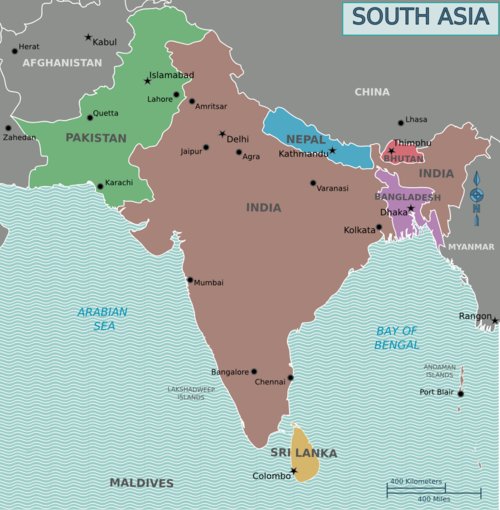
YEAR IN REVIEW – SOUTH ASIA:

By Syed Zafar Mehdi
TEHRAN - The year gone by was shaped by many significant events in South Asia. There was drama, there was intrigue, there was betrayal, there was brutality, and there was a healing touch too.
From Imran Khan’s phenomenal rise to Nawaz Sharif’s staggering fall in Pakistan, from Narendra Modi’s dwindling fortunes to the frightening campaign of right-wing forces in India, from America’s failures in Afghanistan to China’s growing influence in the region, from Taliban’s hide-and-seek games to Afghan government’s handshakes, from the persecution of Rohingya refugees to the plight of oppressed Kashmiris.
Here is a lowdown on some of the important events that made news this year:

1.Khan’s victory and Sharif’s growing troubles
The year 2018 will be remembered for the historic political transition in Pakistan, when cricketer-turned-politician Imran Khan’s Pakistan Tehreek Insaaf (PTI) had the last laugh in the bitterly-contested, violence-marred general election.
PTI romped home with 114 seats, while its closest rival Pakistan Muslim League (PML-N) clinched 63 seats and Pakistan People’s Party (PPP) trailed behind with 43 seats. Although PTI couldn’t touch the magic figure of 137 seats, it managed to cobble together a coalition.
The results were not shocking as many poll strategists had tipped Imran Khan to be the next premier of Pakistan, but the election was marred by allegations of rigging and manipulation against the powerful military establishment of Pakistan, which allegedly backed Khan’s PTI over other parties.
A few weeks before the polls, Pakistan’s former Prime Minister and PML-N chief Nawaz Sharif was sentenced to ten-year jail term in an anti-graft case and banned from contesting elections. He termed the election result as “tainted and dubious”.
Although the Islamabad High Court later suspended the 10-year jail term against Sharif, last week an accountability court again sentenced him to seven years in prison on corruption charges, compounding his legal troubles.
Meanwhile, the new premier, well aware of the anti-American sentiment that permeates Pakistani society and polity, has refused to be a pawn in American’s sinister game in the region. At the same time, he has extended an olive branch to estranged neighbors India and Afghanistan, although the overtures haven’t been received well in New Delhi.
Under the new government, Pakistan’s relationship with China has also strengthened further as both sides make progress on the ambitious China-Pakistan Economic Corridor (CPEC) project. China has also come to the rescue of Pakistan’s flailing economy by pledging a good package.
2.Modi’s fall from grace and rise of Hindutva forces
In India, while government’s economic mismanagement and increasing attacks on religious minorities dominated the popular discourse this year, state elections earlier this month was the top story of 2018.
The ruling Bharatiya Janata Party (BJP) suffered a major setback after losing three key states – Rajasthan, Chhattisgarh and Madhya Pradesh – to Indian National Congress (INC), the main opposition party, in state elections.
The results, which came barely four months before the general elections in India, set the ball rolling for Congress, which has been in the opposition in India since 2014.
All three states were won last time by the BJP, which also won 60 out of 65 parliament seats in these states in 2014 general elections. Congress victory has clearly given it an upper hand going into 2019.
Ecstatic over the results, Congress president Rahul Gandhi said Prime Minister Narendra Modi had “failed to provide a vision for the country going forward”, and under the BJP government, “mismanagement of economy” had taken place.
This year also saw the rise of right-wing Hindu forces in India, led by chief minister of northern Indian state of Uttar Pradesh Yogi Adityanath, who stoked communal passions with inflammatory speeches, and went on a spree to change names of places in his state. He belongs to Modi’s party BJP.
This year, India enhanced its defense partnership with Russia and continued oil trade with Iran, despite the U.S. sanctions. Although New Delhi kept everyone guessing initially regarding its stance on U.S. diktat to stop oil imports from Iran, it eventually rebuffed Trump and embraced Iran.
Chabahar port project also got headway this year. India Ports Global Limited finally took over operations at the Shaheed Beheshti Port in Chabahar last week.

3.China-U.S. trade war and Beijing’s growing clout
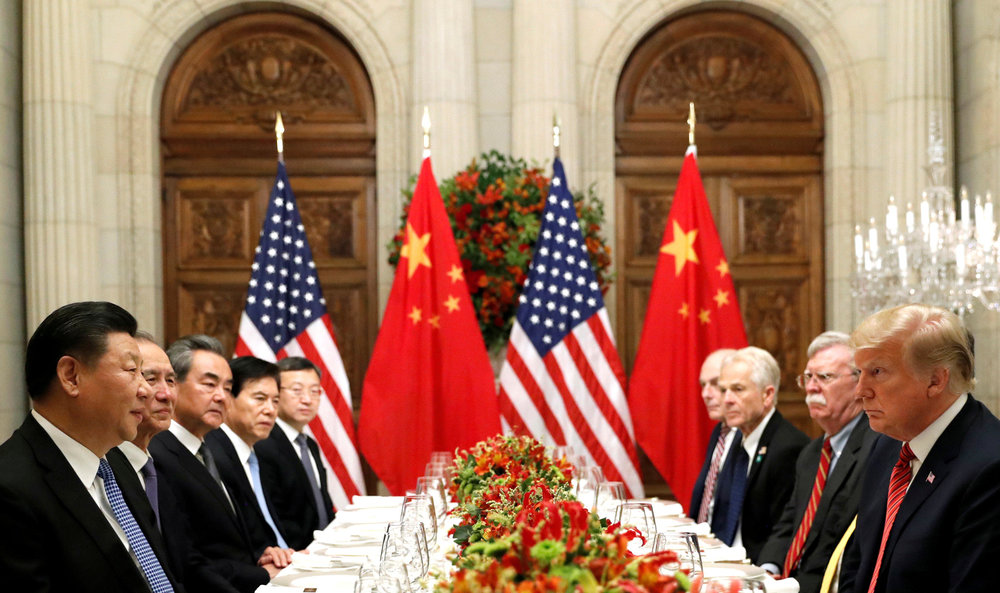
While Donald Trump, in his characteristic recalcitrant manner, announced no-holds-barred trade and tariff war against friends and foes this year, what made headlines was his trade war with China.
Trump threatened to impose heavy tariffs on Chinese imports to force Beijing into renegotiating its trade balance with the U.S.
Beijing, a heavyweight in its own right, vowed to retaliate with duties on nearly everything it imports from the U.S. and tariffs on goods U.S. companies imports from China.
As the trade war between them intensified, experts blasted Trump’s trade policies, which they said pose the greatest threat to global economic growth.
“I would say the policies that are embraced by the U.S. administration around trade represent the biggest risk today to the global economy,” BlackRock's Philipp Hildebrand was quoted saying by CNBC.
Hu Xijin, chief editor of Chinese daily Beijing Times, said China is an economic and a nuclear power and it isn’t an easy task to provoke it from any direction.
“China is not Mexico and will not agree with a laundry list of demands from the U.S. in this trade war,” he wrote on Twitter, saying China will “hit back to the end” if U.S. persists with its trade war.
Meanwhile, China stepped up its engagement in South Asia this year, especially in Afghanistan-Pakistan region, where U.S. has been slowly losing the ground.
The partnership between China and Pakistan has grown stronger this year, courtesy China’s investment in Pakistan through CPEC, and Beijing has been seeking an active role in Afghanistan too.
Last week, Pakistan, China and Afghanistan held second round of trilateral dialogue in Kabul in an attempt to facilitate the peace process and help end the protracted U.S.-imposed war in Afghanistan.

4.Afghan peace process and America’s war games
This year, Afghan peace process witnessed many ups and downs as the Taliban played hide-and-seek with the Afghan government and foreign powers jumped into the fray.
On Eid al Fitr this year, the two warring sides observed a historic, unprecedented three-day ceasefire, which saw the Taliban fighters and members of Afghan security forces embracing each other in a spirit of camaraderie never seen before.
The ceasefire lasted three days after which the Taliban fighters went back to the frontlines to fight the same dirty war, turning down government’s offer to extend the truce.
Afghan president Ashraf Ghani, who has offered many concessions to the group to join the Afghan-led and Afghan-owned peace process, said the three-day truce was an indication that majority of rebels were votaries of peace.
“It is now Taliban’s turn to give a positive response,” he said. “I am ready to extend the ceasefire anytime when the Taliban are ready.”
On Eid al Azha, Ghani-led government again extended an olive branch to the Taliban, declaring a conditional ceasefire. This time, the offer was not accepted. The group refused to hold parleys with the government in Kabul, calling it ‘illegitimate’.
Amidst this hide-and-seek game between the two warring parties, foreign powers, mainly the U.S. Russia and China took advantage of the situation and started engaging directly with the Taliban.
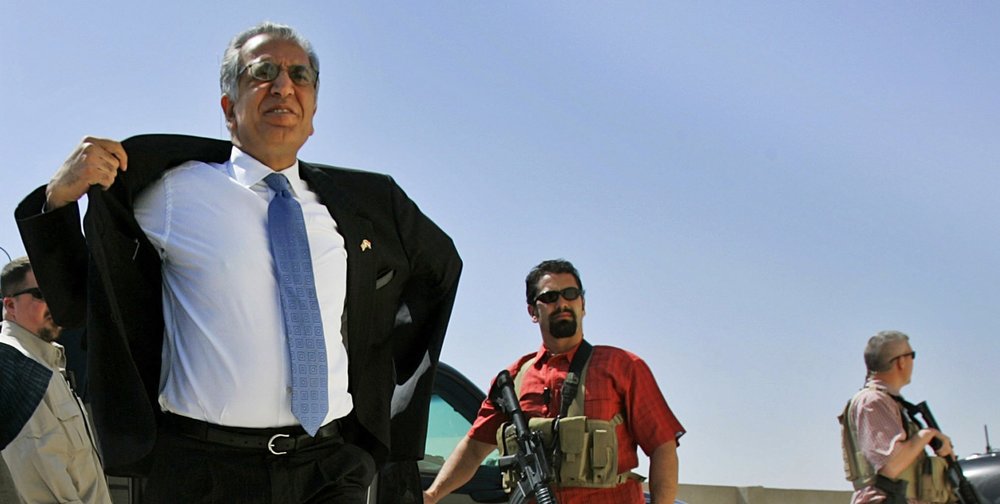
U.S. reportedly held many rounds of ‘peace negotiations’ with the Taliban in recent months, including the one in UAE this month. Experts believe it is insulting to the Afghan government, which feels sidelined.
Also, as the security situation continues to deteriorate, many pundits have questioned the motive of U.S. government to hold talks with the ‘murderers’, saying violence and dialogue cannot go together.

5.Repatriation of Rohingya and their untold misery
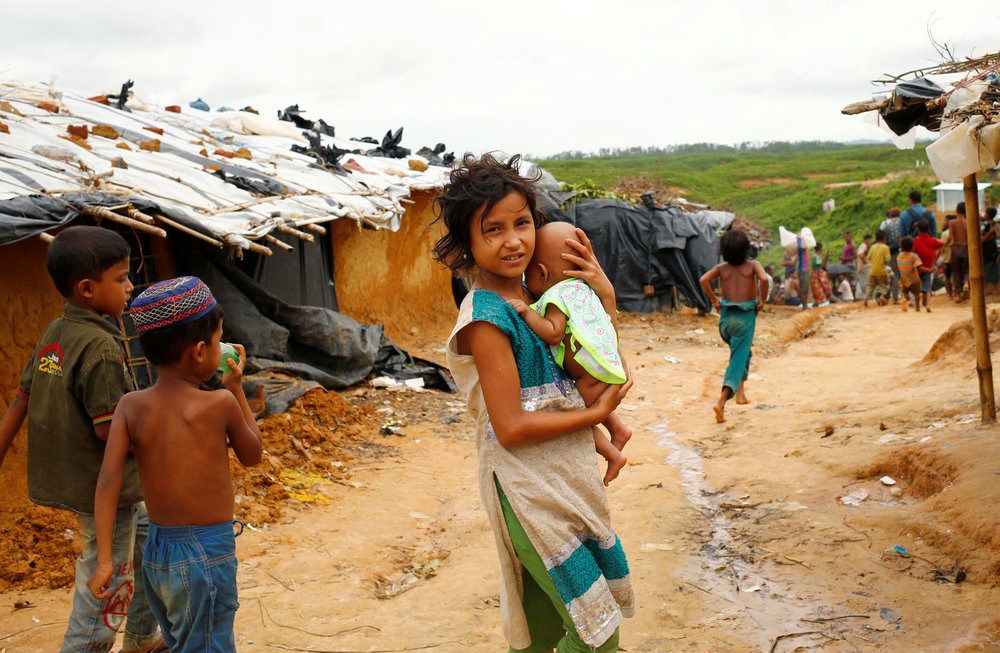
This year, the misery of persecuted Rohingya Muslims continued – both in the refugee camps of Bangladesh and in their native Rakhine province of Myanmar.
And, despite the repatriation deal between the governments of Myanmar and Bangladesh, homecoming did not happen as the conditions were not considered conducive for their voluntary repatriation.
As per conservative estimates, there are around 905,000 Rohingya refugees in Bangladesh's Cox's Bazar presently, although some human rights bodies have put the figure higher. The exodus of persecuted Rohingya Muslims from Rakhine started in October 2016, following the crackdown by Burmese army. Almost 200,000 fled to neighboring Bangladesh. In August 2017, more than 720,000 of them escaped to Bangladesh following persecution, murder, arson and rape.
United Nations Secretary General Antonio Guterres, who visited Bangladesh in July this year, admitted nothing could have prepared him for the “scale of the crisis and extent of suffering” he witnessed there.
Myanmar and Bangladesh had signed a bilateral repatriation agreement late last year, according to which the process of voluntary repatriation was to begin in 60 days. But the plan was shelved.
In June, Myanmar inked an agreement with UN to expedite the process of Rohingya repatriation, but the memorandum of understanding (MoU) was kept under wraps. Rohingya community leaders, after seeing the leaked MoU, rejected the agreement, saying it did not address their concerns.
International aid groups and bodies fighting for refugees have also opposed the idea of repatriating Rohingya refugees in current circumstances.
“The conditions are not in place for safe, voluntary, and dignified return of Rohingya refugees,” Matthew Smith, co-founder of Fortify Rights, told Tehran Times in an interview.

6.Crisis of governance and human rights in Kashmir
This year saw many unsavory political events unfold in Indian-controlled-Kashmir as the government collapsed and the security situation turned grimmer.
The coalition government between India’s ruling Bhartiya Janta Party (BJP) and Kashmir’s Peoples Democratic Party (PDP), two parties with contrasting ideologies, fell apart in June.
The decision of BJP to pull out of an alliance with PDP, according to a report by Concerned Citizens Group led by former union minister Yashwant Sinha, was part of a “grand strategy” for 2019 parliament elections.
The report said the feeling in Kashmir is that the BJP-led government in New Delhi will now take more “belligerent” position on laws that give Kashmir a special status in Indian union.
BJP-PDP fallout paved ground for direct rule of federal government in New Delhi, through governor, who dissolved the assembly after reports about ‘horse trading’ by some local parties in Kashmir.
In recent years, and especially this year, New Delhi has adopted more muscular approach with rising incidents of violence. Indian security forces have allegedly opened fire at civilians at many places.
Government forces, observers say, are not able to manage the situation when protests at encounter sites, a growing phenomenon in the disputed region, break out.
Earlier this month, seven civilians were killed in southern Kashmir, which sparked widespread protests across the state. Politicians, cutting across the political divide, denounced what they called a “massacre”.
Meanwhile, this year, United Nations released its first ever report detailing the human rights violations in Kashmir, across the Line of Control (LoC), highlighting a situation of chronic impunity for violations committed by security forces.
The exhaustive report urged all the parties to end the cycles of violence and ensure accountability for the past and present abuses. Indian government rejected the report, terming it “fallacious”.

Thursday, May 02, 2013

Foreign interference in SL Muslim problem

From the very moment that the BBS became prominent in Sri Lanka, there has been speculation about sinister foreign forces operating behind it. There is certainly a Norwegian connection, about which no clarification has been forthcoming. Now the BBS leaders are in the US on a month-long visit, which is reportedly part of a programme to make their movement international. There seems to be big money and power behind the BBS. Most curious of all are the coincidences between what is happening here and in Burma. By Izeth Hussain
I concluded my article, Sri Lankan Muslims in the racist paradigm (The Island of March 18) with the following paragraph: "Were the Bodu Bala Sena and the JHU unaware of what was going on in Geneva, and that the anti-halal campaign could have very adverse consequences there? Commonsense should have dictated that the anti-halal campaign be postponed until the conclusion of the UNHRC meeting. Some who are over-fond of conspiracy theories would say that they are secretly serving the purposes of the US and of India. Others would say that they have been manipulated by the CIA and RAW without being aware of it. I cannot subscribe to such notions. I have the strong conviction that the explanation for the horrendous mistiming of the anti-halal campaign is to be found in the irrationality that goes with racism. The usual paradigm of racism does not include a recognition of the fact that racism and irrationality go together." Let me make my position absolutely clear before proceeding further. Both the BBS and the JHU are very widely regarded as extreme racist organizations, and therefore both have to be regarded as having a proneness to extreme irrationality. It was that extreme irrationality – and not their being traitors – that made them blind to what was going on in Geneva. But, of course that extreme irrationality would also make it very easy for the CIA, RAW etc to manipulate them without their being aware of it. Assuming that they were indeed manipulated, we have to ask what were the presumed objectives of the CIA, RAW etc. The objectives could have been along the following lines: the anti-Muslim hate campaign, which clearly had the acquiescence if not the positive support of the government behind it, could lead to genocide and, therefore, it was impossible for any self-respecting Muslim state to vote against the anti Sri Lanka US Resolution. Without the Muslim vote for Sri Lanka, the US Resolution would have won overwhelmingly, and Sri Lanka would have been seen internationally as a virtual pariah state. That may be precisely what certain sinister forces want for Sri Lanka. Fortunately, the indefatigable campaigning of the Pakistani Foreign Minister and her officials prevented that outcome. Anyway, there is no getting over the fact that objectively – whatever might be the subjective intentions of the BBS and the JHU – their allowing the anti-halal campaign to mount to a crescendo precisely at that time served the purposes of the enemies of Sri Lanka. They should be more alert to the international implications of their actions in the future.
From the very moment that the BBS became prominent in Sri Lanka, there has been speculation about sinister foreign forces operating behind it. There is certainly a Norwegian connection, about which no clarification has been forthcoming. Now the BBS leaders are in the US on a month-long visit, which is reportedly part of a programme to make their movement international. There seems to be big money and power behind the BBS. Most curious of all are the coincidences between what is happening here and in Burma. The T-shirts worn by the demonstrators in both countries look identical except that the logos are different, suggesting that they were produced by the same manufacturer. A new wave of anti-Muslim violence broke out last month, this time in central Burma against Muslims regarded as indigenous Burmans unlike the Rohingyas who were targeted last year. Apparently the rhetoric used by the Buddhist monk leader there is very similar to the rhetoric used here.
Consider this for example: "When the profit goes to the enemy’s hand, our nationality, language and religion are all harmed. They will take girls with this money. They will force them to convert religion. All children born to them will be a danger to the country. They will destroy the language as well as the religion." It seems to be the same unholy brew as in Sri Lanka, with a nexus drawn between money, sex, and conversion. This could be standard fare in racist hate speech, or it could be that the same sinister forces are operating behind the campaigns in Sri Lanka and Burma. I have no hard evidence to cite in support of my position that the same sinister forces could be at work behind the campaigns in Sri Lanka and Burma. Even so, I concluded my article Clarifications on Genocide in The Island of April 22 with the following: "I must also say that I have come to suspect more and more strongly that behind the nonsense about halal and the anti-Muslim programme sinister foreign forces have been at work." Though lacking the hard evidence I can however set out the rationale for that position. But, before doing that I must refer to important material about secret service activity in Sri Lanka that I came across while in the process of writing this article. The material is given in Upul Joseph Fernando’s article Paving the way for US intervention in Sri Lanka? (Ceylon Today of April 24). According to the American website World Net Daily a source within the Iranian Intelligence Services told it (WND), even before the identities of the Boston bombing suspects became known, that the Islamic regime was behind them and to look for trails through Sri Lanka and Bangladesh. Earlier when the German bakery bomb explosion took place in Pune (India), the chief suspect had in his confession revealed that the final operational plan had been drawn up in Colombo. Various details were given in that connection. Another interesting detail is that President Bush had stated that a Sri Lankan Tamil speaking Muslim was the chief financial officer and money launderer behind the clandestine operations of A. Q. Khan (the reputed father of Pakistan’s nuclear bomb). A further detail worth mentioning is that a few months ago the New York based Open Society Foundation had in their report mentioned that Sri Lanka permitted use of its air space and airports for flights associated with the CIA’s extraordinary renditions operations in 2003. There is further interesting material in the article but I will not go into all that as my purpose is merely to point to material indicating that several secret services have been active in Sri Lanka. But I must quote the following from UJF’s interesting speculations in his concluding paragraphs: "In essence, all these revelations and disclosures amount to an alarming trend in Indian and American strategy – vis-à-vis Sri Lanka. Both countries are committed to proving Sri Lanka as a hot-bed of Islamic terrorism targeting Europe, America and India." I will now set out the rationale for believing that the same sinister forces could be behind the anti-Muslim campaigns in Sri Lanka and Burma. It all goes back to the 1972 Arab-Israel war, in the aftermath of which there was a phenomenal increase in oil prices. One of the main beneficiaries was Saudi Arabia, which chose to spend part of that wealth in spreading its Wahabi version of Islam. Its main instrument for that purpose was the madrasa, which provided free education since under Islam it is forbidden to make money out of religion. The main beneficiaries of madrasa education were members of the poor and the lower middle classes, precisely the classes from which violent revolutionaries are bred. The result was seen in the Eastern Province in the form of violent incidents after the death of a Sufi mystic, who caked himself Pailuwan (wrestler). Later there was violence in Beruwela, the result of what orthodox Muslims would regard as sacrilegious behaviour on the part of Wahabi Muslims. At the time of the conclusion of the war in 2009 there were several Jihad groups in the Eastern Province, and it took some time to make them give up their weapons. Not much more is known to the general public about the impact of Wahabism in the Eastern Province. But as UJF’s article brings out the EP and the rest of Sri Lanka have for years been a hotbed of international secret service activity. The madrasa education has everywhere led to what is called political Islam, militant Islam, and fundamentalist Islam, which has bred hatred of the West and terrorism. The US and India, as well as Pakistan, Iran, and Israel had to be concerned about what was going on in Sri Lanka on the religious front and we can expect that all their secret services have been active here. In connection with the anti-Muslim campaign we have to be concerned mainly about the possible interests of the US and India. The US could want to alert our government to the dangers that could flow from Wahabism. As I have argued in earlier articles, halal is really a non-problem, something that could have been easily solved. But, the halal problem was a way of targeting the ACJU, which significantly is regarded as the spear-head for Wahabism in Sri Lanka. But, I don’t believe that the US will pursue its own interests in Sri Lanka at the expense of India’s interests. If the US did promote the anti-Muslim hate campaign, it would have been to serve India’s interests. How have those interests been served? The hate campaign leads to one resounding question: if the Muslim minority which has been so much on the side of the Sinhalese against the Tamils can be treated in this way, how can we expect the Sinhalese to ever give fair and equal treatment to the Tamils? The question leads to the idea that a political solution for the Tamils has to go beyond 13A or even 13A+. Was that what the TNA President Suresh Premachandran had in mind when he told a visiting delegation of Indian MPs, "We need an interim administration overseen by India or the United Nations until there is a final settlement for the Tamils."
Izethhussain@gmail.com