Showing posts with label Hajj. Show all posts

Monday, August 12, 2019

Learning sacrifice and love from Eid Al-Adha

JESSICA AYA HARN

Eid Al-Adha, one of the holiest holidays in Islam, is the celebration of Prophet Ibrahim’s devotion and love towards God, as shown in his willingness to even sacrifice his own son for Allah. Before Ibrahim could sacrifice his son however, God provided a sacrificial lamb instead, saving Ibrahim’s son and rewarding him with love and mercy.
Muslims around the world therefore celebrate Eid Al-Adha as the end of the Hajj pilgrimage in a commemoration of devotion and worship to Allah. Animals are sacrificed in remembrance of Prophet Ibrahim’s own offer of sacrifice, with one third of the animal given to charity, another third to family, friends, or neighbors, and the final third towards one’s own home.
Although Eid Al-Adha is a time for family gatherings, community worship, and communal acts of charity, many Muslims, including myself, find Eid Al-Adha a time for solitary spiritual reflection. In remembrance of Prophet Ibrahim’s sacrifice and devotion towards God, Eid Al-Adha can be an important time for deep personal reflection.
With the stories of Prophet Ibrahim’s sacrifice and the thought of millions of Muslims making the pilgrimage of Hajj, it can sometimes feel a bit overwhelming. What have we done in our lives to compare to the sacrifice that Ibrahim made to Allah? Are we truly being proactive in our actions as Muslims, or have we simply become compliant Muslims, who may only do the physical acts of worship but are lacking in the spiritual devotion towards God?
He [Ibrahim] said, ‘Unless my Lord guides me, I will surely be among the people gone astray.'”
By understanding why Prophet Ibrahim made the sacrifice, and why millions of Muslims sacrifice so much to go on the pilgrimage of Hajj, we can try to increase our own daily sacrifices in our devotion towards God. The simple reason why Prophet Ibrahim was able to so willingly sacrifice his own son was because of his love for Allah. His love for Allah is arguably the strongest reason why he was rewarded so much by God with the sparing of his son. The millions of Muslims who also make the annual pilgrimage of Hajj do this not because it is forced, but because this is one of the greatest acts of love one can do for Allah.
Without a deeply conscious love for God, no amount of sacrifice will ever be sufficient. Being proactive in your love and fully understanding and feeling your love for Allah can come in many forms. It can be simply reflecting and thinking. It can be reading Quran. It can be going into nature and wondering at the miracles of Allah. It comes in an infinite number of ways, which allows us no excuse to not live our lives in full love and devotion towards God.
Once this level of conscious love for God becomes a part of your spirituality, the sacrifices you make for Allah will flow naturally. No sacrifice can be made without love. And because each sacrifice you make, whether it be small or big, is coming from a place a love, this in turn becomes a holy act of devotion and worship towards God. That is what Prophet Ibrahim taught us, and that is what symbolizes the pilgrimage of Hajj every year.
We called to him, ‘O Abraham, You have fulfilled the vision.’ Indeed, We thus reward the doers of good. Indeed, this was the clear trial. And We ransomed him with a great sacrifice, And We left for him [favorable mention] among later generations: ‘Peace upon Abraham’. Indeed, We thus reward the doers of good.”
So this Eid Al-Adha, let it be a time for charity, celebrations, and acts of worship. But let it also be a time for quiet reflection and remembrance to strengthen our love for God. Without this core strength, of being conscious in our love for Allah, we can never hope to live our lives as truly submitting Muslims. May we all be blessed this Eid, and inshallah find the strength and love to live full and spiritual lives.

Sunday, August 11, 2019

Is Saudi Arabia getting Eid wrong? Meet the British Muslim on a moon mission

Londoner Imad Ahmed wants to revive the Islamic tradition of celestial observation [NCS]
Has Saudi Arabia been faking lunar sightings ahead of Eid and Ramadan? This British Muslim is one of a growing number who think so.


A moon war is raging in the Muslim world, with many gripped in a divisive debate over Earth’s closest celestial body. At the centre of the matter lies one crucial question – has Saudi Arabia been faking its sightings of the moon?
For Muslims, whose religious calendars are based on the moon’s cycles, this is no small matter. The sighting of the moon’s new crescent indicates the start of each month of the Islamic calendar, and in turn the dates of Muslim religious festivities.

In the West, disagreements between those who follow Saudi moonsighting announcements and those who prefer more local reports have resulted in neighbouring mosques beginning the Ramadan fast separately, as well as the odd phenomena of members the same household celebrating eid on different days.
Now, with the festival of Eid al-Adha on the horizon, the moon wars have been in full swing.

Eid on Sunday or Monday?
Among Arab states, there has been disagreement about the date of Eid al-Adha, with Saudi Arabia having announced it for August 11, while Omani and Moroccan authorities have declared it would be the day after.
Imad Ahmed says Saudi Arabia's reports are
not credible

[NCS]
In the United Kingdom, meanwhile, a movement of amateur astronomers is challenging Saudi Arabia’s ‘fake’ moonsighting announcements. Among them is Imad Ahmed, founder of the New Crescent Society - a group dedicated to reviving the Islamic tradition of celestial observation.
"The problem in particular with Saudi Arabia is that all year round, they don't do moonsightings. They use the Umm al-Qura calendar which is based on calculations, but that often means that their calendar is one day ahead of those based on physical sightings of the moon," Imad explains.
"So when they do carry out moonsightings, or claim to do so, they end up doing it one day early. Sometimes - and there are many instances in history of this - Saudi Arabia has even claimed the moon has been sighted when it was in fact below the horizon. We know that’s not possible from our data and this is a cause for alarm."
Saudi Arabia has even claimed the moon has
been sighted when it was in fact below the
horizon. We know that’s not possible from our
data and this is a cause for alarm
Armed with this information, the East Londoner has travelled across the UK to promote the idea that British Muslims should carry out their own moonsightings and stop relying on foreign authorities - including Saudi Arabia.

Growing momentum 
Moonsighting groups are springing up across
the UK [NCS]
Up and down Britain, it seems many are in agreement with Imad, eager to gather at local vantage points to sight the moon for themselves.
"The response has been incredible – we have been contacted by people up and down the country who are enthusiastic about taking back control of the Islamic Calendar in the UK," Imad told The New Arab.

"People don’t want to outsource this incredible tradition – they want to enjoy being part of a shared heritage, where they can teach their children astronomy and to enjoy nature. We have more people contacting us to help them sight the moon than we can logistically manage right now!"
As a result of The New Crescent Society's work, much of which is promoted through its Facebook page of around 8,000 followers, Muslims across Britain have set up monthly moonsighting events to gather at local hills, fields and even in London's iconic Shard tower to see if they can spot the crescent moon.
In conjunction with the Royal Observatory in Greenwich, The New Crescent Society has also held regular 'Astronomy and Islam' events, where members of the public can learn about the history of Islamic astronomy and how to sight the moon's new crescent themselves. As part of this cooperation, the Royal Observatory held its first ever live moonsighting streamed on Facebook to mark the beginning of Ramadan in 2018.
The New Crescent Society has worked with the
Royal Observatory 
in Greenwich to promote
amateur astronomy [NCS]
Now with Eid al-Adha on the horizon, the New Crescent Society has compiled a growing list of over 300 British mosques that have declared that they will be following local moonsighting reports. According to local sightings, Eid will be on Monday in Britain.

Imad believes that breaking away from Saudi moonsightings will encourage unity among British Muslims, both with each other and with the universe around them.
"By establishing local moonsightings, people learn more about astronomy, more about Muslim heritage and become better connected to nature. This would bring the community together," Imad told The New Arab.

"It doesn’t matter if youre Sunni, Shia, Arab, Iranian, Brelwi, Deobandi or a white British convert - there would be one thing we can agree upon: Did we see the moon or not?"
Eroding Saudi influence?The growth of local moonsighting groups in Britain comes at a time of worldwide disillusionment in Saudi Arabia as a moral and religious authority. Riyadh's involvement in Yemen's brutal war, which has been dubbed by the UN as the world's worst humanitarian crisis, has greatly undermined the state's credibility among Muslims.

Crown Prince Mohammed bin Salman's crackdown on dissent in the ultra conservative kingdom has also swept up popular clerics and religious figures - one of whom is facing death for simply calling for unity between rival Muslim states.

While the majority of the world's Muslims have never fully bought into Saudi Arabia's petrodollar-backed propogation of Wahhabism, one religious matter which many still defer authority to the kingdom over is moonsightings. However, if this changes, it is likely that Saudi Arabia will lose even more influence over the religious affairs of Muslims outside of the kingdom.
It doesn’t matter if youre Sunni, Shia, Arab,
Iranian, Brelwi, Deobandi or a white British
convert - there would be one thing we can
agree upon: Did we see the moon or not?
"If Muslims find about the problems of following a foreign moonsighting, especially when they [Saudi Arabia] mix calculations with moonsightings and seem to get reports when we know the moon is not visible, will have many asking ‘why should we follow that country?'" Imad says.
For him, it is high time that British Muslims held their own moonsightings and took control of their own Islamic calendar.
"For many Muslims living in the UK – the penny has dropped. It is now irrefutable that Saudi Arabia’s moonsightings are not credible," Imad told The New Arab in response to Saudi Arabia's latest controversial moonsighting report.

"At New Crescent Society we would urge people to stay away from controversy, and rather than blaming Saudi Arabia, focus on building moonsighting systems here in the UK. Saudi Arabia, Bangladesh, Pakistan, South Africa and Morocco all do their own moonsightings – so it’s time we did too!"

Friday, August 02, 2019

Calls to Boycott Hajj


Editor


Performance of Hajj is one of the most cherished ambitions of every Muslim, at least once in a lifetime. Even sinners long to visit the House of Allah in Makkah and offer their salutations to the noble Messenger of Allah (pbuh) in Madinah. This is done in hopes of forgiveness before they leave this dunya.
The Qur’an offers exemption for those who are unable to do so. This can include lack of financial resources or poor health. The manner in which Bani Saud have managed, or mismanaged, Hajj and how its resources are squandered in ways contrary to the teachings of Islam have led to calls to boycott the annual pilgrimage. The boycott calls have come not from wild-eyed revolutionaries but from respected scholars in the Muslim world.
The most prominent Muslim scholar to speak on the issue of Hajj is Shaykh Yusuf al-Qaradawi. Born in Egypt, Shaykh al-Qaradawi currently resides in Doha, Qatar. He has millions of followers in the Arabic speaking world through his program on al-Jazeera Arabic and internet postings.
Exactly a year ago (August 2018), Shaykh al-Qaradawi issued a fatwa that said in part, “Seeing Muslims feeding the hungry, treating the sick, and sheltering the homeless are better viewed by Allah (swt) than spending money on the Hajj and Umrah [the lesser pilgrimage] every year.”
There was a clear hint about the exorbitant prices the Saudis charge for Hajj. Some commentators call it gouging; others have said that Hajj has been turned into an extravaganza devoid of purpose and meaning. Many Muslims are also upset with the arbitrary manner in which the Saudi regime denies visas to pilgrims from countries with which it has political and/or ideological differences.
Calls for boycott have grown louder and spread for a variety of reasons. The de facto ruler Muhammad bin Salman’s erratic behavior and the manner in which he has murdered tens of thousands of innocent civilians including children in Yemen has caused much anguish. His brutal persecution of leading ‘ulama’ in the Kingdom as well as ongoing hostilities against Islamic Iran at the behest of his imperialist and Zionist masters are other reasons for displeasure.
In April, Libya’s Grand Mufti al-Sadiq al-Ghariyani declared that repeating Hajj or ‘Um-rah is “an act of sin rather than a good deed.” This could be interpreted as discouraging Muslims from going for Hajj repeatedly thus depriving others of the opportunity to perform Hajj.
But there is no ambiguity in last June’s statement of a senior official with Tunisia’s Union of Imams. He called for Hajj boycott, saying Saudi income from Hajj “is used to kill and displace people,” as in Yemen, instead of helping the world’s impoverished Muslims. Clearly, the suffering of poor Yemenis at the hands of Saudi invaders has aroused great concern among many sincere Muslims.
The Saudi regime rakes in billions of dollars annually in pilgrimage fees (Hajj and ‘Umrah). This income amounts to about one-fifth of Saudi Arabia’s gross domestic product. These are no mean sums.
This also explains why the Saudi regime has created different classes of Hajj. It touts seven-star Hajj where pilgrims are accommodated in luxury hotels with lavish meals and other amenities while the majority of pilgrims languish in Saudi Arabia’s oppressive heat.
Far from Hajj being a leveler of distinctions (every male pilgrim is required to don two pieces of unstitched cloth), the Saudis have deliberately set out to create different classes all in their ceaseless effort to make more money.
Sami Angawi, founder of the Hajj Research Center commenting on the regime’s inexorable construction drive destroying Islam’s heritage sites, said, “They are turning the holy sanctuary into a machine, a city that has no identity, no heritage, no culture, and no natural environment” (foreignpolicy.com). Muslims need to reflect on and revive the true spirit of Hajj.

Who Should Administer the Haramayn?

“No politics” for Muslim hujjaj but politics as usual for Bani Saud

Zafar Bangash
As millions of Muslims converge on Makkah for the annual pilgrimage of Hajj, the question of the purpose and meaning of this important Islamic duty once again comes to the fore. Since Bani Saud occupied and usurped control of the two holy cities of Makkah and Madinah (together known as the Haramayn) through British intrigue — yes Muslim affairs are determined by non-Muslim colonialists — the Najdi Bedouins have turned them into their private real estate. They have assumed that they can do what they like in these two sacred cities. Muslim indifference and lack of understanding is also to blame. Bani Saud have destroyed Islam’s historic sites; they unilaterally decide who can and cannot perform Hajj and what is or is not permissible at the time of Hajj.
Since Bani Saud’s control of the Haramayn, they have assiduously peddled the notion that they would not allow “politics” in Hajj. “Politics,” however, remains undefined but what they insist on is that there should be no criticism of Zionism and imperialism at the time of Hajj. Muslims should perform the rituals of Hajj and then leave immediately. In recent years Hajj has also been priced out of the range of most Muslims.
Do the Saudis’ arbitrary policies conform to the teachings of Islam and are the Najdi Bedouins consistent in the application of restrictions they have imposed? Let us turn to the noble Qur’an and consider what Allah (swt) commands the Muslims to do at the time of Hajj,
And a proclamation from Allah and His Apostle [is herewith made] to all mankind on this day of Hajj, “Allah disavows all who ascribe divinity to any beside Him, and [so does] His Apostle…” (9:03).
A brief historical background to the revelation of this ayah that forms part of a cluster of ayat from Surah at-Tawbah is necessary. When these ayat were revealed in the ninth year of the Hijrah, Muslims from Madinah were already on their way to Makkah for Hajj. Abu Bakr al-Siddiq(ra), one of the close companions of the Prophet (pbuh), led the Muslim Hajj caravan. The noble Messenger did not wait until the Muslims had performed Hajj and returned to Madinah to apprise them of the new Qur’anic injunctions. Instead, he dispatched his cousin and son-in-law, ‘Ali ibn Abi Talib (a) immediately to Makkah to publicly proclaim these ayat at the time of Hajj.
These are referred to as the bara’ah or disavowal ayat and declare in unambiguous terms the Muslims’ disassociation from the mushriks at the time of Hajj. Yet Bani Saud insist that Muslims must not do so. Who should we obey: Allah (swt) and His Apostle (pbuh) or the Bani Saud?
Setting aside all other considerations, let us look at the Najdi Bedouins’ conduct relating to Makkah. Do they abide by the rule, “no politics” in Hajj or Makkah? The “no politics” order is itself political in nature; it is meant to prohibit censure of two of the most oppressive regimes in the world: Zionist Israel and imperial America. Why are Bani Saud defending the enemies of Allah (swt) by openly violating divine commands?
Let us consider some recent events in Makkah to highlight the contradictions in Bani Saud policies. At the end of May, beginning of June, the Saudi regime convened three conferences in Makkah. One was an emergency meeting of the Organization of Islamic Cooperation, Arab League, and the Gulf Cooperation Council (GCC). What was the emergency? The May 12 attacks on four oil tankers, two of them Saudi oil tankers, in the UAE port of Fujairah by unknown assailants. The Saudi aim was to line up fellow Arabian regimes to first blame and then condemn Iran for these “attacks.”
No proof was offered, none was deemed necessary since the Washington war hawk John Bolton had blamed Iran for the tanker attacks. That was good enough for the Saudis. King Salman, suffering from severe dementia and unable to remember what he had said even a few moments earlier, still blasted Iran for what he called its “naked aggression” against the region’s “stability and international security.” What regional stability or international security is Salman talking about? His own regime is involved in a vicious war on the hapless people of Yemen since March 2015. At least 60,000 Yemeni civilians have been killed and more than a million children are afflicted by cholera. Some 22 million out of 24 million Yemenis are on the verge of starvation. That does not sound like supporting “regional stability,” nor does unleashing takfiri terrorists on Syria, who have now been dealt a severe blow thanks to the valiant efforts of the resistance front.
“International security” is another buzzword that is used to protect the illegitimate interests of predatory powers like the US and Zionist Israel. The US has more than 800 military bases worldwide, at least 42 of them around Iran. Iranian forces or naval vessels are not present in the Gulf of Mexico like American warships are in the Persian Gulf. Iran has not murdered Israeli nuclear scientists unlike Zionist Mossad agents who have murdered Iranian scientists. Iran is not threatening the world with nuclear weapons as are the US and Zionist Israel. So what “international stability” is Salman, with one foot in the grave, talking about?
Makkah, the birthplace of Islam, was at the end of May turned into an arena to advance Wahhabi, Zionist, and imperialist propaganda against Islamic Iran. Not surprisingly, Tehran rejected the accusations, calling them baseless. Iran’s Foreign Ministry spokesperson said Saudi Arabia had joined Israel and the United States in a futile attempt to mobilize regional opinion against it.
Iran’s position was vindicated by what Qatar’s Foreign Minister Shaykh Muhammad bin ‘Abd al-Rahman al-Thani told al-Jazeera on June 2. The summits “adopted Washington’s policy toward Iran and not one that takes the neighborhood into consideration.” The Qatari foreign minister also said his government had reservations about hardline statements on Iran made at emergency summits in Makkah organized by Saudi Arabia, “The statements condemned Iran but did not refer to a moderate policy to speak with Tehran.”
There were other contradictions in the Saudi position, as noted by Qatar’s top diplomat. It talked about “Gulf unity” yet the two-year-long blockade of Qatar continues. “The Makkah summit ignored the important issues in the region, such as the Palestine issue and the wars in Libya and Yemen,” Qatar’s foreign minister told the UK-based broadcaster, al-Araby. Adding insult to injury, the Saudis had prepared the conference declaration ahead of time without consulting other participants. They were simply told to approve it.
There was also another summit in Makkah held under the auspices of the Saudi regime. Some 80 Muslim scholars were gathered from around the world to discuss “The Value of Moderation in the Qur’an and Sunnah.” The theme was admirable except that there was little moderation at the conference. It was an attempt to create a body of Saudi-sponsored muftis to dish out fatwas to rubberstamp Bani Saud policies.
The Saudi version of “moderation” means surrender to Zionist Israel and US imperialism. There is no “moderation” toward or dialogue with kafirs as commanded by the Qur’an, “Muhammad is the Messenger of Allah; and those who are [truly] with him are unyielding toward the deniers of Allah’s power presence, [yet] full of mercy toward one another” (48:29).
Aware that the overwhelming majority of Muslims worldwide reject normalization of relations with the Zionist usurpers of Palestine, Bani Saud want a religious cover for what is essentially a policy of surrender.
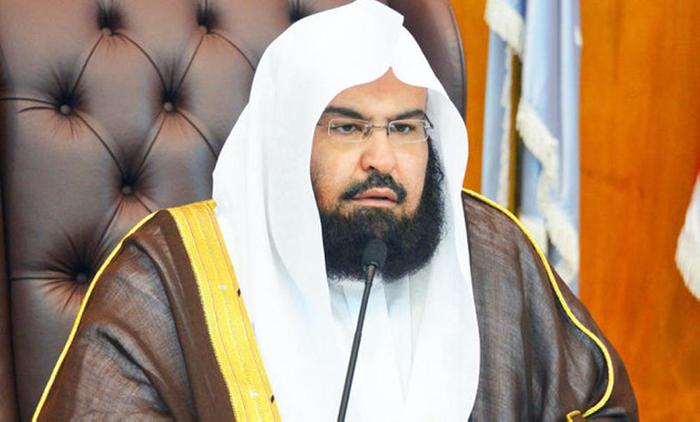
The “imam” of the Haram, ‘Abd al-Rahman al-Sudays, is demanding allegiance to a crown prince who is most likely guilty of murder, embezzlement, terrorism, cozying up to the arch enemies of Islam, and persecuting a class of scholarly colleagues that the shaykh once proudly belonged to.
Even al-Masjid al-Haram, the most sacred of Islam’s masjids, has not been spared the indignity of Bani Saud’s dirty politics. “Shaykh” ‘Abd al-Rahman al-Sudays has used the minbar (pulpit) of the Haram to demand that everyone pledge allegiance to the murderous Crown Prince Muhammad bin Salman who has rightly earned the epithet “Mr. Bone Saw” following the brutal murder and dismemberment of Jamal Khashoggi last October.
‘Abdullah al-‘Awdah, son of the imprisoned moderate scholar, Salman al-‘Awdah pointed out in an article in TRT World (June 11, 2019),
The summit was held mere kilometres from the Dhahban prison in Jeddah, where symbols of moderation in the Muslim world such as my father, Salman al-‘Awdah, and others (three of whom — including my father — the prosecution demanded the death sentence for) are being held.
While lauding the values of the conference “such as refusing violence, intimidation campaigns using Islam, racism and human rights violations” he pointed to the contradictions in practice, “These great principles were however recited only a couple of kilometres from the infamous Dhahban prison, where the real symbols of moderation tell a different story.”
The Saudi-sponsored ‘ulama’ conference was held to create a body that would have monopoly over fatwas. The final article of the conference declaration reads, “No one can consent the Islamic Ummah’s affairs and speak in its name on its religious affairs and anything connected to them except its ‘ulama’ who are established in an association such as the association of this document…”
At a stroke, the Saudi-sponsored group of 80 ‘ulama’ —and they may be learned scholars — have dismissed other Islamic scholars worldwide. Again, under the guise of organizing a religious conference, the Saudis have indulged in crass politics to find a religious crutch for their policy of appeasement to Zionism and imperialism, right in the heart of Makkah.
Bani Saud get away with such crimes because Muslims elsewhere, barring a few exceptions, are not paying adequate attention to these developments. For all practical purposes, Makkah and Madinah are as much under Zionist occupation as al-Quds (Jerusalem).

Sunday, September 10, 2017

Hajj: Antidote for the malignancy of American materialism

By Yuram Abdullah Weiler


“There is no crime America will not commit in order to maintain its political, cultural, and military domination of those parts of the world where it predominates.” —Imam Khomeini to Hajj pilgrims, September 12, 1980

Muslims of the world, whether Sunni or Shi’a, can attest to the veracity of Imam Khomeini’s words of nearly a half century ago. Since those prescient words were uttered by the Founder of the Islamic Republic of Iran, the United States, under the rubric of fighting terrorism, has shed blood and spread chaos in the Muslim world, the likes of which had not been seen since the times of the crusades.

Among the crimes committed by the Washington regime are supporting a sanguinary 8-year-long war upon Iran, backing a brutal occupation of the Palestinian homeland by its Zionist collaborator, invading the sovereign nation of Iraq and subjecting its people to unimaginable humiliation and death, laying waste to Afghanistan while coopting a rebellion and turning it into a proxy war against the former Soviet Union, instigating and funding a terrorist campaign aimed at the legitimate government of Syria, and providing military and logistic support for the vicious Saudi war against the people of Yemen.  These are but a few crimes from a long list of outrages.


Beyond these unconscionable criminal carnages perpetrated by the Potomac plutocrats, who, hand-in-hand with their Zionist accomplices, have turned the Middle East into a cauldron of chaotic conflict, lies the crime of exporting the seductive but contagious cancer of American materialism. If not for Islam and the valiant resistance of Muslims, this malignancy would metathesize unabated, spreading its infectious ideology to societies around the world.  The same can be said for Washington’s illegal and immoral policies of instigating sectarian violence and rebellion to destabilize legitimate governments in the Islamic countries.

This two-pronged assault on the Islamic world, materialism and destabilization, was mentioned by the Leader of the Islamic Revolution, Ayatollah Sayyid Ali Khamenei, in his annual Hajj message for 2017. “On the one hand, the magic of materialism is busy beguiling and annihilating by using advanced instruments,” the Leader noted, “and on the other hand, the policies of the system of domination are instigating sedition and fueling the fire of discord among Muslims and turning Islamic countries into a hell of insecurity and disagreement.”

What about this magical magnetism of American materialism and how, like a stealth weapon, can it ultimately destroy a society? “Materialism is, amongst all nations, a dangerous disease of the human mind; but it is more especially to be dreaded amongst a democratic people, because it readily amalgamates with that vice which is most familiar to the heart under such circumstances,” wrote Alexis de Tocqueville in his classic work, Democracy in America.  

Tocqueville went on to explain that democracy unchecked has the potential to push its adherents towards ever higher levels of self-gratification, which “soon disposes men to believe that all is matter only.”  In other words, people in a western-style democracy, unrestrained by the oversight of a religious scholar and fellow clerics, are irresistibly compelled by their appetites to embrace materialism. But then a destructive feedback loop acting upon the members of society is created by materialism itself, as Tocqueville noted, which “hurries them back with mad impatience to these same delights: such is the fatal circle within which democratic nations are driven round.” Like so many rats on a treadmill, those afflicted with this “dangerous disease” work rabidly to acquire more and more material possessions, which, in turn, only makes them desire even more.

Research into the nature of materialism appears to suggest that developing nations are particularly susceptible to its pernicious pull. “Recent analyses of globalism suggest that consumer culture is spreading from the West to other parts of the world,” researchers Giiliz Ger and Russell W. Belk wrote in 1994.  Disturbingly enough, they observed that “consumers of even the so-called Third World seem to be starting to want luxury consumer goods similar to those of the West, even before they have adequate nutrition.” 

Consequently, one of the most menacingly effective means of achieving total economic domination, which is the aim of western capitalism, is by promoting conspicuous consumption. Bombarded incessantly by advertising from the corporate media, the unsuspecting inhabitants of the Global South are persuaded into believing the consumptive lifestyle of the west is better for them. Ger and Belk highlight this point by stating “consumers in less economically developed nations try to imitate the more extravagant consumption of consumers from more economically developed nations with whom they come in contact.” Once someone is hooked on American materialism, it seems, there is no turning back from economic enslavement.

Obviously detrimental to the society in the targeted country, the imitation of conspicuous consumption is obscenely profitable for U.S. multinational corporations, which benefit from the Washington regime’s predatory policies of imposing corrosive corporate capitalism on developing nations under the façade of fostering economic growth. For example, the International Monetary Fund, essentially an appendage of Washington, has some 3,000 employees who dictate economic terms to 1.5 billion people in the developing nations.

So rather than creating “the opportunities impoverished households need to raise their living standards,” as the U.S. Agency for International Development insists is one of their areas of focus, Washington’s underlying goal is the perpetuation of profits for U.S. multinational corporations. However, as William Lazonick, a professor of economics at the University of Massachusetts at Lowell, has pointed out in the prestigious Harvard Business Review, “Corporate profitability is not translating into widespread economic prosperity,” an observation all too clear even to most Americans.

According to Belk, materialism has three dimensions: possessiveness (owning rather than renting or borrowing), nongenerosity (unwillingness to share with others), and envy (coveting the possessions of others).  One need only look to the current occupant of the Oval Office, the tangerine toupee-topped tweeter, to see all of these obnoxious characteristics in their most extreme form.  Here is a vulgar man so enmeshed in materialism that he could not resist seeking his own cravings for self-aggrandizement while posing in front of TV cameras against a backdrop of devastation caused by hurricane Harvey, and thereby marginalizing the misery of his fellow citizens.  As the Leader remarked, Trump “is showing the truth about America.”

As Ayatollah Khamenei has pointed out in his 2017 Hajj message, the way for Muslims to combat this pernicious, western-produced pandemic of materialism is by participating in the annual Hajj pilgrimage. “Hajj can be a cure for both of these grave maladies that the Islamic Ummah is suffering from,” the Leader stated.  “It can purge hearts of impurities and enlighten them with the light of piety and understanding,” he continued. Additionally the Hajj “can open eyes to the bitter realities of the world of Islam,” according to the Leader, undoubtedly a reference to the U.S.-induced catastrophes currently proliferating across the Middle East.

How does the Hajj serve as an antidote to materialism?  By tackling the three dimensions of materialism mentioned above—possessiveness, nongenerosity and envy—separately during the Hajj with appropriate rituals.  Firstly, envy is dashed by the plain, unstitched, two-piece white cloth garments worn by all pilgrims, thus making the rich indistinguishable from the poor. The Hajj garments, which resemble the burial shrouds placed upon the dead, force the pilgrims from the material world of envy and any other disobedience into the realm of submission to Allah.

Next, possessiveness is countered by circumambulating the Ka’aba, a simple mud and stone building, which has none of the glitter of the material possessions promised by western capitalism, yet attracts millions of pilgrims each year from around the world. By circumambulating the Ka’aba, the pilgrim demonstrates a desire only for Allah and nothing else.  

And lastly, nongenerosity is nullified by the sacrifices of animals made by the pilgrims on Eid, a portion of the meat of which is donated to the poor and indigent.  When making the sacrifice, the pilgrim should intend to “cut off the throat of greed,” for as Imam Ali (AS) said, “Love of the world engenders greed.”

The Prophet (S) and the Imams of Ahl ul-Bayt (AS) have been fighting materialism since the advent of Islam.  Intending to disparage the Hajj, one materialist named Ibn Abi’l-Aujaa asked Imam Sadiq (AS), “Until when will you work on this threshing-floor, seek refuge from this stone, worship this house of mud and stone, and go around it like frightened camels?”  The Imam (AS) replied, “Whomever Allah causes to go astray and to be blind in heart will find the truth bitter and will have the Satan as guardian and lord, and will be damned to perdition from which there is no return.”

It is clear that Allah has caused the leaders of the United States to go astray and be blind in their hearts, as evidenced by their crimes, which they continue to commit in the Middle East and elsewhere around the world. One of these many crimes is promulgating materialism, and as Ayatollah Khamenei has indicated in his address, the Hajj is the antidote.  As Imam Ali (AS) said, “The Hajj is the jihad of every weak person.”  May we Muslims merit joining this jihad, and thereby eradicate the malignancy of American materialism.


-Yuram Abdullah Weiler


Thursday, August 24, 2017

The politics of Hajj quotas: 'What would Allah say to this?'

Critics argue that the Saudi authorities need to make their Hajj quota system more transparent to ensure it is fairer

The Clock Tower and Grand Mosque in Mecca in September 2016 (AFP)

Areeb Ullah's picture
I put myself down for a visa to work at the Hajj as a cleaner just so I can get into the country. It was the only way
- Ismail Mahmud, pilgrim
Ismail Mahmud left his home in Minya, Egypt, and headed for a neighbourhood cafe to write his will. He was diagnosed with a life-threatening illness two years ago and knew his time in this world was short. He had one final wish: to complete the Hajj in Saudi Arabia, but obtaining a visa to do so has come at a high price.

"My sons were not happy when I sold these fields, but we had no choice," said Mahmud, a 59-year-old primary school teacher. "The economic conditions in Egypt have become very difficult and they refused to give me a visa, even with a note from my doctor. It was the only way to pay for my dream to do the Hajj."
Mahmud refused to wait and see whether his name would be picked out of a government-run lottery, entitling him to attend. Instead, he went one step further.
"Everyone said getting picked by the government was impossible unless you paid high officials, but I just couldn't afford it," he said. "So I put myself down for a visa to work at the Hajj as a cleaner just so I can get into the country. It was the only way."

The problem with Hajj quotas

Like thousands of Egyptians, Mahmud has waited years to go to the Hajj. His situation is not uncommon, with millions of Muslims worldwide turning to private travel agents or other means via the black market. 
The Hajj is one of the five pillars of Islam and one which all Muslims are obligated to complete at least once, meaning that visas are hotly contested.
Those who undertake the five-day pilgrimage are absolved of all their past sins, meaning many look to attend during their old age.
How do Saudi authorities decide who can attend Hajj each year? (AFP)

Saudi Arabia sets the quotas, based on the population of Muslims in each country, which in turn - through governments or private travel companies - allocate places for their citizens.
The long wait times, which can be up to 10 years or longer in some countries, lengthened after Riyadh cut the overall quota of visas by 20 percent in 2009 to accommodate expansion work in the grand mosques in Mecca and Medina. It has now reversed the decision, so an additional million pilgrims can now attend the pilgrimage, which this year begins on 30 August.
The rise in numbers comes after the Gulf kingdom suffered a decline in oil prices as well as the lowest number of pilgrims in a decade in 2016. It will boost the economies in Mecca and Medina.
The lottery of obtaining a visa
The governments in most Muslim-majority countries allocate the largest chunk of their places via a random lottery and give the rest to private travel agents. In the UK and elsewhere, tickets are sold via private travel agents on a first-come, first served basis, depending on eligibility.
The biggest problems come in countries such as Indonesia, which is usually awarded the largest number of visas - it  has a Muslim population of 260 million.

Indonesia is given the highest quota of Hajj visas by the Saudis (AFP)


Like many countries with inflated waiting times, it celebrated the addition of an extra 10,000 places on top of the 220,000 already allocated by praising the Saudi authorities. 
Indonesia uses a lottery system to allocate the majority of its places: each applicant pays $2,000 to be considered - the average monthly wage is around $1,200 - and is then put on a waiting list. Even so, locals still face a wait of up to 39 years, meaning some pilgrims die before they win a place.
Other countries take tough measures to be fair and reduce waiting times. Jordan only has 7,000 places to fill this year. Its rules include automatically accepting prospective pilgrims who were born in 1945 or before and demanding that potential pilgrims swear on the Quran that they have never previously attended the Hajj.
The year-of-birth rule is adjusted annually to give elderly applicants a better chance of winning a place, meaning that next year those born on or before 1946 will be eligible to attend. Exceptions are granted to male guardians, such as a son or husband, who are accompanying a female pilgrim.

Bouthaina Naser, 40, a housewife from the north of Jordan, has tried numerous times to obtain a visa, without success. She began thinking about the Hajj after being diagnosed with cancer five years ago and every year since has applied for a visa. 
Frustrated at the Jordanian restrictions, she was forced to turn to the black market to achieve her "dream of doing the Hajj".
"I tried three times to buy Hajj visas from the black market and through people who knew someone selling them from the Saudi embassy," she told MEE. "The Jordanians should allow people to attend if they have the financial ability to go and assess it on a case-by-case basis."

Claims of corruption

Critics accuse the Saudi authorities of politicising the Hajj and helping create a global black economy in visas, with the allocation process in some countries being described as rife with corruption and unfair to poorer pilgrims.
Pakistan, which receives the third-highest quota, was recently rocked by a corruption scandal after prospective pilgrims accused officials of giving a portion to private companies in exchange for bribes.
A Bangladeshi family at dawn at the plain of Arafat, outside Mecca, in 2000 (AFP)


In Bangladesh, the high court has demanded an investigation into how the government managed this year's allocation after some travel agents delayed submitting visa applications in the hope of receiving cheaper rates on accommodation in Mecca and Medina. It has left some Bangladeshis who won on the lottery still uncertain as to whether they will be attending.
Madawi al-Rasheed, a Saudi academic based at the London School of Economics, told Middle East Eye that the al-Saud clan had created a "black economy around the world which is centred on the Hajj".
"The lack of transparency in Saudi Arabia, especially with the quota system, has helped create a black market and trade in visas," she said.
"There is a black market in visas where Saudi embassy employees from around the world sell visas illegally and give them to their friends. They have a certain interest in getting certain people in and excluding others or putting them on a waiting list for the rest of their lives."

Hajj: An arena for political fighting

Riyadh justifies the quota it sets as a means to ensure the safety of all pilgrims. The Hajj has been hit by numerous incidents over the years, which have resulted in the deaths of pilgrims, usually through overcrowding.
The most recent incident, a stampede in 2015, left at least 2,000 people dead, although the final death toll has been disputed.
Some observers have characterised the quota system as a means for Riyadh to influence Muslims around the world. Rasheed said that the Saudis have historically used the Hajj "as a political tool" after it took control of the two holy sites in the early 1920s.
The stampede at Mina in 2015 left more than 2,000 pilgrims dead (AFP)


"Access to the Hajj and performing the ritual is dependent on the will of the Saudi regime," she said. "The main reason is so it is able to control Muslim countries because the Hajj is one of the pillars of Islam, and every Muslim is under the obligation to do it if they can.
"If a Muslim is anti-Saudi or voices criticism of Saudi then they are banned from coming. We saw this happen with Rachid Ghannouchi, the leader of Ennahda [a political party] in Tunisia, when he tried to do the Umrah [attend Mecca outside Hajj] from London, the Iranians last year, and the Qataris this year."
Iranian pilgrims were told by their government not to attend the Hajj in 2016, the first time it has done so, after pre-existing tensions worsened between Tehran and Riyadh. Diplomatic relations hit an all-time low after more than 450 Iranian pilgrims were killed during the 2015 disaster.
Mehdi Beyad, a PhD candidate at SOAS in London who focuses on the geopolitics of the Middle East, told MEE that Tehran had politicised this incident and had historically used the Hajj as a "marker for broader political conflicts".
Just as you cannot divorce Saudi politics from its approach towards Hajj, the same goes for Iran
- Mehdi Beyad, academic
"Just as you cannot divorce Saudi politics from its approach towards Hajj, the same goes for Iran, for instance with the 1987 incident where Shia pilgrims were killed in clashes with Saudi security forces," said Beyad.
At least 400 people were killed by Saudi riot police after Iranian pilgrims chanted "Death to America! Death to the Soviet Union! Death to Israel!" next to the Grand Mosque in Mecca. 
Beyad said: "This incident is seen as a rallying cry for Iranians and Shias more widely, and the competing narratives over it illustrate the broader way in which Hajj has become an arena where states battle for legitimacy and try to connect their identities to it.
"Beyond stated security concerns, by appearing to take a stand over Hajj different states can project themselves as protectors of their professed communities, call into question the capabilities and legitimacy of others, and use Hajj as a marker for broader political conflicts."
For Mahmud, the politics behind the award of a visa has left him frustrated and resentful.
"Each year the Hajj keeps getting more expensive, and I don't know how long I will have," he said. "These restrictions are making hard-working people like me and others lie to complete my God-given right to visit the Masjid al-Haram and the Prophet's mosque.
"What would Allah say to this?"