Showing posts with label US Military. Show all posts

Wednesday, October 02, 2019

Americans Enable Unspeakable Atrocities Every Day

Not so long ago, in November 2010, I took command of B Troop, 4th Squadron, 4th US Cavalry in a ceremony at Fort Riley, Kansas. It was, for me, a proud day. Army officers are taught to revel in their unit’s history, and the 4th Cavalry Regiment had a long, storied past indeed. On that cool, late fall day, the squadron’s colors – a flag with battle streamers – fluttered. One read: Bud Dajo, Philippine Islands – a reference to one of the regiment’s past battles. The unit crest pictured on the flag and pinned on our uniforms included a volcano and a kris – the traditional wavy-edged sword of the regiment’s Moro opponents in the Philippines – but hardly a trooper in the formation knew a thing about that war, battle, or the 4th Cavalry’s sordid past in the islands.
Bud Dajo was hardly a battle at all. It was a massacre. Some 1,000 Moro separatists, including their families, who opposed the US military occupation of Jolo Island, had fled to the crest of a volcano to avoid American conquest and retribution. Then, from 5-8 March 1906, the 4th Cavalry, along with other army formations, bombarded the overmatched Moros – few had firearms at all – then rushed the summit. The Moro men fought desperately and managed to inflict some 20 deaths on the charging American troopers, but they’d never stood a chance. Reaching the volcanic top, the cavalrymen fired down into the crater until all but six defenders and occupants were dead, a 99% casualty rate. The victorious troopers then proudly posed for a photograph, standing above the dead – which included hundreds of women and children – as though they were naught but big game trophies on a safari hunt.
Few Americans remember the US invasion, occupation, and pacification – a neat euphemism, that – of the Philippine Islands, but Filipinos will never forget. Perhaps half a million locals died (one-sixth of the total population) at the hands of superior US military technology, induced disease and starvation. The war also reflected and affected the US Army culture of the day. Most of the generals were veterans of the vicious Indian Wars of extermination in the previous decades. Racially pejorative terms for the Filipinos entered the military vernacular. Some, such as “nigger,” were reappropriated; others, like gugu – thought to be the etymological precursor to the Vietnam-era epithet gook – were new. The war also informed the army’s leadership for many years. The first twelve of the US Army’s chiefs of staff, including General John Pershing of World War I fame, had all served in the Philippines. The legacy was quite long. Even General George Marshall, architect of World War II victory and a future Secretary of State, had served in the islands as a fresh lieutenant.
The war bloodied and frustrated the US Army, too. Some 4,000 soldiers died, many more were wounded, and the conventional conflict and counterinsurgency raged from 1898-1913, making the Philippine War the second longest in American history, after Afghanistan, that is. The war did, in a peculiar moment during the 2016 presidential campaign, briefly earn a shout out from Donald Trump. In order to bolster his own calls for war crimes against terrorists and their families, he told an apocryphal – and debunked – story about how Pershing had once ordered bullets dipped in pig’s blood (considered unclean in Muslim culture), had 49 prisoners executed with them, and then set the one survivor free to inform his comrades of what awaited them should they continue to resist. The result, said Trump, “for 25 years there wasn’t a problem, okay?”
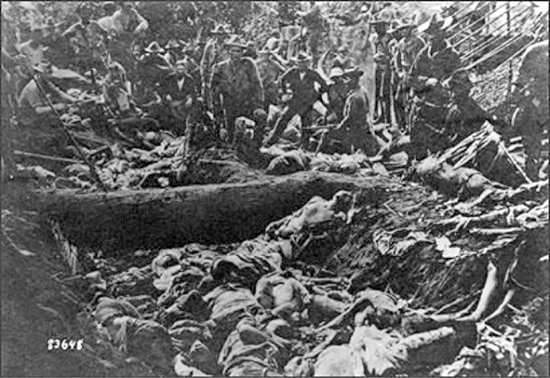
U.S. soldiers pose with Filipino Moro dead after the First Battle of Bud Dajo, March 7, 1906, in Jolo, Philippines.
It made for great rhetoric, but awful history. Not only had the incident never occurred but the war had dragged on for years after even the army’s worst atrocities, including the 1906 Bud Dajo massacre. A cool seven further years, in fact. Besides, Pershing – though himself flawed and later architect of his own volcanic Moro massacre of 200-300 souls in 1913 – had been largely sympathetic to the locals. He learned their language, ate their food, traveled unarmed to meet their leaders, and became the honorary father to a local sultan’s wife. When his superior, General Leonard Wood – who today has a prominent active fort named after him in Missouri – ordered the assault on Bud Dajo, Pershing had surveyed the results and declared “I would not want to have that on my conscience for the fame of Napoleon.”
Back home in the states, many prominent consciences were indeed shocked by the massacre, and, in particular, the trophy photo taken by the victorious troopers. The image flooded the papers, the 1906 version of going viral. At that time, unlike today, there was a substantial (if not majority) anti-imperialist movement brewing. It’s lead literary spokesman, Mark Twain, said of the Bud Dajo “battle,” “We abolished them utterly, leaving not even a baby alive to cry for its dead mother.” These words were hardly trifling, and the rhetoric and activism of anti-imperialists succeeding in getting opposition to empire and the Philippine occupation into the platform of even the highly racist, Jim Crow-era, Democratic Party.
The photograph also galvanized African-American civil rights activists. W.E.B. Du Bois declared the crater image to be “the most illuminating I’ve ever seen,” and considered displaying it on his classroom wall “to impress upon the students what wars and especially wars of conquest really means.”
Nothing even approaching that level of intellectual outrage exists now, as the American Empire spreads its tentacles the world over. Few public intellectuals – to the extent that endangered species even exists these days – even notice the extent of their nation’s ongoing war crimes in the Greater Middle East. Take Afghanistan, for example, the only war longer than the American debacle in the Philippines. After 18 indecisive and bloody years of combat, the US military and its Afghan allies now kill more civilians annually than the vicious Taliban. That ought to be cause for pause, reflection, concern. Only it isn’t, not in Washington, not even in most universities. We’re a long way from Du Bois posting the Bud Dajo picture on his classroom wall.
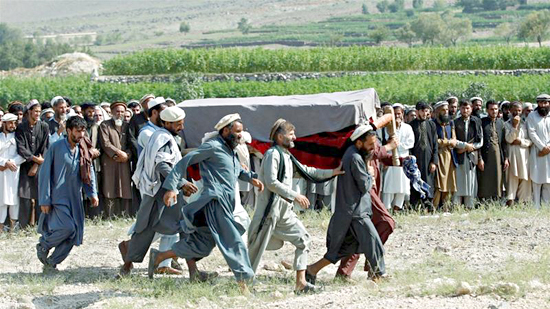
Men carry the coffin of one of the victims after a drone strike that killed 30 pine nut farmers in Nangarhar province, Afghanistan, on Sept. 19, 2019.
Not that there haven’t been plenty of shocking photos of the civilian victims of US bombing these past weeks. Over the course of just several days in late September, the military (“accidentally,” it claimed) struck two weddings, and a group of thirty innocent pine nut farmers. Total civilian deaths approached 100, with many of the victims (in the weddings) women and children. Their crimes, apparently: gathering while Afghan! That’s right, in militarized Afghanistan, merely forming sizable groups – for ceremonies, funerals, farming – appears, to drone operators and bomber pilots, apparently criminal and threatening.
Far too often, way more routinely than Americans are apt to remember, US aircraft have subsequently slaughtered civilians – thereby bolstering Taliban narratives and recruitment, and sowing distrust of the U.S.-backed Kabul regime. Nevertheless, you’d never know it back here in the safety of the homeland. These war crimes hardly crack mainstream media and the macabre photo evidence barely raises an American eyebrow. That’s apathy manifested as tragedy.
So consider this modest piece of mine, this brief history lesson and connection to contemporary US empire, a plea of sorts to the teachers of America. Want to be a true patriot, a forceful educator, and decent human being? Well, do your students a favor: post the photos of recent US military airstrikes upon civilians in Afghanistan – the war crimes of the 21st century – on your classroom walls. Du Bois, and Twain, would be proud…and that’s hardly bad intellectual company to keep…


Maj. Danny Sjursen
Maj. Danny Sjursen is a retired U.S. Army officer and former history instructor at West Point. He served tours with reconnaissance units in Iraq and Afghanistan...

Monday, September 23, 2019

'Your Presence Has Always Been a Calamity': Iranian President Demands US Get Out of Persian Gulf

"The farther you go from our region and our nations, the more security would come for our region."

Iranian President Hassan Rouhani said U.S. and other Western nations must leave the Persian Gulf to avert war. (Photo: Hamid Najafi/Tasmin News Agency/cc)
Iranian President Hassan Rouhani said Sunday that the only way to move toward lasting peace in the Middle East is for the United States and other Western powers to immediately leave the Persian Gulf, a call that comes days after the Trump administration announced the deployment of more troops to Saudi Arabia.
"Your presence has always been a calamity for this region, and the farther you go from our region and our nations, the more security would come for our region," Rouhani said in a speech during a rally on Sunday.
Rouhani also accused the U.S. and other nations of falsely blaming Iran for a recent attack on Saudi oil facilities, which Secretary of State Mike Pompeo called "an act of war."
"Those who want to link the region's incidents to the Islamic Republic of Iran are lying like their past lies that have been revealed," said Rouhani. "If they are truthful and really seek security in the region, they must not send weapons, fighter jets, bombs, and dangerous arms to the region."
To counter the U.S.-led "maritime coalition" purportedly formed to protect shipping in the Persian Gulf in the wake of tanker attacks—which the Trump administration also blamed on Iran on the basis of flimsy evidence—Rouhani said he will unveil a regional peace initiative titled the Hormuz Peace Endeavour (HOPE) at a U.N. General Assembly meeting in New York this week.
"All countries of the Persian Gulf and the Strait of Hormuz and the United Nations are invited to join," Rouhani said Monday before departing for New York.

Monday, May 06, 2019

Closing Military Bases, Opening a New World

By David Swanson, Executive Director of World BEYOND War, May 2, 2019


In a day and age when many of us are taught to overcome prejudice and behave respectfully toward all, mainstream U.S. media and school texts still habitually portray U.S. lives as the only lives that really matter. A plane crash that kills dozens of human beings is reported, just like a war, with the bulk of the coverage on the handful of U.S. lives lost. A U.S. military commander’s decision to bomb a village rather than subject his troops to ground combat is depicted as an act of enlightenment. The U.S. Civil War is almost universally labeled the deadliest of all U.S. wars, despite the fact that many U.S. wars have killed many more human beings — including U.S. human beings if Filipinos were U.S. citizens during the Philippine-American war or World War II.
In an age when we are generally taught to solve our problems nonviolently, the exception for the organized mass murder of war remains. But wars are increasingly marketed, not as protection from the Adolf Hitler of the Month (last month’s weapons customer), but as acts of philanthropy and benevolence, preventing massacres by bombing cities, or delivering humanitarian aid by bombing cities, or developing democracies by bombing cities.
So, why does the United States maintain troops in at least 175 countries, and roughly 1,000 major military bases in over 80 countries outside the United States and its colonies? This is a practice whose development depended on racism. When old-fashioned colonies became unnecessary for rubber, tin, and other materials that chemists could create, the exception of oil remained, and the desire to maintain troops near potential new wars (how ever progressively marketed) remained. Now that it is clear to most of us that oil will render the earth uninhabitable, that the United States can get its planes, ships, drones, and troops to any spot on earth rapidly without any nearby base, and that all human beings are equally capable of creating such splendorous monuments to self-government as the campaign ad, the gerrymandered district, and the unverifiable voting machine, it’s mostly the belief that non-U.S. people don’t matter that remains.
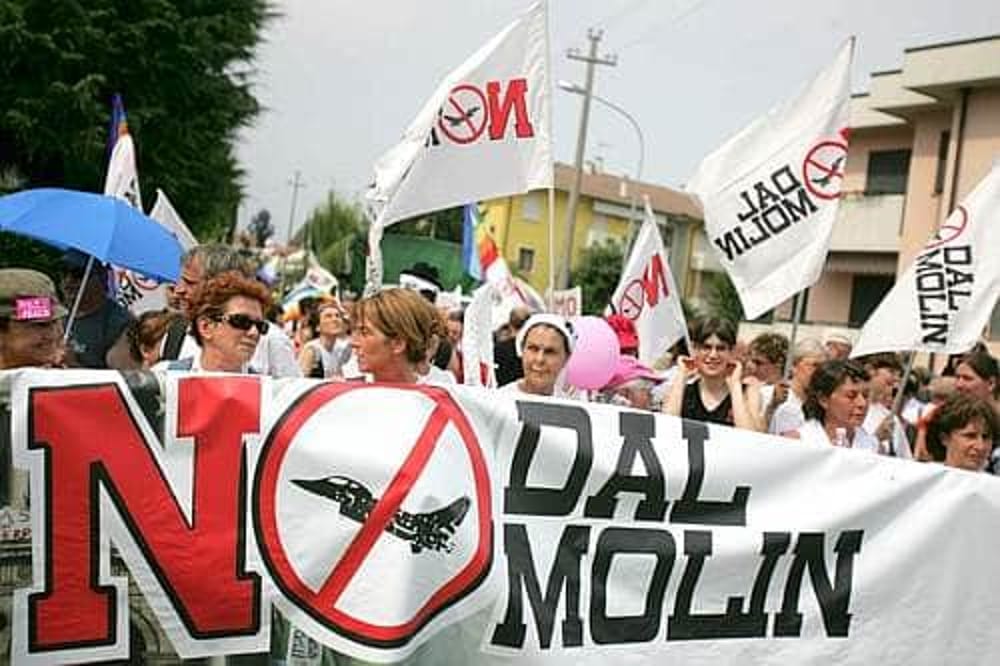
There are profits to be made, and weapons-buying or oil-selling or labor-exploiting dictatorships to be propped up. There’s the inertia of the way things are. There’s the perverse drive to dominate the globe. But the marketing scheme for the global archipelago of bases comes down to the need to police people for their own good, even though they mostly believe it harms them. The presence of not a single foreign U.S. or NATO base has been approved by a public referendum. Numerous such bases have been voted down by public referenda (including one in February 2019 in Okinawa), not a single one of which has been honored by the U.S. government. Many bases are the targets of massive nonviolent protests even before their construction, and for years or decades after.
Most bases are gated communities on steroids. The residents can come out, visit brothels, drink, crash their cars and sometimes airplanes, and commit crimes immune from local prosecution. The bases can emit pollutants and poisons, render the local drinking water deadly, and answer to nobody in the nation being “served” by the base. Those who live outside the base, unless employed there, cannot come in to visit the Little America built inside the walls: the super markets, fast food restaurants, schools, gyms, hospitals, childcare centers, golf courses.
An empire of bases is an empire of very little land, but it is no more land that was “available” than the Americas were empty and awaiting European “discovery.” Countless villages and farms have been eradicated, populations evicted from islands, those islands bombed and poisoned into uninhabitablity. This process describes significant portions of Hawaii, of the Aleutian Islands of Alaska, Bikini Atoll, Enewetak Atoll, Lib Island, Kwajalein Atoll, Ebeye, Vieques, Culebra, Okinawa, Thule, Diego Garcia, and other locations most people in the United States have never heard of. South Korea has evicted large numbers of people from their homes to make way for U.S. bases in recent years. Pagan Island is a new target for destruction.
While the rest of the world’s nations combined have a couple of dozen military bases outside their borders, and while the wealthier nations of the world are leaving the United States behind in health, happiness, life expectancy, education, and other measures of well-being, the United States goes right on building and maintaining more bases around the world at great expense (over $100 billion every year), and at great risk. This has been true during every recent U.S. presidency. President Donald Trump may yet get a big new base named for him in Poland, though it is in Asia and Africa that the heaviest base construction is underway.
Bases hold missiles as well as troops, and new bases in Romania and elsewhere have contributed to the highest ever risk of nuclear apocalypse. Bases have generated, motivated, and served as training grounds for terrorism, including such famous terrorist attacks as those of 9-11, driven by opposition to bases in Saudi Arabia, and groups like ISIS, organized in prison camps at U.S. bases in Iraq. An explicit purpose in launching and continuing many wars, including those on Afghanistan and Iraq, is to establish bases. Bases are also used as locations to torture people ostensibly outside the rule of any law. When Congress Members suspect that U.S. troops might someday leave Syria or South Korea, they are quick to insist upon a permanent presence, though they are somewhat mollified when White House officials suggest that any troops leaving Syria will only make it as far as Iraq, from which they will be able to quickly attack Iran as “needed.”
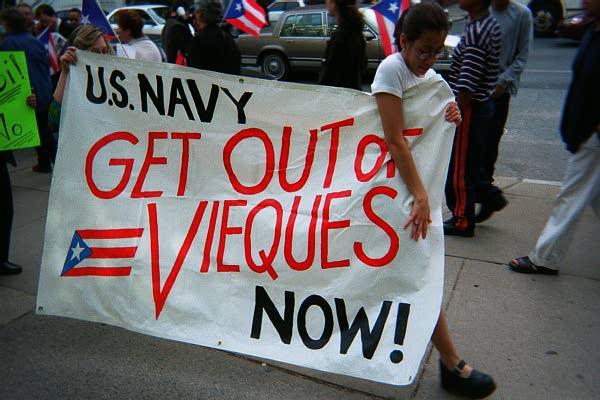
The good news is that sometimes people can shut down bases, as when farmers in Japanprevented the construction of a U.S. base in 1957, or when the people of Puerto Rico kicked the U.S. Navy out of Culebra in 1974, and after years of effort, out of Vieques in 2003. Native Americans evicted a Canadian military base from their land in 2013. People of the Marshall Islands shortened a U.S. base lease in 1983. The people of the Philippines kicked out all U.S. bases in 1992 (though the U.S. later returned). A women’s peace camp helped get U.S. missiles out of England in 1993. U.S. bases left Midway Island in 1993 and Bermuda in 1995. Hawaiians won back an island in 2003. In 2007 localities in the Czech Republic held referenda that matched national opinion polls and demonstrations; their opposition moved their government to refuse to host a U.S. base. Saudi Arabia closed its U.S. bases in 2003 (later reopened), as did Uzbekistan in 2005, Kyrgyzstan in 2009. The U.S. military decided it had done enough damage to Johnston/Kalama Atoll in 2004. In 2007, the President of Ecuador answered public demand, and exposed hypocrisy, by announcing the United States would need to host an Ecuadorean base or shut down its base in Ecuador.
There have been many incomplete victories. In Okinawa, when one base is blocked, another is proposed. But a broad and global movement is being built that is sharing strategies and providing assistance across borders. At World BEYOND War we are putting a major focus on this effort, and have helped to start up a D.C. insider coalition called Overseas Base Realignment and Closure Coalition, drawing heavily on the work of David Vine and his book Base Nation. We’ve also been part of launching a global activist coalition to educate and mobilize people for the closure of U.S. and NATO military bases. This effort has produced a conference in Baltimore, Md., in January 2018, and one in Dublin, Ireland, in November 2018.
Some of the angles finding traction and being shared around the world are environmental. U.S. bases are poisoning ground water, not just all over the United States, where the Pentagon is seeking to legalize such practices, but all over the world, where it needn’t bother. The reasons the Pentagon needn’t bother legalizing destruction abroad ultimately depend on the last remaining widely accepted bigotry in U.S. culture, namely that against every non-U.S. culture.
As the anti-base movement grows, it must work with activists who oppose Western Empire without opposing violence. Spreading the skills of nonviolent activism will be crucial. It must also figure out how to work with that uniquely U.S.ian creation: libertarianism. One way might be this: encourage pressure on Trump to continue demanding that nations occupied by (or “hosting”) U.S. bases pay larger fees for the “service.” We can do this while encouraging governments around the world to respond with a polite “Don’t let the door hit you on your way out.”
At the same time, we cannot lose track of the new world that would be made possible by moving resources away from the maintenance of bases, and away from the even more costly wars they instigate. With this kind of money, the United States could transformboth itself and global foreign aid.

David Swanson

David Swanson is an author, activist, journalist, and radio host. He is director of WorldBeyondWar.org and campaign coordinator for RootsAction.org. Swanson's books include War Is A Lie. He blogs at DavidSwanson.org and WarIsACrime.org. He hosts Talk Nation Radio and is a 2015 Nobel Peace Prize nominee.