Showing posts with label South Sudan. Show all posts

Wednesday, July 31, 2019

A Brief History of the CIA’s Dirty War in South Sudan

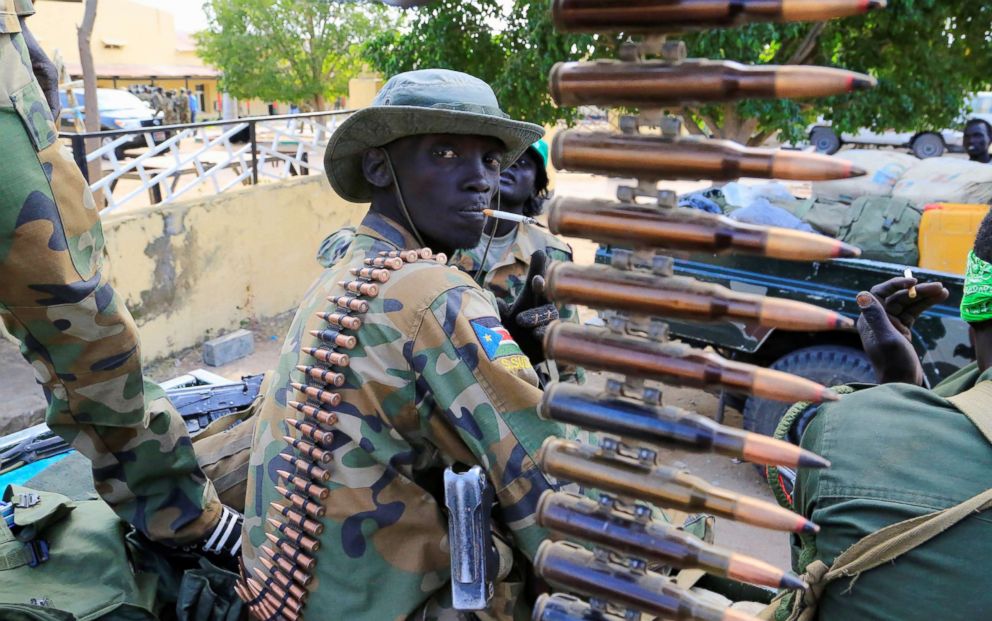
With the CIA’s Dirty War in South Sudan winding down its time to take a brief but comprehensive look at the origins and history of this most secret of Pax Americana crimes in Africa.
It is in the national interests of the USA to deprive China of access to African energy resources, with the Sudanese oil fields being the only Chinese owned and operated in Africa. It was no coincidence that one of the first targets of the “rebellion” in South Sudan was the Chinese oil fields. It has been US vs China in South Sudan from the start.
To begin this history we must go back to the origins of the South Sudan peace process that developed in 2004. This new breakthrough came about following the East Sudan uprising and subsequent intervention in Sudan by the Eritrean military in support of the Beja and Rashida peoples movement in 2003. Eritrean commandos cut the Port Sudan-Khartoum highway, the lifeline for 25 million residents of Sudans capital. For two weeks the Sudanese army counterattacked and ended up utterly defeated by the Eritrean special forces.
Facing critical food and fuel shortages the Sudanese officer core that was then the base of support for the recently deposed Omar Al Bashir capitulated and as part of the peace deal agreed to begin good faith negotiations with the various Sudanese resistance groups, both east, south and even, supposedly, in the west.
This resulted in John Garang, head of the Sudanese Peoples Liberation Movement and the President of Sudan Omar Al Bashir sitting down together to sign a comprehensive peace deal in Asmara, Eritrea late in 2004.
In December of 2004 we flew into Asmara, Eritrea and checked into the old Imperial Hotel, the Emboisoira, and found ourselves sharing breakfast with senior leaders of the SPLM. We had a satellite dish back in the US with EritreanTV so we had seen our breakfast mates on the news covering the recently signed peace deal in Asmara. They were all in high spirits, still excited about the prospect for peace in Sudan.
Later, after returning home to the USA in 2015 we heard of a new peace deal, this time being signed in Navaisha in Kenya. And this time the deal was brokered by the USA. The only real difference between the 2004 Asmara agreement and the 2005 Kenya deal was the inclusion of a clause calling for a referendum on independence for South Sudan.
The USA forced Bashir and Garang to accept this independence referendum after forcing a new peace “negotiation” and eventual, deal, in Kenya, away from Eritrean mediation efforts. Carrot and the stick, inducements and threats by the worlds superpower forced Garang and Bashir to accept the dismemberment of Sudan and created the conditions for one of the most brutal civil wars in African history. This was the doings of the USA from the get go.
After signing the peace deal John Garang, as head of the Sudanese Peoples Liberation Movement (SPLM), held his first public rally in Khartoum and drew a million people or more, three times the largest crowd Bashir had ever had. There he made a fateful speech.
John Garang made it clear that he was strongly AGAINST independence for South Sudan, instead calling on his fellow Sudanese in the North to help elect him president to build a new Sudan based on equal rights and justice for all Sudanese.
Garang stated his intent to be politically independent from the western powers instead looking to China, already in the oil business in Sudan, to develop Sudans economy. Sudan, as a whole, is the largest and potentially richest country in Africa and for the USA to lose Sudan to China wasn’t acceptable to Pax Americana.
John Garang was dead two weeks later in a mysterious helicopter crash and with him died a unified Sudan.
With in a few years a referendum was held for “independence” for South Sudan and voila it was a done deal. The irony is that John Garang, who was vehemently against independence for South Sudan, is now proclaimed “The Father” of the South Sudanese independent state.
In 2009 my old friend Alexander Cockburn contacted me asking for a story about what was going on vis a vis Sudan/South Sudan. I had been living next door in Eritrea for the past few years and I responded with “Storm Clouds Over South Sudan” which Alex and Jeffrey St. Claire published on their website “Counterpunch” where I predicted the upcoming holocaust in the worlds newest “independent” country.
I only wish my words had not come true.
I was repeatedly forced to continue exposing the CIA’s dirty war in South Sudan over the next few years with titles like “US vs China in South Sudan”, “The CIA’s DIrty War in South Sudan” amongst others in an attempt to shine the light of day on this most dirty, and secret, CIA covert war.
I am not exagerating when I call the civil war in South Sudan the most secret major covert military operation by the CIA in the Agency’s history. The proof of this is the fact that not a single writer other than myself has made this charge. This might be explained by the lengths prominent western journalists have attempted to point the blame away from the Agency and instead at the South Sudanese peoples themselves.
Its been horrific first hand stories by award winning progressive journalists like Nick Turse that painted this dirty war as black on black, African tribal violence at its worst.
When I pointed out to Nick Turse that the rebels were being paid $300 a month salaries, Mr. Turse denied the accuracy of my claim. In an exchange on Twitter he said that the rebels were making maybe $300 a year if that, so no need to explain the $6 million a month it would take to pay 20,000 rebel combatants salaries?
The problem with Mr. Turse assertion is that former South Sudanese rebel fighters have confirmed being paid $300 a month when they were under arms. In South Sudan young men join the army because it’s the only way to get enough money to feed your family, not out of patriotic zeal. When the money periodically dried up, usually stolen by the rebel generals, the soldiers start to leave, as my sources had experienced.
Do the math, 20,000 rebels paid $300 a month times 6 years plus food, fuel and ammo and you come out with over $500 million and counting? Honestly now, who has a history of coming up with that amount of cash, entirely secret for that long but the CIA? Must we be reminded of the CIA’s dirty wars in Angola and Mozambique in support of South African Apartheid back in the 1970’s and 80’s?
Show me the money, right? How come no one in the international media has ever asked this question? The rebels have no visible means of support, where could they be getting their funds from?
This story remains the best kept secret “dirty war” the CIA has ever operated. Until the Chinese brought in a couple thousand armed “peacekeepers” to protect their oil fields this CIA operation was successful, shutting down, temporarily Chinese oil production in South Sudan. But more importantly, it pretty much shut down Chinese expansion in South Sudan. That is what this dirty war was all about, preventing China from gaining a major foothold in Africa’s oil fields.
Show me the money? Show me the ONLY party that benefits from this war? Thats right, the ONLY party to benefit from this brutal, foreign funded African holocaust has been Pax Americana, the U.S. of A, by shutting down Chinese oil production and expansion in South Sudan.
Today peace has broken out in South Sudan, shaky as it may be. The CIA had been using the former regime in power in Ethiopia, the TPLF, to funnel their filthy lucre to the rebel armies in South Sudan but with the “Peaceful Revolution” breaking out in Ethiopia this avenue to the rebels was cut off. The rebel leadership had no choice but to cut a deal with South Sudan President Salva Kiir for cash so they could pay their troops salaries. No money, no honey, you get what you pay for and without hard CIA cash to pay their troops it became “Give peace a chance”. Of course corruption remains rife and stolen salaries for various ethnically based military departments have continued to cause revolts and instability.
Yet so far the peace deal signed, sealed and delivered in Asmara in 2018 has been holding. The CIA are now almost completely out of the picture in South Sudan though one should never underestimate the Agency’s capacity for evil. Its in the US national interest to deny China access to African oil so it will always continue to be US vs China in South Sudan, as part of Pax Americana’s designs for Africa as a whole.
Thomas C. Mountain is an historian and educator living and reporting from Eritrea since 2006. See thomascmountain on Facebook or best contact him at thomascmountain at g mail dot com

Thursday, June 20, 2019

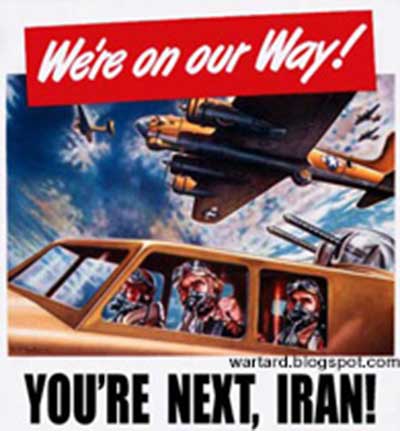
Last Nation Standing – Iran

Although the Trump administration has given many reasons for its aggressive attitude toward the Islamic Republic of Iran, the more prominent reasons emerge from Iran failure to assure (1) it will never pursue nuclear weapons, (2) will not supply weapons to Hezbollah and Hamas, and, (3) will not threaten Israel.
Only Iranian pursuit of nuclear weapons can affect the security of the mighty United States (US), and that pursuit cannot occur until expiration of The Joint Comprehensive Plan of Action (JCPOA) allows additional enrichment, which, unless the JCPOA is terminated before it expires, is not until, about 2030. Seems the US can wait to see how events progress, talk with Iran as that date nears, and postpone action for at least a decade. With those considerations, why the US aggressive behavior toward Iran? Maybe, because Iran is “The Last Nation Standing.”
What does this mean? Well, there is a common thread in US actions of aggressive behavior toward certain nations that have not actually threatened the security of the United. The common thread is Israel, and after the decline of all of these nations that have not threatened the security of the United States, Iran is the Last Nation Standing.
Sudan
Not a nation to be recommended to any citizen — having been corrupt, intolerant, and ruled by  a despot — once wealthy with minerals and gushing oil, Sudan had possibility of becoming a strong and vibrant African nation, US policies of countering terrorism, assisting South Sudan rebels, and Interfering in the Darfur civil war contributed to preventing that outcome.
Link of a car bomb at the World Trade Center in New York to Osama bin Laden, who had residence in Sudan, prompted the US State Department to add Sudan to its list of state sponsors of terrorism. Afterwards, the United States accused Sudan of harboring members of several terrorist organizations, and, In October 1997, imposed economic, trade and financial sanctions. These sanctions occurred despite Sudan, starting in 1995, offering extradition or interviews of arrested al-Qaeda operatives, as well as allowing access to the extensive files of Sudanese intelligence. According to a CIA source, as reported in the Guardian, Sept 30, 2001, “This represents the worst single intelligence failure in this whole terrible business. It is the key to the whole thing right now. It is reasonable to say that had we had this data we may have had a better chance of preventing the attacks.”
A Congressional Research Service report at https://www.theatlantic.com/international/archive/2011/07/us-played-key-role-in-southern-sudans-long-journey-to-independence/241660/ exposed U.S. support of the southern Sudanese struggle. It listed actions going back to the Clinton era, including the provision of more than $20 million surplus U.S. military equipment to frontline states of Uganda, Eritrea, and Ethiopia, which the report says “helped reverse military gains made by the [Sudanese] government against the southern rebels”.
The US congress heightened the insurrection in Sudan’s Darfur province by passing an amendment, H.Con.Res.467 — 108th Congress (2003-2004), amended 07/22/2004, which “States that Congress declares that the atrocities unfolding in Darfur, Sudan, are genocide, and urges the Administration to refer to such atrocities as genocide.” The amendment gathered world opinion against the Sudanese government. Not clarified were that, although the public accepted the figure of 400,000 killings of people in Darfur, this genocide had no verification of the number of killings, no displayed mass graves, and no images of a great number of bodies.
Before he left the U.S. State department, former US Deputy Secretary of State Robert Zoellick stated, “It’s a tribal war. And frankly I don’t think foreign forces want to get in the middle of a tribal war of Sudanese.”(ABC News on-line, November 9, 2005)
A peace agreement, which ended the second Sudanese civil war in 2005 and restored southern autonomy, moved the United States, on September 9, 2009, to ease the sanctions on Sudan. On July 9, 2011, South Sudan became independent and reduced Sudan to a pipeline for South Sudan oil. After Sudan became a diminished state, barely able to survive, the United States lifted economic and trade sanctions. Independent South Sudan fared worse — involved in its own civil war, human rights violations, and social and economic turmoil.
Homeland Security News Wire, 24 October 2012“Israeli planes destroy Sudanese arms factory suspected of producing chemical weapons for Hamas.”
“According to James Mulla, the director of Voices of Sudan, a coalition of U.S.-based Sudanese-interest organizations, Israel’s support proved pivotal to the Anyana’s success during the first Sudanese civil war, which ended in 1972.
Over the years, there have been reports of the Israelis continuing to aid South Sudanese rebels during Sudan’s second civil war, which lasted from 1983 to 2005 and resulted in an estimated 1.5 million to 2.5 million deaths.”
Libya
Due to Libya Leader Moammar Gadhafi’s support for radical revolutions, the United States found reason to have strained relations with Libya. Sanctions soon followed. In March 1982, the U.S. Government prohibited imports of Libyan crude oil into the United States and expanded the controls on US origin goods intended for export to Libya. Licenses were required for all transactions, except food and medicine. In April 1985, all Export-Import Bank financing was prohibited.
On April 14, 1986, the United States launched air strikes against Libya in retaliation for “Libyan sponsorship of terrorism against American troops and citizens.” Five military targets and “terrorism centers” were hit, including Gadhafi’s headquarters.
After Libya halted its nuclear program, renounced terrorism, accepted responsibility for inappropriate actions by its officials, and paid appropriate compensation to the victims’ families for the bombing of a US commercial airplane over Lockerbie, Scotland, the United Nations (UN) lifted sanctions, the US terminated the applicability of the Iran and Libya Sanctions Act to Libya, and President Bush signed an Executive Order terminating the national emergency with respect to Libya, which ended economic sanctions.  All was going well until 2011.
Despite the lack of clarity of the 2011 rebellion against Gadhafi and specious reasons for NATO and US roles to defend the rebels, the U.S. government cut ties with the Gadhafi regime, sanctioned senior regime members, and, together with several European and Arab nations, managed to have the UN authorize military intervention in the conflict. The intervention demolished the Gadhafi regime, an outspoken antagonist of Israel, and enabled the rebels to obtain victory, another fallen nation and, still, in 2019, an embattled nation.
JEWISH TELEGRAPHIC AGENCY, February 22, 1973
“Israel Downs Libyan Passenger Plane; 70 Killed, 13 Survive; Bad Weather May Have Caused Plane to Stray.”
Egypt
Prime Minister of Egypt, Anwar Sadat, signing of a peace treaty with Israel stimulated the US to normalize relations with combative Egypt. The most populous and leading nation of the Arab world, principal defender of Arab rights, which had waged several wars with Israel, became a weakened observer to the hostilities affecting the Middle East.
Syria
The US never favored the Assad regimes, cut relations, and wished them to go away. Nevertheless, after the September 11, 2001 attacks on US soil, the Syrian Government tried limited cooperation with the US War on Terror.  Syrian intelligence alerted the US of an Al-Qaeda plan, which was to fly a hang glider loaded with explosives into the US Navy’s Fifth Fleet headquarters in Bahrain. Syria was also a destination for US captives outside of its borders in its rendition program. According to US officials, as reported by Nicholas Blanford, in a Special to The Christian Science Monitor, May 14, 2002, Syrian information was instrumental in catching militant Islamists around the world.
Syria’s opposition to the Iraq War deteriorated relations. Serious contention arose because of a US claim that the Syrian Government permitted foreign fighters to cross the Syrian border and enter Iraq. In May 2004, the Bush administration enacted the Syria Accountability and Lebanese Sovereignty Restoration Act, which imposed sanctions on Syria, banned the majority of exports to Syria except food and medicine, and prohibited the export of most goods containing more than 10 percent US manufactured component parts
Syria’s descent into near oblivion started with its civil wars, in which foreign fighters (ISIS and al-Nusra) entered Syria from NATO’s Turkey (no retribution to Turkey for allowing ISIS to enter Syria), and a multitude of insurgents fought with and against one another until Assad, with assistance from Russia, Iran and Hezbollah, overcame the insurgencies. WikiLeaks, in 2011, released diplomatic cables between the US embassy in Damascus and the State Department, which revealed that the US had given financial support to political opposition groups and their related projects through September 2010.
In December 2012, President Barack Obama announced the US would formally recognize the Syrian Opposition Coalition as the legitimate representative of the Syrian people.
With ISIS defeated and a limping Assad government barely managing to have the nearly destroyed nation survive, United States Ambassador to the United Nations. Nikki Haley. affirmed that “the priority of the United States policy concerning Bashar al-Assad is to no longer to force him out of power.” Bombed almost daily by Israeli missiles and planes, the hopelessly weak Syria cannot retaliate.
Haaretz, Sep 08, 2018
“Israel Secretly Armed and Funded 12 Syrian Rebel Groups, Report Says.”
Iraq
insufficient for US strategists that a decade of sanctions had only crippled Iraq, the US administration, citing strong intelligence reports that proved Saddam Hussein was developing weapons of mass destruction, invaded and destroyed Iraq. Anyone examining the reports could ascertain their falseness and show that Iraq was no more dangerous to the security of the United States than Venezuela. The already severely weakened Iraq, which always had the possibility of becoming a strong and vibrant nation, and was no threat to the US, suffered the mightiest of blows and fell with hardly a whimper.
NY Times, June 9, 1981
“Israeli jets destroy iraqi atomic reactor; attack condemned by u.s. and arab nations.”
Haaretz, Apr 03, 2003
“The war in Iraq was conceived by 25 neoconservative intellectuals, most of them Jewish (ED: Avid Israel supporters), who are pushing President Bush to change the course of history.”
Iran
No matter what Iran does, the US perceives Iran as an enemy and a threat to not only the Middle East, but to world order. All this hostility, despite the facts that (1) the Iranians showed willingness to create a new Afghanistan by pledging $560 million worth of assistance, almost equal to the amount that the United States pledged at the Tokyo donors’ conference in January 2002, (2) according to the U.S. envoy to Afghanistan, Richard Dobbins, Iran played a “decisive role in persuading the Northern Alliance delegation to compromise its demands of wanting 60 percent of the portfolios in an interim government,” (3) Iran arrested Al-Qaeda agents on its territory and, because Al-Qaeda linked the Shiite Muslims, represented by Iran and Hezbollah, with Crusaders, Zionists, and Jews as its most bitter enemies, had ample reason to combat  terrorist organizations, and (4) Iran has no reason for or capability of attacking the US or its western allies.
What do all these defeated nations, which have suffered from US aggressive tactics, have in common — they were no threat to the US and each was a severe antagonist of Israel — Sudan. Libya, Egypt, Syria and Iraq — each capable of achieving power, and now powerless. The US sacrificed its soldiers in battles, spent excessive sums of money, gained animosities from other nations for its aggressive efforts, and for one principal reason — to protect Israel.
Why does the US protect Israel?
Some believe the US protects Israel to have a western footprint in the Middle East, similar to that of using South Korea to have a footprint in Asia. Others speak of the foothold enabling oil control.
These arguments have contradictions. The US can acquire support from almost all Middle East nations by not supporting Israel, no longer is dependent on Middle East oil, and can actually lower oil prices and have more access to petroleum by encouraging Iran oil production.
Let’s talk real. The destructions visited upon the described nations have done little to advance US security and economy. Therefore, the reason for the actions and US support of Israel must be political — politicians are coopted by catering to the religious right community and other Israel defenders. US administrations are willing to sacrifice American lives and give exorbitant financial assistance to Israel in trade for electoral support from Israel’s backers. All this despite Israel making decisions counter to US interests, such as allowing a Chinese firm, in which the Chinese government has a major stake, to run the Israeli port of Haifa, which  hosts joint U.S.-Israeli naval drills and visits from American vessels.
Due to US aggressive tactics, the antagonists to Israel have fallen, and Iran is the last nation standing.
Dan Lieberman edits Alternative Insight, a commentary on foreign policy, economics, and politics. He is author of a nonfiction book, A Third Party Can Succeed in America, a Kindle, The Artistry of a Dog, and a novel, The Victory (under a pen name, David McWellan).