Showing posts with label Omar al-Bashir. Show all posts

Thursday, June 13, 2019

Remaking Al-Bashir’s Regime In Sudan

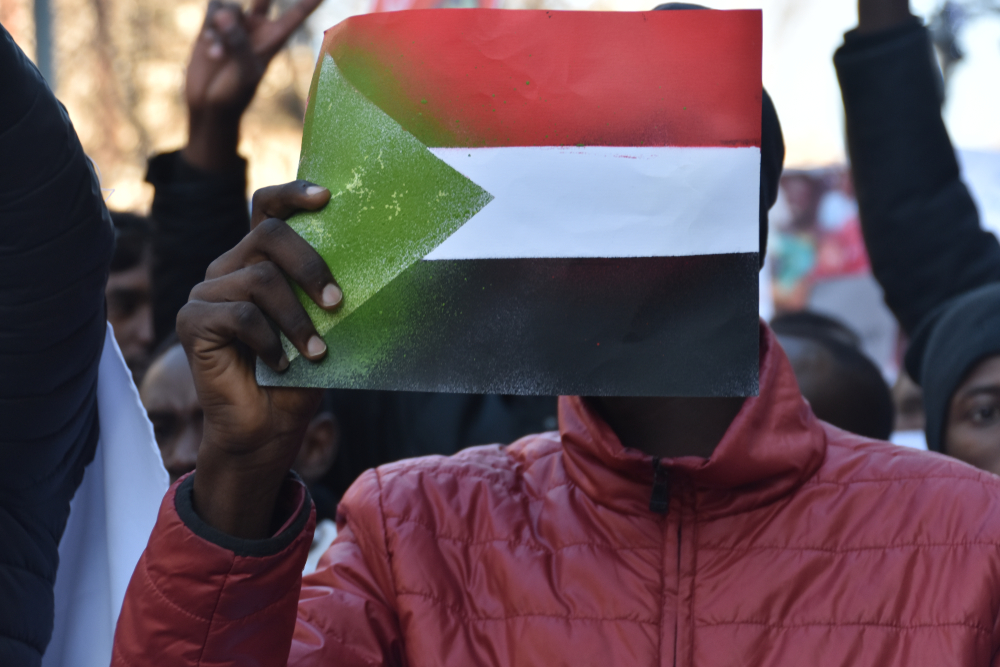
Protestor in France (GERARD BOTTINO via Shutterstock)
by Abdulaziz Kilani
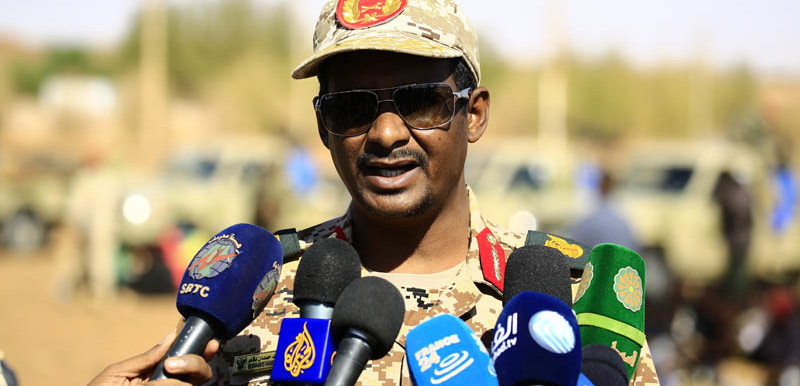
Last month, the interim leader of Sudan, General Abdel Fattah al-Burhan, visited Egypt and the United Arab Emirates. At the same time that he was in Abu Dhabi, his deputy, Mohamed Hamdan “Hemedti” Dagalo, was in Jeddah meeting Saudi Crown Prince Mohammed bin Salman. This happened before al-Burhan headed to Mecca to attend the double-summits that Riyadh was organizing.
As soon as these interim leaders returned from their visits, the military council adopted a new approach toward protesters. “The UAE and Saudi Arabia are not interested in seeing a successful democratic transition anywhere in the Middle East, including Sudan,” Daniel Serwer, director of the Conflict Management Program at the Johns Hopkins School of Advanced International Studies, told me. “They would much prefer the military stay in charge and follow the Saudi/Emirati lead to autocracy.”
The death toll of pro-democracy protesters has topped 100 in a few days. The African Union suspended Sudan over its military’s brutal crackdown and the United Nations called for an investigation.
The force used against protesters suggests that a remake of al-Bashir’s regime is in progress, which dashes the people’s hopes for democracy. The man complicit in the crimes in Darfur in 2003, Hemedti, is now one of the country’s main leaders. Did the military council start a coup against Omar al-Bashir, pushed by the protesters, for the sake of Sudan or for the sake of saving themselves?
The protesters have insisted on the removal of the entire military council for fear that the repression they witnessed under al-Bashir may not be gone completely. They want the whole system changed not just a few individuals. The TMC, which has abandoned negotiations in favor of violence, has now become the main obstacle to the transformation of governance in Sudan to a civil state.
Perhaps the TMC wanted the protesters to take a step back. But the protesters realize that doing so would waste months of efforts and jeopardize their dream of freedom and democracy. It would also make the chance of establishing a civilian state unlikely—if not impossible—for the TMC might get the impression that the use of force is a better way for them to retain power.
Abu Dhabi and Riyadh sent $500 million to Sudan after the military council toppled al-Bashir as part of a planned $3 billion overall package. The purpose of the aid is less about aiding the Sudanese and reviving the country’s economy and more about maintaining Gulf influence in Sudan. In fact, when al-Burhan and Hemedti visited the Gulf countries, they may have gotten the green light to start the slaughter they committed on their return.
Imad Harb, director of research at Arab Center Washington DC, told me:
What is ironic is that the TMC’s main supporters in Sudanese society are Islamist forces that are demanding to continue with the imposition of sharia laws. Elsewhere in the Arab world, Saudi Arabia and the UAE have spearheaded a campaign against Islamists, but in Sudan they don’t seem to mind supporting the TMC whose main constituency are the Islamists. I believe that their stance on Islamists is demagogic and what they are interested in is only suppressing calls for political change, whoever makes them.
Saudi Arabia and the UAE do not want a revolution in any country where they have influence. The developing scenario in Sudan resembles how Libya’s strongman, Khalifa Haftar, after visiting Saudi Arabia, launched a military assault on Tripoli that has sent the country spinning into a civil war.
The State Department has reported conversations about the Sudan crackdown between Under Secretary of State for Political Affairs David Hale and both Saudi Deputy Defense Minister Khalid bin Salman and the UAE’s Minister of State for Foreign Affairs, Anwar Gargash. According to the State Department, Hale “noted the importance of a transition to a civilian-led government in accordance with the wishes of the Sudanese people.” This indicates that Washington seems concerned about the role played in Sudan by the two Gulf countries.
This concern appears to have had an effect on the two Gulf countries. The Saudi Press Agency reported a day after the State Department’s press release that the government of Saudi Arabia has followed with “great concern” the developments in Sudan. It pointed out that the kingdom “affirms the importance of resuming the dialogue between the various parties in Sudan to fulfil the aspirations of the brotherly Sudanese people.” Gargash, too, has expressed his country’s concern about the “massacre” in Sudan and supported calls for an investigation.
Given that both Riyadh and Abu Dhabi acted rapidly after the State Department’s reports, the United States is obliged to put maximum pressure on its allies. The recent nomination of David Booth as a special envoy for Sudan may turn out to be a meaningful U.S. action that President Trump hopes to get credit for. After widespread criticism of his support for Mohammed bin Salman, particularly after the murder of journalist Jamal Khashoggi, Trump might be looking for a way to boost his public image.
On Tuesday, the protesters called off a general strike and agreed to resume talks. “The opposition’s announcement that it is suspending the civil disobedience campaign and returning to negotiations can be seen as a sign that the military is willing to compromise,” Harb added. “This may make the Saudis and Emiratis nervous. If they don’t like what they see in the next few days, they may pressure its people on the TMC (specifically Mohammad Hamdan [Hemedti] and his Rapid Support Forces) to stage what can be seen as a ‘corrective’ coup. The situation is still very fluid in Sudan.”
But for a true transformation of Sudanese governance to take place, the TMC must change the way it deals with the protesters and stop countries like Saudi Arabia and UAE from interfering in Sudan’s affairs. Talks can only succeed if the Sudanese are fully in control of the process.
Abdulaziz Kilani is the editor-in-chief of Sharq Wa Gharb Arabic electronic newspaper. He tweets as: @az_kilani

Friday, April 26, 2019

Canadian Analyst Says Sudan Coup An Outside Job

TEHRAN (Tasnim) – A prominent Canadian expert described the recent military coup in Sudan “a clandestine regime change” attempt orchestrated from outside the North African country supposedly by the US and its regional allies, including Saudi Arabia and Israel.

“I see the events which ultimately transpired less as a domestic coup d’état on the heels of a homegrown protest movement than a classic intervention by the USA and its allies or, more to the point, a clandestine “regime change” which closely mimicked the play book used to install el-Sisi in Egypt as the culmination of its part in the somewhat protracted Arab Fall,” Barry Grossman, who is based on the Indonesian island of Bali, told Tasnim in an interview.
Barry Grossman a political analyst specializing in Public International Law, who has resided in Indonesia for more than 20 years, frequently commenting on current affairs and geopolitics. He graduated from the University of Calgary with a Bachelor of Commerce in 1984 and from Osgoode Hall Law School in Toronto in 1987, after which he worked as a commercial litigator with a large Toronto law firm before moving to Australia to take up an academic position with the University of Melbourne Law School and, after that a lectureship at Monash University Law school. In addition he worked for a number of years as a senior litigation consultant to a large, national law firm in Australia and is widely published by refereed Academic journals and as a writer of reference works for the legal profession.
Following is the full text of the interview.
Tasnim: Sudan's President Omar al-Bashir was recently removed by a military coup after months of anti-government protests against his three-decade rule. A military council led by Lieutenant General Abdel Fattah al-Burhan is now in power and says it will oversee a transitional period that will last a maximum of two years. What do you think about the latest developments in the African country? How do you predict the future of the developments? Would the military council hand over the power to a democratic government?
Grossman: It would be easy, of course, to let one’s analysis of these events be colored by the fact that al-Bashir came to power himself by a coup d’etat and, perhaps more significantly, by his previous willingness to do Saudi Arabia’s bidding, especially in Yemen. But to be frank, I do not feel that is an appropriate approach, unless people are committed to brushing Atlantic World interference under the carpet while refusing to learn anything about what this portends for others in the region.
Let us not forget that, in recent years, Sudan was itself split in two, with its oil rich southern region become the new, independent state of South Sudan with full Atlantic World backing. Indeed, I do not think it would be overstating the matter to see the emergence of South Sudan as an independent nation in 2011 as being nothing less than the culmination of another massive US heist designed to separate nations which do not fully submit to US hegemony from their natural resources.
We should also not forget that despite longstanding US sanctions and other measures which discriminated against Sudan, including designating Sudan as a state sponsor of terror, al-Bashir’s government nevertheless long cooperated with US counter-terrorism efforts and, at one point, the Bashir government is reputed to have even offered to extradite Osama Bin Laden in return for a US commitment to lift its sanction against Sudan. The offer was of course declined and we all know what happened in the ensuing years.
The main problem I have with recent events stems from reports that only weeks before the recent coup that removed him, President Bashir was pressured by the KSA to put aside his differences with Salah Gosh, OBL’s former handler in Sudan who went on to become Sudan’s point man working with the USA on counter-terrorism, even though Gosh was sidelined and almost imprisoned some years back for making comments which suggested that he was willing to back a coup d’état against al-Bashir.
The first thing Gosh did after President Bashir naively agreed to the Saudi request and appointed Gosh as the head of Sudan’s intelligence apparatus, is travel to Germany where he was reported as having met with MI6 and the head of Mossad, ostensibly to plan a political transition for Sudan after Bashir’s imminent removal.
Of course, it is not entirely surprising that the KSA had apparently elected to betray their once loyal ally, since recent developments involving Prince Mohammad bin Salman, Saudi Arabia warming relations with Israel, the still secret Trump “Final Solution” for “resolving” the Palestinian “problem”,  and last but not least,  Bashir’s own apparent moves to normalize relations with Syria’s President Assad, all seem to have left Saudi Arabia’s King-in-waiting and de facto ruler, MBS, decidedly unimpressed with al-Bashir.  
As a result, I see the events which ultimately transpired less as a domestic coup d’état on the heels of a homegrown protest movement than a classic intervention by the USA and its allies or, more to the point, a clandestine “regime change” which closely mimicked the play book used to install el-Sisi in Egypt as the culmination of its part in the somewhat protracted Arab “Fall”.     
Tasnim: According to media reports, there have been some meddlesome measures by Saudi Arabia and the UAE in Sudan. However, Sudanese protesters have declared their strong opposition to the two countries. What do you think about the future of relations between Sudan and the two Arab countries and do you think that the next Sudanese government would be an ally of the two?
Grossman: Well, I am not convinced that even the protest movement was what it has been portrayed to be, any more than I was convinced by similar claims relating to protests in Libya, Egypt, Syria and elsewhere during the carefully engineered Arab Fall which, despite the havoc, destruction, and bloodshed, was so celebrated by the Atlantic World, bearing in mind that it is never very difficult for foreign agents to stir up a critical mass of civic unrest in nations suffering under the burden of long term Atlantic World manipulation, intervention, sanctions, and more generally, unfairness in all matters related to trade.
In any case, what exactly drove protesters to take a stand if not domestic economic problems which inexorably followed years of US sanctions and the theft of 75% of Sudan’s oil revenues by forcing the Independence of South Sudan on the majority? 
Tasnim: As you know, Sudan is part of Saudi Arabia's disastrous military campaign against Yemen. Given that a huge number of the Saudi-led coalition forces fighting in Yemen are Sundanese, what do you think about the effect of developments in Sudan on the protracted war on Yemen?
Grossman: Well I suppose we will know the answer to this question soon enough. But I certainly will not be surprised to see Sudan once again taking a far more active military effort in support of the belligerent and criminal Saudi-US-UK and UN backed war on the people of Yemen.

Friday, April 19, 2019

Sudan’s Revolution Risks Being Stolen From Under Our Noses

Gen. Mohamed Hmadan (Hemeti)
On April 11, there were jubilant scenes on the streets across Sudan when Omar al-Bashir was ousted after almost three decades in power.
When the protests started last December, an unprecedented number of Sudanese took part or supported the peaceful protests, including solidarity protests by the diaspora, in London, Cairo, Washington, DC to name a few.
The protests showed the many facets of Sudanese creativity, generosity, humour and most importantly, the tenacity and courage that had enabled them to endure the Islamist government and their policies thorough 30 years of undemocratic rule.
Long-time leader Bashir was ousted and replaced by a military-led transitional council, headed by Awad Ibn Auf, the Minister of Defense.
But this did not quell the protests, and within 24 hours, Ibn Auf resigned and was replaced by Abdel-Fattah al-Burhan, general inspector of the armed forces. The transitional council has promised dialogue with the opposition and to hand over power to a civilian government within two years.
However, a very unique revolution is in danger of being stolen from under people’s noses. Many people were quick to realise that the current transitional council is looking to continue business as usual. The state of emergency declared by Bashir remains in place and no sight of a civilian government is emerging.
The sit-in outside the military headquarters continues, and all eyes are now on how the transitional council deals with those determined to maintain the sit-in until their demands are met.
One particularly troubling issue in the new government is the rise of the Rapid Response Forces (RSF) Lt. Gen. Mohamed Hamdan (aka Hemeti), who is now the second in command of the newly established transitional military council.
The RSF, formally known as the Janjaweed, have been responsible for serious human rights violations in the Darfur, including the use of rape as a weapon of war with more than 300,000 people killed and over two million displaced from their homes.
In haste and jostling for some power, most of the opposition appears to have embarked on a compromise strategy in its dialogue with the transitional council, indicating they have perhaps grown used to lowering the bar when it comes to how Sudan should be governed, and thereby jeopardizing the very essence of the revolution.
In part, their reaction is a symptom of the years of systematic destruction of any political opposition in Sudan, as well as the civil society spaces. However these efforts failed to placate those who have protested over the last couple of months, and the sit-in at the military headquarters continues.
This is the time to be bold, and to address Sudan’s numerous challenges, including reforming the economy, and rebuilding the state’s infrastructure including health, education and justice sectors, especially for the peripheries in Darfur, Nuba Mountains and Blue Niles which have endured years of conflict.
Why Is Protest on this Scale Happening Now in Sudan?
With a history of revolutions against dictatorship in Sudan, in 1964 and 1985, it was not a question of if, but when protesters would come out against the government.
December 2018 was the perfect storm – Sudan’s economy was in free fall, with every household affected by the spiralling cost of living. The protests began in the periphery, starting in El-Damazin on December 13, quickly spreading to other towns and cities across the country, with a critical demonstration in Atbara, Nile State, on December 19.
Government forces were not able to quell the protests as quickly if they had started in Khartoum. Additionally, the leadership of an unaffiliated non-ideological body was critical in galvanizing the masses, notably the Sudanese Professionals Association (SPA), an umbrella organization of doctors, lawyers, journalist, teachers and other professional groups.
Despite continued references to “the second Arab Spring” – and there are numerous similarities – these comparisons deny the country its multiple identities.
Sudan lies across unique cultural, linguistic, religious and ethnic fault lines, which cross both Africa and the Arab world. This was not a second Arab Spring, rather a unique Sudanese revolution.
The Role of Women and Youth in the Protests
The protests were driven by young people – those born or raised under Bashir’s almost 30-year rule. Women, young Sudanese women, in particular, have played a crucial role in the protests at all levels, and have been labelled “kandakat”, the title for queens of ancient Nubia.
Despite restrictive rules to govern dress and behavior which predominantly affected poor communities, Sudanese girls and women showed their strength and tenacity during the protests.
This should come as no surprise; Sudanese women have played significant social and political roles throughout Sudan’s modern history, but it will be essential that they also form part of the political dialogue and future government.
What Can the Wider World do for the Sudanese People?
There was a deafening silence by governments and international media when the protests began, and the coverage of events only came to the fore when Bashir was ousted.
But Sudan is the midst of competing interests and powers, providing the foot soldiers for the Yemen conflict, for example. Its allies, Saudi Arabia, United Arab Emirates and Egypt, all came out to support the transitional council (al-Burhan is the General overseeing Sudanese forces in Yemen), while the European Union talks about democracy, but is blinded with its drive to stem migration to its shores.
The African Union was one of the few voices that rejected the military-led transitional council, urging the installation of a civilian-led government.
A lot is a play at the moment, and in truth, no one knows where Sudan will go in the coming days and weeks, as negotiations and deal-making take place behind closed doors.
While the Sudanese people now face many challenges, the hope is that their aspirations for a better life can be realized.
Bashair Ahmed is the executive director of Shabaka and a doctoral researcher at the University of Sussex. 

Thursday, December 27, 2018

Bread revolution in Sudan

By Ramin Hossein Abadian
TEHRAN - The rise of bread price along with loss of a large part of Sudan’s resources and other issues over the years have triggered protests in the African country.
udan has been witnessing mass protests for some time. To understand the depth of Sudanese’s’ horrible condition it suffices to refer to an interview Reuters had conducted with a protestor who said he has been unable to buy a loaf of bread for four days.
The process of development in Sudan is accelerating to an extent that it has reached the capital. Subsequently, the internet was disrupted in the country and some social networks such as Facebook, Twitter and Whatsapp were filtered. Schools closed down. In two cities of Omdurman and Atbara, police attacked demonstrators who took to the streets for rising prices and reduction in liquidity and fired tear gas.
According to media reports, protesters in Khartoum, not far away from the Presidential Palace, chanted slogans calling for the withdrawal of Omar al-Bashir, President of Sudan, from power. Some sources have reported about 10 deaths and some 22. The hub for the protestors was the city of Atbara.
Atbara is the second most important city, after the city of Ad-Damir, in the province of Nahr al-Neel. The office of the British Colonial Railway Company was located in the city of Atbara, which is why it is called the city of iron and fire. The city of Atbara is a longtime base of the Communist Party of Sudan. For this reason, throughout history, the city has been the origins of labor protests against the ruling dictatorship.
Atbara is home to the office of the president of Nile Valley University (NVU) and several cement factories and light food industries.
The first demonstration in the city of Atbara was held by students and railway workers in protest of bread shortage and began on December 19. They closed the street leading to the radio and television building.
Another demonstration took place in Alshaya area, where protesters threw stones at the building of the ruling National Congress Party while several other demonstrations took place in other areas. The number of participants in the TV street rally reached 3,000.
The most important part of the demonstrations was in the cinema street where protestors chanted slogans of overthrowing the regime, and a group of artillery units who were passing by on a vehicle lifted their guns in solidarity with protestors.
One of the most important scenes in the protest rally was when the two-story building of the ruling party was set on fire. It's unclear who set fire to this building, and whether it was the angry protesters or other people? The dissidents believe that militants and security forces burn the building and destroy public and private property to undermine the image of protesters, as happened in the September 2013 uprising.
Bread was the main cause of the protest
Although Sudanese authorities were taken aback by the demonstrations, the current situation is a result of accumulated crisis over the years. Since 2011 and following the separation of southern Sudan, the country suffers a severe economic crisis, and one reason for that is the separation of oil fields with the independence of southern Sudan from the north.
In fact, these protests were predictable from a few days ago, especially since reports from inside Sudan have been indicative of the difficult situation, especially bread and fuel. The Sudanese economy is in its worst shape with inflation, and the country’s currency is taking a sluggish trend against the dollar. The loss of oil revenues with the independence of South Sudan in 2011 has played a huge role in the country’s downward economy.
Many investors refuse to work and invest in Sudan, which is still on the list of sponsors of Washington's terrorism, and its president is being prosecuted by international tribunals for mass murder in Darfur.
Sudan has entered a nightmare and the banks have lost liquidity because Sudanese citizens have withdrawn their money from the banks and exchanged it for dollars. Only a few currency exchange stores operate in Khartoum, and banks in other parts of the country only allow citizens to withdraw $10 a day.
The situation became critical to the extent that the government could not provide flour for the bread industry as well as fuel for public transport and vehicles. After that, prices skyrocketed and the black market emerged for the basic necessities.
The Sudanese government made a strategic mistake when they allocated the fuel and flour of other states to the capital. The price of bread in Sudan increased a lot. The crackdown on the demonstrators became more violent as time went by.
Has the military lost hope in the regime?
The thing that could have happened in the city of Atbara was the army's support of the demonstrators against the police and the security forces. Army forces stationed in some areas and prevented a violent crackdown on people, and in some areas, including Atbara support the protesters. Some reports show police adherents to protesters.
Some analysts see the move as a departure from the army and military institutions of this country with Omar al-Bashir, and the withdrawal of his support and others as an attempt to calm the angry protesters.
Where do the political parties stand in the bread revolution?
Political parties initially did not take a stand on the rallies, and perhaps because they keep away from the actions of some protesters in destruction of state and private property. But when the changes became intense and they were out of control of the ruling party, and the rules of prohibition were applied in al-Qaziraf and Atbara, the National Umma Party changed position and urged supporters to take part in the rallies.
The Egyptian ruler worried about the spread of Sudan's demonstrations and movements
Egyptian security officials and the Egyptian presidency have ordered the media to refrain from addressing the Sudanese demonstrations to prevent similar incidents. According to the report, Egyptian media have not yet responded to the incident after four days of Sudanese unrest that killed and injured dozens of protesters. Even the regional newspapers of al-Ahram, al-Akhbar and al-Mumouriya have not reported any news of Sudan's incidents. The Egyptian government is worried by its neighbors with Sudan that the scope of protests will spread to Egypt in bad livelihoods and economic problems in the near future.
Omar al-Bashir's reasons refusal to leave the presidential seat
If al-Bashir resigns from power, he must surrender to the International Criminal Court, as Umar al-Bashir is prosecuted by the International Criminal Court on charges of committing war crimes, crimes against humanity and mass murder in the Darfur region of western Sudan. In 2009 and 2010 the court issued his arrest warrant.
Another reason is that al-Bashir, despite the aggravation of existing crises, prepares himself for the elections in 2020 and does not spare any efforts to overcome the constitutional obstacles; while under article 57 of the constitution adopted in the year 2005 Sudan, no one more than 2 courses can become a presidential candidate.
The role of Sudanese military involvement in the Yemeni war in a crisis
Omar al-Bashir, in hopes of grabbing money for servicing the country's military economy, sent Yemen to the fighting fronts, but many political currents and popular campaigns in Sudan demand the country’s return to the Yemeni War.
The fraction of the forces of change in Sudan's parliament also called for the immediate withdrawal of Sudanese forces from the war with Yemen and called for Sudan's armed forces to oppose the constitution to the Yemeni war.
It seems that the current crisis is different from the preceding ones, and we have to follow the course of Sudan's developments and anticipate the end of bread revolution.