Tom Engelhardt
The US president is a heartless person devoid of any humanity as is evident by his inhuman policies both at home and abroad.
Stay with us for an article in this regard for the ‘TomDispatch’ site, titled “Is Donald Trump an Asteroid? Honestly, this could get a lot uglier.”
The writer is Tom Engelhardt, co-founder of the American Empire Project. His sixth and latest book is “A Nation Unmade by War”. Previous books include: “The United States of Fear”.
Sixty-six million years ago, if the scientists are to be believed, an asteroid slammed into Planet Earth. Landing on what’s now Mexico’s Yucatán Peninsula, it gouged out a crater 150 kilometers wide and put so much soot and sulfur into the atmosphere that it created what was essentially a prolonged “nuclear winter.” During that time, among so many other species, large and small, the dinosaurs went down for the count.
Forget about the million years figure, but over the course of a recent century or two, mankind taught itself how to replicate the remarkable destructive power of that long-gone asteroid in two different ways: via nuclear power and the burning of fossil fuels. And if that isn’t an accomplishment for the species that likes to bill itself as the most intelligent ever to inhabit this planet, what is?
Talking about accomplishments: as mankind has armed itself ever more lethally, it has also transformed itself into the local equivalent of so many asteroids. Think, for instance, of that moment in the spring of 2003 when George W. Bush, Dick Cheney, and crew launched the invasion of Iraq with dreams of setting up a Pax Americana across the West Asia-North Africa region and beyond. By the time US troops entered Baghdad, the burning and looting of the Iraqi capital had already begun, leaving the National Museum of Iraq trashed (gone were the tablets on which Hammurabi of ancient Babylon first had a code of laws inscribed) and the National Library of Baghdad, with its tens of thousands of ancient manuscripts, in flames. (No such “asteroid” had hit that city since 1258, when the Mongol marauders sacked it, destroying its many libraries and reputedly leaving the Tigris River running “black with ink” and red with blood.)
In truth, since 2003 the West Asia-North Africa region has never stopped burning, as other militaries entered the fray, insurgent groups rose, terror movements spread, and the US military never left.
By now, the asteroidal nature of American acts in the region should be beyond question.
Consider, for example, the recently retired general and former secretary of defense, Jim “Mad Dog” Mattis, the man who classically said of an Iraqi wedding party (including musicians) that his troops took out in 2004, “How many people go to the middle of the desert... to hold a wedding 80 miles from the nearest civilization?” Or consider that, in the very same year, Mattis and the 1st Marine Division he commanded had just such an impact on the Iraqi city of Fallujah, leaving more than 75% of it in rubble.
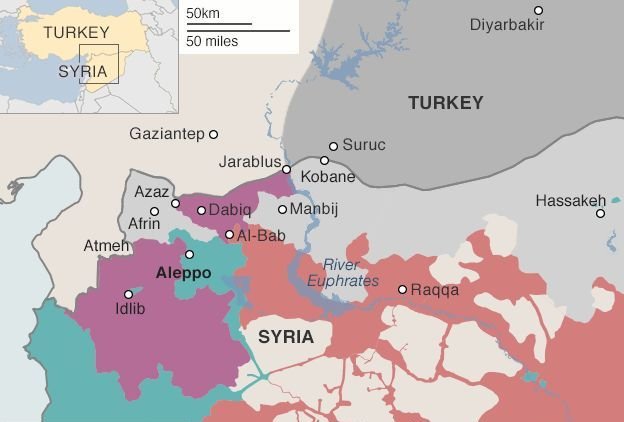
Or focus for a moment on the destruction caused by some combination of US air power, Daesh bombers, artillery, and mortars that, in seven months of fighting in 2017, uprooted more than a million people from the still largely un-reconstructed Iraqi city of Mosul (where 10 million tons of rubble are estimated to remain). Or try to bring to mind the rubblized city of Ramadi. Or consider the destruction of the Syrian city of Raqqa, the former “capital” of the Daesh caliphate, left more than 80% “uninhabitable” after the US (and allied) air forces dropped 20,000 bombs on it. All are versions of the same phenomenon.
And yet when it comes to asteroids and the human future, one thing should be obvious. Such examples still represent relatively small-scale local impacts, given what’s to come.
If you happened to be an Afghan, Iraqi, Libyan, Syrian, Somali, or Yemeni in the twenty-first century, can there be any question that life would have seemed asteroidal to you? What Osama bin Laden allegedly began with just 19 fanatic followers and four hijacked commercial airliners, the US military continued across the West Asia-North Africa region as if it were the force from outer space (which, in a sense, it was). It doesn’t matter whether you’re talking about cities turned to rubble, civilians slaughtered, wedding parties obliterated, populations uprooted and sent into various forms of exile, the transformation of former nations (however autocratic) into failed states, or the spread of terrorism. It’s been quite a story. More than 17 years and at least $5.6 trillion after the Bush administration launched its Global War on Terror, can there be any question that the wildest dreams of Osama bin Laden have been more than fulfilled? And it’s not faintly over yet.
More remarkable still, just about all of this has largely been ignored in the country that functionally made it so. If you asked most Americans, they would certainly know that almost 3,000 civilians were slaughtered in the terror attacks of 9/11, but how many (if any) would be aware of the several hundred civilians -- brides, grooms, revelers, you name it -- similarly slaughtered in what were, in essence, US terror attacks against multiple wedding parties in Afghanistan, Iraq, and Yemen? And that’s just to begin to mention the kinds of destruction that have gone on largely unnoticed here in the US.
In the first 18 years of this century, tens of millions of people have been uprooted and displaced -- more than 13 million in Syria alone -- from what had been their homes, lives, and worlds. Many of them were sent fleeing into countries like Jordan, Lebanon, and Turkey. Sooner or later, more than one million Syrians made it to Europe and 21,000 even made it to the US. In the process, Washington’s wars (and the conflicts that unfolded from them) unsettled ever more of the planet in much the way those particulates in the atmosphere did the world of 66 million years ago. So consider it an irony that, here in the US, so few connections have been made between such events and an unceasing series of American conflicts across West Asia and North Africa -- or that the thought of even the mildest sorts of retreats from any of those battlegrounds instantly leaves political and national security elites in Washington (and the media that cover them) in an uproar of horror.
Consider this a tale of imperial power gone awry that -- were anyone here truly paying attention -- could hardly have been uglier. And no matter what happens from here on, it’s hard to imagine how things won’t, in fact, get uglier still. I’m not just thinking about Donald Trump’s Washington in 2019, where such ugliness is par for the course. I’m thinking about all of those lands affected by America’s unending post-9/11/2001 wars (and the catastrophic American-backed Saudi one in Yemen that goes with them) -- about, that is, the region and the conflicts from which Donald Trump sorta, maybe, in the most limited of ways was threatening to begin pulling back as last year ended and about which official Washington promptly went nuts.
We’re talking, of course, about the conflicts from hell that have long been labeled “the war on terror” but -- given the spread of terror groups and the rise of the anti-immigrant right in Europe and the US -- should probably have been called “the war for terror” or the “war from hell.” And it’s this that official Washington and much of the mainstream media can’t imagine getting rid of or out of.
Naturally, doing so will be ugly. In functionally admitting to a kind of defeat (even if the president insists on calling it victory), Washington will be tossing aside allies -- Kurds, Afghans, and others -- and leaving those who don’t deserve such a fate in so many ditches (just as it did in Vietnam long ago). Worse yet, it will be leaving behind a part of the world that, on its watch, became not just a series of failed or semi-failed states, but a failed region. It will be leaving behind populations armed to the teeth, bereft of normal lives, or often of any sort of life at all, and of hope. It will be leaving behind a generation of children robbed of their futures and undoubtedly mad as hell. It will be leaving behind those cities in rubble and a universe of refugees and insurgents galore. Even if Daesh doesn’t rebound, don’t imagine that other horrors can’t arise in such circumstances and amid such wreckage. Ugly will be the word for it.
And for some of that ugliness, you can indeed thank Donald Trump, whether he withdraws American troops from Syria, as promised, or not. After all, here’s the strange thing: though no one in Washington or elsewhere in this country had paid more than passing attention to it, the recent Syrian “withdrawal” decision wasn’t The Donald’s first. Last March, he “froze” $200 million that had been promised for Syrian aid and reconstruction, money that assumedly might have gone to derubblizing parts of that country -- and rather than being up in arms about it, rather than offering a crescendo of criticism (as with his recent decision to withdraw troops), rather than resignations and protests, official Washington and the media that covers it just shrugged their collective shoulders. It couldn’t have been uglier, but Washington was unfazed.
As for countermanding the president’s order and staying, we already know what more than 17 years of endless American war have delivered to that region (as well as subtracted from the American treasury). What would another two, four, or eight years of -- to use a fairly recent Pentagon term -- “infinite war” mean? Here’s one thing for sure: ugly wouldn’t even cover it. And keep in mind that, despite Donald Trump’s recent Syrian and Afghan decisions (both of which are reversible), so much of what passes for American war in this century, including the particularly grim Saudi version of it in Yemen and those Air Force and CIA drone assassination strikes across much of the region, has shown little sign of abating anytime soon.
And then, of course, there’s that other issue, the one where withdrawal can’t come into play, the one where ugly doesn’t even begin to cover the territory.
In case you haven’t instantly guessed -- and I suspect you have -- I’m thinking about what’s happening to the place known to its English-speaking inhabitants as Earth. It no longer takes a scientist or a probing intelligence to know that the planet that welcomed humanity all these thousands of years has begun to appear a good deal less gracious thanks to humanity’s burning of fossil fuels and the release of greenhouse gases into the atmosphere. By now, no matter where you live, you should know the litany well enough, including (just to start down a long list): temperatures that are soaring and only promise to rise yet more; a record melting of Arctic ice; a record heating of ocean waters; ever fiercer storms; ever fiercer wildfires (and ever longer fire seasons); rising sea levels that promise to begin drowning coastal cities sometime later this century; the coming of mega-droughts and devastating heat waves (that by 2100 may, for instance, make the now heavily populated North China plain uninhabitable).
Nor do you have to be a scientist these days to draw a few obvious conclusions about trends on a planet where the last four years are the hottest on record and 20 of the last 22 years qualify as the warmest yet. And keep in mind that most of this was already clear enough at the moment in planetary history when a near-majority of Americans elected as president an ardent climate-change denier, as were so many in the party of which he became the orange-haired face. And also keep in mind that the very term climate-change denier no longer seems faintly apt as a description for him, “his” party, or the crew he’s put in control of the government. Instead, they are proving to be the most enthusiastic group of climate-change aiders and abettors imaginable.
In other words, the administration heading the country that, historically, has been the largest emitter of greenhouse gases is now in the business -- from leaving the Paris climate accord to opening the way for methane gas releases, from expanding offshore drilling to encouraging Arctic drilling, from freeing coal plants to release more mercury into the atmosphere to rejecting its own climate-change study -- of doing more of the same until the end of time. And that's certainly a testament to something. Ultimately, though, what it is doing may be less important than what it isn’t doing. On a planet on which, according to the latest UN report, there are only perhaps a dozen years left to keep the long-term global temperature rise under 1.5 degrees centigrade, the Trump administration is wasting time in the worst way imaginable.
Even 18 years into a series of “quagmire” of West Asian wars, the US could still withdraw from them, however ugly the process might be. It could indeed bring the troops home; it could ground the drones; it could downsize the Special Operations forces that now add up to a secret army of 70,000 (larger than the armies of many nations) at present deployed to much of the globe. It could do many things.
What Washington can’t do— what we can’t do—is withdraw from the Earth, which is why we are now living on what I increasingly think of as a quagmire planet.
In the 1960s, that word, quagmire (“a bog having a surface that yields when stepped on”), and its cognates -- swamp, sinkhole, morass, quicksand, bottomless pit -- were picked up across the spectrum of American politics and applied to the increasingly disastrous war in Vietnam. It was an image that robbed Washington of much of its responsibility for that conflict. The quagmire itself was at fault -- or as historian Arthur Schlesinger, Jr., put it at the time: “And so the policy of ‘one more step’ lured the United States deeper and deeper into the morass... until we find ourselves entrapped in that nightmare of American strategists, a land war in Asia.”
Embedded in the war talk of those years, quagmire was, in fact, not a description of the war as much as a worldview imposed on it. That image turned Vietnam into the aggressor, transferring agency for all negative action to the land itself, which had trapped us and wouldn’t let us go, even as that land was devalued. After all, to the Vietnamese, their country was anything but a quagmire. It was home and the American decision to be there a form of hated or desired (or sometimes, among America’s allies there, both hated and desired) intervention. Much the same could be said, of course, of the Greater Middle East in this century.
When it comes to this planet in the era of climate change, however, quagmire seems like a far more appropriate image, as long as we keep in mind that we Americans are the aggressors. It is we Americans who are burning those fossil fuels. It is, as the US president loves to put it, “American energy dominance” that is threatening to submerge Miami, Shanghai, and other coastal cities in the century to come.
It is the urge of the Trump administration to kneecap the development of alternative energies, while promoting coal, oil, and natural gas production that is threatening the human future. It is the acts and attitudes of Trumpian-like figures from Poland to Saudi Arabia to Brazil that threaten our children and grandchildren into the distant future, that threaten, in fact, to turn the Earth itself into a rubblized, ravaged planet. It is Vladimir Putin's Russian petro-state that is at work creating a future swamp of destruction in the Arctic and elsewhere. It is a Chinese inability to truly come to grips with its use of coal (not to mention the way it is exporting coal plants to Africa and elsewhere) that threatens to make our world into a morass. It is the lack of any urge on the part of fossil fuel CEOs to “keep it in the ground” that will potentially take humanity down for the count.
In that context, think of the man who, from his earliest moments in the Oval Office, wanted to withdraw the United States from the Paris climate agreement, filled his cabinet with climate-change aiders and abettors, was desperate to obliterate his predecessor's modest steps on climate change, and never saw a coal mine, oil rig, or fracking outfit he didn’t love as the latest asteroid to hit Planet Earth. Under the circumstances, if the rest of us don’t get ourselves together, we are likely to be the dinosaurs of the Anthropocene era.
Donald Trump himself is, of course, just a tiny, passing fragment of human history. Already 72, he will undoubtedly be taken down by a Big Mac attack or something else in the years to come and most of his record will become just so much human history. But on this single subject, his impact threatens to be anything but a matter of human history. It threatens to play out on a time scale that should boggle the mind.
He is a reminder that, on this quagmire planet of ours, we -- the rest of us -- have no place to go, despite NASA’s plans to send humans to Mars, the rise of privatized projects for space tourism, and a Chinese spacecraft's landing on the far side of the moon. So, if we care about our children and grandchildren, as 2019 begins there is no time to spare and no more burning issue on Planet Earth than this.